


Most patients struggling with persistent illness are told that oxidative stress is a villain to be suppressed at all costs, yet the strategic application of this very force is often what finally breaks the cycle of chronic disease. You’ve likely spent years cycling through protocols, managing symptoms of fatigue and brain fog while feeling as though your condition is an inescapable reality. It’s exhausting to feel stuck in a conventional loop, but exploring oxidative therapy for chronic disease offers a departure from standardized care through precision biochemical pathways.
We believe your health is not a dead end. You will discover how controlled oxidative therapies can reset the immune system and combat complex chronic illnesses through specific mechanisms that trigger a hormetic benefit traditional antioxidants simply cannot achieve. This clinical guide examines the science behind these specialized IV protocols, helps you determine if you’re a candidate for this advanced approach, and identifies the requirements for a clinical center equipped to manage complex, multi-faceted cases.
Key Takeaways
- Learn the critical distinction between chronic oxidative stress and the controlled, therapeutic application of oxidizing agents to stimulate systemic healing.
- Discover how oxidative therapy for chronic disease upregulates essential antioxidant enzymes and restores mitochondrial ATP production at a cellular level.
- Understand why conventional protocols often stall and how advanced IV delivery bypasses the limitations of oral supplements and protective bacterial biofilms.
- Explore the precision biochemical pathways used to target metabolically inflexible cancer cells and eradicate persistent infections in chronic Lyme disease.
- Recognize the value of a personalized, research-based approach that moves beyond standardized treatments to address your unique physiological needs.
Understanding the Paradox: Oxidative Stress vs. Oxidative Therapy
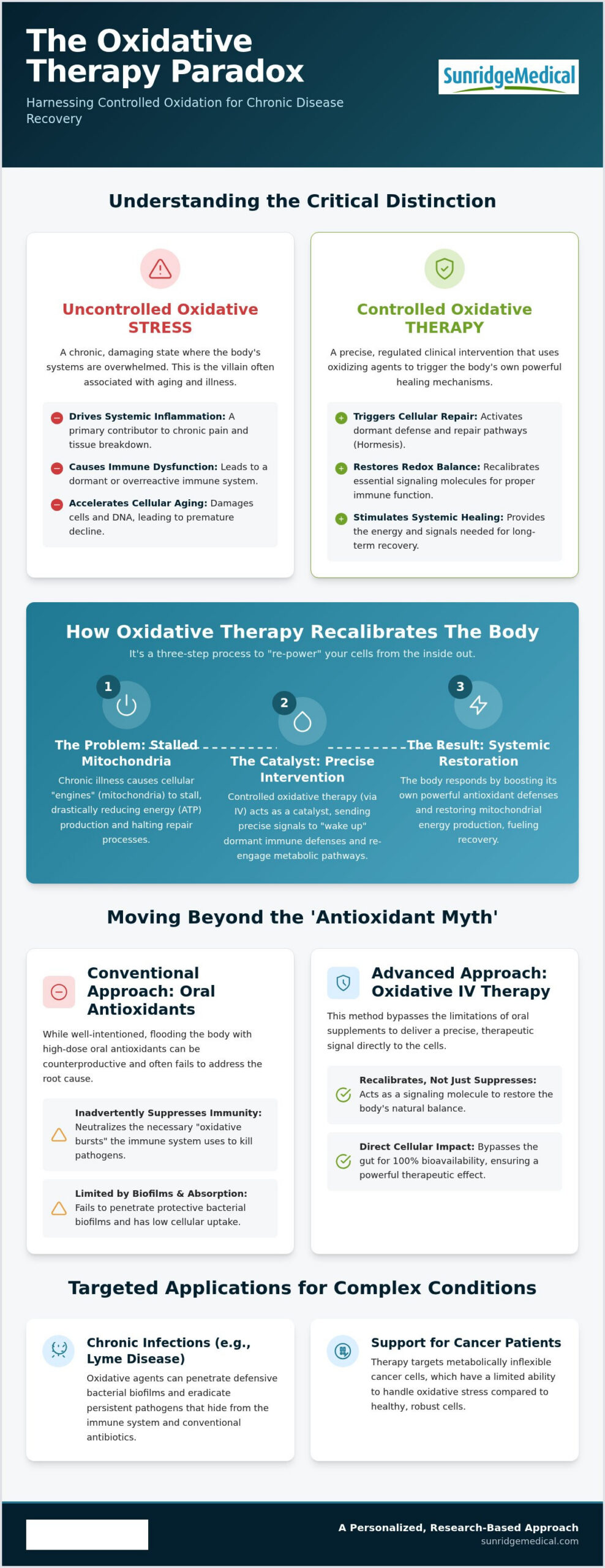
The term “oxidative” often carries a negative connotation in traditional medical circles, usually associated with cellular aging and tissue damage. However, this perspective overlooks the sophisticated biological reality of Understanding Redox Therapy and the fundamental necessity of oxidation in human health. While uncontrolled oxidative stress is indeed a primary driver of systemic inflammation, oxidative therapy for chronic disease is a highly regulated, targeted clinical intervention. It involves the precise administration of oxidizing agents to trigger specific, restorative biochemical pathways that are otherwise inaccessible.
In a healthy state, the body maintains a delicate equilibrium between oxidation and reduction, known as Redox homeostasis. Reactive Oxygen Species (ROS) are not merely metabolic byproducts; they are essential signaling molecules that instruct the immune system to respond to internal and external threats. When this balance is lost, the body enters a state of chronic dysfunction where the immune system either overreacts or becomes dangerously dormant. Restoring this balance requires more than just suppressing “bad” molecules; it requires the active recalibration of these signaling pathways through professional guidance.
The Science of Hormesis: Why Controlled Stress Heals
Hormesis describes a biological phenomenon where a low dose of a specific stressor activates beneficial repair mechanisms that would otherwise remain inactive. It’s the principle that what does not overwhelm the system actually strengthens it. In the context of complex illness, the immune system often becomes “exhausted” or suppressed by persistent pathogens and environmental toxins. By introducing a controlled oxidative challenge, we can effectively “wake up” these dormant defenses. Oxidative therapy acts as a clinical catalyst for mitochondrial restoration, effectively re-powering the cellular engines that have stalled under the weight of chronic illness.
Moving Beyond the ‘Antioxidant Myth’
Many patients arrive at our center after years of flooding their systems with high-dose oral antioxidants. While well-intentioned, this approach can inadvertently hinder the natural immune response by neutralizing the very oxidative “bursts” the body uses to eradicate pathogens and dysfunctional cells. The immune system requires these targeted bursts to penetrate the defenses of chronic infections and clear out metabolic debris. At Sunridge Medical, we focus on integrative medicine for chronic illness to ensure these pathways are balanced with precision. By utilizing oxidative therapy for chronic disease, we move past the simplistic antioxidant-only model and toward a more sophisticated, multi-faceted restoration of health.
Clinical Mechanisms: How Oxidative Therapies Stimulate Recovery
The efficacy of oxidative therapy for chronic disease lies in its ability to recalibrate cellular respiration. At the heart of this process is the mitochondrion, the organelle responsible for generating Adenosine Triphosphate (ATP). Chronic illness often leads to mitochondrial “stalling,” where energy production drops and cellular repair ceases. Controlled oxidative protocols introduce precise signals that re-engage these metabolic pathways, effectively jump-starting the body’s energy production and restoring the vitality required for systemic healing.
This approach operates through a sophisticated biological feedback loop. While it may seem counterintuitive to introduce oxidation, doing so actually upregulates the body’s endogenous antioxidant defenses. Research into current clinical trials on anti-oxidative stress treatments highlights how the body responds to specific stressors by increasing levels of Superoxide Dismutase (SOD) and Catalase. These enzymes are far more potent than any oral supplement, providing a robust internal shield against the very oxidative stress that fuels chronic inflammation.
Additionally, these therapies provide direct pathogen inactivation. Many bacteria, viruses, and fungi are anaerobic or possess limited defense mechanisms against oxidative bursts. By modulating the cytokine response, these protocols help shift the body from a state of chronic inflammatory “alarm” to one of active resolution. For those navigating these complex medical choices, speaking with a clinical expert at Sunridge Medical can clarify which mechanisms are most relevant to your specific diagnosis and recovery goals.
Ozone Therapy and Oxygenation Pathways
Medical-grade ozone serves as a powerful systemic activator. It enhances red blood cell flexibility, allowing oxygen to reach deep into microcapillaries that are often constricted by inflammation. This process stimulates the production of white blood cells and interferon, essential components of a high-functioning immune system. This level of physiological support is a primary reason why many individuals seek out lyme disease specialists who understand the necessity of systemic oxygenation in overcoming persistent, deep-seated infections.
High-Dose Intravenous Vitamin C as an Oxidative Agent
While Vitamin C is famous as an antioxidant, its behavior changes dramatically at high intravenous concentrations. In this clinical context, it transitions into a pro-oxidant. This shift leads to the generation of hydrogen peroxide (H2O2) within the extracellular space. Healthy cells possess the enzyme machinery to neutralize this peroxide, but compromised or metabolically inflexible cells often lack these defenses. This selective targeting makes high-dose IVC a cornerstone of alternative cancer treatment, offering a precise way to challenge dysfunctional cells while supporting the surrounding healthy tissue.
Why Conventional Chronic Disease Protocols Often Stall
Many patients find themselves caught in a cycle of temporary relief followed by frustrating regression; they are often told that their condition is permanent or that they must simply “manage” their symptoms. This stagnation occurs because conventional protocols frequently address the surface manifestations of illness while failing to penetrate the underlying cellular dysfunction. While research into antioxidant therapies for chronic inflammation offers valuable insights into the molecular basis of disease, the reality is that oral supplements and standard lifestyle changes are often insufficient for overcoming deep-seated metabolic traps.
A primary reason for this stall is the presence of biological barriers like biofilms. Chronic infections, such as Lyme disease, utilize these protective structures to shield themselves from standard pharmaceutical approaches and the body’s own immune defenses. Environmental toxins and neurologic stressors can also lock the body into a state of perpetual alarm, preventing the natural healing response from engaging. Without a strategy that can penetrate these barriers and recalibrate the system, recovery remains elusive. The failure of the “one-size-fits-all” medical model is evident when complex, multi-system illnesses are treated with standardized, packaged solutions that ignore the individual’s unique biochemical landscape.
The Problem with Standardized Care in Complex Cases
Standardized medical models operate on the assumption that a single protocol can address the needs of every patient with a specific diagnosis. However, complex illnesses are as unique as the individuals they affect. Packaged treatments often fail because they ignore the specific biochemical markers and hidden roadblocks that vary from person to person. We believe that a comprehensive physician evaluation is the only way to identify these specific impediments to health. By utilizing iv therapy for autoimmune disease, we can bypass the digestive limitations that often prevent oral treatments from reaching the cells that need them most, ensuring that clinical-grade agents are delivered with maximum precision.
Bioenergetic Failure: When the Body Loses the Will to Heal
In the face of persistent toxicity or infection, the body may enter a state of mitochondrial “shut down.” This is a survival mechanism where the cells prioritize basic existence over active repair, leading to the profound fatigue and brain fog characteristic of chronic illness. Oxidative therapy for chronic disease acts as a clinical jump-start for cellular energy production, signaling the mitochondria to resume normal function and produce the ATP required for recovery. To ensure this reset is sustainable, we often integrate hormone therapy for autoimmune disease to stabilize the metabolic environment and provide the body with the hormonal foundation required for lasting restoration.
Targeted Applications: Oxidative Therapy for Specific Conditions
The clinical utility of oxidative therapy for chronic disease extends across a spectrum of complex conditions where conventional treatments frequently reach their limit. By harnessing precise biochemical signals, we can address the specific metabolic and immunological failures that define these illnesses. Whether the goal is to dismantle the protective layers of a persistent pathogen or to recalibrate an overactive immune system, these protocols offer a level of specificity that standardized care cannot match. This approach works by meeting the body exactly where it is currently struggling.
- Alternative Cancer Support: Utilizing oxidative bursts to target metabolically inflexible cancer cells that lack robust defense mechanisms.
- Chronic Lyme Disease: Eradicating persister cells and modulating the post-Lyme inflammatory response to restore systemic balance.
- Autoimmune Disorders: Re-educating the immune system to accurately distinguish between “self” and “invader” through redox signaling.
- Neurologic Recovery: Reducing neuro-inflammation and supporting brain-derived neurotrophic factor (BDNF) to enhance cognitive clarity.
Precision Protocols for Advanced Cancer Stages
Integrating oxidative IVs with integrative cancer treatment by stage allows for a more comprehensive approach to oncology. This methodology is particularly effective because it targets the tumor microenvironment, creating an environment that is inhospitable to dysfunctional cell growth. Pro-oxidant therapy selectively affects cells with low antioxidant reserves. This selectivity ensures that healthy tissues remain supported while compromised cells are systematically challenged through specific biochemical pathways developed over decades of clinical practice.
Managing Chronic Lyme and Co-infections
Borrelia burgdorferi is notorious for its “stealth” mechanisms, including the ability to change shape and hide within deep tissues. Breaking through these defenses requires a multi-faceted strategy that combines oxidative therapy with targeted nutritional infusions. This combination not only addresses the infection but also provides the body with the raw materials needed for comprehensive recovery. We focus heavily on resolving long-term neurologic symptoms associated with Lyme, such as cognitive impairment and sensory dysfunction, by reducing systemic inflammation. If you’re ready to explore a customized path toward wellness, contact Sunridge Medical at 1-800-923-7878 for a professional physician evaluation.
The Sunridge Medical Advantage: Personalized Oxidative Medicine
Choosing a path toward recovery requires more than just a list of treatments; it requires a partnership with a clinical team that views your health through a comprehensive lens. At Sunridge Medical, we provide a sanctuary for individuals who have been overlooked or frustrated by traditional medical systems. Our philosophy is rooted in a sophisticated blend of clinical authority and compassionate optimism, ensuring that every patient feels seen, heard, and supported. We don’t offer the “packaged” or standardized menus common in many alternative circles. Instead, our approach to oxidative therapy for chronic disease is built on the foundation of therapeutic precision and a 20 year history of specialized care.
Your journey begins with a comprehensive physician evaluation that goes far beyond a standard check-up. We examine the intricate details of your medical history, current symptoms, and previous treatment failures to construct a complete picture of your health. For our national patients, we maintain a methodical and reassuring rhythm that simplifies the process of traveling for care. From the initial consultation to the development of your roadmap and ongoing monitoring, our team acts as a steady hand, guiding you through the complexities of advanced integrative medicine with certainty and professional gravity.
Developing Your Individualized Treatment Plan
Precision is the cornerstone of our methodology. We utilize advanced diagnostic testing to identify the specific biochemical markers that inform our selection of oxidative agents. This data driven approach ensures that your treatment plan is tailored to your unique physiological needs rather than a generic diagnosis. Throughout your care, we employ continuous monitoring to adjust IV concentrations in real time. This level of oversight is essential for maintaining optimal safety and maximizing the efficacy of our research based alternative protocols. We are committed to staying at the leading edge of medical research to provide you with the most effective tools for restoration.
Taking the First Step Toward Clinical Recovery
The decision to move beyond standard, ineffective protocols is a significant turning point in any chronic health journey. If you’ve felt stuck in a loop of persistent fatigue, brain fog, or the fear that your condition is untreatable, it’s time to seek a more specialized perspective. Our 1-800 number serves as a direct line to a team that understands the weight of your experience and the possibility of your progress. We invite you to step out of the conventional cycle and into a clinical environment designed for your specific recovery needs. Contact Sunridge Medical at 1-800-280-4574 to schedule your individualized physician evaluation and begin your path toward lasting well-being.
Charting a New Path Toward Lasting Recovery
Navigating a complex health journey requires a departure from the standardized cycles that often leave patients feeling untreatable. By understanding how oxidative therapy for chronic disease utilizes precision biochemical pathways, you’ve taken the first step toward reclaiming your well-being. This clinical approach doesn’t just manage symptoms; it recalibrates the immune system and restores mitochondrial energy production to address the root causes of dysfunction. It’s a method that moves beyond surface-level suppression to trigger the body’s innate healing mechanisms.
At Sunridge Medical, we offer more than just alternative options. We provide a sanctuary rooted in over 20 years of clinical excellence and a dedication to research-based medicine. Our specialized, physician-led protocols are designed specifically for those facing late-stage chronic cases that have stalled under conventional care. You don’t have to navigate this journey alone. Ready to explore a more comprehensive path to recovery? Schedule your individualized consultation with Sunridge Medical today. Progress is possible when you have a pioneering expert and a steady hand as your guide.
Frequently Asked Questions
What is oxidative therapy and how does it differ from oxidative stress?
Oxidative therapy is the controlled clinical administration of medical grade oxidizing agents to trigger restorative biochemical pathways, while oxidative stress refers to an uncontrolled state of cellular damage. In a clinical setting, oxidative therapy for chronic disease acts as a hormetic stressor that effectively wakes up the immune system. This differs significantly from the chronic, systemic inflammation found in patients who haven’t yet balanced their redox signaling through professional, individualized care.
Is oxidative therapy safe for patients with advanced chronic disease?
These therapies are designed to be safe even for patients with advanced or late stage conditions because every protocol is customized to the individual’s metabolic tolerance. At Sunridge Medical, we conduct comprehensive physician evaluations before any treatment begins to ensure the patient’s system can handle the oxidative challenge. Our clinical team monitors concentrations continuously, adjusting the intensity of the IV protocols to match the patient’s specific physiological needs and current recovery stage.
How many sessions of oxidative IV therapy are typically required for recovery?
The duration of treatment varies based on the specific protocol and the patient’s individual health status. For instance, Major Autohemotherapy often involves 10 to 20 sessions, while more intensive options like Ten Pass ozone may require only 5 to 10. We determine the exact frequency after a comprehensive evaluation. This ensures your care plan is precisely calibrated to your body’s response rather than a generic, one size fits all schedule.
Can oxidative therapy be used alongside conventional cancer treatments?
Yes, oxidative therapies are frequently used as a cornerstone of integrative oncology to support patients undergoing conventional treatments. These protocols utilize oxidative bursts to selectively target cancer cells, which often lack the antioxidant defenses found in healthy tissue. This approach helps to address the tumor microenvironment without interfering with the primary goals of your oncological care. Our team coordinates these protocols to ensure they complement your broader clinical strategy for recovery.
What are the common side effects of oxidative therapies like Ozone or IV Vitamin C?
Most patients tolerate these therapies well, though some may experience a temporary Herxheimer reaction as the body clears neutralized pathogens and metabolic debris. This response can manifest as mild, flu like symptoms or temporary fatigue, but it’s often a sign that the therapy is effectively engaging the immune system. We manage these reactions by adjusting IV concentrations and providing supportive nutritional infusions to help your body process and eliminate toxins more efficiently.
Does oxidative therapy help with chronic fatigue and brain fog?
Oxidative therapy for chronic disease is particularly effective for resolving persistent fatigue and cognitive impairment by jump starting mitochondrial function. When the mitochondria resume normal ATP production, the body gains the energy required to clear neuro inflammation and repair cellular damage. This metabolic reset helps lift the brain fog that often persists when conventional treatments fail to address the underlying bioenergetic failure common in complex, multi system illnesses.
How do I know if I am a candidate for oxidative protocols at Sunridge Medical?
Determining candidacy requires a detailed review of your medical history and current health status through our specialized evaluation process. If you’ve felt stuck in a loop of conventional treatments without progress, you’re likely a candidate for a more comprehensive lens. You can take the first step by calling our toll free number at 1-800-280-4574. Our clinical advocates will help you schedule a consultation to explore how our individualized protocols can address your specific needs.
Is oxidative therapy covered by standard health insurance?
No, oxidative therapies are not covered by major US insurers because they are not FDA approved for these specific uses. Sunridge Medical does not offer standard health insurance billing for our specialized services. This allows our clinic to utilize advanced, research based protocols that are often excluded from conventional health plans. Patients typically use self pay options to access our treatments, ensuring that care decisions are made by physicians and patients.