

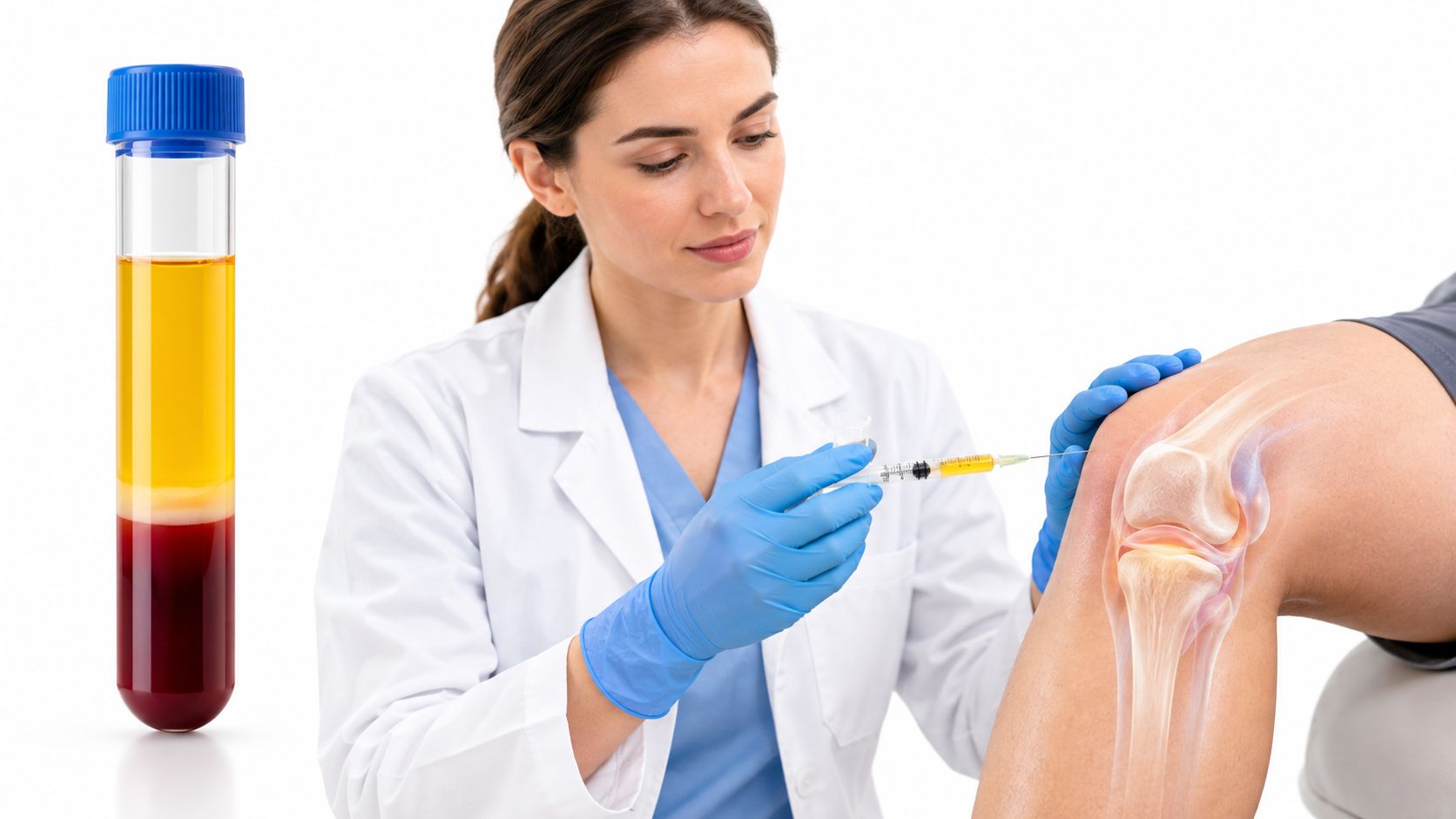
If two clinics both offer platelet rich plasma, are you getting the same treatment at each one? Often, you're not. That gap between the name and what's in the syringe explains much of the confusion around platelet rich plasma benefits, including why one person improves and another feels no change.
This guide walks through what PRP is, how it works at a cellular level, where evidence is stronger or weaker, and which questions help you judge candidacy. It doesn't promise regeneration or a cure. It gives Scottsdale and Phoenix patients a clear, evidence informed way to decide whether an evaluation makes sense.
Table of Contents
- What Is Platelet Rich Plasma and How Does It Work
- Evidence for PRP Across Common Conditions
- What PRP Can and Cannot Do
- Who Is a Good Candidate for PRP
- What to Expect During a PRP Treatment Course
- How Sunridge Medical Approaches PRP Therapy
- Next Steps and How to Get Started
What Is Platelet Rich Plasma and How Does It Work
A patient in Paradise Valley with a sore, arthritic knee recently described PRP this way. She'd heard it uses her own blood to heal the joint, but she couldn't explain what happens between the blood draw and the injection. That missing middle step is where the biology, and the variation between clinics, lives.
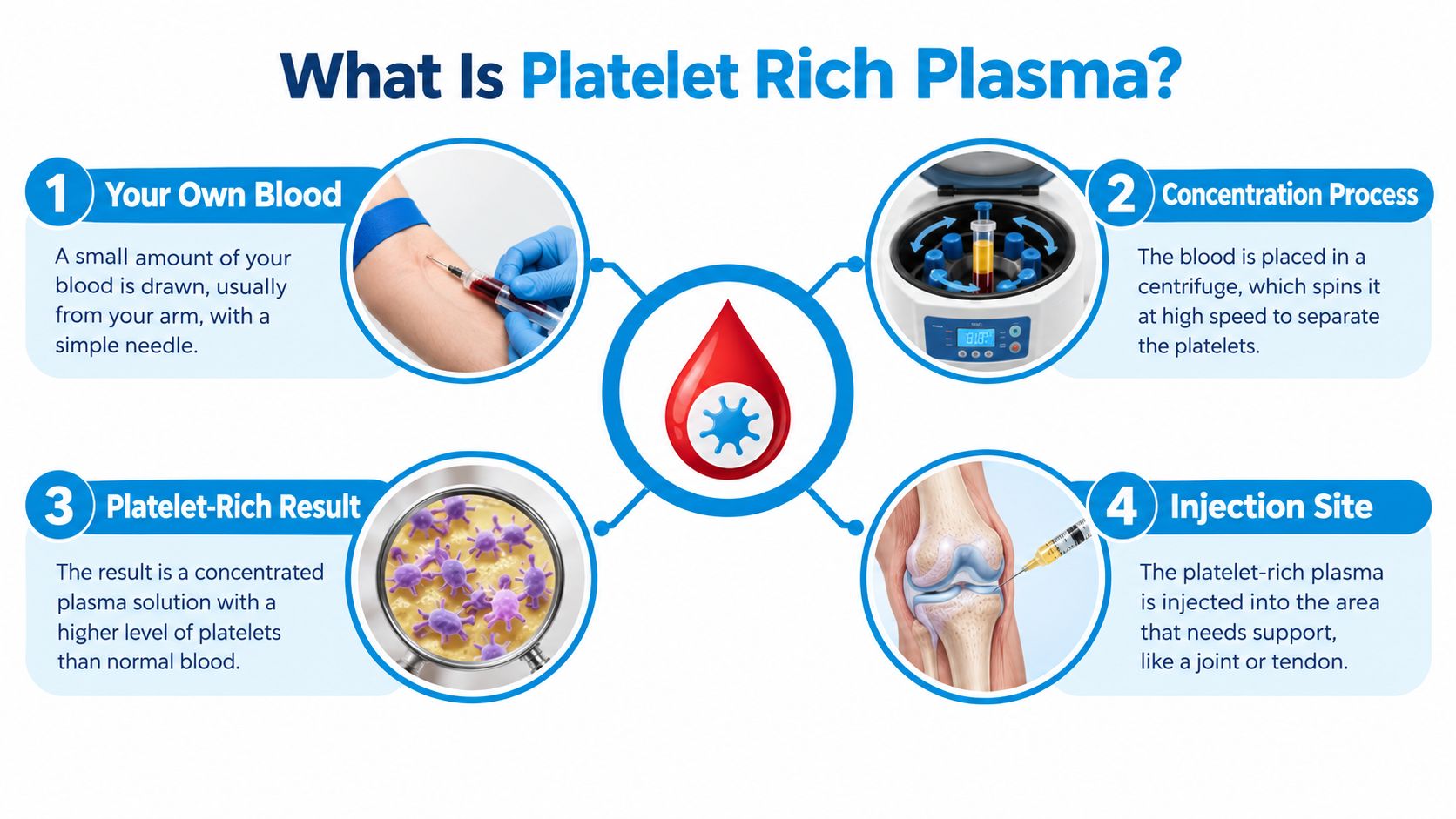
Platelet rich plasma, or PRP, is a concentrate made from your own blood. A clinician draws a sample, spins it in a centrifuge to separate components, and collects the platelet rich layer for injection into a joint, tendon, or other target tissue. You're not receiving a manufactured drug. You're receiving a concentrated portion of your own blood, prepared in a specific way.
What Platelets Do After Injection
Think of platelets as messengers, not building blocks. When they're activated, they release the contents of small storage packets called alpha granules. Those packets contain signaling proteins called growth factors, and the signals, rather than the platelets themselves, do most of the work described in research on PRP growth factor signaling and tissue repair.
That research identifies platelet derived growth factor (PDGF), vascular endothelial growth factor (VEGF), transforming growth factor beta (TGF-β), fibroblast growth factor (FGF), and insulin like growth factor (IGF) among those mediators. Together, they recruit reparative cells, stimulate fibroblast and mesenchymal cell proliferation, regulate new blood vessel formation, and promote extracellular matrix and collagen synthesis. In plain terms, they encourage local cells to organize repair activity.
Other proteins help keep that activity in place. Fibronectin, vitronectin, thrombospondin, and von Willebrand factor help organize the provisional clot at the injury site and localize signaling there. Without that scaffolding, growth factors would disperse instead of concentrating where tissue needs support.
PRP's rationale is pharmacologic and cellular, not simply mechanical. The injection doesn't patch tissue. It delivers concentrated signals that may prompt your own cells to respond.
Why PRP Is a Category and Not One Product
That's also why preparation matters so much. Different commercial systems produce materially different platelet, leukocyte, erythrocyte, and growth factor profiles, and there's no universally accepted optimal concentration. Two preparations can both be labeled PRP while containing quite different cellular mixes.
Because of that variation, a careful clinician documents platelet dose, leukocyte content, activation method, injection target, and processing protocol rather than treating PRP as standardized. If a clinic can't tell you what's in your preparation, you can't reasonably compare your treatment to a published study.
This mechanism supports potential benefit in tendinopathy, early osteoarthritis, muscle injury, and surgical augmentation, but it doesn't establish efficacy for every indication. The same blood based approach is also discussed in other contexts, including hair applications described in a resource on Bel Air hair tonic with PRP. A plausible mechanism in one tissue doesn't prove benefit in another, which is why condition specific evidence matters next.
Evidence for PRP Across Common Conditions
Patients often ask whether PRP works, as if there's one yes or no answer. A better question is where it has helped, for how long, and under what protocol. The answer changes by diagnosis, and that's not a weakness of the discussion. It's the most honest summary of the evidence.
Knee Osteoarthritis
Knee osteoarthritis is the most studied joint application. Syntheses of randomized trials indicate that intra articular PRP can improve pain and function, with benefits commonly reported over approximately 6 to 12 months, as summarized in a Frontiers in Medicine review of PRP for knee osteoarthritis. That framing matters. Treatment should be understood as symptom modifying and function supporting, not as proven cartilage regeneration.
A separate meta analysis strengthens that picture without removing uncertainty. It included 18 randomized controlled trials involving 1,995 patients and found greater improvements in pain and WOMAC function scores with PRP than placebo, with platelet concentration influencing results, as reported in a PubMed indexed meta analysis of PRP versus placebo for knee osteoarthritis. Higher platelet preparations were associated with greater pain relief and more durable functional improvement in that analysis.
Timing also helps explain technique. After exogenous activation, platelets aggregate and coagulate within about 10 minutes, while nearly 95% of alpha particle contents are released within approximately 1 hour, according to the Frontiers review cited earlier. Signaling happens quickly and locally, so injection technique, target accuracy, and post injection loading can matter as much as nominal concentration.
Tendon, Ligament, and Emerging Uses
Evidence from tendon and ligament research suggests possible short and long term pain relief versus alternative treatments, but response remains diagnosis and preparation specific. A tendon that's degenerative, torn, or overloaded for different reasons shouldn't be expected to respond identically. Patients comparing regenerative options sometimes also review related background, such as research on prolozone therapy as another injection based approach, before deciding which evaluation fits their problem.
Emerging applications sit on thinner ground. A systematic review of PRP for erectile dysfunction and Peyronie's disease identified 17 studies involving 1,099 patients, including only four randomized controlled trials, with small to moderate benefits and substantially varied protocols, as described in a systematic review of PRP for erectile dysfunction and Peyronie's disease. The reviewers concluded evidence remains limited and optimal protocols aren't yet determined.
PRP Evidence Strength by Condition
| Condition | Evidence Strength | Typical Outcome |
|---|---|---|
| Knee osteoarthritis | Stronger, but heterogeneous | Improved pain and function for selected patients, without proven disease reversal |
| Tendon and ligament problems | Mixed and diagnosis specific | Possible pain relief, with results varying by tendon and protocol |
| Erectile dysfunction and Peyronie's disease | Limited and emerging | Small to moderate reported benefits, with protocols not yet standardized |
The pattern across conditions is consistent. Where trials are larger and outcomes are measured with validated pain and function scales, confidence improves. Where protocols vary widely and follow up is short, PRP is better described as investigational or emerging than proven.
What PRP Can and Cannot Do
The consultation below reflects a common conversation in Scottsdale. A patient wants relief, but she also needs to know what PRP won't do before she spends time and money on it.

What Symptom Relief Does Not Prove
PRP may reduce pain and support function for selected patients. It has not been shown to reliably regenerate cartilage, reverse osteoarthritis, or cure degenerative disease. Feeling better is clinically meaningful, but it isn't the same claim as rebuilding a joint, and responsible counseling keeps those ideas separate.
Uncertainty in knee osteoarthritis deserves direct discussion. A 2025 evaluation found that although many systematic reviews report improvements, their methodological quality was critically low, overlap among included studies was high, and WOMAC outcomes were inconsistent, as detailed in a Frontiers in Physiology evaluation of PRP evidence quality. Its authors concluded confident conclusions about efficacy and comparative effectiveness cannot yet be drawn.
That doesn't mean every positive result should be dismissed. A 2025 large joint osteoarthritis study reported clinically significant average pain improvements of 49% at six months and 45% at 12 months, as noted in that same evaluation. Group averages, though, don't predict whether you personally will respond.
Where Results Have Been Disappointing
Some conditions show a clearer negative signal. For lateral epicondylitis, often called tennis elbow, moderate certainty evidence from 10 randomized trials showed no meaningful pain or functional benefit, with PRP not superior to autologous blood, according to the Frontiers evaluation above. That finding challenges any claim that PRP helps every painful tendon.
A useful test of honesty: If a provider can't name a condition where PRP has performed poorly, the explanation you're hearing is marketing, not medicine.
Benefits may be delayed or absent, so a plan should define reassessment and stopping criteria before the first injection. Patients also benefit from understanding alternatives and adjuncts, which is why some review MedAmerica Rehab Center's shockwave alternatives alongside injection options. Others want a direct comparison, such as an explanation of platelet rich plasma versus stem cell approaches, before choosing a path.
For patients with cancer or complex systemic illness, extra caution applies. PRP shouldn't be framed as a universal repair or anti inflammatory treatment, and decisions should be coordinated with treating specialists. The video below offers additional clinical context for that balanced view.
Who Is a Good Candidate for PRP
A common assumption is that anyone with joint or tendon pain is a candidate because PRP comes from their own blood. Autologous doesn't mean automatically appropriate. Candidacy starts with a confirmed diagnosis, not with the availability of an injection.
Questions That Reveal Whether PRP Fits
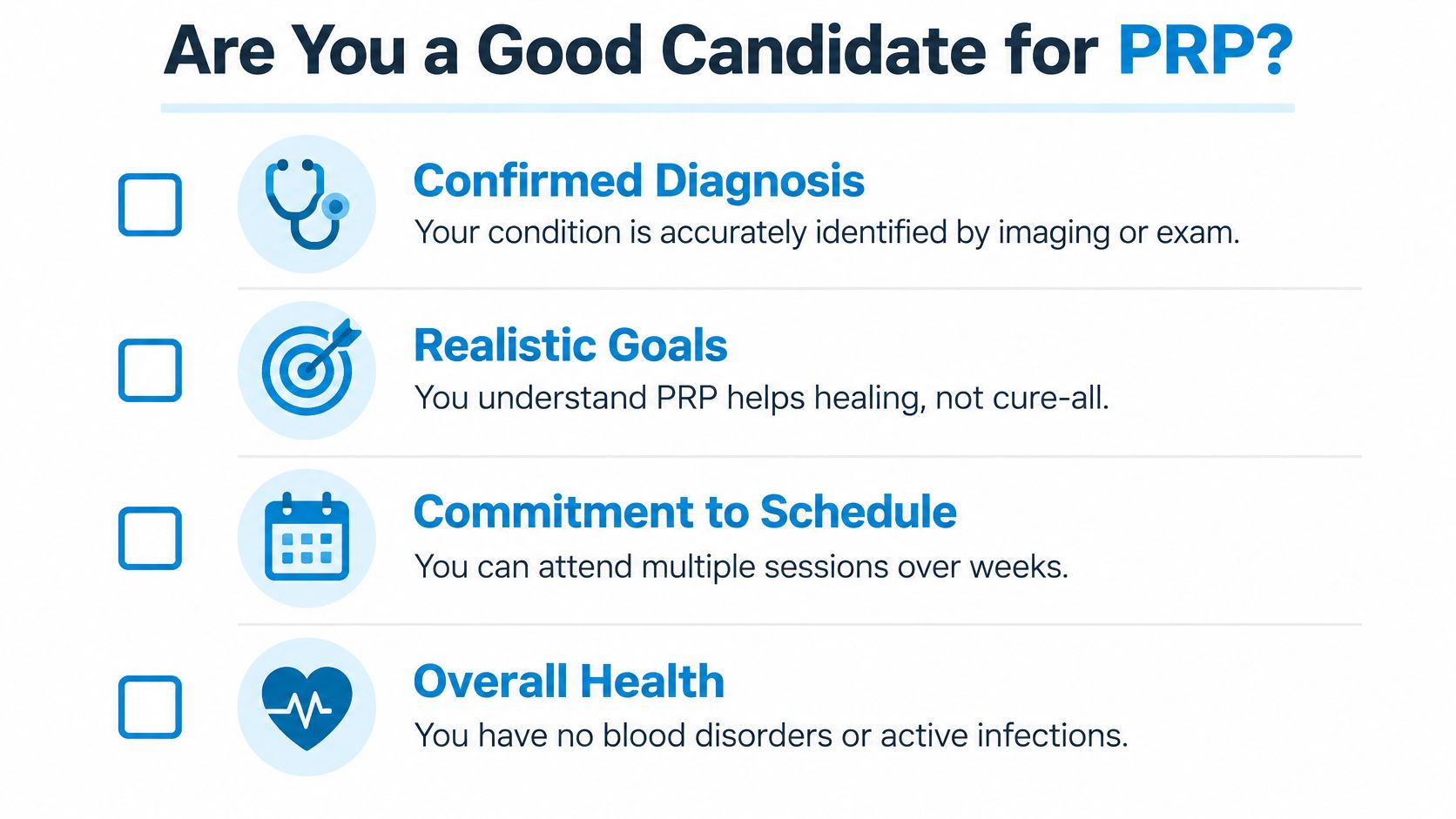
A good evaluation confirms the pathology driving your symptoms and sets realistic functional goals. Walking farther, climbing stairs with less pain, or returning to a specific activity are measurable aims. Vague hopes for total repair aren't a sound basis for treatment, and they make follow up hard to interpret.
Your clinician should also review bleeding risk and anticoagulant use, along with medications and systemic illness that could affect safety or response. Baseline inflammation, anemia, platelet disorders, metabolic status, and structural disease pattern may all influence the decision. That review is especially important for patients traveling from Tempe, Mesa, Chandler, or Gilbert with complex chronic conditions.
- Confirmed pathology: Imaging or examination identifies the tissue and problem being targeted.
- Defined goals: You and your clinician agree how pain and function will be measured.
- Health review: Medications, bleeding risk, and systemic illness are assessed before treatment.
- Follow up plan: Reassessment dates and stopping criteria are set in advance.
Why Your Specific Formulation Matters
You should also ask what is in your PRP. A 2025 review of 87 studies involving 7,925 patients and 8,118 knees found whole blood characteristics reported in only 20% of studies, platelet recovery in 22%, PRP analysis in 30%, and activation in 47%, as reported in a PubMed indexed review of PRP formulation reporting. Missing details make clinic to clinic comparisons unreliable.
Don't assume higher platelet or leukocyte levels automatically produce better outcomes. Ask about platelet concentration, red cell and leukocyte content, activation, image guidance, number of injections, and why that preparation was selected for your condition. Patients with ongoing soft tissue problems may also find background on musculoskeletal injuries and chronic soft tissue pain evaluation helpful when preparing those questions.
If those answers are vague, candidacy hasn't really been established. A transparent formulation discussion helps you judge whether a positive study resembles the treatment you're being offered.
What to Expect During a PRP Treatment Course
Knowing the sequence reduces anxiety and helps you plan work, exercise, and travel. The visit itself is only one part of the course. Evaluation beforehand and structured follow up afterward determine whether the treatment was appropriate and whether it helped.
From Consultation to Injection
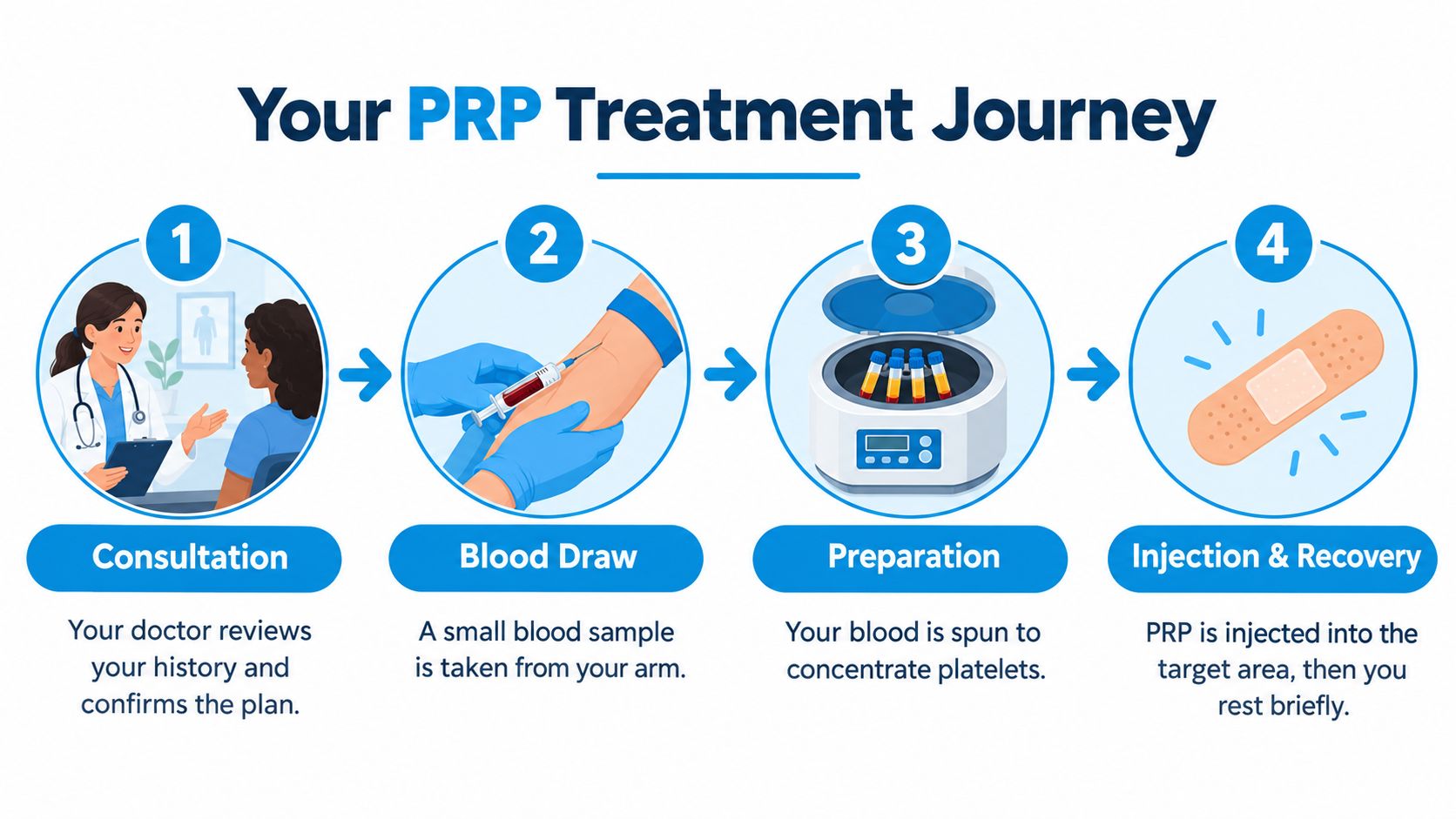
First, your clinician reviews your history, examination findings, prior treatments, and goals. That conversation confirms the target and screens for issues that could change the plan. Bring a medication list, relevant imaging, and a clear description of activities that provoke or relieve your symptoms.
On treatment day, blood is drawn from your arm and processed to concentrate platelets. The prepared PRP is then injected into the target area, which may involve image guidance depending on the site and protocol. You'll want to ask in advance how many injections are planned and how response will be judged between visits.
- Consultation: Diagnosis, goals, medications, and risks are reviewed.
- Blood draw and preparation: Your sample is processed using a documented protocol.
- Injection: PRP is delivered to the confirmed target tissue.
- Reassessment: Pain and function are measured against your starting point.
Recovery and Measuring Response
Temporary soreness or swelling can occur after an injection, and your clinician should explain activity guidance and warning signs before you leave. Detailed information about platelet rich plasma side effects and safety considerations can help you prepare questions for that discussion. Don't drive your recovery plan from another patient's experience, because target tissue and protocol differ.
Follow up should use validated pain and function scales, not memory alone. Achilles tendinopathy research illustrates why. A 2025 systematic review and meta analysis reported a pooled visual analog scale pain score of 71.24, with a 95% confidence interval of 53.06 to 89.42, and VISA-A functional outcomes ranging from 35.10 to 86.80 across studies, as summarized in a systematic review of PRP for chronic Achilles tendinopathy.
That wide range doesn't mean measurement is pointless. It shows protocols, severity, and patient characteristics varied, so Scottsdale and Phoenix patients need individualized evaluation rather than assuming one injection protocol fits every Achilles problem. If agreed goals aren't met, the plan should change rather than repeat automatically.
How Sunridge Medical Approaches PRP Therapy
At Sunridge Medical, PRP isn't presented as a stand alone answer to every painful joint or tendon. The clinic's integrative model starts with why you're hurting, what else is affecting recovery, and whether a regenerative injection fits alongside conventional care. That sequence matters because the same knee pain can arise from very different combinations of structural damage, inflammation, deconditioning, and systemic illness.
Individualized Evaluation Before Treatment
Clinicians review your diagnosis, imaging when available, prior therapies, medications, bleeding risk, and functional goals. They also consider broader contributors that matter in complex chronic disease, including metabolic health, immune conditions, neurologic problems, and concurrent cancer care. If PRP doesn't fit safely or the evidence for your condition is weak, that limitation should be stated plainly.
This approach reflects experience with patients who haven't improved with standard care alone and who need coordinated, multi system assessment. Some arrive from across the greater Phoenix metropolitan area for a second opinion. Others travel to Scottsdale while already receiving care elsewhere, so communication with outside specialists becomes part of responsible planning.
A preparation can't be judged by its label alone. Ask what is in it, where it will be placed, and how success or failure will be decided.
Transparent Preparation and Coordinated Care
Where PRP is considered, the clinical discussion should include preparation details, target accuracy, expected range of outcomes, and how other therapies may complement or conflict with it. Conventional care, rehabilitation, activity modification, and integrative supportive measures aren't competitors in that conversation. They're tools that need sequencing based on your condition and goals.
That distinction separates an integrative medical evaluation from a generic wellness visit. The goal isn't to sell an injection. It's to determine whether PRP offers a reasonable, evidence informed option for your confirmed problem, and to define in advance what improvement would justify continuing.
Patients with cancer, autoimmune disease, Lyme and tick borne illness, or other complex conditions require particular care. PRP decisions in those settings should account for systemic inflammation, medications, blood counts, and specialist input. A careful no, or a decision to defer, can be as clinically valuable as proceeding.
Next Steps and How to Get Started
Start by writing down your diagnosis, treatments you've already tried, current medications, and the specific activity you want to recover. Bring relevant imaging and records if you have them. Those details let a clinician judge candidacy efficiently instead of guessing from pain location alone.
During an initial consultation, expect discussion of whether PRP is appropriate, what formulation would be used, what outcomes are realistic, and how follow up will be measured. You'll also have a chance to ask how care can be coordinated if you're visiting Scottsdale from elsewhere in Arizona or from out of state.
If you're weighing platelet rich plasma benefits against other options, contact Sunridge Medical in Scottsdale to discuss whether a PRP evaluation is appropriate for your situation. A consultation doesn't commit you to treatment. It gives you a condition specific assessment and a clear explanation of your next options.
Sunridge Medical offers individualized, integrative evaluations for musculoskeletal pain and complex chronic conditions, including assessment of whether platelet rich plasma is a reasonable, evidence informed option for your confirmed diagnosis and goals. If you'd like a clear discussion of candidacy, formulation, risks, and alternatives before deciding on treatment, visit Sunridge Medical to request a consultation.