


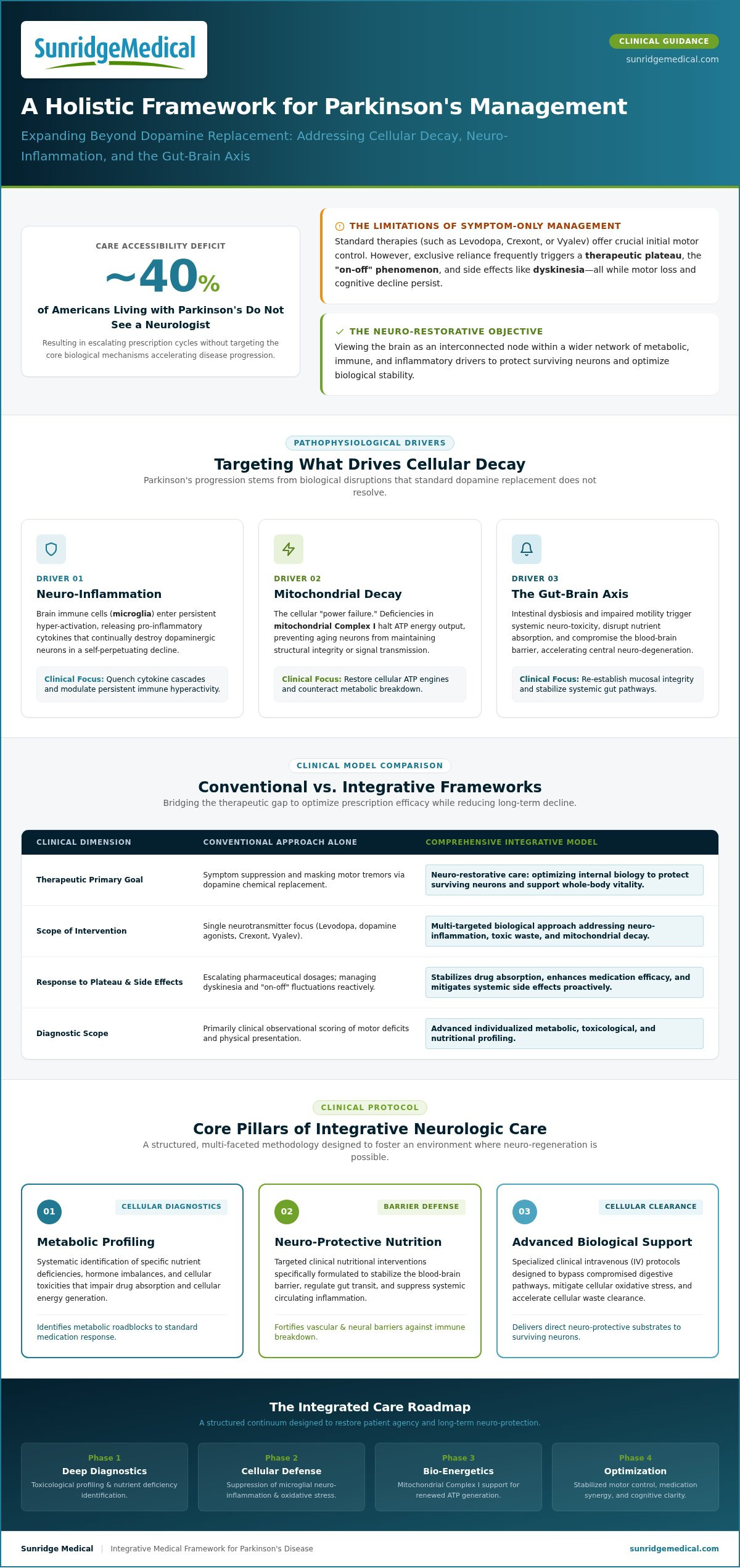
Nearly 40 percent of Americans living with Parkinson’s disease do not see a neurologist, which often leaves them trapped in a cycle of escalating medication without addressing the systemic drivers of their condition. While standard treatments like the recently approved Crexont or Vyalev offer necessary symptom control, many patients find that a purely symptomatic focus fails to stop the progressive loss of motor control or the persistent fog of cognitive decline. You deserve a strategy that looks deeper than the surface. Adopting a holistic approach to managing Parkinson’s symptoms means moving beyond simple dopamine replacement to target neuroinflammation, mitochondrial decay, and the gut-brain axis.
It’s exhausting to feel like a passenger in your own body as tremors and rigidity dictate your daily life. We understand the frustration of managing drug side effects while feeling that the root causes of neuro-degeneration are being ignored. This clinical guide explores how an integrative medical framework can restore your sense of agency. You’ll discover how targeting underlying biological drivers can enhance symptom control, improve clarity, and boost energy levels. We will outline a structured plan for 2026 that supports long-term brain health through advanced diagnostics and neuro-metabolic restoration.
Key Takeaways
- Understand why relying exclusively on dopamine replacement often leads to a therapeutic plateau and how to expand your care strategy beyond standard prescriptions.
- Identify the critical roles of neuro-inflammation and mitochondrial dysfunction in accelerating brain cell decay and the clinical methods used to address them.
- Learn how a holistic approach to managing Parkinson’s symptoms integrates advanced nutritional protocols and specialized IV therapies to enhance daily motor control and energy.
- Discover the benefits of an integrative framework that works alongside conventional treatments to optimize medication efficacy while minimizing systemic side effects.
- Explore the necessity of individualized diagnostic roadmaps that target your specific metabolic and toxicological profile for long-term neuro-protection.
Beyond Dopamine: Redefining the Holistic Approach to Managing Parkinson’s Symptoms
Parkinson’s is often viewed through a narrow lens of dopamine deficiency. This reductionist view overlooks the systemic complexity of neuro-degeneration. A holistic approach to managing Parkinson’s symptoms shifts the focus from merely masking tremors to addressing the person as a whole biological system. We view the brain not in isolation, but as a node in a complex network of metabolic, immune, and inflammatory processes that dictate the speed of disease progression.
Conventional protocols center on dopamine replacement. While this provides initial relief, it often leads to a therapeutic plateau where medication efficacy wanes and side effects like dyskinesia emerge. Our goal is neuro-restorative care. We focus on optimizing the internal environment to support surviving neurons rather than just suppressing the symptoms of those already lost. This shift in perspective allows us to target the underlying mechanisms of decay, such as oxidative stress and cellular toxicity, which are often left unaddressed in standard care models.
The Limitations of a Conventional-Only Strategy
Standard clinical management of Parkinson’s disease relies heavily on levodopa. Over time, patients frequently experience the “on-off” phenomenon, where motor control fluctuates unpredictably between doses. Long-term reliance on high-dose pharmaceuticals can also strain systemic health, affecting gut motility and cognitive clarity. By 2026, the medical community increasingly recognizes that a multi-disciplinary approach is no longer optional; it’s the gold standard for maintaining quality of life as the disease progresses.
Defining the Core Pillars of Integrative Neurologic Care
True progress requires a multi-faceted strategy. We prioritize metabolic support and mitochondrial optimization to address the power failure often seen in aging brain cells. Mitochondria are the engines of your neurons; when they fail, the brain’s ability to process signals and maintain structure diminishes. This isn’t about replacing your current neurologist. It’s about adding a complementary layer of advanced biological treatments. A holistic approach to managing Parkinson’s symptoms includes several key pillars:
- Metabolic Profiling: Identifying nutrient deficiencies and hormonal imbalances that hinder drug absorption and energy production.
- Neuro-Protective Nutrition: Implementing specific dietary interventions that stabilize the blood-brain barrier and reduce systemic inflammation.
- Advanced Biological Support: Utilizing specialized IV protocols designed to reduce oxidative stress and clear cellular waste.
By addressing these pillars, we move from a reactive stance to a proactive one. This methodology creates a sanctuary for the brain, fostering an environment where neuro-regeneration is possible. It’s a path rooted in reliability and thoroughness, designed for those navigating the complexities of chronic neurologic decline.
Addressing Biological Drivers: Neuro-Inflammation and Mitochondrial Health
Chronic neuro-inflammation isn’t just a side effect of Parkinson’s; it’s a primary accelerator of dopaminergic cell death. When the brain’s immune cells, known as microglia, remain in a state of hyper-activation, they release pro-inflammatory cytokines that further damage healthy tissue. This creates a self-perpetuating cycle of decline. By adopting a holistic approach to managing Parkinson’s symptoms, we look beyond the tremors to identify what is triggering this persistent immune response.
Mitochondrial dysfunction represents the “power failure” of the neurologic system. These cellular engines are responsible for producing ATP, the energy currency of the brain. In Parkinson’s, mitochondrial Complex I deficiency often prevents neurons from maintaining their structural integrity or processing signals effectively. Without sufficient energy, the brain cannot repair itself. We prioritize restoring mitochondrial efficiency as a foundational step toward neuro-protection and improved vitality.
The gut-brain axis plays a pivotal role in motor stability and rigidity. A 2024 study published in JAMA Network Open demonstrated that patients with verified mucosal damage in the gastrointestinal tract carry a 76% higher risk of subsequently developing Parkinson’s. This link explains why digestive health often influences the severity of tremors. Many patients find that addressing gut dysbiosis and mucosal permeability through integrative and functional medicine approaches in Parkinson’s care leads to more predictable motor responses and better absorption of essential nutrients.
The Role of Oxidative Stress in Neuro-Degeneration
Free radicals are unstable molecules that strip electrons from healthy cells, causing structural damage within the substantia nigra. Oxidative stress is a primary driver of Parkinson’s progression. To counter this, clinical protocols must include high-potency antioxidant support. This targeted intervention helps neutralize reactive oxygen species before they can compromise delicate neurologic pathways, helping to preserve the neurons you still have.
Environmental Factors and Neurologic Health
Heavy metals and industrial chemicals often act as hidden neurologic triggers. Exposure to pesticides, solvents, or lead can accumulate over decades, burdening the nervous system and exacerbating motor fluctuations. Incorporating detoxification into your plan is essential for long-term stability. If you’ve felt that these external factors have been ignored by traditional providers, exploring environmental illness treatment can provide a necessary layer of clinical clarity. Our team can help you identify these toxic burdens through specialized testing to ensure your path forward is as clear as possible.
Conventional vs. Holistic Frameworks: Bridging the Therapeutic Gap
Standard neurologic care typically focuses on the reactive suppression of symptoms. While this is necessary for immediate relief, it often overlooks the broader physiological landscape. A holistic approach to managing Parkinson’s symptoms emphasizes systemic optimization, shifting the goal from simple maintenance to the active preservation of neurologic function. By 2026, precision medicine has evolved to recognize that no two neurologic journeys are identical. Individualized physician evaluations are critical because they allow us to map the specific metabolic and environmental factors influencing your unique clinical presentation.
The therapeutic gap exists when conventional medicine reaches its limit. Many patients find themselves on a “medication treadmill,” where dosages increase but the quality of life remains stagnant or declines. Bridging this gap requires a framework that addresses the underlying biological drivers we discussed previously, such as mitochondrial health and neuro-inflammation. This comprehensive lens ensures that every aspect of your biology is working in harmony to support your recovery.
Synergy in Action: How Integrative Care Supports Standard Meds
Integrative care isn’t a replacement for traditional pharmaceuticals; it’s a force multiplier. Many patients struggle with the “wearing-off” effect of standard medications, which can often be mitigated through metabolic support that stabilizes drug absorption. We also address debilitating non-motor symptoms like cognitive fog and persistent fatigue by incorporating hormone optimization to support brain health and cellular resilience. Utilizing evidence-based medication-free strategies to manage Parkinson’s symptoms, such as targeted movement and specialized nutritional support, provides a stable foundation. This synergy allows conventional medications to perform more effectively, often at more manageable dosages with fewer side effects.
Evaluating the Evidence for Holistic Protocols
Standardized care protocols often fail complex neurologic patients because they ignore the bio-individual variables that drive disease. Clinical observations consistently show that when we address the person as a whole biological system, the results are more durable. Research-based alternative methodologies provide a necessary bridge for those who have plateaued in conventional systems. We focus on clinical outcomes that prioritize your daily experience, from improved motor control to restored energy levels. This approach isn’t just about feeling better; it’s about establishing a reliable, scientific roadmap for long-term brain health and stability.
Key Components of a Comprehensive Holistic Symptom Management Plan
Moving from clinical philosophy to practical application requires a structured roadmap. A holistic approach to managing Parkinson’s symptoms isn’t just about adding supplements; it’s about a coordinated effort to stabilize the nervous system. We integrate physical rehabilitation, such as high-cadence cycling or specialized boxing, with cognitive training to drive neuroplasticity. We also address the physiological impact of stress. High cortisol levels directly worsen motor fluctuations and rigidity. By implementing stress-reduction techniques like vagus nerve stimulation, we help calm the autonomic nervous system and address daily symptom control.
Cognitive rehabilitation is equally vital. We use targeted exercises to maintain executive function and memory, which are often the first areas to plateau under standard care. This multi-layered strategy ensures that we aren’t just reacting to the disease, but actively building a more resilient biology. For families seeking specialized disability support to navigate the daily challenges of the condition, learn more about how tailored programs can complement a clinical roadmap. Every component of the plan is designed to work in synergy, creating a foundation for long-term stability and a higher quality of life.
Advanced IV and Nutritional Infusions
Many Parkinson’s patients suffer from impaired gut motility, which makes oral absorption of vitamins and medications highly inconsistent. We solve this by utilizing IV therapy for neurologic conditions to bypass the digestive tract entirely. This delivery method ensures 100 percent nutrient bioavailability, allowing high-dose antioxidants and neuro-supportive compounds to reach the brain immediately. Specific infusions are clinically applied to neutralize oxidative stress and support the body’s natural detoxification pathways. These protocols are customized based on your specific toxicological profile to clear the biological waste that hinders neural communication.
Targeted Nutrition and Supplementation
Dietary choices are a powerful tool for neuro-protection. We often recommend nutritional protocols that emphasize mitochondrial efficiency, such as a modified ketogenic diet. By shifting the brain’s primary fuel source from glucose to ketones, we help bypass the energy failures seen in damaged neurons. We also prioritize specific phytonutrients that are capable of crossing the blood-brain barrier to provide direct support. However, generic advice is rarely effective for complex conditions. We use metabolic testing to individualize your diet, ensuring you receive the exact ratios of fats, proteins, and micronutrients your body needs to thrive.
If you’re ready to move beyond standardized care and build a protocol tailored to your unique biology, we invite you to consult with our clinical team to discuss your personalized path forward.
The Sunridge Medical Approach: Individualized Care for Parkinson’s
Every patient’s biology is a unique puzzle that requires a sophisticated diagnostic lens. A holistic approach to managing Parkinson’s symptoms requires more than a brief consultation; it demands a deep dive into the specific biological drivers of your condition. We begin with a comprehensive neurologic evaluation that examines heavy metal accumulation, gut dysbiosis, and chronic immune burdens. This diagnostic depth allows our team to move beyond the standardized model and address the specific reasons why your symptoms may be progressing despite conventional intervention.
We develop individualized protocols for complex chronic diseases by synthesizing these diverse data points into a cohesive, physician-led treatment plan. This isn’t just about masking a tremor or reducing rigidity for a few hours. It’s about optimizing the entire physiological environment to support long-term brain health and cellular resilience. Our role as a scientific guide ensures that your care is rooted in reliability and thoroughness, providing a steady hand as you navigate the complexities of neurologic decline.
A Legacy of Advanced Alternative Medicine
Founded in 2003, Sunridge Medical has spent over 20 years refining the integration of advanced alternative medicine with neurological support. We don’t believe in “packaged” care; instead, our clinical team acts as a dedicated advocate, constantly monitoring your neurologic progress and adjusting your protocol based on objective data. This long-standing commitment to the Alternative Health Medicine Pillar ensures you aren’t just receiving a treatment, but a specialized sanctuary for recovery. We combine the latest research with a compassionate, patient-centered focus to help you regain the quality of life you deserve.
Taking Control of Your Neurologic Journey
Feeling stuck in a traditional system that only offers escalating medication doses can be isolating. We believe in empowering you through education and advanced clinical options that bridge the gap between standard care and leading-edge research. Seeking a second opinion in integrative medicine is often the first step toward breaking through a therapeutic plateau and finding a more sustainable path forward. It’s time to transition from a passive passenger to an active participant in your health journey.
Our team is ready to help you explore a comprehensive roadmap tailored to your life. We invite you to schedule your clinical consultation with Sunridge Medical today or call our 1-800 number to speak with a specialist. Taking this step allows us to begin the process of restoring your well-being through a more comprehensive, holistic approach to managing Parkinson’s symptoms.
Empowering Your Path Toward Neurologic Stability
Managing Parkinson’s requires a strategic shift from passive symptom suppression to active biological restoration. We’ve explored how addressing neuro-inflammation and mitochondrial decay can transform your daily experience and motor control. A holistic approach to managing Parkinson’s symptoms provides the comprehensive framework necessary to bridge the gap between conventional pharmaceutical care and long-term brain health. By targeting the root mechanisms of cellular degeneration, you can regain a sense of agency and cognitive clarity.
Sunridge Medical has been a pioneering expert in this field since 2003. We are specialists in complex neurologic and chronic diseases, offering individualized physician-led treatment plans that honor your unique biological puzzle. You don’t have to navigate this journey alone or settle for a plateau in your progress. Our team acts as a dedicated scientific guide, providing the specialized attention and advanced protocols required for meaningful change and the restoration of well-being.
Speak with a Specialist at Sunridge Medical: 1-800-XXX-XXXX
It’s time to reclaim your quality of life with confidence and calm determination. We look forward to supporting you on your journey toward a healthier, more vibrant future.
Frequently Asked Questions
What is a holistic approach to managing Parkinson’s symptoms?
A holistic approach to managing Parkinson’s symptoms is a comprehensive medical framework that addresses the entire biological system rather than just dopamine levels. This methodology targets the underlying mechanisms of neuro-degeneration, including oxidative stress and metabolic failure. By integrating advanced diagnostics with personalized protocols, we aim to enhance quality of life and restore cellular resilience. It represents a departure from standardized care, focusing instead on the unique physiological drivers of each individual condition.
Can holistic therapies be used alongside my current Parkinson’s medication?
Yes, integrative protocols are designed to complement conventional pharmaceuticals like levodopa. These therapies often act as a force multiplier by optimizing the internal environment, which can help stabilize drug absorption and reduce the “wearing-off” effect. For those exploring integrated homeopathic care as a complementary tool, advancehomeopathy.ae provides specialized resources to support this transition. Our clinical team monitors your progress to ensure all treatments work in synergy. This collaborative strategy allows for a more stable neurologic journey while maintaining the essential support provided by your standard neurologic care.
How does nutrition impact the progression of Parkinson’s disease?
Nutrition serves as a critical driver of neuro-protection by influencing mitochondrial efficiency and systemic inflammation. Specific dietary interventions help stabilize the blood-brain barrier and provide the essential precursors needed for neural repair. For example, a 2024 study in JAMA Network Open highlighted the link between gut health and a 76 percent higher risk of Parkinson’s. Addressing mucosal integrity through targeted nutrition is foundational for slowing the rate of neuronal decay and improving motor stability.
Are IV therapies effective for managing neurologic symptoms?
Intravenous protocols are highly effective because they bypass the gastrointestinal tract to ensure 100 percent nutrient bioavailability. Many Parkinson’s patients suffer from impaired gut motility, which makes oral supplementation inconsistent. By delivering high-potency antioxidants and neuro-supportive compounds directly into the bloodstream, we can neutralize oxidative stress more efficiently. These customized infusions help clear cellular waste and support the metabolic needs of surviving neurons, providing a layer of care that oral methods cannot match.
What role does neuro-inflammation play in Parkinson’s?
Neuro-inflammation is a primary accelerator of dopaminergic cell death in the substantia nigra. When microglia remain hyper-activated, they release pro-inflammatory cytokines that damage healthy brain tissue, creating a self-perpetuating cycle of decline. A holistic approach to managing Parkinson’s symptoms prioritizes cooling this inflammatory response. By identifying and removing the specific triggers of this immune activation, we help create a sanctuary for the brain where neuro-regeneration and long-term stability become possible.
Is there a specific diet recommended for Parkinson’s patients in 2026?
Clinical guidelines in 2026 increasingly favor neuro-metabolic diets like the modified ketogenic or MIND protocols. These diets emphasize high-quality fats and phytonutrients that support mitochondrial function and reduce oxidative damage. We don’t believe in “packaged” dietary advice; instead, we use metabolic testing to individualize your nutritional plan. This ensures the ratios of macronutrients support your energy production and drug metabolism, making your diet a therapeutic tool for brain health.
How does environmental detoxification help with neurologic conditions?
Environmental detoxification removes the hidden toxic burdens, such as heavy metals and industrial chemicals, that exacerbate motor fluctuations. These substances accumulate in neurologic tissue over decades, hindering neural communication and accelerating cell death. By identifying these triggers through specialized testing, we can implement targeted protocols to clear these biological obstacles. Removing these systemic stressors allows the nervous system to function with greater clarity and reduces the overall burden on your biological pathways.
What should I expect during a holistic neurologic consultation?
You should expect a deep, comprehensive evaluation that looks far beyond standard motor testing. Our physicians review your complete medical history, including environmental exposures, gut health, and metabolic markers. This initial consultation serves as a diagnostic roadmap to identify the specific drivers of your neuro-degeneration. From there, we develop an individualized treatment plan tailored to your unique biology, moving from high-level clinical concepts to practical, supportive next steps for your recovery journey.