


The standard medical dismissal of your persistent brain fog and “wired but tired” nights doesn’t change the reality of your physical exhaustion. You know your body is signaling a deeper imbalance, yet conventional tests often return “normal” results while you struggle with relentless salt cravings and a cognitive haze that won’t lift. This disconnect isn’t in your head; it’s a measurable dysregulation of your neuroendocrine system. A truly effective adrenal fatigue recovery plan must move beyond basic supplementation to address the underlying Hypothalamic-Pituitary-Adrenal (HPA) axis dysfunction that governs your stress response.
We understand the frustration of being told to simply “stress less” when your biology no longer supports that command. You deserve a sophisticated clinical roadmap that validates your symptoms through precision diagnostics and advanced biological support. In this guide, you’ll discover how to recalibrate your internal systems using research-based protocols that prioritize long-term restoration over temporary fixes. We will examine the transition from basic lifestyle adjustments to specialized therapies designed to restore your vitality and cognitive clarity.
Key Takeaways
- Reframe the concept of “adrenal fatigue” as a measurable HPA axis dysregulation to better understand the communication breakdown in your stress response system.
- Utilize precision diagnostics, such as the four-point diurnal cortisol curve, to establish a scientifically grounded adrenal fatigue recovery plan tailored to your unique biology.
- Implement essential biological foundations through targeted nutritional strategies that prioritize blood sugar stability and cellular electrolyte balance.
- Explore advanced clinical interventions, including specialized IV protocols and hormone optimization, for deep cellular restoration when lifestyle changes are insufficient.
- Transition from reactive recovery to long-term resilience by maintaining wellness through periodic lab re-testing and expert clinical oversight.
Understanding Adrenal Fatigue as HPA Axis Dysfunction
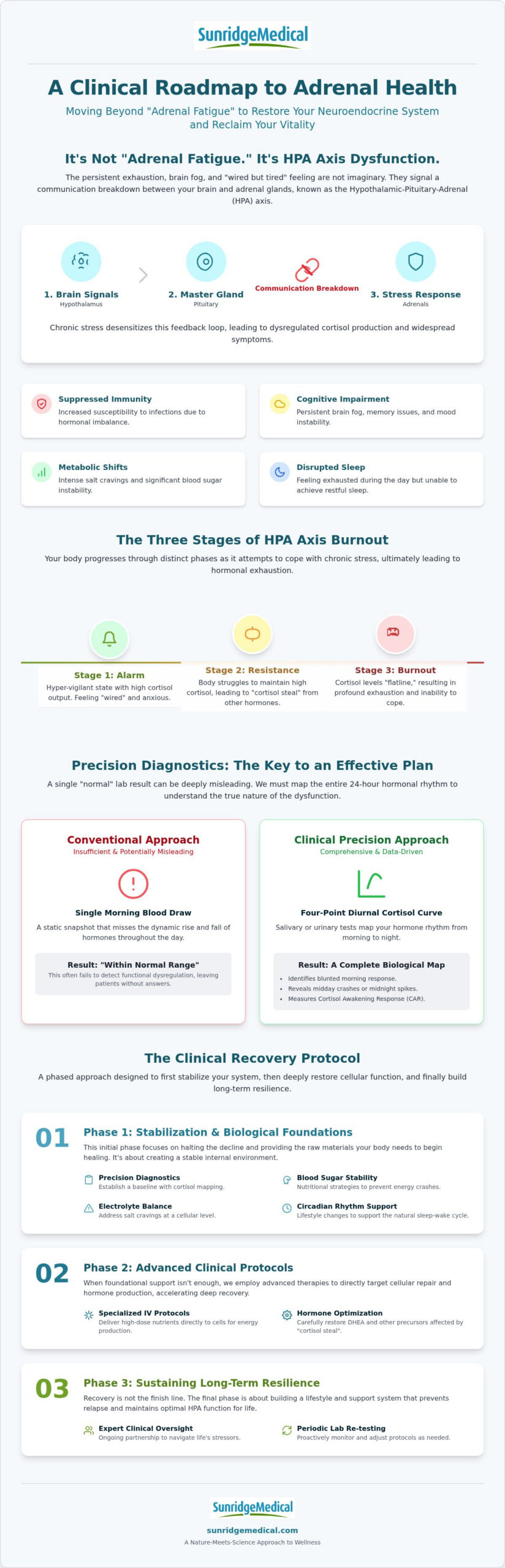
The term “adrenal fatigue” is frequently used to describe a cluster of symptoms, yet it’s more accurately defined as a functional dysregulation of the Hypothalamic-Pituitary-Adrenal (HPA) axis. Unlike primary adrenal failure, where the glands are physically incapable of producing hormones, HPA dysfunction is a communication breakdown between the brain and the endocrine system. When chronic stressors persist, the feedback loop that regulates your stress response becomes desensitized. Initiating a structured adrenal fatigue recovery plan begins with a precise understanding of how this internal signaling system fails. While Understanding Adrenal Fatigue requires acknowledging its status as a functional rather than pathological diagnosis, the physical impact is undeniably real.
Conventional medical models often overlook this middle ground, focusing primarily on extreme pathologies like Addison’s Disease. This leaves a significant gap for patients who aren’t in organ failure but are experiencing profound systemic consequences. Untreated cortisol dysregulation can lead to:
- Suppressed immune surveillance and increased susceptibility to infection.
- Neurologic symptoms such as cognitive impairment, brain fog, and mood instability.
- Metabolic shifts that trigger persistent salt cravings and blood sugar instability.
- Disrupted sleep-wake cycles that leave you feeling exhausted yet unable to rest.
The Role of Cortisol and DHEA
Cortisol and DHEA function in a delicate balance of catabolic and anabolic activity. While cortisol helps you mobilize energy for immediate threats, DHEA facilitates repair and growth. Under chronic stress, the body may engage in the “cortisol steal,” diverting hormonal precursors away from sex hormones to prioritize cortisol production. This shift marks the transition through three distinct stages: Alarm (hyper-vigilance), Resistance (struggling to maintain output), and Burnout (cortisol flatlining). A successful adrenal fatigue recovery plan must address which stage your body is currently navigating.
Why “Normal” Labs Leave Patients Feeling Empty
Many patients feel frustrated when standard morning blood cortisol tests return “normal” results. These snapshots fail to capture the diurnal rhythm, the rise and fall of hormones throughout the day. You might have a normal morning level but experience a premature crash or a midnight spike. Being “medically cleared” while feeling physically depleted is a common experience, but it doesn’t mean your symptoms are imaginary. It simply means the testing was not sensitive enough to detect the functional HPA dysfunction occurring beneath the surface.
Clinical Diagnostics: Precision Testing for an Accurate Recovery Plan
Effective restoration is impossible without a precise biological map. Before initiating any adrenal fatigue recovery plan, we must move beyond the guesswork of symptoms and enter the realm of data-driven diagnostics. While conventional medicine typically focuses on the binary presence or absence of adrenal insufficiency, a clinical approach identifies the nuanced dysregulation that precedes organ failure. This requires looking at the diurnal cortisol curve, a 24-hour cycle that reveals exactly when your system is overproducing or failing to meet demand.
A single morning blood draw is insufficient for this level of detail. It’s a static snapshot of a dynamic process. Instead, we utilize four-point testing to track your hormonal rhythm from the moment you wake until you prepare for sleep. This level of precision allows us to identify the specific root of your exhaustion, whether it’s a blunted morning response or a midnight spike that prevents restorative rest. Identifying these patterns is the only way to build a strategy that works with your biology rather than against it.
Salivary and Urinary Cortisol Mapping
Saliva testing is the preferred method for assessing free, bioavailable cortisol throughout the day. We pay specific attention to the Cortisol Awakening Response (CAR), which serves as a clinical marker for HPA axis resilience. A healthy CAR represents your body’s ability to “power up” for the day’s demands. To gain an even deeper perspective, we often incorporate urinary metabolite testing. This doesn’t just show what’s currently circulating; it reveals how your body is processing and clearing these hormones, providing a complete picture of total adrenal output.
Comprehensive Hormone and Metabolic Panels
Adrenal recovery doesn’t happen in a vacuum. The HPA axis is intricately linked to the thyroid and sex hormone production. In many cases, successful restoration requires integrated hormone therapy for autoimmune disease or other chronic conditions to reduce the overall burden on the system. We also screen for nutrient deficiencies and metabolic markers, such as insulin sensitivity and systemic inflammation. When the body is in a state of high alert due to blood sugar instability or inflammatory triggers, the adrenals cannot heal. Identifying these variables is the first step toward a sustainable recovery. If you’re ready to move beyond standard labs, a comprehensive clinical evaluation can provide the clarity you’ve been seeking.
Phase 1 of the Recovery Plan: Stabilization and Biological Foundations
The first stage of a clinical adrenal fatigue recovery plan is stabilization. We don’t jump into advanced therapies until the body’s basic biological needs are met. This phase focuses on removing external stressors and replenishing the cellular nutrients required for hormone synthesis. It’s a period of calm determination where we stop the “bleeding” of energy and start the rebuilding process. By establishing these foundations, we create a safe environment for the HPA axis to begin its slow recalibration.
Blood sugar stability is the cornerstone of HPA axis restoration. Skipping breakfast is a primary trigger for cortisol spikes, as the body must overcompensate to maintain glucose levels. According to the Hormone Health Network, the symptoms often labeled as fatigue are non-specific, but clinically, we see that high-quality proteins and healthy fats at every meal prevent the metabolic crashes that strain the adrenals. We specifically monitor the ratio of sodium to potassium. Patients often experience intense salt cravings because the body is struggling to maintain fluid balance, making electrolyte replenishment a priority.
Nutritional Support and Blood Sugar Management
Precision nutrition in Phase 1 isn’t about calorie restriction; it’s about hormonal signaling. We prioritize a high-protein breakfast within an hour of waking to blunt the morning cortisol surge. Including healthy fats, such as avocado or olive oil, provides the cholesterol backbone necessary for steroid hormone production. We also emphasize the importance of sea salt and potassium-rich foods to support the adrenal cortex, which often struggles to regulate minerals when under chronic strain.
Circadian Rhythm Reset
Restoring the sleep-wake cycle is essential for addressing the common 3 AM wake-up call. This phenomenon usually occurs when blood sugar drops and the body releases a surge of cortisol to compensate, jolting you awake. To fix this, we implement strict sleep hygiene that includes eliminating blue light exposure two hours before bed to support natural melatonin. Morning sunlight is equally vital; it signals the brain to begin the natural rise of cortisol, helping to reset the HPA axis. Adaptogenic herbs can also be used as a biological buffer, smoothing out the stress response throughout the day.
Finally, we address physical activity. High-intensity interval training or heavy cardio can be counterproductive during Phase 1. These activities demand a cortisol output that your system cannot currently sustain. We transition patients toward restorative movement, such as walking or gentle stretching, which provides the benefits of circulation without the metabolic cost of exhaustion. This shift allows the body to redirect its limited resources toward internal repair rather than external performance.
Phase 2: Advanced Clinical Protocols for Deep Cellular Recovery
While the stabilization efforts of Phase 1 are vital for creating a healing environment, many patients find that dietary shifts and improved sleep hygiene only take them so far. When the HPA axis is deeply dysregulated, the body may lack the cellular momentum required to initiate its own repair. This is the point where a sophisticated adrenal fatigue recovery plan must transition from foundational lifestyle support to advanced biological interventions. These protocols target the underlying mechanisms of exhaustion at the mitochondrial and hormonal levels, providing the high-impact support necessary for profound restoration.
Clinical intervention is required when the patient remains “stuck” despite their best efforts to manage stress. At this stage, we focus on recalibrating the system through precision therapies that go beyond what can be achieved through oral supplementation alone. This level of care requires a physician-led integrative medicine for chronic illness approach, ensuring that every protocol is tailored to the individual’s unique biochemical signature.
Targeted Intravenous (IV) Nutritional Therapy
Chronic stress frequently compromises digestive function, leading to a cycle of malabsorption where the body cannot access the nutrients it needs most. Intravenous protocols bypass the gastrointestinal tract entirely, delivering high-dose nutrients directly into the systemic circulation. By saturating the adrenal enzyme pathways with Vitamin C, B-complex vitamins, and Magnesium, we can jumpstart cellular energy production. This is particularly effective as IV therapy for autoimmune disease and chronic fatigue provides a concentration of nutrients that oral dosing simply cannot achieve.
Hormone Optimization and BHRT
Restoring the HPA axis often requires addressing the depletion of the “hormonal reserve.” When the body has prioritized cortisol production for years, levels of DHEA, pregnenolone, and progesterone typically plummet. Bio-identical Hormone Replacement Therapy (BHRT) allows for the precise replenishment of these vital precursors. This is not a standardized application; it requires meticulous, individualized dosing based on the precision lab results discussed in previous sections. We carefully monitor the HPA axis throughout the optimization process to ensure the body is returning to a state of equilibrium rather than becoming dependent on external support.
We also utilize oxidative therapies to enhance mitochondrial efficiency. These treatments improve how your cells utilize oxygen, effectively “recharging” the metabolic furnace that has been dampened by chronic burnout. This multi-faceted approach ensures that we are not just masking symptoms but are actively restoring the biological machinery of your stress response. To explore how these advanced protocols can be integrated into your personalized journey, contact Sunridge Medical for a comprehensive clinical evaluation.
Sustaining Resilience: Long-Term Maintenance and Relapse Prevention
Recovery is a significant milestone, but resilience is the ultimate destination. Once your energy levels stabilize and cognitive clarity returns, the focus of your adrenal fatigue recovery plan shifts from active repair to long-term maintenance. Resilience isn’t just the absence of symptoms. It’s the biological capacity to encounter life’s inevitable stressors without triggering a systemic collapse of the HPA axis. This transition requires moving from reactive treatment to a proactive model of physiological management.
Sustaining these gains depends on your ability to recognize the subtle language of your body. Relapse often begins with small, familiar signals: a slight shift in sleep quality, the return of afternoon sugar cravings, or a subtle increase in irritability. Ongoing monitoring through periodic lab re-testing ensures that we can identify these shifts before they manifest as full-scale burnout. It’s much easier to adjust a protocol in its early stages than it is to rebuild a depleted system from scratch.
Building Stress Resilience
True resilience involves both emotional regulation and targeted biological buffering. We encourage our patients to view their health as an ongoing clinical partnership rather than a one-time fix. This approach might involve periodic maintenance IV sessions to replenish micronutrients during high-stress seasons or minor hormone adjustments to maintain an optimal equilibrium. By staying ahead of the curve, you prevent the HPA axis from becoming desensitized again. This proactive stance transforms you from a patient seeking help into an advocate for your own long-term vitality.
Your Next Steps Toward Recovery
The complexity of HPA dysfunction often mirrors other chronic conditions that require a multi-faceted lens. At Sunridge Medical, we apply the same level of precision and depth to adrenal health as we do to our integrative cancer treatment by stage and chronic illness frameworks. We don’t see your symptoms as disparate complaints; we see them as interconnected signals of a system out of balance. This perspective allows us to consolidate your experience into a single, cohesive roadmap for restoration.
A comprehensive physician evaluation is the only way to consolidate these signals into a clear path forward. You don’t have to navigate this journey alone or settle for “normal” labs that don’t reflect how you actually feel. If you’re ready to reclaim your vitality and build a foundation of lasting resilience, contact Sunridge Medical at 1-800-923-7878 to schedule your professional clinical consultation and begin your personalized adrenal fatigue recovery plan.
Reclaiming Your Vitality Through Clinical Precision
Reclaiming your energy is not a matter of willpower; it’s a process of biological recalibration. True restoration begins by shifting the focus from vague symptoms to the precise mechanics of HPA axis dysregulation. By moving through a structured adrenal fatigue recovery plan that prioritizes stabilization before introducing advanced cellular protocols, you can finally bridge the gap between being “medically cleared” by standard labs and actually feeling well. This journey requires a departure from standardized care in favor of a methodology that respects your unique biochemical signature.
Sunridge Medical has provided a sanctuary for patients since 2003, offering over two decades of integrative medical expertise. Our approach goes beyond the ordinary, utilizing comprehensive physician evaluations that look deeper than standard laboratory ranges to identify the root of your exhaustion. We provide customized IV protocols and hormone optimization tailored to your specific needs, ensuring your path to resilience is as individual as your DNA. Schedule your clinical evaluation with Sunridge Medical today and partner with a team dedicated to your long-term restoration. You possess the capacity for progress, and we provide the steady hand to guide you there.
Frequently Asked Questions
How long does a typical adrenal fatigue recovery plan take to show results?
Initial stabilization often takes four to six weeks, but full HPA restoration typically requires six to twelve months of consistent intervention. This timeline depends on the severity of your dysregulation and the precision of your adrenal fatigue recovery plan. We focus on incremental progress, moving from cellular replenishment to systemic resilience. Patience is a clinical requirement, as the neuroendocrine system requires time to desensitize and rebuild its natural feedback loops.
Can I recover from adrenal fatigue while still working a high-stress job?
It is possible to recover while working, provided you implement biological buffers to manage the impact of that stress. While we can’t always change your environment, we can change how your body responds to it. This involves using adaptogens, precision nutrition, and clinical IV protocols to protect the HPA axis from further strain. The goal is to build enough physiological resilience so your career no longer depletes your vital hormonal reserves.
Is caffeine allowed during an adrenal recovery plan?
We generally recommend a strategic reduction or temporary elimination of caffeine during the active recovery phase. Caffeine forces the adrenal glands to release cortisol and adrenaline when the system is already struggling, which can lead to further depletion. If total elimination is too disruptive, we suggest small amounts of green tea, which contains L-theanine to buffer the stimulatory effect. Once the HPA axis is stabilized, many patients can reintroduce moderate amounts.
What are the most effective supplements for HPA axis support?
The most effective support involves a combination of adaptogenic herbs and foundational nutrients tailored to your lab results. Ashwagandha and Rhodiola are frequently used to modulate the stress response, while high doses of Vitamin C and B-complex vitamins support the enzymatic pathways within the adrenal cortex. However, these should always be part of a physician-led adrenal fatigue recovery plan to ensure the dosages match your specific diagnostic markers and don’t cause further imbalance.
Why did my primary care doctor say adrenal fatigue isn’t real?
Conventional medicine typically focuses on binary pathologies like Addison’s disease, which is the total failure of the adrenal glands. Because “adrenal fatigue” is a functional dysregulation of the HPA axis rather than an organ failure, it doesn’t fit the standard diagnostic criteria used in many primary care settings. We recognize this as a communication breakdown between the brain and the endocrine system, a condition that requires advanced, integrative diagnostics to identify correctly.
Can adrenal fatigue cause weight gain even with a clean diet?
Persistent cortisol dysregulation often leads to metabolic resistance and abdominal weight gain regardless of caloric intake. When cortisol is chronically elevated, it signals the body to store fat for a perceived ongoing emergency. Additionally, the resulting insulin resistance can make weight loss nearly impossible despite a clean diet. Restoring the HPA axis helps normalize these metabolic signals, allowing the body to release stored fat once the perceived threat has subsided.
What is the difference between burnout and clinical adrenal exhaustion?
Burnout is often used to describe the psychological and emotional state of exhaustion, whereas clinical adrenal exhaustion refers to the measurable physiological depletion of the HPA axis. In burnout, you may still have some hormonal reserve, but in exhaustion, your cortisol output has effectively flatlined. Both require intervention, but clinical exhaustion demands more intensive biological support, such as BHRT or specialized IV protocols, to restore the body’s fundamental energy production.
How often should I re-test my cortisol levels during recovery?
We typically recommend re-testing every three to four months during the active phase of your recovery. This frequency allows us to monitor how your body is responding to the protocols and make necessary adjustments to your hormone or nutrient dosages. Once stability is achieved and you move into the resilience phase, annual or bi-annual testing is usually sufficient to ensure your system remains in equilibrium and to prevent potential relapses during high-stress periods.