
For many patients, the standard “one size fits all” oncology model feels less like a healing journey and more like a battle where the body is often collateral damage. You’ve likely felt the frustration of being treated as a diagnosis rather than a person, or perhaps you’re exhausted by the debilitating toxicity of traditional protocols. It’s a valid concern that while the tumor is being targeted, the underlying health of your biological terrain is being overlooked. This is why integrative oncology has become a vital medical bridge, moving beyond simple supportive care to optimize how your body responds to treatment and recovery.
You deserve a treatment plan that targets the disease without sacrificing your quality of life. In this 2026 medical reference, you’ll discover how integrative oncology bridges the gap between conventional treatments and advanced alternative protocols to create a more effective, individualized path to recovery. We’ll preview the latest evidence-based strategies for reducing toxicity, accessing therapies beyond the local hospital system, and finally addressing the root causes of illness with clinical precision.
Key Takeaways
- Learn how integrative oncology functions as a physician-led synthesis of conventional standards and advanced research-based alternatives to treat the whole person.
- Discover the clinical role of specialized IV and injection therapies that go beyond basic nutrition to target the underlying mechanisms of illness.
- Understand the critical distinctions between conventional, alternative, and integrative models to ensure your care remains medically supervised and effective.
- Explore the structured path from a comprehensive physician evaluation to a customized treatment plan designed for your unique biological terrain.
- Gain insight into how research-based protocols can help reduce treatment toxicity and improve your clinical outcomes, even in advanced stages of care.
Defining Integrative Oncology: Beyond Supportive Wellness
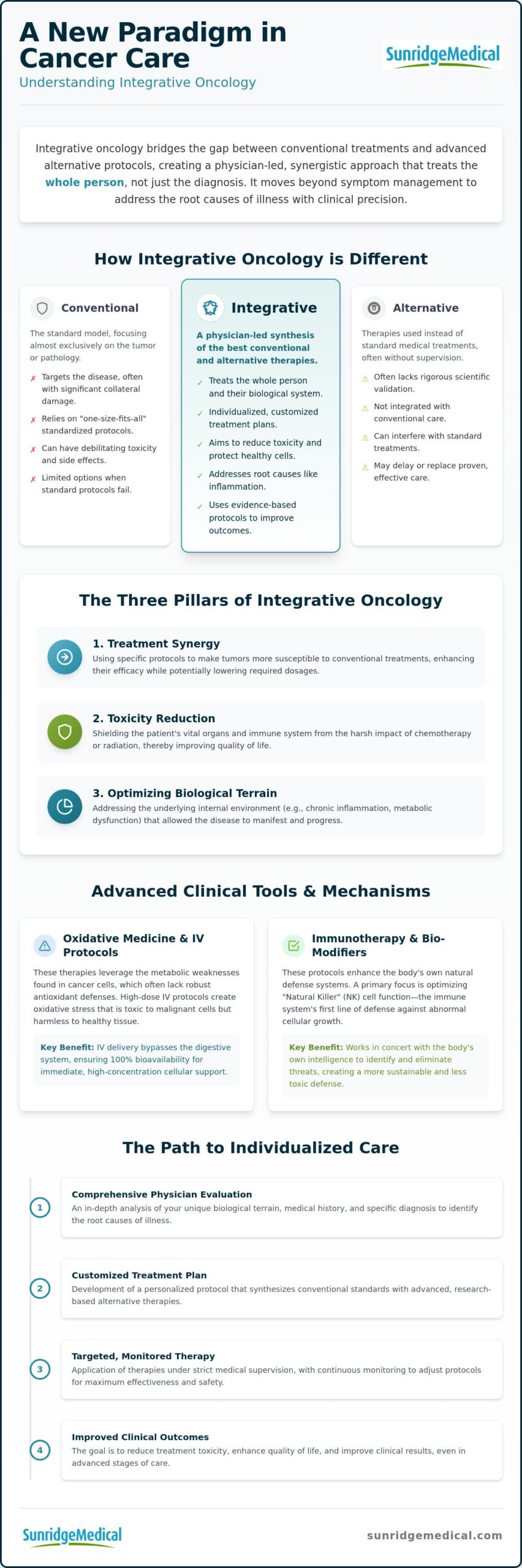
Integrative oncology represents a paradigm shift in how we approach malignant disease. It isn’t merely the addition of wellness practices to a chemotherapy regimen. Instead, it’s a physician-led synthesis that bridges the gap between established conventional standards and advanced, research-based alternative protocols. While traditional models focus almost exclusively on the pathology of the tumor, this approach prioritizes the “whole person.” This holistic philosophy is also championed by Dr.Vaishali Nore’s Homeopathy & Wellness Clinic, which treats the patient as a complex biological system rather than a set of diagnostic codes.
Understanding the nuances of integrative vs. conventional vs. alternative care is essential for any patient navigating a complex diagnosis. Many hospitals offer “complementary” care, which provides supportive measures like nutrition counseling or mindfulness to manage side effects. Integrative oncology goes deeper. It seeks a synergistic relationship where alternative protocols actually enhance the efficacy of conventional treatments while simultaneously protecting the body’s healthy cells. By 2026, the medical community has increasingly recognized that biological individualization is superior to the “one-size-fits-all” standardized protocols of the past.
The Core Pillars of an Integrative Approach
The success of this methodology rests on three critical foundations. First is synergy; we use specific protocols to make the tumor more susceptible to treatment. Second is toxicity reduction. We aim to shield the patient’s vital organs and immune system from the harsh impact of radiation or chemotherapy. Third is the biological terrain. We address the underlying internal environment, such as chronic inflammation or metabolic dysfunction, that allowed the disease to manifest in the first place. This holistic view of the body is why patients often coordinate with specialists like Hour Dental to ensure that oral health is supporting their overall recovery. This creates a multi-faceted defense that targets the illness from every angle.
Why Standard of Care Often Falls Short for Advanced Cases
For patients facing stage 5 cancer or complex stage 4 diagnoses, the limitations of standardized care become painfully clear. Traditional oncology often operates as a “revolving door” of escalating dosages and diminishing returns. When the standard protocol fails, patients are often told there are no more options. An integrative specialist acts as a scientific guide, using clinical authority to navigate advanced therapies that local hospitals may not offer. We believe that a more comprehensive lens is necessary when traditional options are exhausted, providing a structured path forward for those who feel overlooked by the system. Men facing this challenge with hormone-sensitive malignancies, for example, can benefit from exploring integrative treatment for prostate cancer as a research-based alternative to aggressive conventional intervention.
Advanced Mechanisms: The Clinical Tools of Integrative Oncology
While many institutions limit their integrative services to acupuncture or yoga, true integrative oncology utilizes advanced medical protocols designed to alter the biological environment of the tumor. These aren’t lifestyle suggestions. They’re targeted, research-based interventions. By focusing on patient-centered integrative care, we can deploy clinical tools that address the disease’s metabolic and immunological foundations with precision and clinical authority. This comprehensive approach also recognizes the importance of maintaining one’s physical confidence; for those interested in medical-grade aesthetic support, you can learn more about Organic Skin & Body Med Spa and their holistic wellness treatments.
Oxidative Medicine and IV Protocols
Oxidative medicine uses specific biochemical triggers to target metabolic weaknesses within malignant cells. Cancer cells often lack the robust antioxidant defenses found in healthy tissue, making them vulnerable to certain oxidative stresses. High-dose intravenous protocols leverage this vulnerability, creating a therapeutic environment that challenges the tumor while leaving healthy cells unharmed. IV nutritional therapy serves as a critical delivery system, bypassing the limitations of the digestive tract to provide immediate, high-concentration cellular support. This method ensures that the body maintains the necessary biological resources to withstand aggressive care without the typical nutrient depletion seen in standard treatments.
Immunotherapy and Biological Response Modifiers
Modern oncology has made great strides in immunotherapy, yet these treatments often require additional support to reach their full potential. We utilize biological response modifiers to enhance the body’s natural defense systems. A primary focus is the optimization of “natural killer” (NK) cell function. These specialized white blood cells are the body’s first line of defense against abnormal growth. By integrating peptide therapy and other emerging research-based alternatives, we provide a multi-faceted approach to immune restoration. This isn’t just about “boosting” the immune system; it’s about precision modulation to ensure the body remains an inhospitable host for disease.
In the practice of integrative oncology, nutritional protocols are frequently misunderstood as simple dietary changes. In an advanced clinical setting, these involve the precise application of nutrients as pharmacological agents. We analyze metabolic pathways to determine which specific compounds can disrupt tumor growth or mitigate the toxic effects of conventional therapies. This level of precision requires a deep understanding of biochemistry and a commitment to moving beyond “standardized” care. It’s about providing the body with the exact molecular tools it needs to fight back. If you’re seeking a more comprehensive strategy, you can explore our alternative cancer treatment protocols to see how these mechanisms work in practice.
Integrative vs. Conventional vs. Alternative: A Comparison
Patients often find themselves at a crossroads, forced to choose between seemingly conflicting medical philosophies. On one side, conventional oncology offers aggressive interventions aimed at tumor reduction, yet it frequently neglects the patient’s underlying physiological resilience. On the other, “pure” alternative care emphasizes natural healing, but it sometimes lacks the clinical diagnostic rigor required for complex cases. Choosing a path shouldn’t feel like a compromise. The integrative oncology model resolves this tension by providing a comprehensive risk-mitigation strategy that prioritizes both the eradication of disease and the preservation of the host.
Evaluating Treatment Philosophies
- Conventional: This model is almost entirely pathology-centric, focusing on the destruction of malignant cells through standardized protocols. While these methods are often necessary, they can be systemicially taxing, sometimes leading to long-term toxicity.
- Alternative: These protocols prioritize the body’s innate healing capacity. While appealing for their low toxicity, “pure” alternative methods can be risky if they’re used in isolation without rigorous medical oversight or diagnostic tracking.
- Integrative: This is a physician-led, research-based synthesis. It utilizes the strengths of conventional medicine while incorporating advanced, evidence-informed alternatives. As demonstrated by Integrative Oncology at Mayo Clinic, this approach ensures that every intervention is weighed for both safety and efficacy. For men specifically, a dedicated clinical resource on integrative treatment for prostate cancer illustrates how this philosophy is applied to one of the most commonly diagnosed malignancies.
The Safety and Efficacy Debate
A significant concern in modern cancer care is the potential for drug-herb or drug-nutrient interactions. An integrative specialist understands the biochemistry behind these interactions, ensuring that a specific supplement doesn’t inadvertently interfere with a chemotherapy agent’s efficacy. This level of precision requires continuous monitoring and advanced diagnostic testing, which aren’t typically available in non-medical settings. For those managing advanced stages of illness, a clinical environment is essential. It provides the necessary infrastructure for rapid protocol adjustments based on real-time data. This structured medical alliance offers a level of safety that “pure” alternative paths simply can’t match, positioning integrative oncology as the premiere choice for patients seeking a more thorough and reliable medical journey.
The Path to Individualized Care: What to Expect
Many patients arrive at our clinic feeling like a statistical outlier in a standardized system. This frustration often stems from a lack of progress or the unsettling feeling that their unique biology is being ignored by conventional, high-volume protocols. The transition to a structured path begins with a departure from the traditional model of care. It starts with a comprehensive physician evaluation that serves as a scientific deep dive into your medical history, lifestyle, and current physiological status. This initial phase is critical for building a foundation of clinical certainty and compassionate optimism, moving away from “packaged” care toward a truly personalized medical alliance.
Advanced Diagnostic Testing
Standard blood panels often miss the subtle, underlying drivers of chronic illness. We utilize sophisticated diagnostics to identify environmental toxins, heavy metals, and persistent underlying infections that may be suppressing the immune system. We also examine genetic and epigenetic markers to understand how your body processes nutrients and responds to oxidative stress. These insights don’t just provide a diagnosis; they inform the specific composition of your protocols. By monitoring functional medicine markers throughout the process, we can track how your body responds at a cellular level, allowing for a level of precision that goes beyond standard care. This diagnostic rigor is a hallmark of integrative oncology, ensuring that every treatment is backed by real-time data. For insights into the digital infrastructure that enables this level of healthcare precision, read more.
Creating the Individualized Protocol
Data is only useful if it’s translated into an actionable strategy. Once your diagnostic profile is complete, we develop a structured treatment schedule that addresses both the pathology and your systemic health. This isn’t a static document. One of the primary strengths of integrative oncology is its inherent flexibility. We adjust your plan based on your real-time physiological responses, ensuring that the treatment evolves alongside your recovery. Having a centralized medical advocate is essential for managing these complex cases, providing a steady hand and a clear path forward when traditional options feel exhausted.
This collaborative model ensures you aren’t just a passive recipient of care but an active partner in your health journey. We believe that a more comprehensive lens is necessary to restore well-being, especially when navigating advanced stages of disease. If you’re ready to move beyond standardized treatments and explore a plan tailored to your specific biological terrain, you can start your journey with an individualized physician evaluation to determine the most effective path for your unique needs.
Advanced Research-Based Protocols at Sunridge Medical
Sunridge Medical has established itself as a premiere destination for individuals seeking alternative cancer treatment within a rigorous medical framework. Since its founding in 2003, the center has maintained a 20-year legacy of combining clinical authority with compassionate optimism. This long-standing commitment is particularly vital for patients navigating complex chronic conditions or advanced cancer stages where traditional options may be exhausted. Unlike large hospital systems that often prioritize standardized throughput, Sunridge provides a specialized environment dedicated to the unique needs of the individual, ensuring that no one feels like just another number in a standardized system. For patients researching their options across the region, our comprehensive guide to alternative cancer treatment centers in Arizona offers essential clinical criteria for evaluating specialized facilities and finding a research-based path to individualized care.
The Sunridge Difference: Precision and Compassion
The vision of Medical Director Dr. Steven S. Isaacman shapes every aspect of the care provided at our center. It’s a philosophy rooted in the belief that every patient deserves a personalized roadmap to recovery. By operating as a specialized outpatient center, we focus entirely on complex disease management without the distractions of general hospital services. This exclusivity allows for a level of attention and protocol customization that is difficult to find in traditional settings. Our research-based approach has consistently shown that when you address the underlying biological mechanisms of disease, progress becomes a tangible possibility rather than a distant hope. Patients often find a sense of sanctuary here, feeling supported by a team that acts as a steady hand throughout their journey, which can also include coordinating with boutique specialists like Exotica Skin Care to support a patient’s confidence and aesthetic health during recovery.
For those seeking similar high-quality aesthetic guidance and professional facial treatments, you can learn more about Skin Care Pro Group and their specialized wellness protocols.
Fostering emotional well-being by surrounding yourself with cherished memories can be a vital part of a holistic recovery; to preserve these moments on sustainably sourced birch, check out WoodSnap.
Taking the Next Step in Your Health Journey
Preparing for a consultation with an integrative oncology specialist is the first step toward reclaiming your well-being. To ensure the most thorough evaluation, patients should gather all recent medical records, pathology reports, and imaging results. It’s also helpful to provide a detailed list of current medications and supplements. This data allows our team to conduct a comprehensive assessment of your biological terrain from the very first meeting. We don’t want you to feel overwhelmed by the process. Our concierge-level support begins before you even walk through our doors, with dedicated professionals available through our toll-free line to answer your initial questions and guide you through the intake process.
You don’t have to navigate this complex journey alone. Whether you’re dealing with a new diagnosis or seeking more advanced options for a persistent condition, we’re here to offer a more comprehensive lens on your recovery. Integrative oncology provides the tools to fight the disease while supporting the person, and we’re ready to help you build that bridge. Speak with a Sunridge Patient Advocate today to explore your personalized options and take the next step toward a structured plan for your health.
Empowering Your Recovery with Clinical Precision
Choosing a path through a complex diagnosis requires more than just standard protocols; it demands a medical alliance that honors your unique biology. We’ve explored how integrative oncology serves as this vital bridge, combining the rigor of conventional standards with the depth of advanced research-based alternatives. By focusing on the biological terrain and utilizing specialized IV protocols, we move beyond simple symptom management toward active, targeted treatment. This approach ensures that you’re never just a number in a standardized system, and that all aspects of recovery, including sexual health through resources like fullmast.ca, are considered in your overall wellness plan.
With over 20 years of clinical experience in advanced alternative medicine, Sunridge Medical provides the specialized attention necessary for complex and advanced-stage diseases. Our individualized protocols are developed by specialized physicians who prioritize both your clinical outcome and your daily quality of life. You don’t have to face this journey with limited options. We invite you to Schedule Your Comprehensive Medical Evaluation and discover a path forward rooted in reliability and compassionate optimism. Your well-being is our primary focus, and the possibility of progress is closer than you think.
Frequently Asked Questions
What exactly is the difference between integrative and alternative oncology?
Integrative oncology is a physician-led synthesis that uses evidence-based alternative protocols alongside conventional treatments to improve clinical outcomes. In contrast, “pure” alternative oncology often seeks to replace standard medical care entirely. By maintaining a medical alliance between both worlds, patients benefit from a comprehensive strategy that targets the pathology while simultaneously supporting the body’s underlying physiological resilience.
Will integrative treatments interfere with my chemotherapy or radiation?
These protocols are specifically designed to be synergistic rather than competitive with chemotherapy or radiation. A specialized physician evaluates the biochemistry of every intervention to ensure there are no negative drug-nutrient interactions. Instead of interfering, these therapies often reduce the systemic toxicity of conventional care, which allows the body to tolerate aggressive treatments more effectively and with fewer side effects. To further support your recovery from physical side effects like lymphedema, you can visit Best Lymphatic Specialist for specialized manual drainage.
Can integrative oncology help with stage 4 or metastatic cancer?
Yes, integrative strategies are particularly valuable for advanced or metastatic cases where traditional options may have reached their limits. The clinical focus shifts toward optimizing the biological terrain and enhancing immune surveillance to manage the disease more effectively. This structured approach, which may include addressing environmental stressors through a house harmonization service, provides a clear path forward for individuals who feel they’ve exhausted the options available within the standardized hospital system.
Does insurance typically cover integrative cancer treatments?
In 2026, insurance coverage for integrative therapies is expanding, with services like acupuncture and nutrition counseling having the broadest coverage under supportive care benefits. However, many advanced alternative protocols remain out-of-pocket expenses. It’s essential to verify specific benefits with your provider, as many insurers now include wellness or mental health provisions that may apply to certain aspects of your individualized plan.
How do I find a qualified integrative oncologist?
You should look for a licensed medical doctor who possesses a dedicated focus on advanced alternative medicine and a proven clinical track record. It’s important to choose a provider who prioritizes individualized physician evaluations rather than offering “packaged” treatment plans. Seeking a specialist who operates within a structured medical center—or consulting specialized resources like drboamah.com for integrative healthcare guidance—ensures you receive the necessary diagnostic rigor and clinical oversight for your complex journey.
What types of IV therapies are commonly used in integrative oncology?
Common interventions include oxidative protocols, high-dose nutritional therapy, and biological response modifiers designed to target metabolic weaknesses in malignant cells. These therapies bypass the digestive system to provide immediate cellular support and maintain vital nutrient levels during aggressive care. By using these specialized delivery methods, we can achieve therapeutic concentrations that aren’t possible through oral supplementation alone.
Is integrative oncology safe for patients with autoimmune disorders?
Yes, integrative care is safe for patients with autoimmune disorders, provided the protocol is customized to their specific immune profile. The goal is to modulate the immune response rather than simply “boosting” it, which prevents the over-activation of pre-existing autoimmune conditions. This level of precision requires a deep understanding of biological mechanisms to ensure the treatment supports healing without causing additional systemic stress.
How long does a typical integrative treatment protocol last?
There is no “standard” timeframe because every protocol is individualized based on the patient’s unique biological response and the complexity of their condition. While some initial intensive phases may last several weeks, the overall journey is a logical progression that moves from active treatment to long-term maintenance. Your medical team will adjust the schedule in real-time based on diagnostic markers and your physical progress, often recommending expert rehabilitation through RED Physiotherapy to help restore mobility and strength as you transition through different stages of recovery.