


What if your multiple sclerosis treatment focused less on masking your symptoms and more on resolving the biological triggers that cause them? For many, the standard reliance on disease-modifying therapies (DMTs) leaves a void where vitality should be, often trading neurological stability for persistent fatigue and a pervasive sense of brain fog. If you feel that your current regimen only addresses the surface of your diagnosis, you’re not alone. Exploring alternative treatments for multiple sclerosis is no longer a fringe pursuit; it’s a necessary evolution for patients seeking to restore their quality of life and address underlying systemic dysfunction.
We understand the frustration of feeling stuck in a cycle of flare-ups and side effects while the core of your health remains overlooked. You deserve a medical strategy that treats you as a whole person, not just a collection of clinical markers. This guide provides a deep dive into the 2026 landscape of integrative protocols, from the latest research on remyelination therapies like PTD802 to advanced biological treatments. We’ll examine how precision-targeted protocols can reduce the frequency of relapses and provide a structured path toward renewed energy and neurological resilience.
Key Takeaways
- Explore how research-based alternative treatments for multiple sclerosis move beyond simple immune suppression to address systemic triggers and restore biological balance.
- Understand the “multi-hit” hypothesis and the critical role the microbiome plays in modulating autoimmune signaling and disease progression.
- Discover how advanced modalities, such as oxidative therapies, can improve cellular oxygenation and support the body’s natural repair mechanisms.
- Learn how to transition from a reactive approach to a proactive, personalized medical plan that addresses the underlying causes of fatigue and brain fog.
- Gain insight into a physician-led model of care that prioritizes the individual’s unique biological landscape over a standardized diagnosis.
What Are Alternative Treatments for Multiple Sclerosis?
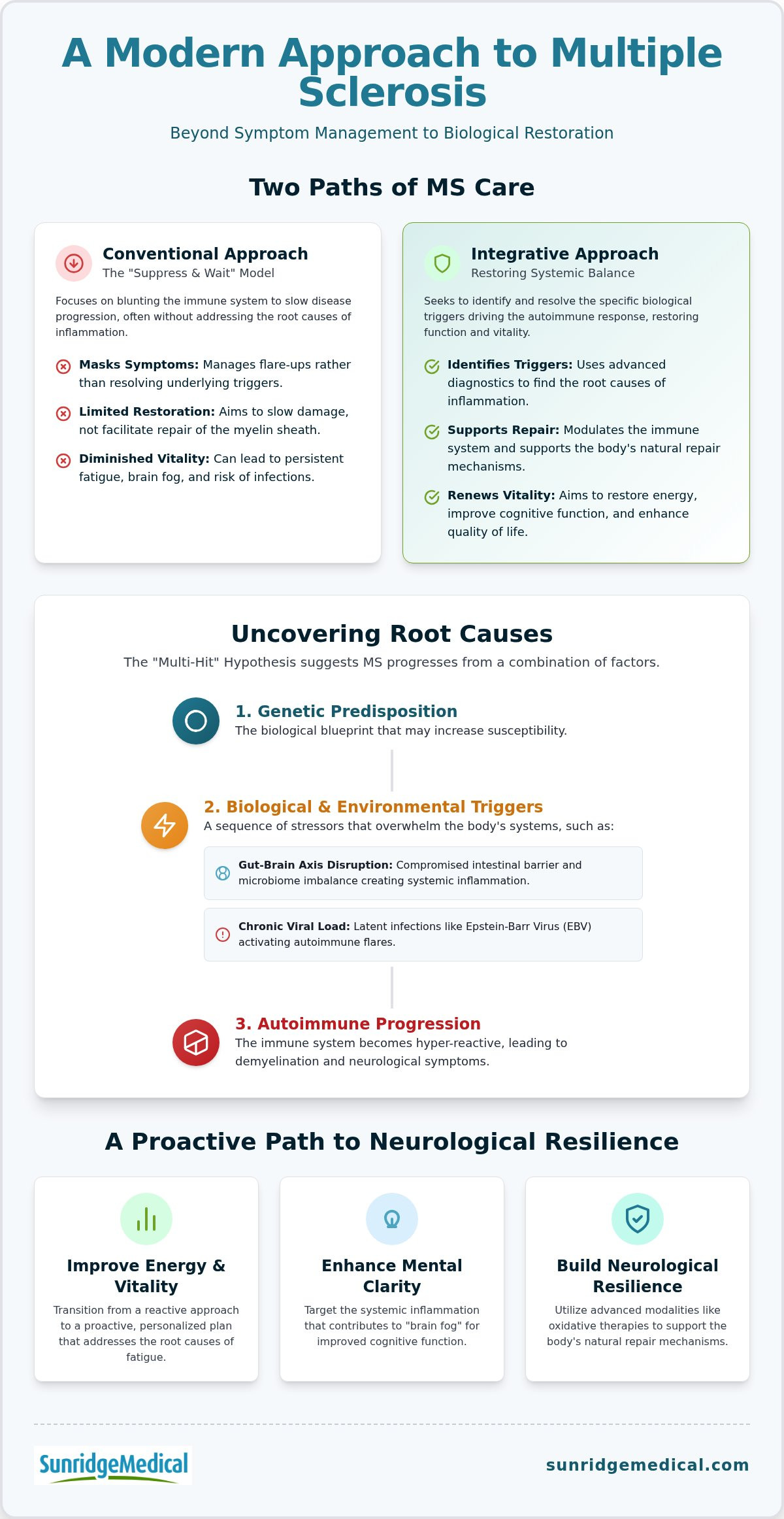
Alternative treatments for multiple sclerosis represent a sophisticated clinical departure from the standard “suppress and wait” model that has dominated neurology for decades. In the past, the primary objective of care was to blunt the immune system’s activity to prevent further damage. While this remains a critical component of management, it often fails to address the underlying biological dysfunction that drives the disease. In 2026, we’ve reached a pivotal turning point where integrative neurology is recognized as a necessary evolution. This approach doesn’t just manage symptoms; it seeks to modulate the immune response and restore systemic balance through research-based protocols.
It’s vital to distinguish between general “holistic” wellness and advanced alternative medicine. While diet and exercise are foundational, advanced alternative protocols involve high-level diagnostics and targeted biological therapies administered under strict physician supervision. This clinical rigor ensures that every intervention is tailored to the patient’s specific inflammatory profile and genetic markers. A physician-led evaluation is the cornerstone of a safe alternative path, providing the expertise needed to navigate complex neurologic recovery without compromising safety.
The Limitations of Conventional MS Management
Defining the Integrative Neurology Model
The integrative neurology model bridges the gap between traditional clinical practices and cutting-edge alternative science. By utilizing advanced diagnostics, physicians can identify the specific environmental and biological triggers that contribute to a patient’s unique disease expression. This Multiple Sclerosis Overview highlights the complexity of the condition, underscoring why a “one-size-fits-all” medication plan often falls short. Instead of broad suppression, this model focuses on supporting the health of the myelin sheath and recalibrating the body’s inflammatory signaling. When alternative treatments for multiple sclerosis are physician-led and data-driven, they offer a structured path toward improved neurological function and sustained energy levels.
Identifying the Biological Triggers of MS Progression
Multiple sclerosis isn’t a random occurrence. While genetic markers provide the biological blueprint, they rarely act in isolation. The “multi-hit” hypothesis suggests that MS progression is fueled by a specific sequence of stressors that eventually overwhelm the body’s compensatory mechanisms. This means that while you may have a predisposition, the actual demyelination is often catalyzed by external and internal triggers. Identifying these individual stressors is the primary goal when developing effective alternative treatments for multiple sclerosis. By pinpointing what is actually driving the immune system into a state of hyper-reactivity, we can move beyond broad suppression and toward targeted resolution.
The gut-brain axis is a central component of this biological landscape. Research indicates that the microbiome acts as a command center for immune signaling. When the intestinal barrier is compromised or the microbial balance is disrupted, the body can produce pro-inflammatory cytokines that cross into the central nervous system. This systemic inflammation doesn’t just cause discomfort; it actively facilitates the breakdown of the myelin sheath. Current Research on Alternative Medicine for MS suggests that modulating these gut-derived signals can significantly impact disease trajectory and neurological stability.
Chronic Infections and Viral Load
In many clinical cases, we find a clear link between latent infections and autoimmune flares. The Epstein-Barr Virus (EBV) has gained significant attention in 2026 as a primary driver of MS activity. When the immune system is constantly distracted by a high viral load, it’s more likely to commit “errors” in self-recognition. Advanced alternative protocols focus on reducing this viral burden through targeted biological support. By addressing these underlying pathogens, we can lower the total stress on the immune system, which often leads to a reduction in both the frequency and severity of relapses.
Environmental Toxins and Neurological Health
The modern environment presents a constant barrage of heavy metals and pollutants that can compromise the blood-brain barrier. Lead, mercury, and various industrial chemicals act as neurotoxins that exacerbate inflammatory signaling within the brain. This is why detoxification is a critical component of integrative medicine for chronic illness. Utilizing advanced testing methods allows us to identify your specific toxic burden rather than relying on a generic cleanse. Removing these obstacles to healing is essential for any restorative path. You can explore how a personalized diagnostic evaluation at Sunridge Medical helps pinpoint these hidden stressors to create a truly individualized recovery plan.
Research-Based Alternative Modalities for MS Support
Effective alternative treatments for multiple sclerosis prioritize the restoration of cellular function rather than just the suppression of the immune response. One of the most impactful tools in this restorative toolkit is the use of oxidative therapies. These protocols work by enhancing cellular oxygenation and reducing the chronic oxidative stress that contributes to axonal damage. When the body’s internal environment is optimized, biological treatments can more effectively support natural repair mechanisms. This shift from a defensive posture to a proactive, regenerative one is what distinguishes advanced integrative care from traditional symptom management.
Precision is maintained through the integration of hormone optimization, which acts as a powerful modulator for both immune response and neuroprotection. Hormonal balance isn’t just about wellness; it’s a critical component of maintaining the blood-brain barrier’s integrity and supporting the survival of neurons. A data-driven approach to alternative treatments for multiple sclerosis ensures that we aren’t just guessing but are following a clear, evidence-based path. Throughout these interventions, continuous clinical monitoring is essential to ensure that every protocol is adjusted in real-time based on the patient’s evolving biological markers and neurological feedback.
Advanced IV Therapy for Autoimmune Regulation
Intravenous delivery offers a significant clinical advantage by bypassing the digestive barriers that often limit the efficacy of oral supplements. This is particularly vital for patients experiencing the severe fatigue or compromised gut health discussed in previous sections. Utilizing IV therapy for autoimmune disease allows for the administration of high-dose nutrients directly into the bloodstream for maximum bioavailability. Customized IV protocols at Sunridge Medical target neuroinflammation with specific biological agents, ensuring that therapeutic compounds reach the central nervous system with clinical precision. By tailoring these infusions to address specific inflammatory markers, we can achieve a level of systemic recalibration that oral protocols cannot match.
Mitochondrial Support and Cellular Energy
At the cellular level, MS is increasingly characterized as a mitochondrial disease because the profound fatigue associated with the condition often stems from a failure in ATP production. Alternative strategies focus on boosting mitochondrial efficiency to restore energy levels and support the high metabolic demands of the nervous system. Nutritional protocols designed to support the health of the myelin sheath and maintain axonal integrity are central to this effort. There is a deep synergy between mitochondrial support and the hormonal balance outlined in our 2026 guide. When these systems are addressed simultaneously, patients often report significant improvements in both cognitive clarity and physical stamina.
Standard neurology often follows a “wait and see” approach, monitoring for the next lesion on an MRI before adjusting therapy. This passive stance can feel like a slow retreat. Shifting to an individualized recovery path means choosing a proactive medical intervention that anticipates and addresses biological shifts before they manifest as physical decline. When exploring alternative treatments for multiple sclerosis, the focus moves from simply tracking damage to actively fostering a restorative internal environment. This transition requires a supportive clinical sanctuary where the patient’s experience is prioritized and every symptom is viewed as a piece of a larger biological puzzle.
Communicating this shift to your existing medical team can feel daunting. It’s helpful to frame your decision as a desire for a more comprehensive, integrative approach that supports your standard care. Establishing realistic timelines is also vital. Chronic neurologic conditions don’t develop overnight, and systemic restoration requires a steady, methodical pace. You aren’t just looking for a temporary fix; you’re building a foundation for long-term stability.
Beyond Standard Lab Tests
Standard blood panels are designed to identify acute disease states, not the subtle imbalances that drive chronic autoimmunity. They often fail to capture the specific nutritional gaps, environmental toxicities, or immune dysregulations that contribute to persistent brain fog and fatigue. Advanced functional diagnostics provide a much deeper view. These insights allow for the customization of alternative treatments for multiple sclerosis, ensuring that the interventions address your unique biological roadblocks. A comprehensive physician evaluation forms the bedrock of this plan, ensuring that every protocol is built on data rather than generalizations.
Creating a Multi-Faceted Treatment Strategy
True recovery requires moving beyond the search for a single magic pill. A successful strategy integrates advanced medical therapies with targeted nutrition and specific physical support. Patient education is a cornerstone of this process. Understanding the “why” behind your protocol empowers you to sustain neurological wellness over the long term. A cohesive plan integrates these disparate threads into a single, manageable protocol. This level of care requires a dedicated advocate who can guide you through the complexities of neurologic recovery with a steady hand. If you’re ready to move beyond standard management, you can consult with our specialists at Sunridge Medical to begin your personalized diagnostic journey.
The Sunridge Approach: Comprehensive Alternative Care for MS
Sunridge Medical operates on the fundamental principle that multiple sclerosis is a multi-faceted systemic challenge rather than a singular autoimmune error. While conventional medicine often focuses on standardized drug regimens that offer a one-size-fits-all solution, we prioritize the unique biological landscape of each individual. Our research-based alternative treatments for multiple sclerosis are specifically designed for patients who have reached the limits of standard care and are seeking a more profound level of restoration. We provide a structured environment where advanced clinical science meets compassionate, individualized attention, ensuring that your care is as unique as your diagnosis.
Our philosophy centers on treating the whole person rather than just managing a list of clinical markers. We recognize that for many, the standard “suppress and wait” model has failed to deliver the vitality and stability they deserve. By focusing on the underlying triggers of immune dysregulation, we offer a clear path forward for those who haven’t found relief through conventional means. This approach isn’t about rejecting science; it’s about applying it with a level of precision and depth that standard systems often overlook. We act as your scientific guide, utilizing over two decades of experience in complex chronic disease management to help you navigate your recovery with confidence.
Individualized Physician Evaluations
The diagnostic journey at Sunridge begins with an exhaustive evaluation that looks far beyond standard neurological panels. Led by Medical Director Dr. Steven S. Isaacman, our team analyzes your entire medical history, current environmental stressors, and the specific inflammatory triggers discussed in previous sections. We look for the “multi-hit” sequence of events that catalyzed your symptoms, from latent viral loads to gut-brain axis disruptions. This depth of insight is essential for developing truly individualized treatment plans for complex neurologic conditions. As you move through your protocol, our physicians provide continuous monitoring to adjust your therapy in real-time. This level of oversight ensures that your recovery path remains precise, safe, and aligned with your body’s evolving needs.
A Sanctuary for Advanced Neurologic Recovery
We’ve established our facility as a clinical sanctuary for those navigating the complexities of chronic illness. Our commitment is to bridge the gap between traditional neurology and the leading edge of alternative medicine, providing high-level care in a supportive environment. If you’ve felt overlooked by traditional systems or frustrated by a lack of progress, we offer a capable ally in your health journey. Moving toward a better quality of life starts with a comprehensive understanding of your body’s specific requirements. You can begin this process today by scheduling a consultation to review your medical history and explore a personalized recovery journey tailored to your unique biological profile.
Empowering Your Path to Neurological Resilience
Managing multiple sclerosis requires more than just tracking disease progression; it demands a proactive search for the biological triggers that drive your unique symptoms. By addressing the “multi-hit” factors like chronic viral loads and gut-brain axis disruptions, you can move beyond standard symptom management toward genuine restoration. Exploring alternative treatments for multiple sclerosis is a commitment to understanding your body’s specific requirements through advanced functional testing and targeted biological support. At Sunridge Medical, we provide a clinical sanctuary where precision meets empathy, ensuring you aren’t navigating this complex journey alone.
With over 20 years of expertise in complex chronic disease management, our team specializes in individualized physician-led evaluations and advanced IV protocols tailored to neurological health. We don’t believe in standardized care for a condition as unique as yours. Instead, we offer a steady hand and a clear, data-driven path forward. To learn more about how our integrative protocols can support your recovery, schedule a consultation with our MS specialists at Sunridge Medical or call 1-800-923-7878. Your journey toward renewed energy and improved function is possible, and we’re here to guide every step.
Frequently Asked Questions
Can alternative treatments for Multiple Sclerosis be used alongside conventional DMTs?
Yes, alternative treatments for multiple sclerosis are frequently integrated with conventional disease-modifying therapies (DMTs) to provide a more comprehensive care model. While standard DMTs focus on slowing disease progression, alternative protocols address the underlying systemic dysfunction and persistent symptoms like fatigue. This collaborative approach ensures that you aren’t forced to choose between standard stability and integrative restoration.
What is the primary goal of integrative neurology in MS management?
The primary objective is to move from broad immune suppression toward precise immune modulation and systemic restoration. By identifying the specific biological triggers that catalyze demyelination, integrative neurology seeks to recalibrate the body’s inflammatory signaling. This model prioritizes the health of the myelin sheath and the optimization of mitochondrial function to improve your overall quality of life.
How long does it typically take to see results from an alternative MS protocol?
Response times are highly individualized and depend on the severity of your condition and your body’s unique restorative pace. Some patients report improvements in energy levels and cognitive clarity within the first few weeks of treatment. However, addressing chronic neurologic issues is a methodical process that typically requires several months of consistent clinical intervention to achieve sustained results.
Are the alternative treatments at Sunridge Medical based on current research?
Every protocol at Sunridge Medical is rooted in current medical research and administered under strict physician supervision. We utilize advanced diagnostics and evidence-based biological therapies to ensure our methods remain at the leading edge of integrative medicine. Our role as a scientific guide is to provide you with the most effective, data-driven options available in 2026.
Does Sunridge Medical offer specialized IV therapy for MS patients?
We provide specialized, customized intravenous protocols that target neuroinflammation and support cellular repair mechanisms. These IV therapies bypass digestive barriers to ensure that high-dose nutrients and biological agents reach the central nervous system with maximum precision. This delivery method is especially beneficial for patients who struggle with the absorption issues or severe fatigue mentioned in this guide.
What makes the Sunridge approach different from standard neurology?
Our methodology is proactive and personalized rather than reactive and standardized. While standard neurology often waits for new lesions to appear on an MRI before adjusting therapy, we use advanced functional testing to identify stressors before they cause damage. We treat the whole person by resolving the specific biological triggers that drive your unique disease expression.
How can I find out if I am a candidate for Sunridge Medical’s MS protocols?
Determining your candidacy begins with a thorough physician evaluation and a review of your complete medical history. This diagnostic process allows our medical team to understand the specific complexities of your case and determine if our advanced alternative protocols align with your recovery goals. You can start this journey by reaching out to our specialists for a clinical consultation.