


What if the persistent brain fog and cognitive decline you’re experiencing aren’t signs of permanent damage, but rather a biological backlog of toxic burden that your body can no longer manage on its own? For many, the journey toward health is stalled by conventional approaches that treat isolated symptoms while ignoring the underlying environmental triggers. It’s exhausting to feel dismissed by a medical system that fails to recognize the complexity of your experience, leaving you to wonder if your former energy will ever return.
We understand that a successful detox from mold exposure requires more than a simple cleanse; it necessitates a clinical recalibration of your body’s internal filtration systems. You deserve a path forward that is both scientifically rigorous and deeply compassionate. In this guide, we’ll outline the medical framework for identifying specific mycotoxin burdens and the advanced clinical protocols required to facilitate a true recovery. We’ll preview how individualized, physician-led plans and targeted therapies can clear the path for your body to heal, restoring the physical and mental vitality you thought was lost forever.
Key Takeaways
- Distinguish between a standard fungal allergy and the systemic inflammatory response triggered by mycotoxins, the secondary metabolites that drive chronic illness.
- Understand the “Enterohepatic Trap,” a biological mechanism where fat-soluble toxins are recycled back into the bloodstream rather than being eliminated.
- Learn why a successful detox from mold exposure requires clinical-grade binding agents to interrupt the toxic recycling loop and support the liver’s clearance pathways.
- Discover the limitations of generic over-the-counter cleanses and how integrative protocols address the root cause of environmental illness.
- Explore the role of individualized physician evaluations and research-based testing in creating a precise roadmap for restoring physical and cognitive vitality.
The Clinical Reality of Mold Toxicity and Mycotoxin Burden
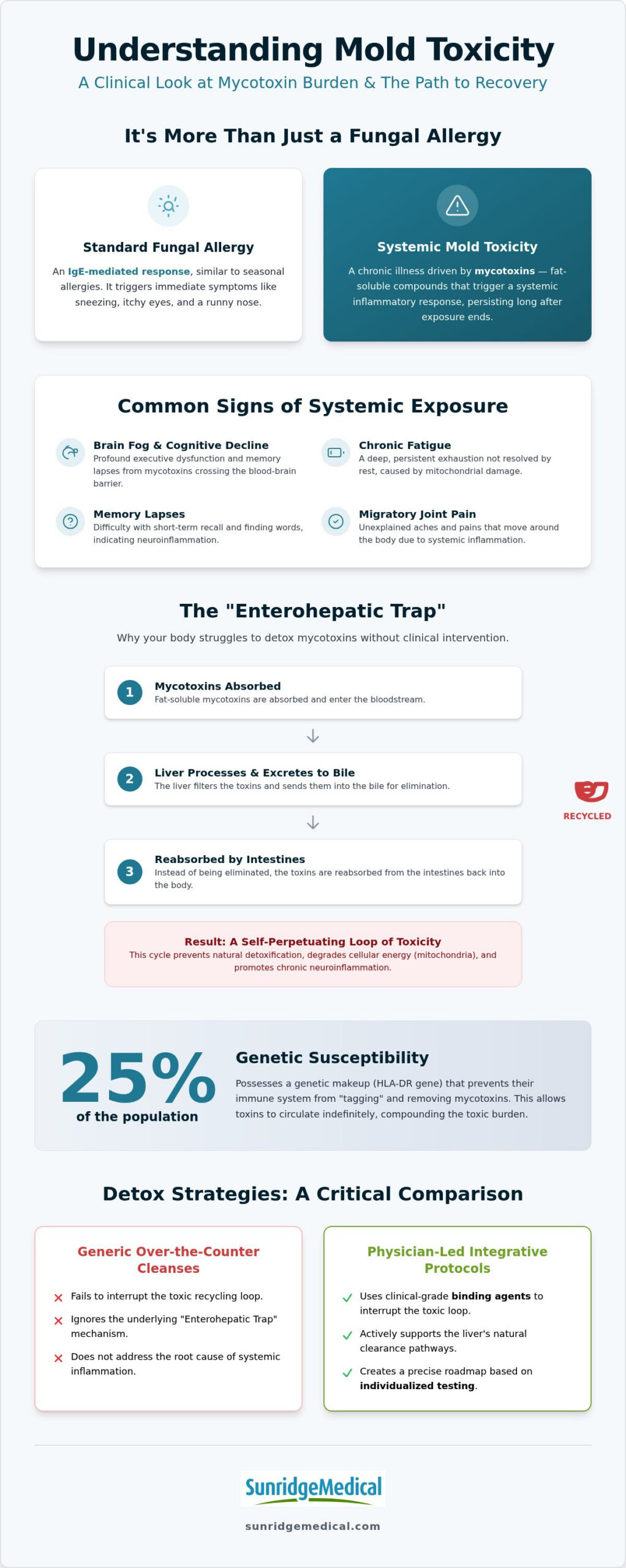
The clinical reality of mold toxicity is often obscured by the common misconception that it’s merely a seasonal allergy. While sneezing and itchy eyes are typical IgE-mediated responses, systemic mold toxicity is driven by something far more insidious: mycotoxins. To understand the depth of this issue, one must ask, What are Mycotoxins? They’re secondary metabolites produced by microfungi that are capable of causing disease and death in humans. Unlike pollen, these fat-soluble compounds bypass the body’s standard defenses, triggering chronic, low-grade inflammation that can persist long after the initial exposure has ended.
Conventional laboratory testing frequently fails to capture this reality because it primarily screens for acute allergic reactions. It doesn’t typically account for the “Total Burden” theory, which suggests that the body’s health is a result of the cumulative impact of various stressors. When mycotoxins are added to a system already struggling with heavy metals or viral loads, the body’s regulatory mechanisms can collapse. Successfully planning a detox from mold exposure requires looking beyond standard markers to identify the specific inflammatory signals being sent by the immune system.
Common Signs of Systemic Mold Exposure
Systemic exposure manifests through a complex array of symptoms that often mimic other chronic conditions, leading to frequent misdiagnosis. Neurologically, patients often report a profound sense of executive dysfunction, memory lapses, and a persistent “brain fog” that makes daily tasks feel insurmountable. These aren’t just subjective feelings; they’re often the result of mycotoxins crossing the blood-brain barrier. Physically, this burden presents as chronic fatigue that isn’t resolved by rest, migratory joint pain, and unexplained respiratory distress. These symptoms are frequently categorized under the framework of Systemic Inflammatory Response Syndrome (SIRS), where the immune system remains in a state of permanent “high alert,” unable to return to its baseline state of calm.
Why Some People Are More Susceptible
You might wonder why two people living in the same environment can have vastly different health outcomes. Genetic predisposition plays a significant role, particularly regarding the HLA-DR gene. Approximately 25 percent of the population possesses a genetic makeup that prevents their immune system from “tagging” mycotoxins for removal, effectively leaving the toxins to circulate indefinitely. This inability to clear the toxic load is often compounded by a compromised gut microbiome, which is essential for the final stages of elimination. For many patients, mold exposure doesn’t exist in a vacuum. It often overlaps with and exacerbates other complex conditions, such as chronic Lyme disease, creating a multi-layered health challenge that requires a precise, individualized approach to recovery.
The Enterohepatic Trap: Why Your Body Struggles to Detox
The human body possesses a sophisticated filtration system, yet mycotoxins are uniquely designed to evade it. These compounds are lipophilic, meaning they’re fat-soluble and easily absorbed into cell membranes. While the liver is tasked with neutralizing these threats, it often becomes a bottleneck in the recovery process. Instead of being eliminated, mycotoxins are processed by the liver and excreted into the bile, only to be reabsorbed by the intestines and sent back into the bloodstream. This circular path, known as enterohepatic circulation, creates a self-perpetuating loop of toxicity that makes a detox from mold exposure exceptionally difficult without clinical intervention.
This recycling process does more than just prolong the presence of toxins; it actively degrades cellular infrastructure. As mycotoxins circulate, they target the mitochondria, which are the primary energy producers within your cells. By disrupting the electron transport chain, these toxins induce profound fatigue and cognitive impairment. The health effects of mold exposure extend deep into the central nervous system, where mycotoxins can breach the blood-brain barrier. This infiltration triggers neuroinflammation, explaining why many patients struggle with persistent executive dysfunction and mood instability despite being out of the moldy environment.
The Mechanism of Mycotoxin Sequestration
When the liver and kidneys are overwhelmed, the body employs a survival strategy called sequestration. It packs mycotoxins away into adipose (fat) tissue to keep them away from vital organs. This storage effectively “hides” the toxins from the immune system, but it also creates a reservoir that leaks toxins back into the system during periods of stress or weight loss. Mycotoxin sequestration is the biological process by which the body stores toxic metabolites in adipose tissue as a protective measure, which inadvertently prevents their elimination and necessitates clinical intervention to release and bind them safely. This chronic state rapidly depletes glutathione, your body’s master antioxidant, leaving your cells vulnerable to further oxidative damage.
Cellular Damage and Recovery
Prolonged exposure often leads to the development of mitochondrial antibodies, where the immune system begins attacking its own energy-producing structures. This is a primary trigger for secondary autoimmunity in environmental illness. High levels of oxidative stress cause a “rusting” effect at the cellular level, damaging DNA and protein structures. For recovery to be successful, cellular repair must happen concurrently with toxin removal. Simply pulling toxins out isn’t enough; we must also provide the nutritional and clinical support needed to rebuild damaged membranes and restore mitochondrial health. If you feel stuck in this cycle of recycling toxins, a specialized medical consultation can help identify the specific biochemical barriers preventing your recovery.
Conventional vs. Integrative Detox Strategies
Conventional medicine often approaches environmental illness through the lens of acute symptom management. If you visit a standard clinic, you might be prescribed antihistamines for respiratory distress or topical steroids for skin irritation. While these interventions provide temporary relief, they don’t address the systemic bioaccumulation of mycotoxins that drives chronic illness. A truly effective detox from mold exposure requires moving beyond surface-level treatments to target the deep-seated toxic burden residing in your tissues.
Generic over-the-counter cleanses and supplements often lack the potency and precision required for complex cases. These products are frequently marketed as one-size-fits-all solutions, yet they fail to account for an individual’s specific genetic profile or current metabolic state. Integrative medicine, by contrast, prioritizes bio-individualized care. This approach utilizes advanced diagnostics to map out a patient’s unique biochemical barriers. It’s also important to recognize that environmental mold isn’t the only concern; Mycotoxins in the food chain can contribute to the overall burden, making clinical oversight essential to ensure all sources of toxicity are addressed and managed safely.
The Role of Binders in Clinical Detox
Binders are essential for interrupting the enterohepatic recycling of toxins discussed previously. While common substances like activated charcoal or bentonite clay can be helpful for general support, they often lack the specificity needed to bind certain aggressive mycotoxin strains. Clinical-grade, prescription-strength sequestering agents provide a more targeted approach. However, using the wrong binder or an incorrect dosage can trigger a Herxheimer reaction, where toxins are released faster than the body can eliminate them. This leads to a temporary worsening of symptoms, which is why medical supervision is non-negotiable during this phase of recovery.
Advanced IV Therapies for Environmental Illness
Many patients with chronic mold toxicity suffer from gut malabsorption, making oral supplements significantly less effective. Utilizing specialized IV therapy allows us to bypass the digestive tract and deliver critical nutrients directly into the bloodstream. These infusions are designed to replenish depleted cellular stores of glutathione, minerals, and vitamins that have been exhausted by chronic inflammation. Additionally, oxidative therapies can be employed to help recalibrate the immune response, providing the body with the metabolic energy it needs to finally clear the toxic backlog and begin the process of deep cellular repair.
The Clinical Pillars of a Comprehensive Detox Protocol
Recovery from systemic mycotoxin illness is a methodical process that requires more than just removing the source of exposure. While environmental remediation is the first critical step, the internal biological environment must also be addressed through a structured, multi-phase approach. A successful detox from mold exposure is built upon five clinical pillars designed to safely mobilize, bind, and eliminate toxins while repairing the underlying cellular damage.
- Step 1: Environmental Remediation: You cannot heal in the same environment that made you ill. This involves professional mold removal adhering to the ANSI/IICRC S520 standard to ensure the air you breathe is free of fungal spores and fragments.
- Step 2: Sequestration and Binding: As previously discussed, interrupting the enterohepatic cycle is vital. Clinical sequestering agents are used to “trap” toxins in the digestive tract, preventing their reabsorption into the bloodstream.
- Step 3: Cellular Support: This phase focuses on optimizing the liver and kidney filtration pathways. By providing the specific co-factors needed for Phase I and Phase II detoxification, we ensure the body can process mobilized toxins efficiently.
- Step 4: Immune Recalibration: Chronic exposure often leaves the immune system in a state of hyper-vigilance. We use targeted therapies to address the inflammatory cascade and quiet the systemic inflammatory response.
- Step 5: Maintenance: Long-term health requires preventing future accumulation. This involves ongoing nutritional support and lifestyle adjustments to maintain robust elimination pathways.
Optimizing Elimination Pathways
Before initiating aggressive binding, we must ensure the body’s “drainage” pathways are open and functioning. If the bowels are sluggish or the lymphatic system is stagnant, mobilized mycotoxins will simply relocate to other tissues, often worsening neurological symptoms. Hydration, gentle movement, and supporting gut motility are foundational requirements. To prevent the systemic re-circulation of mobilized toxins, a clinician must ensure that the primary drainage pathways, specifically the bowels, kidneys, and lymphatic system, are fully functional before initiating aggressive binding protocols.
Nutritional Foundations for Recovery
Nutrition serves as the fuel for the detoxification engine. An anti-inflammatory diet reduces the “background noise” of systemic inflammation, allowing the immune system to focus on repair. We prioritize nutrients like sulfur-containing amino acids, silymarin, and B-vitamins, which are essential for liver clearance. Furthermore, the role of hormone optimization cannot be overlooked, as balanced endocrine function provides the physiological resilience necessary to withstand the demands of a clinical detox. If you are ready to move beyond generic advice and begin a physician-led recovery, we invite you to contact our clinical team for a comprehensive evaluation.
Individualized Care at Sunridge Medical
At Sunridge Medical, we recognize that your health journey is distinct. Standardized protocols often fail because they treat the condition rather than the individual. Our approach to integrative medicine for chronic illness is rooted in the belief that true healing requires a deep, scientific understanding of your unique biochemistry. Since our founding in 2003, we’ve focused on bridging the gap between conventional clinical rigor and advanced, research-based alternative therapies. We don’t just see a patient. We see a complex biological system that needs precision-guided restoration.
A successful detox from mold exposure begins with a comprehensive physician evaluation. We utilize research-based testing, including blood serum analysis for IgG and IgE antibodies, to pinpoint the specific mycotoxins disrupting your health. This level of detail allows us to move beyond guesswork. By identifying exactly which toxins are present, we can develop a customized detoxification roadmap that addresses your specific inflammatory triggers and metabolic barriers. This is the difference between a generic “cleanse” and a clinical-grade medical intervention.
Advanced Treatment Modalities
Our clinical team utilizes sophisticated tools to address the multi-systemic impact of environmental illness. We design customized IV protocols that are tailored to your specific mycotoxin profile, ensuring that your body receives the exact nutrients and antioxidants needed for cellular repair. This integrative support is especially critical for patients dealing with co-occurring conditions, such as chronic Lyme disease or autoimmune dysfunction. We believe that recovery is a dynamic process. Our physicians provide ongoing monitoring and adjustment of your treatment plan, ensuring that every step taken is optimized for your progress and long-term vitality.
Starting Your Recovery Journey
Taking the first step toward health can feel overwhelming, especially when you’ve felt dismissed by other medical systems. We provide a sanctuary of specialized attention where your experience is honored and your recovery is our priority. During your initial clinical consultation, we’ll review your medical history in detail and begin the process of unmasking the root causes of your symptoms. This is more than just a visit; it’s the beginning of a collaborative partnership focused on restoring your physical and cognitive energy. We invite you to reach out to our team to schedule your evaluation and begin the path toward a life free from the burden of toxic exposure.
Reclaiming Your Health and Cognitive Vitality
Recovering from the complex effects of mycotoxin illness requires a shift from managing symptoms to addressing the root biological burden. A successful detox from mold exposure is not found in a generic supplement but through a structured medical framework that interrupts the recycling of toxins and repairs cellular damage. By prioritizing environmental remediation alongside physician-led protocols, you can finally move past the persistent brain fog and fatigue that have stalled your progress.
At Sunridge Medical, we’ve provided expert medical direction since 2003, utilizing advanced research-based alternative protocols to guide patients back to health. We understand the frustration of feeling overlooked by traditional systems, and we’re dedicated to offering a more comprehensive lens for your recovery. Our team is here to provide the specialized attention and scientific precision your case demands. There is no reason to settle for a life defined by illness when a targeted path to wellness is available.
Your journey toward restoration begins with a single step. Schedule your comprehensive clinical evaluation with Sunridge Medical today. For personalized support and to learn more about our individualized care, contact us at 1-800-SUNRIDGE. There is a clear path forward, and we’re ready to act as your steady hand in navigating it.
Frequently Asked Questions
How do I know if my symptoms are caused by mold or something else?
Differentiating mold toxicity from other conditions requires advanced diagnostic testing and a thorough review of your environmental history. While symptoms like brain fog and fatigue overlap with many chronic illnesses, the presence of specific mycotoxins in your system is a definitive indicator of exposure. We use specialized evaluations to map these markers against your symptom profile, ensuring we address the actual root cause rather than pursuing a broad, non-specific diagnosis.
Can the body detox from mold exposure on its own?
While the body has natural filtration systems, it often struggles to clear mycotoxins due to genetic predispositions and the enterohepatic recycling loop. For approximately 25 percent of the population, the immune system cannot “tag” these toxins for removal. In these cases, a clinical detox from mold exposure is necessary to interrupt the recycling process and provide the biochemical support required to safely mobilize and eliminate the stored toxic burden.
How long does a clinical mold detox protocol typically take?
The duration of a clinical protocol varies significantly based on an individual’s toxic load and the efficiency of their elimination pathways. Most patients begin to see measurable improvements in cognitive and physical energy within three to six months of starting a targeted plan. However, deep cellular repair and the full clearance of sequestered mycotoxins can take longer, requiring ongoing physician monitoring to adjust the protocol as your body’s needs evolve.
What are mycotoxins and why are they so difficult to eliminate?
Mycotoxins are toxic secondary metabolites produced by microfungi that are fat-soluble and highly resistant to standard immune responses. Their lipophilic nature allows them to hide within adipose tissue and cell membranes, making them invisible to many conventional detox methods. Because they circulate through the bile and are reabsorbed in the gut, they remain trapped in a continuous cycle, necessitating specific sequestering agents to bind and remove them from the body.
Is there a specific test for mold toxicity in the body?
Yes, we utilize research-based testing such as blood serum analysis for IgG and IgE antibodies and urine mycotoxin panels to identify specific toxic markers. These tests provide a detailed map of the mycotoxin strains present in your system. By analyzing these results alongside your clinical presentation, we can develop a precise detox from mold exposure roadmap that targets your unique biological needs rather than relying on general symptom management.
What is a Herxheimer reaction and is it common during detox?
A Herxheimer reaction is a temporary intensification of symptoms that occurs when toxins are mobilized faster than the body can eliminate them. It’s a common sign that the detoxification process is working, but it must be carefully managed to avoid unnecessary distress. We prioritize opening drainage pathways before starting aggressive binding to minimize these reactions. This approach ensures that mobilized toxins are moved out of the system safely and efficiently.
Can mold exposure lead to long-term autoimmune issues?
Persistent exposure to mycotoxins can trigger chronic inflammation and the development of mitochondrial antibodies, which are precursors to autoimmune dysfunction. When the immune system remains in a state of high alert, it may begin to attack the body’s own tissues. Addressing this inflammatory cascade through integrative protocols is essential for preventing the progression of environmental illness into long-term systemic autoimmune conditions that require more complex, multi-faceted management.
Do I need to leave my home to successfully detox from mold?
You must remove yourself from the source of exposure for a clinical detox to be effective. If your home contains active mold growth or high concentrations of mycotoxins, your body will continue to accumulate new toxins while you’re attempting to clear old ones. Professional remediation according to ANSI/IICRC S520 standards is critical. If remediation isn’t possible, finding a safe, mold-free environment is a non-negotiable step in your recovery journey. For those in the Wisconsin area who need a clean space to keep their possessions during a transition, you can check out First Choice Storage for secure units.