


What if the most effective way to dismantle a persistent infection isn’t a stronger pharmaceutical, but a strategic burst of biological oxygen? You’ve likely spent years navigating the cycle of antibiotic resistance and gut microbiome depletion, only to be met with “normal” lab results that fail to explain your systemic fatigue. It’s exhausting to feel overlooked by traditional systems when your body remains trapped in a state of chronic low-grade inflammation. We understand that you aren’t looking for a temporary fix; you’re seeking a sophisticated, research-based path back to your baseline health.
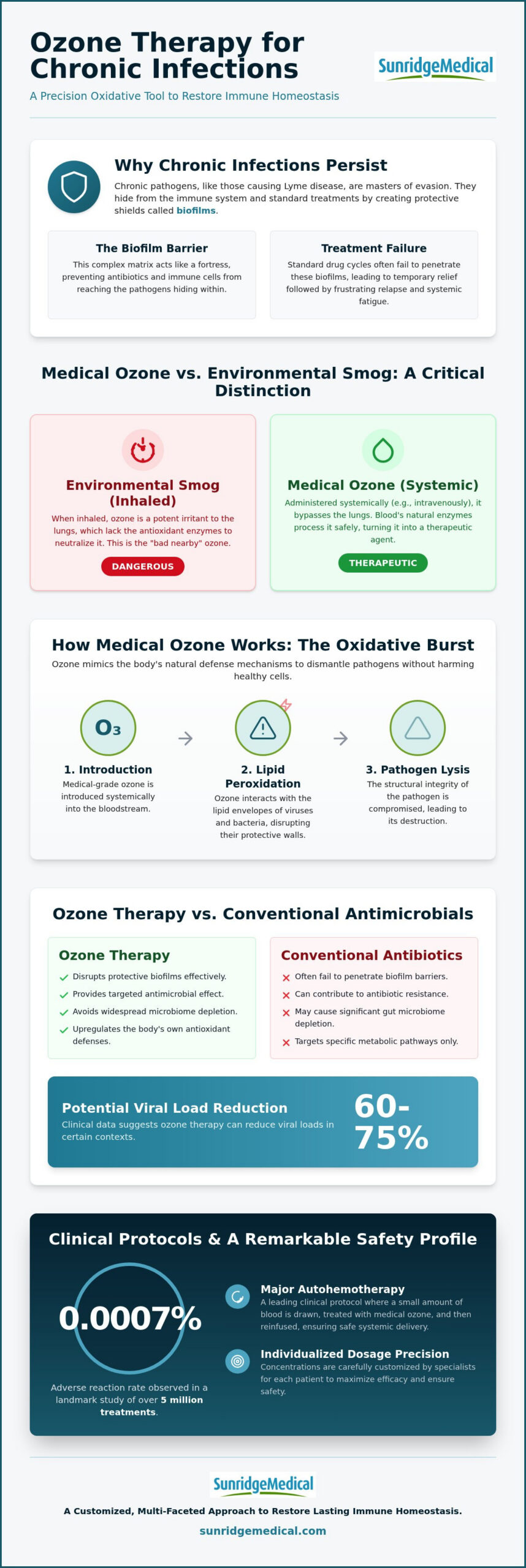
In this clinical guide, you’ll discover how ozone therapy for chronic infections serves as a precision oxidative tool to disrupt persistent pathogens and restore immune homeostasis. While clinical data suggests this approach can reduce viral loads by 60 to 75 percent in certain contexts, its primary value lies in its ability to prime your own antioxidant defenses. We’ll provide a scientific explanation for why oxidative therapy works, exploring how it targets the root of your brain fog and exhaustion without the toxicity of conventional methods. This overview will guide you through the leading-edge protocols designed to help you reclaim your cognitive clarity and physical energy.
Key Takeaways
- Understand why persistent pathogens use protective biofilms to evade the immune system and why standard treatment cycles often fail to reach them.
- Explore the biochemical “oxidative burst” mechanism that allows medical ozone to disrupt the lipid envelopes of viruses and bacteria.
- Learn why ozone therapy for chronic infections provides a targeted antimicrobial effect without the widespread microbiome depletion caused by traditional antibiotics.
- Discover the clinical protocols of Major Autohemotherapy and the critical role of individualized dosage precision in ensuring patient safety and efficacy.
- Gain insight into how a customized, multi-faceted approach integrates oxidative medicine with research-based protocols to restore lasting immune homeostasis.
Understanding Pathogen Persistence in Chronic Infections
Many patients find themselves trapped in a cycle of temporary relief followed by frustrating relapse. Chronic pathogens, such as Borrelia burgdorferi, the causative agent of Lyme disease, are masters of biological evasion. They don’t just circulate in the bloodstream; they retreat into deep tissue reservoirs and change their form to survive standard antibiotic cycles. This persistence often leads to the systemic fatigue and brain fog that characterize environmental and tick-borne illnesses. To address these conditions, we must look beyond standard pharmaceutical interventions and toward the underlying mechanics of how these infections hide.
The Biofilm Barrier and Antibiotic Resistance
Pathogens create complex, protective matrixes known as biofilms to shield themselves from the host’s immune response. These structures act like a physical umbrella, preventing antimicrobials from making direct contact with the bacteria. While standard drugs target specific metabolic pathways, they often fail to penetrate these dense, slimy barriers. Biofilms act as a biological fortification that transforms transient infections into recalcitrant, long-term health challenges by obstructing both immune cells and standard medications. This is a primary reason why an Ozone Therapy Overview reveals that clinicians are increasingly turning to oxidative tools that can disrupt these protective layers at a molecular level.
Medical Ozone vs. Environmental Smog
It’s vital to distinguish between environmental pollution and medical-grade O3. You’ve likely heard the phrase “good up high, bad nearby,” which refers to the protective atmospheric layer versus the irritating smog found in urban environments. However, the “Medical Precision” rule applies when we utilize ozone therapy for chronic infections. The danger of ozone lies almost exclusively in inhalation because the lungs lack the necessary antioxidant enzymes to neutralize the gas. When breathed in, ozone is a potent irritant; when administered systemically, it becomes a sophisticated therapeutic agent.
In a clinical setting, we use systemic administration, typically through intravenous methods, to bypass the respiratory system entirely. Your blood is naturally rich in protective enzymes like catalase and superoxide dismutase, which allow the body to process medical ozone safely. This controlled oxidative stress doesn’t harm your healthy cells. Instead, it triggers a healing response and disrupts the lipid envelopes of pathogens. When administered by specialists using precise, individualized concentrations, the safety profile is remarkable. A landmark study of over 5 million treatments found an adverse reaction rate of only 0.0007 percent, proving that when handled with expertise, this reactive triatomic oxygen molecule is a powerful ally in the restoration of well-being.
The Biochemistry of Medical Ozone: Mechanism of Action
Medical ozone functions as a biological catalyst rather than a simple pharmacological agent. When introduced systemically, it interacts with the double bonds of fatty acids in the cell walls of pathogens, initiating a process called lipid peroxidation. This reaction specifically disrupts the lipid envelope of viruses and bacteria, effectively compromising their structural integrity and leading to lysis. This mechanism mimics the “oxidative burst” used naturally by your macrophages to neutralize invaders, providing a concentrated version of the body’s own defense strategies.
Beyond direct pathogen destruction, ozone significantly improves the metabolic environment of your tissues. It enhances the flexibility of red blood cells, allowing them to navigate constricted capillaries and deliver oxygen more efficiently to starved areas. This shift from simple oxygenation to systemic oxidation is a cornerstone of recovery. As detailed in this Clinical Review of Ozone Therapy, the treatment also triggers a hormetic response, upregulating essential antioxidant enzymes like superoxide dismutase (SOD) and glutathione to protect healthy cells from oxidative stress.
Targeting Anaerobic Pathogens
Most persistent pathogens, including the bacteria responsible for Lyme disease, are anaerobic or microaerophilic. They thrive in low-oxygen, high-acidity environments where the immune system struggles to reach them. Using ozone therapy for chronic infections fundamentally alters this internal terrain by flooding it with reactive oxygen species (ROS). These organisms lack the robust antioxidant defenses found in human cells, making them uniquely vulnerable to this oxidative pressure. Research indicates that when used alongside traditional protocols, this approach can enhance treatment effectiveness by 50 percent against antibiotic-resistant strains.
Modulating the Immune Response
A primary challenge in chronic illness is a dysregulated immune system that is either underactive or stuck in a pro-inflammatory state. Ozone acts as an immunomodulator by activating the Nrf2 pathway, which serves as the master switch for reducing systemic inflammation. This process induces a controlled release of cytokines that helps clear chronic viral loads while balancing the TH1/TH2 immune response. This level of precision is vital for effective autoimmune disease management, where the goal is to calm overactive responses without compromising general immunity. This comprehensive biochemical shift offers a steady hand for patients who want to explore specialized protocols tailored to their unique physiological needs.
Comparing Oxidative Therapy with Conventional Antimicrobials
Traditional antibiotics operate through targeted chemical bonding, seeking out specific metabolic pathways or protein structures within a bacterium. While effective in acute settings, this specificity allows pathogens to adapt; they simply mutate the target site to render the drug useless. In contrast, ozone therapy for chronic infections utilizes universal oxidative disruption. It’s a physical destruction of the cell wall that happens too rapidly for a pathogen to develop a counter-strategy. This fundamental difference explains why “superbugs” often succumb to oxidative stress.
Pathogens cannot “evolve” a way to resist being oxidized any more than a piece of paper can evolve a way to not burn when exposed to a flame. This creates a reliable mechanism for patients who have seen their progress stall due to antibiotic resistance. By moving the focus from chemical interference to oxidative pressure, we can bypass the biological defenses that make chronic illnesses so difficult to treat with standard pharmaceutical tools.
The Selective Nature of Medical Ozone
One of the most significant advantages of systemic ozone is its inherent selectivity. Healthy human cells are equipped with a robust array of antioxidant enzymes, such as catalase and superoxide dismutase, which neutralize ozone the moment it makes contact. Pathogens, particularly the anaerobic varieties found in chronic illness, lack these protective mechanisms. This disparity allows for a targeted approach that spares your beneficial gut flora. Unlike oral antibiotics that often lead to gut microbiome depletion, systemic ozone supports a healthy internal ecosystem. Detailed research on the Biochemical Mechanisms of Ozone confirms that this selectivity is what makes it a sophisticated alternative to “carpet bomb” pharmaceutical approaches.
Addressing Multi-Infection Complexes
Patients dealing with complex conditions often face multiple co-infections, such as Babesia or Bartonella, alongside their primary diagnosis. Managing these through conventional means typically requires multiple drug cocktails, which significantly increases the toxic load on the liver and kidneys. By utilizing ozone therapy for chronic infections, we can target these diverse pathogens through a single, unified mechanism. A broad-spectrum oxidative approach is often more efficient, addressing the entire pathogen load simultaneously without the cumulative side effects of long-term pharmaceutical use. For those seeking specialized chronic Lyme disease treatment, this efficiency is crucial for long-term recovery.
Beyond its antimicrobial properties, oxidative therapy offers systemic benefits that drugs cannot match. It stimulates mitochondrial function, increasing the production of Adenosine Triphosphate (ATP). This boost in cellular energy is why many patients report improved cognitive clarity and reduced fatigue even before the pathogen load is fully cleared. It’s a steady progression toward wellness that addresses both the infection and the patient’s underlying vitality.
Clinical Protocols: Administration and Safety Frameworks
Safety in oxidative medicine is rooted in the Arndt-Schulz principle. This principle suggests that biological systems respond differently based on the concentration of a stimulus. For ozone therapy for chronic infections, a precise dosage is the difference between a therapeutic response and unnecessary physiological stress. We utilize Major Autohemotherapy (MAH) as the clinical gold standard for delivery. This systemic approach ensures that the conditioned blood reaches deep tissue reservoirs where pathogens often hide, providing a level of thoroughness that localized treatments cannot match.
Managing the recovery journey also requires a deep understanding of the Jarisch-Herxheimer reaction. As the oxidative process successfully dismantles bacterial cell walls, the resulting release of endotoxins can cause a temporary flare in symptoms. This is often called a “die-off” effect. We prioritize a methodical escalation of dosage to ensure that your body’s detoxification pathways aren’t overwhelmed during this critical phase. It’s a steady, calculated progression toward health.
The Administration Process
A typical IV ozone session is a streamlined, professional experience. It usually lasts between 45 and 60 minutes. The process begins with the collection of a specific volume of your blood into a sterile, closed-loop system. We then introduce a precise mixture of medical-grade oxygen and ozone. This gas is generated from a high-purity source to ensure no environmental contaminants are present. Once the blood is adequately conditioned, it’s reinfused into your system. For chronic cases, we often recommend a frequency of two to three sessions per week during the initial loading phase to maintain consistent oxidative pressure on the pathogen load.
Safety Standards and Physician Oversight
Every protocol begins with a comprehensive physician evaluation to determine your specific biological markers and tolerance levels. A non-negotiable step in our safety framework is G6PD screening, as this enzyme is essential for protecting red blood cells from oxidative stress. Patients with a G6PD deficiency are generally ineligible for systemic ozone because their cells cannot safely neutralize the gas, which could lead to hemolysis. By maintaining strict monitoring of vital signs and laboratory markers, we provide a sanctuary of care where progress is both steady and scientifically grounded. If you’re ready to move beyond standardized treatments, consult with our specialists to develop your individualized recovery plan.
The Sunridge Approach: Individualized Oxidative Medicine
Sunridge Medical doesn’t subscribe to the “one-size-fits-all” model that often leaves chronic patients feeling stuck. We recognize that your journey is unique; therefore, your treatment must be equally specialized. Our methodology moves beyond standardized protocols by viewing ozone therapy for chronic infections as one component of a much larger, multi-faceted recovery plan. By integrating oxidative medicine with other forms of alternative health medicine, such as high-dose IV Vitamin C, we create a synergistic effect. Clinical research indicates that pairing these therapies can yield 37 percent higher antioxidant activity than ozone alone, providing a more robust defense against persistent pathogens.
Founded in 2003, Sunridge Medical has spent over two decades refining research-based alternative protocols. Led by Medical Director Dr. Steven S. Isaacman, our team acts as a dedicated advocate for those who have exhausted conventional options. We don’t just treat symptoms; we seek to restore your body’s innate immune homeostasis through precision and depth. This commitment to pioneering expertise ensures that you’re receiving care at the leading edge of medical application.
Comprehensive Physician Evaluations
Successful recovery begins with a clear map. We utilize advanced diagnostics to identify the root cause of your symptoms, mapping your specific pathogen load and immune status with clinical precision. This isn’t a surface-level summary. It’s a deep dive into your biology that allows us to craft a treatment plan addressing both the active infection and your underlying host resilience. By understanding exactly which pathogens are present and how they have affected your system, we can determine the specific oxidative dosages required for your success. We prioritize customized physician evaluations to ensure every protocol is tailored to your unique physiological needs.
A Sanctuary for Complex Recovery
We provide more than just medical treatment; we offer a sanctuary of specialized attention. Many of our patients travel from across the country to access our advanced integrative care, and we’re committed to supporting that journey every step of the way. You deserve a steady hand and a pioneering expert who isn’t satisfied with the status quo. Our clinical environment is designed to reassure you that progress is possible, even when traditional systems have failed to provide answers. If you’re ready to move toward a state of lasting well-being, schedule a consultation with our medical team to discuss your individualized path. We’re here to help you navigate the complexities of ozone therapy for chronic infections with calm determination and scientific expertise.
Reclaiming Your Vitality Through Precision Oxidative Medicine
Recovery from persistent illness requires more than managing symptoms; it demands a fundamental shift in your internal biological terrain. We’ve explored how medical-grade ozone acts as a physical disruptor of biofilms and anaerobic pathogens, bypassing the limitations of antibiotic resistance. By combining this oxidative pressure with a research-based approach to alternative medicine, you can address the root causes of systemic fatigue and cognitive fog.
Sunridge Medical brings over 20 years of experience in complex chronic disease management to your recovery. Under the leadership of Dr. Steven S. Isaacman, we utilize advanced IV protocols for ozone therapy for chronic infections that are precisely calibrated to your unique pathogen load. This level of specialization ensures your treatment is both safe and scientifically grounded. You don’t have to navigate this complex journey alone. Speak with a Sunridge Medical specialist about your individualized treatment plan today.
Your path to restoration starts with a single, steady step toward more comprehensive and compassionate care.
Frequently Asked Questions
Is ozone therapy safe for patients with chronic infections?
Systemic ozone therapy is remarkably safe when administered by specialists using medical-grade equipment and proper clinical protocols. Safety is ensured through comprehensive physician oversight and mandatory screenings for contraindications like G6PD deficiency. Unlike long-term pharmaceuticals that can strain the liver and kidneys, medical ozone utilizes the blood’s natural antioxidant enzymes to neutralize the gas while targeting pathogens.
How many sessions of ozone therapy are typically required for Lyme disease?
Treatment frequency is highly individualized based on your specific pathogen load and immune status. Many clinical protocols begin with two to three sessions per week during an initial loading phase to maintain consistent oxidative pressure. A typical course for chronic cases may involve 10 to 20 sessions to effectively disrupt biofilms and restore systemic energy levels.
Can ozone therapy replace conventional antibiotics?
Ozone therapy for chronic infections is frequently utilized as a synergistic tool rather than a total replacement for standard care. It can improve the effectiveness of antibiotics by disrupting the protective biofilms that shield bacteria from drugs. This integrative approach allows for a more aggressive strategy against resistant strains while supporting the patient’s overall biological resilience.
What is a Herxheimer reaction and how is it managed during ozone treatment?
A Herxheimer reaction is a temporary escalation of symptoms caused by the rapid release of endotoxins as pathogens die off. We manage this “die-off” effect by carefully calibrating the oxidative dosage and supporting your body’s natural detoxification pathways. This methodical pacing ensures that your system isn’t overwhelmed as it processes cellular debris and clears persistent infections.
Does insurance cover medical ozone therapy for chronic illnesses?
Most standard health insurance providers don’t cover oxidative therapies, as they often categorize these treatments as alternative or investigational. Patients typically utilize private pay options or health savings accounts to access these advanced protocols. We recommend contacting your specific carrier to determine if any portion of your integrative clinical consultation or laboratory work might be eligible for reimbursement.
What are the primary differences between medical ozone and environmental ozone?
Medical ozone is a precise mixture of pure oxygen and ozone generated from high-purity source gas in a sterile environment. In contrast, environmental ozone is an atmospheric pollutant often mixed with nitrogen oxides and industrial contaminants. While inhaling any form of ozone is irritating to the lungs, systemic IV administration is safe because the blood contains the enzymes necessary to process it.
Are there any side effects associated with systemic ozone administration?
Systemic administration is generally well-tolerated, with the most common “side effects” being the temporary detoxification symptoms associated with the Herxheimer reaction. Some patients report a mild metallic taste or brief fatigue immediately following a session. Serious adverse events are extremely rare when treatments are conducted under strict physician supervision using individualized concentrations tailored to the patient’s tolerance.
How does ozone therapy affect the body’s natural antioxidant levels?
Using ozone therapy for chronic infections actually stimulates your body to produce higher levels of its own protective antioxidant enzymes. This process, known as hormesis, triggers the upregulation of glutathione, catalase, and superoxide dismutase. Instead of depleting your natural defenses, the treatment primes your immune system to better manage oxidative stress and reduce systemic inflammation over the long term.