


Why do your joints still ache and your mind feel clouded even when your laboratory results insist you’re perfectly healthy? For many of the 500,000 Americans expected to be diagnosed this year, the standard two-week course of antibiotics is simply not enough to restore vitality. It’s exhausting to live with persistent migratory pain and cognitive fatigue while being told your symptoms lack a clinical explanation. You deserve a partner who understands how functional medicine for lyme disease can validate your experience and provide a path forward when conventional systems fall short.
We shift the focus from merely suppressing a pathogen to conducting a comprehensive biological reset of your immune and endocrine systems. This article will demonstrate how identifying root causes, such as systemic inflammation and immune sequestration, allows for the application of advanced clinical protocols. You’ll discover a structured roadmap to recovery that integrates research-based alternative therapies designed to restore your well-being when standard care has reached its limit. This approach moves beyond temporary fixes, offering a sophisticated framework for those ready to reclaim their health.
Key Takeaways
- Understand why the standard 14-to-21-day antibiotic course often fails chronic patients and how Lyme disease mimics complex autoimmune and neurologic disorders.
- Discover how a systems-biology approach using functional medicine for lyme disease identifies the underlying mechanisms of chronic illness rather than just targeting the pathogen.
- Learn about advanced clinical diagnostics, including PCR and ELISpot testing, that provide higher sensitivity for detecting persistent infections and cellular energy deficits.
- Explore the application of customized IV protocols and clinical-grade oxidative therapies designed to restore host resilience and support long-term recovery.
- Gain a clear roadmap for evaluating integrative medical centers that bridge the gap between conventional care and leading-edge alternative research.
The Limitations of Conventional Lyme Disease Treatment
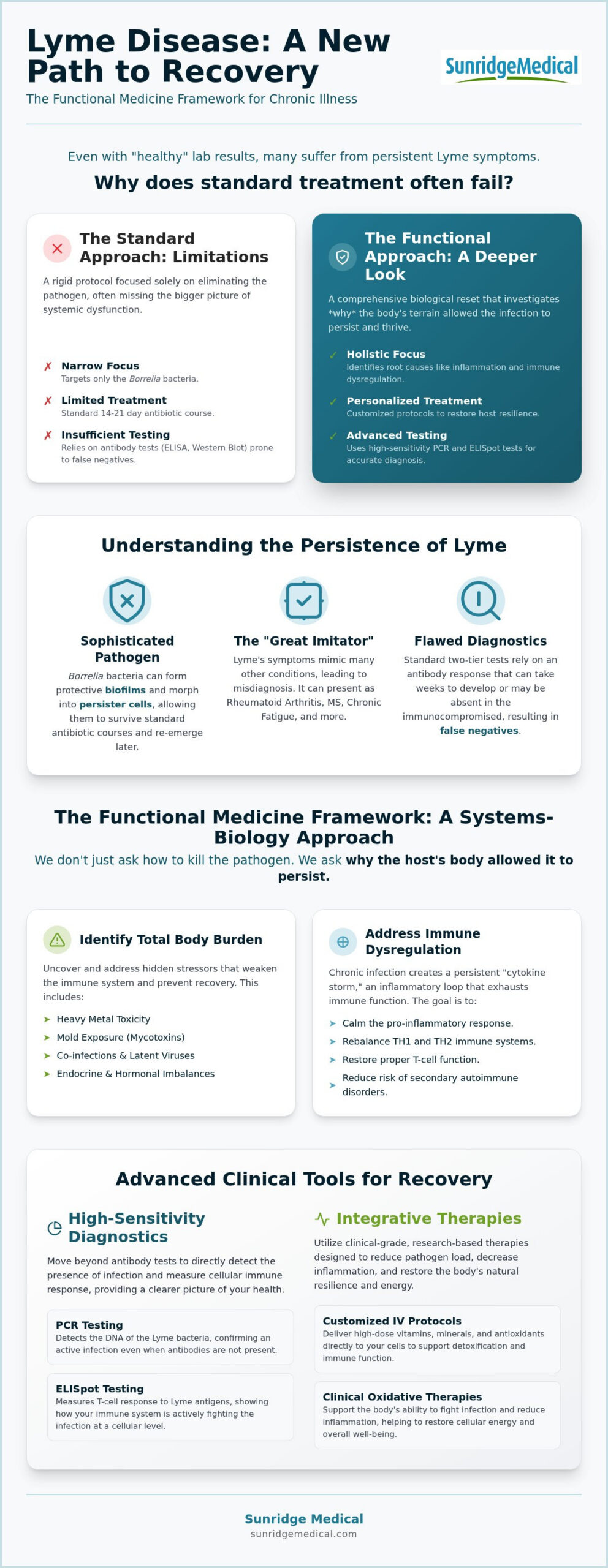
The standard medical model for treating Lyme disease relies on a rigid protocol: a 14 to 21 day course of oral antibiotics. While this approach is effective for many acute cases, it frequently fails the significant population of patients who transition into chronic illness. This failure isn’t a lack of patient compliance; it’s a limitation of the treatment itself. Borrelia burgdorferi, the spirochete responsible for Lyme, is a sophisticated pathogen capable of morphing into persister cells and encasing itself in protective biofilms. These biological shields allow the bacteria to survive antibiotic exposure, leading to a resurgence of symptoms once the medication stops.
Because Lyme can mimic conditions like rheumatoid arthritis, multiple sclerosis, and chronic fatigue syndrome, it’s often called the “Great Imitator.” This diagnostic complexity is at the heart of the Chronic Lyme disease controversy, where patients are often told their symptoms are merely Post-Treatment Lyme Disease Syndrome (PTLDS) rather than an active, persistent infection. Utilizing functional medicine for lyme disease allows for a deeper investigation into whether the body is dealing with a lingering pathogen or a runaway inflammatory response that requires more than just a simple prescription.
The Failure of Standard Diagnostic Testing
The current two-tier testing system, consisting of the ELISA and Western Blot, was originally designed for surveillance rather than clinical diagnosis. These tests rely on the body’s antibody response, which can take weeks to develop or may never reach detectable levels in immunocompromised individuals. This timing issue often leads to false negatives during the critical early window of infection. A seronegative Lyme patient is an individual who presents with clinically clear symptoms of infection but lacks the specific antibody response required to trigger a positive result on standardized laboratory tests. This diagnostic gap leaves thousands of patients without validation or a clear path to recovery.
The Persistence of Chronic Symptoms
Even when the primary infection is addressed, the systemic fallout can be devastating. Lyme spirochetes have a predilection for fatty tissues, often crossing the blood-brain barrier to trigger neuroinflammation. This leads to the persistent brain fog and cognitive decline that many patients describe as losing their mental clarity. Beyond the nervous system, the infection frequently disrupts the endocrine system, causing profound hormonal imbalances and adrenal fatigue. Addressing these complex interactions requires a transition from standard protocols to a more comprehensive framework. This is why functional medicine for lyme disease is becoming the preferred choice for those seeking to restore their biological resilience through personalized care.
The Functional Medicine Framework for Lyme Recovery
Recovery from persistent Lyme requires a profound paradigm shift in how we view chronic illness. While conventional Lyme disease treatment focuses almost exclusively on the elimination of Borrelia burgdorferi, the framework of functional medicine for lyme disease views the illness as a multi-systemic disruption. It’s a systems-biology approach that looks at the body as an interconnected web rather than a collection of independent organs. We don’t just ask how to kill the pathogen; we ask why the host’s biological terrain allowed the infection to take root and persist. By identifying the total body burden, which includes hidden stressors like heavy metals and mold toxicity, we can begin to restore your natural resilience. Individualized care plans are essential because every patient harbors a unique genetic and environmental history that dictates their recovery speed.
Addressing the Immune Dysregulation
Chronic infection often forces the body into a state of perpetual alarm, triggering what is known as a persistent cytokine storm. This pro-inflammatory loop prevents the body from returning to a state of homeostasis and keeps the nervous system in a sympathetic “fight or flight” mode. Over time, this dysregulation exhausts T-cell function and creates a significant imbalance between TH1 and TH2 immune responses. This shift doesn’t just hinder the body’s ability to fight the bacteria; it also increases the risk of developing secondary autoimmune disorders. Utilizing functional medicine for lyme disease allows us to quiet this inflammatory noise and retrain the immune system to recognize and respond to actual threats appropriately.
Managing Co-Infections and Environmental Triggers
Lyme rarely travels alone, and many patients are also dealing with co-infections like Babesia, Bartonella, or Mycoplasma. Each of these pathogens requires a distinct clinical strategy because they affect the body through different biological mechanisms. These infections often work synergistically with environmental toxins, such as glyphosate or heavy metals, to suppress the immune system even further. This multi-layered complexity is why many find that a standard antibiotic course is insufficient for achieving a full recovery. Discovering a comprehensive integrative medicine for chronic illness recovery path is vital for addressing these hidden layers of disease that are often overlooked in primary care.
If you feel your recovery has stalled under standard protocols, a personalized physician evaluation can help identify the precise obstacles preventing your return to health. You can explore how these advanced protocols are customized for your specific needs at Sunridge Medical.
Advanced Diagnostics: Identifying the Root Cause
Standard testing often leaves patients in a diagnostic vacuum. When ELISA and Western Blot results return negative despite debilitating symptoms, it’s a sign that the testing methodology is insufficient for the complexity of the case. Advanced functional medicine for lyme disease utilizes more sensitive tools such as Polymerase Chain Reaction (PCR) testing to detect bacterial DNA and ELISpot assays to measure active T-cell responses. These tools provide a higher degree of sensitivity, helping to confirm the presence of Borrelia even when antibodies are dormant. Taking an Integrative Approach to Lyme Disease ensures that we aren’t just looking for a bug, but assessing the total biological impact on the host.
The infection doesn’t just exist in the bloodstream; it invades the cellular machinery. We evaluate mitochondrial function to understand why patients experience profound, unrelenting fatigue. Chronic infection often hijacks cellular energy production, leading to a state of mitochondrial dysfunction. Simultaneously, we perform comprehensive hormonal mapping. The stress of chronic illness frequently disrupts the adrenal and thyroid glands, exacerbating symptoms like weight gain, temperature dysregulation, and mood instability. Interpreting this complex web of data requires a dedicated physician evaluation to ensure every clinical finding is woven into a cohesive recovery strategy.
Biological Markers of Chronic Infection
Beyond pathogen detection, we monitor specific biological markers of chronic inflammation. Elevated levels of C4a and TGF-beta1 often indicate a systemic inflammatory response syndrome (SIRS) triggered by the infection or concurrent mold exposure. We also identify micronutrient deficiencies, such as low magnesium or B12, which can cripple the immune system’s ability to repair tissue. Expert Lyme disease specialists use these specific inflammatory markers to track clinical progress and adjust treatment protocols in real time as the body begins to heal.
Neurologic and Cognitive Assessment
Cognitive decline and “brain fog” aren’t just subjective complaints; they’re often the result of neuroinflammation or autonomic dysfunction. We assess for Postural Orthostatic Tachycardia Syndrome (POTS) and other forms of dysautonomia that frequently accompany late-stage Lyme. Because the infection can compromise the central nervous system, specialized neurologic condition treatment is a cornerstone of our recovery protocols. By addressing the root neurologic triggers, we can help patients regain mental clarity and physical stability. This comprehensive diagnostic phase ensures that no stone is left unturned before moving into the therapeutic stage of recovery.
Clinical-Grade Alternative Therapies for Lyme Disease
Moving from the diagnostic phase to active intervention requires a tiered approach that addresses the infection’s complexity. While oral supplements have a role in long-term wellness, they often fall short in chronic cases because the infection frequently compromises the gastrointestinal tract. Clinical-grade functional medicine for lyme disease utilizes direct delivery methods to ensure therapeutic concentrations reach the cellular level where they’re needed most. These physician-monitored protocols offer a level of precision and biological impact that at-home regimens simply cannot match. By utilizing advanced oxidative therapies and immune-modulating treatments, we can begin to shift the body’s internal environment from one of disease to one of recovery.
Specialized IV and Injection Therapy
Direct intravenous delivery is often necessary to bypass gut malabsorption issues common in late-stage Lyme. Utilizing intravenous vitamin C therapy provides potent immune support while applying oxidative pressure on persistent pathogens. These nutritional infusions deliver high concentrations of vitamins, minerals, and amino acids directly to depleted cells, fueling the body’s repair mechanisms. Every IV protocol is meticulously tailored to the patient’s specific co-infection profile, ensuring that we address the unique biological footprint of their illness rather than applying a one-size-fits-all solution.
Detoxification and Biofilm Management
A primary obstacle to recovery is the presence of biofilms, which are protective matrices that bacteria create to hide from the immune system. We employ targeted clinical strategies to break down these barriers, exposing the dormant bacteria to the body’s natural defenses and therapeutic agents. However, as these pathogens are eliminated, they release endotoxins that can trigger a Herxheimer reaction. This systemic “die-off” response can cause a temporary flare in symptoms if not managed correctly. To mitigate this, our protocols focus on supporting the primary detoxification organs, specifically the liver and kidneys, through controlled sequences that ensure the body can efficiently process and eliminate these toxins. This methodical approach reduces patient discomfort and maintains a steady trajectory toward health.
If you’re ready to move beyond basic supplements and access advanced clinical protocols, schedule a consultation at Sunridge Medical to begin your personalized journey toward long-term recovery.
Choosing an Advanced Integrative Medical Center
Selecting the right facility for your recovery is a decision that requires careful scrutiny of both clinical philosophy and historical success. A center shouldn’t force a choice between conventional wisdom and alternative research. Instead, the most effective recovery environments utilize a sophisticated blend of both to address the multi-faceted nature of the disease. When evaluating functional medicine for lyme disease, look for a center that prioritizes individualized physician evaluations over standardized, pre-packaged protocols. This ensures that your unique biological markers, rather than a generic diagnosis, dictate the course of your care.
A comprehensive evaluation should go beyond a simple review of symptoms. It must involve a deep dive into your medical history, environmental exposures, and previous treatment failures. This process allows the medical team to identify the precise obstacles to your healing. As your treatment progresses, your care plan shouldn’t remain static. It must evolve through continuous monitoring and data-driven adjustments, ensuring that the therapeutic approach remains aligned with your body’s changing needs during the recovery journey.
The Sunridge Medical Approach to Lyme
Sunridge Medical has operated as a national leader in advanced alternative medicine since its founding in 2003. Led by Medical Director Dr. Steven S. Isaacman, our team leverages over two decades of experience in managing complex chronic diseases that have baffled traditional systems. We don’t just treat an infection; we address the systemic fallout. Our facility provides access to a wide range of specialized services, including Hormone Optimization Therapy and Neurologic Condition Treatment. This multi-faceted approach allows us to act as a pioneering advocate for patients who’ve felt overlooked or dismissed by the standard healthcare model.
Next Steps for Clinical Recovery
The journey toward long-term health begins with a professional consultation designed to validate your experience and map your path forward. Preparing for your first evaluation involves gathering your previous laboratory results and documenting the progression of your symptoms. This baseline information is critical for our physicians to develop a targeted clinical roadmap. We understand the fear that chronic illness is permanent, but our focus remains on the possibility of significant progress through a more comprehensive lens than standard practices. Contact our team at 1-800-923-7878 to begin your individualized recovery journey today.
Reclaiming Your Health Through Precision Medicine
Recovery from chronic Lyme disease isn’t a matter of chance; it’s a matter of clinical precision. We’ve explored why standard antibiotic protocols often fall short and how a systems-biology approach identifies the hidden biological burdens stalling your progress. By integrating advanced diagnostics with physician-monitored IV and oxidative therapies, we can move beyond symptom management toward a genuine restoration of your immune and nervous systems. This comprehensive application of functional medicine for lyme disease offers a scientific roadmap for those who’ve felt abandoned by traditional care.
With over 20 years of experience in complex chronic diseases, Sunridge Medical provides the specialized attention required to navigate these difficult health journeys. You don’t have to accept persistent fatigue or cognitive decline as your permanent reality. Our individualized physician-led treatment plans are designed to rebuild your resilience from the cellular level up. Take the first step toward a transformative recovery today. Schedule your comprehensive clinical evaluation by calling 1-800-923-7878. You deserve a dedicated advocate who is committed to your long-term well-being and the restoration of your vitality.
Frequently Asked Questions
Is chronic Lyme disease a recognized medical condition in functional medicine?
Yes, functional medicine for lyme disease recognizes chronic infection as a multi-layered clinical reality rather than just a post-treatment syndrome. This framework acknowledges that the pathogen can persist in protected tissues, triggering ongoing immune dysregulation. By focusing on the biological terrain of the patient, we validate the persistent symptoms that conventional tests might overlook. This recognition is the first step in moving from a state of frustration to a structured recovery plan.
How long does a typical functional medicine protocol for Lyme disease take?
The duration of a recovery protocol depends entirely on the complexity of your case and the presence of co-infections. Most patients begin to see shifts in their clinical markers within the first few months, though a full biological reset often requires a more extended commitment. Because we focus on restoring host resilience rather than just killing the bug, the timeline is dictated by how quickly your immune and endocrine systems can regain homeostasis.
Can functional medicine help if I have already had Lyme for several years?
Yes, functional medicine is specifically designed for complex, long-term cases where standard treatments have failed. Even if you’ve struggled with symptoms for years, our protocols target the biofilms and persister cells that allow the infection to remain dormant. We address the cumulative damage to your nervous and endocrine systems, helping to reverse the chronic inflammation that has built up over time. It’s never too late to initiate a physician-led biological reset.
What is the difference between an integrative Lyme specialist and a conventional doctor?
An integrative specialist utilizes a systems-biology approach that views you as an interconnected whole, whereas a conventional doctor typically focuses on acute pathogen elimination. Conventional care often relies on standardized antibiotic windows that don’t account for individual immune health or environmental toxins. Our specialized physicians investigate the root causes of your symptoms, including mitochondrial function and total body burden, to create a customized roadmap that bridges the gap between conventional and alternative research.
Are the IV therapies used for Lyme disease safe and research-based?
All IV protocols utilized at our center are physician-monitored and rooted in clinical research regarding oxidative and nutritional support. These therapies deliver high concentrations of essential nutrients and biological agents directly to your cells, bypassing the malabsorption issues common in chronic illness. This direct delivery ensures that the therapeutic agents reach the necessary concentration levels to support immune function and tissue repair. Safety is our primary concern, and every protocol is adjusted based on your specific clinical data.
How does hormone optimization play a role in Lyme disease recovery?
Hormone optimization is critical because chronic infection often leads to profound adrenal fatigue and thyroid dysregulation. When your endocrine system is compromised, your body lacks the metabolic energy required to fuel a robust immune response. By restoring balance to your hormones, we provide your cells with the necessary signals to repair tissue and reduce systemic inflammation. This hormonal support acts as a foundation, allowing the more targeted anti-microbial therapies to work more effectively.
Will I experience a Herxheimer reaction during functional medicine treatment?
A Herxheimer reaction is a common part of the healing process as pathogens are eliminated and release endotoxins. While these reactions can be uncomfortable, we utilize specific clinical strategies to manage and mitigate their intensity. By supporting your primary detoxification organs and breaking down biofilms in a controlled sequence, we ensure that your body can process these toxins efficiently. Our physicians monitor your progress closely to adjust the pace of treatment, keeping your comfort and safety at the forefront.
Does Sunridge Medical provide individualized treatment plans for out-of-state patients?
Sunridge Medical operates as a national leader, providing individualized treatment plans for patients traveling from across the country. We understand the unique challenges faced by those who lack access to advanced functional medicine for lyme disease in their local areas. Our team coordinates your care to ensure that your time at our center is maximized for clinical impact. Every plan is built around your specific physician evaluation, providing a level of specialized attention that transcends geographic boundaries.