


What if the progressive decline you’ve been told is inevitable is actually a systemic breakdown that can be addressed by looking beyond the brain itself? When facing the complexities of cognitive or motor challenges, many patients find that functional medicine for neurological disorders provides the answers that standard evaluations miss. You’ve likely felt the frustration of being told your “labs are normal” even as your symptoms persist, or perhaps you’re concerned about the long term side effects of your current medications. This feeling of being stuck is not a reflection of your potential for recovery, but rather a limitation of the traditional diagnostic lens.
We’ll show you how to move past symptom management by identifying specific root causes like toxicity, chronic infection, or cellular metabolic dysfunction. This 2026 guide details how a personalized, research-based recovery plan can help stop the progression of decline and restore your physical function. You’ll gain a clear understanding of how addressing systemic health can lead to the restoration of cognitive clarity and a return to the life you deserve. Our methodical approach provides the clinical certainty and specialized attention required to navigate these difficult health journeys with confidence.
Key Takeaways
- Understand how functional medicine for neurological disorders moves beyond symptom suppression to identify the specific physiological imbalances driving your condition.
- Discover the critical role of neuroinflammation and mitochondrial health in maintaining the cellular energy required for cognitive and motor function.
- Learn how hidden triggers such as chronic infections and environmental toxins can mimic progressive neurological diseases and how to identify them through advanced testing.
- Explore the necessity of a comprehensive physician evaluation to move past “normal” lab results and find the true root causes of your symptoms.
- See how a research-based, personalized recovery plan can stop the progression of decline and support the restoration of your long-term well-being.
The Shift from Symptom Management to Functional Medicine for Neurological Disorders
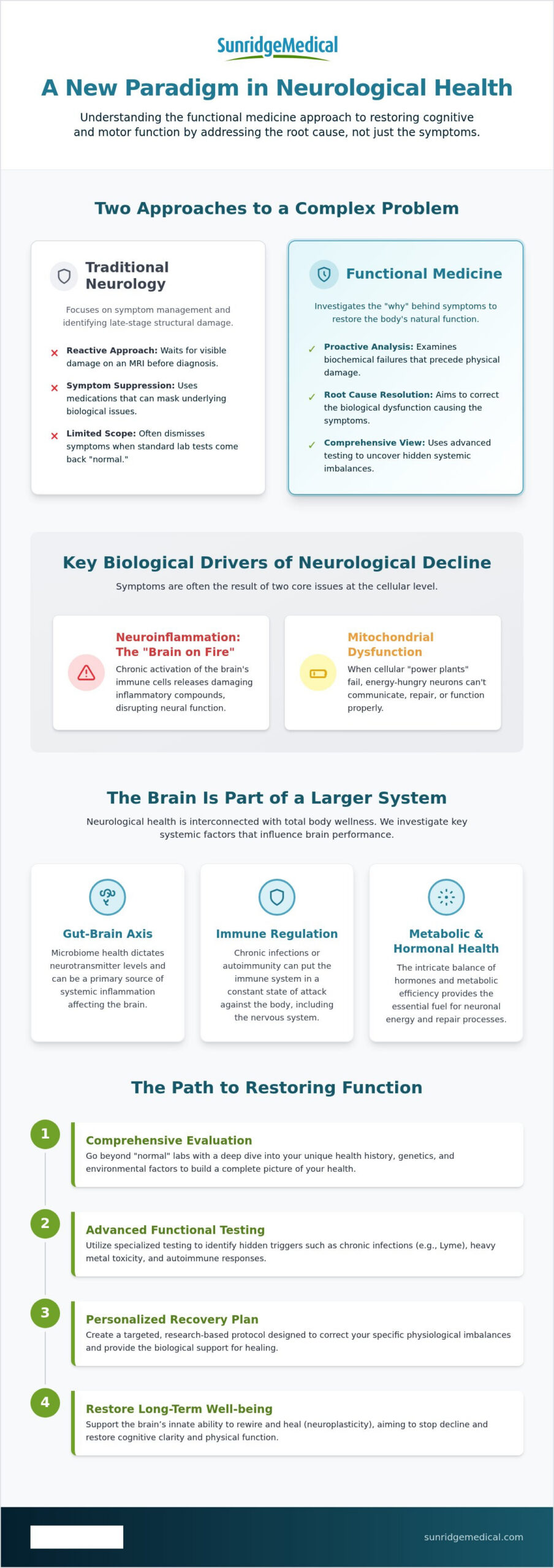
Traditional neurology focuses primarily on identifying structural damage through imaging and managing symptoms with pharmacological interventions. While this model is essential for acute trauma or surgical needs, it often fails patients with chronic, progressive conditions. In 2026, the functional approach to the nervous system has evolved into a sophisticated analysis of how your internal environment dictates brain performance. Instead of waiting for an MRI to show visible lesions or atrophy, we examine the biochemical and metabolic failures that precede physical damage. A “normal” MRI does not guarantee a healthy brain; it simply means the damage hasn’t reached a structural threshold yet. By the time a scan shows a problem, the underlying physiological dysfunction has often been present for years.
Choosing functional medicine for neurological disorders means moving away from a diagnostic label and toward a biological solution. We don’t just ask what condition you have, we investigate why your neurons are failing to communicate effectively. This shift represents a departure from standardized protocols, opting instead for a deep dive into your unique genetic, environmental, and lifestyle factors.
The Limitations of Conventional Neurological Care
Many patients feel trapped in a “wait and see” cycle, where they’re monitored for decline rather than offered a path to restoration. Conventional care often relies on suppressive medications that, while helpful for temporary relief, can mask the very biological issues causing the decay. This approach is reactive rather than proactive. It prioritizes structural imaging over functional analysis, leaving many individuals without answers when their tests come back clear despite debilitating symptoms. We believe that if you’re experiencing cognitive or motor challenges, your physiology is signaling for help, regardless of what a standard blood panel suggests.
The Core Principles of Functional Neurology and Medicine
Our methodology is built on the foundation of neuroplasticity, which is the brain’s remarkable ability to rewire and heal when provided with the correct biological support. We recognize that the brain doesn’t exist in a vacuum. It is heavily influenced by systemic factors, including:
- The Gut-Brain Axis: How microbiome health dictates neurotransmitter production and neuroinflammation.
- Immune Regulation: The ways in which systemic autoimmunity can trigger a “brain on fire” response.
- Hormonal Synergy: The impact of metabolic health on neuronal energy and repair.
This comprehensive view is vital for addressing complex cases, including Functional Neurological Disorder, where the brain’s signaling is impaired despite a lack of structural damage. By embracing integrative medicine for chronic illness, we provide a structured path forward that focuses on biochemical correction and the restoration of well-being through a multi-faceted clinical lens.
Biological Drivers: How Systemic Imbalances Trigger Neurological Symptoms
To understand the progression of neurological decline, we must look at the biochemical fuel and inflammatory pathways that sustain brain function. Standard care often overlooks the fact that the brain is part of a larger, integrated system. Through the lens of functional medicine for neurological disorders, we identify the biological drivers that cause neurons to misfire or degenerate long before damage is visible on a scan.
Neuroinflammation is a primary driver of cognitive and motor symptoms. It’s often described as a “brain on fire” state, triggered when microglia, the brain’s resident immune cells, become chronically activated. While these cells are meant to protect you, persistent activation leads to the release of inflammatory cytokines that damage healthy neural tissue. This process is frequently accompanied by mitochondrial dysfunction. Your neurons are the most energy-intensive cells in your body. When mitochondria fail, these cells lose the ability to process information and repair damage, leading to profound brain fog and physical fatigue.
The blood-brain barrier acts as a meticulous gatekeeper, but systemic inflammation can lead to a “leaky brain” scenario. This allows environmental toxins and heavy metals to cross into sensitive neural territory, triggering oxidative stress. This free radical damage overwhelms the brain’s antioxidant defenses and disrupts critical neural pathways. Identifying these systemic triggers requires a level of diagnostic depth that goes beyond standard testing. If you’re ready for a more comprehensive evaluation, consulting with a specialized physician can provide the clarity you’ve been seeking.
The Microbiome-Gut-Brain Axis
The microbiome-gut-brain axis is a bidirectional communication highway. Intestinal permeability, or “leaky gut,” often translates directly to neuroinflammation. Because the gut is the “second brain,” producing a significant portion of the body’s serotonin and GABA, a compromised microbiome directly impacts mood, sleep, and cognitive clarity. Clinical strategies for recovery must prioritize restoring gut health to reduce the systemic toxic load and support neurotransmitter balance.
Hormonal and Metabolic Influences on the Brain
Metabolic health is a cornerstone of neurological stability. Research has increasingly linked insulin resistance in the brain, sometimes referred to as Type 3 Diabetes, to progressive memory loss and cognitive decline. Chronic stress further complicates this by elevating cortisol levels, which can lead to measurable hippocampal atrophy over time. This is why hormone therapy for autoimmune disease is frequently a missing link in neurological recovery, as it helps stabilize the internal environment necessary for neural repair.
Identifying Systemic Triggers: Lyme, Autoimmunity, and Toxicity
The search for a resolution to neurological symptoms often stops at the diagnosis. However, a diagnosis is simply a description of symptoms, not an explanation of their origin. In the practice of functional medicine for neurological disorders, we look for the specific systemic triggers that initiate and sustain neural dysfunction. We don’t accept “idiopathic” as an answer; instead, we investigate the environmental and biological variables that have compromised your nervous system’s integrity.
Specialized diagnostic testing is the cornerstone of this investigation. While standard blood panels often return “normal” results, they rarely look deep enough into the body’s toxic burden or chronic infection status. In 2026, advanced specialty labs for gut health, heavy metals, and complex immune panels can range from $500 to over $2,500. This investment provides a level of detail that standard insurance-based models cannot match, revealing the precise triggers that require clinical intervention.
Lyme Disease and Neurological Mimicry
Chronic infections are frequently the hidden architects of neurological decline. Borrelia burgdorferi, the primary pathogen in Lyme disease, has a notorious affinity for the central nervous system. This “Neuro-Lyme” can present with symptoms that almost perfectly mimic ALS, Multiple Sclerosis, or Parkinson’s disease, leading to frequent misdiagnosis in conventional settings. The bacteria can cross the blood-brain barrier, triggering the microglia activation and neuroinflammation we discussed previously. Because of these complexities, lyme disease specialists are often required to identify the co-infections and biofilm protections that allow these pathogens to evade standard antibiotic treatments.
Environmental Illness and Neurotoxicity
We live in an environment where we’re constantly exposed to neurotoxic substances, from heavy metals like lead and mercury to mycotoxins produced by indoor mold. While the body has natural detoxification pathways, many patients suffer from bioaccumulation. This occurs when the toxic load exceeds the body’s ability to process and eliminate it, often due to genetic predispositions or compromised gut health. These toxins act as direct “circuit breakers” in the brain, disrupting neural signaling and causing oxidative damage to delicate tissues. Restoring function requires more than just avoiding exposure; it necessitates structured, physician-led detoxification protocols designed to safely pull these substances from cellular storage without causing further systemic stress.
When the immune system becomes dysregulated by these triggers, it may begin to mistakenly attack brain tissue, a condition known as autoimmune encephalopathy. This represents the ultimate systemic breakdown, where the body’s defense mechanisms become the primary source of injury. Addressing this requires a multi-faceted approach that stabilizes the immune system while simultaneously removing the infectious or toxic catalysts that caused the confusion in the first place.
Advanced Integrative Protocols for Neurological Recovery
Restoring neurological health requires a shift from reactive monitoring to proactive intervention. Our clinical framework for functional medicine for neurological disorders is built upon five essential stages of recovery. It begins with a comprehensive physician evaluation that transcends standard diagnostics. We utilize functional testing to map your specific biological terrain, identifying the exact catalysts of your symptoms. Once these triggers are identified, we prioritize addressing systemic inflammation and oxidative stress to stabilize the internal environment. This stabilization is the prerequisite for all subsequent repair.
Implementing targeted IV and injection therapies allows us to deliver high concentrations of cellular repair agents directly where they are needed most. This stage is followed by support for neurogenesis and neuroplasticity, where we provide the brain with the specific building blocks required to rewire and heal. Finally, we focus on the ongoing monitoring and optimization of your internal environment to ensure that progress is maintained and health is restored for the long term.
The Role of Specialized IV Therapies
Direct delivery of nutrients is often necessary when the digestive system is too compromised to provide the brain with essential fuel. Nutritional infusions bypass malabsorption issues, delivering high concentrations of vitamins, minerals, and amino acids directly to the bloodstream. We also employ oxidative therapies to modulate the immune response, effectively rebooting dysregulated defenses. For many, iv therapy for autoimmune disease serves as a critical tool for supporting neurological tissue repair by reducing the inflammatory load that hinders natural healing.
Biological and Regenerative Treatments
Moving beyond basic supplementation, we utilize research-based alternative treatments to stimulate neurogenesis and neuroplasticity. These biological agents are selected for their ability to modulate chronic inflammatory pathways at a cellular level. This level of precision is especially vital for patients navigating complex co-morbidities. For instance, we provide specialized support for those requiring integrative cancer treatment by stage, where neurological side effects from conventional oncology must be managed alongside the primary condition. This multi-faceted approach ensures that every aspect of your biology is addressed in tandem.
If you’re ready to explore a targeted, multi-faceted approach to your recovery, contact Sunridge Medical to speak with a patient advocate about your unique needs.
Restoring Quality of Life: The Sunridge Medical Approach
At Sunridge Medical, we recognize that your journey through neurological illness is uniquely yours. No two patients share the same biological “map” of disease, which is why standardized treatments often reach a ceiling of effectiveness. By utilizing functional medicine for neurological disorders, we provide a structured, physician-led path forward for those who’ve felt abandoned by the conventional system. Our philosophy is rooted in the belief that progress is always possible when you look deep enough into the underlying mechanisms of dysfunction. We act as a steady hand and a clinical sanctuary, offering the specialized attention necessary to navigate complex health journeys.
Our methodology isn’t just a collection of therapies; it’s a research-based, multi-faceted approach designed to restore systemic balance. We move beyond the diagnosis to understand the individual human experience behind the symptoms. This transition from a state of hopelessness to a clear, actionable plan is the hallmark of our care. By identifying the specific catalysts, whether they’re toxic, infectious, or metabolic, we empower you to reclaim your cognitive health and physical function.
Individualized Care for Complex Chronic Cases
“One-size-fits-all” protocols fail in neurological medicine because they ignore the intricate web of systemic influences we’ve detailed throughout this guide. We’re committed to identifying the unique triggers specific to your biology. Our protocols combine the rigorous safety standards of conventional medicine with the pioneering innovation of advanced alternative treatments. This integration allows us to address the root causes of neurodegeneration while supporting your body’s innate capacity for repair. We don’t just manage your condition; we work to transform your health from the inside out.
Taking the Next Step Toward Neurological Health
Your journey toward recovery begins with a comprehensive physician evaluation. During this initial consultation, we’ll review your medical history with a level of thoroughness that’s rare in modern healthcare. This isn’t a rushed appointment but a deep dive into your physiology to find the answers you’ve been seeking. Our patient support team plays a vital role in this process, coordinating every aspect of your care so you can focus entirely on your healing. We invite you to call our toll-free number to schedule your personalized consultation and take the first step toward a restored quality of life.
Reclaiming Your Cognitive Health and Physical Function
Navigating a neurological condition requires more than just managing symptoms; it demands a deep investigation into the systemic imbalances that drive cellular decline. By embracing functional medicine for neurological disorders, you move away from the limitations of standard imaging toward a comprehensive understanding of your biological terrain. We’ve explored how identifying triggers like chronic infection, environmental toxicity, and neuroinflammation can halt progressive symptoms and restore cognitive clarity. This shift in perspective turns a “normal” lab result into a starting point for deeper diagnostic discovery and biochemical correction.
Led by Medical Director Dr. Steven S. Isaacman, Sunridge Medical brings over 20 years of clinical experience in treating complex chronic diseases. We specialize in developing individualized protocols for treatment-resistant neurological cases, providing a level of precision that standard systems often overlook. You don’t have to navigate this path alone or accept a future of inevitable decline. Our team is ready to act as your scientific guide, offering the specialized attention and research-based care you deserve. To begin your journey toward recovery, Schedule a Consultation with a Sunridge Medical Specialist today. There is always a reason for hope when you address the root cause.
Frequently Asked Questions
How is functional medicine different from traditional neurology?
Functional medicine for neurological disorders differs from traditional neurology by shifting the focus from structural damage to biochemical performance. While a conventional neurologist uses imaging to identify lesions or atrophy, we investigate the physiological imbalances that precede physical decay. We analyze how the gut, immune system, and endocrine health collectively influence neuronal signaling. This systems-biology approach allows us to address the metabolic and inflammatory drivers that standard diagnostic models often overlook.
Can functional medicine help with progressive conditions like Parkinson’s or MS?
These methodologies are designed to address the systemic drivers of neurodegeneration, such as chronic inflammation and oxidative stress. By stabilizing your internal environment, we aim to slow or halt the progression of symptoms that characterize conditions like Parkinson’s or MS. Our clinical focus is on restoring cellular energy production and modulating the immune response. This proactive strategy provides a structured path forward for those who haven’t responded to standard pharmacological symptom management.
What kind of tests are used in functional neurology to find root causes?
We utilize advanced diagnostic testing that goes far beyond standard blood panels or structural MRIs. In 2026, this includes comprehensive microbiome analysis, detailed metabolic panels, and testing for biological age. We also screen for heavy metal toxicity and mycotoxin exposure to identify environmental triggers. These specialized labs allow our physicians to create a precise biological map of your health, ensuring that every protocol is tailored to your unique physiological needs.
Is it possible to reverse neuroinflammation through diet and IV therapy?
Targeted interventions can significantly reduce neuroinflammation by repairing the blood-brain barrier and removing inflammatory catalysts. Diet plays a foundational role in reducing systemic toxic load, while specialized IV therapies deliver high concentrations of antioxidants and nutrients directly to the bloodstream. This dual approach bypasses digestive malabsorption to feed the brain the building blocks it needs for repair. It effectively calms the “brain on fire” state that drives chronic cognitive and motor symptoms.
How long does a functional medicine protocol for neurological disorders take?
The duration of a personalized protocol depends on the complexity of your case and the severity of your triggers. Most patients with chronic neurological challenges can expect a treatment timeframe ranging from 6 to 12 months. This period allows for the methodical removal of toxins, the resolution of underlying infections, and the gradual restoration of neural signaling. Progress is monitored through regular physician evaluations to ensure your recovery plan remains optimized for your evolving needs.
Do you treat neurological symptoms caused by chronic Lyme disease?
We specialize in treating complex cases where chronic infections like Borrelia burgdorferi cause profound neurological dysfunction. This condition, often called Neuro-Lyme, requires a multi-faceted approach to penetrate biofilms and cross the blood-brain barrier. Our protocols address not only the primary infection but also the co-infections and systemic inflammation that mimic other progressive diseases. This comprehensive strategy is essential for patients whose symptoms have persisted despite standard antibiotic treatments.
What are the most common environmental toxins that affect the brain?
The most frequent environmental triggers include heavy metals like mercury and lead, along with mycotoxins from indoor mold exposure. These substances are particularly dangerous because they can bioaccumulate in fatty tissues like the brain. Once stored, they disrupt neural communication and trigger chronic oxidative stress. Identifying these toxins through specialized testing is a critical step in our functional medicine for neurological disorders framework, allowing us to implement targeted detoxification protocols safely.
Are these alternative neurological treatments safe for advanced patients?
These treatments are physician-led and research-based, ensuring they are safe for patients at various stages of illness. Every protocol is individualized after a thorough evaluation by Dr. Steven S. Isaacman or our specialized medical team. We prioritize treatments that support the body’s natural repair mechanisms without the harsh side effects often associated with long-term neurological medications. This careful, methodical approach provides a sanctuary for individuals seeking progress through a more comprehensive medical lens.