


You've heard that a glutathione IV might brighten the skin, support “detox,” or improve energy. You may also have seen warnings about nausea, allergic reactions, liver problems, or contaminated compounded products. Before you book an infusion in Scottsdale or anywhere in the Phoenix area, the practical question is not just whether glutathione is “safe.” It's whether the potential reason for treatment justifies an intravenous product, whether you're an appropriate candidate, and whether the clinic can recognize and respond to a reaction in real time.
This guide focuses on glutathione IV side effects, including what can happen during an infusion, what may appear afterward, which medical histories require caution, and how product quality creates a separate layer of risk. It also explains what a responsible clinic should monitor. The purpose isn't to recommend for or against IV glutathione in the abstract, but to help you have a specific, qualified conversation with a medical professional before consenting to treatment.
Table of Contents
- Why Patients Ask About Glutathione IV Side Effects
- What Glutathione Is and Why the IV Route Matters
- Side Effects During and Immediately After Infusion
- Delayed and Organ-Level Reactions to Monitor For
- Product Quality and Compounding Risks
- Contraindications and Cautions Before Treatment
- How a Responsible Clinic Monitors Each Infusion
- Questions Patients Commonly Ask Before Saying Yes
Why Patients Ask About Glutathione IV Side Effects
Individuals asking about glutathione IV side effects are trying to make a decision quickly. They may be considering an infusion for cosmetic skin lightening, fatigue, recovery, or a general wellness goal. Some have read about potential benefits on a clinic website, such as glutathione IV drip benefits, but want a clearer account of the trade-offs before scheduling.
The first distinction is between a mild, temporary infusion symptom and a medical event that requires the infusion to stop. A brief feeling of warmth or lightheadedness can have a different significance from wheezing, falling blood pressure, widespread hives, or severe chills. Patients should know how a clinic makes that distinction rather than being told that discomfort is automatically normal.
What this discussion includes
The information here addresses:
- Immediate reactions: Symptoms that develop while the IV is running or shortly afterward.
- Delayed concerns: Organ-level or skin findings that may require follow-up rather than simple reassurance.
- Product quality: The possibility that a reaction reflects endotoxin exposure, contamination, potency problems, or another compounding failure.
- Candidacy: Medical histories and medications that can change the risk assessment.
- Monitoring: The questions you should ask about screening, vital signs, infusion rate, emergency readiness, and post-infusion instructions.
Dosing decisions, FDA approval status, compounding standards, and off-label aesthetic use deserve separate consideration. A clinic shouldn't treat them as minor details, because intravenous administration bypasses normal digestive barriers and places the product directly into circulation.
Practical rule: A provider should be able to explain why IV glutathione is being considered for your specific situation, what alternatives exist, and what would make them decline treatment.
The FDA has documented systemic reactions associated with injectable glutathione, including cases requiring hospitalization, so the safety conversation should happen before the IV starts, not after a problem develops. The decision should account for your medical history, current symptoms, medications, and the quality controls used for the product.
What Glutathione Is and Why the IV Route Matters
Glutathione is an endogenous tripeptide antioxidant made from three amino acids. The body produces it inside cells, with the liver playing an important role in overall glutathione availability. It participates in redox regulation and helps cells manage oxidative stress, but it isn't a vitamin that the body uses up after one dose.
The delivery route changes the pharmacology. Oral glutathione must pass through the gastrointestinal tract and liver, where digestion and first-pass metabolism can limit how much reaches systemic circulation. Intramuscular administration and IV administration also behave differently. An IV delivers the compound directly into the bloodstream, creating a rapid exposure that oral supplementation doesn't reproduce.
Why oral data cannot answer every IV question
Patients sometimes assume that because glutathione is naturally present in the body, a concentrated IV dose must be harmless. That conclusion doesn't follow. An endogenous substance can still produce problems when the route, concentration, formulation, infusion speed, or patient condition changes.
IV administration can produce transient concentrations above ordinary physiologic exposure. That difference helps explain why evidence about oral products shouldn't automatically be used to reassure someone about an IV infusion. It also explains why a cosmetic “drip” deserves medical screening even when the person feels generally healthy.
A responsible clinician should clarify the intended indication rather than treating IV glutathione as a universal wellness intervention. If the discussion involves cosmetic changes, patients can also ask how claims were assessed, what happens if the benefit is temporary, and whether a dermatologic evaluation would be more appropriate. Before-and-after images, including those discussed in glutathione IV before-and-after information, don't establish that an IV is suitable or safe for every patient.
The central point is straightforward: the IV route creates a different safety question from oral supplementation. The body's natural production of glutathione doesn't remove the need for product controls, patient selection, and observation.
Side Effects During and Immediately After Infusion
A patient who develops chills, nausea, dizziness, or sudden weakness while the drip is running needs assessment at once. The FDA has described reports of fever, chills, pain, dizziness, shock-like reactions, and sepsis-like symptoms after IV glutathione, whether given alone or with other ingredients. Some patients required hospitalization. The agency associated the pattern with excessive endotoxin exposure, which may also cause muscle pain, headache, nausea, vomiting, low blood pressure, and death. FDA safety communication on injectable glutathione
A less serious sensation can still signal a problem that requires attention. Needle discomfort, vein irritation, warmth, headache, nausea, fatigue, or lightheadedness should be reported promptly. Staff should check when the symptom began, how severe it is, vital signs, and whether it is progressing. Patients should not be told to tolerate it.
Acute Glutathione IV Reactions by System
| System | Common / Mild | Rare / Serious |
|---|---|---|
| Infusion site and vein | Stinging, pain, redness, irritation, phlebitis, or swelling if fluid leaves the vein | Significant extravasation, marked swelling, severe pain, or tissue injury |
| General or neurologic | Flushing, headache, dizziness, fatigue, chills, or a transient unwell feeling | Shock-like reaction, severe weakness, altered responsiveness, or rapidly worsening symptoms |
| Gastrointestinal | Nausea or stomach discomfort | Repeated vomiting accompanied by low blood pressure or systemic deterioration |
| Respiratory and allergic | Mild nasal or skin symptoms may occur during a reaction | Bronchospasm, breathing difficulty, generalized urticaria, hypotension, or anaphylaxis |
| Cardiovascular | Palpitations or lightheadedness that resolves with assessment | Sustained hypotension, collapse, or a severe systemic infusion reaction |
The FDA has also described symptoms beginning within minutes, including nausea, vomiting, lightheadedness, chills, body aches, and sneezing. Rapid onset makes the infusion itself the immediate concern. It should not be dismissed as a delayed “detox” response.
If you develop breathlessness, chest tightness, widespread hives, faintness, severe chills, or rapidly worsening pain, tell the infusion staff immediately.
The response may involve stopping or slowing the infusion, checking vital signs, examining the IV site, and providing urgent treatment. A responsible clinic needs a clear escalation process and should not continue the drip merely because the appointment is unfinished.
Delayed and Organ-Level Reactions to Monitor For
The chair-side experience doesn't capture every possible concern. Some reactions become apparent later through persistent symptoms, abnormal laboratory results, or a new skin finding. A 2018 clinical study of intravenous glutathione used for skin lightening reported adverse events in 32% of participants, with serious outcomes including liver dysfunction and one case of anaphylactic shock. Clinical review of intravenous glutathione safety
That figure comes from a specific clinical context and shouldn't be treated as a universal rate for every product, dose, or patient population. It does, however, provide human safety information that is more meaningful than saying only that “side effects are possible.”
Reading the organ-level signals carefully
Liver: Liver dysfunction is the most important delayed organ-level signal described in the cited clinical literature. A patient might need reassessment for persistent nausea, unusual fatigue, abdominal discomfort, dark urine, pale stools, or yellowing of the skin or eyes. Symptoms alone can't establish causation, so a clinician may consider liver testing and other explanations.
Kidneys: Renal concerns require individualized interpretation. Higher exposure, pre-existing kidney disease, fluid shifts, and concurrent medicines may change the risk calculation. Crystalluria and kidney injury are discussed in safety materials, but the strength of evidence varies by report and context. A patient with kidney disease shouldn't assume an IV antioxidant is automatically protective.
Skin: Cosmetic use can produce unwanted pigment changes, irritation, or contact reactions at the infusion site. A new rash, persistent redness, blistering, or progressive discoloration deserves clinical review rather than repeated treatment.
| Organ System | Reported Reaction | Frequency Signal | Monitoring Implication |
|---|---|---|---|
| Hepatic | Liver dysfunction and other liver-injury signals | 32% experienced adverse events in the cited 2018 clinical study, with liver dysfunction among serious outcomes | Review symptoms, medication history, and liver testing when clinically appropriate |
| Renal | Kidney-related injury concerns and crystalluria risk | Evidence is variable and may reflect dose, susceptibility, or product factors | Review kidney function, hydration status, and nephrotoxic medicines |
| Dermatologic | Pigment changes, irritation, or contact reactions | Reported, but frequency depends on the product and clinical context | Examine persistent or progressive skin findings and reconsider cosmetic use |
| Systemic | Severe hypersensitivity or inflammatory reactions | Documented in clinical and regulatory reports | Treat abrupt or worsening symptoms as a medical event, not a routine after-effect |
Some proposed outcomes remain theoretical extrapolations from non-IV evidence, while others appear as single-case reports. That distinction is clinically important. A careful provider should tell you what is documented, what is uncertain, and what monitoring is justified by your history rather than presenting every possibility as equally likely.
Product Quality and Compounding Risks
A serious reaction after IV glutathione may come from the preparation, not only from glutathione's pharmacology. Product quality is a separate safety layer. Excess endotoxin, particles, incorrect potency, or an unstable formulation can expose a patient to risks unrelated to the intended effects of glutathione.
FDA reports describe patients who developed adverse events after receiving compounded injectable L-glutathione associated with potentially high endotoxin levels. Reported outcomes ranged from fever to death. The agency has also described adverse events after IV glutathione alone or combined with other ingredients, including fever, chills, pain, dizziness, shock-like reactions, and sepsis-like symptoms. FDA compounding warning about glutathione sterile injectables
What patients should ask about sourcing
A clinic should answer these questions clearly:
- Sterile preparation: Who compounded the product, and which standards govern that facility?
- Ingredient grade: Is the material intended for injection rather than supplied as a dietary supplement ingredient?
- Lot documentation: Can staff verify the lot, expiration date, storage conditions, and certificate of analysis?
- Testing: Does the documentation address sterility, endotoxin, identity, potency, and visible particles?
- Recall readiness: Can the clinic identify every patient who received a specific lot if a quality concern appears?
FDA has specifically raised concerns about using dietary-supplement-grade glutathione in injectables. That warning supports a practical distinction: medical supervision does not make a poorly controlled product safe.
Resources on sterile diluents for research from Herbilabs can help explain why sterility, reconstitution, storage, and intended use matter. A research-oriented resource is not a substitute for an injectable product sourced and handled through appropriate clinical channels.
A responsible clinic should also explain what happens if the product record is incomplete. If staff cannot identify the source, lot, storage conditions, or testing documentation, postponing treatment is the safer choice.
Ask how the clinic separates product-quality assurance from patient monitoring. One cannot compensate for the other.
Contraindications and Cautions Before Treatment
Candidacy should be handled as a shared-decision checklist, not a casual intake question. The following situations may require avoiding IV glutathione, postponing treatment, changing the plan, or involving another clinician. The list isn't exhaustive, and your provider should review your history, examination, laboratory information, and current medications.
Histories that deserve a direct conversation
- Active asthma or prior bronchospasm: A respiratory reaction could become more dangerous when airway reserve is limited. Ask, “Could this formulation or infusion trigger breathing symptoms, and is emergency treatment immediately available?”
- Known sulfite hypersensitivity: Some formulations or excipients may raise concern for sensitive patients. Ask which ingredients are present, not only whether the vial is labeled glutathione.
- Recent anaphylaxis to an IV product: A recent severe reaction requires careful review before another intravenous exposure. Ask whether an allergy specialist or another treatment route is more appropriate.
- Kidney disease or reduced eGFR: Clearance, fluid handling, and exposure may differ. Ask whether current kidney results have been reviewed and whether another option avoids unnecessary renal stress.
- Hepatic impairment: Existing liver dysfunction makes it harder to dismiss new symptoms and may alter the risk-benefit assessment. Ask what baseline and follow-up liver evaluation is needed.
- G6PD deficiency: Oxidative stress and medication safety can interact in complex ways. Ask whether your diagnosis has been confirmed and whether a specialist should participate.
- Pregnancy or lactation: Evidence is insufficient to assume that an elective IV exposure is appropriate. Ask whether treatment can safely wait.
- Nephrotoxic or hepatotoxic medicines: The combined medication burden may matter more than glutathione alone. Bring every prescription, over-the-counter medicine, and supplement to the visit.
You can review general protocol considerations in glutathione IV dose information, but an online dosing discussion can't determine your candidacy. Don't consent until the clinician can explain the indication, formulation, monitoring plan, and alternatives in terms you understand.
How a Responsible Clinic Monitors Each Infusion
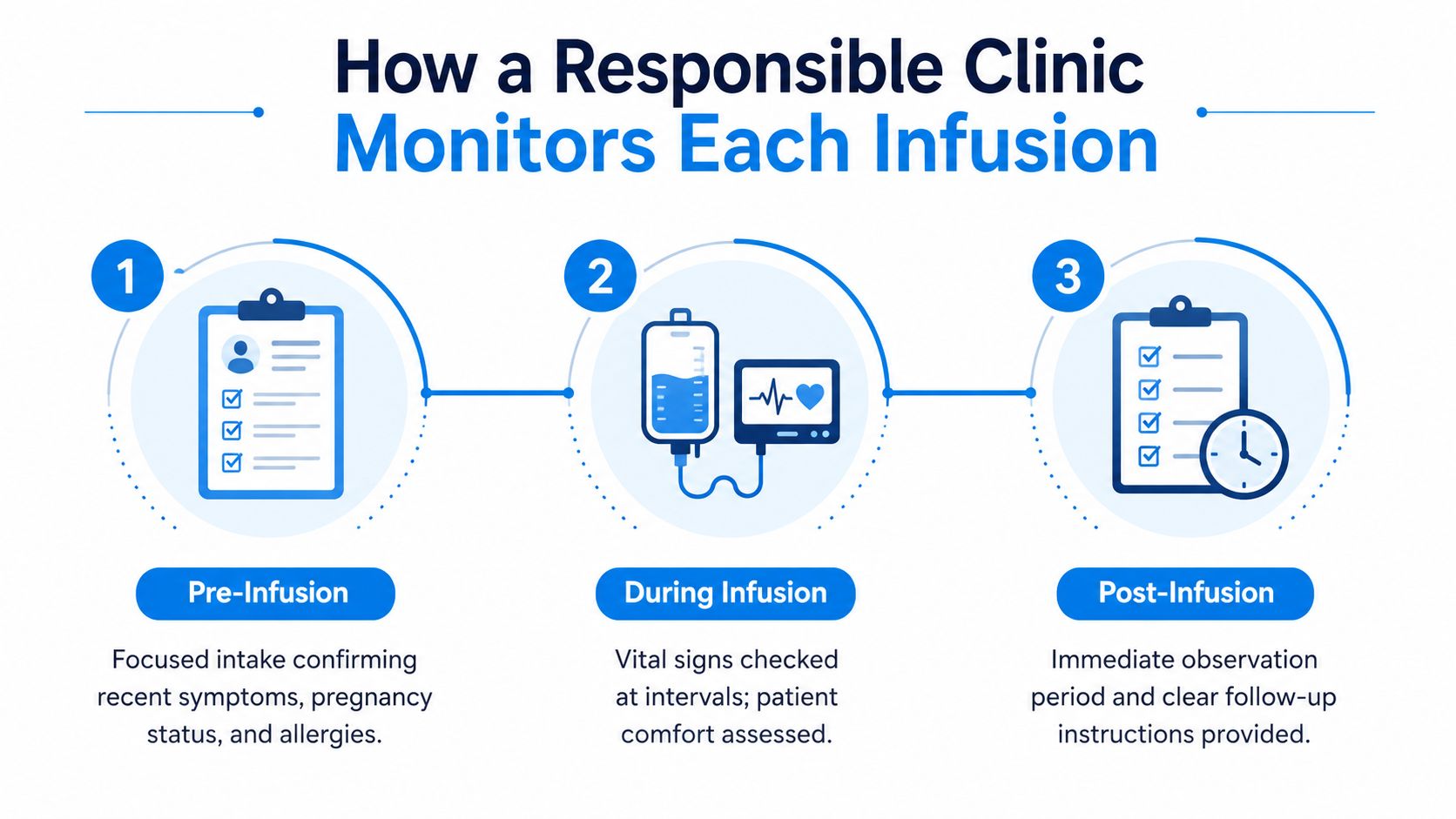
Safe administration starts before the IV bag is connected. A clinician or trained infusion professional should confirm why treatment is being considered, review recent symptoms, ask about pregnancy status and allergies, reconcile medications, and document prior reactions to IV therapy. Baseline vital signs provide a reference if dizziness, flushing, or hypotension develops later.
Before the infusion
The intake should identify contraindications, recent illness, respiratory symptoms, medication interactions, and the exact product being administered. If a clinic can't answer basic questions about formulation, lot tracking, or emergency readiness, that uncertainty is itself a reason to pause.
During the infusion
The staff should check blood pressure, pulse, and oxygen saturation at intervals appropriate to the patient and infusion. They should observe the IV site for pain, swelling, redness, or leakage and ask about flushing, headache, nausea, breathlessness, chest tightness, chills, or lightheadedness.
The infusion rate should be adjusted to tolerance, and the staff should know when to stop rather than just slowing the drip. A patient shouldn't have to persuade an attendant that a symptom is serious.
After completion
A responsible clinic documents the response and keeps the patient under observation for an appropriate period before discharge. You should receive hydration guidance, instructions for managing minor symptoms, a direct contact method, and clear thresholds for calling the clinic, contacting urgent care, or seeking emergency help.
Patients considering related oxidative treatments can also review ozone therapy side effects because the same principles apply: screening, product or equipment controls, real-time observation, and a defined response plan.
A clinic that cannot describe its monitoring process in concrete terms hasn't given you enough information to make an informed decision.
Questions Patients Commonly Ask Before Saying Yes
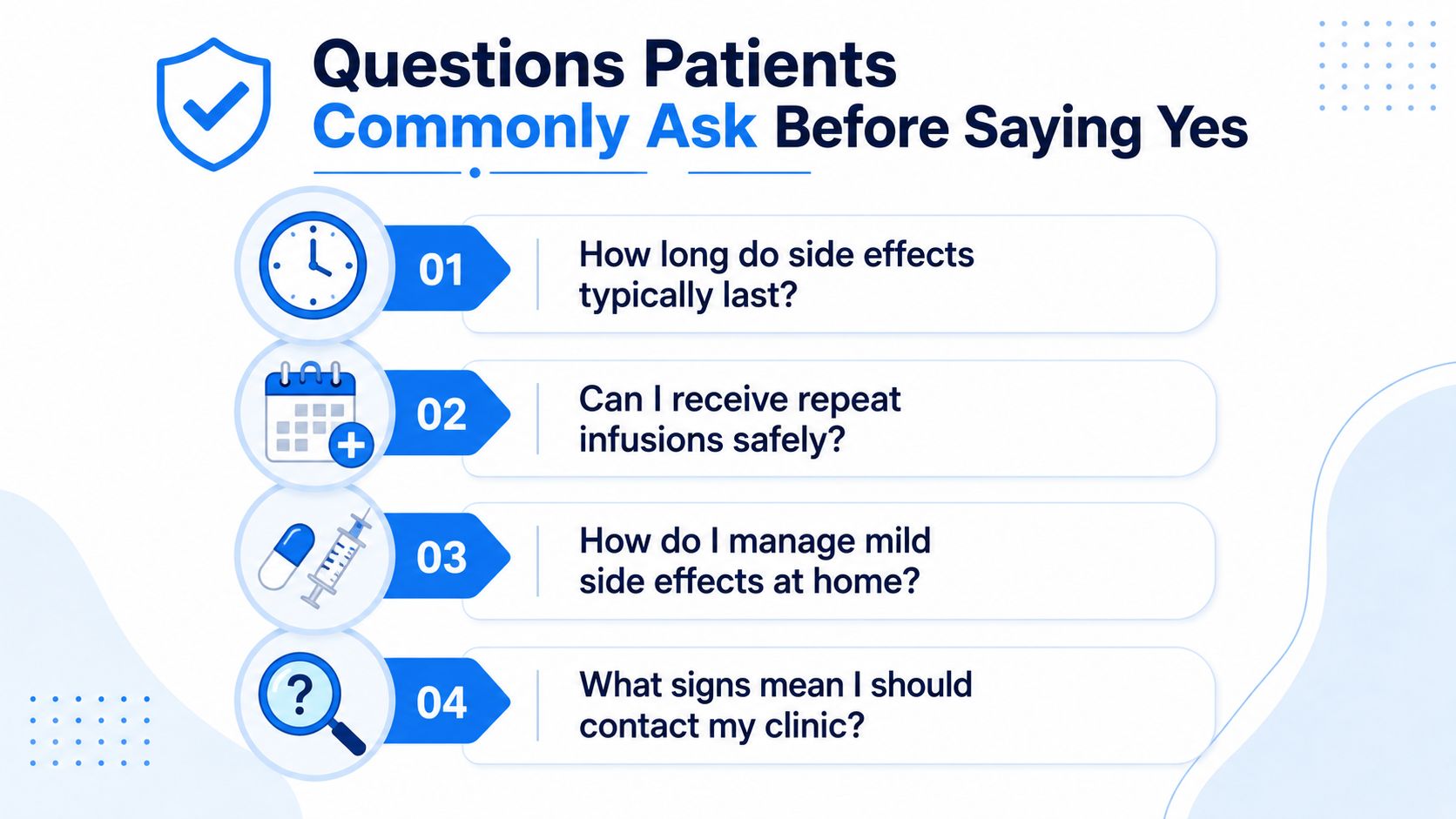
How long do side effects usually last?
Many mild infusion symptoms, such as temporary fatigue, nausea, headache, flushing, or lightheadedness, may settle after the infusion ends, but the duration depends on the reaction and the patient. Persistent, worsening, or unusual symptoms shouldn't be labeled a routine “detox” response. Fever, severe chills, breathing difficulty, faintness, widespread hives, repeated vomiting, or new yellowing of the skin or eyes warrants prompt medical advice, with emergency care for severe or rapidly progressing symptoms.
Do repeat infusions change the risk?
A previous uneventful infusion doesn't guarantee that a later infusion will be uneventful. The product lot, formulation, infusion rate, health status, medication list, and cumulative clinical context can change. Repeat treatment should be spaced conservatively and reconsidered if the original indication was unclear or the first session produced symptoms.
If repeat infusions are being considered, ask whether baseline laboratory evaluation is appropriate and what finding would stop the next session. A clinician should also document the exact product and response from earlier treatment rather than relying on memory.
What should I bring from my primary care clinician?
Bring a current medication and supplement list, relevant diagnoses, allergy details, prior infusion records, and recent laboratory results when available. If you have kidney, liver, respiratory, hematologic, or autoimmune concerns, coordination with your primary care clinician or specialist may be more appropriate than proceeding from a wellness intake alone.
Is IV glutathione approved for skin lightening or chelation?
Patients should distinguish an advertised use from an FDA-approved indication. FDA has not approved glutathione for cosmetic skin lightening or general systemic wellness use. Skin lightening and claims that glutathione functions as a chelating treatment are off-label or unsupported uses in many clinic settings, and they shouldn't be presented as established outcomes.
Chelation is a separate medical intervention with its own indications, agents, risks, and monitoring requirements. Glutathione shouldn't be substituted for a properly evaluated heavy-metal concern, and a cosmetic goal shouldn't be used to justify an infusion without a clear clinical rationale.
When is an integrative evaluation more appropriate than a standalone IV?
An evaluation makes more sense when fatigue, skin changes, chronic illness, medication intolerance, or suspected environmental exposure has not been clearly explained. In Scottsdale, Sunridge Medical's approach is a clinician-led intake that reviews the indication, medical history, current medications, and relevant organ-system concerns before IV glutathione is considered. When appropriate, the clinic may coordinate with primary care and place IV therapy within a broader functional medicine plan rather than treating it as a standalone cosmetic service.
Patients in Phoenix, Paradise Valley, Tempe, Mesa, Chandler, Gilbert, and the greater Phoenix metropolitan area can ask about a consultation before deciding on treatment. Related clinic pages describe integrative IV therapy and functional medicine evaluations in Arizona, but the appropriate next step depends on your medical situation, not on a menu of services.
Sunridge Medical offers individualized integrative evaluations in Scottsdale for patients who want their indication, medications, allergies, and organ-system risks reviewed before IV glutathione is considered. Contact Sunridge Medical to discuss whether a clinician-led consultation is appropriate and to build a safety-focused plan rather than booking an infusion without medical context.