

When delivered by controlled medical routes such as major autohemotherapy, ozone therapy side effects are usually mild and transient, but inhalation and direct intravenous gas carry serious and documented risks. Long-term safety data remain limited, so the safest decision depends on the route, dose, medical history, and quality of clinical monitoring.
You may be in the same position as many patients who ask about ozone therapy in a Scottsdale consultation. You've read claims about chronic pain, infections, inflammation, or cancer support, and an integrative physician has mentioned ozone as one possible component of a broader plan. The potential benefit sounds appealing, but you're also wondering what could happen during the session, whether fatigue or nausea is normal, and which risks deserve real concern.
The honest answer isn't that every reaction is harmless. The risk profile changes sharply by administration route. Controlled blood-based treatment isn't equivalent to breathing ozone, and neither is equivalent to placing gas directly into a vein. A newer evidence synthesis also identifies limited long-term safety data and minimal systematic monitoring as important gaps, even though short-term tolerance often appears favorable in the available literature (2026 evidence synthesis).
This distinction matters for patients in Scottsdale, Phoenix, Paradise Valley, Tempe, Mesa, Chandler, Gilbert, and throughout the greater Phoenix metropolitan area who are comparing a medically supervised clinic with a wellness setting. Before you sit down for treatment, you should know what a common short-lived reaction looks like, which symptoms may signal an emergency, and what screening should happen first.
Table of Contents
- Why Patients Ask About Ozone Therapy Side Effects
- How Ozone Therapy Works and Why Route Matters
- Common Short-Lived Reactions During and After Treatment
- Rare but Serious Adverse Events to Understand
- Inhalation Is the Highest-Risk Pathway
- Contraindications and Who Needs Extra Screening
- How Integrative Clinics Reduce Risk During Treatment
- Practical Questions Patients Should Ask Before Starting
Why Patients Ask About Ozone Therapy Side Effects
A patient in a Scottsdale consultation may arrive after conventional care has not resolved persistent symptoms. They have searched for integrative options and want to know whether ozone therapy is reasonable to consider, not whether anyone can guarantee a safe outcome. They need a clear distinction between expected precautions, uncertain benefits, and risks that require a different treatment decision.
That concern is legitimate. Ozone therapy does not have the same FDA-approved safety profile as mainstream pharmaceuticals, and evidence varies by condition and administration method. A responsible discussion should cover the therapy's emerging or complementary status, the uncertainty around effectiveness for a specific diagnosis, and why one route may carry substantially more risk than another.
The important question is: “Does ozone therapy have side effects?” It is: “Which route, what concentration, which patient, and what safeguards?”
Calling side effects mild can obscure the main safety issue. Carefully controlled medical routes may cause brief autonomic or local symptoms. Inhaled ozone can injure lung tissue, while direct intravenous gas administration has been associated with catastrophic vascular events. A 2022 clinical review described direct intravenous gas administration as linked in the literature to at least six deaths and identified vagal reactions as the most common serious event, often related to pain during infiltration (clinical review).
At Sunridge Medical, an integrative medical clinic in Scottsdale, the decision is whether a proposed protocol fits the individual patient. Screening should review current diagnoses, medications, laboratory information, cardiovascular and renal risk, respiratory history, and the treatment goal. This route-specific assessment matters because “ozone therapy” describes several procedures with different exposure pathways, not one uniform intervention.
How Ozone Therapy Works and Why Route Matters
A patient may hear “ozone therapy” and assume every protocol carries the same risk. It does not. Ozone therapy uses a prepared ozone-oxygen mixture to create a controlled oxidative signal. The proposed response involves antioxidant defenses, immune signaling, and circulatory changes, but these mechanisms remain under clinical investigation. They do not prove that ozone cures cancer, infection, autoimmune disease, or any other condition.
Route, ozone concentration, total dose, treatment frequency, handling technique, and patient-specific susceptibility determine the safety profile. In major autohemotherapy, blood is collected into a closed container, exposed to a calibrated mixture outside the body, and reinfused. Rectal insufflation delivers gas through the lower gastrointestinal tract. Topical preparations and injections create different exposure patterns. These methods require separate risk discussions.
Why the lungs are different
The lungs receive inhaled ozone directly, placing respiratory tissue in a different risk category from blood-based or topical delivery. A blood-based protocol keeps the gas away from the lungs by treating blood outside the body, while topical treatment limits exposure to the treated surface. Direct vascular gas administration presents another hazard because gas can enter the circulation itself.
Route selection also affects screening. A systematic review of autohemotherapy case reports described hemolysis and renal failure at higher ozone concentrations, hyperkalemia in patients with hypertension, diabetes, and chronic kidney disease, and cerebral gas embolism in patients with a patent foramen ovale. Those findings support reviewing kidney, cardiovascular, respiratory, and neurologic history before treatment rather than treating ozone therapy as one uniform procedure.
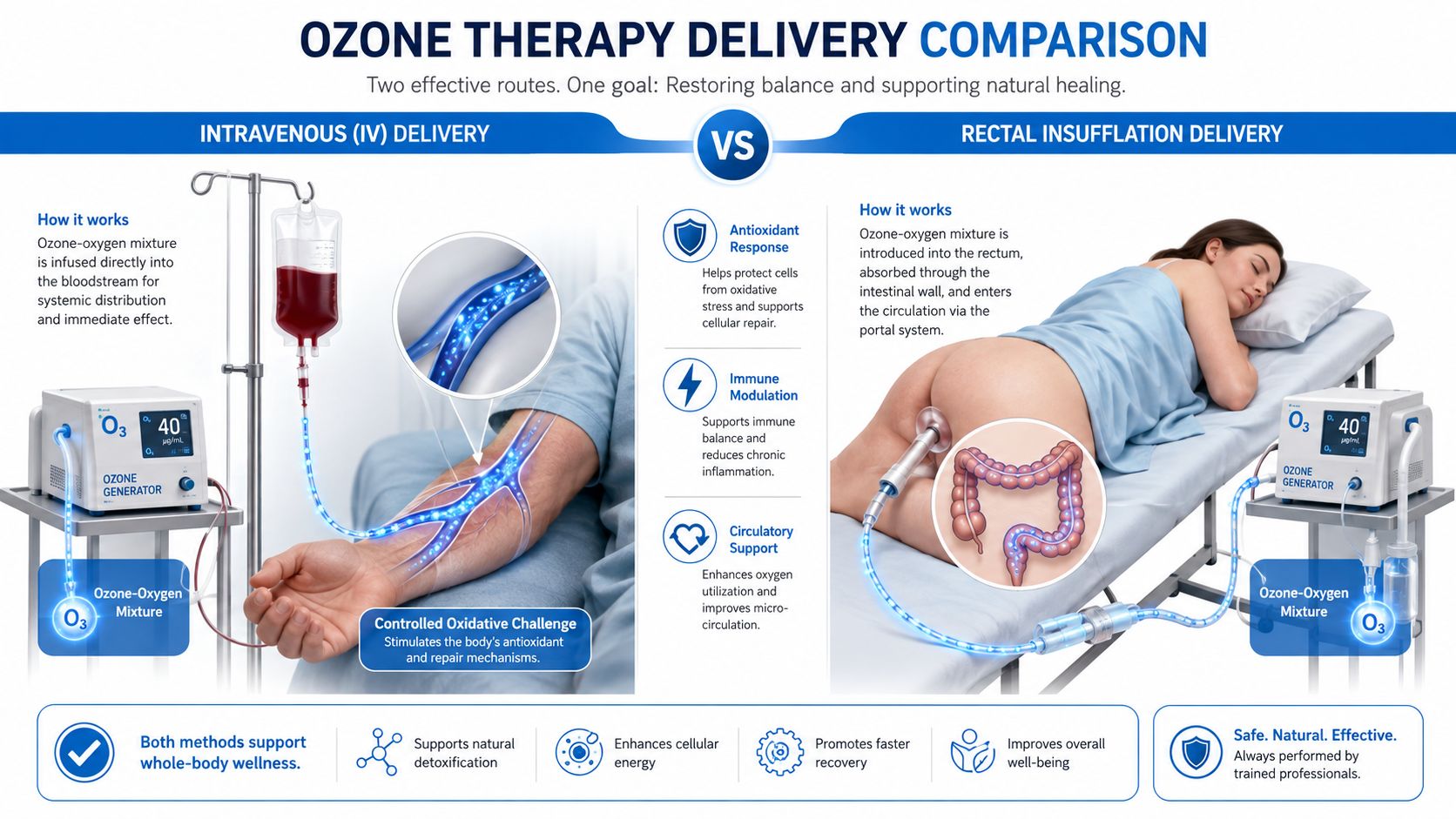
At Sunridge Medical, an integrative clinic in Scottsdale, the proposed route should match the patient's diagnoses, medications, laboratory information, treatment goal, and tolerance for risk. Patients can also review this clinical guide to ozone therapy for chronic infections before discussing whether a protocol is appropriate.
Common Short-Lived Reactions During and After Treatment
Most reported reactions from controlled, noninhalational protocols are temporary. Patients may feel tired or “washed out,” develop a mild headache, feel lightheaded when standing, experience nausea or flushing, or notice soreness where an IV or injection was placed. Some report a brief change in their original symptoms, sometimes described as a Herxheimer-like response, although that label shouldn't be used to dismiss a significant or persistent deterioration.
The 2010 review described nausea, stomach bloating, and a metallic taste during blood reinfusion in women more often than men, affecting approximately 10% to 15% of patients. It also reported that, after 4 to 12 sessions, four women developed a diffuse itchy rash with hot flushes, slight hypotension, and nausea (2010 peer-reviewed review). These findings describe particular published observations, not a prediction of what will happen to every patient.
Common reactions and expected timing
| Reaction | Typical Onset | Typical Resolution | Reported Frequency |
|---|---|---|---|
| Fatigue or washed-out feeling | During or after treatment | Usually short-lived | Reported in clinical descriptions, exact frequency varies |
| Mild headache | During or after treatment | Often transient | Reported as a common minor symptom |
| Lightheadedness or vasovagal symptoms | During treatment or when standing | Usually improves with rest and observation | Common serious-event pattern in clinical reviews |
| Nausea, bloating, or metallic taste | During blood reinfusion | Usually resolves after the session | About 10% to 15% in the specific 2010 review observation |
| Local IV or injection soreness | At the treatment site | Short-lived | Commonly reported |
| Itchy rash with flushing and nausea | After repeated sessions | Requires clinical assessment | Four cases after 4 to 12 sessions in the cited review |
A symptom that persists beyond the expected recovery period, becomes stronger with each session, or feels out of proportion shouldn't be automatically described as detoxification. Tell the treating clinician. Patients who compare ozone reactions with other therapies may also find general educational material on how to manage peptide side effects, although advice for one treatment shouldn't replace an ozone-specific assessment.
Rare but Serious Adverse Events to Understand
Serious complications appear infrequently in the published literature, but they still belong in the consent conversation. A case report shows that an event has occurred, not how often it happens in routine practice. For several ozone protocols, reliable monitoring remains limited, so route, patient factors, and procedure quality matter more than the reassuring label “rare.”
Vascular and blood-related mechanisms
Direct intravenous gas carries the clearest embolic concern. Gas entering a vessel can obstruct circulation, and cerebral gas embolism is particularly concerning when a patient has a right-to-left shunt, such as a patent foramen ovale. Reported serious outcomes also include myocardial infarction and other ischemic events, as described in the autohemotherapy safety review.
Blood injury presents a different pathway. Concentrations above the 60 μg/mL threshold noted earlier were linked to red-blood-cell damage and kidney complications in reviewed case reports. Hyperkalemia was reported in patients with substantial comorbidity, including hypertension, diabetes, and chronic kidney disease. Contamination, poor handling, or a breach in protocol can also produce infectious or autonomic complications. Concentration control, sterile equipment, and careful reinfusion technique therefore require direct attention.
| Adverse Event | Mechanism | Route Most Implicated |
|---|---|---|
| Cerebral gas embolism | Gas enters the circulation and crosses a right-to-left shunt | Direct intravenous gas or protocol breach |
| Myocardial infarction or ischemic event | Vascular or cardiac stress in a susceptible patient | Systemic or intravenous protocols |
| Hemolysis and renal failure | Excessive ozone concentration damages red blood cells | Blood-based protocols using concentrations above 60 μg/mL |
| Hyperkalemia | Red-cell injury or metabolic vulnerability in a patient with comorbid disease | Systemic blood-based treatment |
| Vagal reaction | Pain or infiltration triggers autonomic instability | Injection or infiltration procedures |
| Septic reaction | Contamination during blood handling | Autohemotherapy with inadequate sterile technique |
Patients may also react to materials used around a procedure, including containers, preservatives, medications, or disinfectants. Separate benzyl alcohol allergy information for researchers does not establish ozone risk, but it illustrates why a clinic should review every substance involved, rather than attributing every reaction to ozone itself.
Long-term exposure remains difficult to assess. The long-term safety review describes limited long-term safety information and sparse systematic monitoring, with rare reports involving stroke, myocardial infarction, thrombosis, and hemolysis. A responsible clinician should review cumulative exposure, relevant medical conditions, and the treatment route before assuming repeated sessions are appropriate.
Inhalation Is the Highest-Risk Pathway
Inhaled ozone belongs in a separate risk category. It's a direct pulmonary irritant and oxidant, not a gentler version of blood-based treatment. Medical summaries and clinical reviews describe cough, throat irritation, chest tightness, wheezing, asthma worsening, and lung-tissue injury after respiratory exposure. Cleveland Clinic notes that short-term exposure can cause severe and permanent respiratory injury (Cleveland Clinic overview).
This is why a patient shouldn't breathe from an ozone generator, tolerate gas leaking into a treatment room, or assume that nasal exposure is comparable to a controlled blood protocol. The lungs have no practical way to “precondition” inhaled ozone before it contacts airway and alveolar tissue. A clinic's containment procedures should prevent accidental inhalation, not merely respond after symptoms begin.
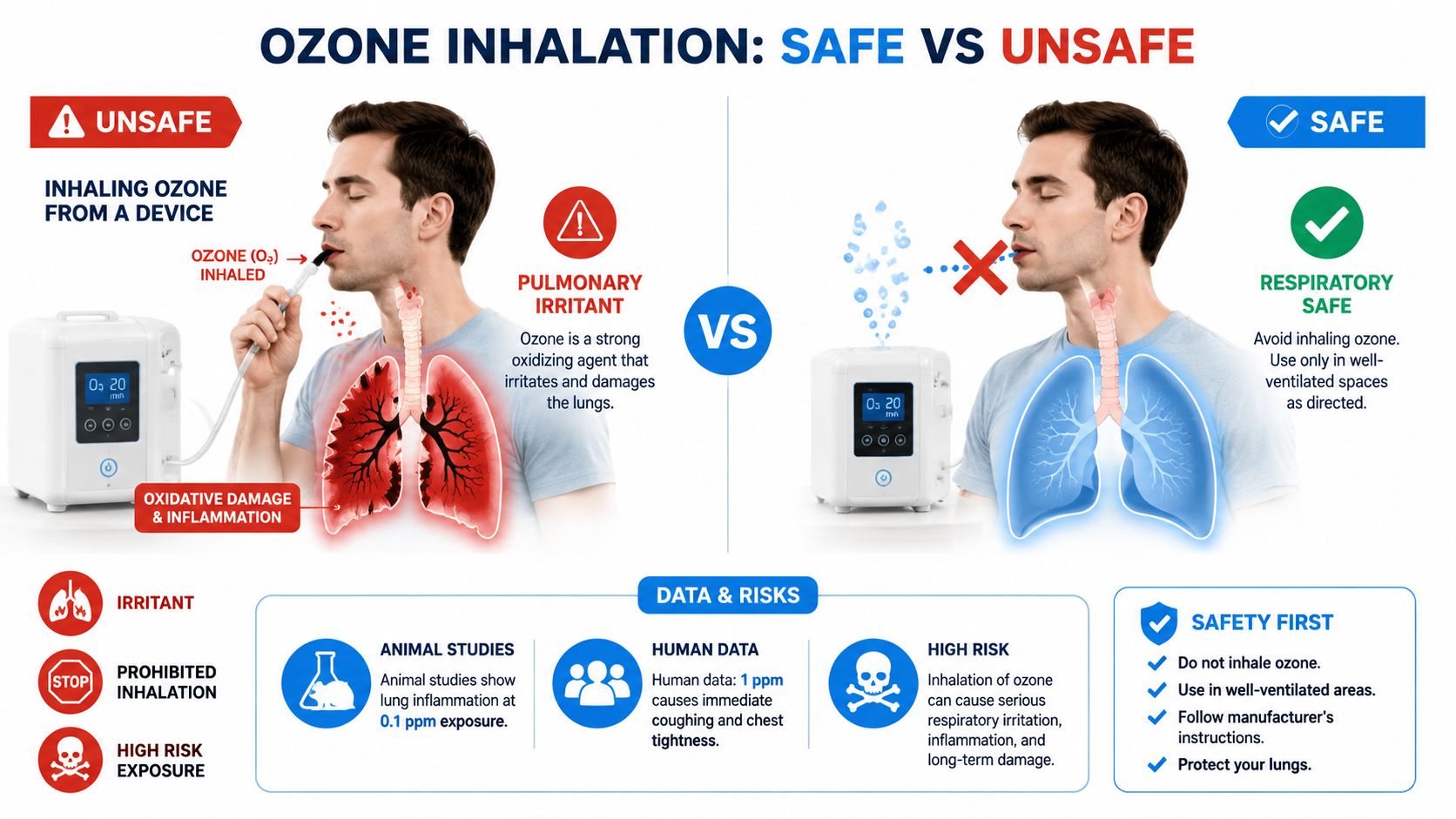
Controlled noninhalational routes may produce local discomfort, headache, abdominal distension, fatigue, or a transient pain flare. That doesn't make them risk-free, but it explains why route selection changes the safety discussion. The pulmonary toxicity of ozone is the most reproducible adverse-effect pathway, while systemic risks depend heavily on concentration, vascular entry, technique, and patient susceptibility.
Patients exploring oxygen-related integrative care should also distinguish ozone from other approaches discussed in Sunridge Medical's cancer oxygen therapy information. A qualified clinician should explain exactly which gas, device, route, and intended purpose are being proposed.
Contraindications and Who Needs Extra Screening
Screening should happen before scheduling, not after the IV is placed. Some conditions may make ozone therapy inappropriate, while others require coordination with a specialist, additional laboratory review, a different route, or a decision not to proceed.
Conditions that need special attention
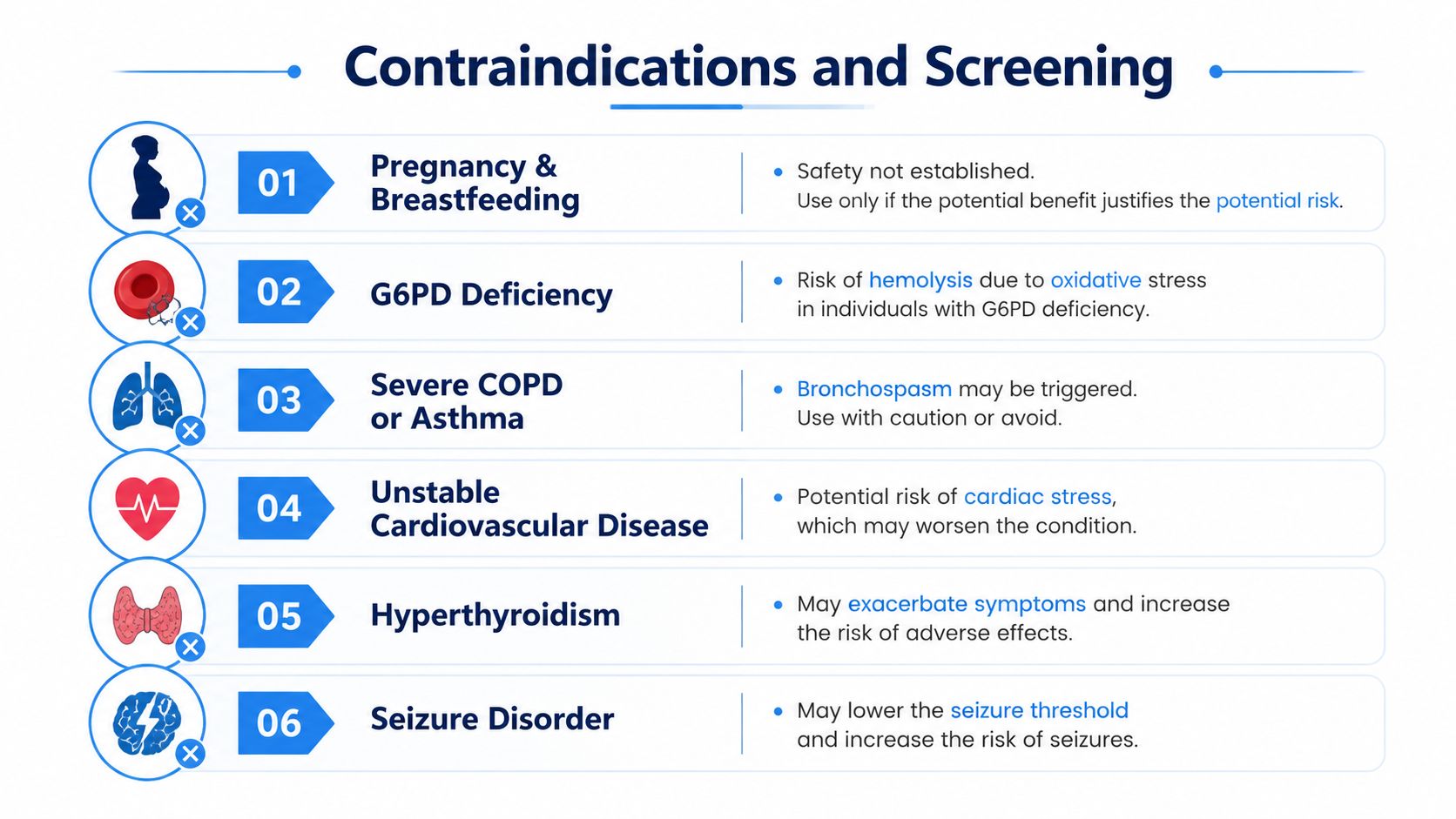
- Pregnancy and breastfeeding: Treatment is generally avoided because safety information is insufficient for these populations.
- G6PD deficiency or other red-cell enzyme defects: Oxidative exposure may increase the risk of hemolysis, so enzyme status must be considered before blood-based protocols.
- Severe COPD or significant asthma: Respiratory disease increases concern about accidental exposure and bronchospasm, especially if a facility cannot guarantee strict containment.
- Uncontrolled hyperthyroidism: Active endocrine instability warrants medical review before an oxidative intervention.
- Recent myocardial infarction or unstable cardiovascular disease: A patient with unstable cardiac status may not tolerate physiologic stress or an adverse autonomic event.
- Active bleeding or anticoagulation that can't be paused: Blood collection, IV placement, or injections may create procedural risk.
- Patent foramen ovale or another right-to-left shunt: This anatomical issue becomes particularly important when a systemic route could permit gas entry into circulation.
- Active malignancy treatment: Ozone should not be added without coordination with the treating oncology team, especially when chemotherapy, radiation, surgery, or immunotherapy is underway.
- Pediatric patients: Use should be limited to specific indications with appropriate pediatric expertise.
A review of autohemotherapy case reports found that serious harms clustered around identifiable factors, including concentrations above 60 μg/mL, complex cardiovascular or renal comorbidity, patent foramen ovale, rapid reinfusion, and protocol breaches (fibromyalgia autohemotherapy review). Those findings support a practical rule.
Screening isn't paperwork. It's the clinical process that separates physician-supervised treatment from a wellness service using the same name.
A Scottsdale integrative clinic should ask about medications, prior reactions, kidney and heart disease, respiratory conditions, pregnancy status, enzyme disorders, and current cancer care. If the answers raise concern, postponing treatment or declining it may be the safest medical decision.
How Integrative Clinics Reduce Risk During Treatment
Safety starts with matching the protocol to the indication and administration route. For systemic treatment, the clinician should choose a concentration within the intended therapeutic range, use a calibrated medical ozone generator, and verify the mixture before administration. As noted in the earlier safety review, concentration calibration matters because severe blood injury was associated with levels above 60 μg/mL.
The layered process
- Calibration: Staff check the generator, select a concentration suited to the route and purpose, and confirm that treatment is not being improvised with a wellness device.
- Patient clearance: The team reviews medical history, medications, current symptoms, recent laboratory information, G6PD status when relevant, cardiovascular and renal risk, and any contraindication that has emerged that day.
- Controlled treatment: During major autohemotherapy, blood collection should use a closed system with appropriate anticoagulant handling. Reinfusion should be gradual, while staff watch for discomfort, blood pressure changes, or a vasovagal response.
- Observation and follow-up: Staff monitor vital signs, oxygen saturation, and symptoms during treatment, then observe the patient until discharge criteria are met. Written instructions should cover delayed symptoms and emergency warning signs.
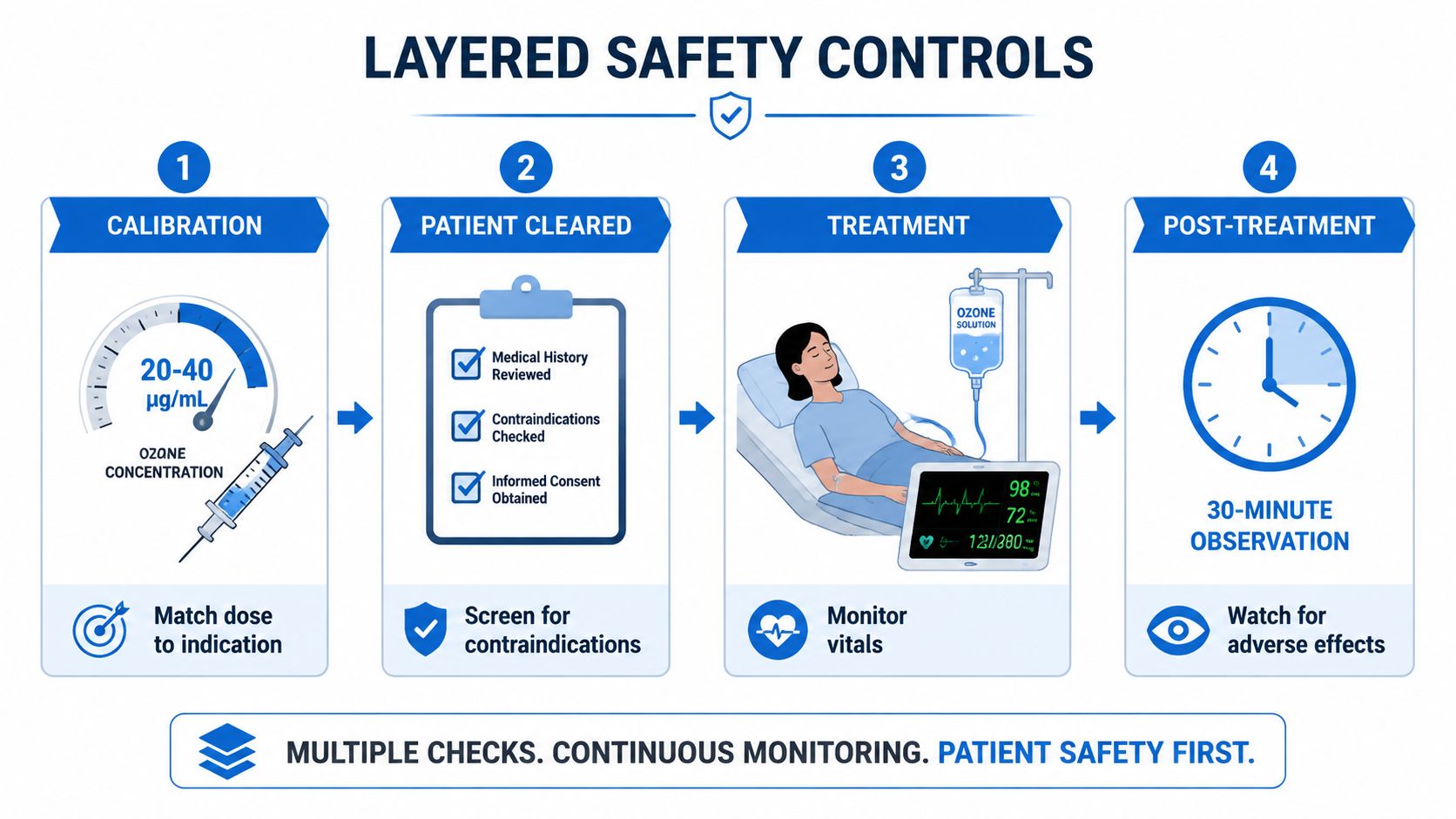
Slow reinfusion and careful handling reduce preventable problems. They lower the chance that pain, rapid fluid movement, or a technical error will trigger a complication. Clinics should also consider screening for right-to-left shunts when clinically indicated and use added caution with cardiovascular or renal disease. These safeguards address the factors associated with serious events in the earlier case review, including higher concentrations and rapid reinfusion.
Patients can review how oxidative approaches may fit a broader integrative plan through Sunridge Medical's oxidative medicine therapies. The treatment label matters less than the clinic's process: documented rationale, route-specific precautions, active monitoring, and a clear response plan if symptoms occur.
Practical Questions Patients Should Ask Before Starting
Bring questions to the consultation and expect direct answers. A clinic that can't explain its route, concentration, screening process, and emergency plan hasn't given you enough information to make an informed decision.
Questions about the practitioner
Ask who will evaluate you, what medical credentials they hold, and whether they have specific training in oxidative medicine. You should also ask how long they've performed the exact protocol being recommended, not how long they've worked in integrative medicine.
Request an explanation of how the clinic tracks outcomes and adverse events. If the practice only collects testimonials and doesn't document symptoms, vital signs, treatment parameters, and follow-up, it may not be able to identify patterns or improve safety.
Questions about the protocol
- Which route is being recommended? Ask why major autohemotherapy, injection, topical treatment, or another route fits your goal.
- What concentration and dose will be used? The clinician should explain the rationale in understandable language and distinguish concentration from total dose.
- How many sessions are being proposed? Ask what would justify continuing, changing, or stopping treatment.
- Is the generator medical-grade? Ask whether calibration records are available and how the device is checked before treatment.
- How is accidental inhalation prevented? The answer should include containment, room safety, and a response plan for leaks or exposure.
Questions about screening and emergencies
Ask which laboratory tests are required, whether G6PD status matters for your protocol, and how the clinician evaluates kidney, heart, lung, and bleeding risks. If you have cancer, ask how the ozone plan will be coordinated with oncology treatment rather than added independently.
Ask what equipment is available for a vasovagal reaction, allergic reaction, breathing problem, embolic event, or cardiac emergency. Find out who monitors you during reinfusion, how long you'll remain under observation, and which symptoms require emergency services instead of a clinic phone call.
Questions about recovery and cumulative exposure
Before beginning, ask how the clinic defines an expected short-lived reaction and when a symptom becomes abnormal. Clarify whether fatigue, nausea, headache, flushing, fever, chills, or a temporary symptom flare should be reported immediately or monitored at home.
You should also ask how repeated exposure is reviewed over time. Long-term safety data are limited, so the clinician should reassess whether treatment remains appropriate instead of assuming that more sessions are always better. Ask who to contact after hours and whether the practice provides written instructions.
Sudden chest pain, severe shortness of breath, new weakness, confusion, fainting, seizure, severe abdominal or flank pain, or rapidly worsening symptoms warrant emergency evaluation. Don't wait for a routine clinic callback when symptoms suggest a cardiac, neurologic, respiratory, or embolic emergency. Patients comparing integrative options can also review a clinical framework for evaluating alternative cancer treatments before discussing any adjunctive therapy with their oncology team.
Sunridge Medical offers individualized integrative evaluations in Scottsdale for patients considering oxidative medicine alongside conventional care, including review of route-specific ozone therapy side effects, medical history, current treatment, and screening needs. Contact Sunridge Medical to discuss whether a consultation is appropriate for your health goals and risk profile.