


High-dose intravenous vitamin C is an investigational treatment studied alongside conventional cancer therapy, not a proven standalone cure. In a randomized phase 2 pancreatic cancer trial, mean overall survival was 16 months with IV vitamin C plus chemotherapy versus 8 months with chemotherapy alone, but a later phase 3 colorectal cancer trial did not improve progression-free survival.
You may be reading about high dose vitamin C for cancer after hearing that standard treatment has stopped working, caused difficult side effects, or left you wanting another option. Perhaps your oncologist has recommended chemotherapy, radiation, immunotherapy, or surgery, while someone else has mentioned intravenous vitamin C. Those choices can feel difficult to compare because laboratory findings and early clinical signals are often presented as if they were established outcomes.
The practical question isn't just whether vitamin C “works.” It's which cancers, treatment combinations, and patient circumstances have shown a measurable signal, and whether the potential benefit justifies the time, cost, monitoring, and uncertainty. A careful integrative oncology evaluation should add context rather than encourage you to replace treatments with the strongest evidence.
Table of Contents
- When Standard Options Feel Limited
- How Intravenous Vitamin C Differs From Oral Supplements
- What Clinical Research Shows About Survival and Progression
- IV Versus Oral Vitamin C and Which Cancers Are Studied
- Safety, Contraindications, and Therapy Interactions
- How Integrative Clinics Design Individualized Protocols
- Next Steps for Patients in Scottsdale and the Phoenix Area
When Standard Options Feel Limited
After months of treatment, patients often reach a point where the conversation changes. A scan may show progression after chemotherapy. A recurrence may require a new regimen. Or treatment may still be controlling the cancer, but side effects have made daily life increasingly difficult. In that moment, searching for high dose vitamin c for cancer support is understandable.
The problem is that online information frequently collapses very different situations into one promise. A laboratory mechanism, a small early trial, and a randomized study don't carry the same evidentiary weight. A responsible physician has to separate those layers before discussing whether an infusion could fit into an individual plan.

The decision is rarely vitamin C alone
Consider a patient with metastatic disease who has already received standard therapy. The meaningful questions include whether the cancer is progressing, what treatments remain available, how kidney function is performing, whether a deficiency or enzyme disorder creates additional risk, and whether the proposed infusion could interfere with an active regimen.
Those questions make IV vitamin C a clinical adjunct under investigation, not a quick fix. The National Cancer Institute's PDQ summary states that high-dose vitamin C isn't FDA-approved as a cancer treatment, while noting that early studies have explored its tolerability alongside standard therapy.
The NIH PDQ evidence review describes a field that has developed from early case reports and pilot studies toward randomized and phase III research. It also identifies ongoing work, including a phase III study in metastatic colorectal cancer, which shows why the subject remains clinically active without being settled.
Practical rule: An additional treatment should be evaluated by its effect on the whole care plan, not by a compelling mechanism or a single encouraging result.
For patients in Scottsdale and the greater Phoenix area, that usually means bringing complete oncology records to a qualified physician who can coordinate an integrative discussion with the treating oncology team. The objective is expanded, safer decision-making, not abandoning therapies that have established roles.
How Intravenous Vitamin C Differs From Oral Supplements
Oral vitamin C and intravenous vitamin C aren't interchangeable. The difference is pharmacokinetic, meaning it concerns how the body absorbs, distributes, and clears the substance.
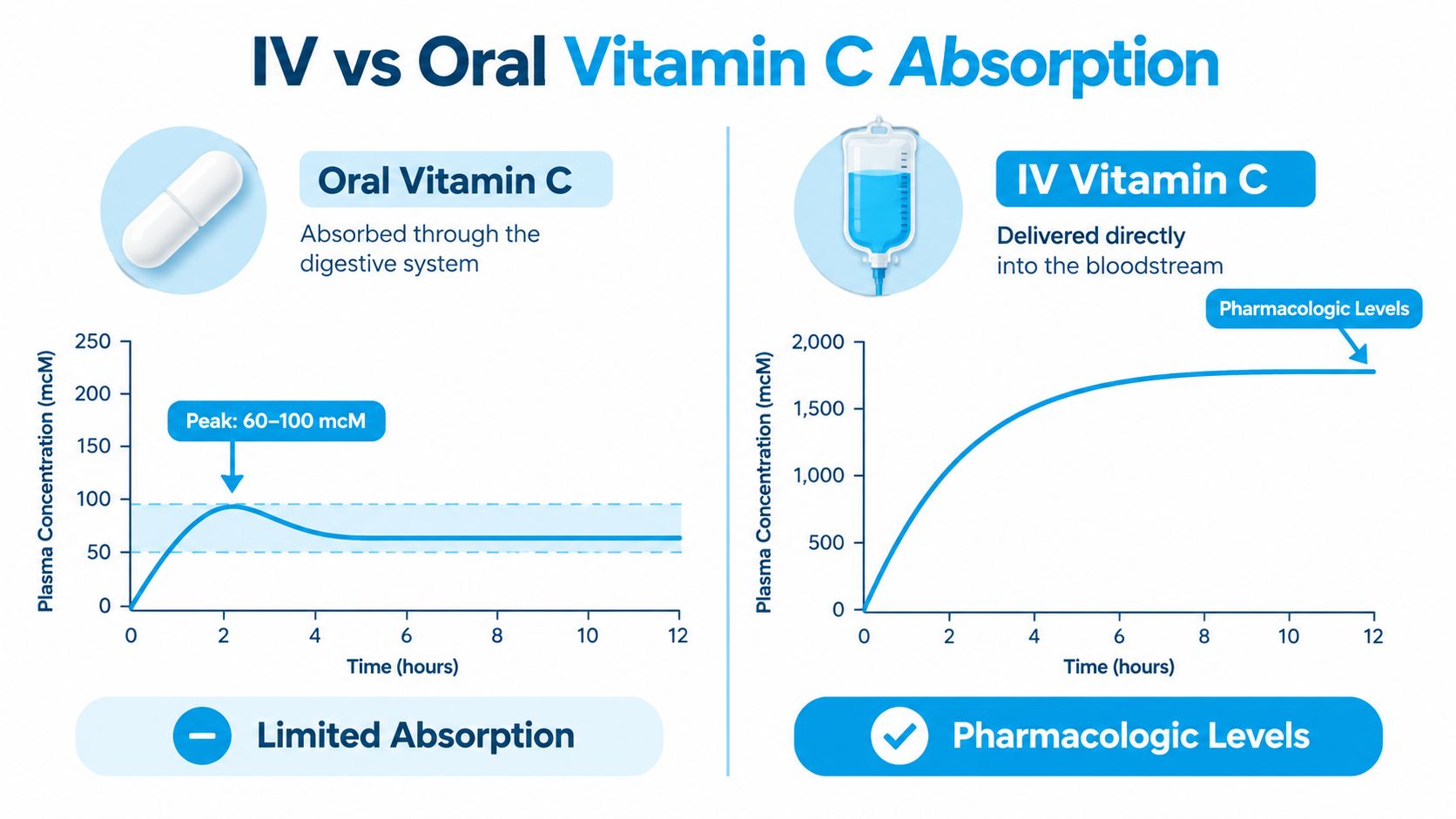
With oral dosing, absorption and clearance limit the amount that reaches the bloodstream. Plasma levels typically plateau around 60 to 100 micromolar, while intravenous administration can produce pharmacologic levels of approximately 0.3 to 20 millimolar. Some studies have reported 25 to 30 millimolar after a 100-gram infusion, although the dose and resulting concentration depend on the protocol and the patient. These values are described in a peer-reviewed review of pharmacologic vitamin C.
Why concentration matters
At ordinary nutritional levels, vitamin C functions as an essential micronutrient and antioxidant. At the much higher concentrations made possible by IV delivery, researchers study a different biological effect. Ascorbate can participate in extracellular reactions that generate hydrogen peroxide, creating redox stress in the tumor environment.
The proposed anticancer effect isn't merely “more antioxidant protection.” It depends on achieving concentrations that oral supplementation generally can't produce. The NIH Office of Dietary Supplements fact sheet reports that oral vitamin C reaches a maximum plasma level of about 220 micromoles per liter, while IV administration can raise levels to about 26,000 micromoles per liter. The same source notes that these high concentrations are selectively cytotoxic to tumor cells in vitro.
That laboratory finding doesn't prove a clinical benefit. Tumors differ in metabolism, antioxidant defenses, blood supply, and sensitivity to oxidative stress. A concentration reached in a controlled experiment also doesn't automatically translate into longer survival for a person receiving several treatments at once.
What patients should take from the science
Taking more tablets isn't a substitute for an oncology infusion protocol. Oral vitamin C may have a nutritional role, but the cancer research discussed here concerns physician-directed intravenous dosing, laboratory screening, hydration, and treatment coordination.
Patients interested in the treatment can review how an integrative clinic describes vitamin C infusions for cancer and then discuss whether that approach is medically appropriate with their oncologist and infusion physician.
What Clinical Research Shows About Survival and Progression
Clinical interest in IV vitamin C rests on a small number of measurable signals, not on consistent results across all cancers. The most relevant question is which tumor types and treatment combinations have shown a difference, and how confidently those findings can guide an individual case.
A randomized phase 2 trial included 34 patients with stage 4 metastatic pancreatic cancer. When high-dose IV vitamin C was added to gemcitabine plus nab-paclitaxel, mean overall survival rose from 8 months to 16 months, and progression-free survival rose from 4 months to 6 months, according to the University of Iowa report on the trial.
That result is clinically interesting, but it applies to a defined regimen and a limited phase 2 study. It does not show that every person with pancreatic cancer will have the same response, or that IV vitamin C should replace established treatment.
Positive signals have boundaries
In a small University of Iowa study of 11 patients with glioblastoma or non-small cell lung cancer, median overall survival reached 18 to 22 months versus the 14 to 16 months reported for historical controls in that work, as described in the linked trial publication. Early studies also reported that IV vitamin C could be given with standard therapy without serious treatment-related complications. Mild effects included increased urination, dry mouth, and occasional temporary blood-pressure increases.
The contrast with colorectal cancer matters. A later multicenter phase 3 trial found that high-dose vitamin C added to FOLFOX, with or without bevacizumab, did not improve progression-free survival compared with chemotherapy alone. That result does not eliminate a possible role in other cancers, but it limits broad claims based on early positive studies.
How to interpret the overall record
A 2019 systematic review of 19 clinical trials found that only 4 used randomization. The authors concluded that the available evidence did not prove a clinically relevant improvement in overall survival, clinical status, quality of life, or performance status because study quality was low. The review is available through PubMed.
A more recent systematic review reported longer median overall survival with IV vitamin C across adult malignancies, while progression-free survival showed only a trend. Its authors characterized the evidence as supportive rather than definitive, as summarized in the 2025 review of high-dose vitamin C in cancer.
The practical conclusion is clear: IV vitamin C has credible signals worth studying, but no evidence supports calling it a universal cancer treatment or cure. An integrative clinic such as Sunridge Medical should therefore assess the tumor type, current regimen, organ function, treatment goals, and available clinical evidence before recommending it. Active phase II and phase III research continues to identify the cancers and combinations in which this therapy may matter.
IV Versus Oral Vitamin C and Which Cancers Are Studied
Because the pharmacokinetic difference is established, the useful question is which cancers and treatment combinations have been studied.
Where the research is concentrated
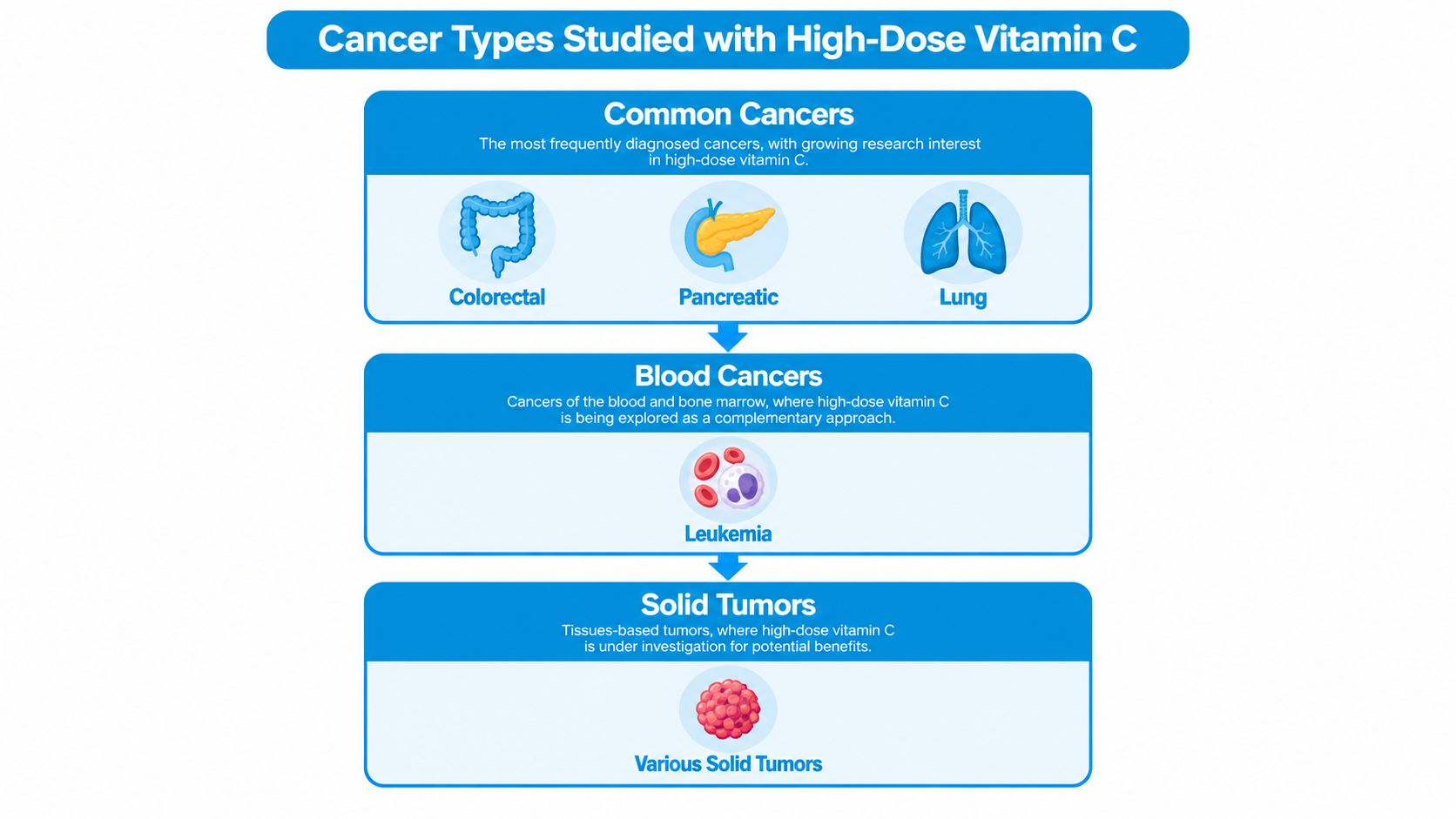
Clinical studies have examined IV vitamin C in several malignancies:
- Pancreatic cancer: The randomized phase 2 combination trial produced the clearest survival signal described earlier. It remains investigational and does not establish a standard of care.
- Glioblastoma and non-small cell lung cancer: Early research has focused on feasibility, tolerability, and possible benefit when IV vitamin C is given with conventional treatment.
- Colorectal cancer: A negative multicenter phase 3 result shows why evidence from one tumor type should not be generalized to another.
- Blood cancers and other solid tumors: Researchers are assessing whether tumor biology affects responses to ascorbate-based combinations.
Studies have also included metastatic castration-resistant prostate cancer, bladder cancer, lymphoma, and myeloma. The NIH PDQ summary describes ongoing clinical research, including trials evaluating high-dose vitamin C alone or alongside standard cancer therapies.
The trial designs matter as much as the cancer names. A study may test IV vitamin C with chemotherapy, radiation, targeted therapy, or another treatment, so its findings apply to that specific combination and patient population. Results from an early feasibility study cannot establish survival benefit, while a negative randomized trial may limit use in a particular setting without answering every question in other cancers.
A clinic such as Sunridge Medical should therefore evaluate the diagnosis, stage, molecular features when available, current regimen, treatment goals, organ function, and eligibility for a relevant study. The practical question is whether the proposed combination has a credible rationale and measurable clinical endpoint for that individual, not whether IV vitamin C is appropriate for cancer in general.
Safety, Contraindications, and Therapy Interactions
Safety screening must come before any infusion. Early studies described acceptable tolerability, with mild effects such as increased urination, dry mouth, and occasional temporary blood-pressure increases. Those findings shouldn't be treated as a complete safety guarantee for every dose, diagnosis, kidney function profile, or concurrent treatment.
High-dose IV vitamin C can create risks that aren't apparent from taking a standard oral supplement. Kidney function, hydration, stone history, and relevant enzyme disorders all need review. Glucose-6-phosphate dehydrogenase deficiency, commonly called G6PD deficiency, deserves particular attention because high-dose vitamin C may create a risk of hemolysis in susceptible patients.
Screening should be individualized
Before treatment, a physician may review:
- Kidney health: Reduced kidney function or a history of kidney stones can change the risk assessment.
- G6PD status: Testing may be appropriate before high-dose therapy, especially when the clinical history is uncertain.
- Current cancer treatment: Chemotherapy, radiation, targeted therapy, and immunotherapy may have different mechanisms and timing considerations.
- Laboratory monitoring: Blood counts, renal markers, hydration status, and treatment-specific tests help guide continuation.
- Infusion response: Blood pressure, symptoms, urine output, and tolerance should be monitored during and after treatment.
The interaction question is especially important. Because high-dose vitamin C can produce redox effects, patients shouldn't independently add it around chemotherapy or radiation without discussing timing and intent with the treating team. Whether an antioxidant is helpful, neutral, or potentially counterproductive may depend on the treatment mechanism and the cancer context.
Patients can review IV vitamin C in Scottsdale as one example of how a clinic may frame physician-directed infusion care, but an online service description can't determine personal eligibility.
Safety first: Never delay urgent oncology care, alter chemotherapy timing, or begin high-dose infusions based only on an online protocol.
How Integrative Clinics Design Individualized Protocols
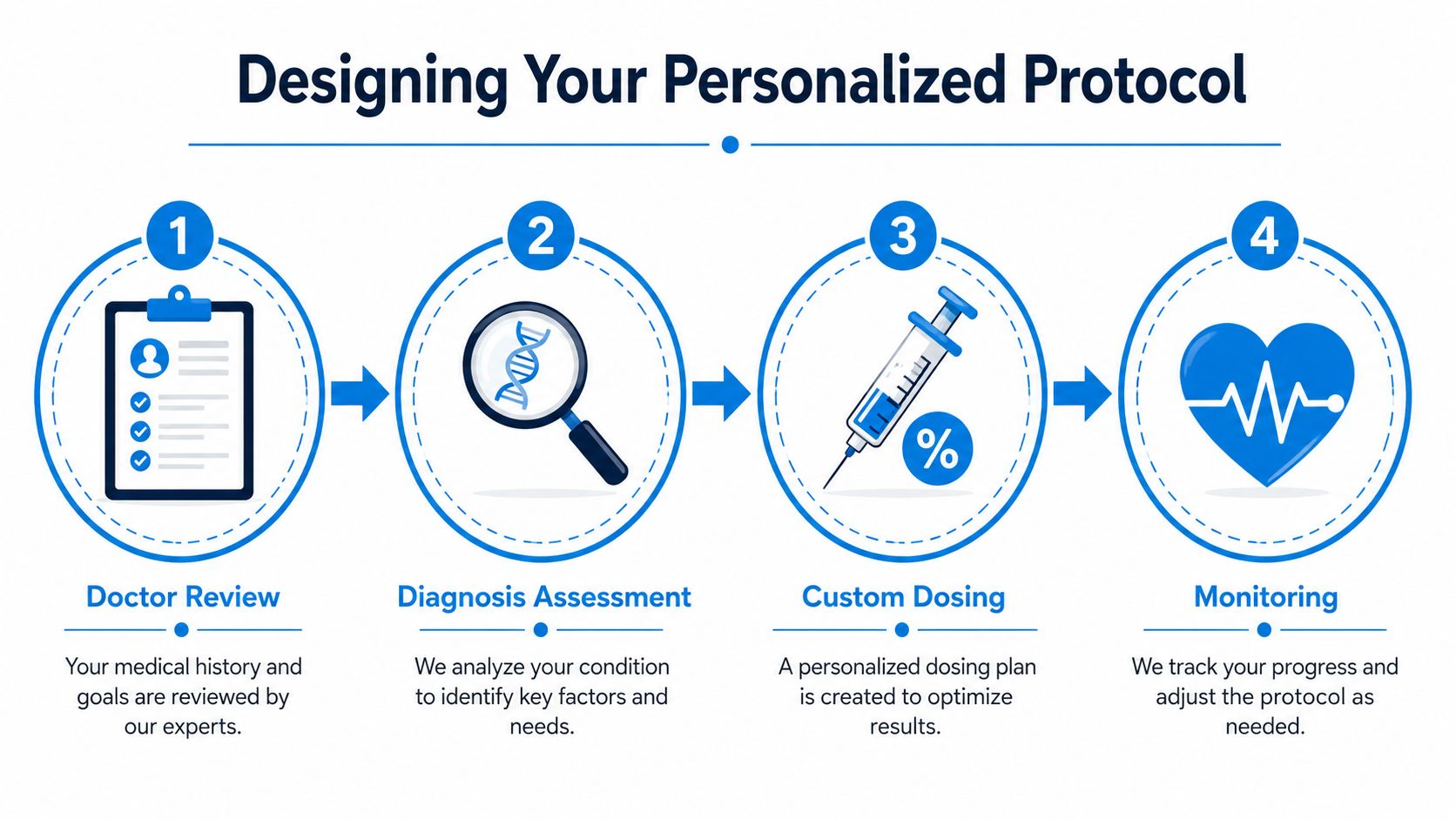
A sound integrative oncology plan begins with the diagnosis, not with the infusion. The physician reviews pathology, staging, imaging, prior treatment response, current medications, laboratory results, symptoms, performance status, and the goals of the treating oncologist.
That review helps answer three separate questions. Could the patient safely receive the therapy? Could it fit alongside the current treatment? And is there a rational reason to consider it despite the uncertainty? If the answer to any of these is no, declining the infusion may be the most appropriate clinical decision.
From records to a monitored plan
A physician-directed workflow commonly includes:
- Record review: Confirm the cancer diagnosis, current disease status, prior therapies, allergies, medications, and treatment goals.
- Risk assessment: Evaluate kidney function, stone history, G6PD considerations, hydration, vascular access, and other comorbidities.
- Protocol design: Select the route, dose, infusion schedule, and coordination points based on the individual rather than applying a fixed package.
- Ongoing reassessment: Track tolerance, symptoms, laboratory findings, imaging, and the overall response to standard treatment.
The plan should also clarify what success would mean. A patient may prioritize symptom control, maintaining function, completing conventional therapy, or pursuing additional disease-directed options. Those goals aren't interchangeable, and an infusion should not be described as effective unless the relevant outcome is measured.
Integrative care works best when it complements appropriate conventional oncology rather than competing with it. Coordination may involve sharing records, confirming treatment dates, clarifying which physician manages adverse effects, and arranging follow-up when a patient travels to Scottsdale from Phoenix, Paradise Valley, Tempe, Mesa, Chandler, Gilbert, or elsewhere in the greater metropolitan area.
Patients seeking a broader framework can read about building an integrative cancer treatment plan and use it to prepare for a physician conversation. The final recommendation still has to come from a clinician who knows the case and can monitor the patient directly.
Next Steps for Patients in Scottsdale and the Phoenix Area
A useful consultation begins with organized information. Bring pathology reports, recent imaging, oncology notes, medication and supplement lists, treatment dates, relevant laboratory results, and a written list of priorities. If you're considering IV vitamin C during active treatment, ask both teams to communicate directly about timing and monitoring.
Questions worth asking include:
- Is my cancer type represented in randomized or later-phase research?
- Is the proposed use standalone, or is it intended to accompany standard therapy?
- What outcome are we trying to measure?
- What screening is required before infusion?
- Could this interact with my current chemotherapy, radiation, immunotherapy, or targeted treatment?
- How will we decide whether to continue, modify, or stop?
- Who will manage complications or changes in my cancer treatment?
Patients in Scottsdale may be seeking a second opinion, while those in Phoenix, Paradise Valley, Tempe, Mesa, Chandler, or Gilbert may be looking for a coordinated adjunctive evaluation. Travel planning matters, especially when treatment requires repeated visits, laboratory review, communication with an established oncology team, and a clear plan for follow-up.
Integrative oncology care in Phoenix can be part of that broader discussion, but no clinic should promise that high-dose vitamin C will control a particular cancer. The appropriate next step is a case-specific review of evidence, safety, treatment compatibility, and patient goals.
The most honest answer to the question “Does high dose vitamin C for cancer work?” is conditional. Some studies show meaningful signals, while others do not confirm benefit. That uncertainty isn't a reason to dismiss the therapy, and it isn't permission to market it as a cure.
Sunridge Medical offers physician-directed integrative oncology evaluations and investigational IV vitamin C discussions for patients who want additional options alongside appropriate conventional care. If you're in Scottsdale or the Phoenix metropolitan area, visit Sunridge Medical to request a consultation and discuss whether an individualized evaluation is appropriate for your diagnosis and treatment plan.