


A cancer diagnosis can make even familiar places feel uncertain. You may be comparing oncology opinions in Phoenix, managing treatment side effects in Tempe, or looking for a second opinion after recurrence while wondering whether there's a way to support your energy, sleep, mood, nutrition, and daily function without stepping away from standard cancer care.
That's the practical search behind integrative oncology Phoenix. Adults across Scottsdale, Paradise Valley, Mesa, Chandler, Gilbert, and the wider Phoenix metropolitan area often want a coordinated plan rather than a disconnected list of supplements or alternative treatments. They want someone to review the full medical picture, explain what's supported by evidence, identify what may carry risks, and coordinate recommendations with their oncology team.
Arizona has a substantial cancer burden. The state averaged 34,274 invasive cancer cases per year from 2016 through 2020, with an incidence rate of 382 cases per 100,000 people, and the rate declined 11% during that period, according to the Arizona Cancer Report for 2016–2020. Maricopa County recorded an overall cancer incidence rate of 385.3 per 100,000 in 2022, placing the Phoenix area close to the statewide figure, while Arizona's statewide rate in 2022 was 383.8 per 100,000, compared with 442.3 per 100,000 for the United States in State Cancer Profiles.
This guide explains what integrative oncology means, which supportive approaches have guideline support, how a personalized pathway may unfold, and what to ask when comparing a Scottsdale or Phoenix clinic. It's educational information, not a substitute for advice from your oncologist or another qualified medical professional.
Table of Contents
- Introduction to Integrative Oncology in Phoenix
- What Integrative Oncology Means and How It Complements Conventional Care
- Evidence Informed Modalities and Diagnostics You May Encounter in Phoenix
- Your Care Pathway From First Consult to Personalized Protocol
- How to Choose an Integrative Oncology Clinic in the Phoenix Area
- Outcomes Risks Costs and Logistics for Greater Phoenix Patients
- Next Steps With Sunridge Medical in Scottsdale
Introduction to Integrative Oncology in Phoenix
Consider a Scottsdale adult who has just received a breast cancer diagnosis. The treatment plan may involve surgery, radiation, hormone therapy, or another conventional approach, yet the patient is also dealing with poor sleep, fear about the next appointment, questions about food, and uncertainty about which supplements could interfere with treatment. Another Phoenix resident may have completed chemotherapy but still experience pain, fatigue, or anxiety, while someone in Chandler or Gilbert may be seeking a second opinion after a recurrence.
These patients aren't necessarily rejecting conventional oncology. More often, they're asking for better coordination around the whole cancer experience. They want symptom support that respects the primary treatment plan and a physician who can distinguish reasonable complementary care from therapies that are unproven, unsafe, or marketed with unrealistic promises.
The local need is understandable. Arizona's cancer registry recorded 19,384 invasive cancer cases in 1997, and later reporting continued to show more than 30,000 annual invasive cases during the 2016–2020 period, reflecting a persistent patient population rather than a short-lived concern, as documented in the Arizona cancer registry report for 1997. State reporting identifies breast, prostate, lung and bronchus, colorectal cancer, and melanoma among the major cancer types.
A responsible pathway starts with the diagnosis and treatment plan already in place. It then asks a second set of clinically important questions: Which symptoms are limiting daily life? What nutritional or functional concerns need attention? Could a proposed supplement interact with medication? Which supportive therapies have meaningful evidence for the specific problem?
For a broader explanation of how integrative care fits into contemporary cancer treatment, readers can review the role of integrative oncology in modern cancer care. The central idea is simple: integrative oncology should add organized support, not create confusion or replace appropriate cancer treatment.
What Integrative Oncology Means and How It Complements Conventional Care
Integrative oncology is a patient-centered, evidence-informed approach that combines conventional cancer treatment with selected complementary therapies, lifestyle support, mind-body care, and carefully reviewed natural products when appropriate. Alberta Health Services describes the field as using lifestyle modifications, mind-body practices, and natural products alongside conventional treatment, with examples including meditation, yoga, imagery, relaxation, hypnosis, acupuncture, Tai Chi, herbs, vitamins, dietary supplements, cannabis, and traditional healing approaches in appropriate contexts. The Alberta Health Services overview of integrative oncology also makes clear that these approaches belong within patient-centered care, not a promise of cure.
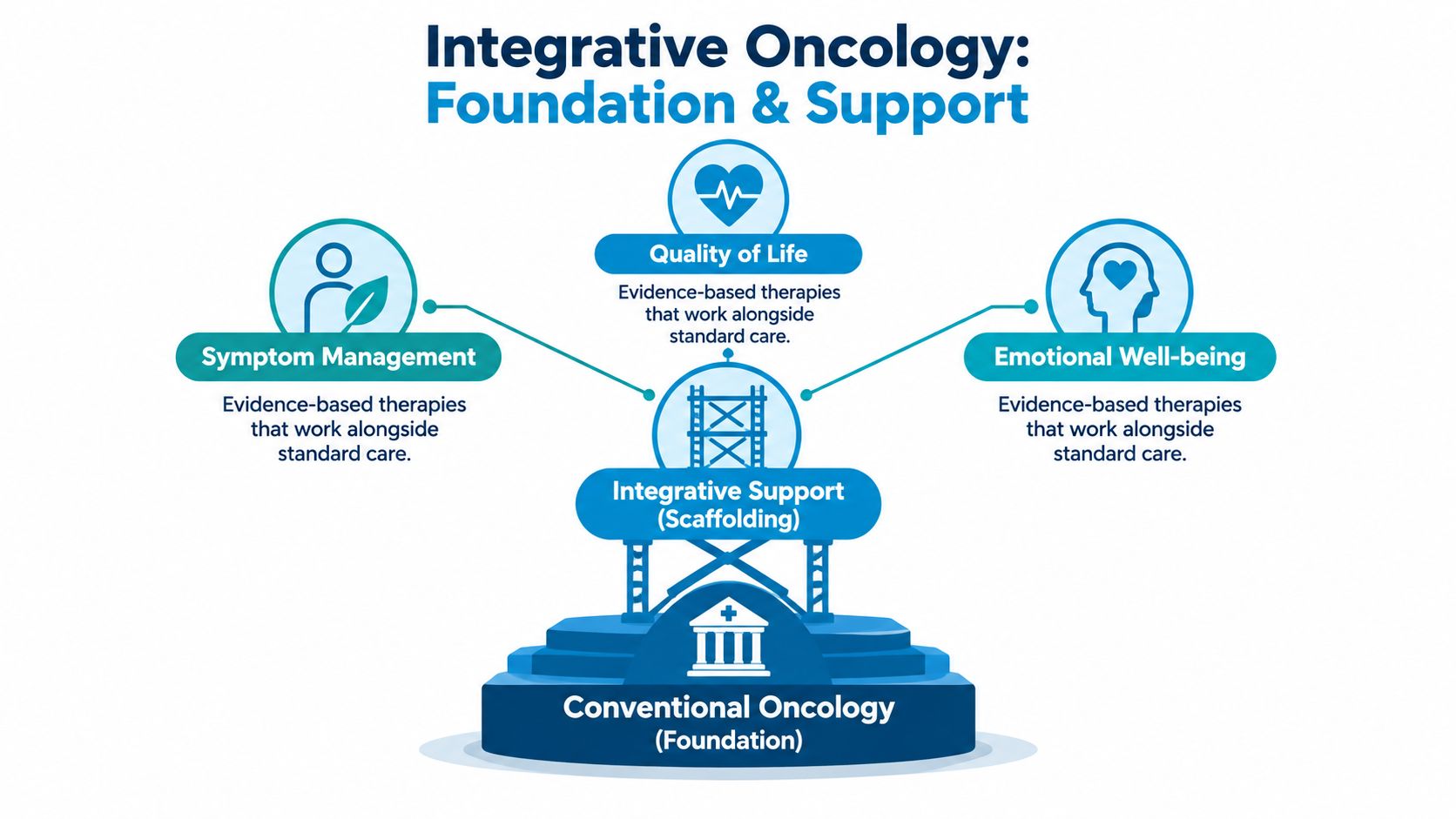
A useful analogy is a building. Conventional oncology is the foundation, including surgery, chemotherapy, radiation, immunotherapy, hormone therapy, or other treatments selected for the cancer. Integrative support is the scaffolding around that building. Scaffolding doesn't replace the foundation. It helps clinicians and patients address the practical problems that can make treatment harder to tolerate, such as anxiety, nausea, pain, sleep disruption, reduced mobility, and emotional strain.
What integrative care does not mean
Integrative oncology isn't the same as using alternative medicine instead of cancer treatment. It also isn't a license to combine every available therapy. A thoughtful plan starts with the patient's diagnosis, stage, treatment schedule, medications, laboratory information, medical history, preferences, and goals.
The goals are usually supportive. A patient may want help managing treatment-related nausea, joint pain, stress, low mood, fatigue, sleep problems, or the challenges of survivorship. Some interventions may be appropriate during treatment, while others may need to wait or may not be advisable at all.
Clinical boundary: A therapy can be useful for a symptom without treating or eliminating the cancer itself.
That distinction matters because the strongest guideline evidence in integrative oncology generally concerns symptom control and quality of life, not tumor eradication. The joint Society for Integrative Oncology and ASCO literature base for anxiety and depression identified 110 relevant studies, including 30 systematic reviews and 80 randomized controlled trials, and recommended selected interventions such as mindfulness-based care, yoga, relaxation, music therapy, reflexology, and aromatherapy for certain cancer-related symptoms during or after treatment in the SIO-ASCO guideline literature.
The physician's job is to connect the pieces. That can mean reviewing a proposed supplement for interactions, adjusting a supportive recommendation around chemotherapy timing, or helping a patient choose a manageable practice rather than an overwhelming program.
Evidence Informed Modalities and Diagnostics You May Encounter in Phoenix
A patient in Phoenix may arrive with chemotherapy-related nausea, persistent pain, poor sleep, or anxiety about the next treatment. The useful question is not which alternative treatment sounds most promising. It is which evidence-informed option addresses that specific concern, fits the cancer plan, and can be monitored safely.
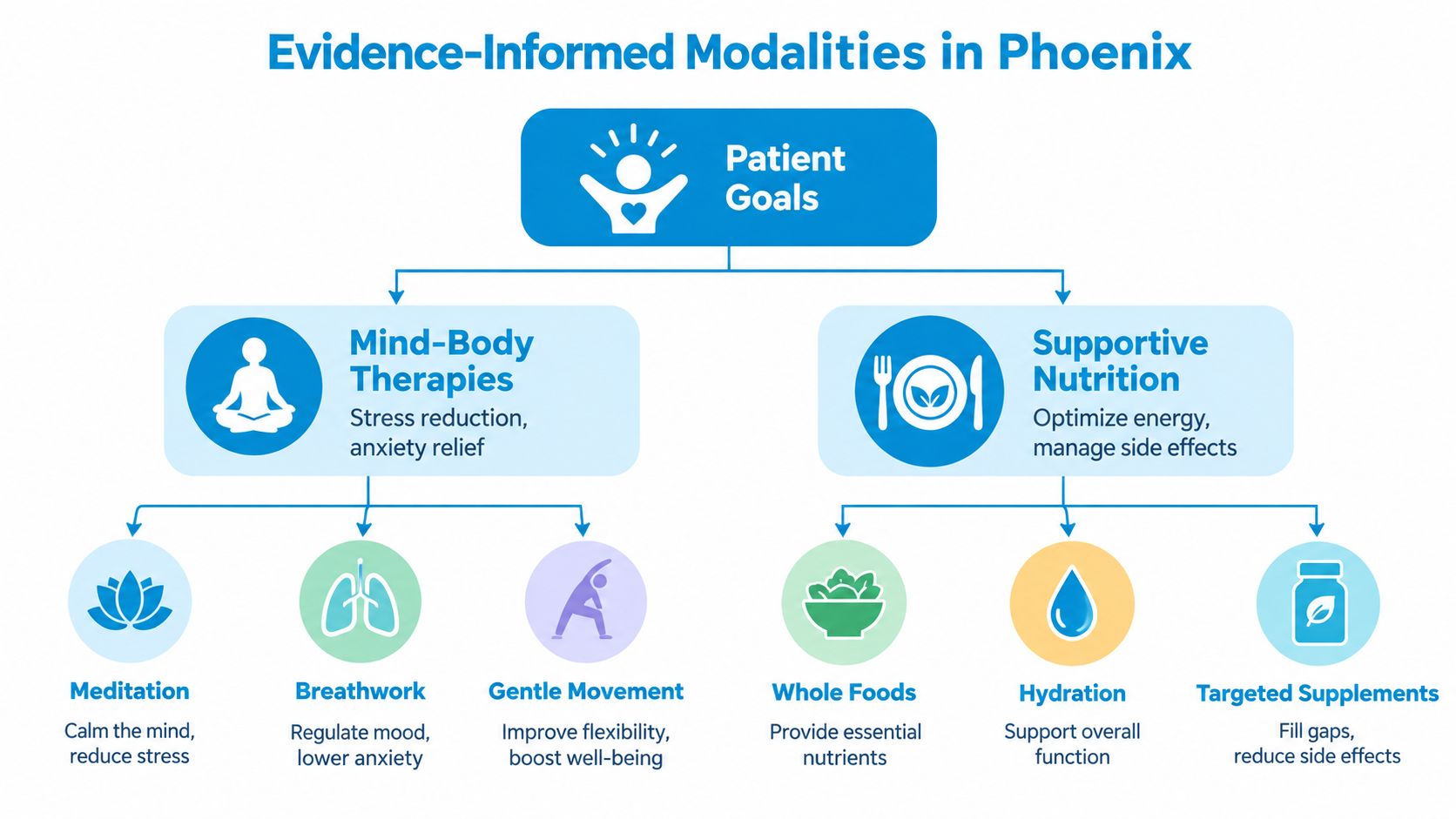
Guidelines describe several supportive modalities for selected symptoms. The SIO-ASCO educational guidance discusses music therapy, meditation, stress management, massage, and yoga for concerns such as anxiety, stress, depression, and mood. Acupressure and acupuncture may help with chemotherapy-induced nausea and vomiting. These approaches are not interchangeable. A clinician should match the intervention to the patient's symptoms, treatment schedule, physical condition, and preferences.
Matching modalities to patient goals
- Anxiety and mood: Mindfulness-based interventions, yoga, hypnosis, relaxation therapies, music therapy, reflexology, acupuncture, tai chi, and lavender essential oils appear in updated SIO-ASCO guidance for selected anxiety-related concerns. The 2024 guideline update advises clinicians against using cannabis or cannabinoids as cancer-directed treatment unless they are used within a clinical trial.
- Pain: The joint pain guideline recommends acupuncture for aromatase inhibitor-related joint pain. It also states that acupuncture, reflexology, or acupressure may be used for general cancer pain or musculoskeletal pain. Evidence for several natural products and mind-body interventions remains low or inconclusive, as described in the SIO-ASCO pain guideline.
- Nausea and vomiting: Acupuncture and acupressure may supplement the anti-nausea plan prescribed by the oncology team. They should not replace medically indicated antiemetic treatment.
- Sleep, stress, and function: Relaxation, mindfulness, yoga, music therapy, and carefully selected movement may support coping and daily function when adapted to the patient's condition.
Diagnostics need the same discipline. An integrative clinician may review pathology, imaging, medications, laboratory findings, nutritional status, and relevant molecular or biomarker information. The purpose is to connect those findings to a clinical decision, not to order every available test.
Phoenix patients may also ask about nutritional infusions, IV therapies, oxidative approaches, hyperthermia, or other adjunctive treatments. Their status should be stated clearly, whether complementary, emerging, off-label, or investigational, rather than presented as a cure. Anyone considering hyperthermia treatment planning should ask about the proposed goal, diagnosis-specific evidence, coordination with conventional treatment, and risk monitoring.
Evidence matters most when it changes a safe, specific decision.
Your Care Pathway From First Consult to Personalized Protocol
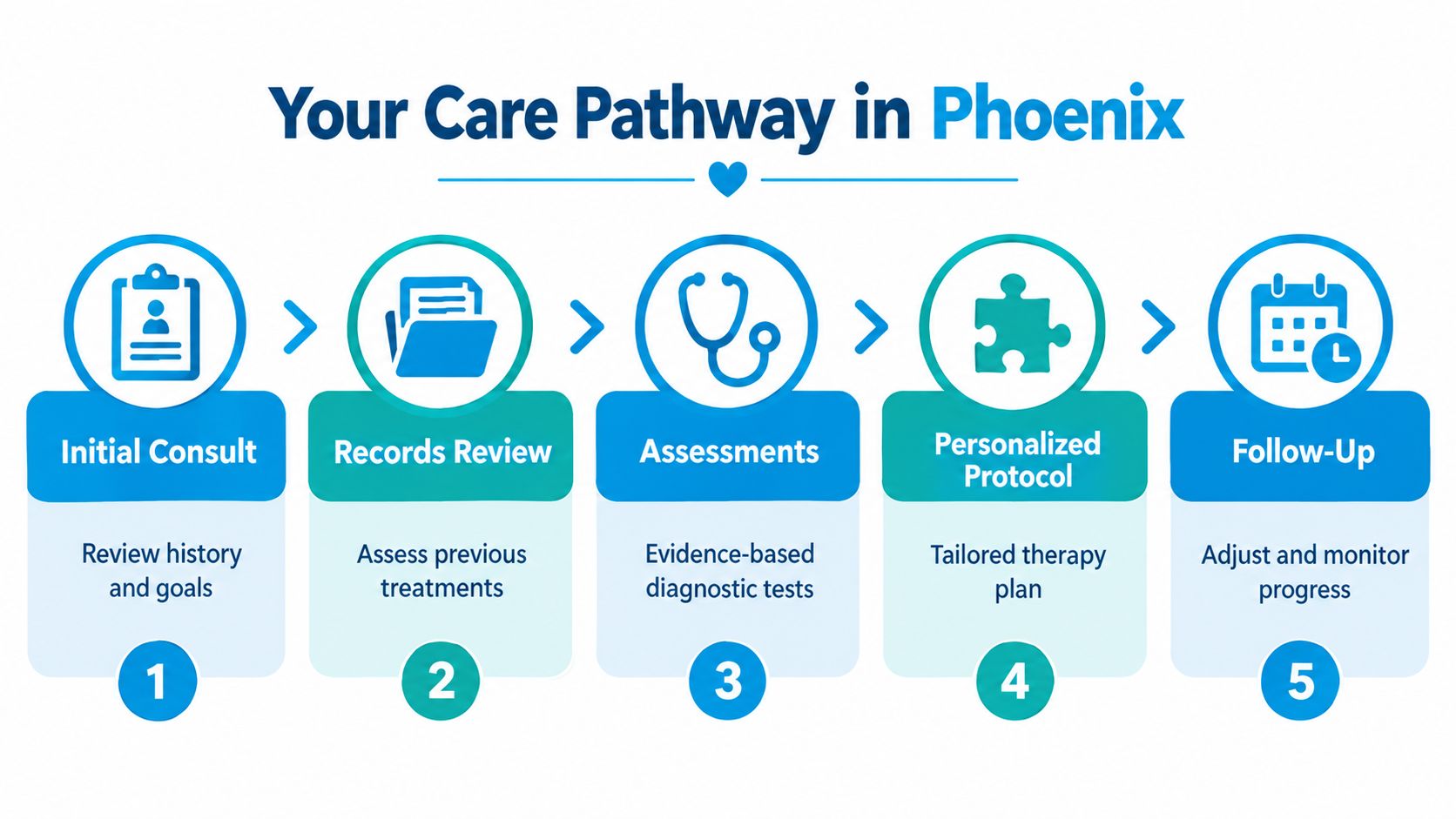
Patients often imagine an integrative oncology consultation as a conversation about supplements. A medically responsible visit is broader. The clinician first needs to understand the cancer, the treatment history, the current symptoms, and the patient's priorities before discussing possible additions.
Step one begins with records and goals
Bring pathology reports, imaging reports, operative notes, oncology notes, medication and supplement lists, and recent laboratory information when available. If records are scattered across systems in Phoenix, Scottsdale, Mesa, or another Valley city, an intake coordinator can help identify what's missing. Patients who need help organizing appointments, documents, and communication may also find a patient intake coordinator resource useful as they prepare for a complex medical consultation.
The first discussion should clarify goals. Are you looking for support during chemotherapy? Are you dealing with joint pain after hormone therapy? Do you need help with nutrition, sleep, anxiety, or survivorship planning? Are you seeking another perspective after standard treatment has not produced the hoped-for response?
Assessment turns information into a plan
The clinician may evaluate current symptoms, functional capacity, nutrition, sleep, stress, medical conditions, medications, allergies, and treatment timing. A proposed test should answer a meaningful question. A proposed therapy should have a defined purpose, a safety review, and a way to judge whether it is helping.
The resulting protocol may include conventional coordination, symptom-focused therapies, lifestyle recommendations, monitoring, and a schedule for reassessment. It shouldn't look identical for every person with the same cancer type. One patient may need support for aromatase inhibitor-related joint pain, while another may need help with anxiety and sleep during radiation.
For a detailed clinical framework, see building an integrative cancer treatment plan. The plan should remain connected to the treating oncology team, especially when a patient is receiving active chemotherapy, radiation, immunotherapy, surgery, or hormone therapy.
This video provides another way to visualize how an integrative care conversation may be organized:
Follow-up is where clinical judgment continues. Symptoms, medications, laboratory findings, treatment changes, and patient preferences can all affect the next decision. A therapy that isn't useful, tolerable, or safe should be reconsidered rather than continued automatically.
How to Choose an Integrative Oncology Clinic in the Phoenix Area
Choosing a clinic is a medical decision, not a service comparison. A clinic may offer an impressive list of therapies, but the more important question is whether the team can explain why a therapy fits your case, how it will be coordinated, and what it cannot accomplish.
Use the following checklist when comparing clinics in Scottsdale and Phoenix.
Clinic Evaluation Checklist for Phoenix Patients
| Evaluation Criteria | What to Look For | Questions to Ask |
|---|---|---|
| Physician oversight | Licensed clinicians who review the diagnosis, medications, treatment history, and risks | Who evaluates my case, and what oncology or integrative training do they have? |
| Coordination | Willingness to communicate with the conventional oncology team | How will you coordinate with my oncologist and radiation, surgical, or infusion providers? |
| Evidence standards | Clear distinction between guideline-supported, complementary, emerging, and investigational options | What evidence supports this therapy for my symptom or diagnosis? |
| Safety review | Medication, supplement, allergy, organ-function, and treatment-timing review | Could this interact with my chemotherapy, immunotherapy, radiation, or prescriptions? |
| Continuity | Follow-up, symptom tracking, and adjustment of the plan | How will you decide whether to continue, modify, or stop a therapy? |
| Transparency | Written recommendations, realistic goals, and clear financial information | What is the purpose, expected burden, risk, and cost of each component? |
| Second-opinion support | Respect for the patient's existing oncology care and decision timeline | Can you review my records without asking me to delay standard treatment? |
A thorough intake should leave room for uncertainty. Cancer treatment decisions often involve tradeoffs, and a trustworthy clinician will tell you when evidence is limited. Be cautious if a provider promises to cure cancer, asks you to abandon standard oncology, relies only on testimonials, hides ingredients, or pressures you to purchase a large protocol before reviewing your records.
A second opinion can be useful when the diagnosis is complex, the treatment options feel unclear, or you want help interpreting complementary recommendations. The clinical evaluation checklist for finding an integrative oncologist offers another framework for evaluating credentials, communication, evidence, and safety.
The best local choice may be the clinic that offers fewer claims and better explanations. You should understand the purpose of every recommendation, the alternatives, and the plan for monitoring.
Outcomes Risks Costs and Logistics for Greater Phoenix Patients
A patient may enter an integrative oncology visit hoping one therapy will control the tumor. The more useful pathway begins by separating two goals: supporting the body through treatment and directly treating cancer. Evidence-informed approaches can help selected patients with anxiety, mood symptoms, pain, nausea, stress, and other treatment-related concerns. Those benefits matter, but they do not establish that a complementary therapy shrinks or eliminates cancer.
Ask what role each recommendation is meant to play. If a clinician proposes cancer-directed treatment, the explanation should identify whether the approach is established, off-label, emerging, or investigational, and whether a clinical trial is relevant. Cannabis or cannabinoids should not be presented as cancer-directed treatment outside a clinical trial, consistent with the guidance discussed earlier.

Safety and financial questions deserve equal attention
A supplement can interact with a prescription medicine or influence treatment decisions. Acupuncture, massage, exercise, nutrition changes, IV therapies, oxidative approaches, and other services may need adjustment around blood counts, infection risk, surgery, organ function, or treatment timing. Give every clinician an up-to-date list of medications, vitamins, herbs, and therapies.
Costs depend on the insurance plan and the service. Before booking, ask whether the consultation and proposed therapies are covered, whether prior authorization is required, what documentation the clinic can provide, and which services are self-pay. Request a written estimate so the financial plan is clear.
Travel also becomes part of care. Patients coming from Mesa, Chandler, Gilbert, Tempe, or elsewhere in the Valley should plan appointment frequency, transportation, lodging, caregiver availability, and communication between visits. A Scottsdale clinic may coordinate locally while another provider continues the primary oncology treatment.
Schedule medical appointments before planning activities across Arizona. Free time may allow you to find exclusive Arizona getaways, but sightseeing should not interfere with treatment instructions, rest, or follow-up care.
Next Steps With Sunridge Medical in Scottsdale
An integrative oncology evaluation should begin with your actual clinical record, not a generic protocol. At Sunridge Medical, the Scottsdale team can review the diagnosis, prior treatments, pathology, relevant molecular information, current health, medications, symptoms, and personal goals before discussing which integrative strategies may reasonably fit the situation.
The clinic uses a combined model involving conventional medicine, traditional therapies, and alternative modalities to develop individualized plans. Depending on the case, discussions may include symptom support, nutritional and IV approaches, oxidative medicine, hyperthermia-oriented care, or other adjunctive options. Each recommendation still requires a clear purpose, safety review, and realistic explanation of the evidence.
This approach may be relevant for adults at different points in the cancer journey, including people in active treatment, those managing recurrence, survivors with persistent symptoms, and patients seeking a second opinion. Sunridge Medical also supports patients from Phoenix, Paradise Valley, Tempe, Mesa, Chandler, Gilbert, and other parts of the greater Phoenix area, as well as people traveling to Scottsdale for care.
A consultation is an opportunity to ask focused questions: What is the goal of each recommendation? How might it fit with my oncology plan? What risks or interactions should I consider? How will we monitor symptoms and adjust the plan?
If you're considering integrative oncology in Phoenix, contact the clinic with your records and a clear description of your diagnosis, current treatment, and most pressing concerns.
Sunridge Medical offers physician-directed integrative oncology consultations in Scottsdale, including individualized review and coordination for patients seeking supportive options alongside conventional cancer care. Visit Sunridge Medical to discuss whether an evaluation or consultation is appropriate for your situation.