


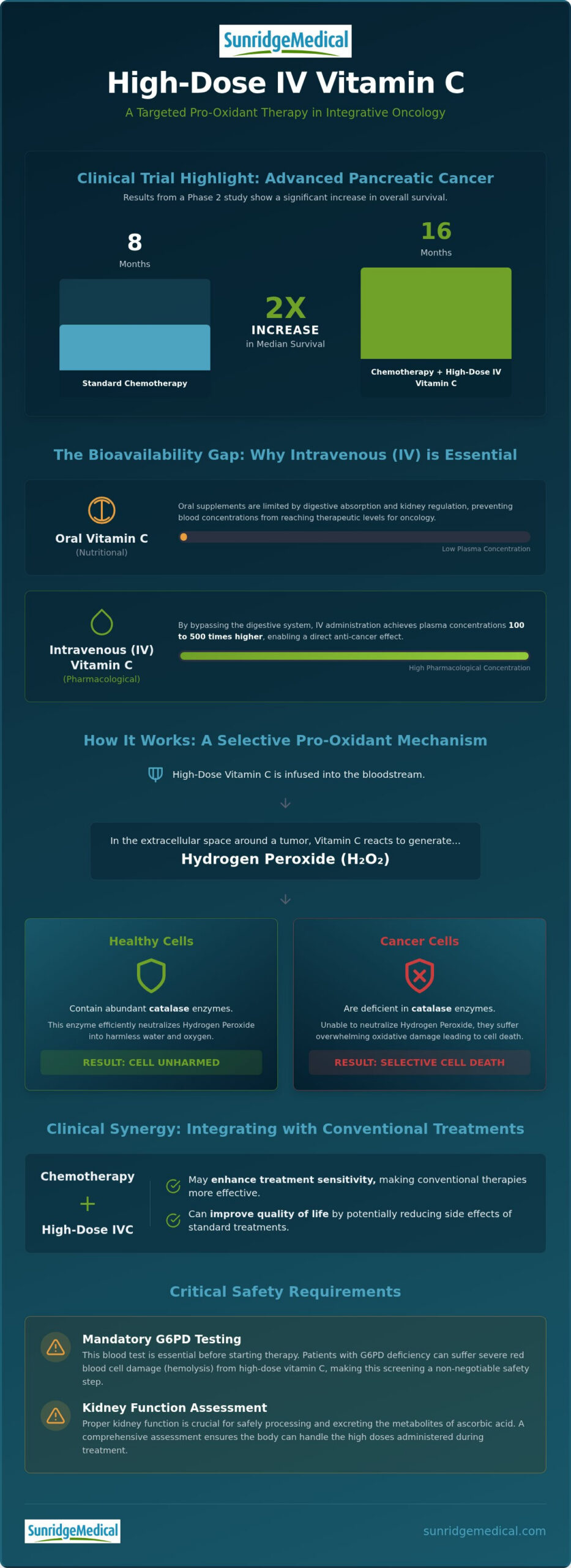
Could a precision-calibrated oxidative therapy actually double the average survival time for those facing advanced pancreatic cancer? A phase 2 clinical trial published in November 2024 suggests exactly that; it found that adding high dose vitamin c iv for cancer to standard chemotherapy extended overall survival from eight months to sixteen. We understand that you may feel overwhelmed by conflicting online advice or fearful of the debilitating toxicity often associated with conventional treatments. It’s common to feel like a mere statistic in a standardized medical system that lacks the time for individualized attention.
You deserve a scientific guide who prioritizes both clinical rigor and your personal well-being. This guide clarifies the research-based mechanism of intravenous ascorbic acid; specifically, how it acts as a selective pro-oxidant to target cancer cells while sparing healthy tissue. We’ll move beyond the “wellness drip” narrative to discuss essential safety requirements like G6PD testing and kidney function screening. By the end of this article, you’ll understand how specialized, research-based protocols are structured to support your recovery with the precision your health demands.
Key Takeaways
- Distinguish between standard nutritional supplementation and the pharmacological dosing required to achieve therapeutic plasma levels that the digestive system cannot reach.
- Understand the pro-oxidant mechanism where high dose vitamin c iv for cancer creates hydrogen peroxide in the extracellular space to selectively target cancer cells.
- Examine the clinical synergy between intravenous ascorbic acid and conventional treatments, which may enhance treatment sensitivity and improve quality of life.
- Identify the critical safety requirements, including mandatory G6PD testing and kidney function assessments, necessary before beginning any high-dose protocol.
- Explore how individualized physician evaluations facilitate the transition from standardized care to customized, research-based alternative treatment plans.
Understanding High Dose Vitamin C IV Therapy in Integrative Oncology
Many patients first encounter ascorbic acid as a simple nutritional supplement taken to support the immune system during seasonal illnesses. In the context of integrative oncology, however, we must distinguish between low-dose nutritional support and the pharmacological application of high dose vitamin c iv for cancer. While oral supplements are excellent for maintaining baseline health, they cannot reach the therapeutic plasma levels required to exert a direct anti-cancer effect. At Sunridge Medical, we view this therapy as a cornerstone of modern alternative cancer treatment, moving beyond general wellness into the realm of precision oxidative medicine.
The Bioavailability Gap: Oral vs. Intravenous Administration
The human body is remarkably efficient at regulating nutrient levels, a process governed by the renal threshold. When you consume Vitamin C orally, the digestive tract and kidneys work in tandem to cap blood concentrations; once you exceed a certain amount, the excess is quickly excreted. This biological ceiling means that even massive oral doses fail to reach the levels necessary to impact tumor cells. Research indicates that intravenous administration can achieve plasma concentrations 100 to 500 times higher than the maximum possible oral dose. Bioavailability in this clinical setting refers to the percentage of the administered substance that enters the systemic circulation and becomes available at the cellular level to target malignant growth. By bypassing the gut entirely, we ensure the substance reaches the specific “pharmacological” concentrations required for a therapeutic impact.
The Evolution of Ascorbic Acid in Clinical Research
The clinical journey of ascorbic acid began decades ago with the pioneering work of Linus Pauling and was later refined by researchers at the Riordan Clinic. For a detailed Intravenous Vitamin C Overview, one can see how the scientific community’s understanding has shifted from viewing it solely as an antioxidant to recognizing its potential as a targeted oxidative agent. Early skepticism often stemmed from studies that utilized oral dosing, which we now know is insufficient for oncology. Modern protocols have evolved through years of clinical data, moving toward high-dose infusions that generate hydrogen peroxide in the extracellular space. This historical progression has transformed a once-misunderstood supplement into a structured, research-backed protocol used to support patients navigating complex health journeys. We don’t rely on outdated assumptions; instead, we use these decades of evidence to build customized, high-impact strategies for our patients.
The Biological Mechanism: How Ascorbic Acid Targets Cancer Cells
To understand the efficacy of high dose vitamin c iv for cancer, we must look past its traditional role as an antioxidant. While oral doses protect cells from oxidative damage, pharmacological concentrations achieved via IV behave as a pro-oxidant. This shift is the foundation of its selective toxicity. When ascorbic acid enters the extracellular fluid surrounding a tumor, it reacts with trace metal ions to generate hydrogen peroxide. For a healthy cell, this is a manageable event. For a malignant cell, it’s a targeted strike against its very survival.
Hydrogen Peroxide Production and Selective Cytotoxicity
The primary differentiator between healthy and cancerous tissue lies in the presence of an enzyme called catalase. Healthy cells possess abundant levels of catalase, which allows them to efficiently neutralize hydrogen peroxide into water and oxygen. Cancer cells, however, are often deficient in this vital enzyme. Without the ability to detoxify the peroxide, they experience overwhelming internal damage. As detailed in various High-Dose Vitamin C Clinical Trials, this chemical reaction occurs specifically in the spaces between cells, ensuring that the treatment remains localized to the tumor environment. This selective mechanism is what allows us to target the disease without compromising the patient’s underlying vitality.
If you’re seeking a deeper understanding of how these mechanisms apply to your specific diagnosis, our team of specialists can provide a comprehensive clinical consultation to explore your options.
Metabolic Interference and Cancer Cell Energy Depletion
Malignant cells are notorious for their high glucose consumption, a phenomenon known as the Warburg effect. Vitamin C in its oxidized form, dehydroascorbate, bears a striking structural resemblance to glucose. Cancer cells effectively mistake the treatment for their primary fuel source, pulling it across the cellular membrane in a “Trojan Horse” maneuver. Once inside, the substance induces significant oxidative stress that disrupts the cell’s mitochondrial function. This process inhibits glycolysis, the primary pathway cancer cells use to generate energy. By depleting cellular ATP (the cell’s “energy currency”), the therapy starves the tumor of the resources it needs to proliferate. By incorporating high dose vitamin c iv for cancer into a multi-faceted protocol, we can exploit these metabolic vulnerabilities while sparing the immune system and supporting the body’s natural defenses.
Clinical Synergy: Integrating Vitamin C with Conventional Treatments
A frequent concern for patients is whether high dose vitamin c iv for cancer will interfere with their chemotherapy or radiation. Conventional wisdom often warns against antioxidants during treatment, but this perspective overlooks the pharmacological reality of IV administration. Because the therapy acts as a pro-oxidant at high concentrations, it doesn’t shield cancer cells; instead, it can actually enhance the efficacy of certain chemotherapeutic agents. This selective oxidative stress creates a multi-pronged attack on the tumor, often weakening its defenses when the body is most vulnerable.
Evidence suggests that intravenous ascorbic acid can work synergistically with standard protocols to improve patient outcomes. A comprehensive Clinical Review of High-Dose IV Vitamin C highlights that this therapy can increase the sensitivity of malignant cells to oxidative stress, potentially making standard treatments more effective. To understand how these combinations vary based on the progression of the disease, patients should consult our clinical reference guide on integrative cancer treatment by stage. This resource helps clarify how customized protocols are titrated to meet the specific demands of each patient’s journey.
Reducing Toxicity and Improving Quality of Life
Beyond its direct impact on malignant cells, IV Vitamin C serves as a vital component of supportive care. Standard treatments often result in debilitating side effects like profound fatigue, nausea, and a loss of appetite. By supporting the body’s underlying metabolic processes and immune function, high dose vitamin c iv for cancer helps mitigate these toxicities. Patients often report an improved sense of well-being and higher energy levels, which allows them to stay on their primary treatment schedules without the need for frequent interruptions. Integrative care aims for both maximum clinical efficacy and the preservation of patient comfort, ensuring that the journey toward health is as manageable as possible.
Potential Synergistic Effects with Standard Protocols
The oxidative nature of high-dose ascorbic acid can lead to the weakening of cancer cell membranes, making them more susceptible to the cytotoxic effects of chemotherapy and radiation. This synergy requires precise timing and coordination between your medical teams. We advocate for an open dialogue between alternative and conventional doctors to ensure that every element of your care plan is synchronized. Facilitating this communication is essential; we recommend that patients provide their oncology team with a clear outline of their integrative protocols. This proactive approach ensures that your treatment is a unified effort, maximizing the potential for progress while maintaining the highest standards of safety and clinical oversight.
Safety, Dosage, and Clinical Standards for IV Infusion
Safety is the foundation of any precision medical protocol. While the benefits of high dose vitamin c iv for cancer are significant, the therapy must be administered within a strictly controlled clinical framework. This isn’t a generic “wellness” procedure; it’s a pharmacological intervention that requires physician oversight to monitor the body’s response in real time. We prioritize a methodical approach that ensures your physiology is supported at every stage of the process, from the initial screening to the final titration of your dose.
The Critical G6PD Deficiency Screening
Before your first infusion, a mandatory blood test for Glucose-6-Phosphate Dehydrogenase (G6PD) deficiency is required. G6PD is an enzyme that helps red blood cells function normally and protects them from oxidative damage. For individuals with this specific genetic deficiency, high concentrations of Vitamin C can cause red blood cells to rupture, a serious condition known as hemolytic anemia. This safety screening is a non-negotiable clinical standard. It’s a simple, straightforward test that allows us to confirm your eligibility and ensure the therapy is a safe option for your unique biochemistry.
To begin your personalized safety evaluation and discuss your treatment options, contact our clinical team at Sunridge Medical for a comprehensive consultation.
Monitoring Plasma Levels and Electrolyte Balance
The term “high dose” is relative to each patient’s metabolic needs and the specific nature of their diagnosis. We utilize a titration process, which involves starting with a conservative dose and gradually scaling up based on post-infusion lab results. This methodical scaling ensures we reach the therapeutic plasma levels necessary to target cancer cells without overtaxing the kidneys. Because high-dose ascorbic acid can have a diuretic effect, maintaining proper hydration and electrolyte balance is vital. We use Comprehensive Metabolic Panels (CMP) to monitor kidney function throughout the protocol, as individuals with pre-existing renal insufficiency or a history of oxalate kidney stones require specialized care.
A typical protocol may involve infusions multiple times per week, with each session lasting several hours. This clinical environment provides a sense of sanctuary and specialized attention, allowing you to rest while your medical team monitors your vitals. By maintaining these rigorous standards, we ensure that high dose vitamin c iv for cancer serves as a powerful, safe, and effective component of your integrative care plan. We don’t just administer a treatment; we manage a complex biological process with the goal of restoring your well-being through a more comprehensive lens than standard practices.
The Sunridge Medical Approach: Individualized Alternative Cancer Care
Sunridge Medical operates on the belief that every patient requires a strategy as unique as their own biochemistry. Standardized medical systems often prioritize high-volume, packaged care, but we recognize that effective oncology requires a deeper level of precision. Our philosophy centers on treating the individual human experience, not just the clinical diagnosis. By choosing high dose vitamin c iv for cancer at our facility, you are choosing a protocol that is meticulously titrated to your specific physiological needs and metabolic responses. We believe that progress is possible when we look beyond the status quo to find more effective ways to help those in need.
Precision Protocol Development and Physician Oversight
Every successful journey begins with a foundation of data. Before any treatment starts, we conduct a comprehensive physician evaluation to understand the complexities of your health. Dr. Steven S. Isaacman leads our clinical team with a focus on advanced diagnostics and research-based alternative medicine. This oversight ensures that your protocol is not only safe but optimized for your specific stage of recovery. We provide a sanctuary-like environment where you can receive specialized attention in a calm, determined atmosphere. This setting is designed to reassure those who may have felt overlooked by traditional systems, providing a steady hand as you navigate your health journey.
Comprehensive Support Beyond Vitamin C
While intravenous ascorbic acid is a powerful tool, it’s often most effective when integrated into a multi-faceted treatment plan. We don’t view any therapy in isolation. For many patients, this means combining oxidative treatments with other supportive strategies, such as hormone optimization or environmental illness management. Our expertise extends to complex chronic diseases and neurologic conditions, allowing us to address the underlying factors that may be hindering your progress. This holistic integration is what sets our methodologies apart, ensuring we address the unique, targeted needs of your body.
Taking the first step toward a customized care plan can feel daunting, but you don’t have to navigate this path alone. We act as your scientific guide, providing the intellectual and empathetic support you need to make informed decisions about your health. If you’re ready to explore how high dose vitamin c iv for cancer can be tailored to your specific needs, we invite you to reach out. Our dedicated advocates are available via our toll-free support line to help you schedule a personalized consultation and begin your path toward the restoration of your well-being.
Moving Toward Precision in Integrative Oncology
We’ve explored how intravenous ascorbic acid functions as a targeted pro-oxidant, bridging the gap between nutritional support and pharmacological precision. Success in this field relies on rigorous clinical standards, including mandatory G6PD screenings and the careful titration of doses based on your unique metabolic response. By integrating high dose vitamin c iv for cancer into a multi-faceted protocol, we can address the disease’s vulnerabilities while simultaneously supporting your body’s underlying vitality. This approach moves beyond the limitations of oral supplements to achieve the plasma concentrations necessary for a therapeutic impact.
You don’t have to navigate this complex journey alone or settle for standardized care. Under the leadership of Medical Director Dr. Steven S. Isaacman, our team provides research-based integrative protocols and individualized care plans specifically designed for advanced cancer stages. Ready to explore a personalized approach to your recovery? Contact Sunridge Medical at 1-800-923-7878 to schedule your comprehensive evaluation. We’re here to act as your scientific guide, providing the steady hand and expert insight needed to restore your well-being with calm determination.
Frequently Asked Questions
Is high-dose Vitamin C IV therapy FDA approved for cancer treatment?
High-dose IV Vitamin C isn’t currently approved by the FDA for the treatment of cancer. Its only approved clinical use is for the prevention and treatment of scurvy. In oncological settings, it’s considered an investigational, off-label adjunctive therapy. This means it’s used to support patients alongside conventional protocols rather than as a standalone, government-approved cure. We prioritize research-based applications to ensure every protocol aligns with current scientific understanding.
Can I receive Vitamin C infusions while undergoing chemotherapy?
You can receive Vitamin C infusions while undergoing chemotherapy, and many patients find this combination beneficial. Research indicates that high dose vitamin c iv for cancer can enhance the sensitivity of certain malignant cells to treatment while reducing common side effects like nausea and fatigue. It’s essential to coordinate these therapies with your medical team to ensure proper timing. This integrated approach focuses on maintaining your strength throughout the treatment process.
How many grams of Vitamin C are typically used in a “high dose” protocol?
A “high dose” protocol typically involves concentrations ranging from 25 grams to over 100 grams per infusion. These levels are far beyond what the digestive system can process. We use a titration process, starting with a lower dose and gradually scaling up based on your specific plasma level results and tolerance. This customization ensures that the concentration reaches pharmacological levels necessary to trigger the pro-oxidant effect while remaining safe for your physiology.
What are the side effects of high-dose Vitamin C IV therapy?
Most patients tolerate the therapy well, though some experience mild side effects like increased thirst, dry mouth, or fatigue during the infusion. Because the treatment involves a high volume of fluid, mild nausea or a temporary increase in blood pressure can occur. It’s strictly contraindicated for individuals with pre-existing kidney disease or a history of oxalate stones. We monitor your vitals and hydration levels throughout every session to ensure a comfortable and safe experience.
Is G6PD testing mandatory before starting Vitamin C infusions?
G6PD testing is a mandatory clinical requirement before you begin any high-dose infusion protocol. This genetic screening identifies a deficiency in the Glucose-6-Phosphate Dehydrogenase enzyme, which is necessary to protect red blood cells from oxidative stress. Administering high dose vitamin c iv for cancer to someone with this deficiency could lead to hemolytic anemia. We prioritize this simple blood test as a fundamental safety standard for every patient entering our care.
How long does a typical IV Vitamin C treatment session take?
A typical session usually lasts between one and three hours. The exact duration depends on the specific dosage being administered and how well your body processes the infusion. We maintain a steady, methodical drip rate to ensure both safety and comfort. This time provides a quiet, sanctuary-like environment where you can rest, read, or relax while our clinical staff monitors your progress and maintains your electrolyte balance throughout the procedure.
Will my health insurance cover the cost of alternative cancer treatments?
Standard health insurance providers typically don’t cover the costs of alternative or integrative cancer treatments. These protocols are often categorized as investigational or elective by traditional insurance companies. We recommend that patients contact their providers directly to verify their specific coverage details. Our team focuses on providing premiere, customized care that prioritizes your recovery through advanced methodologies that often fall outside the scope of standardized health insurance billing.
What happens if Vitamin C is taken orally instead of intravenously?
Oral Vitamin C is limited by the renal threshold, which means the gut can only absorb a small fraction of the dose before it’s excreted. Even massive oral doses can’t achieve the pharmacological plasma concentrations required to target cancer cells. Intravenous administration bypasses the digestive tract entirely. This allows us to reach blood levels 100 to 500 times higher than oral dosing, enabling the substance to act as a selective pro-oxidant rather than a simple antioxidant.