


Maria, a 58-year-old Scottsdale resident finishing chemotherapy for ovarian cancer, is asking a question many patients bring to an integrative clinic: could high-dose vitamin C IV support her recovery or make treatment easier to tolerate? The answer requires more than a simple “yes” or “no.” It depends on the evidence, the intended goal, kidney function, medication history, and coordination with her oncology team.
The phrase high dose vitamin C IV Scottsdale can describe very different services, from a general wellness infusion to a physician-directed oncology protocol. This guide explains what pharmacologic intravenous vitamin C means, why oral supplements can't produce the same blood levels, how dosing is developed, who may be a poor candidate, and what a Scottsdale consultation may involve.
Table of Contents
- What High Dose Vitamin C IV Actually Means
- Why Intravenous Delivery Changes the Equation
- Clinical Uses and Where the Evidence Stands
- Typical Dosing Protocols and Session Frequency
- Safety, Contraindications and Chemo Interactions
- What to Expect During and After an Infusion
- Cost, Logistics and the Sunridge Medical Approach
- Frequently Asked Questions and Next Steps
What High Dose Vitamin C IV Actually Means
Vitamin C, also called ascorbic acid, is familiar as a dietary nutrient. Low amounts from food or oral supplements help prevent deficiency and support normal biological functions. High-dose intravenous vitamin C is different. It delivers ascorbate directly into a vein at pharmacologic doses, meaning the goal is to produce blood concentrations that ordinary nutrition cannot achieve.
In oncology literature, high-dose IV vitamin C is commonly defined as at least 10,000 mg per infusion or 50 mg/kg per day (clinical review of pharmacologic IV vitamin C). Contemporary protocols may use approximately 50,000 to 100,000 mg per infusion, two to three times weekly, although a patient's actual plan should be individualized (National Cancer Institute vitamin C PDQ). These amounts are far beyond the dose used to prevent scurvy.
A high-dose infusion also isn't automatically the same as a Myers' cocktail. Myers' cocktails generally refer to blended wellness infusions containing nutrients such as magnesium, B vitamins, and vitamin C. Pharmacologic IV vitamin C uses ascorbate as the central therapy and requires a more careful review of candidacy, laboratory safety, dose escalation, and treatment interactions.
Practical rule: A vitamin infusion should be described by its actual dose, purpose, screening process, and medical supervision, not just by the word “IV.”
Patients who want a deeper explanation of clinical rationale can review this clinical guide to intravenous vitamin C therapy. The most important distinction is that high-dose IV vitamin C remains an adjunctive or investigational approach in cancer care, not an FDA-approved replacement for chemotherapy, radiation, surgery, immunotherapy, or other standard treatments.
Why Intravenous Delivery Changes the Equation
Oral vitamin C absorption has a ceiling. The intestine uses transport systems that become saturated, so taking more tablets doesn't create an unlimited rise in blood concentration. A useful analogy is trying to fill a bathtub with a teaspoon. You can keep adding water, but the delivery method remains too limited to flood the tub efficiently.
An IV line bypasses intestinal absorption and delivers ascorbate directly into the bloodstream. This allows clinicians to pursue millimolar plasma concentrations, a qualitatively different pharmacologic exposure from the micromolar levels associated with ordinary oral dosing (professional IV vitamin C resource).
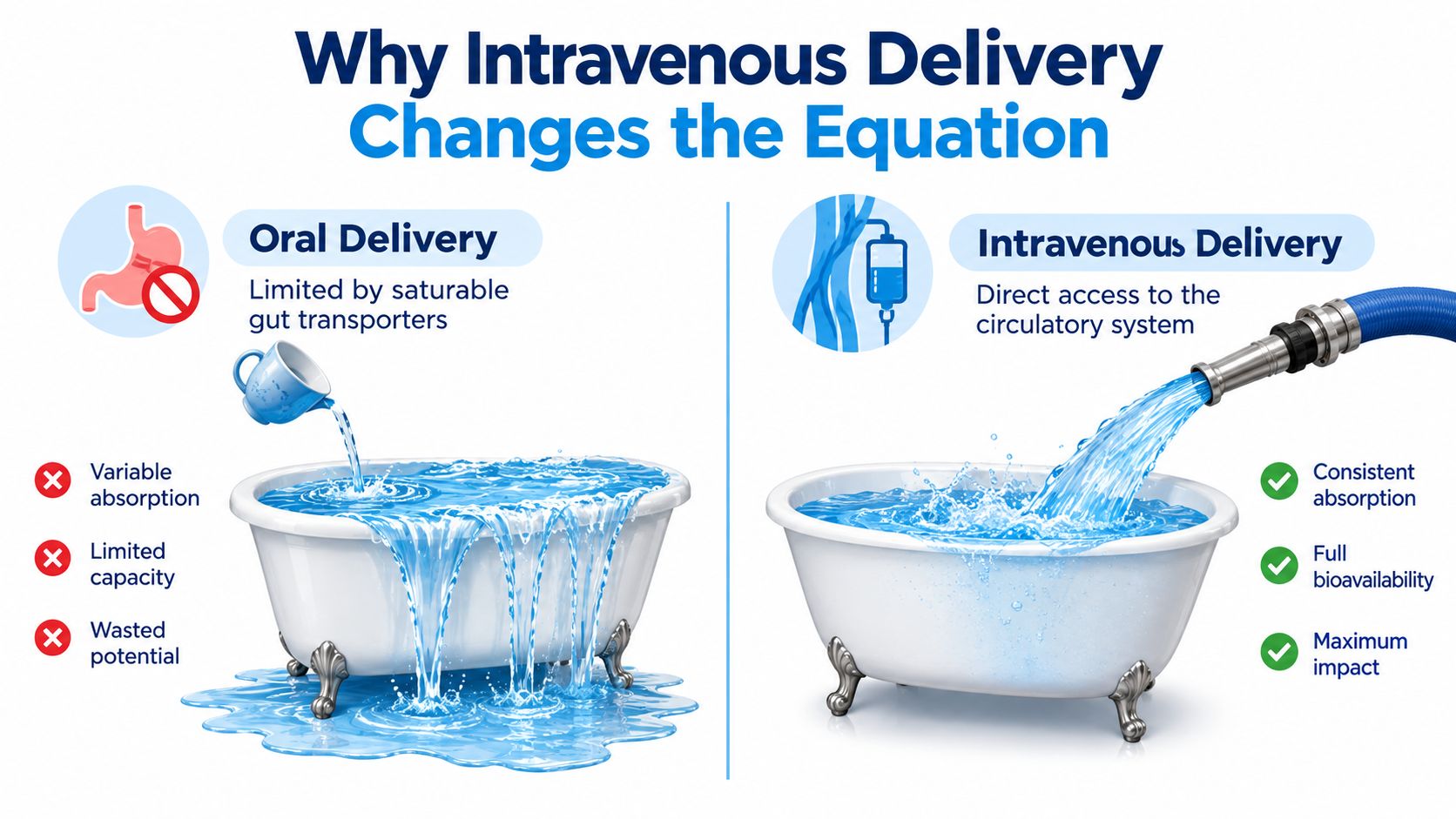
At these higher concentrations, researchers have proposed several possible biological effects. Ascorbate may generate hydrogen peroxide in and around certain tumor environments, influence immune-cell activity, and participate in collagen and extracellular-matrix processes. These mechanisms are scientifically interesting, but they don't prove that an infusion will shrink a particular tumor or extend an individual patient's life.
The distinction matters because pharmacology is not the same as clinical outcome. A treatment can achieve a measurable blood concentration and still require additional trials to determine when it helps, for whom it helps, and how it should be combined with other therapies.
A patient considering treatment in Scottsdale, Phoenix, Paradise Valley, Tempe, Mesa, Chandler, or Gilbert should therefore ask two separate questions: “Can IV delivery reach a level oral vitamin C cannot?” and “Has that level been proven to improve my specific condition?” The first question has a pharmacologic answer. The second remains condition-specific and uncertain.
Clinical Uses and Where the Evidence Stands
The most developed clinical discussion concerns IV vitamin C as an oncology adjunct. Some trials and reviews have reported signals involving quality of life, chemotherapy tolerability, or survival, but the studies differ in cancer type, dose, treatment schedule, comparison group, and outcome measurement. That heterogeneity makes it difficult to translate a promising result into a universal protocol.
A 2025 systematic review and meta-analysis reported a pooled median overall survival ratio of 1.83, with a 95% confidence interval of 1.40 to 2.40 and p < 0.001, among adults with malignant neoplasm receiving IV vitamin C compared with no IV vitamin C (2025 systematic review and meta-analysis). This finding is a clinical signal, not proof that high-dose IV vitamin C should replace established cancer treatment.
A separate review of survey data reported that 172 clinicians had administered IV vitamin C to 11,233 patients in 2006 and 8,876 patients in 2008, with an average dose of 28 g every four days over 22 total treatments per patient (evidence review of IV vitamin C use). Survey data can describe real-world use, but they can't establish efficacy in the same way a well-controlled randomized trial can.
| Condition | Evidence Type | Strength of Signal | Key Caveat |
|---|---|---|---|
| Cancer support | Clinical trials, reviews, and meta-analysis | Signals involving tolerability, quality of life, and possible survival benefit | Evidence is heterogeneous, and routine cancer benefit remains unproven |
| Sepsis and acute illness | Pilot and observational research | Investigational | Findings require stronger confirmatory trials |
| Chronic fatigue and fibromyalgia | Small studies and observational data | Preliminary | Results may not apply to every patient |
| Post-viral syndromes | Early clinical investigation | Uncertain | No established universal protocol or proven cure |
IV vitamin C has also been investigated for supportive care in sepsis, chronic fatigue, fibromyalgia, and post-viral syndromes. These areas remain less established. Patients should be wary of claims that high-dose vitamin C cures cancer, reverses chronic disease, or works predictably for everyone. A physician-directed integrative plan should complement appropriate conventional care, not delay it.
For patients exploring cancer-specific options, this overview of vitamin C infusions for cancer provides additional context. Sunridge Medical is one Scottsdale option for discussing physician-directed integrative care, but any patient receiving cancer treatment should keep the treating oncologist involved.
Typical Dosing Protocols and Session Frequency
Clinicians generally build a high-dose protocol gradually rather than beginning with the largest intended dose. The first infusion may function as a tolerance assessment. Published descriptions include an initial dose of 10 to 15 g, followed by 25 to 30 g if tolerated, with later doses reaching 50 g or more (review of high-dose IV vitamin C protocols).
The dose isn't selected by a patient's diagnosis alone. Kidney function, body size, glucose-6-phosphate dehydrogenase status, treatment goals, chemotherapy timing, hydration status, and symptoms during earlier infusions all influence the plan. Some supportive-care settings have used 5 to 25 g over 30 to 120 minutes, while oncology protocols may use higher amounts under physician supervision (review of high-dose IV vitamin C protocols). Because this source URL must remain unique, the earlier citation identifies the reference for both protocol ranges.
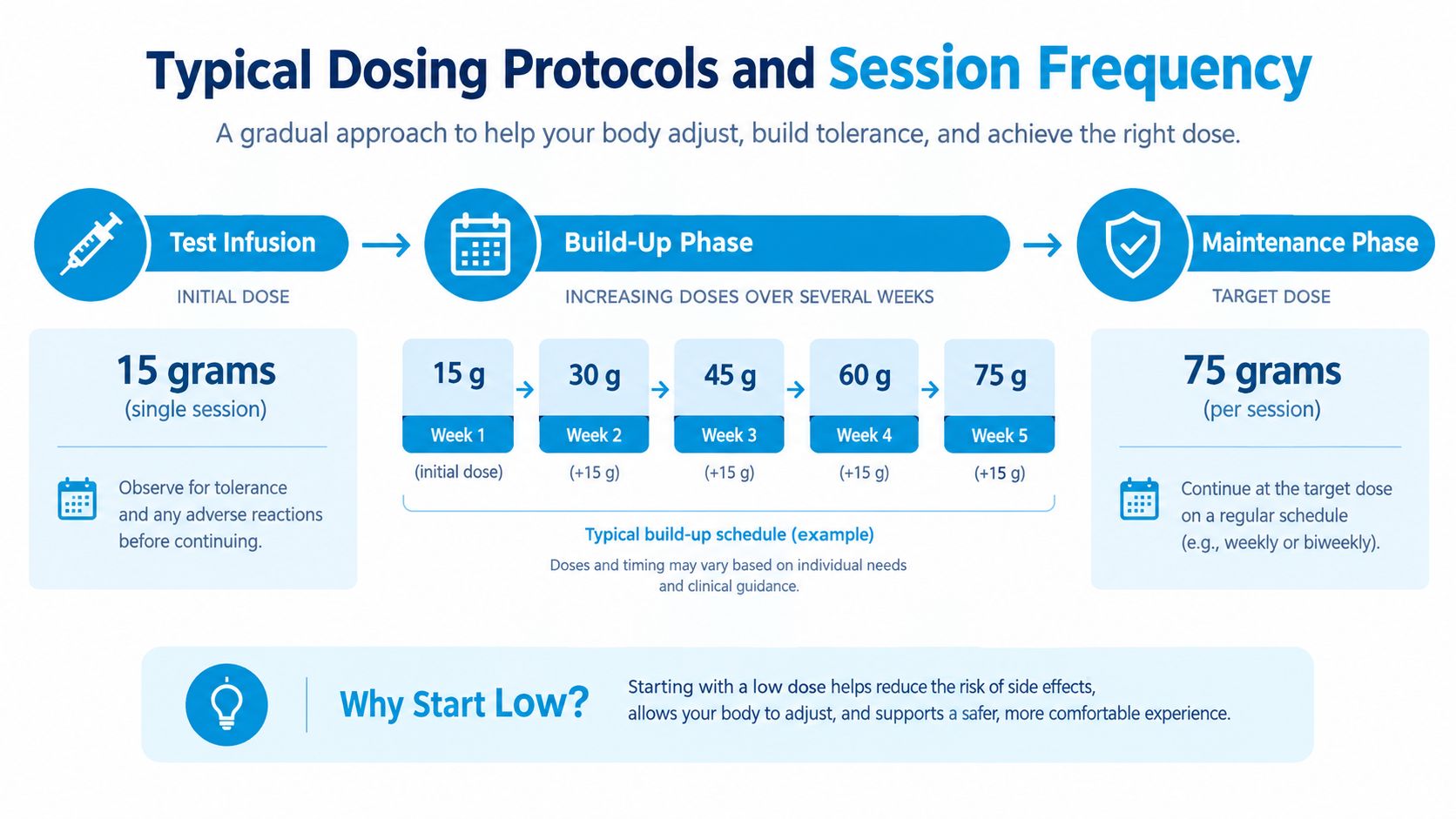
Many clinicians use a test infusion, build-up phase, and maintenance phase. A patient may begin with a lower dose, increase only after reviewing symptoms and laboratory information, and later space treatments according to the clinical objective. There isn't one schedule that applies to every person, and a wellness schedule shouldn't be presented as equivalent to an oncology protocol.
Before escalation, clinicians commonly review renal function, electrolytes, and G6PD status. A dose may also be tied to a target plasma concentration rather than a fixed number of grams. One oncology resource notes that doses above 15 g are typically needed to reach pharmacologic plasma levels, which is why doses below that threshold are often described as low-dose IV vitamin C (professional IV vitamin C resource).
Safety, Contraindications and Chemo Interactions
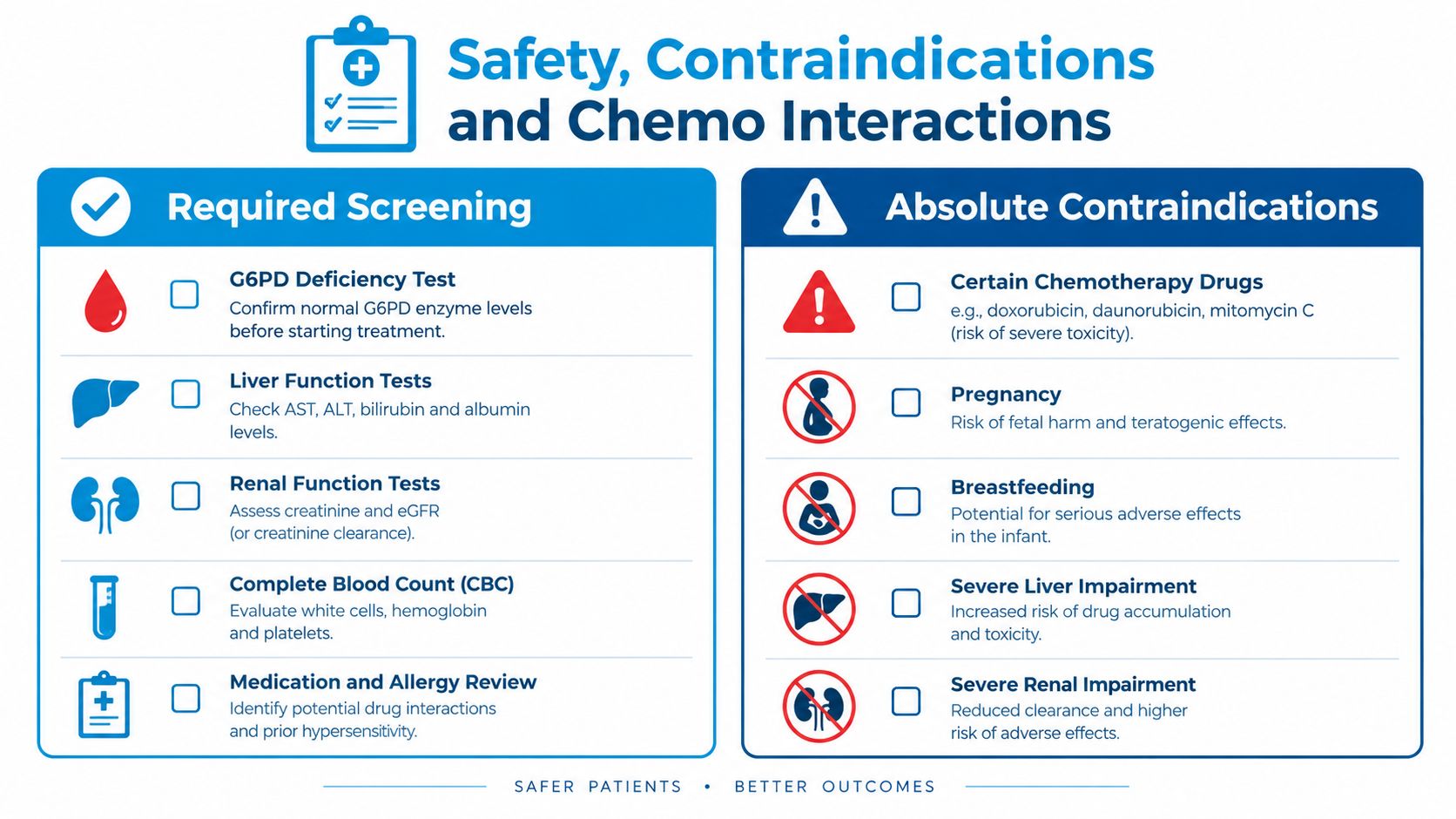
The fact that vitamin C is familiar and available orally doesn't make high-dose IV administration risk-free. The National Cancer Institute reports that IV vitamin C has generally been well tolerated in clinical trials, while also describing temporary effects such as thirst, nausea, vomiting, chills, and increased urinary flow. Rare renal problems have been reported, particularly in patients with preexisting kidney disease (National Cancer Institute vitamin C PDQ).
G6PD screening is a critical pre-infusion question. Patients with glucose-6-phosphate dehydrogenase deficiency may face a risk of hemolysis with high-dose vitamin C. A careful intake should also address kidney disease, prior oxalate kidney stones, hemochromatosis or other iron-overload conditions, fluid overload, and possible oxalate nephropathy (medical review of safety considerations).
Medication coordination matters
Patients receiving chemotherapy shouldn't schedule high-dose IV vitamin C independently of their oncology plan. Ascorbate's proposed oxidative effects could create concerns with certain medications, including some platinum compounds and tyrosine kinase inhibitors. Other combinations may be considered compatible when the infusion is timed appropriately, but the decision depends on the exact drug, dose, treatment cycle, disease status, and laboratory results.
A physician should review the complete medication list before each escalation, not just ask whether the patient is currently receiving chemotherapy. That review includes prescription drugs, radiation timing, supplements, kidney history, glucose-related conditions, and any previous infusion reactions. Patients can also read this guide to immune-support supplements during chemotherapy before discussing options with their care team.
What to Expect During and After an Infusion
At a first visit, a patient typically checks in, has vital signs recorded, reviews medications and medical history, and discusses consent and expectations. A clinician or nurse places a small IV catheter, then the ascorbate solution drips gradually while the patient reclines.
High-dose sessions may take roughly 30 to 120 minutes, depending on the dose, concentration, infusion rate, and comfort. Patients may notice coolness along the arm, thirst, a sweet or metallic taste, or the need to urinate during the visit. Staff should monitor the patient throughout the infusion and respond to discomfort rather than treating the planned dose as fixed.
Bring water, a snack, a tablet or book, and layered clothing. Scottsdale's outdoor heat can make hydration especially relevant, but patients with fluid-balance problems shouldn't increase fluids without medical guidance. A driver may be sensible for a first visit or a very high-dose session, particularly if the patient feels tired afterward.
Possible short-term experiences include temporary fatigue or a subjective sense of wellness. Neither feeling confirms a treatment response. Notify the clinical team immediately about chest tightness, severe headache, back pain, breathing changes, or any rapidly worsening symptom. This guide to a first IV therapy session can help patients prepare for the practical details.
Cost, Logistics and the Sunridge Medical Approach
The cost of high-dose vitamin C IV in Scottsdale varies by clinic and protocol. A responsible clinic should explain the fee before treatment and identify whether it covers the physician evaluation, laboratory testing, IV supplies, nursing observation, and follow-up. Pricing can change with dose level, infusion duration, bundled scheduling, and optional nutrients.
Because the provided medical information doesn't establish verified Scottsdale price data, patients shouldn't rely on invented online averages. Ask for a written estimate that separates the medical evaluation from the infusion itself.
| Session Type | Typical Price Range (USD) | What Is Included |
|---|---|---|
| Initial consultation and screening | Varies by clinic | Medical history, medication review, laboratory planning, candidacy discussion |
| Lower-dose or test infusion | Varies by dose and clinic | IV placement, physician-directed dose, monitoring, tolerance assessment |
| High-dose infusion | Varies by dose, duration, and clinic | Ascorbate infusion, clinical observation, and assessment for future escalation |
| Bundled protocol | Varies by schedule and clinic | Multiple planned visits, possible follow-up review, and protocol coordination |
A Scottsdale patient may travel from Phoenix, Paradise Valley, Tempe, Mesa, Chandler, Gilbert, or elsewhere in the greater Phoenix metropolitan area. Before booking, confirm whether the clinic provides physician-led intake, G6PD screening, renal testing, medication coordination, and follow-up laboratory review.
At Sunridge Medical, an integrative medical clinic in Scottsdale, the evaluation can include a review of prior records, current medications, oncology treatment timing, kidney history, and relevant laboratory findings. Patients should bring oncology notes, recent lab results, imaging summaries, chemotherapy or radiation schedules, and a complete supplement list. The clinic's integrative model is intended to coordinate conventional care with individualized supportive approaches, rather than position IV vitamin C as a substitute for primary cancer treatment.
Frequently Asked Questions and Next Steps
Who may be considered for high-dose IV vitamin C?
A candidate needs an individualized medical review, adequate safety screening, and a clear reason for considering the therapy. Patients with G6PD deficiency, significant kidney disease, oxalate stone history, iron overload, fluid-balance concerns, or relevant medication interactions may need to avoid treatment or pursue another option.
How often are infusions scheduled?
Frequency depends on the dose, goal, diagnosis, chemotherapy timing, tolerance, and laboratory results. Published oncology protocols commonly describe infusions multiple times weekly, but that pattern shouldn't be copied without physician oversight (National Cancer Institute vitamin C PDQ). Some patients may be considered for a more spaced supportive plan.
Can IV vitamin C be combined with chemotherapy or radiation?
Sometimes, but not automatically. The treating oncologist and the physician directing IV vitamin C should review the specific agents, schedule, lab results, and treatment objectives. IV vitamin C should never replace chemotherapy, radiation, surgery, immunotherapy, or another recommended primary treatment.
Does insurance cover it?
Coverage varies, and investigational or adjunctive infusions may not be reimbursed. Ask the clinic for a fee estimate and contact your insurer before scheduling if coverage matters to you.
How long do benefits last?
There's no reliable universal answer. A temporary sensation of energy or wellness isn't the same as a documented disease response, and evidence remains insufficient to promise a duration of benefit. The appropriate follow-up depends on symptoms, objective findings, treatment goals, and the broader care plan.
For a Scottsdale consultation, prepare your medical records, medication and supplement list, recent labs, imaging reports, and treatment calendar. A careful first conversation should determine whether high-dose vitamin C IV is appropriate, what screening is needed, and how any proposed infusion would fit alongside your existing care.
Sunridge Medical offers physician-directed integrative evaluations and individualized IV vitamin C planning in Scottsdale, including laboratory screening and coordination considerations for patients receiving cancer care. Visit Sunridge Medical to request a consultation and discuss whether high-dose vitamin C IV is medically appropriate for your situation.