


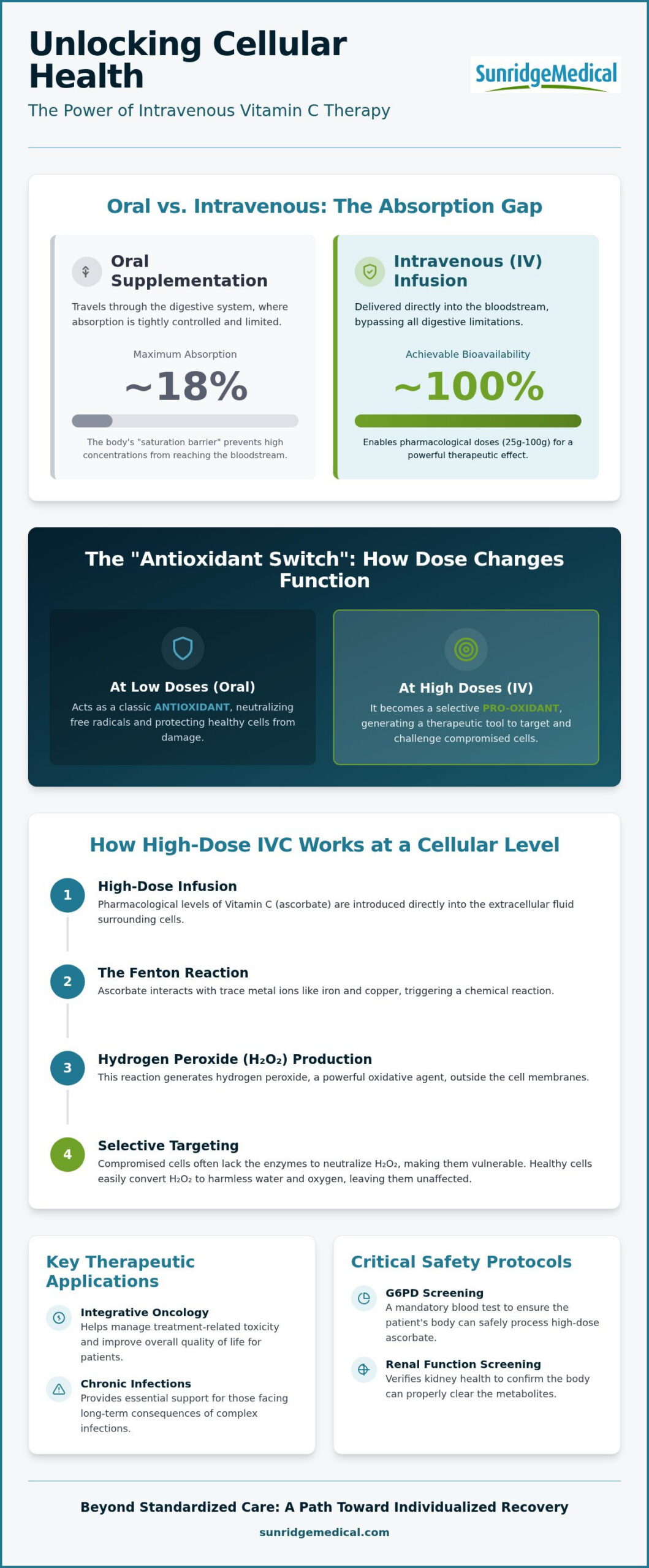
Did you know that while the digestive system may absorb as little as 18 percent of oral supplements, intravenous vitamin c achieves nearly 100 percent bioavailability by bypassing the gut entirely? This stark difference in absorption explains why high-dose infusions are increasingly recognized as a sophisticated pharmacological tool rather than a simple nutritional boost. It’s common to feel frustrated when conventional treatment loops leave you depleted or when the side effects of chemotherapy overshadow your progress. You’re likely seeking a more targeted, research-based approach to reclaim your vitality and support your immune function during a complex health journey.
This clinical guide provides a comprehensive look at the therapeutic applications and rigorous safety protocols surrounding high-dose vitamin C in 2026. We’ll explore how these precise oxidative therapies work at a cellular level to reduce treatment-related toxicity and improve your overall quality of life. By understanding the mechanisms of individualized care and the importance of clinical oversight, you can move beyond standardized models and discover a path toward more resilient, integrative recovery. We’ll examine the specific science behind cellular support and the protocols necessary for a safe, effective therapeutic experience.
Key Takeaways
- Understand why intravenous vitamin c is required to achieve the high pharmacological concentrations that bypass the restrictive absorption limits of the digestive system.
- Explore the unique pro-oxidant mechanism of high-dose ascorbate and its role in generating hydrogen peroxide to support cellular health and recovery.
- Learn how targeted oxidative therapy helps manage treatment-related toxicity in oncology and provides essential support for those facing the long-term consequences of chronic infections.
- Identify the critical safety protocols, including G6PD and renal function screenings, that ensure advanced IV therapies are administered with precision and care.
- Discover the transition from standardized models to precision medicine through individualized protocols that integrate specialized therapies into a comprehensive, multi-faceted recovery plan.
Intravenous Vitamin C vs. Oral Supplementation: The Pharmacological Difference
Many individuals facing chronic illness or cancer feel a sense of frustration when high-dose oral supplements fail to yield the restorative results they expect. It’s a common scenario; patients consume thousands of milligrams of capsules daily, yet their systemic symptoms persist. This gap in efficacy isn’t a failure of the nutrient itself, but rather a limitation of human biology. The digestive system acts as a strict gatekeeper, regulating how much Vitamin C can actually enter the bloodstream at any given time. To move from simple nutritional support to a therapeutic, pharmacological effect, we must look beyond the gut.
The Saturation Barrier
The small intestine relies on specific proteins called sodium-dependent vitamin C transporters to pull nutrients into the body. These transporters have a finite capacity. Research indicates that once oral doses exceed 200mg, the percentage of absorption drops significantly. While a small dose might be mostly absorbed, a massive oral dose of 10,000mg results in a vast majority of the nutrient being wasted. Plasma saturation is the specific physiological threshold where the body begins to excrete excess oral vitamins through the kidneys rather than absorbing them into the blood. This biological ceiling prevents oral supplementation from ever reaching the “pharmacological concentrations” necessary to trigger advanced healing mechanisms.
Intravenous Bioavailability Advantage
Choosing intravenous vitamin c changes the equation entirely by bypassing the digestive tract’s restrictive barriers. When administered directly into the bloodstream, bioavailability reaches 100 percent, allowing plasma levels to soar to heights that are physically impossible to achieve through diet or pills alone. This direct access ensures that the nutrient is immediately available for cellular uptake. While oral forms have a limited peak and a short window of activity, clinical intravenous vitamin c protocols can deliver doses ranging from 25g to 100g in a single session. This creates a high-impact environment where the nutrient acts as a precision tool for recovery. These elevated concentrations are essential for the pro-oxidant effects required in integrative oncology, providing a level of systemic support that a handful of supplements simply cannot replicate. By utilizing this direct route, we provide the body with the exact saturation needed to move toward a state of restoration and balance.
The Science of High-Dose Ascorbate: Pro-Oxidant Mechanisms
Most people recognize vitamin C as a premier antioxidant, a reputation built on its ability to neutralize harmful free radicals at low doses. However, when we transition to the high concentrations achieved through intravenous vitamin c, a fascinating “antioxidant switch” occurs. This isn’t just a matter of more of the same; it’s a fundamental change in how the molecule interacts with your biology. At these pharmacological levels, ascorbate stops acting as a passive scavenger and begins to function as a pro-oxidant, creating a controlled environment of therapeutic oxidative stress that specifically targets compromised cells.
From Antioxidant to Pro-Oxidant
The shift from antioxidant to pro-oxidant is driven by the chemistry of the extracellular fluid, the space surrounding your cells. When high doses of ascorbate are introduced directly into the bloodstream, they interact with trace metal ions like iron and copper. This interaction triggers what scientists call the Fenton reaction. This chemical process results in the production of hydrogen peroxide (H2O2) outside of the cell membranes. While low oral doses are meant to prevent oxidation, these clinical IV doses are designed to generate it purposefully. This mechanism allows intravenous vitamin c to act as a precision tool, utilizing the production of peroxide to challenge the survival of diseased or dysfunctional tissue.
Targeting Compromised Cells
A primary concern for patients is whether this oxidative stress will harm their healthy tissue. The beauty of this therapy lies in selective cytotoxicity. Healthy human cells are naturally abundant in protective enzymes, specifically one called catalase. This enzyme acts as a biological shield, instantly neutralizing hydrogen peroxide by converting it into harmless water and oxygen. Because your healthy cells are robustly equipped with catalase, they remain protected and often thrive in the presence of high-dose ascorbate.
In contrast, many cancer cells and certain chronic pathogens are metabolically “brittle.” They frequently lack the necessary levels of catalase to defend themselves against oxidative pressure. Research regarding IV vitamin C for cancer patients demonstrates how this lack of defense leads to a buildup of peroxide within the compromised cell. This internal accumulation damages the cell’s mitochondria, leading to a severe depletion of ATP, the cell’s primary energy source. Essentially, intravenous vitamin c exploits the metabolic weaknesses of anaerobic cells that cannot process oxidative stress effectively, leading to their eventual breakdown. This targeted approach is a key component of the individualized cancer protocols we develop to support your recovery without the heavy systemic toll of traditional methods.
Clinical Applications: IVC in Integrative Oncology and Chronic Infection
While the laboratory science of the “antioxidant switch” is compelling, its true clinical value lies in the treatment room where patients face the daily realities of chronic illness. Applying intravenous vitamin c within a structured, clinical protocol allows practitioners to address multi-systemic dysfunction that often resists conventional approaches. This method moves beyond simple wellness support, acting as a targeted intervention for complex health challenges ranging from advanced oncology to persistent bacterial infections.
Integrative Oncology Support
In the context of oncology, the primary objective is to enhance cellular resilience while minimizing the systemic toll of aggressive treatments. Current clinical perspectives in 2026 emphasize the significant synergy between high-dose ascorbate and specific conventional therapies. Far from interfering with standard protocols, the pharmacology of intravenous ascorbate suggests it can actually sensitize compromised cells to treatment while protecting healthy tissue. Many patients experience a noticeable improvement in appetite, energy levels, and overall emotional well-being. By actively reducing cancer-related inflammation and mitigating the side effects of chemotherapy, this therapy serves as a vital bridge toward a restored quality of life.
Chronic Infection and Lyme Disease
Beyond oncology, this oxidative therapy offers a powerful tool for those navigating the lyme disease long term consequences. Many individuals feel stuck in a cycle of antibiotic use that fails to resolve persistent symptoms like brain fog or chronic fatigue. The question of is chronic lyme disease real is often answered through the clinical observation of immune exhaustion and the presence of stealth pathogens. Advanced lyme disease specialists utilize intravenous vitamin c to disrupt microbial biofilms and fortify the immune system’s natural defense mechanisms. This pro-oxidant support helps the body clear metabolic debris and recalibrate immune markers, providing a path forward for those struggling with environmental illnesses or autoimmune markers. This multi-faceted approach ensures that the immune system is not just stimulated, but strategically supported for long-term recovery.
Safety Protocols and Patient Suitability: What to Know Before Starting
While the therapeutic potential of high-dose ascorbate is significant, the administration of intravenous vitamin c is a medical procedure that requires rigorous clinical oversight. Ensuring patient safety begins long before the first infusion starts. Because these protocols involve pharmacological concentrations that differ fundamentally from standard nutrition, a “one-size-fits-all” approach is insufficient. We prioritize a detailed physiological assessment to ensure that your body is prepared to process and benefit from the therapy effectively.
One of the most critical safety measures is the screening for Glucose-6-Phosphate Dehydrogenase (G6PD) deficiency. This specific enzyme is responsible for protecting red blood cells from oxidative damage. If a patient with this deficiency receives high-dose intravenous vitamin c, the resulting hydrogen peroxide can cause hemolysis, a serious condition where red blood cells break down prematurely. Beyond enzymatic screening, we must also evaluate renal function. Since the kidneys are responsible for clearing high-dose minerals and metabolic byproducts, ensuring healthy creatinine and BUN levels is essential for preventing renal strain.
Pre-Treatment Screening Requirements
A comprehensive blood panel serves as the foundation for any safe protocol. This includes assessing iron levels, as vitamin C significantly enhances iron absorption; this is a vital consideration for individuals with hemochromatosis. We also review your history regarding oxalate kidney stones to minimize the risk of new stone formation during treatment. Finally, our clinical team meticulously reviews your current conventional medication schedule. This ensures that the timing of your infusions creates synergy rather than conflict with other treatments you may be receiving.
The Infusion Experience
A typical high-dose session generally lasts between one and three hours, depending on the specific concentration and your individual tolerance. During this time, the osmotic load of the infusion can lead to common, manageable side effects such as increased thirst or mild lightheadedness. Maintaining proper hydration and electrolyte balance before and during the session is a key component of our protocol. These infusions must always be administered in a professional clinical setting under the direct supervision of trained medical staff who can monitor your vitals and ensure your comfort. If you are ready to explore how a medically supervised protocol can support your recovery, we invite you to contact our clinical team for an individualized assessment.
Certain contraindications do exist for high-dose therapy. Individuals with significant renal failure, active congestive heart failure, or those currently experiencing uncontrolled fluid retention may not be suitable candidates. By adhering to these strict safety boundaries, we ensure that the therapy remains a powerful ally in your journey toward restoration without introducing unnecessary risk.
Individualized IV Protocols at Sunridge Medical: Beyond Standardized Care
Standardized medical models often fail patients with complex conditions because they rely on “packaged” treatments that ignore individual biochemical uniqueness. At Sunridge Medical, we reject the status quo of one-size-fits-all therapy in favor of a precision medicine model. Under the clinical leadership of our Medical Director, Dr. Steven S. Isaacman, we develop proprietary protocols that address the specific physiological needs of each patient. We don’t view intravenous vitamin c as a standalone solution; instead, it’s a strategic component within a multi-faceted alternative cancer treatment plan designed to target disease while fortifying the host.
The Sunridge Consultation Process
The journey toward restoration begins with an exhaustive diagnostic deep-dive. We utilize advanced testing to identify the root causes of systemic dysfunction, looking far beyond surface-level symptoms. These biomarkers allow us to customize the concentration and frequency of your intravenous vitamin c infusions with surgical precision. Rather than static protocols, our approach involves continuous monitoring and real-time adjustments. As your body responds and your internal chemistry shifts, your protocol evolves to ensure we’re always optimizing for recovery. This level of specialized attention provides a sense of sanctuary for those who’ve felt overlooked by traditional systems.
A Path Toward Clinical Recovery
For individuals struggling with persistent infections, the question of is lyme disease permanent is a source of significant distress. Our clinical perspective is rooted in the belief that through targeted oxidative therapies and biological support, progress is always possible. We combine high-dose ascorbate with other research-based alternative treatments to create a synergistic effect that no single therapy could achieve alone. This multi-faceted methodology addresses the complexity of chronic illness by supporting detoxification pathways and modulating immune markers simultaneously. It’s a steady, methodical process that prioritizes your long-term well-being and the restoration of your quality of life.
Choosing a path of integrative recovery requires a partner who is both a pioneering expert and a dedicated advocate. We provide the intellectual depth and empathetic care necessary to navigate these complex health journeys. If you’re ready to move beyond standardized care and explore a protocol designed specifically for your biology, the next step is a comprehensive clinical evaluation. Our team is here to act as a steady hand, guiding you toward a more hopeful and resilient future through the most advanced applications of alternative medicine available in 2026.
Advancing Your Path to Integrative Recovery
The transition from standard nutritional support to advanced oxidative therapy represents a significant shift in how we approach chronic illness and oncology. By utilizing intravenous vitamin c, we bypass the biological limitations of the gut to achieve the pharmacological concentrations necessary for deep cellular recovery. These precise protocols exploit the metabolic weaknesses of compromised cells while fortifying your body’s natural defenses and reducing treatment-related toxicity. You’ve learned how the pro-oxidant mechanism creates a targeted environment for healing and why rigorous clinical oversight remains the cornerstone of patient safety.
With over 20 years of experience in managing complex chronic diseases, Sunridge Medical remains dedicated to providing research-based alternative protocols tailored to your unique biomarkers. Our physician-led care ensures that every infusion is administered with clinical precision and compassionate oversight. You don’t have to navigate this journey through standardized care alone. We invite you to Schedule a Clinical Consultation with Sunridge Medical to begin your personalized path toward restoration. Progress is possible, and we’re here to support your return to well-being with calm determination.
Frequently Asked Questions
Is intravenous vitamin C therapy FDA approved for cancer treatment?
No, the FDA hasn’t approved intravenous vitamin C as a specific treatment for cancer. As of 2026, it remains an investigational and off-label adjunctive therapy in the field of oncology. While it’s used in integrative protocols to improve quality of life and support immune function, its only FDA-approved indication is for the prevention and treatment of scurvy.
Can I receive IV vitamin C while undergoing chemotherapy or radiation?
Yes, high-dose ascorbate is frequently integrated into protocols for patients undergoing chemotherapy or radiation. Research indicates that the pro-oxidant mechanism of intravenous vitamin c can work synergistically with certain conventional treatments while protecting healthy tissue from oxidative stress. We coordinate with your oncology team to ensure the timing of infusions maximizes therapeutic benefit without interfering with your standard care schedule.
How many sessions of IV vitamin C are typically required for chronic illness?
The number of required sessions is strictly individualized based on your specific biomarkers and the complexity of your condition. For chronic illness recovery, patients often begin with two to three sessions per week during the initial phase. As your symptoms stabilize and immune markers improve, we adjust the frequency to a maintenance level. This methodical approach ensures we’re constantly tailoring the protocol to your real-time recovery progress.
What is the G6PD test, and why is it mandatory before IVC therapy?
The G6PD test is a mandatory screening that identifies a specific enzyme deficiency responsible for protecting red blood cells. Without this enzyme, high-dose infusions could trigger hemolysis, which is the premature breakdown of red blood cells. Ensuring you have adequate G6PD levels is a non-negotiable safety protocol that allows our clinical team to administer high concentrations of ascorbate with absolute precision and safety.
Will IV vitamin C interfere with my blood sugar readings?
Yes, high-dose infusions can cause a false elevation in finger-stick blood glucose readings because the molecular structure of vitamin C is similar to glucose. Handheld glucometers often can’t distinguish between the two molecules. We advise patients to wait at least six to eight hours after an infusion before relying on finger-stick tests or to use laboratory blood draws for accurate glycemic monitoring.
What are the most common side effects of high-dose ascorbate infusions?
The most common side effects are mild and easily managed within a clinical setting. Patients frequently report increased thirst or a sense of lightheadedness due to the osmotic effect of the infusion. Some may also experience temporary irritation at the injection site. We address these effects by ensuring you’re properly hydrated and maintaining a precise electrolyte balance throughout the duration of your session.
Can I do IV vitamin C if I have a history of kidney stones?
A history of kidney stones requires careful clinical evaluation but isn’t always an absolute contraindication. Since vitamin C can be metabolized into oxalate, we perform detailed renal function tests and urinalysis before starting therapy. For patients with a history of calcium oxalate stones, we implement specific hydration protocols and monitor urinary output closely to minimize the risk of new stone formation during recovery.
How do I know if I am a candidate for high-dose intravenous vitamin C?
Candidacy for intravenous vitamin c is determined through a comprehensive clinical consultation and advanced diagnostic testing. We evaluate your medical history, current treatment plan, and specific biomarkers to ensure the therapy aligns with your recovery goals. If you’re struggling with persistent symptoms of chronic infection or seeking supportive care for cancer, a physician-led evaluation is the first step toward a personalized integrative protocol.