


A terminal diagnosis is not a definitive medical conclusion; it’s a transition point that demands a more sophisticated level of clinical inquiry. For many, the conventional system feels like it has reached its limits, leaving families to face the frightening gap between standard palliative care and the desire for active, research-based treatment. It’s natural to feel abandoned when symptom management is presented as the only remaining path. However, there is genuine, research-based hope for terminal cancer patients who look beyond standardized protocols toward individualized biological targeting.
You deserve a clinical framework that seeks to address the underlying mechanisms of disease rather than just managing its progression. This article explores how advanced alternative protocols provide a structured path forward for those who aren’t satisfied with the status quo. We’ll examine the vital distinction between passive comfort care and active alternative methodologies that focus on your specific biological profile. You will discover how precision oxidative therapies and customized IV protocols can help extend your quality time with loved ones. By moving from a one-size-fits-all model to high-precision care, we can establish a clinical foundation for progress and the restoration of well-being.
Key Takeaways
- Learn how to distinguish clinical hope from false hope by focusing on the intersection of medical innovation and your specific biological potential.
- Understand the scientific mechanisms behind advanced alternative protocols that prioritize active intervention over simple symptom management.
- Discover why integrative oncology isn’t a replacement for conventional care but a sophisticated expansion of your available medical options.
- Gain specific criteria for evaluating alternative centers, including the importance of high-level medical direction and thorough physician assessments.
- Explore how individualized biological targeting provides a realistic path of hope for terminal cancer patients who’ve been told no further treatments exist.
Redefining Hope: More Than an Emotion in Terminal Cancer Care
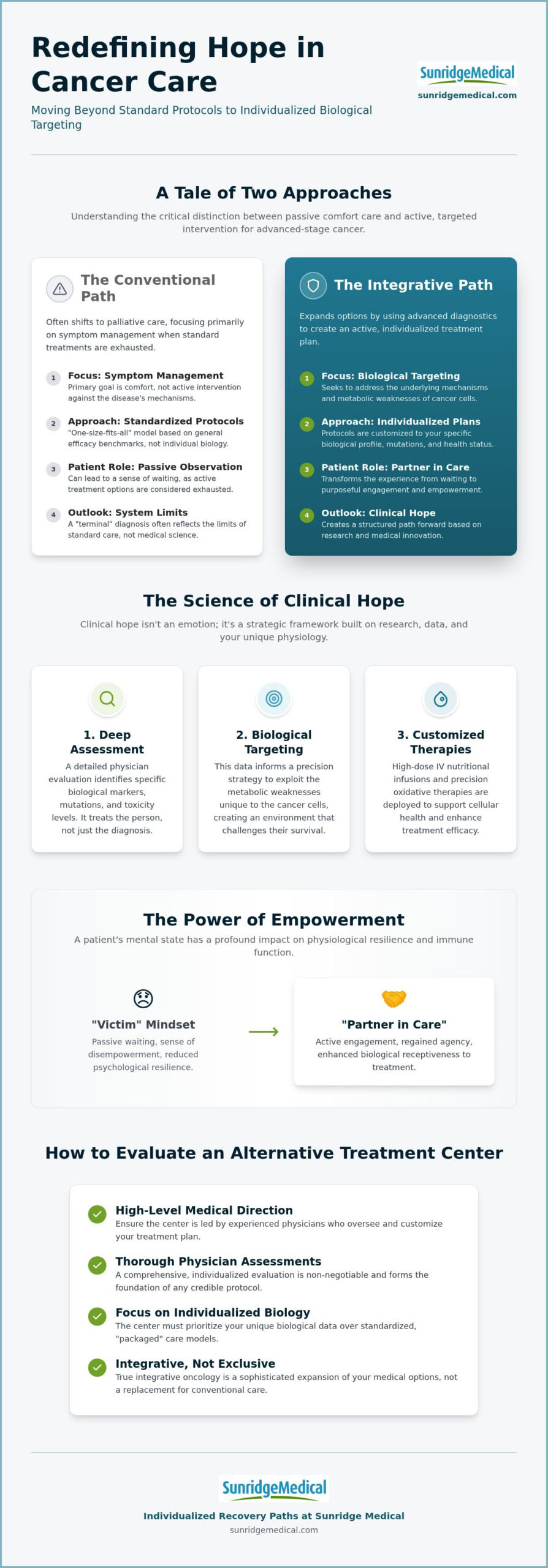
Hope is frequently dismissed as a mere emotional comfort, yet in a clinical setting, it represents the vital intersection between a patient’s objectives and medical innovation. It’s not just a feeling; it’s a strategic framework for action. For those facing advanced stages, Palliative care often becomes the primary recommendation, focusing solely on symptom relief. While comfort is essential, it shouldn’t be the only objective when biological potential still exists. Finding genuine hope for terminal cancer patients requires moving beyond the “false hope” narrative into the realm of clinical hope.
Clinical hope is rooted in research and individualized data. Unlike false hope, which relies on unfounded promises, clinical hope identifies specific biological markers that can still be targeted. This approach acknowledges that a terminal diagnosis often reflects the limits of standard, high-volume protocols rather than the absolute limits of medical science. Having an active plan provides a psychological anchor that passive observation simply cannot match. It transforms the patient’s experience from one of waiting to one of purposeful engagement.
The Psychology of the “Will to Live”
A patient’s mental state has a profound impact on their physiological resilience and immune function. Research suggests that a sense of empowerment can influence the body’s internal environment, potentially enhancing the efficacy of treatments. When you move from a “victim” mindset to a “partner in care” role, you regain a sense of agency that the conventional system often strips away. This psychological shift isn’t just about feeling better; it’s about creating a biological landscape that’s more receptive to advanced protocols. Empowerment acts as a catalyst for resilience, allowing the patient to navigate complex journeys with calm determination.
When Conventional Options Reach Their Limit
Conventional oncology often operates on a standardized model where treatments are discontinued once they reach a toxicity ceiling or fail to meet specific efficacy benchmarks. At this point, the system typically shifts its focus entirely away from active treatment. However, this transition is often a reflection of the system’s constraints, not the patient’s biological reality. Individualized research-based paths offer a departure from these “packaged” care models by focusing on the unique underlying mechanisms of your specific case. Terminal cancer is a state where standard protocols have been exhausted, but biological targeting remains an option. By investigating these specialized avenues, we can often find a structured path forward that conventional systems overlook.
The Science of Clinical Hope: Advanced Biological Targeting
Clinical hope is built on the physiological reality that cancer cells possess unique vulnerabilities. While standard care often stops when tumors stop responding to conventional chemotherapy, advanced alternative protocols investigate metabolic pathways that remain accessible. By identifying these metabolic weaknesses, physicians can create an environment that challenges the cancer’s survival even in metastatic stages. This approach doesn’t ignore conventional data. Instead, it uses that data to inform a more precise, targeted strategy. Resources like ClinicalTrials.gov highlight the ongoing global effort to uncover these novel pathways. For those seeking hope for terminal cancer patients, this shift from general oncology to precision biological targeting is foundational.
Every advanced case is a unique biological puzzle. A standard protocol cannot account for the specific mutations, toxicity levels, and immune health of an individual. This is why individualized physician evaluations are non-negotiable. A detailed assessment allows for the development of alternative cancer treatment protocols that are as unique as the patient’s own DNA. By looking at the person rather than just the diagnosis, we can identify opportunities for intervention that a standardized system might overlook.
Customized IV and Oxidative Therapies
Standard nutrition often falls short in advanced cases where the body is under extreme stress. High-dose nutritional infusions support cellular health at a level oral supplements cannot reach, providing the body with the building blocks it needs for resilience. Oxidative therapies then work by introducing controlled stress to cancer cells. These cells often lack the protective enzymes that healthy cells possess, making them susceptible to these targeted treatments. In advanced oncology, “customized” is the most significant word. It means your treatment is designed specifically for your body’s current state, not a generic diagnosis code.
Biological Treatments and Immune Support
The body’s natural defense mechanisms are often suppressed by the disease and previous aggressive treatments. Biological treatments focus on restoring this innate protection by stimulating the immune system to recognize and respond to threats more effectively. Managing the lingering side effects of past therapies is also a priority, as it improves the body’s viability for current protocols. This creates a synergy where the patient’s recovery is supported while the disease is targeted. It’s a dual-action approach that offers a more comprehensive path toward well-being, providing a realistic source of hope for terminal cancer patients who require more than just palliative care.
Palliative Care vs. Integrative Protocols: Expanding the Horizon
Many patients believe that choosing between comfort and treatment is a binary decision. Conventional systems often present palliative care as the final destination once standard therapies fail. However, integrative oncology offers a different perspective. It suggests that symptom management and biological intervention can, and should, coexist. This approach provides hope for terminal cancer patients by refusing to accept that comfort must come at the expense of active clinical pursuit. Pivoting to alternative care isn’t a sign of resignation; it’s a strategic expansion of your medical options.
Quality of Life (QoL) isn’t just a subjective feeling; it’s a quantifiable clinical metric. In an integrative framework, we view the reduction of disease burden as a primary way to improve this metric. By utilizing advanced alternative protocols to target underlying mechanisms, we aim to alleviate the physiological stress that causes many terminal symptoms. This shift from “one-size-fits-all” oncology to high-precision targeting allows for a more nuanced approach to care that honors the patient’s desire for both dignity and progress.
The Limitations of Standard Palliative Care
Standard palliative care is designed to maximize comfort, primarily through pain management and psychological support. While these are essential, this model often leaves the underlying disease progression unaddressed. This creates a significant psychological burden for patients who feel they’re merely “waiting” rather than “acting.” Bridging this gap requires a shift in focus. We must look for ways to manage symptoms while simultaneously investigating advanced alternative protocols that target the cancer’s metabolic pathways. This proactive stance helps transform the treatment experience from passive observation into a purposeful, clinical journey.
Integrative Oncology as a Comprehensive Path
Integrative oncology combines the supportive nature of palliative care with research-based, active interventions. This dual-action strategy ensures that the patient’s well-being remains the central focus. It allows for a more adaptive care plan that evolves as the patient’s biological needs change. For a deeper understanding of how these strategies differ across various phases of the journey, you can consult our Integrative Cancer Treatment by Stage: A Clinical Reference Guide (2026). By reducing the overall burden of disease through targeted therapies, we can often improve both the duration and the quality of the time spent with loved ones. This comprehensive path offers a more robust framework for those who aren’t ready to stop fighting.
Steps to Evaluating Advanced Alternative Treatment Centers
Selecting a medical facility for advanced care is a high-stakes decision that requires both intuition and intellectual rigor. For those seeking genuine hope for terminal cancer patients, the search must focus on clinical substance rather than marketing promises. A reputable center should function as a sophisticated extension of the medical journey, providing a sanctuary where research-based alternative therapies are applied with precision. The first step in this evaluation is assessing the depth of the individualized physician evaluation. If a facility offers a “packaged” protocol before conducting a comprehensive review of your unique biological markers, it likely lacks the customization necessary for complex cases.
Clinical leadership is equally vital. The medical director should possess the expertise to bridge the gap between conventional oncology data and advanced alternative methodologies. This ensures that your previous treatments, such as chemotherapy or radiation, are factored into a new, cohesive strategy. You deserve a partner who isn’t satisfied with the status quo and who’s dedicated to exploring every available avenue for progress. A steady hand is required to navigate the complexities of metastatic disease, ensuring that every intervention is grounded in a clear medical rationale.
Questions to Ask a Potential Medical Director
Engaging in a professional consultation allows you to gauge the facility’s clinical depth. You should feel empowered to ask direct questions about the rationale behind their specific alternative protocols. Consider asking the following during your evaluation:
- What is the biological mechanism behind the recommended oxidative or IV therapies?
- How will my conventional medical history and previous diagnostic imaging be integrated into this new plan?
- What specific biomarkers will we monitor to track physiological progress?
- How frequently will I meet with a physician to adjust my protocol based on real-time data?
Red Flags in Alternative Medicine
Discernment is your greatest tool when navigating the landscape of alternative care. A significant red flag is the use of “miracle cure” language or guarantees of specific outcomes. Ethical clinical practice is rooted in transparency and the management of biological potential, not in making unsubstantiated claims. A professional, clinical environment should reflect the seriousness of the conditions addressed. If a facility lacks the diagnostic infrastructure or the experienced staff required to handle metastatic and advanced cases, it’s not the right fit for your journey. Reliability and thoroughness are the hallmarks of a premiere specialist center. To begin a more rigorous assessment of your options, consult with the clinical team at Sunridge Medical to discuss a customized path forward.
Individualized Recovery Paths at Sunridge Medical
At Sunridge Medical, we believe that clinical excellence and compassionate care are inseparable. Our philosophy is rooted in the conviction that precision is the highest form of compassion. For those seeking hope for terminal cancer patients, our approach represents a departure from the standardized, high-volume care models that often leave complex cases behind. We don’t just treat a diagnosis; we treat the whole person, accounting for the intricate biological interactions that define your health. This perspective allows us to maintain a high level of professional gravity while fostering a welcoming, hopeful environment.
This comprehensive lens is especially critical for patients navigating concurrent challenges, such as autoimmune disease management or neurologic condition treatment. These complications often disqualify individuals from conventional trials or standard protocols. We view these not as obstacles to be ignored, but as vital components of a targeted, multi-faceted methodology. By addressing the underlying mechanisms of the disease alongside the patient’s unique physiological needs, we create a structured path forward where others see only a dead end.
A Sanctuary for Advanced Cancer Care
Our facility is designed to be a sanctuary, a place where medical excellence meets calm determination. This environment is supported by a multidisciplinary team that acts as a dedicated advocate for every patient. We understand that navigating the world of advanced oncology is overwhelming, so we provide a steady hand to guide you through the logic of our specialized approach. For a deeper look into our medical philosophy and the breadth of our services, you may review our pillar resource: Alternative Cancer Treatment: A Comprehensive Clinical Guide to Integrative Oncology in 2026. This guide establishes the clinical foundation for the care we provide every day.
Beginning Your Journey with Sunridge Medical
The transition from a 1-800 inquiry to a personalized care plan is methodical and thorough. It begins with an individualized physician evaluation that goes far beyond a cursory review of charts. During this initial phase, we analyze your medical history, current diagnostic data, and specific biological markers to identify metabolic weaknesses in the cancer. This process ensures that your protocol is as unique as your own DNA, providing a level of customization that’s rarely found in standard systems. We invite you to call our toll-free number at 800-923-7878 for a confidential consultation to discuss your specific needs. This initial conversation is the first step toward reclaiming agency in your health journey. We’re here to provide the clinical expertise and the specialized attention required to find hope for terminal cancer patients who are ready to explore advanced alternative options.
A New Path Forward in Advanced Oncology
Transitioning from a standardized model to a high-precision, individualized framework fundamentally changes the nature of the clinical conversation. True hope for terminal cancer patients is found in the meticulous application of research-based protocols that target the specific metabolic vulnerabilities of the disease. By integrating conventional data with advanced oxidative and biological therapies, we move beyond the limits of traditional palliative care. This approach prioritizes your quality of life while maintaining an active clinical pursuit of well-being and restoration.
With over 20 years of experience in integrative medicine, Sunridge Medical serves as a sanctuary for those navigating complex and advanced cancer cases. Our specialized team focuses on individualized physician-led protocols designed to address your unique biological profile. You don’t have to navigate this journey alone or settle for a one-size-fits-all approach. Contact Sunridge Medical today to schedule your comprehensive physician evaluation. We’re here to provide the steady hand and scientific expertise you need to move forward with calm determination and confidence.
Frequently Asked Questions
Is there still hope if chemotherapy has stopped working?
Yes, because standard chemotherapy targets specific pathways that the cancer may have bypassed, but other biological vulnerabilities often remain. When conventional protocols reach their toxicity or efficacy limits, advanced alternative options can focus on metabolic targeting and oxidative stress. This shift in strategy provides genuine hope for terminal cancer patients by exploring research-based avenues that aren’t restricted by the standardized constraints of high-volume hospital systems.
What is the difference between alternative and integrative cancer treatment?
Alternative treatments are used in place of conventional therapies, while integrative treatment combines the two into a cohesive plan. At Sunridge Medical, we utilize an integrative philosophy that honors your medical history while introducing specialized research-based protocols. This ensures that your previous experiences with chemotherapy or radiation inform your current path. We bridge the gap between high-level clinical research and personalized care to create a more comprehensive healing environment.
Can alternative treatments be used alongside palliative care?
Yes, active alternative protocols and palliative care are not mutually exclusive. While palliative care focuses on symptom management and comfort, alternative treatments aim to address the underlying biological mechanisms of the disease. Combining these approaches allows patients to maintain dignity and comfort while still pursuing active medical intervention. This dual-action strategy helps reduce the physiological burden of the disease and can enhance the patient’s overall quality of life.
How does Sunridge Medical individualize cancer protocols?
We begin with a comprehensive physician evaluation that analyzes your unique DNA, tumor markers, and metabolic profile. Instead of applying a “one-size-fits-all” protocol, our medical director develops a targeted plan based on your specific physiological needs. We utilize customized IV infusions and oxidative therapies that are adjusted in real-time. This level of precision ensures that your treatment evolves alongside your body’s response to the protocol, focusing on your specific recovery path.
What types of advanced cancers does Sunridge Medical treat?
We specialize in treating a wide range of advanced and complex cancers, including metastatic cases that have stopped responding to standard care. Our protocols are designed to address the unique challenges of late-stage diagnoses where the patient may also be dealing with autoimmune or neurologic complications. Because we focus on the underlying biological mechanisms rather than just the tumor’s location, our methodologies are applicable to many different types of solid tumors and blood-based cancers.
Are alternative cancer treatments safe for terminal patients?
Safety is our primary clinical priority, especially for patients with a high disease burden. Our protocols are administered under strict medical supervision and are designed to support the body’s natural resilience rather than adding to its toxicity. We focus on therapies that have a lower side-effect profile than conventional chemotherapy, making them viable for individuals who can no longer tolerate aggressive standard treatments. Every intervention is carefully monitored to ensure it aligns with the patient’s current physiological state.
How do I know if I am a candidate for advanced alternative protocols?
Candidacy is determined through a detailed clinical assessment of your medical history and current biological markers. If you are seeking hope for terminal cancer patients and feel that conventional options have been exhausted, you may be a candidate for our specialized approach. We look for individuals who are medically stable enough to undergo outpatient protocols and who desire a more active, research-based path than standard palliative care currently offers.
Does hope actually impact cancer survival rates?
Clinical research suggests that a patient’s psychological state and sense of empowerment can influence physiological resilience and immune function. When hope is rooted in a structured medical plan rather than just emotion, it creates a “will to live” that can improve treatment compliance and quality of life. By moving from a passive role to becoming a partner in care, patients often experience a reduction in stress-related biomarkers, which supports the body’s ability to respond to advanced therapies.