


Removing the source of environmental toxins is a critical first step, but for many, it’s rarely the final solution for neurological recovery. You might have cleared the mold from your home or eliminated heavy metals from your diet, yet the mental fog, memory lapses, and persistent exhaustion remain. This happens because the initial injury often triggers a self-sustaining cycle of neuroinflammation that doesn’t simply turn off once the toxin is gone. Achieving real progress in improving brain function after toxic exposure requires a shift from passive avoidance to an active, clinical intervention that addresses the underlying biological damage.
We understand the anxiety of feeling your cognitive speed slip away while standard medical providers offer little more than a shrug. It’s frustrating to be told your labs are normal when your daily experience says otherwise. This guide details a multi-phasic integrative medical approach designed to quench neuroinflammation and restore cognitive clarity through targeted, research-based protocols. We will examine the specific mechanisms of neuro-regeneration and how a structured, medically-supervised path can help you move beyond survival and back toward a life of mental sharpness and vitality.
Key Takeaways
- Understand why standard neurological tests often fail to detect toxic injury and learn which functional panels provide the data needed for a targeted recovery plan.
- Explore how neuroplasticity and Brain-Derived Neurotrophic Factor (BDNF) serve as the biological foundation for improving brain function after toxic exposure.
- Discover a structured 5-step clinical framework that moves beyond simple avoidance to address systemic detoxification and the restoration of primary drainage pathways.
- Learn about specialized integrative protocols, such as customized IV therapies, that bridge the blood-brain barrier to directly support neural repair and cognitive clarity.
The Impact of Toxic Exposure on Neurological Function
Neurotoxicity occurs when exposure to natural or man-made substances alters the normal activity of the nervous system. This disruption leads to significant damage to neurons, which are the essential signaling cells of the brain. These substances interfere with the delicate electrochemical balance required for clear neurotransmission. When the nervous system is compromised, the brain’s ability to maintain homeostasis is lost, leading to a cascade of cellular dysfunction. Understanding neurotoxicity and its effects on the brain is the first step toward clinical recovery. Common culprits include:
- Mycotoxins: These are toxic compounds produced by certain types of mold that can be inhaled or ingested.
- Heavy Metals: Substances such as mercury, lead, and arsenic that accumulate in neural tissues over time.
- Volatile Organic Compounds (VOCs): Chemicals found in common paints, cleaning supplies, and industrial emissions.
How Toxins Breach the Blood-Brain Barrier
The blood-brain barrier (BBB) is a sophisticated defense mechanism designed to shield the central nervous system from circulating pathogens and toxins. It relies on tight junctions between endothelial cells to maintain a pristine environment for neural signaling. However, chronic toxic exposure initiates a cycle of systemic inflammation that weakens these cellular bonds. This “leaky brain” phenomenon allows neurotoxins to bypass natural defenses and infiltrate the brain’s delicate architecture. Neuro-inflammation is the primary driver of cognitive decline after toxic exposure.
Identifying the Symptoms of Toxic Brain Injury
Distinguishing between everyday mental fatigue and a toxic-induced impairment is vital for clinical success. While a long day might cause temporary exhaustion, toxic brain injury results in a persistent inability to focus or process complex tasks. Executive dysfunction often manifests as an inability to organize thoughts or complete multi-step projects that used to be routine. These aren’t just minor inconveniences; they are signals that the brain’s metabolic and structural integrity is under threat.
The damage often centers on the limbic system, leading to memory gaps and sudden emotional shifts that feel disconnected from your personality. You aren’t just “tired”; your brain’s internal communication is being actively disrupted. Recognizing these signs early is the key to improving brain function after toxic exposure. Without intervention, this inflammation can lead to accelerated neurodegeneration. A clinical approach focuses on halting this damage and initiating the repair process. Improving brain function after toxic exposure requires a deep understanding of these specific neurological impacts and a commitment to addressing them through targeted, physician-led protocols.
The Science of Neuro-Regeneration and Recovery
Conventional neurology often views brain damage as a static or permanent condition, but the human nervous system is far more dynamic than previously understood. Neuroplasticity is the brain’s innate ability to reorganize itself by forming new neural connections throughout its lifespan. This inherent capacity for change is the cornerstone of improving brain function after toxic exposure. Recovery isn’t just about stopping the damage; it’s about leveraging the brain’s biological drive to heal and adapt.
Central to this process is Brain-Derived Neurotrophic Factor (BDNF). This specialized protein acts as a growth fertilizer for neurons, supporting the survival of existing brain cells while encouraging the growth and differentiation of new ones. However, this regenerative process cannot occur in a state of high oxidative stress. Toxins flood the brain with free radicals that damage mitochondrial membranes. Since mitochondria provide the cellular energy required for all repair processes, restoring mitochondrial health is a non-negotiable prerequisite for neurological restoration.
Quenching Neuroinflammation
Chronic brain inflammation is often maintained by microglial cells, which are the brain’s resident immune defenders. In a healthy state, they clear debris and support neural health. After toxic injury, these cells can become “primed,” remaining stuck in a pro-inflammatory state that continues to damage healthy tissue long after the toxin is gone. Standard over-the-counter anti-inflammatories often fail to resolve this because they don’t effectively cross the blood-brain barrier in therapeutic concentrations. Biological medicine focuses on calming this overactive immune response at the cellular level, creating the necessary environment for repair.
Stimulating Neural Repair Mechanisms
Once the inflammatory fire is managed, the clinical focus shifts to structural repair. This involves providing the specific building blocks needed to restore the myelin sheath, the protective coating that ensures rapid signal transmission along axons. Restoring the delicate balance between inhibitory neurotransmitters like GABA and excitatory ones like glutamate is equally vital for cognitive clarity. This comprehensive approach aligns with the principles found in Alternative Health Medicine: A Clinical Path for Chronic Illness Recovery in 2026. If you’ve been told your symptoms are permanent, it’s time to explore a more targeted clinical strategy for neurological restoration.
Clinical Assessment: Beyond Standard Neurological Testing
Many patients arrive at our facility after being told their neurological health is perfectly fine. They have undergone standard blood work and high-resolution MRIs, yet the results consistently return as “normal.” This occurs because conventional imaging is designed to detect gross structural damage, such as tumors, strokes, or physical lesions. It is not sensitive enough to visualize the microscopic neuroinflammation, mitochondrial fatigue, or chemical imbalances that define environmental toxic injury. To move toward improving brain function after toxic exposure, we must look deeper into the functional and metabolic state of the nervous system.
Functional testing provides the objective data that standard labs miss. At Sunridge Medical, we utilize specialized diagnostics to pinpoint the exact nature of the injury. These assessments often include:
- Mycotoxin Panels: Urine-based testing that identifies specific mold metabolites sequestered in the body.
- Heavy Metal Provocation: A clinical method to assess “body burden” by identifying metals stored in tissues rather than just what is circulating in the blood.
- Neurotransmitter Testing: Evaluating the levels of dopamine, serotonin, and glutamate to understand how toxins have disrupted your brain’s communication pathways.
The gut-brain axis also plays a primary role in this assessment. Because the enteric nervous system is intimately linked to the brain via the vagus nerve, intestinal permeability or a disrupted microbiome can act as a constant source of systemic inflammation, preventing the brain from entering a regenerative state.
Identifying the Specific Neurotoxic Load
A comprehensive physician evaluation is indispensable for navigating complex neurologic illnesses. There is a profound difference between simple “exposure” and “body burden.” Exposure refers to the toxins you have encountered, while body burden represents the toxins your system has failed to eliminate and has instead stored in fatty tissues like the brain. Individualized protocols must begin with precise diagnostic data to ensure every therapy is targeted to your specific toxic profile. Our role as your scientific guide is to interpret these complex data points to build a reliable roadmap for your recovery.
Evaluating Metabolic and Hormonal Co-factors
Neurological recovery does not happen in a vacuum. Hormone imbalances can significantly exacerbate toxic brain symptoms, as the endocrine and nervous systems are deeply interdependent. For instance, low thyroid function can slow cellular metabolism, making it nearly impossible for the brain to clear metabolic waste or repair damaged neurons. This holistic view is further explored in our Hormone Optimization for Autoimmune Disease: 2026 Guide. Assessing adrenal and thyroid function ensures that your body has the “metabolic spark” required for improving brain function after toxic exposure and achieving lasting cognitive clarity.
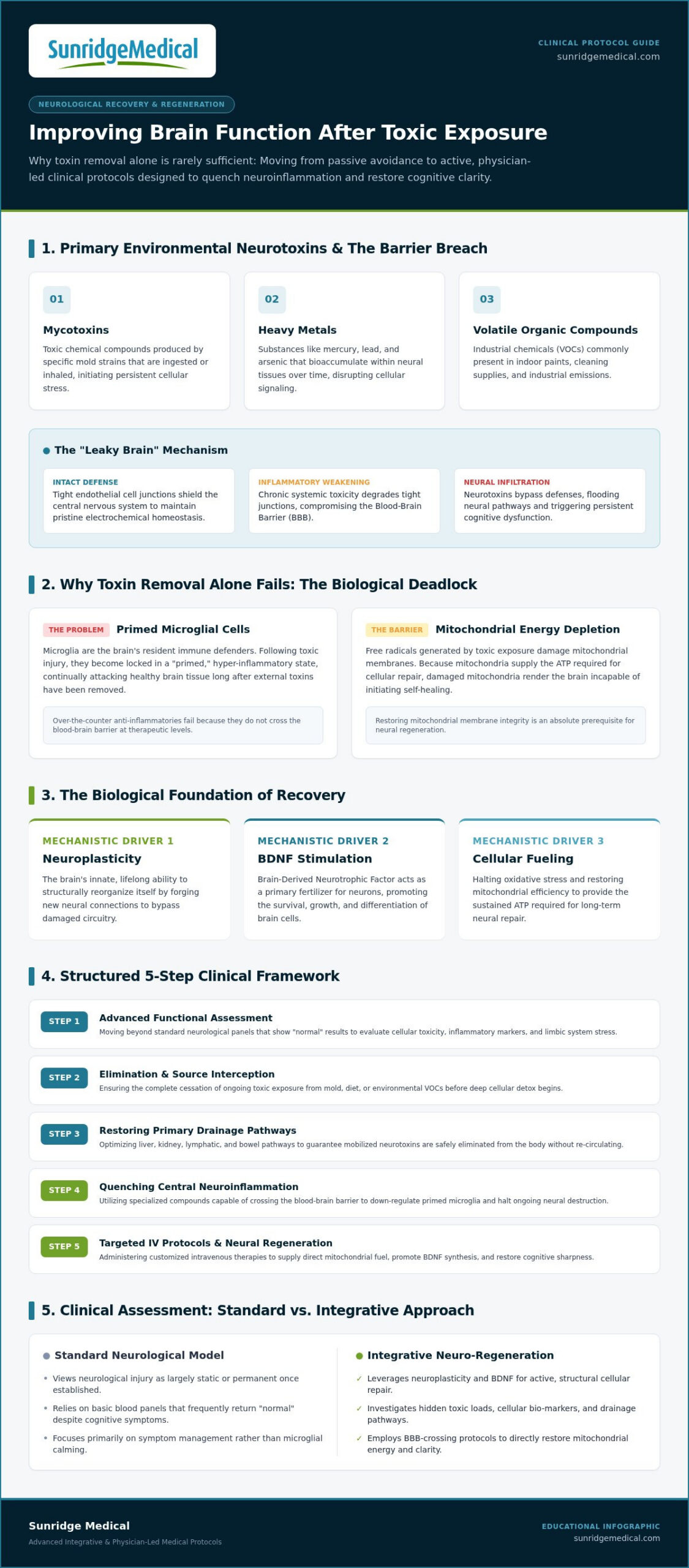
How to Improve Brain Function After Toxic Exposure: A 5-Step Guide
Recovery from environmental neurotoxicity requires a methodical progression that respects the body’s physiological limits. Moving too quickly can redistribute toxins into neural tissue, while moving too slowly allows inflammation to persist. This five-step clinical framework provides a structured path for improving brain function after toxic exposure by addressing both the source of the injury and the cellular damage left in its wake.
- Step 1: Immediate Cessation and Remediation. The most sophisticated medical protocol will fail if the patient remains in a toxic environment. This involves professional mold remediation or removing heavy metal sources.
- Step 2: Systemic Detoxification. Before pulling toxins from the brain, we must open the primary drainage pathways. This means supporting the liver, kidneys, and lymphatic system to ensure toxins have a clear exit route.
- Step 3: Targeted Neuro-Support. We utilize fat-soluble antioxidants and specific lipids designed to cross the blood-brain barrier. These substances neutralize free radicals directly within the central nervous system.
- Step 4: Mitochondrial Resuscitation. Repairing the brain’s “power plants” is vital. By restoring mitochondrial efficiency, we provide the ATP necessary for neurons to repair their own membranes and axons.
- Step 5: Cognitive Rehabilitation. Once the inflammatory burden is reduced, neuro-rehabilitative exercises help strengthen new neural pathways, restoring memory and processing speed.
Phases of Neurological Detoxification
A common mistake in recovery is attempting to “detox” too aggressively. This often triggers a Herxheimer reaction, where the sudden release of toxins overwhelms the body’s ability to process them, leading to a temporary worsening of neurological symptoms. To prevent this, we utilize clinical-grade binders such as charcoal, zeolite, and clay. These substances act like sponges in the digestive tract, trapping toxins and preventing their re-absorption into the bloodstream. Supporting the lymphatic system through specialized movement or therapies also ensures that metabolic waste doesn’t stagnate in the brain’s tissues.
Nutritional and Lifestyle Foundations
A neuro-protective diet serves as the baseline for long-term healing. We emphasize high-quality healthy fats, such as omega-3 fatty acids, which provide the structural components for neural membranes. Equally important is the role of sleep. During deep sleep, the brain’s glymphatic system becomes active, physically “washing” away the metabolic debris and toxins accumulated during the day. Without restorative sleep, the brain cannot complete its primary detoxification cycle. If you’re ready to begin a structured, physician-led protocol, consult with our experts to start your journey toward improving brain function after toxic exposure today.
Advanced Integrative Protocols at Sunridge Medical
While conventional medicine often relies on prescription drugs to manage symptoms of cognitive decline, Sunridge Medical focuses on the root-cause resolution of environmental toxicity. Our research-based alternative treatment for neurologic conditions is designed to address the specific cellular damage caused by mold, heavy metals, and chemical pollutants. We recognize that every patient’s toxic profile is unique, which is why we reject standardized care in favor of precise, individualized protocols. By combining advanced diagnostics with targeted biological therapies, we provide a definitive path for improving brain function after toxic exposure.
Oxidative therapies represent a cornerstone of our clinical approach. These treatments work by neutralizing neurotoxins and stimulating the body’s natural antioxidant defense systems. By increasing cellular oxygenation, we can help the brain overcome the metabolic stagnation that often follows toxic injury. This process doesn’t only assist in the elimination of persistent pollutants but also revitalizes mitochondrial function, providing the energy required for neural repair and cognitive restoration.
Customized Intravenous (IV) Protocols
One of the most significant challenges in neurological recovery is ensuring that therapeutic agents actually reach the brain tissue. Oral supplements must navigate the digestive tract and liver metabolism, often resulting in poor absorption and limited effectiveness. Our customized IV protocols solve this by delivering nutrients directly into the bloodstream with 100% bioavailability. This precision allows us to bridge the blood-brain barrier with high concentrations of neuro-regenerative substances.
We utilize specialized infusions such as Glutathione, the body’s master antioxidant, to quench neuroinflammation, and Phosphatidylcholine to repair damaged neuronal membranes. These targeted infusions provide the essential building blocks for structural repair, as discussed in our IV Therapy for Autoimmune Disease: 2026 Guide. By bypassing the gut, we ensure that the brain receives the exact concentration of nutrients it needs to initiate the healing process.
A Comprehensive Path to Cognitive Restoration
True recovery is rarely achieved through a single modality. Our multi-faceted approach integrates advanced IV therapies with biological treatments and structured lifestyle modifications to create a synergistic healing environment. We act as your scientific guide, providing ongoing monitoring to adjust your protocol as your biochemistry shifts during the recovery journey. This level of specialized attention is what differentiates our methodology from standard practices. If you’re ready to move beyond symptom management and toward true healing, contact Sunridge Medical to schedule a comprehensive evaluation for neurologic recovery and take the first step in improving brain function after toxic exposure.
Reclaiming Your Cognitive Clarity and Vitality
The journey toward neurological recovery requires moving beyond the limitations of conventional symptom management. We have explored how the brain possesses an innate capacity for repair through neuroplasticity, provided the right biological environment is established. By identifying your specific toxic body burden and utilizing precision IV protocols that cross the blood-brain barrier, the restoration of mental sharpness becomes a clinical reality. Achieving lasting results in improving brain function after toxic exposure depends on a multi-faceted strategy that addresses inflammation and mitochondrial health simultaneously.
At Sunridge Medical, our expert clinical team, led by Dr. Steven S. Isaacman, brings over 20 years of experience in treating complex chronic diseases and environmental illnesses. We don’t settle for “normal” lab results when you’re still struggling; instead, we apply research-based alternative medicine protocols tailored to your unique biochemistry. You don’t have to navigate this path alone or settle for a diminished quality of life. Schedule a Consultation with Sunridge Medical for Personalized Neurological Recovery and take a definitive step toward a brighter, clearer future. Progress is possible, and your recovery starts with a commitment to comprehensive, specialized care.
Frequently Asked Questions
Can the brain fully recover from toxic exposure?
Yes, the brain has an innate capacity for recovery through neuroplasticity and targeted clinical protocols. While conventional views often suggest damage is permanent, we focus on reversing the neuroinflammation that maintains cognitive impairment. By providing the specific building blocks for neural repair and quenching oxidative stress, many patients see a restoration of cognitive speed. This process requires a shift from passive avoidance to an active, medically supervised recovery plan.
How long does it take to clear neurotoxins from the brain?
The timeline for clearing neurotoxins from the brain is highly individualized and depends on your total body burden. Some patients begin to notice improvements in mental clarity within several weeks of starting intensive IV protocols, while others with deep seated tissue storage may require several months. Our focus is on opening drainage pathways before aggressively pulling toxins from neural tissue. This methodical approach ensures you don’t experience a severe inflammatory setback.
What are the most common toxins that cause brain fog?
Mycotoxins from mold, heavy metals like mercury and lead, and volatile organic compounds (VOCs) are the most frequent culprits behind toxic brain fog. These substances infiltrate neural tissue and disrupt the delicate balance of neurotransmitters like GABA and glutamate. This interference leads to the leaky brain phenomenon where the blood brain barrier becomes compromised. Identifying these specific substances through functional testing is a critical first step in improving brain function after toxic exposure.
Why didn’t my standard MRI show the damage from toxic exposure?
Standard MRIs are designed to detect structural abnormalities such as tumors, strokes, or large lesions. They aren’t sensitive enough to visualize the metabolic dysfunction or microscopic neuroinflammation caused by environmental toxins. You can have severe cognitive impairment while your brain structure appears normal on a traditional scan. We utilize more advanced functional assessments to identify the underlying biochemical disruptions that standard imaging simply cannot detect in the central nervous system.
What is the role of glutathione in improving brain function?
Glutathione acts as the master antioxidant, playing a primary role in neutralizing the free radicals that cause neuroinflammation. In the context of improving brain function after toxic exposure, it helps to protect neurons from oxidative damage and supports the liver’s ability to process fat soluble toxins. When delivered intravenously, it can effectively reach the brain to dampen the overactive immune response of microglial cells, creating a sanctuary for neural repair and regeneration.
Are there specific IV therapies that help with neurological recovery?
Specialized IV therapies such as Phosphatidylcholine and oxidative protocols are essential for bypassing the digestive system and achieving 100% bioavailability. Phosphatidylcholine is a vital lipid that helps repair damaged neuronal membranes and the myelin sheath. Oxidative therapies assist in neutralizing persistent pollutants and stimulating cellular energy production. These customized nutritional infusions provide the brain with the precise concentration of building blocks it needs to restore cognitive clarity and processing speed.
What should I do if I suspect I have been exposed to mold or heavy metals?
If you suspect exposure to mold or heavy metals, you should seek a comprehensive physician evaluation that goes beyond standard blood work. Conventional providers often overlook the complex relationship between environmental toxins and neurological decline. It’s vital to identify the specific neurotoxic load through functional panels such as mycotoxin testing or heavy metal provocation. Early intervention is the most effective way to halt neurodegeneration and initiate a structured, medically led path toward full recovery.