


What if the most effective weapon against your diagnosis isn’t found in a standardized hospital protocol, but in the precision of a treatment plan designed exclusively for your unique biological signature? You’re likely exhausted by the feeling of being just another number in a crowded oncology ward, where the side effects of treatment often feel as daunting as the illness itself. Many patients are now looking toward oxidative therapy for cancer as a way to address the disease through a more targeted, research-based lens that respects the body’s internal environment.
This guide explores how specialized integrative cancer treatment centers are redefining care by bridging the gap between conventional oncology and advanced alternative medicine. These institutions offer a highly personalized treatment roadmap that simply isn’t available at most local hospitals. We’ll examine the specific methodologies that prioritize your long-term well-being and clinical progress, providing a clear path forward for those seeking a more comprehensive approach to their recovery. By moving beyond one-size-fits-all chemotherapy, you can discover a sanctuary of specialized attention designed for your specific health journey.
Key Takeaways
- Distinguish between supportive “complementary” care and active “integrative” oncology to ensure your treatment plan is designed for clinical progress rather than just symptom management.
- Explore the science behind customized intravenous protocols and the clinical application of oxidative therapy for cancer as a targeted component of advanced alternative medicine.
- Learn a specific framework for evaluating treatment centers, focusing on the medical director’s expertise and the center’s commitment to individualized, research-based care.
- Understand how modern integrative protocols can create a synergistic effect, potentially enhancing the efficacy of standard oncology treatments instead of replacing them.
- Discover the benefits of a “whole-person” medical philosophy that moves beyond standardized chemotherapy to address the unique biological factors of your specific diagnosis.
Defining the Modern Integrative Cancer Treatment Center
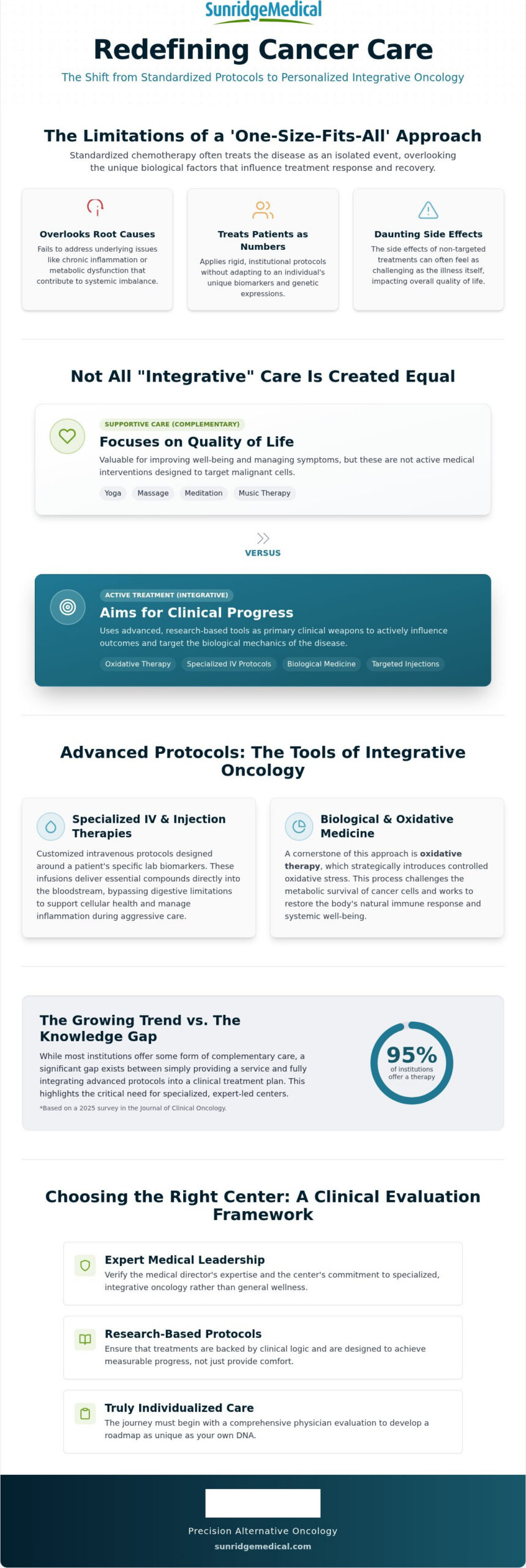
Integrative oncology is a patient-centered, evidence-based medical field that prioritizes the individual’s biological needs over rigid, institutional traditions. In 2026, the medical community is witnessing a fundamental shift in how complex diagnoses are managed. A 2025 survey in the Journal of Clinical Oncology found that 95% of cancer institutions now offer at least one complementary therapy, yet there’s a vast difference between simply offering a service and fully integrating it into a clinical protocol. While many providers feel they lack the specific knowledge to make alternative recommendations, patients are increasingly seeking active treatment models. A modern integrative center doesn’t just help you feel better; it uses advanced tools like oxidative therapy for cancer to actively influence the clinical outcome.
The Shift from Standardized to Individualized Care
One-size-fits-all chemotherapy protocols often fall short because they treat the cancer as an isolated event rather than a systemic failure. These standard plans can overlook the unique biomarkers and genetic expressions that dictate how a specific body responds to treatment. At a specialized center, the journey begins with a comprehensive physician evaluation. This deep dive identifies the underlying factors, such as chronic inflammation or metabolic dysfunction, that contribute to systemic imbalance. By addressing these root causes through precision medicine, clinicians can move past the limitations of packaged care and develop a roadmap that’s as unique as the patient’s own DNA. This shift from reactive to proactive care is what defines the next generation of oncology.
Complementary vs. Alternative Medical Protocols
It’s vital to distinguish between lifestyle support and clinical protocols. Yoga, massage, and meditation are valuable for improving quality of life, but they aren’t active medical interventions designed to target malignant cells. Advanced alternative medicine relies on research-based tools that function as primary clinical weapons. For instance, understanding What is Redox Therapy? helps clarify how clinicians use metabolic and oxidative stressors to challenge the survival of cancer cells. These are not mere add-ons to a hospital stay; they’re sophisticated treatments that require expert administration. Integrative medicine is the strategic synergy of these advanced alternatives and conventional diagnostics, ensuring that every protocol is backed by clinical logic and a focus on long-term progress.
Advanced Alternative Protocols: Moving Beyond Supportive Care
While many large hospital systems offer “integrative” services, they often limit these to stress reduction techniques like music therapy or acupuncture. These methods are helpful for comfort, but they don’t address the underlying biological mechanics of the disease. According to the NCI Definitions of CAM, alternative medicine involves using treatments alongside or in place of conventional ones to achieve specific clinical goals. Advanced centers move beyond simple support, utilizing intensive protocols to strategically alter the body’s internal environment. This proactive approach focuses on physiological change rather than just emotional comfort.
Specialized IV and Injection Therapies
Precision is the hallmark of modern alternative oncology. High-dose nutritional infusions aren’t generic vitamin drips; they’re customized intravenous protocols designed around a patient’s specific laboratory biomarkers. These infusions deliver essential compounds directly into the bloodstream, bypassing digestive limitations to support cellular health during aggressive care. Targeted injections also play a vital role in managing chronic inflammation and systemic symptoms. This level of care requires constant clinical monitoring and real-time adjustments based on how the body responds to each session. It’s about providing the exact resources the cells need to maintain integrity under stress.
Biological and Oxidative Medicine
Biological treatments focus on restoring the body’s natural immune response and systemic well-being. A cornerstone of this approach is oxidative therapy for cancer, which strategically introduces controlled oxidative stress to the body. This process aims to challenge the metabolic flexibility of malignant cells while supporting the resilience of healthy tissue. Unlike standardized treatments that can leave the immune system depleted, these biological protocols are designed to strengthen the host’s defenses. They work by optimizing the body’s internal terrain, making it less hospitable to disease progression.
Implementing these advanced protocols requires a deep understanding of biochemistry and research-based application. It’s not about replacing science, but about expanding the scientific toolkit to include therapies that standard hospitals haven’t yet adopted. If you’re seeking a more targeted roadmap, exploring alternative cancer treatment protocols can provide the specialized medical oversight necessary for a multi-faceted recovery journey. Success in this field depends on clinical precision, not “packaged” care. By combining conventional diagnostics with these advanced biological tools, patients can access a more comprehensive level of care.
Choosing the Right Center: A Clinical Evaluation Framework
Selecting a treatment center is a pivotal decision that requires more than just reviewing a brochure. You’re looking for a facility that doesn’t just offer alternative options but masters them. A 2026 medical report highlights a significant knowledge gap in the medical field, noting that over 80% of cancer care providers globally feel they don’t have enough knowledge about integrative oncology to confidently make recommendations. This makes your due diligence critical. You need a partner who understands the nuance of protocols like oxidative therapy for cancer and how to safely integrate them with your existing medical history.
Verification of Clinical Authority
Look for established clinics with a proven history of managing complex chronic diseases. A medical director’s specific experience in alternative oncology is the foundation of patient safety and protocol efficacy. In a private practice setting, you often find a level of specialized, 1-on-1 attention that large hospital systems simply can’t replicate. This environment allows for a research-based approach where the physician is an active participant in your daily progress, not an administrator overseeing a generic department. Clinical authority is built through decades of focused application, not just institutional branding.
The Importance of Individualized Treatment Planning
True customization is more than a buzzword; it’s a clinical necessity. You can tell a plan is individualized when it’s built upon comprehensive diagnostics that go far beyond standard blood work. These evaluations should identify unique biomarkers, environmental toxins, and metabolic markers that traditional oncology might ignore. A center should provide a steady hand throughout the recovery journey, adjusting your roadmap as your body responds to treatment. When evaluating a center, use the following checklist to ensure they meet a high standard of care:
- Does the center adjust treatment dosages based on my real-time physiological response?
- How do alternative protocols specifically synergize with my conventional treatments?
- Is there consistent clinical monitoring by a physician during every therapy session?
- Are the diagnostics focused on identifying the root causes of systemic imbalance?
Avoid centers that offer “packaged” care or tiered pricing levels that treat patients like retail customers. Your biology doesn’t fit into a pre-set bundle. Instead, seek a scientific guide who prioritizes precision and clinical logic. Ask how they use oxidative therapy for cancer to target your specific needs and what research supports their methodology. The goal is a highly personalized roadmap that offers a clear, structured path forward while maintaining the highest level of professional gravity.
Addressing Common Misconceptions About Alternative Cancer Care
Misconceptions often stem from a lack of understanding about how advanced alternative protocols interact with the human body. A common myth suggests that choosing an integrative path requires abandoning conventional oncology entirely. In reality, these models frequently enhance the efficacy of standard treatments through strategic synergy. By addressing the body’s metabolic environment, clinicians can create conditions that support recovery while minimizing the systemic burden of aggressive care. It’s not an “all or nothing” choice; it’s a “more tools” approach that prioritizes your biological resilience.
Critics sometimes argue that these methods lack scientific rigor, yet they often overlook the growing body of research regarding Reactive Oxygen Species (ROS) and cellular signaling. For instance, the clinical use of oxidative therapy for cancer is rooted in the strategic manipulation of oxidative stress to target malignant cells. This isn’t a “soft” approach or a simple lifestyle change. It’s a precise clinical intervention that leverages biochemistry to challenge the metabolic flexibility of the disease. When administered by experts, the precision of oxidative therapy for cancer ensures that healthy cells are supported while malignant ones are strategically stressed.
The Safety and Efficacy of Integrated Models
Safety remains a primary concern for any patient navigating a complex illness. Physician monitoring is essential to minimize the risk of treatment interactions and ensure every protocol is adjusted to the patient’s real-time labs. Evidence supports the use of intensive IV therapies even in advanced cases, provided they’re administered within a structured clinical framework. This level of oversight ensures that your body isn’t overwhelmed but rather strengthened at each stage of the process. For more specific information on how these protocols are adapted to different diagnoses, you can consult our integrative cancer treatment by stage reference guide.
Navigating the Financial Landscape
Specialized alternative care often falls outside the traditional insurance model because it prioritizes depth of care over high-volume administrative quotas. Private medical centers operate as a sanctuary of specialized attention, offering resources and time that aren’t available in hospital settings. While the initial investment is private, the value lies in accessing a highly personalized treatment roadmap that isn’t restricted by insurance-mandated plans. You’re investing in a clinical ally who has the freedom to prioritize your progress above all else. If you’re ready to move beyond standardized protocols, contact our clinical team to discuss a customized treatment roadmap designed for your unique needs.
The Sunridge Medical Approach: Precision Alternative Oncology
Sunridge Medical has established itself as a national pioneer in the field of advanced alternative medicine, specifically for individuals facing complex oncological challenges. Founded in 2003, our center has spent over two decades refining protocols that move beyond the standardized limitations of conventional hospital systems. Led by Medical Director Dr. Steven S. Isaacman, our team operates with a singular focus on research-based alternative treatments that respect the unique biological signature of every patient. We don’t believe in “one-size-fits-all” chemotherapy; instead, we build each protocol from the ground up based on precise physician evaluations and advanced diagnostics.
A Sanctuary for Complex Disease Management
Many individuals arrive at our facility feeling like a number in an overwhelmed healthcare system. We provide a specialized environment where compassionate optimism meets clinical gravity. This sanctuary approach ensures that patients who have been overlooked or told they’ve reached the end of standard options find a confident and capable ally. Our commitment to clinical excellence is detailed further in our guide to alternative cancer treatment, which explores the depth of our integrative methodologies. By focusing on the restoration of systemic well-being, we help patients navigate their journey with a sense of calm determination and professional support.
Taking the First Step Toward Recovery
The path to a more personalized treatment roadmap begins with a comprehensive physician evaluation. During this initial phase, our clinical team identifies specific biomarkers and underlying factors that contribute to the disease’s progression. This data allows us to implement targeted interventions, such as oxidative therapy for cancer, which are designed to challenge malignant cells while supporting healthy tissue. Unlike the rigid structures of institutional care, our methodologies are multi-faceted and evolve as your body responds to therapy. We prioritize your progress through constant clinical monitoring and real-time protocol adjustments.
Taking the first step shouldn’t feel overwhelming. Our 1-800 support line is available to provide personalized guidance and help you schedule a consultation with our medical team. This initial conversation is the foundation of a new, structured path forward. If you’re ready to explore a higher level of care that prioritizes your individual human experience and utilizes advanced tools like oxidative therapy for cancer, contact our clinical team today to begin your recovery journey.
Empowering Your Path to Clinical Progress
Choosing a new path in oncology requires a shift from being a passive recipient to an active participant in your recovery. You’ve learned that true integrative care isn’t just about comfort; it’s about the strategic application of tools like oxidative therapy for cancer within a research-based framework. By prioritizing highly individualized physician evaluations, you can move past the limitations of standardized protocols and address the unique biological drivers of your illness. This precision ensures that your treatment plan is built for progress rather than just symptom management.
Sunridge Medical brings over 20 years of clinical experience to this journey, acting as a scientific guide for those seeking more than what traditional systems offer. We specialize in developing multi-faceted methodologies that are as unique as your own DNA. If you’re ready to explore a treatment roadmap designed for your specific needs, speak with a clinical specialist today by calling 1-800-923-7878 or visiting our homepage. Your health journey deserves a steady hand and a level of care that honors your individual experience. Progress is possible when you have the right ally by your side.
Frequently Asked Questions
What is the primary difference between a holistic and an integrative cancer center?
Integrative oncology is a patient-centered, evidence-based field that combines conventional diagnostics with advanced alternative protocols. While holistic centers focus on the whole person, they may lack the clinical integration found in an integrative facility. An integrative approach uses medical-grade tools to actively target the disease while supporting systemic health. This strategic synergy ensures that every aspect of the treatment plan is backed by research and physician oversight, providing a more comprehensive roadmap for recovery.
Can I receive oxidative therapy for cancer while undergoing chemotherapy?
You can often receive oxidative therapy for cancer while undergoing chemotherapy, provided the protocols are managed by a specialized medical team. Integrative clinicians use these therapies to strategically challenge malignant cells and potentially enhance the body’s response to conventional treatment. This combined approach requires real-time physician monitoring to ensure safety and efficacy. By addressing the body’s metabolic environment, these therapies aim to support the immune system and improve overall clinical progress during aggressive care.
How do integrative centers customize treatment plans for advanced stages?
Integrative centers customize plans for advanced stages by conducting comprehensive physician evaluations that identify unique biological markers. Rather than relying on “packaged” care, these facilities analyze metabolic function and systemic inflammation. This data allows for the development of a multi-faceted methodology tailored to the patient’s specific health journey. By moving beyond standardized protocols, clinicians can address root causes and use tools like oxidative therapy for cancer to provide a steady hand during complex recovery.
What types of IV therapies are typically used in alternative cancer protocols?
Alternative cancer protocols typically utilize high-dose nutritional infusions, biological therapies, and customized IV protocols. These infusions deliver essential compounds directly into the bloodstream, bypassing digestive limitations to support cellular health and immune function. Targeted injections may also be used to manage chronic inflammation and improve quality of life. Each IV therapy is meticulously designed based on the patient’s laboratory results, ensuring the body receives the precise resources it needs for restoration and progress.
Do integrative cancer treatment centers accept standard health insurance?
Most integrative cancer treatment centers don’t accept standard health insurance billing for advanced alternative protocols. These services are typically handled as private, out-of-pocket investments because they fall outside the standardized mandates of traditional insurance providers. While this requires a private financial commitment, it allows the clinical team to prioritize individualized care and research-based interventions over administrative quotas. Patients often view this as an investment in premiere, high-level specialist care for their complex health needs.
How long does a typical alternative treatment protocol last?
The duration of an alternative treatment protocol varies significantly based on the individual’s diagnosis and clinical response. Many centers begin with an intensive phase that can last several weeks, followed by a maintenance period to sustain progress. This timeline isn’t fixed; instead, it evolves as the medical team monitors your real-time physiological changes. A structured path forward ensures that you aren’t rushed through the process, allowing for a thorough and methodical approach to restoring your well-being.
What qualifications should I look for in an integrative oncologist?
Look for a medical director with extensive experience in alternative oncology and a proven history of treating complex chronic diseases. It’s essential to verify that the center follows a research-based approach and offers individualized care rather than standardized bundles. A qualified integrative oncologist should possess deep technical knowledge and a commitment to clinical excellence. Seeking a scientific guide who acts as a dedicated advocate for your health is vital for navigating the complexities of advanced cancer care.
Are these alternative protocols suitable for rare or complex cancers?
Alternative protocols are highly suitable for rare or complex cancers because they prioritize precision over standardized hospital protocols. When a diagnosis doesn’t fit into a “one-size-fits-all” chemotherapy plan, precision medicine can identify unique biomarkers that conventional oncology might overlook. By focusing on the individual’s biological signature, integrative centers can develop targeted methodologies that address the specific mechanics of rare conditions. This individualized focus provides a sense of sanctuary and hope for those facing difficult diagnoses.