


What if the primary objective of your lupus treatment wasn’t merely to suppress an overactive immune system, but to fundamentally recalibrate the biological mechanisms driving its dysfunction? For many individuals navigating systemic lupus erythematosus, the conventional path often feels like an endless cycle of symptom management. You’ve likely experienced the profound fatigue and cognitive fog that persist despite standard medication; you may also harbor legitimate concerns about the long-term physiological impact of chronic steroid use. It’s common to feel unheard when clinical reports indicate stability, yet your daily quality of life remains significantly diminished.
We believe that true recovery requires a departure from standardized, one-size-fits-all protocols. In this guide, you’ll discover how advanced integrative medicine addresses the root causes of autoimmune activity to foster genuine restoration. We’ll explore the latest shifts in clinical guidelines, including the critical move toward minimizing steroid reliance and the strategic “treat-to-target” approach aimed at long-term remission. By focusing on precise, customized care, it’s possible to move beyond simple suppression and toward a future characterized by stabilized immune function and renewed vitality.
Key Takeaways
- Understand the critical distinction between broad immune suppression and precise immune modulation for achieving long-term stability.
- Learn how advanced lupus treatment protocols utilize specialized IV therapies to bypass digestive barriers and support cellular restoration.
- Discover the importance of a comprehensive “discovery” phase to identify the specific environmental and biological triggers unique to your condition.
- Explore how moving toward immune homeostasis can reduce reliance on heavy pharmaceuticals while addressing persistent fatigue and cognitive fog.
- Establish a framework for an individualized recovery strategy that prioritizes the restoration of daily energy and overall quality of life.
Understanding Lupus and the Limitations of Standard Symptom Management
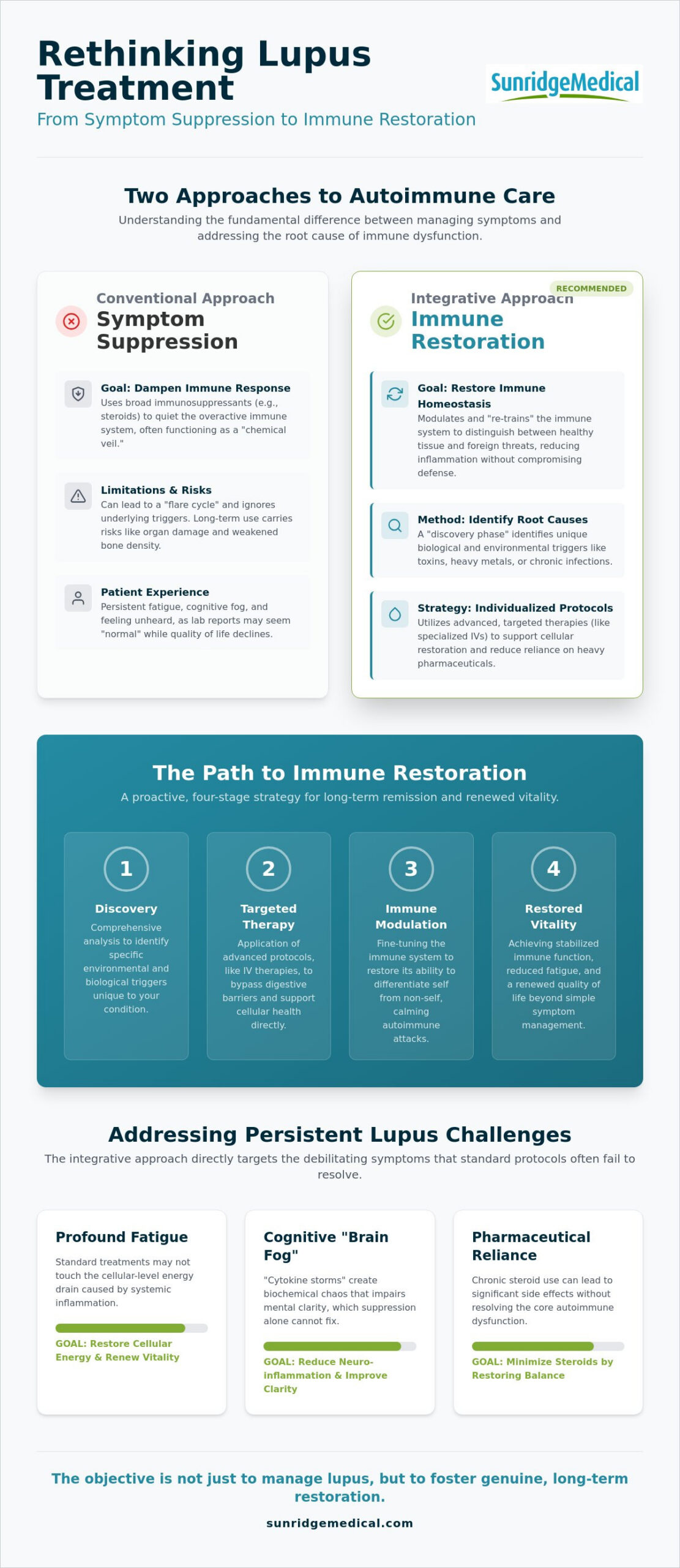
Systemic Lupus Erythematosus (SLE) is not a singular diagnosis but a multifaceted immune dysfunction that impacts nearly every biological system. It’s a condition where the body loses its fundamental ability to distinguish self from non-self. For many patients, the journey toward Understanding Lupus begins with a series of disconnected symptoms that eventually reveal a deeper, systemic failure of immune regulation. The traditional medical model generally views this through a lens of suppression, utilizing a combination of NSAIDs, corticosteroids, and antimalarials to quiet the immune response. While these tools can offer temporary relief during acute episodes, they often function as a chemical veil that masks symptoms without addressing the underlying triggers.
This reliance on symptom masking frequently traps patients in a “flare cycle.” When a lupus treatment plan focuses exclusively on dampening the immune system, it ignores the biological “why” behind the attack. Over time, this unresolved internal conflict can lead to progressive organ damage, even when a patient appears stable on paper. True recovery requires moving beyond the management of surface-level inflammation to explore the deeper mechanisms of autoimmune recovery.
The Autoimmune Mechanism: Why the Body Attacks Itself
The primary driver of lupus is the dysregulation of B-cells and the subsequent production of autoantibodies that target healthy tissues. This persistent inflammatory state is not localized; it actively compromises the integrity of the kidneys, the heart, and the nervous system. Many individuals also experience the devastating effects of “cytokine storms,” where a surge of pro-inflammatory proteins creates systemic havoc. This biochemical chaos is responsible for the profound exhaustion and “brain fog” that standard suppression fails to reach. It’s a cellular-level drain on daily energy that requires a more precise, targeted intervention than traditional pharmaceuticals provide.
Why Standard Protocols May Fall Short for Complex Cases
Conventional pharmaceutical pathways are often designed around a “one-size-fits-all” methodology. This rigid approach fails to account for the unique biochemical landscape of the individual. Long-term reliance on prednisone and other heavy immunosuppressive agents carries a significant burden of potential side effects, including metabolic shifts and weakened bone density. For those seeking to address these metabolic challenges, it may be helpful to explore Compounded Tirzepatide as part of a personalized health strategy. We often see patients who feel gaslighted by the system because their lab results are labeled “normal” even as their quality of life continues to decline. This disconnect between clinical data and the lived human experience is a clear indicator that a standard lupus treatment is no longer sufficient. When the status quo fails to provide progress, a shift toward advanced, research-based alternative protocols becomes the logical next step.
The Integrative Approach: Restoring Immune Homeostasis
The ultimate objective of advanced integrative care is the restoration of immune homeostasis. While conventional methods focus on dampening the entire immune response, our clinical philosophy centers on modulation. Suppression acts as a blunt instrument, often leaving the body’s natural defenses compromised. In contrast, modulation seeks to fine-tune the immune system, retraining it to distinguish between foreign pathogens and healthy tissue. This nuanced approach to lupus treatment allows for the reduction of systemic inflammation without sacrificing your overall resilience.
A comprehensive medical center acts as a bridge between these two worlds. We don’t discard conventional diagnostic expertise; we enhance it with research-based alternative protocols that target the specific root causes of dysfunction. Building a sustainable individualized recovery strategy requires a meticulous investigation into the specific biological and environmental factors that drive your unique presentation. It’s about moving from a reactive stance to a proactive, restorative one.
Identifying Environmental and Biological Triggers
Autoimmune activation rarely happens in a vacuum. Stealth triggers such as environmental toxins, heavy metal accumulation, or mold exposure can keep the immune system in a state of hyper-vigilance. Chronic infections, including Lyme disease, frequently mimic or exacerbate the symptoms of SLE, complicating the clinical picture and leading to unnecessary flares. Additionally, hormonal imbalances often act as a catalyst for autoimmune activity. By prioritizing hormone optimization, we provide a more stable foundation for the immune system to recalibrate and heal.
The Science of Immune Modulation
Immune modulation is a sophisticated process of biological retraining. Instead of simply masking the pain, we focus on reducing the total systemic inflammatory load. This involves identifying and removing the specific stressors that trigger the production of autoantibodies. Our focus remains on treating the individual human experience rather than just the lab results on a page. If you’ve felt stuck in a cycle of temporary fixes, exploring autoimmune disease management through a more comprehensive lens may be the key to lasting stability. Patients managing other neuro-inflammatory autoimmune conditions may also benefit from understanding advanced integrative ms treatment protocols, which share many of the same root-cause principles applied here.
Advanced Alternative Protocols for Lupus Treatment
The transition from managing symptoms to achieving deep biological recovery requires a shift in therapeutic methodology. While conventional approaches often rely on oral medications that can be difficult for the body to process, advanced lupus treatment leverages protocols that prioritize bioavailability and cellular precision. Research-based alternative medicine offers a sophisticated toolkit for patients seeking to move beyond the limitations of standard care. These protocols don’t just mask the inflammatory response; they actively work to recalibrate the environment in which the immune system operates. By focusing on the body’s internal terrain, we can foster an atmosphere where healing becomes possible.
At the heart of this restorative process is the use of targeted infusions and oxidative techniques. These methodologies are designed to support the body’s innate healing capacity while addressing the specific physiological deficits caused by chronic illness. By focusing on the cellular level, we provide a more resilient foundation for long-term health and stability. It’s a strategic departure from the status quo, offering a path forward for those who feel they’ve exhausted traditional options. Patients navigating complex hormonal and systemic conditions may also find value in exploring treatments for neuroendocrine tumours, as the integrative biological terrain approach shares foundational principles with autoimmune restoration protocols.
Specialized IV and Injection Therapies
One of the most significant challenges in treating systemic autoimmune conditions is ensuring that therapeutic agents actually reach the targeted tissues. Oral supplements often fail due to malabsorption or digestive barriers, which are common in patients dealing with chronic inflammation. Specialized IV therapies solve this by delivering customized intravenous protocols directly into systemic circulation. These infusions are frequently used for systemic detoxification, helping the body eliminate the “stealth” triggers and toxins that drive immune confusion. High-dose nutritional infusions provide essential vitamins, minerals, and amino acids that are critical for chronic disease management. These biological treatments support tissue regeneration and help restore the structural integrity of organs that may have been compromised by prolonged flare cycles, while specialized providers like Local Foot Doc offer targeted solutions for localized structural and orthopedic concerns. This direct delivery ensures that the body has the resources it needs to begin the repair process immediately and effectively.
Oxidative Therapies and Cellular Health
Oxidative therapies function as a powerful tool for immune modulation. By introducing controlled oxidative stress, these protocols stimulate the body’s production of protective enzymes and antioxidant defenses. This process helps retrain the immune system, reducing the frequency and severity of inflammatory episodes. Beyond immune regulation, these therapies are instrumental in addressing mitochondrial dysfunction. Many patients struggle with persistent fatigue because their cells lack the energy necessary for basic physiological repair. By optimizing mitochondrial health, we can directly combat exhaustion and improve cognitive clarity. This cellular-level support is a vital component of a comprehensive lupus treatment plan, providing a pathway toward stabilizing the body and preventing future organ damage. It’s a proactive strategy that looks toward the future of your health rather than just reacting to the crisis of the day. By strengthening the cells, we create an environment where the immune system no longer feels the need to remain in a state of constant, destructive alert.
Developing an Individualized Recovery Strategy
A standard rheumatology visit often focuses on a narrow set of laboratory markers, such as ANA titers or inflammatory rates. While these provide a snapshot of current activity, they offer little insight into the “why” behind the dysfunction. We believe that a successful lupus treatment strategy must move beyond the diagnosis and into a phase of deep discovery. This involves a comprehensive physician evaluation that investigates the unique environmental and biological landscape of each patient. By identifying specific triggers, we can move away from reactive suppression and toward proactive restoration. This shift is essential because a recovery plan shouldn’t be static; it must be as dynamic as the condition itself.
Advanced Diagnostic Testing: Looking Deeper
To build a truly individualized care plan, we utilize diagnostic tools that look far beyond standard clinical panels. We seek to identify the underlying drivers of immune confusion through a variety of specialized assessments:
- Environmental and Toxicological Screening: Testing for environmental toxins and heavy metal toxicity that can act as persistent irritants to the immune system.
- Gut-Immune Axis Evaluation: Assessing microbiome health and intestinal permeability, as the majority of the immune system resides in the gut.
- Comprehensive Endocrine Panels: Identifying hormone imbalances and endocrine disruptors that may be fueling autoimmune flare cycles.
This data-driven approach ensures that we aren’t just guessing; we’re addressing the precise mechanisms of your illness. It allows us to customize every aspect of your care based on verifiable physiological needs.
The Path to Stabilization and Progress
Stabilization is not an overnight event; it’s a series of strategic milestones. We focus on measurable goals, such as the steady reduction of systemic inflammation and the restoration of daily energy levels. This journey requires integrating specialized clinical protocols with necessary lifestyle adjustments that support long-term health. Our care plans are never static, as we maintain the clinical agility to pivot the lupus treatment strategy based on your real-time response to care. Continuous, data-driven adjustments ensure that each protocol remains precisely aligned with the patient’s evolving physiological needs. If you’re ready to move toward a more targeted approach, a comprehensive physician evaluation is the first step in reclaiming your quality of life.
Sunridge Medical: Advanced Alternative Medicine for Lupus
Sunridge Medical represents a sophisticated departure from the standardized care models that often leave patients feeling overlooked. We believe that an effective lupus treatment strategy must be as unique as the individual it serves, requiring a meticulous blend of clinical authority and compassionate optimism. Our center is dedicated to the management of complex chronic diseases, providing a specialized environment where conventional medical expertise meets advanced, research-based alternative protocols. We don’t just aim to suppress symptoms; we strive to identify the biological “why” behind the dysfunction to foster genuine, long-term restoration.
This integrative approach allows us to address the multifaceted nature of systemic lupus erythematosus with a level of precision that standard practices often lack. By positioning ourselves as a confident ally in your recovery, we offer a sanctuary for those who have reached the end of the traditional pharmaceutical road. Our focus remains on the possibility of progress, moving beyond the limitations of “normal” lab results to address the persistent fatigue and cognitive fog that diminish your daily quality of life. It’s about moving from a state of being “stuck” to a structured path forward.
Pioneering Protocols and Compassionate Care
The medical director at Sunridge Medical plays a pivotal role in the development of proprietary protocols that target the specific mechanisms of autoimmune activity. These methodologies are born from a commitment to ongoing research and a refusal to accept the status quo of lifelong symptom suppression. We’ve created a clinical sanctuary specifically for patients who have failed standard therapies, offering a steady hand and a clear path forward. Our dedication to medical innovation ensures that our patients benefit from the latest advancements in immune modulation and cellular repair. This intellectual and empathetic approach allows us to act as a scientific guide, helping you navigate the complexities of your health journey with reliability and thoroughness.
Taking the Next Step Toward Well-Being
The process of recovery at our center begins with a comprehensive medical evaluation designed to uncover the specific environmental and biological triggers driving your illness. This evaluation is a deep dive into your unique physiology, moving from a broad diagnosis to a targeted discovery of what your body needs to heal. We understand that seeking specialized lupus treatment often requires travel; therefore, we provide personalized support for our out-of-town patients to make the transition into our care as seamless as possible. This includes assistance with the logistical aspects of visiting our center so you can focus entirely on your recovery. You can begin this journey by contacting the center for a toll-free initial discussion. This conversation is the first step in moving away from a reactive medical model and toward a future characterized by stabilized immune function and a restored quality of life.
Reclaiming Your Health Through Precision Restoration
Managing a complex autoimmune condition requires more than just masking the pain; it demands a strategic effort to restore biological balance. You’ve seen how moving beyond standard suppression to embrace immune modulation can recalibrate your system and address the persistent fatigue that traditional methods often overlook. By identifying environmental and biological triggers through advanced diagnostic testing, you can transition from a state of reactive management to a proactive, individualized recovery strategy.
With over 20 years of experience in complex chronic disease management, Sunridge Medical provides a specialized environment where individualized protocols are developed by our specialized physicians. We don’t settle for the status quo of clinical stability while you still feel unwell. Instead, we offer a steady hand and a clear path toward reclaiming your vitality. It’s time to seek a level of care that prioritizes your unique human experience and addresses the root causes of your dysfunction.
Take the first step toward a more precise lupus treatment and Schedule Your Comprehensive Medical Evaluation at Sunridge Medical. Your journey toward lasting well-being and restored quality of life begins with a commitment to discovery. We are ready to act as your dedicated advocate and scientific guide in the pursuit of genuine health.
Frequently Asked Questions
Is there an alternative to long-term steroid use for lupus?
Yes, advanced integrative protocols focus on immune modulation as a strategic alternative to chronic steroid reliance. Instead of broad suppression, we use targeted biological therapies and nutritional infusions to reduce systemic inflammation. This approach aligns with modern clinical guidelines that advocate for tapering steroids to the lowest effective dose. By addressing the root causes of flare cycles, we help stabilize the immune response without the significant side effects associated with prolonged prednisone use.
Can integrative medicine help with lupus-related kidney issues?
Integrative medicine provides critical support for lupus-related kidney issues by focusing on reducing the total inflammatory burden. We utilize specialized IV therapies designed to support tissue regeneration and protect renal function from progressive damage. By optimizing the body’s internal terrain and removing “stealth” triggers, we help the kidneys recover their filtering efficiency. This comprehensive approach works alongside conventional monitoring to ensure the best possible outcomes for long-term organ health.
How does oxidative therapy work for autoimmune diseases?
Oxidative therapy works by introducing controlled amounts of medical-grade oxygen to stimulate the body’s innate antioxidant defenses. This process helps retrain the immune system to distinguish between healthy tissue and foreign pathogens, effectively reducing the production of autoantibodies. It also addresses mitochondrial dysfunction, which is a primary cause of chronic exhaustion in patients seeking lupus treatment. By enhancing cellular energy production, oxidative therapy supports systemic repair and provides a more resilient foundation for health.
Will I need to stop my current lupus medications to start alternative treatment?
You don’t need to stop your current medications to begin an integrative protocol; in fact, we prioritize a safe and coordinated transition. Our physicians work alongside your existing healthcare team to ensure that any adjustments to your pharmaceutical regimen are data-driven and gradual. The goal is to reach a level of biological stability where your reliance on heavy immunosuppressants can be safely minimized over time. We focus on clinical agility to ensure your safety throughout the recovery process.
How long does it take to see progress with an integrative lupus protocol?
Most patients begin to notice measurable improvements in their energy levels and cognitive clarity within the first few weeks of starting a customized protocol. However, achieving long-term stabilization of the immune system is a methodical process that typically takes several months of consistent care. Each lupus treatment plan is dynamic, with adjustments made based on your real-time response. We focus on setting realistic milestones to ensure steady progress toward your recovery goals.
What makes Sunridge Medical different from a standard rheumatologist?
Sunridge Medical differs from standard rheumatology by moving beyond the suppression model to a discovery and restoration framework. While a standard rheumatologist primarily manages symptoms using a narrow set of drug classes, we investigate the underlying environmental and biological triggers driving your specific dysfunction. We utilize advanced diagnostic testing and proprietary protocols developed by specialized physicians. Our center provides a sanctuary of individualized care for those who haven’t found success with standardized treatments.
Are these alternative treatments backed by medical research?
Yes, the alternative protocols we utilize are rooted in established medical research and emerging clinical studies on immune modulation and cellular health. We bridge the gap between conventional clinical language and advanced biological therapies by focusing on peer-reviewed mechanisms of action. Our commitment to medical innovation ensures that every protocol is based on verifiable science. We prioritize treatments that have shown efficacy in addressing the complex underlying mechanisms of autoimmune disease and systemic inflammation.
Can environmental toxins trigger lupus flares?
Environmental toxins, including heavy metals and mold exposure, are well-documented triggers that can initiate or exacerbate autoimmune flare cycles. These substances act as persistent irritants that keep the immune system in a state of hyper-vigilance, leading to increased autoantibody production. Our advanced diagnostic testing specifically screens for these toxicological burdens to identify what is driving your immune confusion. Removing these triggers is a fundamental step in achieving long-term remission and restoring your body’s natural balance.