


Why does a standard 21-day course of antibiotics leave so many patients still struggling with debilitating brain fog and exhaustion? If you’ve been told your persistent symptoms are psychosomatic, you understand the frustration of seeking integrative lyme disease protocols only to find standardized solutions that fall short. You’re not alone in feeling that the standard medical system has failed to acknowledge the true complexity of your journey.
This clinical guide explores how advanced methodologies are redefining recovery in 2026 by bridging the gap between conventional treatments and biological medicine. We’re moving beyond temporary suppressive measures to target the specific biological terrain where persistent bacteria and co-infections reside. Our approach focuses on the underlying mechanisms of illness rather than just the surface symptoms.
You’ll find a clear roadmap that prioritizes individualized physician evaluations and sophisticated diagnostics to validate your experience. We’ll preview how medical-grade IV and biological therapies offer a path forward for those seeking a more comprehensive, research-based approach to restoring their well-being. This is your invitation to move past the limitations of the status quo and toward a future of renewed health.
Key Takeaways
- Identify the limitations of the “21-day myth” and why standard antibiotic treatments often leave patients struggling with persistent fatigue and brain fog.
- Gain insight into the “Stealth Pathogen” strategy, where bacteria use biofilms and morphological changes to shield themselves from the immune system.
- Discover the role of integrative lyme disease protocols in bridging the clinical gap between conventional medicine and advanced biological therapies.
- Understand how high-sensitivity serology and direct detection methods like PCR testing provide the diagnostic precision needed to validate your experience.
- Learn how an individualized physician evaluation creates a customized roadmap for recovery, moving beyond standardized care to address your unique biological needs.
The Limitations of Conventional Lyme Care: Why Standard Protocols Often Fail
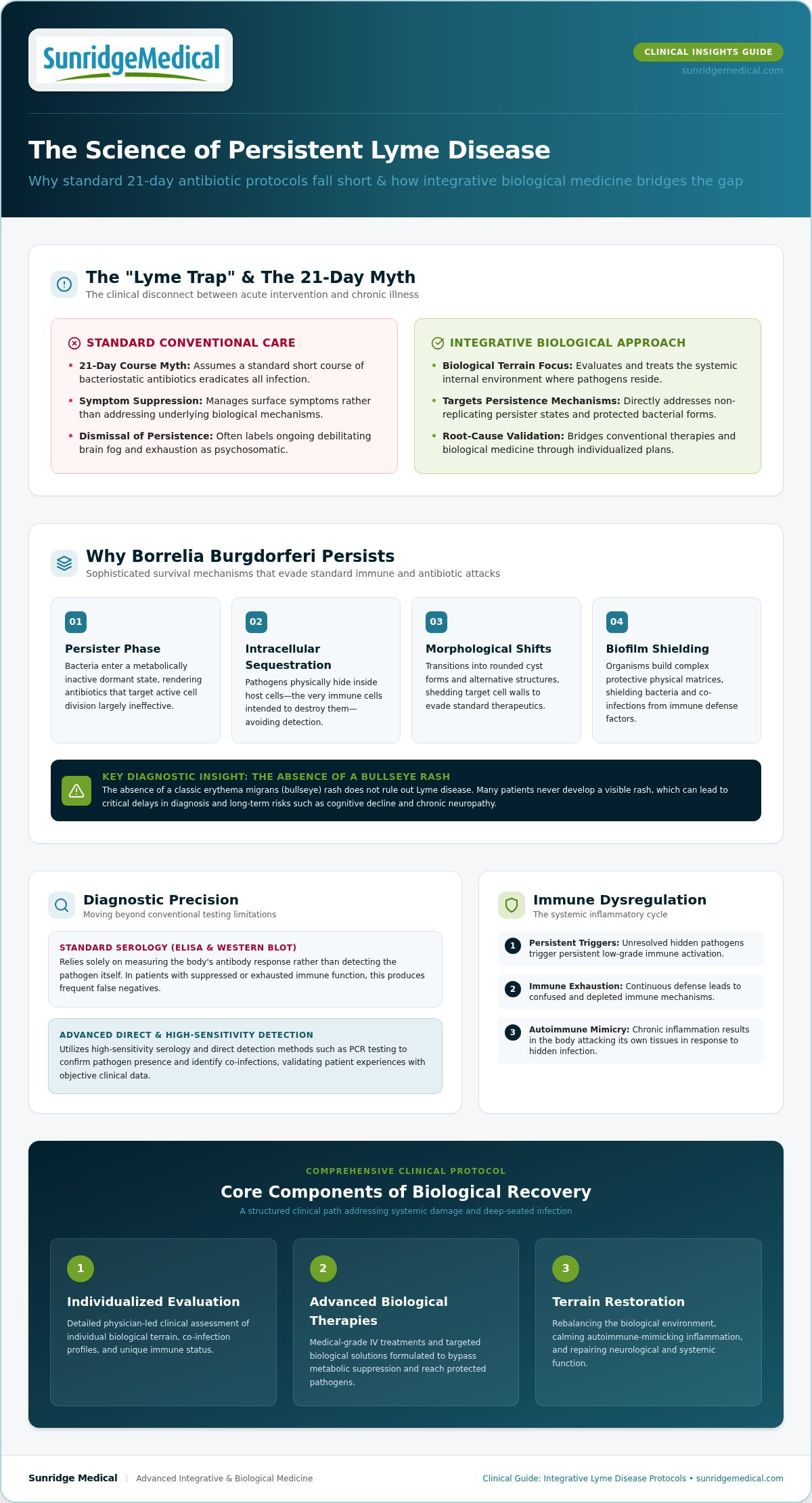
Many patients find themselves caught in what we define as the “Lyme Trap.” This clinical gap exists between the successful treatment of an acute infection and the complex management of chronic, systemic symptoms. Standard medical models excel at addressing the initial tick bite, but they often struggle when the illness persists beyond the first few weeks. This disconnect leaves individuals wandering through a healthcare system that may not recognize their continued suffering as a biological reality.
The prevailing 21-day antibiotic myth suggests that a short course of bacteriostatic medication is sufficient to eradicate Lyme disease from the body. While this may work for some acute cases, it often falls short for those with deep-seated infections. These short-term approaches fail to account for the complex survival mechanisms of the bacteria. Transitioning toward integrative lyme disease protocols allows for a more nuanced approach that addresses why the infection persists despite standard intervention.
Diagnostic hurdles further complicate the journey to recovery. Conventional ELISA and Western Blot tests are notorious for high rates of false negatives, as they rely on the body’s immune response rather than the presence of the pathogen itself. If a patient’s immune system is already compromised or suppressed, these tests may fail to show a positive result, leading to medical gaslighting. Our philosophy shifts the focus from merely chasing a pathogen to treating the entire biological environment of the patient.
The Clinical Reality of Persistent Infection
Borrelia burgdorferi is a highly sophisticated organism capable of entering a “persister” state. In this phase, the bacteria become metabolically inactive, making them largely invisible to standard antibiotics that target active cell division. This survival strategy explains why symptoms can return or worsen months after a patient completes a standard prescription. It’s also a clinical reality that the absence of a bullseye rash doesn’t rule out infection. Many patients never see a rash, and a delayed diagnosis can have profound consequences for long-term neurological health, including cognitive decline and chronic neuropathy.
Beyond Symptom Suppression
True recovery requires moving beyond the simple suppression of symptoms like pain or fatigue. We must address the biological root causes that allow the infection to thrive. This process begins with an Individualized Physician Evaluation, which serves as the foundation for every protocol we develop. By assessing the unique biological terrain of each patient, we can create a targeted path that addresses the infection and the systemic damage it leaves behind. For those seeking a deeper understanding of this methodology, exploring Alternative Health Medicine: A Clinical Path for Chronic Illness Recovery in 2026 provides further insight into our clinical philosophy. We don’t just manage your illness; we work to restore your health through precision and specialized attention.
The Science of Persistence: Biofilms, Co-infections, and Biological Terrain
Understanding why Lyme disease persists requires a deep dive into the sophisticated survival mechanisms of Borrelia burgdorferi. While CDC guidelines on Lyme disease offer a foundation for acute diagnosis, they frequently overlook the “stealth” strategies pathogens use to evade the immune system. Bacteria often transition into cyst forms or utilize intracellular sequestration, hiding inside the very cells meant to destroy them. This morphological flexibility means that standard treatments targeting active cell walls often miss these dormant, protected versions of the infection.
The persistent presence of these pathogens doesn’t just cause infection; it triggers profound immune dysregulation. Over time, the body’s defense system becomes exhausted and confused, leading to a state of chronic inflammation that mirrors autoimmune disease. Patients often feel as though their own body is attacking them, when in reality, it’s reacting to hidden triggers that haven’t been fully cleared. Implementing integrative lyme disease protocols is essential here, as these methods address the specific mechanisms that allow bacteria to remain in the body long after initial treatment ends.
Breaking the Biofilm Barrier
One of the most significant obstacles to recovery is the formation of biofilms. These are protective, slime-like matrices that pathogens create to shield themselves from both the immune system and antibiotics. We utilize specialized enzymes and targeted clinical protocols designed to dissolve these barriers, exposing the hidden pathogens to treatment. Systemic inflammation often prevents the effective delivery of medication, creating “cold spots” in the body where infection can linger. Biological terrain is the internal environment that either supports or inhibits pathogen growth. By optimizing this terrain, we make the body an inhospitable host for chronic infection.
The Burden of Co-infections
Lyme rarely travels alone. Most patients also carry a “co-infection complex” that includes pathogens like Babesia, Bartonella, or Mycoplasma. Each of these carries a unique clinical signature; Babesia often presents as “air hunger” or night sweats, while Bartonella may manifest as neurological pain or distinct skin striations. If a protocol only targets one organism, it can lead to “pathogen hopping,” where one infection recedes only for another to flare up and take its place. A multi-targeted approach is the hallmark of effective integrative lyme disease protocols, ensuring that every layer of the infection is addressed simultaneously. To understand how these factors affect your specific case, you may wish to consult with a physician who understands these complexities. For those experiencing these systemic overlaps, our IV Therapy for Autoimmune Disease: 2026 Guide provides a detailed look at how we address immune exhaustion and systemic restoration.
Core Components of Advanced Integrative Lyme Protocols
Recovery from persistent Borrelia and its associated co-pathogens requires more than just bacteriostatic agents. It demands a multi-phasic strategy that addresses the infection while simultaneously repairing the patient’s biological terrain. While CDC Lyme disease guidelines provide essential standards for initial care, advanced integrative lyme disease protocols extend these efforts by incorporating medical-grade oxidative therapies. These therapies utilize controlled oxidative stress to neutralize pathogens and stimulate a robust immune response, creating an environment where stealth infections can no longer thrive.
Immune modulation is another pillar of this approach. Instead of simply suppressing symptoms, we focus on re-educating the immune system. This allows the body to recognize intracellular pathogens that have previously evaded detection. By restoring this natural recognition, we move the patient from a state of chronic immune exhaustion toward active, effective defense. It’s about shifting the body from a reactive state to a proactive one, ensuring the immune system is capable of maintaining long-term health.
Clinical-Grade IV Protocols
Many patients with chronic Lyme suffer from compromised digestive systems, making oral supplementation inefficient. Intravenous delivery bypasses the gut, ensuring that high-concentration nutrients and biological agents reach the bloodstream directly. We don’t rely on generic infusions. Every IV protocol is customized based on your specific micronutrient deficiencies and metabolic needs. These biological treatments are vital for restoring mitochondrial function, which is often severely impaired by long-term infection and systemic inflammation. By delivering these agents directly, we can achieve therapeutic levels that oral doses simply cannot match.
Managing the Recovery Process
As pathogens are neutralized, they release endotoxins that can trigger a Jarisch-Herxheimer reaction. This reaction can cause a temporary flare in symptoms, including increased fatigue or joint pain. In a clinical setting, we manage this through specialized detoxification support and drainage protocols. Our physicians monitor your progress closely to protect liver and kidney function during these periods of high pathogen die-off. This level of supervision is what distinguishes a clinical sanctuary from home-based care. If you’re looking for guidance on selecting a facility that offers this level of care, consult our resource on Lyme Disease Specialists: A Clinical Guide to Choosing Advanced Integrative Care in 2026. This methodical approach ensures that your recovery is as steady and comfortable as possible.
Diagnostic Precision: Moving Beyond Standard Lyme Testing
Standard diagnostic criteria often overlook the nuances of persistent infection, leaving many patients without a clear explanation for their suffering. To overcome these limitations, advanced integrative lyme disease protocols utilize high-sensitivity serology. These specialized labs evaluate specific protein bands that are frequently disregarded by standard surveillance criteria, providing a more comprehensive view of the patient’s immune encounter with Borrelia. This level of precision is necessary to validate the patient’s experience and establish a factual foundation for treatment.
Direct detection methods, such as PCR and FISH testing, play a vital role in identifying active infection when antibody levels are low or absent. These tools allow us to move beyond indirect evidence of the bacteria and look for its actual genetic material in the bloodstream. However, testing for the pathogen is only one part of the equation. We also conduct functional assessments to evaluate mitochondrial health, gut microbiome integrity, and heavy metal burden. These assessments help us understand why the body has been unable to clear the infection on its own. Ultimately, a detailed physician consultation remains the most powerful diagnostic tool, as clinical history often reveals patterns that data alone might miss.
Identifying the Medical Root Cause
Symptoms like “brain fog” are frequently dismissed as psychiatric issues, but in a clinical context, they’re often markers of neuro-inflammation. We look deeper into environmental factors that complicate recovery, such as mold exposure or heavy metal toxicity, which can keep the immune system in a state of constant alarm. Tracking CD57+ Natural Killer cell counts provides another layer of insight; low levels of these specific cells often correlate with chronic Lyme activity and serve as a reliable marker of overall immune health. By identifying these root causes, we can tailor our approach to address the specific obstacles preventing your recovery.
Hormonal and Neurologic Integration
Chronic infection rarely stays localized; it eventually disrupts the HPA axis and the entire endocrine system. This disruption can lead to profound hormonal imbalances that mimic other conditions, further complicating the clinical picture. Restoring balance to these systems is essential for providing the body with the energy it needs to heal. For a deeper look at how we address these systemic overlaps, see our Hormone Optimization for Autoimmune Disease: 2026 Guide. If you’re ready to move beyond standard testing and gain clarity on your health, schedule a personalized physician consultation to begin your comprehensive evaluation.
The Path to Recovery: Individualized Clinical Support at Sunridge Medical
Sunridge Medical serves as a national sanctuary for individuals who’ve exhausted conventional options and feel overlooked by standard medical systems. We recognize that your journey has likely been marked by clinical uncertainty and a lack of progress, but we offer a different path forward. Our integrative lyme disease protocols are built on the understanding that no two cases of chronic infection are identical. This realization is why we reject the one-size-fits-all model in favor of a highly customized, multi-faceted strategy that addresses the specific biological needs of each patient.
True recovery requires more than just a prescription; it requires a partnership with a scientific guide who understands the intricate complexity of chronic illness. Our physicians act as dedicated advocates, utilizing deep technical knowledge to navigate your unique health journey. We don’t just look at laboratory data; we focus on the individual human experience behind the symptoms. This level of specialized attention ensures that every aspect of your biological terrain is addressed with precision, moving you from a state of being stuck toward a future of restored health.
A Personalized Medical Sanctuary
Patients arriving at our center often transition from a state of frustration to a structured, logical roadmap for recovery. We combine research-based alternative medicine with rigorous clinical monitoring to ensure both safety and efficacy at every stage. Our commitment to pioneering new methodologies means our protocols are constantly evolving with the latest medical research available in 2026. This evolution allows us to offer therapies that go beyond the ordinary, providing a level of care that prioritizes the restoration of your long-term well-being through a more comprehensive lens than standard practices.
Initiating Your Consultation
Taking the first step toward recovery is a straightforward process designed to support you from the very beginning. By calling our toll-free 1-800 number, you can initiate a personalized process to schedule a comprehensive evaluation. During this initial physician-led diagnostic session, we’ll conduct an Individualized Physician Evaluation to identify the specific mechanisms driving your illness. This is not a rushed consultation; it’s a deep dive into your clinical history and current biological state. We invite you to reclaim your well-being through sophisticated, targeted care that honors your experience and offers a clear, supportive path toward progress.
Reclaiming Your Health Through Precision Medicine
Persistent Lyme disease doesn’t have to be a life sentence of fatigue and cognitive decline. By moving beyond the limitations of standard antibiotic courses, you can address the root causes of your symptoms through a more sophisticated clinical lens. True progress depends on identifying hidden biofilms and co-infections while simultaneously restoring your body’s internal biological terrain.
Since 2003, Sunridge Medical has specialized in complex chronic disease, providing a sanctuary for those who’ve exhausted traditional options. Our integrative lyme disease protocols are never packaged or standardized; instead, they’re built upon individualized care plans tailored to your unique physiology. You deserve a clear roadmap that validates your experience and offers a path toward lasting restoration.
Don’t let another day pass feeling stuck in a cycle of illness. Speak with a patient care coordinator today by calling [1-800-923-7878](tel:18009237878) to schedule your individualized physician evaluation. We’re here to act as your scientific guide, helping you navigate the complexities of recovery with calm determination and clinical expertise. Your journey toward renewed well-being starts with a single, targeted step.
Frequently Asked Questions
What makes an integrative Lyme protocol different from standard antibiotic treatment?
An integrative approach differs from standard care by addressing the biological terrain and the immune response rather than solely targeting bacteria with antibiotics. While conventional medicine often relies on short-term bacteriostatic agents, integrative lyme disease protocols incorporate oxidative therapies and customized IV infusions to neutralize pathogens. This multi-phasic strategy focuses on persistent “stealth” forms of the infection that standard protocols often miss, providing a more comprehensive path to long-term recovery.
Can chronic Lyme disease truly be reversed after years of symptoms?
Recovery is possible even after years of chronic symptoms by addressing the underlying mechanisms of persistence like biofilms and immune dysregulation. Our clinical experience since 2003 shows that when we move beyond symptom suppression to target the root biological causes, patients can experience significant restoration. By re-educating the immune system and clearing the “stealth” pathogen burden, we help individuals who have felt stuck in a cycle of illness reclaim their quality of life.
How long does a typical integrative treatment protocol take?
The duration of a protocol is entirely dependent on the individual’s unique clinical picture and the complexity of their infection. Because we prioritize individualized care plans, there’s no “standard” timeline for recovery. Some patients may see progress in a matter of weeks; others with multi-system involvement or heavy co-infection burdens may require several months of intensive clinical support. Every step is guided by ongoing physician evaluations to ensure the protocol evolves with your needs.
What are the most common co-infections addressed in your protocols?
We frequently address a complex array of co-infections that often accompany Borrelia burgdorferi. The most common include Babesia, which often affects the respiratory and circulatory systems, and Bartonella, known for its neurological impact. We also target Mycoplasma and various viral triggers that can contribute to immune exhaustion. Addressing these pathogens simultaneously is a core component of our integrative lyme disease protocols to prevent the “pathogen hopping” that occurs when only one infection is treated.
Do you offer IV therapies for patients with severe neurological Lyme symptoms?
Yes, we provide specialized IV and biological therapies specifically designed to address neuro-inflammation and cognitive impairment. Since neurological Lyme often involves the sequestration of pathogens within the central nervous system, intravenous delivery is essential for ensuring therapeutic agents reach the bloodstream directly. These protocols focus on reducing systemic inflammation and restoring mitochondrial function, which are critical for patients struggling with debilitating brain fog, neuropathy, and other complex neurologic conditions.
How do you manage the Herxheimer reaction during treatment?
We manage the Jarisch-Herxheimer reaction through physician-monitored detoxification and clinical drainage protocols. As pathogens are neutralized, they release endotoxins that can temporarily intensify symptoms. To mitigate this, we use targeted IV infusions and biological agents that support liver and kidney function. This proactive approach ensures that your body can efficiently process and eliminate pathogen die-off, making the recovery process as steady and comfortable as possible under professional clinical supervision.
Why are standard Lyme tests like the ELISA often unreliable for chronic cases?
Standard ELISA tests are often unreliable because they measure the body’s antibody response rather than the presence of the bacteria itself. In chronic cases, the immune system is often too suppressed or exhausted to produce a detectable level of antibodies, leading to frequent false negatives. We utilize more advanced diagnostic tools, including high-sensitivity serology and direct detection methods like PCR, to identify active infections that standard surveillance criteria typically overlook.
Is a physician referral required to begin treatment at Sunridge Medical?
A formal physician referral is not required to initiate your care at our center. Many of our patients find us after exhausting conventional options and seeking a more specialized, integrative approach to their chronic illness. You can begin the process by contacting us directly through our toll-free 1-800 number to schedule your initial individualized physician evaluation. This diagnostic session serves as the foundation for your customized roadmap to recovery and long-term health restoration.