


If the current standard of care for Multiple Sclerosis is so advanced, why does it still feel like you’re merely managing a slow decline rather than reclaiming your vitality? For many, the frustration of impersonal protocols is just as debilitating as the physical symptoms themselves. You understand that your immune system isn’t acting at random, yet you’re often left with medications that mask the fire without ever finding the match. It’s exhausting to feel that critical triggers like latent infections or toxic burdens are being overlooked while you navigate the heavy side effects of conventional drugs.
We believe there’s a more precise way forward. This guide illustrates how an advanced integrative treatment for multiple sclerosis shifts the focus from simple suppression to true neurologic restoration. By targeting the underlying biological mechanisms unique to your body, it’s possible to move beyond symptom management toward a future of reduced flare-ups and improved cognitive function. We’ll explore the clinical path to stabilizing the immune system through individualized physician evaluations and research-based protocols designed to provide the “why” behind your health, offering a clear roadmap for long-term recovery.
Key Takeaways
- Learn the difference between wellness-based “complementary” care and a clinically driven integrative treatment for multiple sclerosis that targets biological root causes.
- Understand how the “Total Body Burden” concept identifies hidden triggers like infections and toxins that drive chronic inflammation and myelin damage.
- Discover the diagnostic advantage of moving beyond standard MRIs to include advanced functional and biological testing for a more complete health picture.
- Explore advanced therapeutic options, including customized intravenous (IV) protocols and autoimmune-specific nutritional strategies designed for neurologic support.
- Identify why a comprehensive physician evaluation is the essential foundation for building a personalized roadmap tailored to your specific MS stage and subtype.
What is Integrative Treatment for Multiple Sclerosis?
An integrative treatment for multiple sclerosis represents a strategic convergence of high-level conventional diagnostics and advanced alternative medical protocols. It’s vital to distinguish this clinical approach from “complementary” medicine. While complementary care often includes wellness-based practices like yoga or massage to improve quality of life, integrative medicine is a data-driven medical strategy. It aims to intervene directly in the disease process by addressing the underlying biological mechanisms that drive neurologic decline. It’s about moving beyond the surface to understand why the body is attacking itself.
The core philosophy of this approach centers on treating the patient as a biological whole rather than a set of isolated neurologic symptoms. Instead of focusing solely on the brain and spinal cord, clinicians look at the entire physiological landscape. The primary objective is to modulate the immune system to slow or halt demyelination while simultaneously fostering an environment conducive to nerve repair. This comprehensive view ensures that every aspect of the patient’s health is considered during the recovery process.
The Shift from Symptom Suppression to Immune Modulation
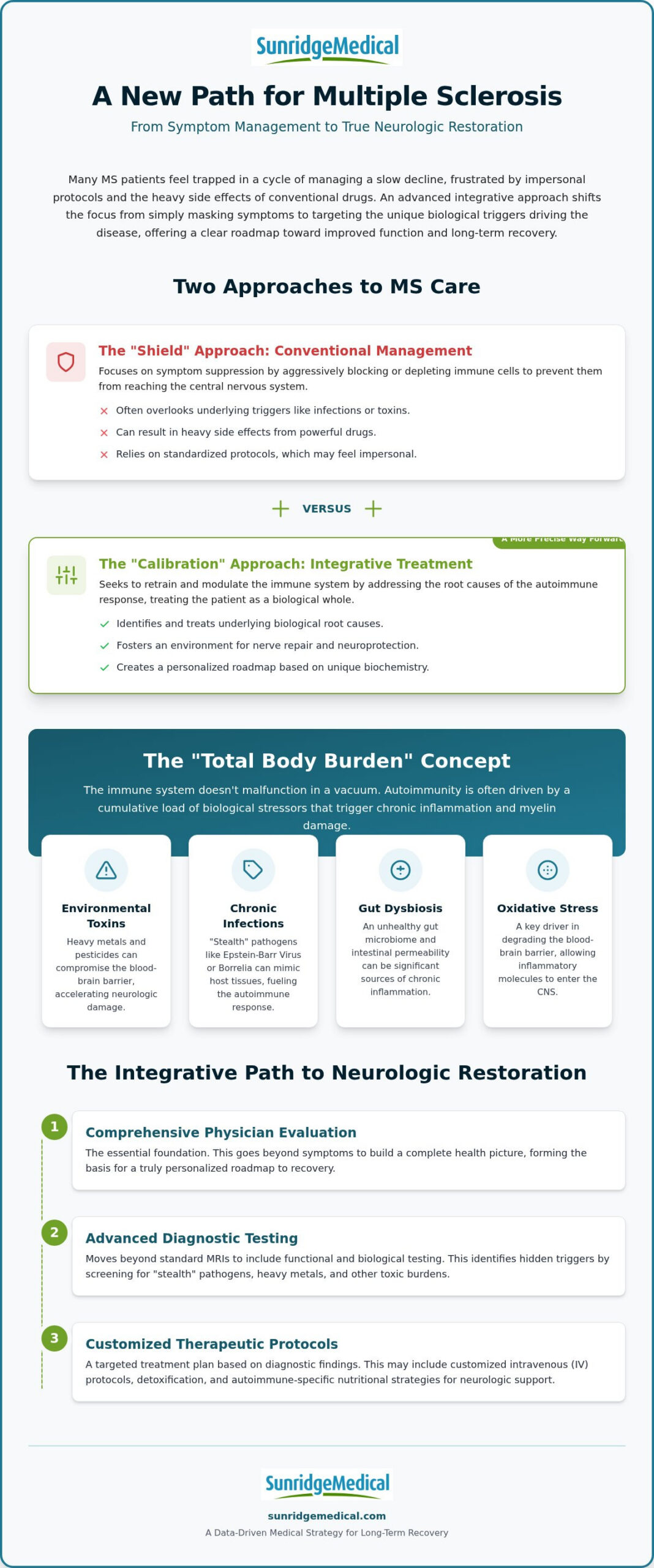
Standard protocols in Conventional MS Management often utilize a “shield” approach. This methodology focuses on aggressively blocking or depleting specific immune cells to prevent them from reaching the central nervous system. While this can reduce relapses, it doesn’t necessarily address the root cause of immune dysfunction. In contrast, integrative care focuses on a “calibration” approach. This seeks to retrain the immune system to recognize healthy tissue, reducing the autoimmune response without leaving the body entirely undefended. Prioritizing neuroprotection is essential for maintaining long-term physical and cognitive function.
Why Patients are Seeking Advanced Alternative Medicine
Many individuals pursue an integrative treatment for multiple sclerosis after finding that traditional Disease-Modifying Therapies (DMTs) carry side effects that significantly impact their daily lives. Others feel that their current care is too impersonal or standardized. They’re looking for a medical protocol that accounts for their unique biochemistry, including factors like gut health, toxic exposures, and chronic infections that are often ignored in conventional settings. Integrative medicine for neurologic health is a research-based expansion of standard care. It provides a more comprehensive framework for those who haven’t found success with standard protocols alone.
Targeting the Biological Root Causes of MS Progression
Standard neurologic care often views Multiple Sclerosis as an idiopathic event, meaning the cause is unknown. In contrast, a clinical integrative treatment for multiple sclerosis focuses on the “Total Body Burden.” This concept suggests that the immune system doesn’t malfunction in a vacuum. Instead, it’s pushed toward autoimmunity by a cumulative load of biological stressors. Chronic inflammation is the relentless driver of myelin damage, but inflammation itself is a response to specific triggers. By identifying these triggers, clinicians move from simply slowing the disease to addressing the mechanisms that fuel it.
Oxidative stress plays a central role in this progression. It contributes to the degradation of the blood-brain barrier, the critical gateway that should protect the central nervous system. When this barrier is compromised, it allows inflammatory cytokines and environmental neurotoxins to enter, accelerating the breakdown of the myelin sheath. Addressing this barrier’s integrity is a fundamental step in stabilizing neurologic health and preventing further damage.
The Connection Between Chronic Infections and Autoimmunity
Clinical research increasingly points to the role of viral and bacterial loads in triggering MS flare-ups. Pathogens like Epstein-Barr Virus (EBV) and Borrelia burgdorferi can mimic host tissues, confusing the immune system. It’s why Lyme disease specialists frequently find symptom patterns that mirror MS. Screening for these “stealth” pathogens is a diagnostic necessity. If these infections remain unaddressed, the immune system will continue to react, regardless of how many suppressive drugs are administered.
Environmental Toxins and Neurologic Health
Heavy metals and environmental chemicals act as potent neurotoxins that disrupt mitochondrial function within nerve cells. When mitochondria fail, neurons lose the energy required for repair and communication. Integrating environmental illness treatment protocols helps clear these obstructions, allowing the body to redirect resources toward neurologic recovery. Neurologic health is inextricably linked to the body’s detoxification capacity. To explore how these biological factors might be influencing your specific case, a comprehensive medical evaluation can provide the clarity needed to build a targeted recovery plan.
Integrative Protocols vs. Conventional MS Management
Conventional neurologic management remains centered on Disease-Modifying Therapies (DMTs) that follow a standardized escalation model. If one drug fails or causes intolerable side effects, the patient typically moves to the next pharmaceutical in the sequence. An integrative treatment for multiple sclerosis disrupts this cycle by prioritizing the patient’s unique biochemistry from the start. This transition from a pharmaceutical-heavy approach to a multi-modal biological protocol allows for a more nuanced intervention that supports the body’s innate repair mechanisms while mitigating the fear of permanent decline.
The “One Size Fits All” model often ignores the subtle variations in how MS manifests in different individuals. While standard care focuses on the “what”—the structural lesions visible on a scan—integrative care focuses on the “how.” By addressing the specific metabolic and immunological environment of each patient, clinicians can focus on improving quality of life and reducing the debilitating side effects often associated with long-term drug use. This shift ensures the patient is an active participant in their recovery rather than just a recipient of a pre-packaged treatment plan.
The Role of Advanced Diagnostics
Looking beyond structural imaging is essential for true neurologic restoration. While an MRI tracks lesion activity, it provides little data on the metabolic state or the inflammatory drivers behind the damage. Advanced diagnostics evaluate cytokine profiles to map specific inflammatory pathways, allowing for precision in immune modulation. We also examine gut-brain axis disruptions through specialized testing, as intestinal permeability often correlates with blood-brain barrier compromise. The precision required in integrative cancer treatment by stage philosophies directly informs our neurologic diagnostic precision, ensuring no biological stone is left unturned.
Synergy: When Alternative and Conventional Medicine Meet
Synergy is the ultimate goal of a comprehensive medical strategy. Integrative protocols aren’t designed to ignore conventional medicine; they’re built to enhance it where necessary. By supporting the body’s detoxification pathways and mitochondrial health, we can often reduce the toxicity burden and side effects associated with standard pharmaceuticals. This collaborative approach ensures that the patient receives the most effective elements of both worlds. A dedicated medical team works to coordinate these therapies, ensuring that every intervention is strategically aligned with the patient’s long-term health goals.
Key Components of a Research-Based Integrative MS Plan
A successful recovery plan is built on precision and the strategic application of advanced biological therapies. Moving beyond standard pharmaceutical suppression requires a multi-faceted approach that addresses the body’s internal environment at the cellular level. A research-based integrative treatment for multiple sclerosis incorporates several core pillars, each designed to stabilize the immune system while promoting the repair of damaged neurologic tissue. This methodology ensures that every intervention is tailored to the individual’s unique physiological needs.
Specialized IV and Injection Therapies
One of the most effective ways to deliver high-dose neurologic support is through the circulatory system. By bypassing the digestive tract, we ensure that therapeutic agents reach the brain and spinal cord without being degraded by stomach acid or compromised by poor gut absorption. Advanced IV therapy for autoimmune disease delivers targeted nutrients, antioxidants, and biological agents directly to the cellular level. This delivery method is essential for reducing systemic inflammation and providing the biological signals required to support tissue repair and myelin stability.
Hormone Optimization and the Nervous System
Hormones are powerful neuroprotective agents that are often overlooked in standard neurologic care. Progesterone and Vitamin D, which functions more like a hormone than a vitamin, play critical roles in maintaining myelin integrity and modulating the immune response. Utilizing hormone therapy for autoimmune disease helps to stabilize the internal environment, providing a steady foundation for neurologic recovery. This process also involves addressing the “adrenal burnout” frequently observed in chronic MS patients, where the body’s stress response system has been depleted by years of systemic struggle.
Precision Nutrition and Oxidative Therapies
Dietary intervention in an integrative treatment for multiple sclerosis goes far beyond general wellness advice. We utilize principles from nutritional oncology to create autoimmune-specific diets that starve inflammatory pathways while fueling mitochondrial function. Complementing this, oxidative therapies are employed to enhance the body’s oxidative capacity. These treatments help to regulate immune function and improve the efficiency of cellular energy production, which is often compromised in neurologic conditions. To begin developing your personalized recovery roadmap, schedule a comprehensive physician evaluation with our clinical team today.
Individualized Care at Sunridge Medical: Restoring Neurologic Function
At Sunridge Medical, we recognize that a diagnosis of Multiple Sclerosis is not a singular medical event, but a complex biological puzzle. Our approach to an integrative treatment for multiple sclerosis begins with a profound shift in perspective. We move away from the standardized algorithms that often leave patients feeling like a statistic; instead, we establish a foundation built on a comprehensive physician evaluation. This initial assessment allows us to map the specific stage and subtype of your condition, ensuring that every protocol is precisely calibrated to your body’s current needs and biological markers.
Restoring neurologic function requires more than just clinical intervention. It demands a dedicated partnership between the medical team and the individual. We act as advocates for those who have been told their options are exhausted or that their decline is inevitable. By focusing on long-term recovery support, we provide a structured path forward that prioritizes both physical restoration and cognitive clarity. This commitment to precision ensures that an integrative treatment for multiple sclerosis is never a “packaged” solution, but a living, breathing medical strategy that evolves as you progress.
The Sunridge Consultation Process
During a high-level neurologic evaluation, we look beyond previous diagnoses to identify the underlying drivers of your symptoms. We meticulously review previous treatment failures, not as setbacks, but as critical data points that help us refine a new path toward wellness. This thoroughness is why integrative medicine for chronic illness serves as a sanctuary for those with complex cases. It’s a professional environment where your history is honored and your future is prioritized through advanced biological diagnostics and a deep understanding of the human experience.
Taking the Next Step in Your Recovery Journey
The most significant change occurs when you shift from being a passive patient to an active participant in your healing process. Understanding the “why” behind your immune system’s behavior empowers you to make informed decisions about your long-term health. We provide national support for individuals seeking a more comprehensive clinical path, offering individualized consultations that bridge the gap between frustration and tangible progress. You don’t have to navigate this journey without a steady hand to guide you. You can contact our center to learn how our specialized methodologies can be applied to your unique health journey. The clinical possibilities of advanced alternative medicine in 2026 offer a sophisticated avenue for those ready to move beyond symptom management toward true neurologic restoration.
Reclaiming Your Future Through Precision Medicine
Reclaiming your future requires a departure from the status quo and a commitment to understanding the unique biological drivers of your condition. By addressing the “Total Body Burden” through advanced diagnostics and specialized IV protocols, it’s possible to shift the focus from mere symptom management to true neurologic restoration. This clinical path isn’t a generic wellness plan; it’s a sophisticated, research-based medical strategy that prioritizes your specific biochemistry and long-term vitality.
With over 20 years of clinical expertise, Sunridge Medical stands as a national leader in advanced neurology and integrative oncology. Our protocols are developed by medical doctors who are dedicated to providing a higher standard of care for those who have failed conventional algorithms. You don’t have to accept a future defined by decline. We invite you to schedule a comprehensive physician evaluation for individualized MS care at Sunridge Medical. Taking this next step allows you to move beyond the limitations of standard care toward a personalized roadmap for health. An integrative treatment for multiple sclerosis offers a sophisticated avenue for those ready to reclaim their well-being with confidence and clinical precision. Your journey toward restoration begins with a single, informed decision.
Frequently Asked Questions
Can integrative treatment for multiple sclerosis be used alongside my current DMT?
Yes, an integrative treatment for multiple sclerosis is frequently utilized alongside Disease-Modifying Therapies (DMTs). This collaborative approach focuses on enhancing the efficacy of conventional drugs while simultaneously mitigating their side effects. By supporting the body’s detoxification pathways and mitochondrial health, we can reduce the systemic burden often associated with long-term pharmaceutical use. Our medical team works to ensure every intervention is strategically aligned with your existing neurologic care plan.
What are the most common biological triggers identified in integrative MS care?
The most common triggers include latent viral loads like Epstein-Barr, bacterial infections such as Lyme disease, and heavy metal toxicity. These biological stressors contribute to the “Total Body Burden” that pushes the immune system into a state of chronic activation. Environmental neurotoxins also play a significant role in disrupting cellular energy production. Identifying these specific triggers through advanced testing allows for a more targeted intervention that addresses the root drivers of myelin damage.
How does IV therapy specifically help with MS symptoms like brain fog and fatigue?
IV therapy bypasses the digestive system to deliver high-dose neurologic support directly into the bloodstream. This ensures that essential nutrients and antioxidants reach the central nervous system at concentrations that oral supplements cannot achieve. By providing direct mitochondrial support, these protocols help resolve the cellular energy deficits that cause debilitating fatigue. This targeted delivery also reduces the neuroinflammation responsible for cognitive impairment, helping to clear the brain fog many patients experience daily.
Is there scientific evidence supporting alternative medicine for neurologic conditions?
Scientific evidence for advanced alternative medicine is rooted in research on oxidative stress, immune modulation, and neuroprotection. Clinical studies increasingly support the use of specific biological agents to stabilize the blood-brain barrier and reduce inflammatory cytokines. While standard care focuses on immune suppression, research-based alternative protocols utilize these findings to focus on retraining the immune system and supporting tissue repair. We rely on over 20 years of clinical experience to apply these research-based methodologies.
How long does a typical integrative MS treatment protocol take to show results?
The timeline for visible results varies based on the individual’s current stage of disease and biological load. Most patients begin to notice physiological shifts within the first few months of a consistent protocol. Because an integrative treatment for multiple sclerosis focuses on true neurologic restoration rather than temporary symptom masking, the process is methodical. It takes time to reduce the cumulative toxic burden and stabilize the immune system’s response to provide lasting improvements in function.
Do I need to stop my current medications before starting an integrative plan?
You don’t need to discontinue your current medications to begin an integrative plan. Any adjustments to your existing pharmaceutical regimen are handled through a careful physician evaluation and close medical supervision. The goal is to create a synergy between conventional and alternative methods, ensuring your body is supported throughout the transition. Our doctors prioritize safety and stability, working to integrate new protocols without disrupting the progress you’ve already made with standard treatments.
Can integrative medicine help with primary progressive multiple sclerosis (PPMS)?
Integrative medicine offers a vital path for those with Primary Progressive Multiple Sclerosis (PPMS). While conventional options for PPMS are often limited, our protocols focus on aggressive neuroprotection and slowing the underlying inflammatory processes. By addressing hidden triggers and supporting mitochondrial health, we aim to stabilize neurologic function and improve daily quality of life. This individualized approach ensures that even progressive subtypes receive a comprehensive medical strategy designed to maintain as much function as possible.
What role does the gut-brain axis play in MS progression and treatment?
The gut-brain axis is a critical component of neurologic health because intestinal permeability often correlates with a compromised blood-brain barrier. When the gut lining is damaged, it allows inflammatory markers to enter the bloodstream and eventually reach the central nervous system. Addressing gut health through specialized diets and biological support helps to reduce the systemic immune activation that drives MS progression. This comprehensive view ensures we’re treating the body’s entire ecosystem rather than just isolated neurologic symptoms.