


What if your debilitating exhaustion isn’t a lack of willpower or a deficiency in basic vitamins, but a calculated “cell danger response” occurring within your very foundations? For many, the journey through chronic illness is defined by a frustrating cycle of “normal” lab results and dismissive consultations that leave the underlying pathology untouched. You recognize that your fatigue is more than just being tired; it’s a systemic failure of energy production that affects your clarity, your mood, and your daily function. Achieving a meaningful recovery requires a shift in perspective toward targeted mitochondrial support for chronic fatigue that addresses these cellular mechanics directly.
We understand the gravity of living with a condition that remains invisible to conventional diagnostic tools. This 2026 guide provides a comprehensive roadmap for restoring your vitality by exploring the latest advancements in cellular medicine, from the implications of the Dietary Supplement Regulatory Uniformity Act to emerging clinical trials. You’ll discover how a structured, medical-grade approach to mitochondrial health goes beyond the limitations of standard care. We’ll examine specialized diagnostic testing and the precision of intravenous protocols designed to bypass digestive barriers, offering a clear path forward for those who have yet to find answers in traditional medicine.
Key Takeaways
- Identify the “Cell Danger Response” as a protective cellular mechanism that can inadvertently lock the body into a state of persistent, debilitating exhaustion.
- Understand how clinical mitochondrial support for chronic fatigue addresses the foundational failure of ATP production to restore systemic energy at the root level.
- Evaluate the critical limitations of oral supplementation and why specialized intravenous delivery is often necessary to bypass the digestive barrier in complex cases.
- Explore the therapeutic roles of master coenzymes like NAD+ and essential nutrients that facilitate cellular resuscitation and promote long-term DNA repair.
- Learn how a customized, research-based approach integrates advanced diagnostics with multi-faceted medical protocols to move beyond standardized treatment models.
The Mitochondrial Link to Chronic Fatigue: Beyond Simple Exhaustion
Mitochondria are the vital organelles within your cells that generate adenosine triphosphate (ATP), the primary currency of biological energy. When these power plants function optimally, your body maintains the stamina required for both physical movement and complex cognitive tasks. However, when a patient suffers from chronic illness, these organelles often transition from energy production to a defensive posture. This shift characterizes the need for mitochondrial support for chronic fatigue, as the body can no longer meet the metabolic demands of its various systems.
It’s vital to distinguish between general tiredness and clinical dysfunction. General fatigue usually resolves with rest; mitochondrial failure does not. This systemic energy deficit directly impacts the autonomic nervous system and immune response, leading to the hallmark symptoms of this condition. When ATP levels drop below a critical threshold, the brain lacks the fuel for clear processing, resulting in brain fog. Muscles become unable to clear metabolic byproducts or repair micro-tears, which manifests as persistent pain and the debilitating phenomenon known as post-exertional malaise.
What Is Mitochondrial Support?
Effective support involves more than just a temporary “boost” to your energy levels; it requires a focused effort to repair and stabilize the organelle itself. Mitochondrial support is a clinical intervention to restore cellular respiration and ATP synthesis. By providing the specific substrates necessary for the electron transport chain, clinicians can implement mitochondrial support for chronic fatigue that addresses the root cause of the deficit. A significant component of this process involves protecting mitochondrial DNA from oxidative damage, which is often the silent culprit behind long-term cellular decline.
Why Conventional Labs Fail to Detect Cellular Energy Deficits
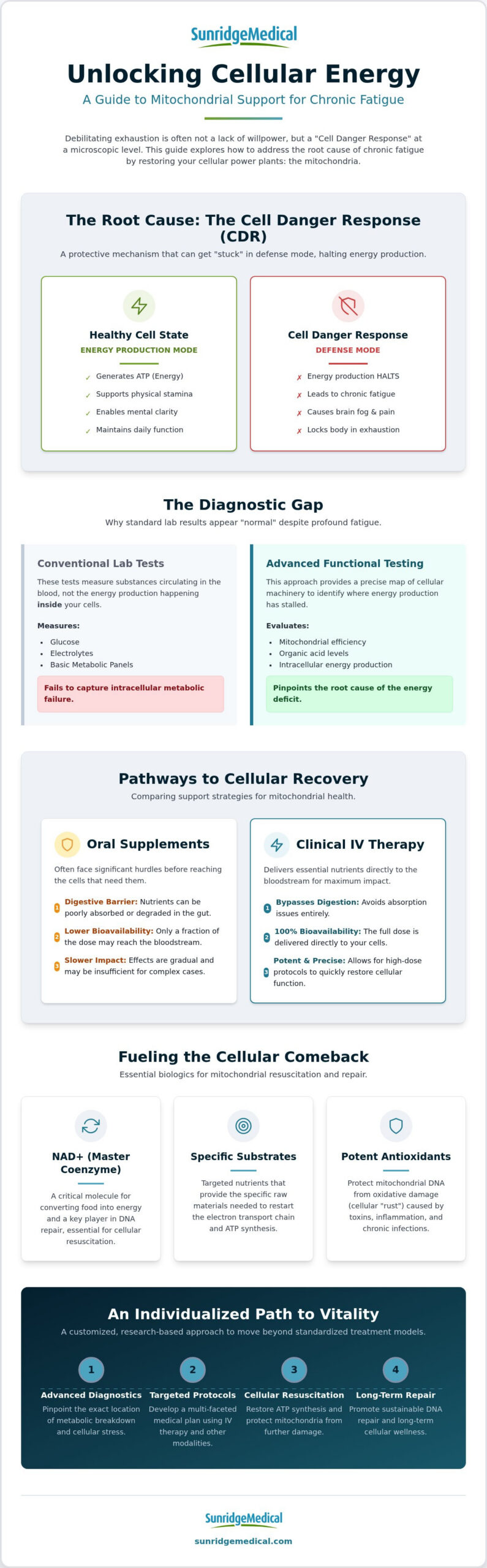
Many patients feel dismissed when their standard blood panels return within “normal” ranges despite their profound exhaustion. These tests primarily measure substances circulating in the blood, such as glucose or electrolytes, rather than the efficiency of energy production occurring inside the cell. This limitation is particularly evident in this Myalgic Encephalomyelitis/Chronic Fatigue Syndrome Overview, where basic metabolic panels often fail to capture the intracellular metabolic disturbances present. To find answers, we must look toward functional testing that evaluates mitochondrial efficiency and organic acid levels, providing a more precise map of where the cellular machinery has stalled.
Mechanisms of Mitochondrial Failure in Complex Chronic Illness
Understanding why the body’s energy production stalls requires looking beyond simple exhaustion. A primary driver of systemic fatigue is the Cell Danger Response (CDR). This represents a fundamental shift in cellular behavior; it’s a metabolic lockdown designed to protect the organism from perceived threats. When the cell senses a pathogen, toxin, or physical trauma, it prioritizes defense over energy production. While this is useful during acute injury, it becomes catastrophic when the response stays active indefinitely. For patients seeking mitochondrial support for chronic fatigue, the clinical goal is to signal the cell that the danger has passed so it can safely return to energy synthesis.
Environmental toxins and heavy metals, such as mercury, lead, and certain pesticides, function as direct mitochondrial poisons. These substances interfere with the delicate electron transport chain, effectively cutting the power lines of the cell. This interference doesn’t just lower energy levels; it creates a self-perpetuating cycle of inflammation and cellular “rust” that conventional diagnostic tools often overlook. Breaking this cycle requires a sophisticated understanding of how these external triggers impact internal bioenergetics.
Chronic Infections and Cellular Energy
Persistent pathogens don’t just occupy space in the body; they actively drain host resources to fuel their own replication. This creates a massive bioenergetic cost, as the immune system remains in a state of high alert. Experienced Lyme disease specialists recognize that treating the infection is only one part of the journey. You must also address the metabolic wreckage left behind. Restoring the cellular power plants is essential for a complete recovery, as a depleted body cannot maintain a robust immune defense or repair damaged tissues.
Oxidative Stress and Mitochondrial DNA Damage
Mitochondrial DNA (mtDNA) is uniquely vulnerable to damage. Unlike nuclear DNA, it lacks the protective coating of histone proteins, leaving it exposed to free radicals. When oxidative stress remains high, these free radicals degrade the inner mitochondrial membrane, causing the cellular machinery to leak and fail. High-level mitochondrial support for chronic fatigue focuses on neutralizing these reactive oxygen species to allow for DNA repair and membrane stabilization. This process is critical for patients who feel stuck in their recovery. If you’re struggling with these systemic failures, exploring a comprehensive medical evaluation is the first step toward reclaiming your vitality and restoring cellular health.
Comparing Support Strategies: Oral Supplements vs. Clinical IV Therapy
Most patients begin their recovery journey by sourcing high-quality oral supplements. While this is a logical response to exhaustion, individuals with complex chronic conditions frequently encounter the “Digestive Barrier.” In a body already strained by systemic inflammation, the gastrointestinal tract is often compromised, leading to the malabsorption of essential cofactors. When you rely solely on oral mitochondrial support for chronic fatigue, you’re essentially asking a malfunctioning system to facilitate its own repair, which often leads to stalled progress and wasted resources.
The Limitations of Standard Nutritional Support
Oral administration is inherently limited by first-pass metabolism in the liver. This physiological process filters out a significant percentage of active ingredients before they can enter the systemic circulation. For many, high-dose oral vitamins result in acute gastrointestinal distress without providing any measurable therapeutic benefit to the cells. This reality highlights the importance of integrative medicine for chronic illness. By bypassing these digestive hurdles, clinicians ensure that the specific nutrients required for cellular respiration are delivered directly to the tissues that need them most.
The Clinical Advantage of Intravenous Protocols
Intravenous delivery provides a decisive clinical advantage through 100% bioavailability. By introducing critical nutrients such as CoQ10, NAD+, and Glutathione directly into the bloodstream, we can establish a powerful concentration gradient. This gradient creates the physiological pressure necessary to drive these vital cofactors into the intracellular space and across the mitochondrial membrane. Achieving this level of therapeutic saturation is impossible through diet or oral capsules alone. These sophisticated, customized infusions are a fundamental component of iv therapy for autoimmune disease, where cellular energy restoration is paramount for recovery.
Safety and efficacy in these complex cases require physician-monitored mitochondrial support for chronic fatigue. This level of professional oversight allows for the continuous adjustment of protocols based on the patient’s evolving metabolic response and specific diagnostic markers. Clinical IV therapy isn’t a packaged solution; it’s a precision medical intervention. By utilizing advanced diagnostics and targeted delivery, we can effectively reset the cellular environment and provide a steady hand for those navigating the difficult path back to systemic vitality.
Essential Nutrients and Biologics for Mitochondrial Resuscitation
Resuscitating stalled mitochondria requires a precise combination of coenzymes, antioxidants, and metabolic catalysts. It’s not enough to simply provide the body with raw materials; the clinical objective is to restore the integrity of the cellular machinery itself. High-level mitochondrial support for chronic fatigue utilizes a multi-faceted approach to address every stage of the energy production cycle. By delivering these biologics in therapeutic concentrations, we can effectively bypass the biochemical “bottlenecks” that keep patients in a state of persistent exhaustion.
The transport system for cellular fuel relies heavily on Coenzyme Q10 (CoQ10) and L-Carnitine. CoQ10 is vital for the electron transport chain, acting as a shuttle for electrons to generate ATP. Simultaneously, L-Carnitine transports long-chain fatty acids into the mitochondrial matrix to be oxidized for fuel. When these cofactors are deficient, the cell’s ability to burn fat for energy is severely compromised. Supporting these pathways is essential for restoring physical stamina and reducing the muscle pain often associated with metabolic failure.
NAD+ Therapy: The Gold Standard for Cellular Energy
NAD+ (Nicotinamide Adenine Dinucleotide) is the master coenzyme for energy production and DNA repair. It’s a fundamental truth that NAD+ levels decline significantly with age and chronic stress, leaving cells vulnerable to dysfunction. This molecule is necessary for the activation of sirtuins, which are specialized proteins that regulate cellular health and stimulate mitochondrial biogenesis. NAD+ IV therapy acts as a cellular “reboot” for patients with ME/CFS. By restoring these levels, we provide the cell with the tools it needs to repair damaged DNA and create new, healthy mitochondria.
Synergistic Antioxidant Protocols
Protecting the mitochondria from oxidative stress is just as important as fueling them. Glutathione and Alpha-Lipoic Acid serve as the primary mitochondrial antioxidants, but they don’t work in isolation. Glutathione must be paired with specific cofactors, such as selenium and B-complex vitamins, for maximum effect. Alpha-Lipoic Acid plays a unique role in recycling other antioxidants, ensuring that the cellular environment remains protected against “intracellular rust.” These biologics protect the mitochondria during the detoxification process, preventing the inflammatory flares that often hinder recovery.
Magnesium and B-complex vitamins serve as the essential catalysts for the Krebs Cycle, the series of chemical reactions used by all aerobic organisms to generate energy. Without these catalysts, even the most advanced mitochondrial support for chronic fatigue will fail to yield results. Every step of ATP synthesis requires specific enzyme activations that are magnesium-dependent. If you’re ready to move beyond basic vitamins and explore a sophisticated, research-based plan, you can request a clinical consultation to begin your journey toward restoration.
The Sunridge Approach: Individualized Clinical Support for Fatigue Recovery
Sunridge Medical doesn’t view exhaustion as a symptom to be suppressed. Instead, we see it as a significant physiological signal of systemic failure. Our medical team conducts comprehensive physician evaluations to identify the specific root causes of your energy deficit. This process involves a strategic integration of conventional diagnostics with research-based alternative protocols. By moving beyond the surface, we can determine whether your condition is driven by chronic infection, toxic burden, or a metabolic lockdown. We prioritize a deep understanding of your unique biochemistry to ensure that every intervention is purposeful and precise.
Ongoing monitoring is a cornerstone of our methodology. We don’t simply initiate a protocol and wait for results. Our physicians continuously adjust your treatment plan based on your cellular response and clinical progress. This dynamic approach allows us to pivot when necessary, ensuring that your body receives the exact cofactors it needs at each stage of the recovery process. This level of specialized attention is what distinguishes our mitochondrial support for chronic fatigue from standardized, “packaged” care models.
Precision Diagnostics and Individualized Care
Standard treatments often fail because they treat all fatigue the same way. At Sunridge, we reject “one-size-fits-all” models in favor of targeted medical strategies. We evaluate neurologic and environmental factors alongside mitochondrial health to build a complete picture of your internal terrain. This multi-faceted approach is essential for long-term recovery. We frequently customize treatment plans to include hormone therapy for autoimmune disease or specialized environmental illness protocols. By addressing these intersecting systems, we provide the most effective mitochondrial support for chronic fatigue available.
Your Path to Recovery
Navigating a complex health journey requires a dedicated advocate. The patient-advocate model at Sunridge Medical ensures that you’re never left to interpret your progress alone. During a comprehensive medical consultation, our physicians listen to your history and review advanced markers of cellular function. We explain the science behind your symptoms and offer a clear, structured path forward. This transparency helps build a foundation of trust and credibility, which is vital for patients who have felt dismissed by traditional systems.
Since 2003, Sunridge Medical has acted as a scientific guide for those seeking a more comprehensive lens on health. We carry an air of exclusivity and premiere status because we offer care that goes beyond the ordinary. Taking the first step toward restoring your quality of life can feel daunting, but you don’t have to do it alone. If you’re ready to experience a medical-grade treatment plan that prioritizes your restoration, we invite you to reach out. You can contact our team at 1-800-923-7878 to discuss your unique needs and begin your clinical path to recovery.
Reclaiming Your Vitality Through Cellular Restoration
Restoring your energy requires a move away from standardized care toward a precise understanding of your cellular mechanics. We’ve explored how the “Cell Danger Response” can lock your body in a state of metabolic defense, and why advanced mitochondrial support for chronic fatigue is essential to break this cycle. By utilizing specialized IV protocols that bypass the digestive barrier, you can deliver the master coenzymes and antioxidants your cells need to resume efficient ATP production. This isn’t about temporary stimulation; it’s about repairing the foundational power plants of your body.
Since 2003, Sunridge Medical has served as a pioneering expert for those navigating complex chronic diseases. Our advanced clinical IV therapy center provides individualized, research-based protocols that address the specific triggers of your exhaustion. You don’t have to accept a life of debilitating fatigue or settle for “normal” lab results that don’t reflect your reality. We invite you to contact Sunridge Medical at 1-800-923-7878 to schedule your comprehensive medical consultation. Your journey toward systemic energy and a restored quality of life begins with a single, decisive step forward.
Frequently Asked Questions
What is mitochondrial support for chronic fatigue?
Mitochondrial support involves clinical interventions designed to restore the efficiency of cellular energy production by providing the cofactors required for ATP synthesis. Unlike basic energy boosters, this approach focuses on repairing the organelle’s structure and protecting its DNA from oxidative damage. At Sunridge Medical, this involves medical-grade protocols that address the underlying “cell danger response” to help patients move beyond persistent exhaustion and reclaim their functional vitality through targeted metabolic resuscitation and individualized care.
Can mitochondrial damage be reversed in chronic fatigue patients?
Mitochondrial function can often be restored through targeted clinical protocols that stimulate mitochondrial biogenesis and repair the inner mitochondrial membrane. By neutralizing intracellular oxidative stress and providing essential precursors like NAD+, the body can replace damaged organelles with healthy ones. This process requires a precise medical strategy that addresses the root cause of the dysfunction, such as chronic infections or environmental toxins, rather than just managing symptoms through standardized or superficial care models.
How long does it take to see results from mitochondrial therapy?
Most patients begin to notice improvements in cognitive clarity and physical stamina within three to six weeks of initiating a customized protocol. However, full cellular resuscitation is a gradual process that depends on the severity of the initial dysfunction and the patient’s overall health profile. Because mitochondrial support for chronic fatigue involves repairing complex biological systems, consistent adherence to physician-monitored therapy is essential for achieving long-term systemic vitality and preventing the relapses often seen with standardized treatments.
Is NAD+ therapy better than taking CoQ10 supplements?
NAD+ and CoQ10 serve different but complementary roles in cellular respiration, making them most effective when used together in a synergistic protocol. NAD+ acts as the master coenzyme for energy production and DNA repair, while CoQ10 facilitates the transport of electrons within the mitochondrial membrane. While oral CoQ10 is common, clinical NAD+ IV therapy often provides more immediate results for complex cases by bypassing the digestive barriers that limit oral supplement bioavailability in compromised patients.
What are the symptoms of mitochondrial dysfunction?
The hallmark symptoms include persistent exhaustion that doesn’t improve with rest, cognitive impairment or “brain fog,” and post-exertional malaise. Patients may also experience chronic muscle pain, headaches, and sensitivity to environmental triggers. These symptoms occur because the cells lack the ATP necessary to power the brain, nervous system, and muscles effectively. When these systems fail to meet metabolic demands, the body enters a state of systemic energy failure that requires advanced clinical intervention to resolve.
Are there specific tests to diagnose mitochondrial failure?
Specialized functional testing identifies cellular energy deficits that standard blood panels often miss. These diagnostics may include organic acid testing to evaluate Krebs Cycle efficiency, ATP profile assessments, and markers for oxidative stress. At Sunridge, we utilize these advanced diagnostics to map the specific metabolic blocks in your energy production pathway. This precision allows us to develop a highly individualized treatment plan that targets your unique cellular needs, ensuring every intervention is based on concrete medical data.
Is mitochondrial support safe for patients with autoimmune diseases?
Targeted mitochondrial support for chronic fatigue is not only safe but often essential for patients managing autoimmune conditions. Restoring cellular energy helps stabilize the immune response and provides the body with the resources needed for tissue repair. However, because the immune system is highly sensitive, these protocols must be customized and monitored by a physician. This oversight ensures nutrient delivery supports recovery without triggering inflammatory flares or overstimulating an already compromised immune system during the healing process.
How does IV therapy help with brain fog and exhaustion?
IV therapy addresses brain fog by delivering high concentrations of NAD+, glutathione, and essential B-vitamins directly into the bloodstream for 100% bioavailability. This delivery method establishes a concentration gradient that drives these nutrients into the brain’s cells, bypassing the blood-brain barrier more effectively than oral supplements. By rapidly restoring ATP levels and neutralizing oxidative stress in the central nervous system, patients often experience significant improvements in mental clarity and overall stamina during their recovery journey.