


What if the persistent burning and numbness in your extremities aren’t inevitable consequences of aging or illness, but rather a biological cry for targeted cellular intervention? For many, a diagnosis of nerve damage feels like a life sentence of restricted mobility and reliance on pharmaceuticals that often carry heavy side effects. You’ve likely been told that your condition is permanent, leaving you to navigate a world where the only goal is to dull the pain rather than restore the function you’ve lost.
We understand the frustration of feeling overlooked by traditional systems that focus on management rather than recovery. This guide explores advanced, physician-led natural treatments for peripheral neuropathy that move beyond temporary relief to address the mitochondrial and vascular root causes of nerve degeneration. Since approximately 50 percent of individuals with diabetes will eventually face these challenges, it’s vital to move beyond standard care toward protocols that prioritize actual cellular repair. We’ll preview how specialized IV therapies and research-based integrative methodologies can help you reclaim your balance, restore sensation in your feet and hands, and find a structured path toward lasting neuropathic recovery through the science of nerve resuscitation.
Key Takeaways
- Understand the “dying back” phenomenon and why treating the clinical failure of the peripheral nervous system is the first step toward restoration.
- Explore the most effective natural treatments for peripheral neuropathy, including the “Nerve Repair Trio” of micronutrients designed to support mitochondrial function and structural repair.
- Learn why specialized IV and oxidative therapies are necessary for bypassing digestive malabsorption to deliver high-dose nutrients directly to damaged nerve tissues.
- Discover how identifying environmental drivers or underlying infections, such as Lyme disease, can resolve the biological root causes of persistent neuropathic pain.
- See how an individualized, physician-developed protocol moves beyond temporary symptom masking toward a comprehensive strategy for nerve regeneration and wellness.
The Biological Pathogenesis of Peripheral Neuropathy
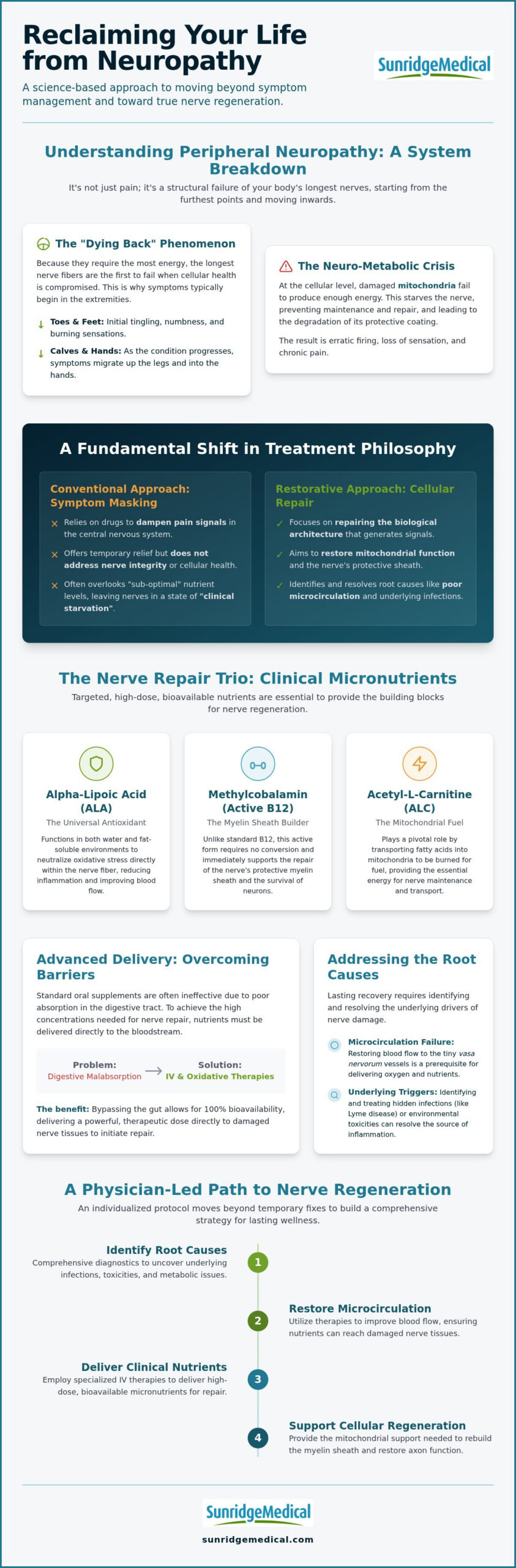
Peripheral Neuropathy represents a profound clinical failure of the peripheral nervous system to maintain the integrity of its signaling pathways. It isn’t just a collection of symptoms; it’s a structural breakdown. This failure often follows a specific pattern known as the “dying back” phenomenon. Because the longest nerve fibers in the body require the most energy to maintain, they’re the first to suffer when the cellular environment becomes compromised. This is why tingling and numbness typically begin in the toes and feet before migrating toward the calves and hands. While standard care focuses on suppressing these signals, true recovery requires a shift toward biological restoration.
The “neuro-metabolic crisis” is a state where damaged mitochondria fail to produce the cellular energy required for axonal transport and structural maintenance, effectively starving the nerve of its ability to heal. When this crisis goes unaddressed, the nerve’s protective coating begins to degrade, leading to the erratic firing and loss of sensation that define the patient experience.
Why Conventional Treatments Often Fall Short
Most standard medical interventions rely on pharmaceutical agents designed to dampen the central nervous system’s perception of pain. These drugs might offer temporary relief, but they don’t address the physical integrity of the nerve sheath or the health of the axon itself. There is a fundamental difference between numbing a signal and repairing the biological architecture that generates it. Furthermore, conventional blood panels often categorize nutrient levels as “normal” even when they’re sub-optimal for nerve regeneration. This leaves many patients in a state of “clinical starvation” where their bodies lack the precise concentrations of micronutrients required to initiate repair.
The Role of Microcirculation in Nerve Health
Nerves depend on a specialized network of tiny blood vessels called the vasa nervorum. These vessels deliver the oxygen and glucose essential for nerve survival. When chronic inflammation or metabolic stress constricts these micro-vessels, the nerves enter a state of chronic hypoxia. Effective natural treatments for peripheral neuropathy must prioritize the restoration of this microcirculation. Without adequate blood flow, even the most advanced clinical nutrients cannot reach the damaged tissues. Improving vascular health isn’t just a side benefit; it’s a prerequisite for any protocol aiming for true nerve resuscitation. By focusing on the intersection of vascular delivery and mitochondrial energy, we can move beyond symptom management toward a more comprehensive lens of well-being.
Clinical Micronutrients for Nerve Structural Repair
While the biological breakdown of nerve fibers is complex, the path to restoration begins with precise biochemical support. Effective natural treatments for peripheral neuropathy require more than general wellness supplements. They demand clinical-grade micronutrients in specific, bioavailable forms that can penetrate the blood-nerve barrier. For instance, many standard supplements use Cyanocobalamin (B12), which requires a multi-step conversion process in the liver. We prioritize Methylcobalamin because it’s already in its active state, allowing it to immediately facilitate the repair of the myelin sheath and support the survival of existing neurons.
Alpha-Lipoic Acid: The Universal Antioxidant
Alpha-Lipoic Acid (ALA) is often termed the “universal antioxidant” because it functions in both water and fat-soluble environments. This unique property allows it to neutralize oxidative stress directly within the nerve fiber itself. Clinical studies, many of which are highlighted in this Mayo Clinic on Neuropathy Treatments summary, demonstrate that ALA improves nerve conduction velocity and increases endoneurial blood flow. By reducing the inflammatory load, ALA helps reverse the cellular distress discussed previously, providing the nerve with the biological environment necessary to begin structural repair. It’s particularly effective for those suffering from diabetic neuropathy, though its benefits extend to toxic and idiopathic cases as well.
Acetyl-L-Carnitine and Nerve Growth Factor
Acetyl-L-Carnitine (ALC) plays a pivotal role in mitochondrial energy production by transporting fatty acids into the cells to be burned as fuel. This energy is essential for axonal transport, the vital process by which a nerve cell moves proteins and nutrients along its entire length. Beyond energy, ALC acts as a potent stimulator of Nerve Growth Factor (NGF). This specific protein is critical for the survival and regeneration of sensory neurons. When combined with Benfotiamine, a fat-soluble form of Vitamin B1, ALC creates a synergistic environment that protects the myelin sheath from the damaging effects of high blood sugar and environmental toxins.
Achieving meaningful therapeutic outcomes depends entirely on precision dosage and clinical purity. Standard retail products often fall short of the concentrations required to induce actual structural change in the peripheral nervous system. Our neurologic condition treatment protocols ensure that these micronutrients are administered at levels capable of resuscitating damaged tissues. This targeted approach represents a departure from standardized care, offering a scientific guide for those seeking to move beyond temporary symptom suppression toward genuine restoration.
Advanced Clinical Protocols: IV and Oxidative Therapies
While high-quality oral supplements provide a foundation for nerve support, many patients with advanced symptoms suffer from compromised digestive absorption. This clinical barrier often prevents therapeutic levels of micronutrients from ever reaching the damaged peripheral nerves. Intravenous (IV) administration solves this by delivering nutrients directly into the systemic circulation; it ensures total bioavailability and creates the saturation effect required to initiate structural repair. This concentration is vital for natural treatments for peripheral neuropathy to move from management to actual recovery. It allows for tissue concentrations that oral dosing simply cannot achieve, providing a powerful intervention for those who’ve seen little progress with standard care.
These specialized protocols are central to integrative medicine for chronic illness. Rather than offering standardized packages, these infusions are tailored to the individual’s specific metabolic needs and toxicity levels. This level of precision is what differentiates a clinical protocol from basic home management. It’s a methodical, research-based approach that prioritizes the restoration of well-being through a more comprehensive lens than standard practices.
Intravenous Nutritional Infusions
We utilize high-dose Vitamin C not just for immune support, but for its role in collagen synthesis and the protection of the delicate nerve sheath. This is paired with Glutathione, the body’s master antioxidant, to detoxify the nervous system and neutralize the oxidative stress that drives nerve death. Every protocol begins with a comprehensive physician-led evaluation. This ensures the infusion supports the patient’s unique biological landscape, moving beyond generic care toward a targeted and multi-faceted methodology. It’s a sophisticated way to deliver the high-dose nutrients directly to damaged tissues, which is a cornerstone of effective natural treatments for peripheral neuropathy.
Oxidative Medicine and Cellular Oxygenation
Oxidative therapies serve as a catalyst for cellular resuscitation. These treatments improve oxygen delivery to ischemic nerves, directly addressing the microcirculation failures discussed in earlier sections. By introducing controlled oxidative stress, these therapies reboot mitochondrial function and modulate the immune response. The clinical history of oxidative medicine in neurologic care is long and reliable, offering a sophisticated path for patients navigating complex health journeys. It’s a personality rooted in thoroughness, acting as a steady hand for those seeking to stimulate the body’s natural repair mechanisms at a cellular level.
Identifying and Addressing Root Causes of Nerve Damage
Many patients spend years managing symptoms without ever discovering why their nerves began to fail. While metabolic issues like diabetes are well-documented, a significant portion of neuropathy cases are classified as idiopathic. This label often indicates that the underlying biological driver simply hasn’t been uncovered yet. To achieve lasting progress, we must look toward environmental and biological triggers that standard screenings frequently miss. Effective natural treatments for peripheral neuropathy require a diagnostic depth that goes beyond the surface, identifying the specific stressors that prevent the body’s natural repair mechanisms from functioning.
We also recognize the critical role of hormone therapy for autoimmune disease as a vital component of neuro-protection. Optimizing hormones like progesterone and testosterone can support the regeneration of the myelin sheath. It also helps dampen the erratic autoimmune responses that often target nerve fibers in complex chronic cases. By stabilizing this internal environment, we create the necessary foundation for the more advanced repair protocols to take hold.
Chronic Infections and Neuro-Inflammation
The work of lyme disease specialists has revealed a profound intersection between chronic infection and neurologic symptoms. Borrelia burgdorferi and its co-infections can directly infiltrate nerve tissue. This causes persistent neuro-inflammation that mimics standard neuropathy but fails to respond to conventional pain medications. Similarly, high viral loads from pathogens like Epstein-Barr (EBV) or the Shingles virus can trigger debilitating nerve pain. Our approach involves identifying these hidden infections and utilizing targeted protocols to reduce the inflammatory burden on the nervous system. This is a prerequisite for any meaningful recovery.
Environmental Toxicity and Detoxification
Beyond infections, the modern world presents a constant barrage of neurotoxins. Heavy metals like mercury and lead, along with mycotoxins from mold exposure, have a high affinity for fatty tissues like the myelin sheath. If these toxins aren’t cleared, the body’s attempts at repair are constantly undermined. Clinical detoxification isn’t about a simple “cleanse”; it’s a medically supervised process of removing these barriers to recovery. When the toxic burden is lifted, the natural treatments for peripheral neuropathy discussed earlier, such as high-dose IV nutrients, can finally reach the tissues they are meant to heal.
If you’re ready to move beyond symptom management and uncover the biological drivers of your pain, our team is here to provide a clear, structured path forward. Contact us today to schedule a comprehensive physician evaluation and begin your journey toward genuine restoration.
The Sunridge Approach to Neuropathy Recovery
Sunridge Medical operates at the leading edge of medical research, positioning itself as a dedicated advocate for those navigating complex health journeys. Our philosophy represents a departure from standardized care, opting instead for a sophisticated blend of clinical authority and compassionate optimism. We don’t settle for the status quo of symptom management; we seek more effective ways to help individuals achieve genuine restoration. By viewing the body through a more comprehensive lens, we’re able to implement natural treatments for peripheral neuropathy that prioritize the biological root causes of nerve damage. This methodology is rooted in reliability and thoroughness, acting as a steady hand for patients who have felt overlooked by traditional systems.
The same rigorous principles of integrative cancer treatment by stage apply to our neurologic protocols. Just as oncological care requires precise, individualized targeting based on the stage of the condition, neuropathy recovery demands a customized biological response tailored to the level of nerve degradation. Every patient undergoes a comprehensive physician evaluation process. This assessment doesn’t just catalog symptoms; it investigates the underlying mechanisms, from metabolic failures to hidden infections, ensuring that the resulting protocol is as unique as the individual’s biological landscape.
Designing Your Individualized Care Plan
A successful recovery plan requires the synergy of multiple advanced disciplines. We combine conventional diagnostics with advanced alternative testing to map out a clear, structured path forward. By integrating specialized IV therapies, targeted nutrition, and biological treatments, we create a multi-faceted methodology that supports the restoration of the myelin sheath. Our focus remains steadfast on the restoration of quality of life and functional mobility. We believe that progress is possible when we move beyond “packaged” care and embrace a custom-tailored strategy that evolves alongside the patient’s recovery journey.
Next Steps: Pursuing Advanced Neurologic Support
Nerve regeneration is a journey of precision medicine that requires moving beyond basic home remedies toward clinical-grade care. While lifestyle adjustments are beneficial, they often lack the “saturation effect” needed to trigger actual structural repair in damaged tissues. We invite you to experience a level of care that goes beyond the ordinary. Our team provides personalized support through toll-free consultations, helping you understand how our specialized protocols can address your specific needs. It’s time to transition from a state of frustration to one of calm determination. With the right scientific guide, the restoration of well-being isn’t just a hope; it’s a methodical, research-based objective.
Embracing a New Standard for Neuropathic Recovery
The path to nerve restoration begins with a fundamental shift in perspective. Instead of merely dampening pain signals, the most effective natural treatments for peripheral neuropathy prioritize resuscitating the underlying biological systems. We’ve explored how addressing mitochondrial failure and identifying hidden drivers like chronic infections or environmental toxicity can change the trajectory of your health. Recovery isn’t a matter of chance. It’s the result of a methodical, research-based approach that delivers high-dose nutrients directly to damaged tissues while clearing the barriers to healing.
Sunridge Medical provides a sanctuary for those seeking a level of care that goes beyond the ordinary. Our physician-led evaluations and individualized care plans are designed to address the unique complexities of your condition through advanced clinical protocols and ongoing patient monitoring. You don’t have to navigate this journey alone. Contact Sunridge Medical today to explore our advanced clinical protocols for peripheral neuropathy. We remain dedicated to your progress. We’re here to offer a steady hand as you reclaim your mobility and restore your well-being.
Frequently Asked Questions
Can nerves actually regenerate through natural treatments?
Peripheral nerves possess a unique capacity for repair if the cellular environment is properly optimized. Unlike the central nervous system, peripheral axons can regrow when provided with sufficient mitochondrial energy and vascular support. This process requires resuscitating the nerve through high-dose nutrients that facilitate myelin sheath restoration. Our clinical protocols focus on this regenerative potential by addressing the metabolic failures that previously halted the body’s natural healing mechanisms.
How long does it take to see results from natural neuropathy protocols?
The timeline for nerve repair varies based on the extent of the damage and your biological resilience. Most patients begin to notice subtle shifts in sensation or a reduction in burning within the first few weeks of intensive clinical care. Because nerve fibers grow at a rate of approximately one millimeter per day, achieving structural restoration is a methodical process. Consistency with advanced natural treatments for peripheral neuropathy is essential for long-term functional improvement.
Are high-dose IV vitamins safe for patients with peripheral neuropathy?
High-dose IV infusions are safe and highly effective when administered under expert physician supervision. By delivering nutrients directly into the bloodstream, we bypass the digestive limitations that often prevent oral supplements from reaching therapeutic levels. This method allows for the saturation effect necessary to trigger cellular repair. Every protocol is customized after a comprehensive evaluation to ensure the concentrations align with the patient’s specific metabolic profile and tolerance levels.
Is Alpha-Lipoic Acid better than standard neuropathy medications?
Alpha-Lipoic Acid (ALA) serves a fundamentally different purpose than standard neuropathic drugs. While conventional medications often focus on numbing pain signals, ALA works to reduce oxidative stress and improve endoneurial blood flow. Clinical evidence suggests that ALA can improve nerve conduction velocity, addressing the structural failure rather than just masking the symptoms. For many, this restorative approach offers a more sustainable path toward well-being without the heavy side effects of pharmaceuticals.
Can chronic Lyme disease be the cause of my peripheral neuropathy?
Chronic Lyme disease and its associated co-infections are frequent hidden drivers of idiopathic neuropathy. These pathogens can directly infiltrate nerve tissue, causing persistent neuro-inflammation that mimics other forms of nerve damage. If your symptoms haven’t responded to standard care, identifying an underlying infectious load is a critical step. Our specialized protocols for chronic illness address these infections to lift the inflammatory burden and allow for nerve regeneration to occur.
What is the most effective natural treatment for diabetic neuropathy?
The most effective approach for diabetic neuropathy involves a multi-faceted protocol that combines glycemic control with advanced microcirculation support. We utilize specialized IV infusions containing precise micronutrients to protect the myelin sheath from high-sugar damage. Improving vascular health through oxidative therapies is also vital. These natural treatments for peripheral neuropathy focus on resuscitating the vasa nervorum, ensuring that oxygen and nutrients can finally reach the starved nerve endings.
Does hormone optimization help with nerve pain?
Hormone optimization plays a significant role in neuro-protection and the maintenance of the myelin sheath. Hormones like progesterone and testosterone influence nerve regeneration and help reduce erratic autoimmune responses. When these levels are sub-optimal, the body’s ability to repair damaged axons is severely compromised. Integrating hormone optimization into a neurologic care plan provides a foundational layer of support that enhances the efficacy of other advanced clinical treatments.
Why did my previous natural supplements fail to improve my neuropathy?
Previous attempts often fail because oral supplements frequently lack the clinical-grade purity or the high dosages required for therapeutic outcomes. Many over-the-counter products use poorly absorbed forms of nutrients, such as Cyanocobalamin instead of Methylcobalamin. If the underlying toxic burden or chronic infection isn’t cleared, the nerves remain in a state of clinical starvation. Success requires a sophisticated, physician-led strategy that ensures nutrients actually reach the damaged tissues.