


What if the persistent brain fog and exhaustion you’re experiencing aren’t just a “syndrome” to be managed, but the result of a biological evasion strategy your current treatment isn’t equipped to handle? For many, the standard course of antibiotics feels like a distant memory, yet the symptoms remain as vivid and debilitating as ever. It’s deeply isolating to feel dismissed by conventional practitioners when your body tells you the struggle of overcoming treatment resistant lyme disease is far from over. You deserve a clinical ally who understands that your symptoms are rooted in complex biological realities rather than a permanent, unchangeable condition.
This guide explores the sophisticated mechanisms, such as protective biofilms and antibiotic-tolerant persister cells, that allow pathogens to survive standard care. We recognize that a one-size-fits-all approach often fails when faced with such resilient infections. By shifting the focus toward a research-based, systems-biology perspective, we’ll examine how integrative protocols can dismantle these microbial defenses. You’ll discover a personalized roadmap designed to help eradicate persistent pathogens and restore the cognitive clarity you’ve been searching for through advanced, multi-faceted methodologies.
Key Takeaways
- Understand why conventional short-term antibiotic courses often fail to address chronic infections, shifting the clinical focus from symptom management toward root-cause identification.
- Explore the biological mechanisms, such as persister cells and protective biofilms, that allow pathogens to evade the immune system and standard medical interventions.
- Discover how advanced intravenous and oxidative protocols offer a multi-faceted strategy for overcoming treatment resistant lyme disease when oral medications prove insufficient.
- Identify the critical role that co-infections like Babesia and Bartonella play in driving persistent neurological symptoms and systemic inflammatory responses.
- Learn the importance of a personalized, physician-led recovery roadmap that addresses immune dysfunction and environmental toxic load to restore long-term cognitive and physical function.
Understanding Why Standard Lyme Protocols Often Fail
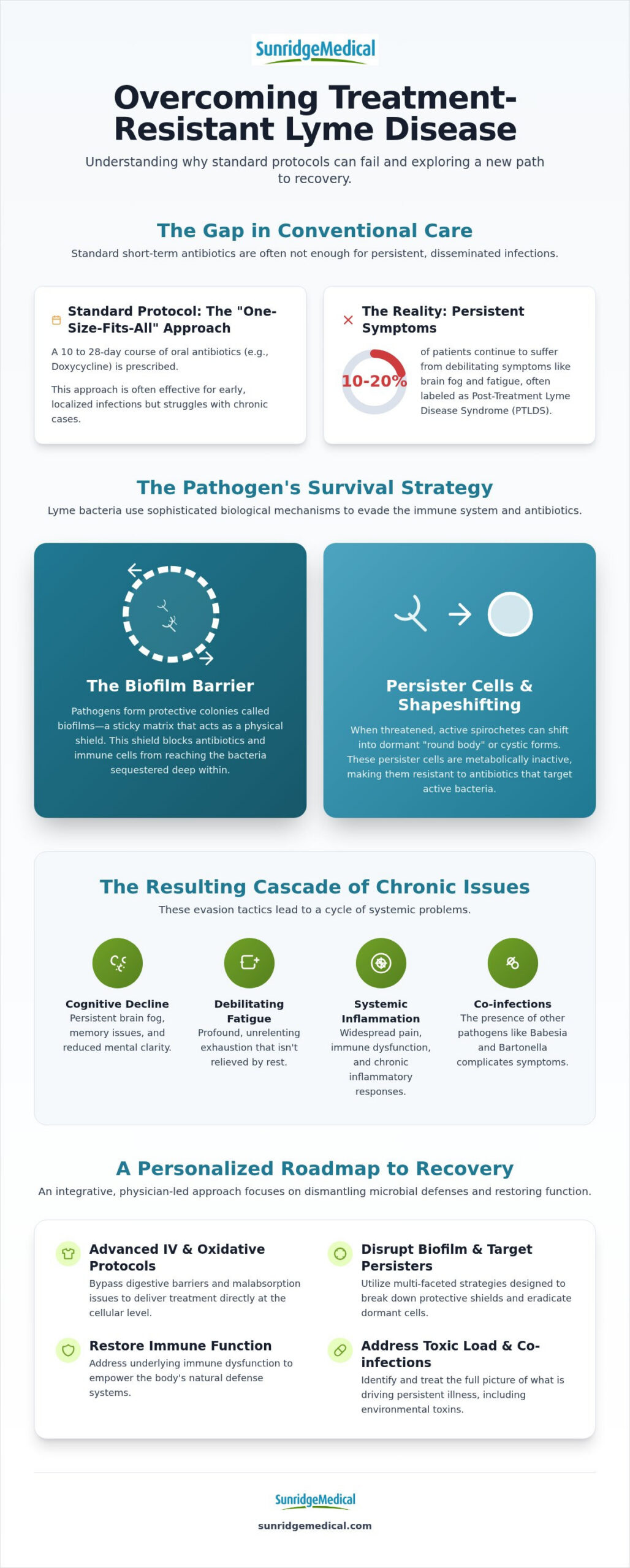
The conventional medical model relies on a standardized 10 to 28-day course of oral antibiotics, typically doxycycline or amoxicillin. While this approach effectively clears early-stage, localized infections for many, it often fails those with disseminated disease. Standard care operates on the assumption that a short-term pharmaceutical intervention is sufficient to eradicate the Borrelia burgdorferi spirochete. For approximately 10% to 20% of patients, however, symptoms like brain fog and fatigue persist long after the prescription ends. This gap in care highlights the urgent need for a more sophisticated clinical perspective.
Conventional systems often label these lingering struggles as Post-Treatment Lyme Disease Syndrome (PTLDS). This term implies the infection is gone and only an “autoimmune ghost” remains. This perspective frequently leaves patients feeling dismissed and stuck in a cycle of symptom management. Emerging research into the mechanisms of persistence suggests a different reality. The pathogen may remain active, sequestered in deep tissues or protected by biological shields. Standard laboratory tests, which rely on antibody detection rather than direct pathogen identification, often yield false negatives in these chronic stages. This creates a diagnostic gap that only a specialized, integrative approach can bridge.
The Failure of One-Size-Fits-Small Protocols
Standardized care often ignores the vast variability in individual immune responses. Oral medications face significant hurdles, including gut malabsorption and the systemic toxic load that many chronic patients carry. When a patient doesn’t respond to the first line of defense, the clinical strategy must shift. Continuing the same oral regimen rarely leads to a breakthrough. Instead, it can lead to further microbiome depletion and systemic strain. Overcoming treatment resistant lyme disease requires moving toward protocols that bypass these digestive barriers and address the infection at a cellular level.
Identifying Clinical Treatment Resistance
Clinical resistance is a complex interplay between pathogen evasion and host dysfunction. Pathogen evasion involves the bacteria changing form to survive, while host dysfunction refers to an immune system too overwhelmed to mount an effective response. Identifying which factor is dominant is the first step toward recovery. In 2026, navigating these complexities requires more than a standard consultation. It demands the expertise of lyme disease specialists who utilize comprehensive physician evaluations. These evaluations look beyond the surface, identifying the specific reasons why previous treatments failed and creating a targeted, multi-faceted path forward.
The Biological Mechanisms of Resistance: Persister Cells and Biofilms
To succeed in overcoming treatment resistant lyme disease, we must first understand the pathogen’s remarkable ability to adapt. Borrelia burgdorferi is not a static bacterium; it is a highly intelligent organism capable of biological shapeshifting. When it senses a hostile environment, such as the presence of standard antibiotics, it can shift from its active spirochete form into “round body” or cystic forms. These morphological changes allow the bacteria to remain viable but protected within the host’s tissues, essentially waiting for the environment to become favorable again. This shape-shifting capability is a primary driver of the relapsing symptoms many patients experience weeks or months after completing a standard course of care.
The Biofilm Barrier
Bacteria often exist in complex, communal structures known as biofilms. These structures are made of an extracellular matrix, a sticky substance that acts as a physical shield against both the immune system and pharmaceutical agents. Standard antibiotics often fail because they cannot penetrate these deep, dense layers to reach the pathogens hiding within. Biofilms are protective colonies that require specialized disruption. Without addressing these barriers, the bacteria remain safely sequestered, causing ongoing systemic inflammation and neurological decline even while the patient is actively taking medication.
Persister Cells and Dormancy
Beyond physical shields, some bacteria utilize a metabolic strategy known as dormancy. These “persister cells” are not genetically resistant to drugs; instead, they simply shut down their metabolic processes. Since most antibiotics work by interfering with active bacterial functions like cell wall synthesis, they’re ineffective against a dormant cell. Once the treatment is withdrawn, these cells can “wake up,” leading to a sudden return of symptoms. Research into a targeted antibiotic for Lyme disease highlights the ongoing scientific effort to find agents that can address these specific challenges without destroying the host’s healthy microbiome.
Effective recovery requires more than just high-dose medications. It necessitates pulse-dosing or multi-vector strategies that catch the bacteria in different phases of their life cycle. By combining biofilm disruptors with targeted biological therapies, we can address the infection from multiple angles simultaneously. If you’re struggling with symptoms that refuse to clear, exploring advanced chronic Lyme disease treatment may provide the specialized focus your recovery requires. This methodical approach ensures that dormant pathogens are reached and addressed, paving the way for a more complete restoration of well-being.
Beyond Antibiotics: Advanced Integrative Therapies for Recovery
When oral antibiotics fail to penetrate the deep-seated biological defenses discussed previously, a more direct clinical route is required. Overcoming treatment resistant lyme disease necessitates a transition from generalized oral regimens to targeted, physician-led interventions. This shift marks the boundary between standard symptom management and a comprehensive strategy aimed at root-cause eradication. By utilizing advanced delivery methods, clinicians can reach sequestered pathogens while simultaneously rebuilding the patient’s physiological resilience.
The Power of Customized IV Protocols
Oral medications are often hindered by poor absorption and the varying health of a patient’s gastrointestinal tract. Intravenous delivery ensures 100% bioavailability, allowing therapeutic agents to enter the bloodstream directly and reach tissues where spirochetes hide. This approach is particularly critical for neurological Lyme cases, where the blood-brain barrier requires precise, individualized dosing to be effective. Beyond pathogen clearance, these protocols incorporate nutritional infusions designed to support mitochondrial health. As the body undergoes the “die-off” process, these infusions provide the essential cellular energy needed to process metabolic waste and reduce systemic inflammation.
Oxidative and Biological Modalities
Oxidative therapies represent a cornerstone of advanced recovery by creating a physiological environment where anaerobic pathogens cannot thrive. By introducing controlled oxidative stress, these treatments disrupt the protective mechanisms of resilient bacteria. These therapies target the pathogen’s metabolic weaknesses by disrupting energy production and cellular integrity without the limitations of traditional pharmaceutical resistance. This methodical approach ensures that even “persister” cells are reached through their metabolic vulnerabilities.
Biological treatments further enhance this process by modulating the host’s immune response. Rather than simply suppressing symptoms, these modalities work to recalibrate an immune system that has been exhausted by chronic infection. This sophisticated integration of conventional science and alternative health medicine offers a clinical path forward for those who have seen little progress with standard care. It’s a multi-faceted strategy that prioritizes the unique biological profile of the individual, ensuring that every protocol is as precise as the condition is complex.
Strategic Support: Addressing Co-infections and Immune Dysfunction
Success in overcoming treatment resistant lyme disease often depends on a clinician’s ability to see the “full picture” of a patient’s health. While Borrelia burgdorferi is the primary focus of most protocols, it’s rarely the sole occupant of a compromised system. The presence of co-infections and environmental toxins can create a synergistic burden that keeps the immune system in a state of perpetual distraction. For many, the reason they remain stuck isn’t a failure of the medication to kill one specific bacterium, but a failure to address the secondary factors that allow the infection to persist.
The Synergistic Effect of Co-infections
A patient’s “toxic load” is another critical variable in chronic recovery. Exposure to environmental factors like mold or heavy metals can trigger systemic inflammation and cytokine storms, effectively overwhelming the body’s natural defenses. This constant inflammatory state often leads to a Th1/Th2 immune imbalance, where the body’s defense mechanisms are misdirected. Recalibrating this balance is essential for achieving long-term remission. Additionally, the chronic stress of long-term illness frequently leads to endocrine exhaustion. Incorporating hormone optimization supports the body’s self-repair mechanisms, providing the physiological foundation necessary for a sustained recovery.
Addressing these complexities requires a level of specialization that goes beyond the ordinary. If you suspect that hidden co-infections or environmental factors are hindering your progress, exploring comprehensive chronic Lyme disease management can help identify and resolve these underlying barriers. By treating the individual as a whole system, we can dismantle the factors that drive resistance and pave a clear path toward restored health.
Personalized Recovery: The Sunridge Medical Approach
Sunridge Medical operates on the principle that complex illness requires a departure from the ordinary. Overcoming treatment resistant lyme disease is a clinical challenge that demands precision and a deep understanding of the patient’s unique biological landscape. Since our founding in 2003, we’ve specialized in research-based alternative medicine to assist those who have reached the limits of conventional care. Our philosophy is rooted in the belief that symptom management is only a temporary measure. Deep biological restoration requires addressing the root causes that allow pathogens to persist, ensuring that the immune system is equipped to maintain long-term stability.
Your Individualized Treatment Roadmap
Every patient’s journey begins with a comprehensive, physician-led evaluation. This is not a standard consultation; it’s an in-depth analysis of your medical history, current symptoms, and previous treatment failures. Our medical team uses this data to develop a multi-faceted protocol tailored specifically to your physiological needs. This data-driven approach allows us to integrate advanced biological treatments with traditional clinical insights. You’re not just a patient in a system. You’re a partner in a collaborative process where a team of specialists works together to monitor your progress and adjust your protocol in real-time. This ongoing monitoring ensures that your care remains as dynamic as the condition we’re addressing.
Taking the Next Step Toward Health
Navigating the transition from standard care to integrative excellence can feel overwhelming, but you don’t have to do it alone. A steady, expert hand is essential when overcoming treatment resistant lyme disease and dealing with the complexities of chronic illness. We provide a sanctuary of specialized attention for those who have felt overlooked or dismissed by traditional medical systems. By moving away from “packaged” or standardized care, we offer a level of customization that is rare in modern medicine. This focus on the individual human experience is what defines the Sunridge approach. If you’re ready to explore a more comprehensive lens for your recovery, scheduling a consultation is the first step toward personalized support. Our team is dedicated to guiding you through every stage of your recovery, building a foundation of trust and clinical reliability.
Empowering Your Path to Biological Restoration
The journey toward recovery from chronic illness is rarely a straight line, but it’s one you don’t have to walk alone. We’ve explored how the biological complexities of biofilms and dormant persister cells create barriers that standard 21-day antibiotic protocols often fail to breach. True progress in overcoming treatment resistant lyme disease begins when we move beyond simple symptom management and address the underlying mechanisms of the infection. By integrating advanced biological treatments with individualized support, we can help you rebuild your physiological foundation and restore the cognitive function you deserve.
Sunridge Medical has been pioneering integrative medicine since 2003, focusing on advanced clinical protocols for treatment-resistant Lyme and other complex chronic diseases. Our approach prioritizes your unique biological profile through individualized care plans that go beyond the ordinary. Ready to move beyond standard protocols? Schedule your comprehensive physician evaluation with Sunridge Medical today. There’s a way forward, and with a dedicated scientific guide by your side, you can reclaim your well-being with confidence and calm determination.
Frequently Asked Questions
What makes Lyme disease ‘treatment resistant’?
Resistance is driven by the pathogen’s ability to shift into dormant cystic forms and create protective biofilms. These biological evasion strategies allow the spirochete to survive standard antibiotic courses that only target active, dividing bacteria. Systemic factors like immune exhaustion and environmental toxic load can also hinder the body’s ability to clear the remaining infection. Overcoming treatment resistant lyme disease requires a strategy that addresses these specific microbial defenses rather than relying on standardized oral regimens.
Can chronic Lyme disease be cleared after years of symptoms?
Progress is possible even after years of persistent symptoms by shifting focus toward root-cause eradication and biological restoration. While long-term infections are complex, advanced integrative protocols are designed to reach sequestered pathogens and recalibrate the immune system. Success depends on a multi-faceted approach that identifies hidden barriers like co-infections or heavy metal toxicity. This comprehensive method seeks to restore cellular health and cognitive function through individualized, research-based interventions tailored to the patient’s unique history.
Why do my symptoms flare up after finishing antibiotics?
Symptom flares often occur because standard antibiotics may only suppress the infection without fully eradicating “persister” cells. Once the medication is withdrawn, these dormant bacteria can revert to an active state, leading to a resurgence of neurological and physical symptoms. This relapsing pattern indicates that the initial treatment didn’t address the pathogen’s ability to hide in deep tissues. A more targeted approach is necessary to ensure every phase of the bacterial life cycle is reached and addressed.
How do biofilms interfere with standard Lyme treatments?
Biofilms act as a physical shield, encasing bacterial colonies in a sticky extracellular matrix that standard antibiotics cannot easily penetrate. This barrier prevents medications from reaching the pathogens hiding within, allowing them to remain active despite ongoing treatment. Because oral antibiotics often lack the concentration or specific disruption mechanisms needed to break through these shields, the infection can persist. Effective protocols must include specialized agents designed to dismantle these matrices and expose the bacteria to the body’s immune defenses.
What is the difference between PTLDS and a persistent infection?
Post-Treatment Lyme Disease Syndrome (PTLDS) is a conventional label suggesting symptoms are a residual autoimmune response rather than an active infection. In contrast, a persistent infection involves viable pathogens that have survived treatment through dormancy or sequestering in tissues. Integrative specialists often find that what is labeled as PTLDS is actually a complex, ongoing biological struggle. Identifying the presence of active pathogens is a critical step in overcoming treatment resistant lyme disease and achieving long-term stability.
Are IV therapies more effective than oral antibiotics for Lyme?
Intravenous therapies offer a significant advantage by bypassing the gastrointestinal tract to ensure 100% bioavailability of therapeutic agents. This direct delivery allows for higher concentrations of nutrients and oxidative treatments to reach the bloodstream and deep tissues where spirochetes often hide. For patients with compromised gut health or neurological involvement, IV protocols provide a more precise and potent clinical route. This method ensures the body receives the necessary support to manage inflammation while directly addressing persistent pathogens.
How long does an integrative treatment protocol typically take?
The duration of a protocol varies significantly based on an individual’s toxic load, the presence of co-infections, and the length of time they’ve been ill. Most patients require a steady, methodical approach that spans several months to allow for deep cellular restoration and immune recalibration. Recovery involves more than just pathogen clearance; the timeline must account for rebuilding mitochondrial health and optimizing hormones. Ongoing physician monitoring ensures the protocol is adjusted as the body’s needs change during the recovery process.
Do I need to treat co-infections simultaneously with Lyme?
Addressing co-infections like Babesia or Bartonella is essential because they often drive the severity of chronic symptoms and treatment resistance. These pathogens have distinct biological profiles and require completely different pharmacological or oxidative strategies than Borrelia. If co-infections are ignored, the immune system remains under constant strain, making it difficult to achieve lasting remission. A comprehensive evaluation identifies these synergistic threats, allowing for a coordinated protocol that targets the full spectrum of the infection for better clinical outcomes.