


What if the standard blood panel your doctor ordered is actually masking the true cause of your persistent fatigue or neurological fog? For many individuals navigating unexplained illness, the search for answers feels like an endless loop of inconclusive results and dismissed concerns. Understanding how to test for heavy metal toxicity requires moving beyond basic screenings that only detect recent, acute exposure. At Sunridge Medical, we recognize that your symptoms aren’t just in your head; they’re often hidden deep within your cellular architecture, where standard diagnostics rarely reach.
You deserve a diagnostic path that validates your experience rather than ignoring it. This 2026 clinical guide explores the most sophisticated methods for identifying heavy metal accumulation, shedding light on why standard blood tests often miss the total toxic burden stored in your tissues. We’ll outline a professional framework for detoxification and precise testing protocols designed to uncover the underlying mechanisms of your condition. By the end of this guide, you’ll have a clear, scientific roadmap toward restoring your well-being and reclaiming your health from the weight of environmental toxins.
Key Takeaways
- Identify the distinction between acute exposure and chronic bioaccumulation to understand why standard blood panels often yield false negatives for long-term toxicity.
- Discover the most effective clinical methods for how to test for heavy metal toxicity by comparing the diagnostic windows of blood, urine, and hair analysis.
- Learn how provoked urine testing utilizes chelating agents to “pull” sequestered metals from deep tissues for a more accurate assessment of your total toxic burden.
- Follow a precise preparation protocol involving dietary and supplement adjustments to ensure the analytical validity of your laboratory results.
- Understand the critical synergy between heavy metal accumulation and chronic conditions such as Lyme disease, providing a framework for comprehensive recovery.
The Clinical Necessity of Testing for Heavy Metal Toxicity
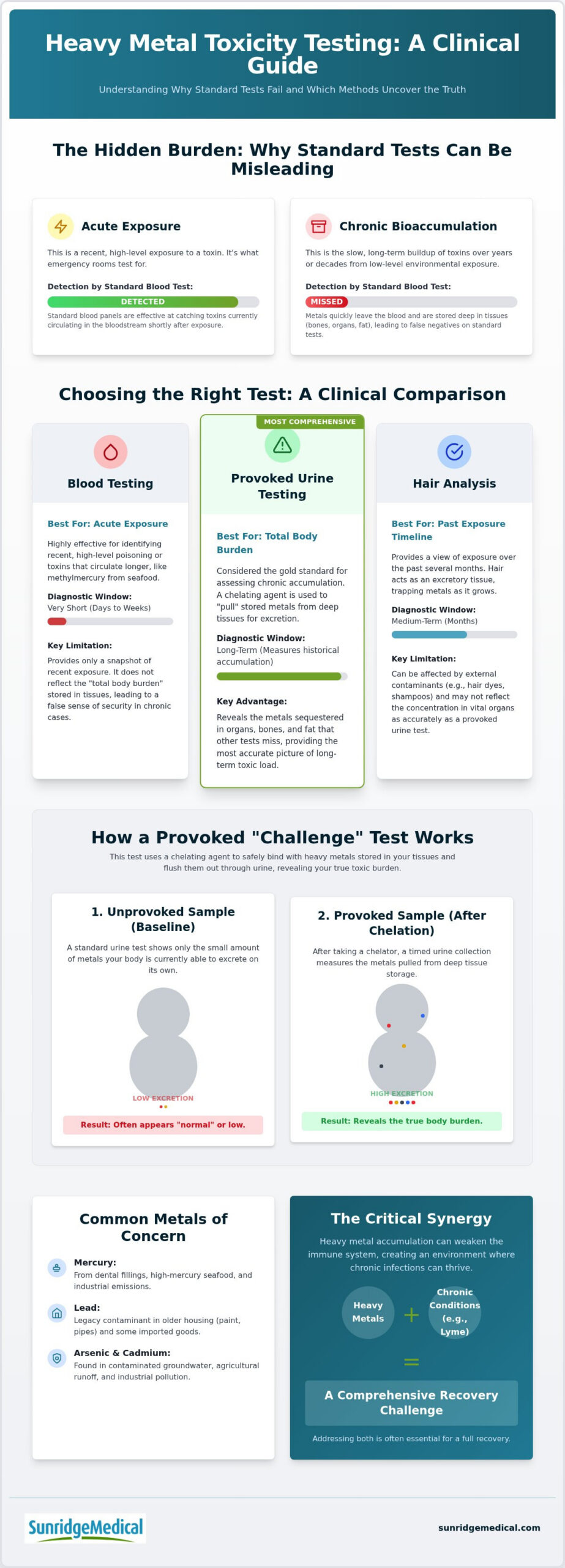
Clinical medicine often views metal toxicity through a narrow lens, focusing primarily on acute, high-level poisoning. While emergency rooms are equipped to handle sudden exposures, the more pervasive threat in 2026 is chronic bioaccumulation. This occurs when low levels of environmental toxins enter the body over decades, slowly overwhelming the natural detoxification pathways. Unlike acute poisoning, chronic toxicity doesn’t always present with a clear, sudden onset of symptoms. Instead, it manifests as a “Total Toxic Burden,” where metals sequester themselves deep within bones, adipose tissue, and vital organs.
This accumulation creates a persistent physiological stressor that can trigger autoimmune responses or fuel chronic inflammation. Conventional “normal” ranges for these elements are often based on broad population averages rather than optimal health standards. For patients pursuing integrative cancer treatment or management for complex neurological conditions, these standard benchmarks are frequently inadequate. We focus on identifying the specific burden that interferes with your cellular function and immune recovery.
Common Metals of Concern in 2026
Modern life continues to present unique exposure risks that require clinical vigilance. Mercury remains a primary concern, often introduced through silver amalgam dental fillings, high-mercury seafood, and specific industrial emissions. For patients evaluating the impact of dental work on their health, Crystal Bright Smile provides restorative expertise to ensure oral health supports systemic well-being. Lead, while heavily regulated, persists as a legacy contaminant in older housing and certain imported consumer goods. Arsenic and cadmium also pose significant risks; arsenic is frequently found in groundwater and agricultural runoff, while cadmium exposure is common among current or former smokers and those living near industrial hubs. Each of these metals interferes with enzymatic processes, leading to the vague, debilitating symptoms many patients experience.
The most significant hurdle in diagnosing chronic illness is the “half-life” problem. Most heavy metals only remain in the bloodstream for a few days before the body moves them into “storage” in the tissues to protect vital circulating systems. Consequently, a standard blood test only captures a snapshot of recent exposure. If you’re investigating how to test for heavy metal toxicity, it’s vital to understand that a “normal” blood result can provide a false sense of security. It doesn’t account for the sequestered tissue burden that may be driving your symptoms. Effective diagnostics must look deeper, utilizing methods that can accurately measure the metals actually trapped within your body’s architecture.
Primary Modalities: Comparing Blood, Urine, and Hair Analysis
Determining how to test for heavy metal toxicity requires a nuanced understanding of how different elements move through the body. While a standard commercial lab might offer a basic screening, specialized laboratories often provide the depth necessary for chronic cases. These facilities utilize advanced mass spectrometry to detect trace levels of 15 to 20 different metals, offering a far more comprehensive profile than a typical hospital panel. Selecting the right clinical path for how to test for heavy metal toxicity ensures that no hidden burdens are overlooked, especially when symptoms are vague or multifaceted.
Blood Testing: Best for Acute Exposure
A Heavy Metal Blood Test is highly effective for identifying recent, high-level exposures or acute poisoning. It remains the most reliable method for detecting organic mercury, such as methylmercury from seafood, which tends to circulate in the serum longer than other forms. However, blood is primarily a transport medium rather than a storage site. Most heavy metals are cleared from the bloodstream within days or weeks, as the body sequesters them into tissues to protect vital systems. Consequently, a blood test may show “normal” levels even when a significant tissue burden exists deep within the organs or bones.
Urine and Hair Analysis: Assessing the Body Burden
To understand the total toxic load, clinicians often turn to urine and hair analysis. A 24-hour urine collection provides a clear view of what the body is currently attempting to excrete through the kidneys. This method is particularly useful for detecting inorganic metals like lead or arsenic that have begun to mobilize from storage. If you’ve been met with “normal” results elsewhere despite feeling unwell, consulting with a specialist can help you determine which modality fits your clinical history and suspected exposure timeline.
Hair mineral analysis serves as a unique chronological record of elemental exposure and metabolic activity over several months. While this method is non-invasive and helpful for tracking long-term trends, it’s susceptible to external contamination from hair products or environmental dust. Therefore, hair results shouldn’t be used in isolation. They must be interpreted by a physician who can correlate these findings with your symptoms and other diagnostic data to create a targeted recovery plan. This multi-modal approach ensures that the “total toxic burden” is accurately identified, providing a foundation for professional detoxification protocols.
The Challenge Test: Understanding Provoked vs. Unprovoked Testing
Standard unprovoked urine or blood tests provide a snapshot of what’s moving through your system at a single moment. However, for those struggling with chronic symptoms, these snapshots often come back frustratingly “normal.” The challenge test, also known as provoked testing, is designed to solve this diagnostic puzzle by identifying the sequestered burden. By using specific chelating agents such as DMSA (dimercaptosuccinic acid), DMPS, or EDTA, clinicians can temporarily “pull” metals out of storage in the bones, fat, and organs. While a standard Heavy Metal Blood Test identifies what is currently in your system, it cannot reveal what your body has tucked away in its deeper architecture.
This method is frequently considered the clinical gold standard for uncovering hidden toxic loads. It bypasses the body’s natural tendency to hide toxins away from the bloodstream to protect vital organs. When you’re determining how to test for heavy metal toxicity, the goal isn’t just to see what’s circulating; it’s to see the total amount of heavy metals that have accumulated over years of exposure. Utilizing different agents allows for precision. EDTA is often preferred for lead, while DMPS or DMSA are frequently utilized for mercury and arsenic. This level of customization is what distinguishes a clinical approach from a standard screening.
How Provocation Works
Biochemical binding agents, or chelators, have a high affinity for heavy metal ions. When administered, they create a stable complex with these sequestered metals, allowing them to be filtered by the kidneys and excreted in the urine. A proper protocol typically involves comparing a baseline, unprovoked urine sample to a second sample collected after the chelating agent is introduced. This comparison reveals “hidden” toxicity that standard tests miss. A significant rise in metal levels after provocation indicates a substantial body burden that may be contributing to chronic neurological or autoimmune symptoms. If you’re investigating how to test for heavy metal toxicity, this comparative data is essential for a true diagnosis.
Safety and Clinical Supervision
Provocation is a powerful diagnostic tool that must be managed with precision. Chelating agents don’t just bind to toxic metals; they can also affect essential minerals like zinc and magnesium. Additionally, the process of mobilizing metals puts a temporary strain on your detoxification organs. Before undergoing a challenge test, it’s vital that your kidney and liver function are thoroughly assessed to ensure your body can safely process the mobilized toxins. These safety checks prevent the redistribution of metals to sensitive areas like the brain.
Because of these complexities, this diagnostic path requires a specialized medical consultation. A professional guide ensures that the dosage of the chelating agent is appropriate for your weight and health status and that you’re properly supported with minerals and hydration throughout the process. This controlled environment transforms a complex diagnostic procedure into a safe, clarifying step toward your recovery.
Preparation and Protocol: How to Ensure Accurate Test Results
Achieving analytical validity when determining how to test for heavy metal toxicity requires meticulous attention to the days leading up to your sample collection. Unlike standard blood draws that may only require simple fasting, heavy metal panels are highly sensitive to dietary noise. This interference often leads to false positives that cause unnecessary alarm or false negatives that leave underlying issues unaddressed. A structured protocol ensures the data your physician receives reflects your body’s true toxic burden rather than your most recent meal. To ensure a valid baseline, patients must strictly avoid all fish, shellfish, and seaweed for 72 hours prior to collection.
The 72-Hour Preparation Checklist
Precision starts three days before the test. You should suspend supplements containing minerals like zinc, selenium, or iodine, as these can compete with or mask the presence of toxic elements in the lab analysis. It’s equally important to avoid high-arsenic foods, particularly certain types of rice and seaweed products. Proper hydration is a critical factor for urine collection accuracy. However, you should stick to filtered water to avoid introducing trace elements sometimes found in municipal tap water sources. Following these steps carefully prevents the common mistake of skewing the “circulating” levels of metals.
Collection Requirements
The integrity of a 24-hour urine sample depends heavily on proper container management. You must keep the collection jug in a cool environment, typically a refrigerator, throughout the entire 24-hour period to prevent chemical degradation of the sample. For spot urine tests, a clean catch technique is required to ensure the sample isn’t contaminated by external environmental factors. If you’re providing a hair sample, the hair must be free of recent chemical treatments, dyes, or medicated shampoos for at least two weeks. These external treatments can artificially inflate mineral readings, making it difficult for a clinician to distinguish between environmental coating and internal bioaccumulation.
When evaluating how to test for heavy metal toxicity, the quality of the sample is just as important as the technology used by the lab. Errors during the collection phase are the most frequent cause of diagnostic confusion. To ensure your testing protocol is handled with the highest degree of clinical precision, contact our team to schedule a comprehensive evaluation. By adhering to a professional timeline, you provide your medical team with the clear, unpolluted data necessary to design an effective detoxification strategy.
Beyond the Test: Integrating Results into a Recovery Plan
Receiving your laboratory report is a pivotal moment, yet the interpretation of these findings requires a level of clinical nuance that standard reference ranges often lack. Conventional labs typically flag results only when they reach life-threatening levels, ignoring the sub-clinical bioaccumulation that frequently drives chronic dysfunction. While the initial goal is learning how to test for heavy metal toxicity, the ultimate objective is translating those results into a functional recovery roadmap. For patients who have navigated the complexities of chronic lyme disease, this distinction is critical. Heavy metals act as a physiological anchor, suppressing the immune system and providing a sanctuary for persistent pathogens. By identifying these sequestered burdens, we can dismantle the barriers preventing your body from responding to treatment.
Transitioning from diagnosis to treatment involves more than just removing a substance; it requires restoring your body’s foundational resilience. Specialized IV therapy plays a central role in this process, delivering targeted nutrients and chelating agents directly into the bloodstream to bypass compromised digestive systems. This method supports the body’s natural elimination pathways while ensuring that essential minerals are replenished in real-time. Understanding how to test for heavy metal toxicity is only the first step; the true work begins with a physician-led protocol that addresses your unique biochemical profile.
Individualized Detoxification Strategies
Generic, “one-size-fits-all” detox kits found in retail stores can be dangerous for complex patients. These products often mobilize metals without ensuring the body’s “drainage pathways”—the liver, kidneys, and lymphatic system—are open and functioning. If these pathways are congested, mobilized toxins can simply redistribute to more sensitive areas, such as the central nervous system. A professional protocol prioritizes the support of these organs before active chelation begins. Furthermore, we maintain a vigilant focus on mineral balance, as the process of removing toxic elements can also deplete essential nutrients like zinc and magnesium if not monitored by a specialist.
Long-Term Environmental Health
A successful recovery plan extends beyond the clinical setting to include a thorough assessment of your daily environment. Identifying and removing the source of ongoing exposure is essential to prevent future bioaccumulation. This might involve lifestyle adjustments such as upgrading water filtration systems, modifying your diet, or even addressing legacy issues in your home or workplace. For individuals managing an autoimmune disease, ongoing monitoring is a necessity. Regular follow-up testing ensures that your toxic burden remains low and that your immune system is no longer under the constant stress of environmental interference, allowing for long-term stability and health.
Reclaiming Your Health Through Diagnostic Precision
Identifying the total toxic burden is more than a diagnostic step; it’s a foundational shift in how we approach chronic illness. You’ve learned that standard screenings often miss sequestered metals and that a structured provocation protocol is essential for clinical accuracy. Mastering the complexities of how to test for heavy metal toxicity allows you to move past dismissed symptoms and toward a targeted, scientific solution.
At Sunridge Medical, we bridge the gap between conventional limits and advanced recovery. Our team utilizes research-based alternative treatments and advanced integrative protocols to provide individualized care for complex chronic diseases. We’re dedicated to acting as your scientific guide, ensuring every aspect of your environmental health is addressed with precision. Schedule a Consultation for Personalized Environmental Illness Testing to begin your path toward restoration. You don’t have to navigate this journey alone. Progress is possible, and a life of renewed vitality is waiting for you.
Frequently Asked Questions
Can a standard blood test detect long-term heavy metal exposure?
Standard blood tests are insufficient for detecting long-term accumulation because they only measure metals currently circulating in the serum. Heavy metals typically leave the bloodstream within a few days or weeks to be sequestered in deeper tissues like fat, bones, and organs. To understand how to test for heavy metal toxicity accurately, clinicians must look beyond these temporary levels and utilize provocative urine testing to reveal the true sequestered burden within the body.
Is hair testing for heavy metals actually accurate?
Hair mineral analysis provides a unique chronological record of metal exposure over several months, making it a valuable tool for tracking long-term trends. However, its accuracy depends on the sample being free from external contaminants like chemical dyes, shampoos, or environmental dust. Because of these variables, we don’t use hair analysis in isolation. It must be interpreted alongside other clinical data to ensure a precise diagnosis of your specific health condition.
What are the most common symptoms that suggest I need heavy metal testing?
Individuals requiring testing often present with vague but debilitating symptoms that standard medicine frequently overlooks. These include persistent fatigue, cognitive “brain fog,” unexplained tremors, and digestive disturbances. You might also experience metallic tastes or heightened sensitivity to environmental chemicals. If you’re struggling with these issues, learning how to test for heavy metal toxicity is a vital step toward identifying the underlying cause of your chronic health challenges and systemic inflammation.
How much does a heavy metal provocation test hurt?
A provocation test is typically not painful, as it generally involves the administration of a chelating agent via a simple IV infusion or oral capsule. The most active part of the test is the subsequent collection of urine over several hours. Some patients may experience mild, temporary “detox” symptoms such as a slight headache or fatigue as metals are mobilized, but these are managed through proper hydration and professional medical supervision during the process.
Do I need a doctor’s order to get tested for heavy metal toxicity?
You should always seek a physician’s guidance when pursuing heavy metal diagnostics. While basic screening kits are available, complex procedures like provoked urine tests require a doctor’s order to ensure clinical safety. Clinics like GP Plus provide the necessary oversight, where a specialist assesses your kidney and liver function before the test and provides the expert interpretation necessary to distinguish between a harmless trace result and a significant toxic burden that requires a highly individualized treatment protocol for recovery.
A high result serves as a roadmap for your recovery rather than a cause for alarm. We use these findings to design a customized detoxification plan that includes specialized IV therapies and nutritional support to safely clear the burden. The focus remains on opening your body’s drainage pathways first to prevent the redistribution of toxins. This structured approach ensures that the elimination process is both effective and supportive of your overall well-being.
Can heavy metals cause ‘brain fog’ or chronic fatigue?
Heavy metals are notorious for crossing the blood-brain barrier and disrupting cellular energy production, which directly contributes to brain fog and chronic exhaustion. Elements like mercury and lead interfere with mitochondrial function, effectively “starving” your brain and muscles of the energy they need to function. Identifying these toxins through precise testing is often the missing link for patients who feel stuck in a cycle of persistent cognitive and physical fatigue despite standard treatments.
How long does it take to get results back from a specialized heavy metal lab?
Results from specialized laboratories generally take between 7 and 14 business days to be processed and returned to the clinic. These facilities use sophisticated mass spectrometry to detect trace elements with extreme precision, which requires more time than a standard hospital blood draw. Once the report arrives, your physician will schedule a detailed consultation to explain the findings and how they integrate into your broader recovery strategy for complex chronic illness.