


You've searched for a glutathione IV dose because a clinic, a friend, or an online protocol gave you a number that sounds reassuringly precise. The problem is that the same milligram amount can mean something very different depending on why glutathione is being used, how quickly it's administered, what it's diluted in, and how your body responds.
A responsible IV plan doesn't begin with “What's the highest dose?” It begins with the indication, medication history, kidney and liver considerations, treatment goals, and the level of evidence supporting the proposed use. The practical discussion of potential treatment effects is separate from the dosing question, which is why patients may also review glutathione IV drip benefits before scheduling a consultation.
Table of Contents
- Why Glutathione IV Dose Is Not a Single Number
- Common Dose Ranges Used in Clinical Practice
- Starting Doses and Titration for General Use
- Oncology-Adjacent and High-Risk Protocols
- Safety, Regulation, and What to Monitor
- Practical Administration and Infusion Variables
- How Sunridge Medical Approaches IV Glutathione in Scottsdale
Why Glutathione IV Dose Is Not a Single Number
A patient may ask for a “standard” glutathione IV dose after seeing one used in a clinic protocol. The practical answer depends first on the indication, then on the route, preparation, infusion speed, and prior tolerance. Cosmetic use, neurologic research, and chemotherapy-adjacent care have produced very different dosing approaches for the same compound.
A Parkinson's disease research regimen should not automatically become a wellness protocol. Likewise, a chemotherapy-adjacent approach should not be copied for general antioxidant support. The number only makes sense within its clinical context.
The variables that change the plan
Four factors usually determine how a clinician sets the dose:
- Indication: Research protocols and expert guidance are built around defined goals, such as studying neurologic symptoms or addressing treatment-related neurotoxicity. Cosmetic and general wellness uses have a different evidence base.
- Route and preparation: A slow IV push and a diluted infusion change how quickly glutathione reaches circulation and how the patient experiences treatment.
- Infusion speed and tolerance: Nausea, flushing, lightheadedness, chest discomfort, or irritation at the infusion site may require slower administration, greater dilution, or a lower dose.
- Medical context: Current chemotherapy, kidney or liver disease, prior reactions, and concurrent medications can make a generic protocol unsuitable.
These variables also explain why published ranges should be read as reference points rather than automatic orders. Administration technique can matter as much as the milligram amount, particularly when a patient is receiving glutathione for the first time.
For general use without a narrow research or oncology protocol, a cautious clinician typically begins near the lower end of a clinically used range, monitors the response, and adjusts only when there is a clear reason. A slower approach gives the team useful information about tolerability before exposure increases.
Patients considering treatment for general support should also separate dosing from claims about outcomes. A review of glutathione IV drip benefits may help explain the proposed rationale, but it does not establish one correct dose for every patient or indication.
Practical rule: Ask which indication supports the dose, how the solution will be administered, and what finding would justify changing it.
Common Dose Ranges Used in Clinical Practice
A dose that fits a cosmetic protocol may be inappropriate for general support or a neurologic indication. Published references therefore offer anchors rather than one universal glutathione IV dose. As noted in the variability discussion above, the 2021 South African guideline describes 500–2,500 mg per session, with 500 mg as a reasonable starting point and 1–2 g commonly used after treatment is established. It also reports administration of up to 6,000 mg, with extreme caution. The guideline links dose selection to administration method, not milligrams alone.
Cosmetic evidence provides a separate anchor. A 2025 peer-reviewed review describes a controlled study using 1,200 mg intravenously twice weekly for 6 weeks. 37.5% of participants receiving glutathione reported lighter skin, compared with 18.7% receiving placebo. This is a historical data point, not confirmation that IV glutathione is an established cosmetic treatment. The review describes the evidence as limited and cosmetic use as controversial. The review and dosing discussion places that regimen within commonly described per-session ranges of 600–2,400 mg.
Published IV Glutathione Dose Anchors
| Indication | Dose per session | Schedule | Duration |
|---|---|---|---|
| General or aesthetic practice anchor | 500–2,500 mg | Varies by response and protocol | Not standardized |
| Cosmetic study described in a 2025 review | 1,200 mg | Twice weekly | 6 weeks |
| Higher-dose historical reports | Up to 6,000 mg | Not standardized | Not established |
The schedule changes the meaning of the number. 1,200 mg twice weekly for 6 weeks is a complete study pattern, whereas 500 mg is a guideline starting point. They answer different clinical questions.
High-dose protocols require a clear indication and close judgment. A larger amount does not establish greater benefit for broad wellness use, and cosmetic treatment should not be presented as a validated standard just because a higher dose appears in historical reports. Practitioners should match the dose anchor to the purpose, evidence, and protocol rather than treating the upper end of a range as the target.
Starting Doses and Titration for General Use
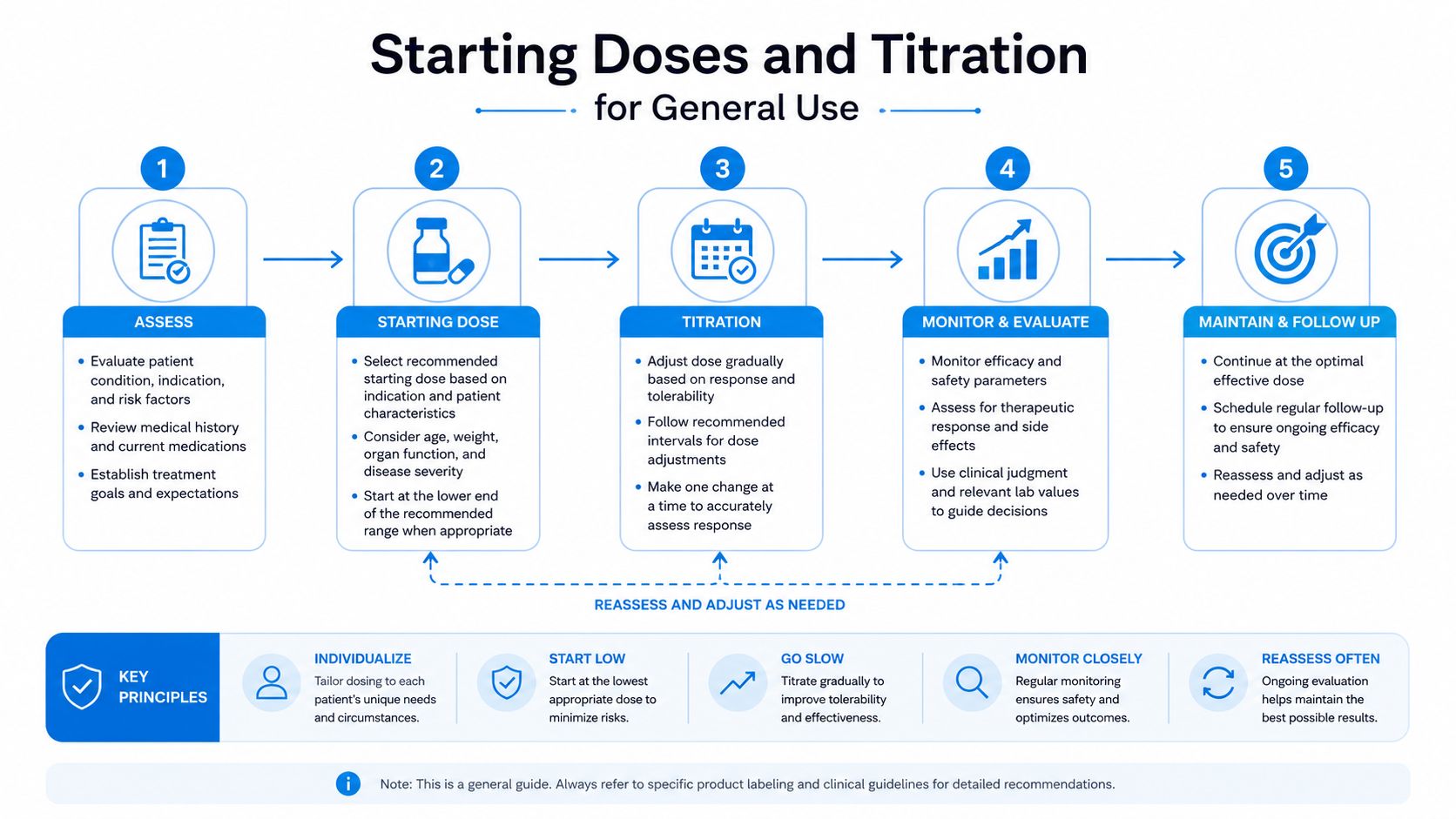
For a patient seeking general supportive care without a narrow indication-specific protocol, practice-oriented references commonly describe starting at 600–1,200 mg per session and adjusting according to tolerance. The first appointment should establish how the patient responds to the preparation and infusion rate, not just test how much medication can be delivered.
The next decision is whether an increase has a defensible purpose. Many clinic protocols describe routine sessions being capped around 2,000–2,400 mg, while the research and practice literature makes clear that there's no approved universal regimen for broad wellness use. A clinically focused dosing summary also highlights that indication, route, and infusion speed matter more than any single number.
A clinically sensible sequence
- Clarify the goal. General wellness, a neurologic condition, cosmetic concerns, and chemotherapy support require different evidence standards.
- Review risk factors. The clinician considers prior infusion reactions, current medications, cancer treatment timing, and organ function.
- Begin conservatively. A starting dose near 600–1,200 mg gives the team an opportunity to evaluate tolerance.
- Adjust deliberately. If the patient tolerates treatment and the clinical rationale supports it, the dose may move upward within the clinic's protocol.
- Set a stopping or maintenance plan. Treatment shouldn't continue indefinitely without reassessing benefit, tolerance, and the original goal.
A Parkinson's disease research regimen provides a useful contrast. Patients received 1,400 mg three times weekly for 4 weeks, a clearly time-bounded research protocol rather than a labeled standard for routine wellness care. Clinicians may use such a regimen as a reference point, but they shouldn't imply that a research schedule automatically applies to every patient with fatigue, aging concerns, or a different neurologic diagnosis.
Maintenance frequency is individualized after the initial treatment period. Some integrative clinics may step down to less frequent sessions, such as weekly or twice-monthly visits, but that schedule should follow the patient's response and broader care plan rather than a universal rule.
Patients and clinicians who are comparing ingredient quality or compounding considerations may also find a research glutathione peptide sourcing resource useful during the due-diligence process. Sourcing information doesn't replace medical evaluation or sterile-compounding verification.
Oncology-Adjacent and High-Risk Protocols
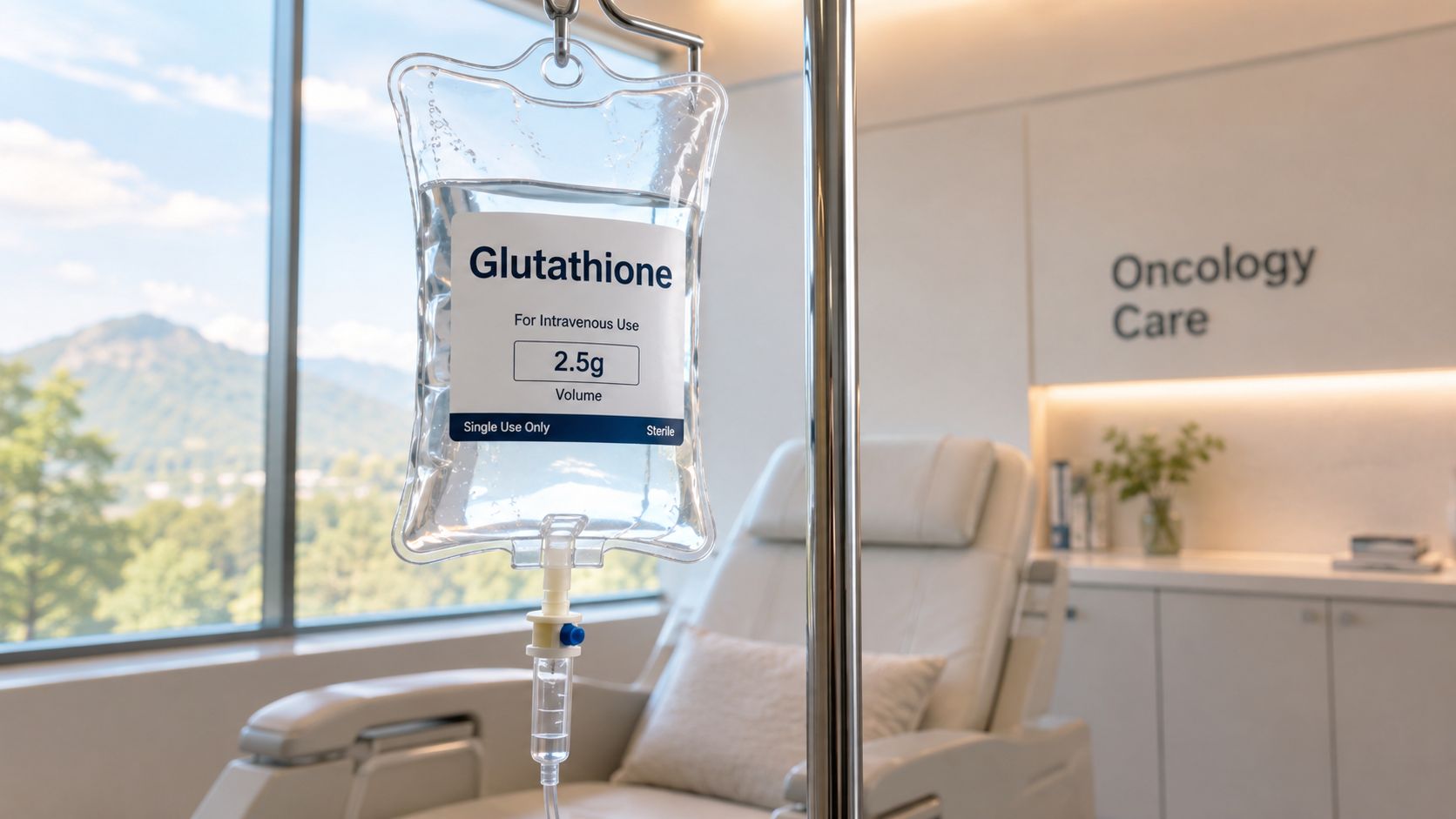
Chemotherapy-adjacent glutathione dosing is a separate category from general antioxidant or cosmetic use. One expert summary describes 1.5 g/m² intravenously over 15 minutes, with a maximum of 2.5 g per dose, administered immediately before platinum-based chemotherapy. The described application is limited to cisplatin or oxaliplatin, not carboplatin. The oncology-focused summary presents this as a structured protocol intended to address treatment-related neurotoxicity, not as a general symptom-relief infusion.
That distinction matters because the dose is calibrated to a narrow clinical situation. Timing relative to chemotherapy, the selected platinum drug, the patient's cancer treatment plan, and oncology oversight all influence whether the protocol is even relevant. Copying the dose for a patient who isn't receiving the same chemotherapy is a category error.
Why extrapolation can be unsafe
Outside a narrow oncology indication, evidence for high-dose IV glutathione is weaker. Doses may be borrowed from small studies, historical protocols, or clinic practice, but those sources don't establish a broadly approved regimen.
A high-risk protocol also requires a high level of monitoring. Reported serious adverse events associated with injectable or unregulated use include anaphylaxis, hepatotoxicity, systemic inflammatory response syndrome, kidney injury, and serious skin reactions. Non-sterile administration adds infection risk. A patient receiving cancer treatment should have glutathione decisions coordinated with the oncology team, especially when timing, drug interactions, and treatment response are relevant.
For broader context on how adjunctive therapies should be evaluated alongside cancer treatment, patients may review this clinical guide to high-dose vitamin C IV for cancer. It's important to keep each therapy's evidence, indication, and safety requirements separate.
The accompanying video provides additional visual context for IV therapy discussions, but it shouldn't be treated as a substitute for individualized oncology or infusion assessment.
Safety, Regulation, and What to Monitor
The regulatory starting point is straightforward. The FDA hasn't approved glutathione for systemic intravenous infusion. The FDA-approved glutathione product is limited to ophthalmic irrigation during eye surgery, and its labeling states that it isn't for injection or IV infusion. The regulatory discussion explains why a clinic should describe systemic IV use as outside that approved product labeling.
Sterility is another central concern. In 2019, adverse events were associated with compounded glutathione contaminated with bacterial endotoxin at levels reported to be up to five times the appropriate limit. The warning concerned the use of dietary-supplement-grade glutathione for sterile injectables, which is not an acceptable substitute for appropriate sterile-compounding controls. The report on the FDA-related warning gives patients a reason to ask where the medication comes from and how the compounding process is controlled.
Questions to ask before treatment
- What is the indication? Ask whether the proposed use is established, off-label, investigational, or primarily based on clinic experience.
- Where is the product compounded? The clinic should be able to explain its sterile sourcing and quality-control process.
- How will the infusion be delivered? Dose, dilution, and administration speed should be specified before consent.
- What will be monitored? A responsible setting should be prepared to recognize and respond to serious reactions.
- How will my other care be coordinated? This matters especially for chemotherapy, kidney disease, liver disease, or complex medication regimens.
Patients sometimes compare IV treatments with other adjunctive options, including hyperbaric oxygen therapy. A practical overview of the risks and benefits of HBOT can help frame a broader discussion about how route, setting, and monitoring affect treatment decisions.
Practical Administration and Infusion Variables
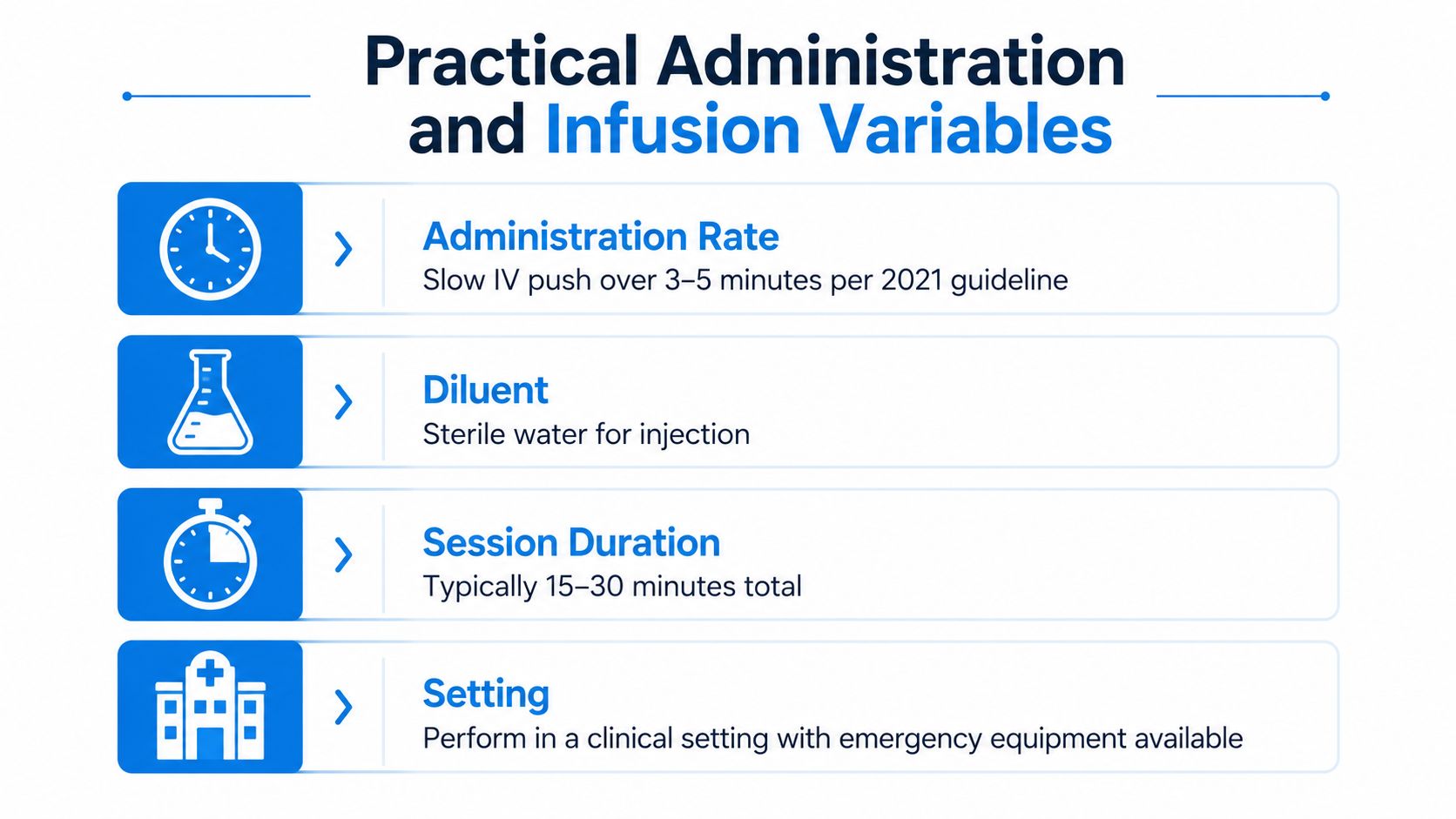
The milligram amount is only one part of an IV glutathione protocol. The 2021 guideline describes a slow IV push over 3–5 minutes in sterile water or dilution in 200 mL of normal saline. Practice-oriented references often describe dilution in saline and infusion over 15–60 minutes, particularly when a slower delivery may improve tolerability.
Neither method should be selected casually. A rapid bolus can feel very different from a diluted infusion, and patients may report flushing, lightheadedness, nausea, or infusion-site discomfort if the delivery is too fast or poorly tolerated. The clinician can respond by slowing the infusion, changing the dilution, or stopping treatment.
What the pre-infusion review should cover
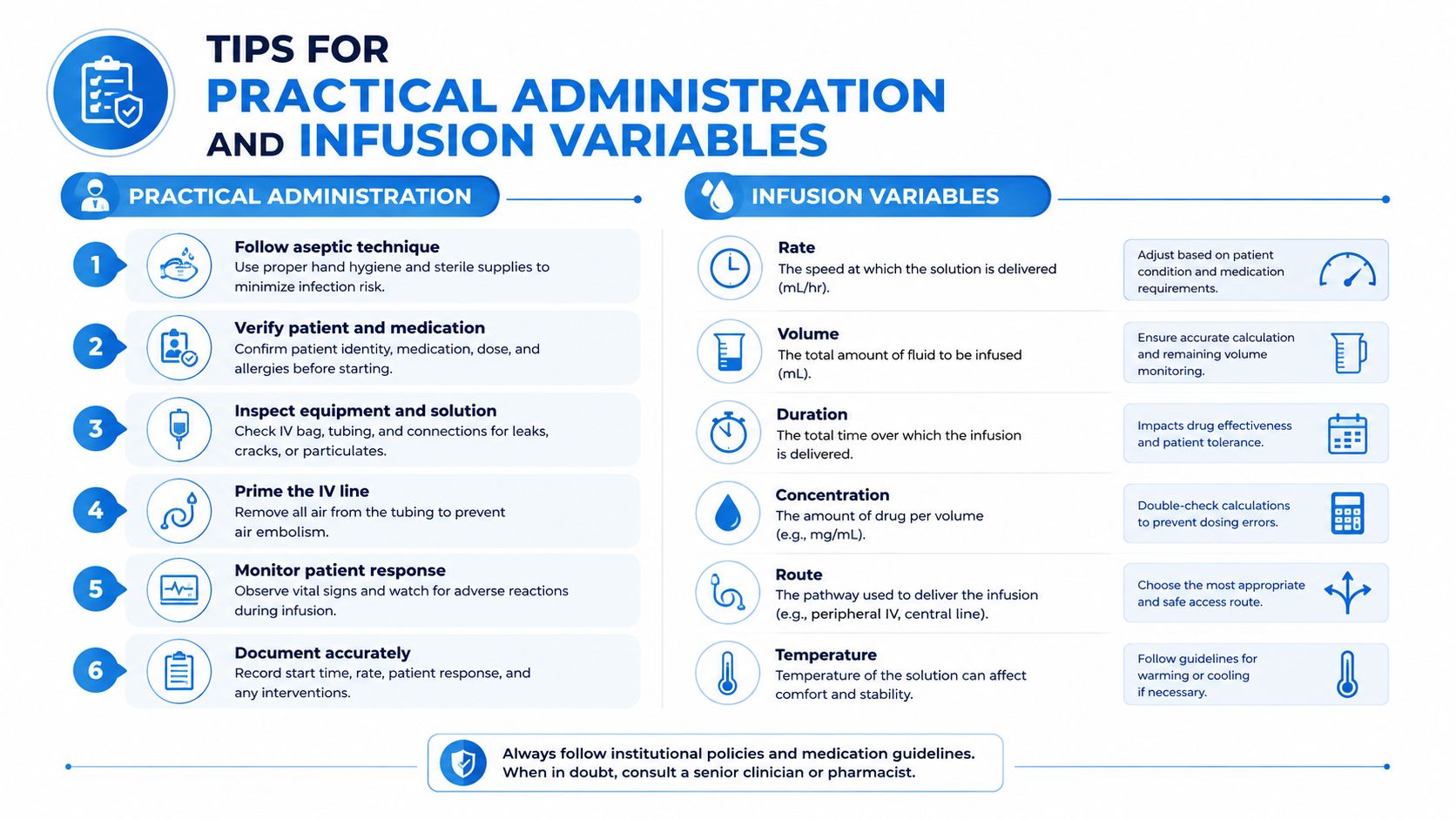
Before a first session, I'd expect the clinical team to ask about:
- Prior anaphylaxis or medication reactions: A history of severe allergy changes the risk discussion and emergency planning.
- G6PD status when clinically relevant: Oxidative therapies may require specific screening and caution in susceptible patients.
- Chemotherapy schedule: Timing and drug selection matter if the treatment is being considered in an oncology-adjacent setting.
- Kidney and liver function: These organs influence how clinicians assess risk in medically complex patients.
- Current medications and supplements: The complete list helps identify overlapping risks and competing treatment priorities.
The same 2021 guideline describes repeating treatment 2–3 times per week for the first month if needed, but that schedule isn't a default for every patient. Frequency should reflect the purpose of treatment, tolerance, response, and whether the patient is in an induction phase or maintenance phase.
Clinics designing staff protocols may also benefit from a guide on ketamine clinics for healthcare staff, particularly for broader lessons about operational safeguards, patient selection, and monitored infusion environments. For patients exploring a wider range of infusion options, Sunridge Medical's IV therapies page provides context for how IV treatment may fit within an integrative care plan.
How Sunridge Medical Approaches IV Glutathione in Scottsdale
At Sunridge Medical in Scottsdale, the glutathione IV dose is considered within the patient's complete clinical picture rather than selected from a universal menu. That review may include cancer stage, chronic illness history, current medications, kidney and liver considerations, treatment goals, and the timing of chemotherapy when applicable.
IV glutathione may be one component of a broader integrative plan that also includes other IV therapies, oxidative medicine, hyperthermia, or detoxification support. Each addition can affect the order, timing, monitoring, and practical goals of treatment, so a dose should be coordinated with the rest of the protocol rather than treated as an isolated wellness purchase.
Patients come to the Scottsdale clinic from Phoenix, Paradise Valley, Tempe, Mesa, Chandler, Gilbert, and communities throughout the greater Phoenix metropolitan area. Out-of-town coordination and travel guidance may also be available for patients coming from elsewhere in Arizona who need a more structured review of complex care options. For patients seeking integrative cancer planning, the clinic's holistic doctor for cancer resource offers a relevant starting point.
Sunridge Medical offers individualized integrative evaluations and IV therapy planning for patients considering glutathione alongside cancer care, neurologic support, or complex chronic disease treatment. Visit Sunridge Medical in Scottsdale to discuss your medical history, current therapies, and whether a supervised consultation is appropriate.