

A cancer diagnosis can make the room feel smaller in an instant. One appointment turns into three, then five, and even after a clear treatment plan, many people still feel like no one has looked at the whole picture. That's usually when the search starts for a doctor for cancer who looks at the whole person, not because standard oncology isn't important, but because patients want someone who can help them make sense of the options without losing sight of safety.
That search can be confusing fast. Some clinics promise “natural cures,” some dismiss conventional treatment, and some use the word so loosely that it tells you almost nothing. A credible integrative clinic, including practices in Scottsdale like Sunridge Medical, works differently, it coordinates supportive care with the oncology plan you already have, and it does so without pretending that supplements or lifestyle changes can replace cancer treatment.
The clearest way to think about this is simple. A real integrative approach asks what can help you tolerate treatment, recover better, maintain quality of life, and make good decisions at every stage. It does not ask you to choose between being “natural” and being treated.
Table of Contents
- When a Cancer Diagnosis Makes You Search for Something More
- What a Holistic Doctor for Cancer Actually Means
- How Integrative Oncology Differs from Standard Care
- Evidence-Based Tools a Good Integrative Program Uses
- How to Evaluate Any Integrative or Holistic Cancer Doctor
- What a First Integrative Consultation Actually Looks Like
- Common Claims to Be Cautious About
- Taking the Next Step Toward an Integrative Evaluation
When a Cancer Diagnosis Makes You Search for Something More
A person hears the word cancer, leaves the consult, and starts searching before they've even gotten home. Sometimes it's after a new diagnosis. Sometimes it's after recurrence, progression, or a second opinion that still doesn't answer the practical questions, like what to do about fatigue, appetite, sleep, or side effects.
Why the search often starts here
Patients are usually not looking for a slogan. They're trying to solve a real problem, they want care that feels coordinated, personal, and honest. That's especially true when standard oncology visits focus on staging and treatment sequencing, but the patient still feels unprepared for the day-to-day burden of therapy.
There's also a trust issue. The internet is full of confident claims, yet major cancer organizations are clear that no special diet, supplement, herb, or combination has been proven to slow cancer, cure it, or prevent recurrence (National Cancer Institute). The same source also notes that complementary approaches may help with symptoms such as nausea, pain, and fatigue, but they are not cures.
That's the gap this topic fills. A good doctor for cancer should help you think more clearly, not more fearfully. The right question isn't whether this type of care exists. It's which version of it is clinically sound, coordinated, and safe.
Practical rule: if a clinic asks you to abandon your oncologist, that's not holistic care, it's a warning sign.
What a Holistic Doctor for Cancer Actually Means
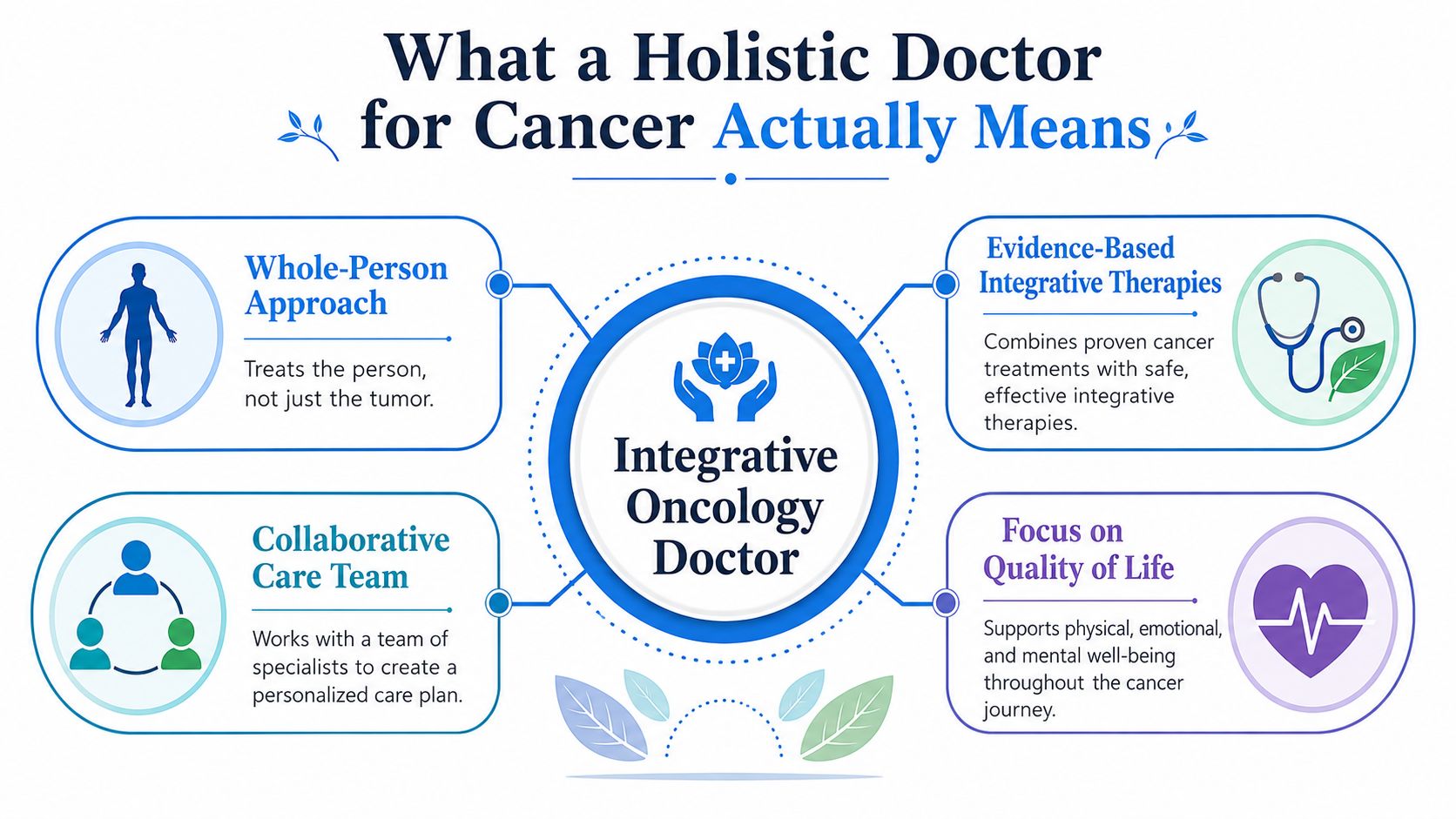
In cancer care, the word holistic gets used in more than one way. In a credible setting, it usually points to integrative oncology, a patient-centered model that combines mind-body practices, natural products, and lifestyle support with conventional cancer treatment (integrative oncology definition). The key idea is alongside, not instead of.
The three models patients commonly run into
The first model is the integrative physician. This clinician coordinates with conventional oncology, reviews treatment timing, and considers supportive therapies that may help symptoms, recovery, or quality of life.
The second model is the alternative-only provider. That person may reject chemotherapy, surgery, radiation, or targeted therapy entirely. That approach is not integrative oncology. The National Cancer Institute and Yale Medicine both warn that using alternative approaches instead of conventional treatment can be dangerous, and a matched analysis found worse survival when alternative medicine replaced standard care (NCI CAM overview, Yale Medicine).
The third model is the general wellness provider. This may be a health coach, spa-based practitioner, or non-oncology clinician who uses the word holistic but does not have cancer-specific training. That does not automatically mean the care is bad, but it does mean you need to ask more questions.
A legitimate integrative cancer physician should be able to explain how a therapy fits into the oncology plan, what it can realistically do, and what it cannot do. In Scottsdale, Phoenix, and nearby communities, that distinction matters because many people are trying to coordinate care between local oncologists, surgeons, and supportive medicine.
How Integrative Oncology Differs from Standard Care
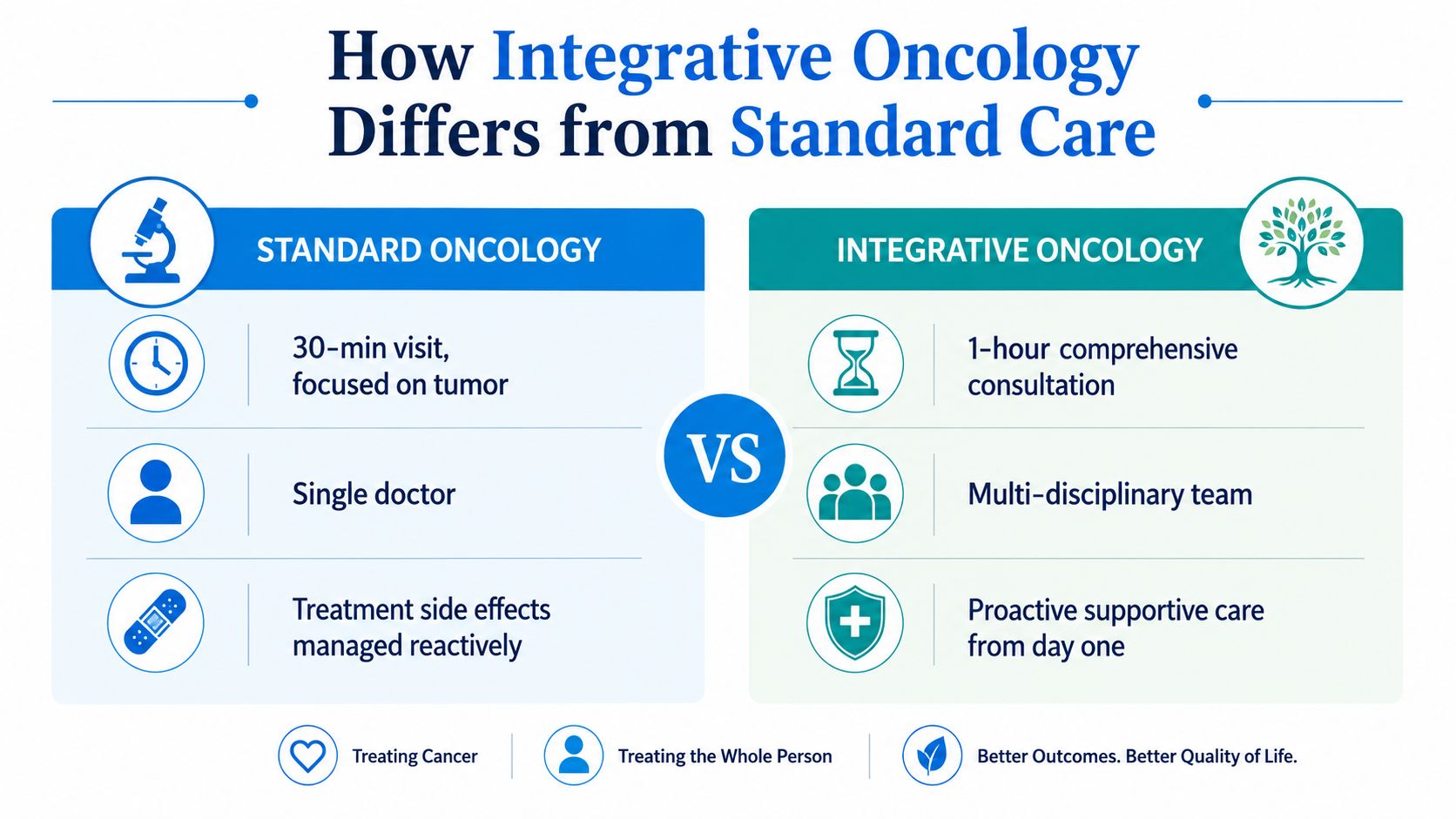
A new cancer diagnosis usually sends people into a familiar medical path. There is a biopsy, imaging, pathology, staging, and then a treatment plan. Standard oncology focuses on treating the cancer itself. Integrative oncology keeps that plan in place and adds attention to the person who has to live through it.
Where the approaches overlap
Both approaches should start with the diagnosis, the records, the risks, and the timing of treatment. Both should also recognize that supplements can interact with therapy, and both should avoid promises that sound bigger than the evidence. Public guidance from the National Cancer Institute is clear that no complementary health approach has been shown to prevent or cure cancer (NCCIH cancer guidance).
The difference shows up in what gets attention during the visit. Integrative oncology spends time on sleep, stress physiology, nutrition, symptom burden, and recovery from side effects, along with the cancer treatment history. Mayo Clinic describes this model as conventional care paired with evidence-based complementary approaches, including mind-body practices, lifestyle changes, dietary changes, and natural products (Mayo Clinic integrative oncology).
That extra attention is not meant to replace oncology care. It is meant to support it, much like a skilled rehab plan supports surgery by helping the body recover function after the main procedure is done.
Where misunderstandings happen
The most common misunderstanding is the belief that “natural” automatically means safe. Supplements and other CAM products can interfere with treatment, so they need to be discussed with the oncology team, not added in isolation. Earlier discussion of the evidence-based model makes the same point, and this reference on integrative oncology in modern cancer care gives a useful way to see how supportive care fits into the larger plan.
The practical difference is simple. Standard oncology asks what the cancer is and how it should be treated. Integrative oncology also asks how to help the person get through treatment with the best possible function and the least avoidable harm. A doctor for cancer should stay inside the oncology team, because supportive care works best when it is coordinated with the main treatment plan.
Evidence-Based Tools a Good Integrative Program Uses
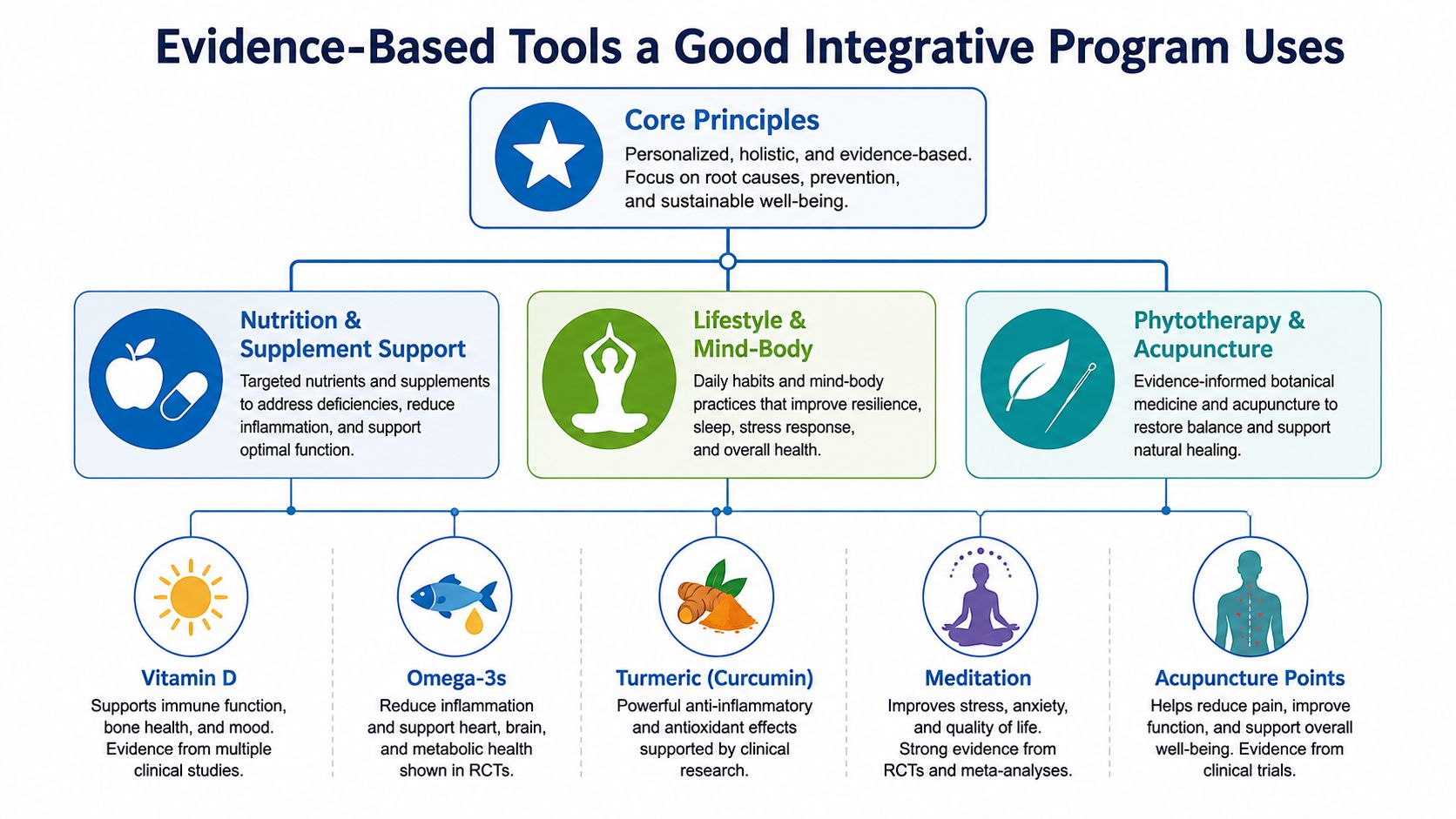
A serious integrative cancer program starts with therapies that have the clearest role in symptom support and quality of life. International consensus work produced 8 criteria for guiding patients toward reputable complementary and alternative medicine providers, and the supportive-care literature repeatedly points to exercise, diet, stress reduction, acupuncture, and massage as tools that can help with fatigue, pain, anxiety, nausea, and sleep in cancer populations (consensus criteria review).
What evidence-informed support usually looks like
A well-run program does not begin with dramatic promises. It begins with a framework. Nutrition is adjusted to the patient's current treatment, appetite, and weight changes. Movement is matched to fatigue level and physical capacity. Stress support may include breathing work, mindfulness, yoga, or counseling. Acupuncture and massage can be considered when they fit the patient's blood counts, pain pattern, and treatment phase.
A clinic like Sunridge Medical may also discuss IV therapies, glutathione, oxidative medicine, hyperthermia, red light therapy, insulin potentiation therapy, PRP, prolozone, and environmental medicine. Those belong in a different conversation from basic supportive care, because they vary more in evidence, clinical rationale, and patient selection. A good clinician should separate what is well established for symptom relief from what is more specialized or investigational.
Clinical insight: a useful protocol is one the oncologist can understand, the patient can follow, and the clinic can explain without jargon.
One practical issue patients often overlook is food. When appetite, nausea, or taste changes make eating hard, meal planning during cancer treatment can help patients think through logistics without turning nutrition into another full-time job. That kind of support belongs in the broader supportive-care picture, not as a substitute for cancer treatment.
For patients wanting a treatment overview tied to IV therapy, Sunridge Medical's clinical guide to intravenous vitamin C therapy fits into the larger discussion of how supportive therapies are sometimes used in integrative practice.
How to Evaluate Any Integrative or Holistic Cancer Doctor
The right clinic should leave you clearer after the visit, not more dependent on hype. Start with training. You want a licensed clinician who can speak plainly about cancer care, treatment timing, supplement interactions, and the limits of what integrative medicine can do.
Questions that separate real care from marketing
- What is your training in oncology-relevant care? Ask how the clinician works with cancer patients specifically, not only with general wellness concerns.
- How do you coordinate with my oncologist? A good answer includes records review, communication, and a plan for overlapping therapies.
- What happens if I'm on chemotherapy or radiation? The clinician should explain possible interactions, especially with supplements and herbs.
- What outcomes do you promise? If the answer sounds like a guarantee, walk away.
Caution matters most here. As noted earlier, the National Cancer Institute says there are no studies showing that a special diet, supplement, herb, or combination can cure cancer or prevent recurrence. Yale Medicine also warns that alternative cancer therapies are associated with increased risk of death when they cause patients to forgo standard treatment.
A practical way to judge the consultation
Ask what the clinic would do in the first month, not just what it “offers.” You're listening for a sequence, records review, therapy selection, coordination, and follow-up. If they cannot explain how they decide whether a supplement, IV, or lifestyle change is appropriate for your phase of care, that is a problem.
A useful next step is to compare the office's answers with a written checklist, such as this integrative oncologist evaluation guide. For immune-support product questions outside cancer care, the VitzAi.com immune vitamin guide can offer background, but any supplement choice still needs to be reviewed in the context of oncology treatment.
What a First Integrative Consultation Actually Looks Like

A first consultation should feel thorough, not rushed. A clinician should review pathology, imaging, the treatment timeline, current medications, and any prior supplements or therapies you have tried. That is the point where a realistic integrative plan starts to take shape.
What patients usually bring
Most clinics need recent records, pathology reports, a medication list, and a clear summary of what has been done so far. If you are coming from Phoenix, Paradise Valley, Tempe, Mesa, Chandler, Gilbert, or elsewhere in the greater Phoenix area, it helps to gather those documents before you travel so the first visit can stay focused on decisions that matter.
A good integrative evaluation also looks beyond the tumor itself. That means discussing fatigue, sleep, digestive symptoms, appetite, stress, immune concerns, and any toxic exposures or metabolic issues that may affect recovery. The goal is not to replace oncology. The goal is to support the patient while oncology does its job.
What a clinic can and can't do on day one
A well-run practice can usually tell you which supportive therapies make sense now, which should wait, and which need coordination with your oncologist. It can also help you understand whether the priority is symptom relief, treatment tolerance, survivorship support, or recurrence-focused monitoring.
What it cannot do is make all the decisions in a single visit. Cancer care changes with the diagnosis, stage, treatment phase, and tolerance to therapy. If a clinic acts as though one protocol fits everyone, that is not individualized care.
For readers comparing centers and care models, this guide to integrative cancer treatment centers can help you think through what a coordinated consultation should include. As noted earlier, the Mayo Clinic overview above is another useful reference point.
Common Claims to Be Cautious About
A cancer diagnosis can make strong promises feel comforting. Claims like “cure cancer naturally,” “chemo-free cure,” and “tumor-shrinking guarantee” sound certain, but they are not the language of evidence-based care. Major cancer organizations do not support those promises, and outcomes can be worse when alternative medicine replaces conventional treatment.
What real integrative care can say
A responsible clinician can say that supportive therapies may help with treatment tolerance, quality of life, and symptom burden. That is a different promise, and it is a more honest one. It matches how major cancer centers describe integrative oncology, as supportive care alongside standard treatment rather than a replacement for it.
Patients' instincts still matter. Many people know, correctly, that they need more individualized attention than a standard oncology visit can provide. The answer is not to step away from conventional care, it is to build a plan that includes both the oncologist and a competent integrative clinician.
Cleansing products and detox programs deserve the same caution. evidence-based detox advice is a better place to start than any claim that a cleanse can treat cancer. In oncology, the word “detox” should be handled carefully, because support and safety matter more than marketing.
For readers comparing integrative cancer treatment centers, the key question is simple: does the clinic coordinate with oncology, or does it ask you to choose between them? That distinction separates supportive care from replacement-therapy risk.
Taking the Next Step Toward an Integrative Evaluation
If you're considering a doctor for cancer who takes a whole-person approach, start with three decisions. First, confirm your diagnosis and conventional treatment plan. Second, decide whether you want supportive integrative care alongside that plan. Third, choose a clinician who can explain their process, coordinate with oncology, and tell you what they won't promise.
The right time to ask for integrative help is often earlier than people think, at diagnosis, during active treatment, in survivorship, or after recurrence. The value is rarely in one therapy by itself. It's in careful protocol design, timing, and follow-through.
For people in Scottsdale, Phoenix, and the surrounding metro area, Sunridge Medical offers an integrative medical setting that works with complex cancer and chronic illness cases and supports both local and out-of-town patients. If your situation would benefit from a second opinion or a supportive integrative consultation, this is the right time to ask the question.
If you're trying to decide whether integrative oncology belongs in your cancer care plan, Sunridge Medical can review your records, talk through your current treatment, and help you understand which supportive options fit your situation. Call or visit to discuss whether an integrative consultation in Scottsdale is appropriate for you, especially if you're balancing standard oncology with a need for more individualized support.