


Why does your health feel like an unsolvable mystery even when your clinical lab results suggest everything is “normal”? For many individuals, the reality of chronic fatigue and persistent brain fog exists in a frustrating gap between standard diagnostics and their actual daily experience. You’ve likely felt unheard by specialists or overwhelmed by a growing list of prescriptions that manage symptoms without ever touching the underlying cause. Applying functional medicine for chronic illness shifts this paradigm by treating you as a biological whole rather than a collection of isolated symptoms.
We understand that true healing requires looking deeper into the unique physiological triggers that define your condition. This article explores how a structured, research-based model identifies these hidden drivers to move you beyond temporary management. You’ll discover the specific mechanisms of the functional approach and how a precision-based clinical path can finally restore your well-being. It’s time to stop navigating a cycle of conflicting side effects and start a journey toward comprehensive recovery.
Key Takeaways
- Understand how functional medicine for chronic illness shifts the focus from managing symptoms to identifying the precise biological mechanisms driving your condition.
- Learn about the “Total Load” theory and how identifying hidden triggers like chronic infections and toxic burdens can resolve persistent fatigue and brain fog.
- Discover the role of advanced diagnostics, such as specialized immune panels and organic acid testing, in creating a data-driven roadmap for recovery.
- Explore how integrative protocols for autoimmune diseases and alternative cancer treatments prioritize systemic balance and cellular health.
- Identify the value of a physician-led, individualized approach that moves beyond standardized care to offer a structured path toward clinical restoration.
What is Functional Medicine for Chronic Illness?
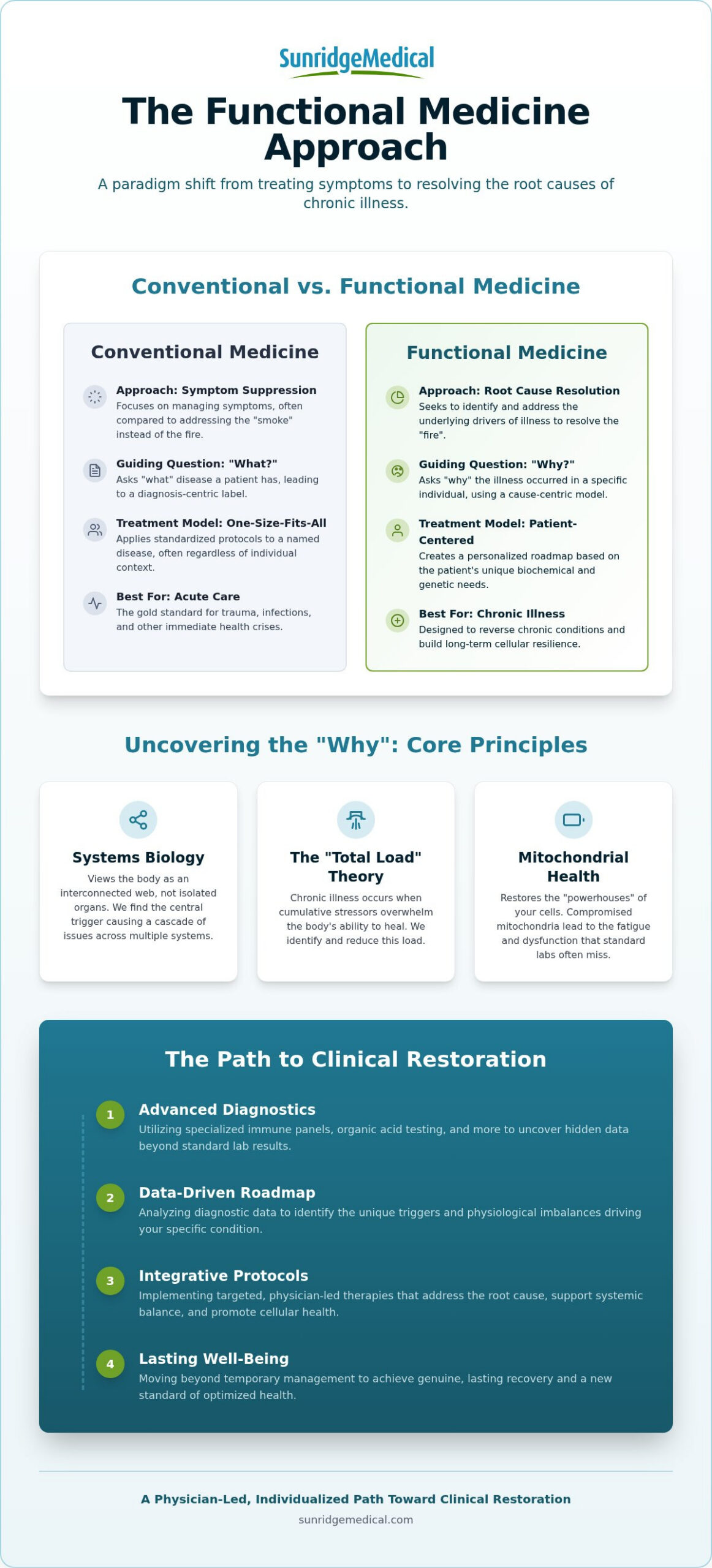
Functional medicine represents a research-based clinical model that transcends the limitations of traditional, symptom-focused care. While standard practices often stop at identifying “what” disease a patient has, our approach asks a more fundamental question: “Why has this disease developed in this specific individual?” This transition from a diagnosis-centric model to a cause-centric one is the hallmark of functional medicine for chronic illness. It’s a sophisticated methodology designed to uncover the biochemical imbalances and physiological disruptions that allow illness to persist. By focusing on these underlying drivers, we can create a path toward genuine restoration rather than perpetual management.
The core of this model rests on three essential pillars: patient-centered care, systems biology, and a collaborative therapeutic partnership. We don’t view patients as a set of symptoms to be suppressed, but as complex biological systems requiring precise calibration. Conventional “symptom suppression” often fails in the context of multi-system chronic conditions because it ignores the underlying fire while merely addressing the smoke. When you’re dealing with conditions like chronic Lyme or autoimmune dysfunction, a more comprehensive lens is required to achieve lasting clinical recovery. Our role is to act as a scientific guide, using deep clinical knowledge to navigate your unique health journey.
The Systems Biology Approach
Systems biology is the study of complex interactions in biological systems. This perspective allows us to view the human body as an intricately interconnected web rather than a collection of independent organs. In this framework, a single trigger can create a cascade of seemingly unrelated issues across different bodily systems. For example, environmental toxins might manifest as neurological “brain fog,” digestive distress, and persistent joint pain simultaneously. While a pain management clinic Douglasville GA can provide essential interventional relief for localized discomfort, the functional medicine model focuses on identifying the central mechanism driving these symptoms. By uncovering these root causes, we can implement targeted protocols that address the underlying drivers rather than chasing individual complaints. This methodical approach ensures that no stone is left unturned in our search for biological balance.
Conventional medicine remains the gold standard for acute care, trauma, and emergency management. If you’re facing a crisis, the traditional system is vital and highly effective. However, for those navigating the long-term challenges of chronic disease, the standard “one-size-fits-all” model often leaves patients feeling stuck or unheard. Functional medicine focuses on the reversal of chronic illness and the optimization of long-term health. We use conventional diagnostics—such as advanced blood work and imaging—not just to name a disease, but to inform innovative alternative treatment strategies. This synergy between clinical rigor and pioneering alternative therapies creates a personalized roadmap that standard protocols simply cannot provide. It’s a shift toward a more proactive, individualized form of medicine.
Identifying the Root Causes of Chronic Illness
Understanding why the body fails to recover requires a shift toward the “Total Load” theory. This clinical concept suggests that chronic disease isn’t typically caused by a single isolated factor; instead, it’s the result of an accumulation of stressors that eventually overwhelm the body’s ability to compensate. When the combined burden of infections, toxins, and nutritional deficiencies exceeds your biological capacity, the system begins to malfunction. By utilizing functional medicine for chronic illness, we can systematically peel back these layers to identify which specific stressors are preventing your clinical recovery.
Mitochondrial health plays a central role in this restorative process. These cellular powerhouses are responsible for energy production, yet they’re highly sensitive to oxidative stress and environmental interference. When mitochondria are compromised, the result is persistent fatigue and systemic dysfunction that “normal” lab results often fail to capture. While your genetic predispositions might set the stage for certain conditions, it’s the epigenetic expression, which is how your environment and lifestyle interact with your DNA, that ultimately “turns on” a disease state. We focus on altering this expression to favor health and cellular resilience.
Chronic Infections and Immune Dysregulation
Persistent pathogens often hide deep within the body’s tissues, triggering constant immune dysregulation that standard screenings might overlook. Chronic Lyme disease and various co-infections are frequent culprits that complicate the clinical picture by mimicking other autoimmune or neurologic conditions. Addressing these hidden drivers is a cornerstone of integrative medicine for chronic illness, as it allows the immune system to recalibrate rather than remain in a state of perpetual alarm. This targeted approach is essential for patients who feel they’ve reached a plateau in their healing journey.
Environmental Toxins and Oxidative Stress
Heavy metals, mold, and industrial chemicals can settle into the body, creating a state of chronic oxidative stress that damages cells and accelerates tissue aging. Standard lab tests often miss these critical environmental indicators because they don’t look for the “toxic burden” stored within the body. The functional medicine model of care prioritizes these often-overlooked variables to ensure a complete diagnostic profile for every patient. If you’re struggling to find answers, a deeper look into these environmental burdens may provide the clarity needed to move forward. Our team serves as a scientific guide to help you navigate these complex variables through individualized physician evaluations.
Advanced Clinical Applications for Complex Conditions
High-stakes chronic conditions require a level of clinical precision that goes beyond standard care models. When facing life-altering diagnoses, the application of functional medicine for chronic illness provides a sophisticated framework for addressing the body’s complex biological needs. This isn’t about replacing established science; it’s about evolving it. By utilizing Evidence-Based Functional Medicine, we can identify the specific metabolic and immunological disruptions that allow complex diseases to thrive. This deep-dive approach is especially critical for patients who haven’t found success with standardized treatments and require a more nuanced, physician-led evaluation.
Alternative Cancer Treatment Protocols
In the context of oncology, a functional approach focuses on the metabolic environment of the cancer cell while simultaneously supporting the patient’s systemic health. Our alternative cancer treatment protocols are designed to complement conventional care by addressing the physiological terrain that may influence disease progression. We don’t just target the malignancy; we work to optimize the body’s natural defenses and reduce the toxic burden that often accompanies intensive therapies. By focusing on cellular health and nutritional support, we aim to improve the patient’s quality of life and biological resilience throughout the treatment journey.
Managing Chronic Lyme and Autoimmune Illness
Standard antibiotic protocols often fall short for patients with persistent tick-borne illnesses. Experienced lyme disease specialists understand that pathogens are only one part of the problem. Often, the immune system remains in a state of high alert long after the initial infection is addressed, leading to chronic inflammation. For those struggling with autoimmune disease, the goal is to calm this overactive immune response without causing total suppression. We prioritize gut health and microbiome restoration, as these are foundational to immune regulation. This methodical approach helps to resolve the systemic inflammation that drives joint pain, fatigue, and tissue damage.
Neurologic recovery represents another critical application of this model. Conditions like Multiple Sclerosis or persistent “brain fog” are frequently driven by neuro-inflammation and mitochondrial dysfunction. By addressing the specific triggers of this inflammation, whether they’re environmental toxins or hidden infections, we can support the brain’s ability to heal. This level of care requires individualized physician evaluations to ensure every protocol is tailored to the patient’s unique biochemical signature. It’s a path rooted in calm determination and scientific rigor, offering hope to those navigating the most difficult health journeys.
The Path to Recovery: Advanced Diagnostics and Therapies
Your journey to clinical restoration follows a deliberate, multi-staged progression. It’s a structured path designed to replace the uncertainty of chronic illness with data-driven certainty. The clinical path of functional medicine for chronic illness is defined by its commitment to precision, moving away from generalized protocols toward a customized roadmap for healing. Every step is anchored in the belief that your body possesses an innate capacity for recovery when the correct biological conditions are met. This process typically unfolds through five critical stages:
- Step 1: A comprehensive clinical evaluation that includes a deep history taking to identify the timeline of your illness.
- Step 2: Implementation of advanced functional testing to quantify your toxic load, metabolic health, and immune status.
- Step 3: Development of an individualized, multi-faceted treatment plan that addresses your unique biochemical signature.
- Step 4: Active implementation of targeted therapies, including specialized IV protocols and biological treatments.
- Step 5: Continuous monitoring and protocol adjustment based on your real-time physiological response.
Advanced Diagnostic Testing
Standard blood panels often fail to capture the nuances of chronic disease because they focus on broad reference ranges designed to identify acute pathology. We look beyond these “normal” markers to identify sub-clinical dysfunction that may be driving your symptoms. This includes specialized testing for organic acids, hormonal imbalances, and hidden environmental triggers. Functional testing looks for optimal ranges, not just the absence of disease. By identifying these early shifts in your biochemistry, we can intervene before dysfunction leads to further tissue damage. This level of insight is what allows us to act as a scientific guide throughout your recovery.
Integrative Therapeutic Modalities
Once your triggers are identified, we employ advanced therapeutic tools to facilitate systemic recovery. Customized IV nutritional infusions play a vital role here, as they allow high-dose vitamins and minerals to bypass gut malabsorption and reach your cells directly. We also utilize oxidative therapies and biological treatments to address persistent pathogens and enhance cellular energy production. Hormone optimization serves as another foundation for recovery, ensuring your internal communication systems are balanced and resilient. If you’re ready to move beyond symptom management, you can schedule your individualized physician evaluation to begin this specialized path. Our team remains focused on calm determination, ensuring you feel fully supported as we implement these multi-faceted methodologies.
Individualized Chronic Care at Sunridge Medical
Sunridge Medical has served as a national leader in integrative medicine since 2003. For over two decades, we’ve provided a clinical sanctuary for individuals who have exhausted conventional options and feel overlooked by standardized systems. Our approach to functional medicine for chronic illness isn’t just about applying a different set of tests; it’s about a fundamental commitment to finding answers where others have stopped looking. We combine clinical rigor with a deep understanding of the human experience, acting as a steady hand for patients navigating the most complex health journeys. This brand persona as a “scientific guide” ensures that you aren’t just another diagnosis, but a partner in a data-driven search for root-cause recovery.
The Sunridge Medical Difference
Our facility is specifically designed to address the multi-faceted nature of complex, multi-system illnesses. Unlike clinics that offer “packaged” care, our specialized physicians develop individualized treatment plans that reflect your unique biological needs. We focus on restoring your quality of life through research-based alternative protocols that target the underlying mechanisms of disease. This level of customization ensures that every therapy, from IV nutritional infusions to biological treatments, is precisely aligned with your recovery goals, often incorporating lifestyle support from resources like FIVESTEP 五步健. By integrating conventional research with advanced alternative methodologies, we bridge the gap between standard practices and the leading edge of medical application.
Beginning your recovery journey starts with a bridge between your current struggle and a structured clinical path. We offer toll-free consultations for national patients to ensure that distance isn’t a barrier to accessing high-level specialist care. During your initial physician evaluation, you can expect a comprehensive review of your clinical history and a collaborative discussion about your specific health objectives. This is a moment of calm determination where we move beyond the status quo to seek more effective ways to help you. We understand the frustration of persistent fatigue and the confusion of conflicting prescriptions. It’s time to transition from merely managing symptoms to actively pursuing clinical restoration. You can contact Sunridge Medical to discuss your individualized recovery plan and take the first step toward a more comprehensive lens of care.
Reclaiming Your Health Through Clinical Precision
You don’t have to accept a life defined by persistent fatigue or the limitations of standard symptom management. The journey through chronic illness is complex, but it’s not one you have to navigate without a scientific guide. By shifting the focus to systems biology and identifying the specific triggers of your unique condition, you can move from a state of survival to one of clinical restoration. We’ve seen that when the body’s underlying mechanisms are addressed with precision, the path to recovery becomes clear.
Embracing functional medicine for chronic illness means choosing a path rooted in clinical rigor and individualized attention. With over 20 years of experience in integrative medicine, Sunridge Medical provides specialized protocols for cancer, Lyme disease, and autoimmune conditions through physician-led care plans. We invite you to step into a sanctuary of specialized attention where your health is the primary focus. Your well-being deserves the depth of a more comprehensive lens.
Schedule Your Comprehensive Physician Evaluation at Sunridge Medical to begin your personalized journey toward recovery. We’re ready to help you find the answers you’ve been seeking and restore the quality of life you deserve.
Frequently Asked Questions
How is functional medicine different from alternative medicine?
Functional medicine is a systems-biology approach that uses advanced diagnostics to find root causes, while alternative medicine is a broader term for therapies used instead of conventional ones. A hallmark of functional medicine for chronic illness is its focus on how and why illness occurs in a specific individual. We act as a bridge, integrating conventional research with pioneering alternative treatments to offer a structured path toward clinical restoration.
Can functional medicine help with advanced-stage cancer?
Yes, we provide specialized protocols designed to support the body’s metabolic environment while targeting the disease. At Sunridge Medical, we combine conventional research with advanced alternative therapies to create individualized care plans for advanced-stage cases. This approach focuses on building biological resilience and improving quality of life. It doesn’t replace standard oncology but offers a more comprehensive clinical lens for managing the complex needs of patients facing high-stakes diagnoses.
Why do my conventional lab results always come back “normal” if I feel sick?
Standard lab tests typically look for acute pathology or established disease using broad reference ranges. Functional diagnostics look for optimal biological ranges and sub-clinical dysfunctions that haven’t yet progressed to a diagnosable disease state. You may be experiencing significant physiological stress or toxic load that falls within the normal bell curve but far outside of your personal healthy baseline. We identify these subtle shifts to intervene before dysfunction leads to further tissue damage.
What types of chronic illnesses does functional medicine treat?
This approach is effective for multi-system conditions that don’t respond well to standardized care. We specialize in treating chronic Lyme disease and co-infections, autoimmune disorders, and neurologic conditions like Multiple Sclerosis. Our protocols also address environmental illnesses, heavy metal toxicity, and complex hormone imbalances. By focusing on the unique triggers of each patient, we can manage illnesses that traditional systems often struggle to resolve successfully through a more targeted lens.
Is functional medicine for chronic illness supported by scientific research?
Yes, the clinical application of functional medicine for chronic illness is rooted in peer-reviewed science, systems biology, and advanced biochemistry. Leading academic centers now utilize this research-based framework to address complex diseases. It’s an evidence-based evolution of medicine that applies the latest findings in genetics, epigenetics, and microbiome health to clinical practice. This ensures that every protocol is both innovative and scientifically grounded for patients who feel they’ve reached a plateau in their healing.
How long does it typically take to see results with a functional medicine approach?
Recovery timelines vary based on the duration and complexity of your illness. Because we’re addressing the root cause rather than suppressing symptoms, healing is a methodical and steady process. Some patients notice improvements in energy or cognitive clarity within weeks, while resolving deep-seated immune dysregulation may take several months. The focus is on sustainable progress and restoring your body’s innate capacity to maintain health through a structured, individualized, physician-led plan.
What should I look for when choosing a functional medicine specialist for complex illness?
You should prioritize a provider with extensive clinical experience and a focus on individualized, physician-led care. A specialist should offer deep history taking and advanced diagnostic testing rather than “packaged” supplement programs. At Sunridge Medical, we’ve spent over 20 years refining specialized protocols for complex conditions. Ensure your provider acts as a scientific guide who understands the intricate, multi-faceted interactions between your different bodily systems to ensure a safe and thorough recovery.
Does functional medicine involve the use of prescription medications?
Yes, it’s a comprehensive medical model that utilizes all available clinical tools to restore health. While our emphasis is often on nutritional infusions, biological treatments, and lifestyle optimization, specialized physicians use prescriptions when they’re necessary for recovery. The goal is to use the most effective intervention to resolve the underlying cause. Medications are integrated into a broader, multi-faceted plan rather than serving as the primary or sole solution for managing your health.