


A cancer diagnosis often leaves patients facing two difficult realities at once. You're trying to understand surgery, chemotherapy, radiation, or immunotherapy, while also wondering whether nutrition, IV therapy, acupuncture, or other supportive treatments could help you tolerate care and preserve your quality of life. If you're searching for naturopathic oncology Scottsdale, you may not be looking to abandon conventional oncology. You may be looking for a coordinated plan that respects standard treatment while addressing the rest of your health.
That distinction matters. Integrative cancer care can offer useful support for symptoms and treatment burden, but it shouldn't promise a cure or confuse improved comfort with longer survival. The most responsible approach is individualized, evidence-informed, and transparent about what's established, what's uncertain, and what may carry interaction risks.
Table of Contents
- Understanding Naturopathic Oncology in Scottsdale
- Core Therapies Used in Integrative Cancer Care
- Combining Naturopathic and Conventional Oncology Safely
- Evaluating the Evidence and Safety of Integrative Treatments
- Navigating the Patient Pathway at Sunridge Medical
- How to Choose a Qualified Naturopathic Oncology Provider
- Common Questions About Naturopathic Cancer Care
Understanding Naturopathic Oncology in Scottsdale
A patient may arrive at a Scottsdale clinic after receiving a pathology report, a treatment recommendation, and a long list of unanswered questions. Perhaps chemotherapy has been proposed, but fatigue, neuropathy, nausea, appetite changes, anxiety, or previous medication reactions already feel overwhelming. Another patient may have recurrent or metastatic disease and want a second opinion before making the next decision. Both situations are understandable. Cancer care is physically demanding, and patients often want a plan that recognizes their whole health rather than focusing only on the tumor.
Naturopathic oncology is a physician-directed discipline that applies naturopathic principles within cancer care. Depending on the clinician and the patient's situation, that may include nutrition, lifestyle support, mind-body care, symptom management, selected natural products, IV therapies, and other adjunctive approaches. The purpose should be to support the patient alongside appropriate oncology treatment, not to substitute unproven therapies for surgery, chemotherapy, radiation, targeted therapy, or immunotherapy.
Arizona also has a defined professional framework for naturopathic physicians. The state established the Naturopathic Physicians Medical Board under Title 32, Chapter 14 of the Arizona Revised Statutes, and Arizona law restricts unlicensed individuals from using titles such as “naturopathic physician” or “N.D.” Arizona's naturopathic medicine regulations show that licensed naturopathic physicians operate within a state-regulated medical system, rather than an informal wellness market.
What patients should expect from an integrative plan
A careful provider starts by reviewing the diagnosis, pathology, imaging, medications, previous treatment, current symptoms, nutritional status, and personal goals. The plan may then include supportive care with a clearer purpose, such as reducing nausea, managing fatigue, supporting mobility, improving sleep, or helping a patient maintain function during treatment.
That patient-centered demand is real. In one large integrative-oncology consultation cohort, 2,474 new patient consultations occurred between September 2009 and December 2013, and 96% of patients completed at least one assessment measure. The same cohort included patients with advanced disease and showed that complementary or alternative medicine use was common among oncology patients. The consultation study and its patient characteristics help explain why patients in Scottsdale, Phoenix, Paradise Valley, and the wider Phoenix metropolitan area seek additional guidance.
For a broader overview of physician-directed options, patients can review Sunridge Medical's integrative cancer care in Scottsdale. The central question remains practical: What is this therapy intended to do, how will it be monitored, and could it interfere with my cancer treatment?
Core Therapies Used in Integrative Cancer Care
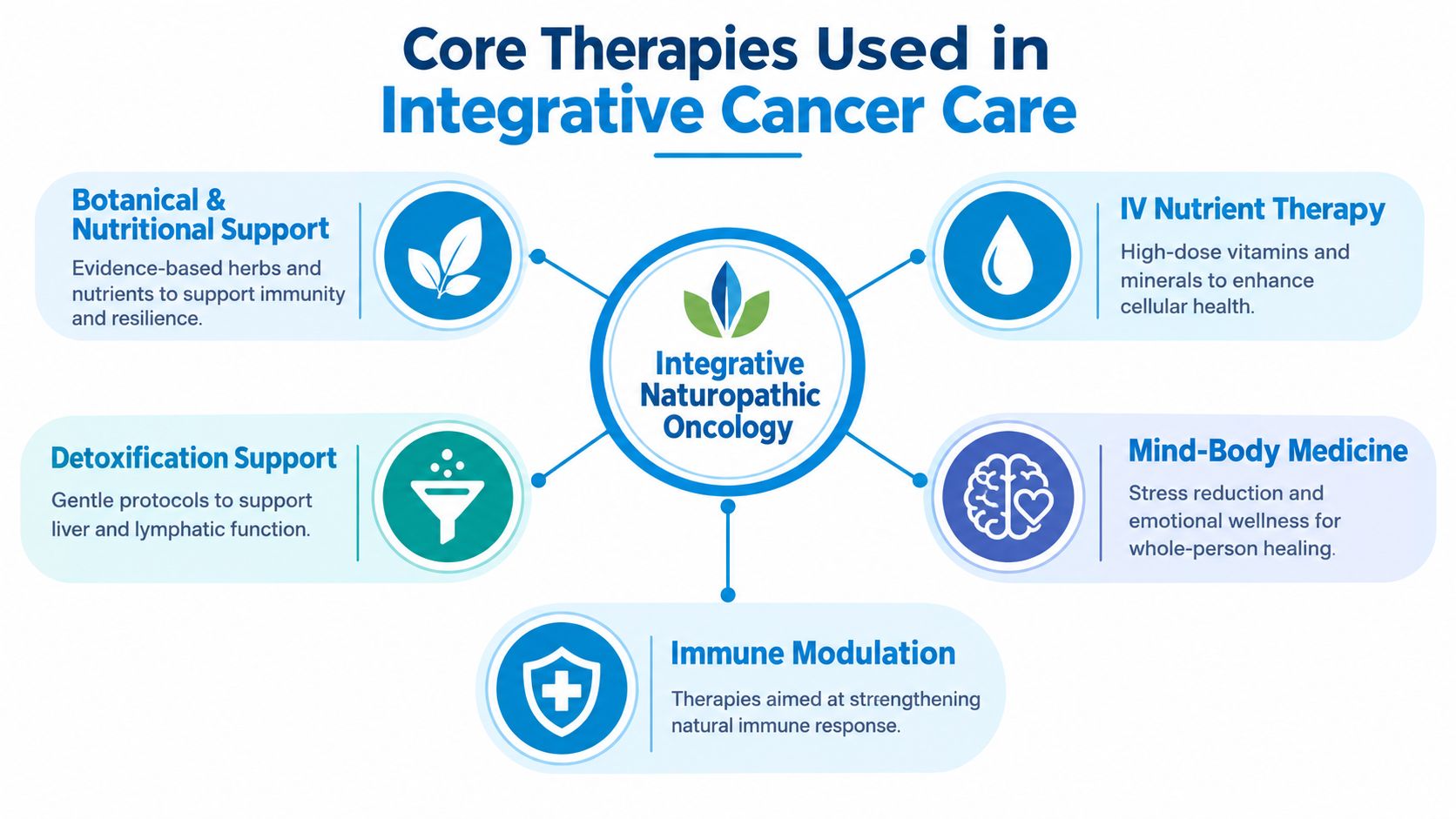
Integrative oncology uses different therapies for different purposes. A nutritional infusion may address a documented deficiency or support hydration, while acupuncture may target nausea or pain. A treatment described as “detoxification” requires a separate discussion about its indication, safety, laboratory monitoring, and relevance to the patient's diagnosis.
IV nutrient therapy and nutritional support
IV therapy delivers fluids, vitamins, minerals, or other compounds directly into the bloodstream. That route can be clinically useful when a patient has difficulty eating, absorbing nutrients, or maintaining hydration, but intravenous delivery doesn't automatically make a treatment effective against cancer. The formulation should match a documented clinical objective, and the team should consider kidney function, liver function, cardiac history, medication interactions, and the timing of chemotherapy or immunotherapy.
Botanical and nutritional products require the same discipline. “Natural” doesn't mean risk-free, and concentrated products can affect bleeding, blood pressure, liver enzymes, sedation, or drug metabolism. A complete medication list should include teas, powders, extracts, capsules, injections, and products purchased online.
Oxidative medicine and hyperthermia
Oxidative treatments, including ozone-based approaches, are promoted in some integrative settings for proposed effects on oxygen handling, inflammation, or cellular signaling. The clinical question isn't whether a mechanism sounds plausible. It's whether a specific treatment, dose, route, and timing have reliable human evidence for the patient's cancer and treatment context.
Hyperthermia uses controlled heat as an adjunctive strategy. Its proposed role may involve changing the local treatment environment or increasing sensitivity to other therapies, but patients should ask whether the approach is established for their specific cancer, being used under a defined protocol, and monitored for adverse effects. Those considering this option can review hyperthermia treatment planning at Sunridge Medical before discussing whether it's appropriate.
The following video may help patients understand how an integrative clinic presents treatment planning, but educational media shouldn't replace a personalized medical consultation.
Targeted and supportive approaches
Insulin Potentiation Therapy, or IPT, is promoted as a way to alter how selected cancer medications are delivered or tolerated. It remains important to distinguish a proposed mechanism from proof of improved survival. Patients should ask what evidence supports the protocol, which conventional drugs are involved, who is coordinating the plan, and how treatment response will be measured.
PRP, prolozone, regenerative services, chelation, and medical detoxification may have roles in selected non-cancer problems or supportive situations, but they aren't interchangeable with cancer treatment. Chelation, in particular, requires a clear medical rationale and appropriate monitoring. A responsible plan avoids stacking intensive therapies because they're available. It prioritizes the patient's diagnosis, current treatment, organ function, symptoms, and goals.
Combining Naturopathic and Conventional Oncology Safely
The safest integrative plan treats the conventional oncology team as part of the care team, not as an obstacle. Chemotherapy, radiation, surgery, targeted therapies, and immunotherapy can interact with supplements and procedures through effects on metabolism, bleeding, immune activity, blood pressure, kidney function, or liver function.
Some botanical products may alter drug levels or cause organ toxicity. Antioxidant products may also raise complicated questions around treatments that depend on oxidative damage, while immune-stimulating products may be inappropriate for some patients receiving immunotherapy or managing autoimmune conditions. The answer isn't to assume every supplement is harmful. The answer is to evaluate each product in context.
Practical rule: Don't start a new supplement, infusion, injection, or intensive adjunctive therapy without giving both your naturopathic and conventional oncology teams the complete product list.
A coordinated treatment sequence
Before treatment begins, the integrative clinician should obtain the cancer diagnosis, pathology, imaging, medication list, laboratory data, and the proposed oncology schedule. The team can then identify therapies that may be reasonable during treatment, therapies that should be paused, and therapies that require additional monitoring.
During radiation or chemotherapy, the priorities often include hydration, nutrition, nausea control, sleep, mobility, bowel function, pain, and neuropathy. An intervention intended to support healthy tissue still needs careful timing. After chemotherapy, acupuncture or other supportive approaches may be considered for symptoms such as nausea, pain, fatigue, or neuropathy, provided the patient's medical status allows it.
Immunotherapy creates another layer of complexity. Because immune checkpoint treatments deliberately alter immune activity, products marketed as immune boosters shouldn't be added casually. The oncology team needs to know what the patient is taking and why.
Questions that prevent avoidable problems
- What is the treatment target? Is the goal symptom relief, nutritional support, treatment tolerance, or tumor control?
- What evidence applies to this cancer? Mechanistic research and laboratory findings aren't the same as clinical evidence.
- What monitoring is required? Ask about blood counts, liver and kidney tests, glucose, electrolytes, or other relevant measures.
- Who communicates with the oncologist? A safe plan includes documented communication, not just a suggestion that the patient pass along information.
- When should treatment stop? Every adjunctive therapy should have criteria for pausing or discontinuing it.
NCCIH warns that no complementary health approach has been shown to prevent or cure cancer, and it notes that some products or practices may interfere with conventional treatment. NCCIH's guidance on cancer and complementary health approaches supports a cautious, coordinated model.
Evaluating the Evidence and Safety of Integrative Treatments
Patients deserve a clear separation between supportive-care evidence and survival evidence. These are not the same outcome. A therapy may help someone sleep, eat, manage nausea, or cope with anxiety without shrinking a tumor or extending life.
Major oncology organizations recognize several integrative approaches for symptom management. Joint guidance from the Society for Integrative Oncology and ASCO supports interventions such as meditation, yoga, relaxation, massage, and music therapy for selected symptoms. The same guidance doesn't recommend acetyl-L-carnitine to prevent chemotherapy-induced peripheral neuropathy because of possible harm. ASCO's endorsed integrative oncology guidance illustrates why each therapy needs a specific indication rather than a broad “natural cancer treatment” label.
NCCIH summarizes evidence that acupuncture may help with cancer pain, chemotherapy-related nausea and vomiting, and cancer-related fatigue. It also describes potential benefits from tai chi for fatigue and from tai chi or qigong for sleep quality when used alongside conventional care. These findings concern symptoms and treatment side effects, not cancer cures. The NCCIH science summary on mind-body approaches provides useful context.
What remains uncertain
Evidence for whole-system naturopathy in cancer is much less definitive. An Australian government review found very low certainty across cancer outcomes and reported an absence of high-certainty evidence for whole-system naturopathy. A 2025 Canadian and United States study also found no clear five-year survival benefit for advanced cancers after accounting for bias. The government evidence evaluation of naturopathy is important reading for patients who want an honest discussion about outcomes.
Recent reviews also describe gaps in rigorous human trials, standardization, and reproducibility for many integrative approaches. A 2025 mini-symposium survey identified oncology-related knowledge gaps among naturopathic doctors, which reinforces the need for ongoing clinical education and collaboration. Patients can also use this ProMed Certifications evidence based practice guide to understand how clinicians should weigh evidence, patient preferences, risks, and clinical judgment.
Before scheduling care, review Sunridge Medical's clinical framework for evaluating alternative cancer treatments. A trustworthy consultation should state plainly whether a therapy is supportive, emerging, off-label, investigational, or established.
Navigating the Patient Pathway at Sunridge Medical
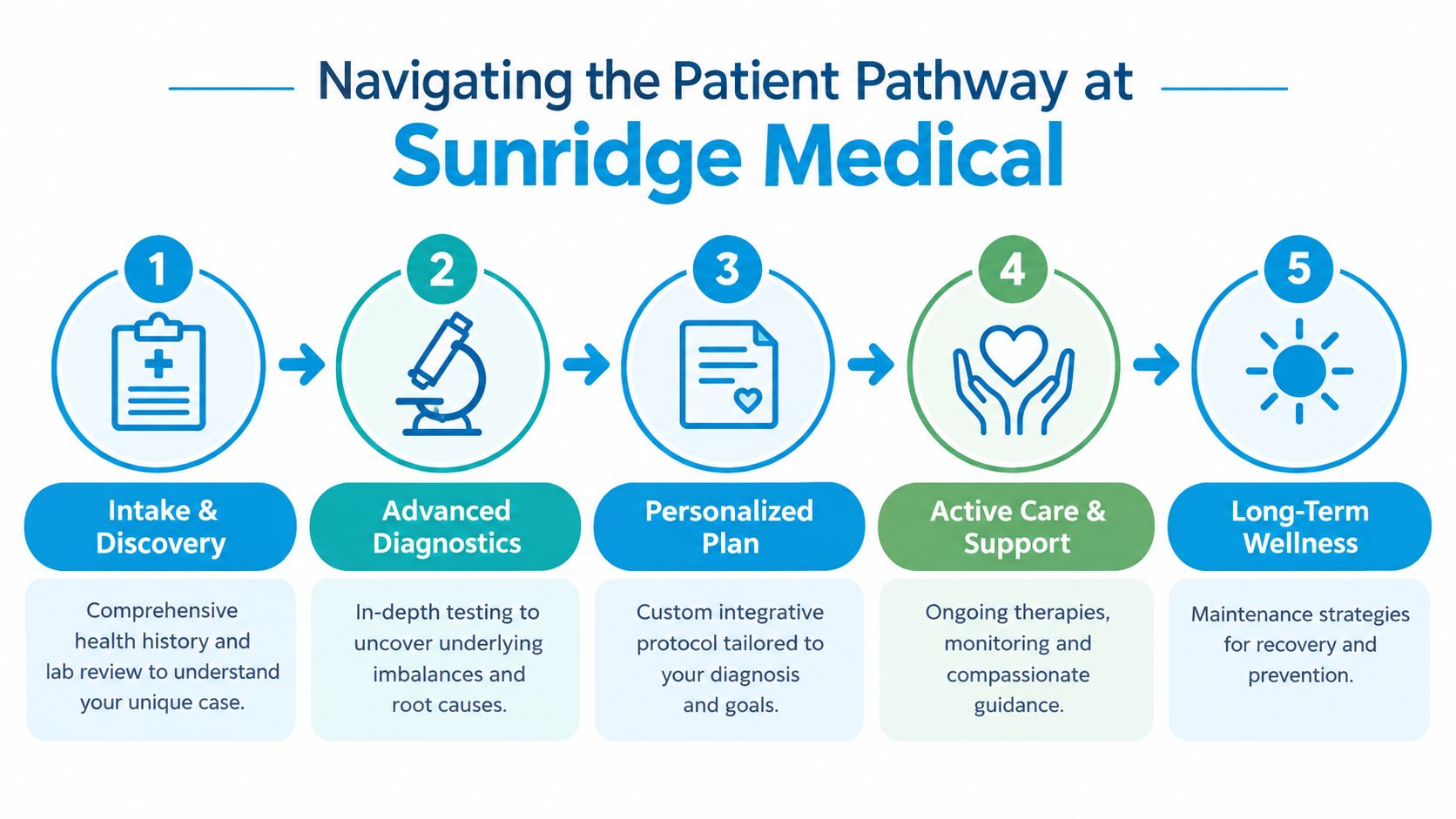
A second-opinion visit usually starts with records, not a treatment menu. The clinical team needs the pathology report, imaging, operative notes, molecular or biomarker results when available, medication list, prior treatment history, current symptoms, and the patient's priorities. This information helps distinguish a question about treatment choice from a question about symptom control or medical stability.
From intake to a personalized plan
The first clinical conversation should clarify what has happened, what is planned, and what the patient hopes to change. A newly diagnosed patient may need help interpreting options before treatment starts. Someone with recurrent or Stage 4 disease may need a review of prior therapies, current disease status, symptoms, and realistic supportive priorities.
Advanced testing should answer a clinical question. It shouldn't be ordered because a test is available. Laboratory review may assess organ function, nutritional concerns, inflammation, metabolic factors, or treatment readiness, depending on the case.
The care team then builds a plan around the diagnosis and goals. That may include conventional coordination, IV support, symptom-focused therapies, nutrition, mind-body care, or discussion of more experimental options. Monitoring matters as much as the initial protocol. Symptoms, laboratory results, treatment tolerance, and disease-directed assessments should guide adjustments.
Support for patients outside Scottsdale
Patients traveling from Phoenix, Paradise Valley, Tempe, Mesa, Chandler, Gilbert, or farther across the greater Phoenix metropolitan area may be able to attend locally. Out-of-town patients need a more deliberate logistical plan, including records transfer, appointment scheduling, transportation, lodging, medication continuity, and communication with the home oncology team.
The clinic's new patient process can help prospective patients understand what information to gather before requesting an appointment. A family member or caregiver should join the conversation when possible, especially if the patient is fatigued or managing a complex medication schedule.
The purpose of this pathway isn't to create a predetermined protocol. It's to make sure each recommendation has a reason, a safety screen, and a way to assess whether it's helping.
How to Choose a Qualified Naturopathic Oncology Provider
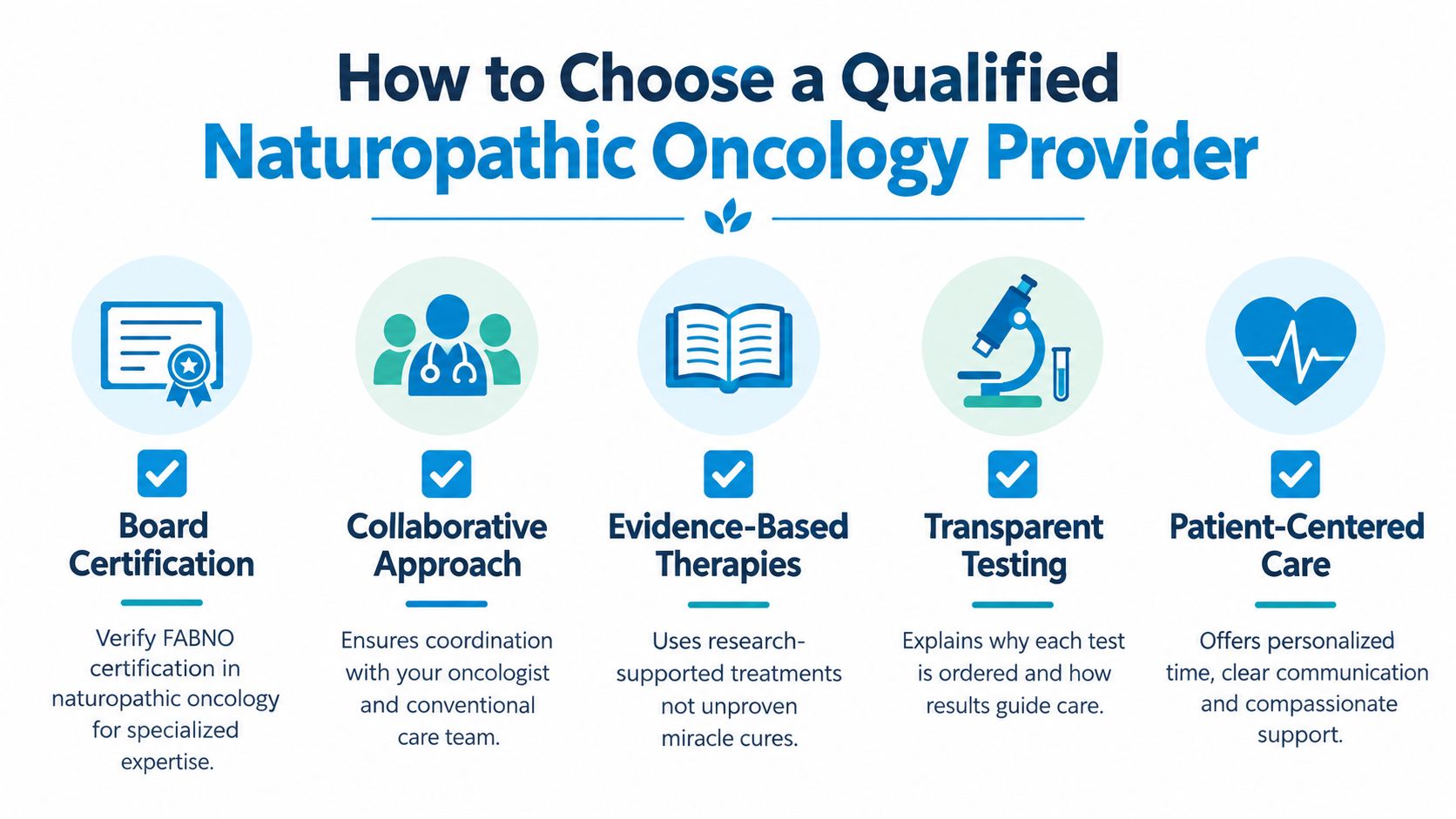
Marketing language can sound reassuring while leaving the important questions unanswered. A qualified provider should be willing to discuss uncertainty, coordinate with your oncologist, and explain why a treatment belongs in your plan.
Use this checklist during an initial call or consultation:
- Verify licensure and oncology training. Confirm the practitioner's Arizona license and ask about specialized naturopathic oncology education, including FABNO certification when applicable.
- Ask about conventional coordination. The provider should request oncology records, communicate with your medical team when appropriate, and avoid telling you to stop medically necessary treatment.
- Review the evidence by therapy. Ask whether each recommendation is guideline-supported for symptoms, supported by limited clinical data, off-label, or investigational.
- Check monitoring procedures. IV, oxidative, hyperthermia, chelation, and injection-based therapies require appropriate screening and follow-up. Ask who reviews laboratory results and manages complications.
- Look for transparent communication. A clinician should explain benefits, limitations, alternatives, costs, and stopping rules without guaranteeing a cure.
A provider who dismisses oncology, promises universal results, or claims that one protocol treats every cancer should raise concern. Good integrative care makes room for hope without replacing informed consent with certainty.
Common Questions About Naturopathic Cancer Care
Does insurance cover integrative oncology?
Coverage varies by insurer, plan, service, and diagnosis. Ask the clinic which services are billed to insurance, which are self-pay, and whether you'll receive an estimate before treatment.
How long do IV or oxidative treatments take?
The duration depends on the formulation, route, monitoring needs, and your medical history. Ask about the expected appointment length, observation requirements, and what you should do if symptoms develop afterward.
What records should I send for a second opinion?
Start with pathology, imaging reports and discs when available, oncology notes, operative reports, medication and supplement lists, laboratory results, and a timeline of previous treatments. Include your main symptoms and the questions you want answered.
Can integrative care replace chemotherapy or immunotherapy?
No complementary approach has been shown to cure cancer. Integrative care should be evaluated as coordinated support or as an investigational discussion, never as a reason to delay proven cancer treatment.
Sunridge Medical provides physician-directed integrative cancer consultations, treatment planning, and supportive options for patients in Scottsdale and across the Phoenix area. Visit Sunridge Medical to discuss your diagnosis, treatment history, and whether an evidence-informed naturopathic oncology consultation is appropriate for your situation.