


A “natural” label is not a substitute for medical evidence, yet patients are frequently forced to choose between rigid conventional care and the unverified promises found online. It’s overwhelming to filter through “miracle cure” claims while managing a life-altering diagnosis. You deserve a path that respects your desire for comprehensive options without sacrificing scientific rigor. Learning how to evaluate alternative cancer treatments requires moving beyond emotional testimonials and focusing on clinical mechanisms. This article provides a professional framework to help you distinguish between anecdotal trends and research-based protocols.
We recognize the frustration of feeling overlooked by traditional systems and the anxiety caused by a lack of regulation in the alternative space. It’s a valid concern to fear wasting precious time on ineffective methods. You’ll learn how to apply a medical logic to integrative care, gaining the specific criteria needed to vet clinics with total confidence. We’ll examine the markers of a legitimate protocol, including the impact of the World Health Organization’s 2025 to 2034 Global Traditional Medicine Strategy. This guide offers a steady hand and a clear, structured path forward that prioritizes your well-being through clinical precision and depth.
Key Takeaways
- Define the spectrum of care to understand how integrative oncology serves as a bridge between conventional medicine and advanced biological protocols.
- Master how to evaluate alternative cancer treatments by applying a professional framework that prioritizes biological rationale and clinical transparency.
- Recognize critical red flags, such as “secret cures” or standardized “packaged” care, to protect yourself from ineffective treatments and unverified claims.
- Utilize a medical vetting checklist to ensure your care is led by experienced physicians who focus on individualized protocols tailored to your specific biomarkers.
- Gain the confidence to pursue a research-driven path that addresses the underlying mechanisms of your condition with clinical precision and depth.
Understanding the Spectrum of Integrative and Alternative Oncology
Understanding the medical landscape is the essential first step in learning how to evaluate alternative cancer treatments. For many, the term “alternative” conjures images of unverified folk remedies or purely supportive care. However, the modern clinical reality is far more sophisticated. Alternative medicine refers to specific protocols used either in place of or alongside conventional methods to address the underlying mechanisms of a condition. It isn’t about rejecting science; it’s about expanding the scientific toolkit to include advanced biological therapies that standard systems might overlook.
Patients often seek these alternatives when they feel trapped by the limitations of “one-size-fits-all” standardized care. Standardized oncology frequently prioritizes statistical averages over individual biochemistry. This can leave those with complex or advanced diagnoses feeling like they’ve reached a dead end. Integrative oncology bridges this gap by combining conventional rigor with innovative biological treatments. Clinical oversight remains non-negotiable throughout this process. A research-based protocol should always be managed by experienced physicians who understand the delicate balance of the human immune system and the metabolic environment of a tumor.
Complementary vs. Alternative: Why the Distinction Matters
It’s vital to distinguish between complementary and alternative care. Complementary therapies, such as acupuncture or specialized nutrition, are primarily supportive. They focus on symptom management and improving quality of life during treatment. In contrast, alternative protocols are targeted biological interventions, such as advanced oxidative treatments or biological response modifiers, designed to impact the disease itself. Your specific integrative cancer treatment by stage will dictate which approach is most appropriate. A Stage 1 diagnosis requires a different level of intervention than a Stage 4 case where the goal is often stabilization and systemic support through a more comprehensive lens.
The Evolution of Research-Based Alternative Medicine
The field has evolved significantly from its early roots. Today’s protocols are built on peer-reviewed mechanisms and precise customization. We’ve moved beyond anecdotal evidence toward a model of alternative cancer treatment that relies on sophisticated diagnostic testing and patient biomarkers. This evolution ensures that every therapy has a clear biological rationale. When you learn how to evaluate alternative cancer treatments, look for this clinical depth. True progress is found in the intersection of advanced research and a deep respect for the individual human experience, moving away from “packaged” care toward a truly multi-faceted methodology.
Key Criteria for Assessing Medical Rigor in Alternative Protocols
Rigor is the dividing line between scientific progress and marketing hype. When determining how to evaluate alternative cancer treatments, you must look for a clear biological rationale. A protocol should target specific cellular pathways or metabolic vulnerabilities. It isn’t enough for a treatment to be “natural.” It must be physiologically active and supported by research that explains its mechanism of action within the tumor microenvironment. This level of scrutiny ensures that you aren’t just pursuing a trend, but rather a targeted medical intervention.
Safe and effective care requires constant clinical monitoring. A legitimate protocol uses objective diagnostic tools, such as tumor markers, advanced imaging, and inflammatory panels, to track your progress in real time. This data-driven approach allows physicians to pivot when necessary, ensuring the treatment remains effective. Safety and toxicity profiles are equally vital. Every intervention carries a risk-to-reward ratio that must be carefully managed by a medical professional who understands potential interactions and systemic impacts. Precision is the foundation of patient safety.
- Evidence-based mechanisms: Does the therapy have a documented biological reason for its application?
- Individualization: Is the plan built around your specific staging and biomarkers?
- Clinical monitoring: Are diagnostic tools used regularly to verify progress?
- Safety profiles: Has the physician assessed the systemic impact and potential toxicities?
The Importance of Individualized Physician Evaluations
Standardized “packaged” treatments are a significant red flag in oncology. Cancer care requires a level of precision that a pre-set bundle simply cannot provide. A truly clinical approach begins with comprehensive lab work and genomic testing to identify the specific drivers of your disease. This physician-led process is fundamentally different from wellness coaching. It involves a high-level specialist who uses technical knowledge to craft a multi-faceted methodology tailored to your unique human experience. If you’re feeling stuck in a standardized system, you can consult with a specialized physician to explore a more targeted path forward.
Advanced Delivery Methods: IV and Biological Therapies
Therapeutic efficacy often depends on the delivery method. Oral supplements frequently suffer from poor absorption rates and digestive breakdown, which limits their impact on advanced conditions. In contrast, specialized IV protocols allow for higher concentrations of biological agents to reach the bloodstream directly. This precision is critical for oxidative therapies and nutritional infusions. These methods aim to shift the metabolic environment of the body, creating a less hospitable landscape for cancer cells while supporting healthy tissue. Advanced delivery is a hallmark of the leading edge of medical research and application.
Red Flags vs. Research-Based Care: How to Spot “Miracle” Claims
Transparency is the hallmark of medical integrity. The “Secret Cure” trap is a common pitfall where clinics claim to possess exclusive, hidden knowledge that the rest of the medical community ignores. In reality, legitimate medical progress is shared and scrutinized. If a provider cannot explain the biological mechanism of their protocol or refuses to share data, it’s a significant warning sign. Understanding how to evaluate alternative cancer treatments involves demanding this transparency as a non-negotiable requirement for your care.
Distinguish between commercial promotion and medical expertise. Many centers prioritize high-gloss marketing over clinical depth. A scientific guide should focus on the technical application of therapies rather than emotional sales pitches. Similarly, be wary of “detox-only” approaches for advanced malignancies. While detoxification is a component of health, it’s rarely sufficient as a standalone strategy for complex diseases. A capable ally will always show a willingness to coordinate with your conventional specialists, ensuring a cohesive and safe journey. This collaborative spirit is a marker of professional gravity and reliability.
Identifying Legitimate Clinical Research
Reading beyond marketing materials requires a discerning eye. Centers often lead with anecdotal testimonials, which are emotionally resonant but scientifically thin. While these stories offer hope, they don’t replace the necessity of clinical case studies that track biomarkers, imaging, and long-term outcomes. Clinical medical rigor is the presence of physician-led, data-driven protocols. You should look for centers that emphasize these objective metrics over subjective experiences. This methodical approach builds the foundation of trust needed for a complex health journey.
Common Misconceptions About Alternative Medicine
A pervasive myth suggests that choosing alternative medicine means abandoning all conventional tools. This binary thinking is dangerous. The most effective protocols are often integrative and multifaceted, utilizing the best of both worlds to target the disease from multiple angles. Another common hurdle is the “all-natural” fallacy. Just because a substance is natural doesn’t mean it’s benign or doesn’t require precise medical dosing. In fact, advanced biological therapies require even greater precision to ensure they’re therapeutic rather than toxic. Gaining this clarity is essential when learning how to evaluate alternative cancer treatments effectively.
- Transparency: Does the clinic openly discuss their mechanisms and data?
- Coordination: Are they willing to work with your existing oncology team?
- Precision: Do they emphasize medical dosing over “all-natural” generalizations?
- Focus: Is the priority on clinical outcomes rather than emotional testimonials?
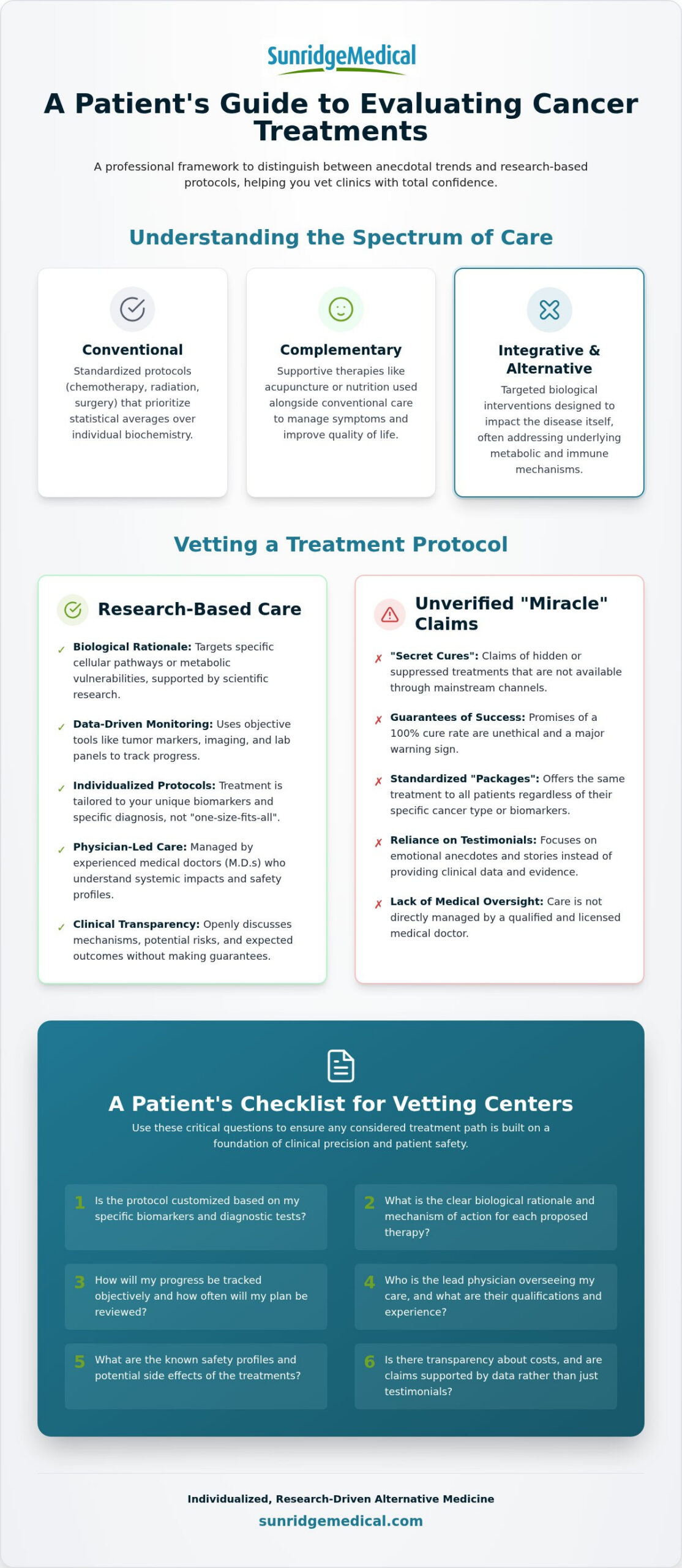
A Patient’s Checklist for Evaluating Alternative Cancer Centers
Moving from theoretical knowledge to a practical selection process is a pivotal moment in your health journey. When you are determining how to evaluate alternative cancer treatments, you must shift your focus toward the operational standards of the facility. A center should function as a sanctuary of specialized attention, led by a medical director with deep oncology experience. Look for an M.D. or D.O. who understands the intricate complexities of advanced disease. Reliability is found in clinics that reject standardized packages in favor of unique protocols based on your specific staging and biomarkers.
True progress requires a multi-faceted approach that addresses the root causes of chronic illness recovery. This includes evaluating how the center integrates various therapies, from advanced biological protocols to hormone optimization. Ongoing monitoring and direct physician access are essential pillars of support. You should never feel like a number in a high-volume system; instead, you deserve a dedicated advocate who provides a steady hand through every stage of the narrative.
Questions to Ask During Your Initial Consultation
Your first meeting is a professional consultation designed to establish expertise and certainty. Use this time to probe the clinical logic of their approach. A pioneering expert will welcome these questions, as they reflect your commitment to a rigorous path forward. Ensure you cover these three critical areas:
- What specific biological mechanisms does this protocol target in my specific tumor type?
- How do you use diagnostic tools to measure success and adjust the treatment plan in real time?
- What is the clinical background of the medical director, and how many similar cases have they managed?
Vetting the Facility and Clinical Staff
A high-level specialist center should offer a range of services that go beyond the ordinary. Assess whether the facility provides advanced IV therapies, biological treatments, and hormone optimization under one roof. A multi-disciplinary medical team ensures that every facet of your health is scrutinized with precision. This level of depth is what distinguishes a premiere clinical environment from a standard wellness center. When you learn how to evaluate alternative cancer treatments, the quality of the staff and the sophistication of the delivery methods are your most reliable metrics. Precision and customization are not just goals; they’re the standard for those seeking a more comprehensive lens than standard practices provide.
If you are ready to move beyond the status quo and explore a targeted, research-driven path, contact Sunridge Medical today to speak with a specialized physician about your unique needs.
The Sunridge Approach: Individualized, Research-Driven Alternative Medicine
Sunridge Medical serves as a clinical sanctuary for individuals who feel frustrated or overlooked by the limitations of standardized health systems. We bridge the gap between conventional clinical rigor and advanced, research-based alternative terminology. Our brand persona is that of a scientific guide, offering a level of care that goes beyond the ordinary. When you learn how to evaluate alternative cancer treatments, you discover that the most effective path involves a sophisticated blend of precision and depth. We don’t offer “packaged” care. Instead, we provide a multi-faceted methodology rooted in reliability and thoroughness.
Individualized care plans are the cornerstone of our philosophy. Complex chronic diseases and advanced malignancies require a more comprehensive lens than standard practices provide. We maintain a high level of professional gravity while focusing on the possibility of progress and the restoration of well-being. This commitment to clinical authority and patient advocacy ensures that you have a capable ally navigating your health journey. By moving from high-level concepts to practical, targeted applications, we help restore well-being through a measured flow of information and specialized attention.
Pioneering Protocols for Advanced Cancer
Our approach combines advanced oxidative therapies with research-based biological treatments to target the metabolic vulnerabilities of disease. We address the unique needs of patients in advanced stages who require more than just supportive care. These pioneering protocols are designed to impact the disease itself while supporting the immune system during the recovery journey. By focusing on the underlying mechanisms of your condition, we create a less hospitable environment for cancer cells. This intellectual and empathetic application of technical knowledge is what sets our specialized approach apart from the status quo.
Your Path Forward: Starting a Clinical Consultation
Taking the first step toward a more comprehensive cancer care plan begins with a thorough physician evaluation. At Sunridge Medical, Medical Director Dr. Steven S. Isaacman leads a practice dedicated to finding more effective ways to help those in need. This initial meeting mimics a professional consultation, moving from a statement of philosophy to a detailed explanation of your unique protocol. We provide a steady hand for patients navigating complex health journeys, ensuring you feel fully informed at every stage. To take the next step in how to evaluate alternative cancer treatments for your specific case, call 1-800-923-7878 to schedule a personalized physician consultation and explore your path toward progress.
Empowering Your Journey with Clinical Precision
Choosing a path beyond the status quo requires a commitment to medical rigor. We’ve explored how to evaluate alternative cancer treatments by prioritizing biological rationale over emotional testimonials and demanding transparency from providers. True progress is found when technical knowledge is applied through an individualized lens, ensuring that every protocol is as unique as the patient it serves. This methodical approach transforms uncertainty into a structured path forward, allowing you to regain control over your health journey.
Since 2003, Sunridge Medical has specialized in providing this level of sophisticated care for complex chronic diseases. Led by Medical Director Dr. Steven S. Isaacman, our team focuses on advanced alternative cancer protocols that bridge the gap between conventional and integrative medicine. We invite you to move forward with a steady hand and a clear strategy for your well-being. Schedule a consultation with our medical team at Sunridge Medical to discuss a personalized strategy tailored to your specific needs. You don’t have to navigate this complex health journey alone; a more comprehensive and hopeful path is within reach.
Frequently Asked Questions
Is alternative cancer treatment safe to use with chemotherapy?
Alternative cancer treatments can be safely integrated with chemotherapy when managed by a specialized physician. This integrative approach focuses on reducing systemic toxicity while potentially enhancing the therapeutic effect of conventional tools. It’s essential to coordinate care to ensure that biological agents don’t interfere with the mechanism of chemotherapeutic drugs. A scientific guide will prioritize your safety by reviewing potential interactions through a comprehensive medical lens.
How do I know if a cancer treatment center is research-based?
A research-based center will provide clear explanations of the biological mechanisms behind every protocol. You should look for the use of peer-reviewed data and objective diagnostic tools to track your progress. Transparency is non-negotiable. If a facility relies on exclusive formulas or emotional testimonials rather than clinical case studies and measurable biomarkers, it lacks medical rigor. This distinction is vital when learning how to evaluate alternative cancer treatments effectively.
What are the most common alternative cancer treatment protocols?
Common research-driven protocols include advanced oxidative therapies, biological response modifiers, and high-concentration nutritional infusions. These methods are designed to shift the body’s metabolic landscape and support immune function. Unlike standardized comfort care, these are targeted biological interventions aimed at the tumor microenvironment. Each protocol must be tailored to the individual’s biochemistry to ensure therapeutic efficacy and precision, moving beyond the limitations of oral supplements or generic wellness advice.
Can alternative medicine help with Stage 4 cancer?
Alternative medicine offers significant value for Stage 4 patients by addressing the metabolic vulnerabilities of advanced disease. When conventional options reach their limit, research-based alternative protocols can focus on stabilizing the condition and enhancing quality of life through immune support. This isn’t about miracle promises; it’s about a multi-faceted methodology that applies technical knowledge to complex, late-stage scenarios. It provides a hopeful path forward for those overlooked by standard systems.
What should I look for in an alternative oncology medical director?
You should prioritize a medical director who holds an M.D. or D.O. degree and possesses extensive oncology experience. It’s important that they lead a practice focused on individualized care rather than pre-set treatment bundles. A pioneering expert will act as a dedicated advocate, constantly seeking more effective ways to help you. Their background should reflect a deep understanding of both conventional clinical language and advanced, research-based biological therapies.
Why is individualized treatment better than a standard protocol?
Individualized treatment is superior because cancer is a heterogeneous disease that behaves differently in every person. A standardized package fails to account for your specific staging, genomic markers, and metabolic profile. By customizing the protocol, a physician can target the exact drivers of your condition with precision. This departure from the status quo ensures that your care is as unique as your human experience, leading to a more thorough and reliable journey.
Does insurance cover alternative cancer treatment protocols?
Most specialized alternative cancer treatment protocols are not covered by standard health insurance plans. These treatments are typically paid for out-of-pocket because they fall outside the standard of care definitions used by major carriers. Patients should view this as an investment in a premiere level of care that goes beyond ordinary practices. It’s a significant financial consideration, so clear communication regarding the scope of the individualized plan is a priority during your consultation.
How long does a typical alternative cancer treatment plan take?
The duration of a treatment plan depends entirely on your specific diagnosis, staging, and biological response. It is a methodical, steady process rather than a rapid intervention. A typical protocol involves an initial intensive phase followed by ongoing monitoring and adjustments based on diagnostic data. This deliberate pacing ensures that you feel fully supported at every stage, building a foundation of trust while allowing the biological therapies sufficient time to impact the disease.