


What if the most effective path to recovery isn’t found in a one-size-fits-all hospital protocol, but in a strategy that treats you as a unique individual rather than a clinical statistic? With an estimated 31,510 new cases of stomach cancer expected in the United States in 2026, many patients feel like a number in a high-volume system. It is natural to feel a sense of dread when facing aggressive side effects or survival statistics that don’t account for your personal resilience. You deserve a plan that values your quality of life as much as it values clinical outcomes.
This guide explores the comprehensive landscape of adenocarcinoma stomach treatment, bridging the gap between conventional standards of care and advanced integrative protocols. We will examine how the latest biomarker-driven breakthroughs, such as CLDN18.2 targeted therapies approved in late 2024, can be combined with research-based alternative methodologies to optimize your biological terrain. By moving beyond standardized care, you can reclaim a sense of agency and find a treatment plan designed for your specific recovery journey.
Key Takeaways
- Learn how gastric adenocarcinoma manifests and why traditional protocols often prioritize tumor reduction over total biological restoration.
- Discover how advanced adenocarcinoma stomach treatment protocols integrate research-based alternative medicine to target the tumor while preserving your quality of life.
- Understand the “Biological Terrain” concept and how optimizing your internal environment can disrupt the physiological conditions that support cancer growth.
- Gain insights into how integrative care mitigates the harsh impacts of chemotherapy and radiation through host restoration and specialized IV therapies.
- Explore how to navigate complex treatment decisions with confidence, identifying the optimal time to seek specialized second opinions and individualized care.
Understanding Gastric Adenocarcinoma: Clinical Characteristics and Standard Protocols
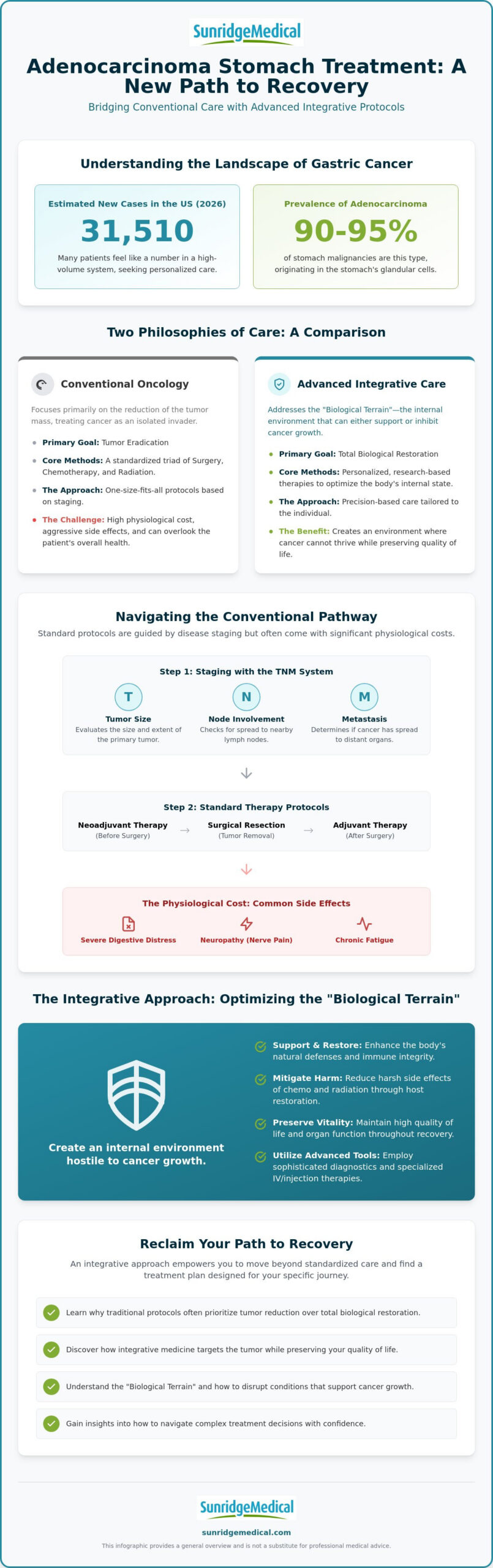
Gastric adenocarcinoma represents the vast majority of all Stomach cancer cases, specifically accounting for 90 to 95 percent of malignancies in this organ. It originates in the glandular cells of the innermost lining of the stomach. For many patients, the journey begins with subtle, often dismissed symptoms. Persistent indigestion, unexplained weight loss, and chronic abdominal discomfort are common early warning signs. Because these symptoms mimic less severe digestive issues, many individuals are diagnosed at later stages, often around the average age of 68. With an estimated 31,510 new cases expected in 2026, understanding the clinical trajectory of this disease is paramount for making informed decisions.
The conventional approach to adenocarcinoma stomach treatment typically involves a standardized triad of surgery, chemotherapy, and radiation. While these interventions are designed to aggressively target the tumor, they often do so through a narrow lens. Traditional systems focus primarily on the reduction of the tumor mass, treating the cancer as an isolated invader. This approach can sometimes overlook the vital necessity of maintaining the patient’s systemic health and immune integrity. True recovery requires more than just the absence of a tumor; it requires the restoration of the body’s internal balance and biological resilience.
The Role of Staging in Treatment Selection
Staging serves as the primary roadmap for conventional oncology. Using the TNM system, doctors evaluate the primary tumor size (T), lymph node involvement (N), and the presence of metastasis (M). Localized adenocarcinoma is often treated with the intent to cure through surgical resection, such as a gastrectomy. However, when the disease becomes regional or metastatic, standard adenocarcinoma stomach treatment protocols frequently shift their focus from curative efforts to palliative care. This transition can feel abrupt and disheartening for patients who are seeking more than just symptom management in a high-volume hospital setting.
Conventional Neoadjuvant and Adjuvant Therapies
Neoadjuvant therapy involves administering chemotherapy before surgery to shrink the tumor, making it easier to remove. Adjuvant therapy follows the operation, targeting microscopic residual cells that may remain in the body. These protocols are the pillars of the hospital system, yet they often come with a high physiological cost. Common side effects like fatigue, neuropathy, and severe digestive distress aren’t just inconveniences; they are signs of a stressed immune system. Understanding these impacts is the first step toward seeking a more comprehensive protocol that addresses both the malignancy and the host.
Advanced Integrative Protocols for Adenocarcinoma Stomach Treatment
Effective adenocarcinoma stomach treatment demands a fundamental shift in perspective. While standard oncology focuses almost exclusively on the aggressive eradication of malignant cells, advanced integrative protocols address the “Biological Terrain.” This concept refers to the internal physiological environment that either permits or inhibits oncogenesis. If the body’s internal state remains conducive to cancer growth, even the most successful surgical intervention may not prevent recurrence. By optimizing the terrain through research-based alternative medicine, we aim to create an environment where cancer can no longer thrive while simultaneously supporting the patient’s overall vitality.
Our approach integrates sophisticated diagnostic insights with customized interventions that respect the body’s complex systems. This is a significant departure from the Standard of Care for Gastric Cancer, which typically relies on broad-spectrum, “packaged” interventions. We move beyond the “average patient” model to provide precision-based care. These non-toxic or low-toxicity interventions are essential for preserving organ function and maintaining a high quality of life throughout the recovery journey. If you feel your current plan lacks this personalized depth, exploring our alternative cancer treatment protocols can provide the comprehensive strategy you need.
Specialized IV and Injection Therapy
Specialized IV and injection therapies are central to our clinical methodology. These protocols deliver high-dose nutrients directly into the bloodstream, bypassing the digestive limitations often found in gastric patients. Oxidative therapies specifically target the unique metabolic vulnerabilities of cancer cells, utilizing targeted physiological stress to disrupt their energy production. Unlike traditional chemotherapy, these biological treatments are designed to support the body’s natural defense mechanisms, preserving immune integrity even during intensive care phases.
Metabolic and Nutritional Support
Adenocarcinoma cells exploit specific metabolic pathways to fuel their rapid proliferation. Advanced protocols identify these pathways to “starve” the tumor while nourishing the patient. This is particularly critical for managing cachexia, the severe wasting syndrome that often complicates gastric cases. Nutritional infusions are customized to maintain physical strength and weight, ensuring the body has the resources required for healing. Metabolic support enhances conventional treatment efficacy by making malignant cells more susceptible to intervention while protecting healthy, non-cancerous tissue.
Choosing between different modalities of adenocarcinoma stomach treatment is often the most significant decision a patient will face. Standard protocols, which are detailed in the Stomach Cancer Treatment Options provided by the National Cancer Institute, are designed to eliminate the tumor through surgical or chemical means. While effective at reducing mass, these methods frequently overlook the “host,” which is the person whose body must recover from both the cancer and the treatment. Individualized integrative medicine aligns the goal of tumor eradication with the equally vital goal of host restoration. This dual-pronged strategy ensures that adenocarcinoma stomach treatment isn’t just a battle against a tumor, but a comprehensive restoration of the person.
This approach is particularly evident in side effect management. Conventional chemotherapy and radiation often leave patients with profound fatigue, immune suppression, and gastrointestinal distress. Integrative protocols use targeted supportive therapies to mitigate this damage. By protecting healthy cells and bolstering organ function, patients don’t just endure treatment; they maintain the strength necessary to complete it. This shift in focus from “surviving the cure” to “thriving through recovery” fundamentally changes the long-term prognosis. Survival isn’t just about the absence of disease. It’s about the presence of robust immune surveillance and systemic health. For patients seeking facilities that specialize in integrating alternative therapies with chemotherapy, understanding how to evaluate a center’s clinical depth and proprietary protocols is an essential step in this process.
The patient experience also differs greatly between these two worlds. In a standardized hospital system, care can feel institutionalized and hurried. You may feel like a number in a high-volume queue. Integrative oncology centers like Sunridge Medical offer a sanctuary. Here, the focus is on specialized attention and a calm determination to see you progress.
Efficacy and Quality of Life
A fortified immune system is the patient’s greatest asset. When the body’s natural defenses are supported, the ability to tolerate aggressive interventions increases significantly. For those facing metastatic or Stage 4 adenocarcinoma, standard systems often default to a “palliative” mindset, which can feel like a surrender. In an integrative setting, palliative care is redefined as active progress. It’s about symptom control and maintaining a high quality of life while continuing to target the underlying disease through advanced alternative means.
The Science of Alternative Cancer Treatment Protocols
There is a common misconception that alternative medicine lacks clinical gravity. At Sunridge Medical, we bridge this gap by utilizing peer-reviewed research to inform our alternative cancer treatment protocols. Every plan begins with a rigorous physician evaluation that mirrors the thoroughness of any top-tier clinical institution. We don’t rely on “standardized packages.” Instead, we apply scientific precision to natural and biological mechanisms, ensuring that every protocol is both innovative and grounded in medical logic.
Navigating Treatment Decisions: Addressing Clinical Expectations
A diagnosis of gastric cancer often feels like a sudden loss of autonomy. Standard hospital systems move quickly, frequently pushing patients into a pre-packaged sequence of events. However, the most critical step you can take is to seek a second opinion from a specialist in integrative oncology. This perspective allows you to look beyond the tumor and evaluate your health through a more comprehensive lens. Identifying the right time to incorporate advanced alternative medicine is often right now. Whether you are at the beginning of your journey or facing a complex recurrence, adding a layer of biological support can fundamentally change your experience with adenocarcinoma stomach treatment.
Managing the emotional and psychological burden of this diagnosis is just as vital as the physical protocols. Anxiety over survival statistics or the fear of aggressive side effects can paralyze the decision-making process. Communicating with your conventional oncology team about integrative choices requires a focus on synergy. It is not about choosing one path over the other; it is about creating a collaborative environment where every intervention works in harmony to support your recovery. If you are ready to explore how these protocols can fit into your current plan, contact us for a physician evaluation to begin your individualized journey.
Overcoming Common Objections to Integrative Care
Safety is the primary concern for most individuals. Patients often ask if research-based alternative protocols are safe to use alongside chemotherapy. The answer lies in the precision of the application. These treatments are designed to be non-interfering, often enhancing the body’s ability to tolerate standard care by protecting healthy cells. While some view individualized care as a luxury, in complex cases, it is a clinical necessity. The cost-value relationship of specialized outpatient care is found in the preservation of organ function and the potential for a more resilient recovery.
Criteria for Selecting an Alternative Treatment Center
Experience is the most reliable metric of clinical authority. Sunridge Medical has been a pioneering force in the field since 2003, providing a level of steady-handed guidance that is rare in alternative medicine. Our Medical Director, Dr. Steven S. Isaacman, oversees every case to ensure that complex chronic disease management is handled with scientific rigor. During a comprehensive physician evaluation, you should expect a deep dive into your medical history and a clear, structured path forward that respects your unique human experience. To ensure you are selecting a practitioner with the depth of expertise your case demands, reviewing a clinical evaluation checklist for finding an integrative oncologist near me can help you ask the right questions and identify the highest level of care. This level of specialized attention is what transforms a patient from a number into a partner in their own healing.
The Sunridge Medical Approach: Individualized Care for Adenocarcinoma
Choosing a facility for adenocarcinoma stomach treatment is a decision that defines the trajectory of your recovery. Sunridge Medical operates as a sanctuary for specialized attention, offering a stark contrast to the high-volume, institutionalized environment of a standard hospital. While traditional systems are often bound by rigid, one-size-fits-all insurance models, our clinical focus remains entirely on the individual. This patient-centric philosophy allows us to implement proprietary alternative cancer treatment protocols that are as unique as the patients we serve. We believe that a complex disease requires a sophisticated, multi-faceted response that respects your body’s specific biological needs. Patients who want a structured framework for evaluating their options will find that our 2026 clinical evaluation guide for choosing cancer natural treatment centers offers the professional criteria needed to identify facilities that go beyond standardized care.
Dr. Steven S. Isaacman founded Sunridge Medical in 2003 with a vision to bridge the gap between conventional oncology and advanced medical research. This vision is rooted in the belief that progress is always possible when you move beyond the status quo. By combining clinical authority with compassionate optimism, we act as a scientific guide for those navigating the most challenging stages of gastric cancer. Our goal is not just to manage a condition, but to restore well-being through a more comprehensive lens than standard practices allow. Initiating this journey begins with a commitment to seeking a higher standard of individualized care.
Comprehensive Physician Evaluations
The foundation of our approach is the depth of our diagnostic testing. We look beyond surface-level symptoms to identify the underlying medical root causes that may be hindering your recovery. This diagnostic data is then translated into a multi-faceted treatment plan designed to disrupt cancer metabolism while fortifying your immune system. For a broader context on how these methodologies fit into the modern medical landscape, you may explore our Alternative Cancer Treatment: A Comprehensive Clinical Guide to Integrative Oncology in 2026. This level of precision ensures that every intervention is targeted and purposeful.
Beginning Your Path to Progress
Taking the first step toward a personalized journey should not feel overwhelming. Our team provides immediate support through our 1-800 number, helping prospective patients navigate the initial stages of the clinical process. To maximize the outcomes of your first consultation, it’s helpful to provide any recent lab work, imaging reports, and a full history of previous treatments. This information allows our medical team to build a steady-handed strategy from the very first meeting. We maintain a final note of compassionate optimism: even in the face of complex disease, the potential for restoration remains. You don’t have to navigate this journey alone; a structured, supportive path forward is available.
Reclaiming Your Path to Recovery
Effective adenocarcinoma stomach treatment requires a departure from standardized, high-volume care. It necessitates a strategy that addresses the unique metabolic and biological needs of the individual. By focusing on the restoration of the host and the optimization of the internal environment, we move beyond mere symptom management toward a goal of true physiological progress. You deserve a treatment plan that values your quality of life as much as clinical outcomes, ensuring that your body remains resilient throughout the healing process.
With over 20 years of clinical experience in alternative oncology, Sunridge Medical provides a sanctuary for those facing advanced and complex cancer stages. Under the leadership of Dr. Steven S. Isaacman, our team develops individualized protocols that prioritize clinical precision and personal dignity. You don’t have to navigate this journey alone or feel like a number in a standardized system. We are here to act as your scientific guide and dedicated advocate.
Schedule a comprehensive physician evaluation or call our toll-free support line at 1-800-SUNRIDGE to begin exploring your options for specialized, premiere care. We believe in the possibility of progress and remain committed to your well-being. There is always a reason for hope when you have a steady hand to guide you forward.
Frequently Asked Questions
Is adenocarcinoma of the stomach curable with alternative treatments?
Alternative protocols for adenocarcinoma stomach treatment focus on achieving clinical remission and systemic restoration rather than using the simplified term “cure.” Success depends on the stage of diagnosis and the individual’s unique biological response to treatment. By addressing the underlying physiological terrain, these research-based protocols aim to create an environment where cancer cells can no longer thrive.
Can I receive integrative therapies while undergoing chemotherapy?
Yes, you can receive integrative therapies alongside chemotherapy. These protocols are specifically designed to be synergistic, often protecting your healthy cells from the toxic effects of standard interventions. This biological support helps maintain your immune integrity, which frequently allows patients to complete their conventional cycles with fewer interruptions and a higher quality of life.
What are the survival rates for stage 4 adenocarcinoma with integrative care?
Survival rates vary significantly based on a patient’s specific biomarkers and their response to individualized protocols. While standard hospital systems often provide broad, discouraging statistics for stage 4 cases, integrative care focuses on extending life through metabolic optimization and immune surveillance. Our objective is to shift the prognosis from a terminal outlook to one of manageable progress and systemic stability.
How do specialized IV therapies help in stomach cancer treatment?
Specialized IV therapies deliver high-dose nutrients and oxidative agents directly into the bloodstream, bypassing the digestive limitations common in gastric cancer. This method ensures 100 percent bioavailability, which is critical when the stomach lining is compromised and cannot absorb oral supplements effectively. These infusions target the metabolic vulnerabilities of cancer cells while providing the resources your body needs for tissue repair.
What is the difference between alternative and integrative oncology?
Alternative oncology refers to treatments used in place of standard protocols, while integrative oncology combines research-based alternative medicine with conventional insights. Sunridge Medical utilizes a sophisticated blend of both methodologies. We use advanced diagnostics to inform proprietary protocols that can stand alone or work in harmony with other medical interventions to provide a premiere level of care.
How long does a typical treatment protocol last at Sunridge Medical?
The duration of a treatment protocol is entirely individualized based on the complexity of your case and your specific health goals. Most patients undergo an intensive initial phase that lasts several weeks, followed by a personalized maintenance plan to ensure long-term progress. We don’t employ standardized timelines because every patient’s biological terrain responds to treatment at a different pace.
Does Sunridge Medical accept standard health insurance for these protocols?
No, Sunridge Medical does not accept standard health insurance billing for our advanced alternative protocols. Most traditional insurance providers only cover standardized hospital treatments and do not yet recognize the individualized, research-based methodologies we employ. This independence allows our medical team to prioritize your specific health needs without the restrictions or delays often imposed by insurance companies. To better manage the financial planning required for these specialized investments in your health, you can learn more about MRA Advisory Group.
What makes the Sunridge approach different from a traditional hospital?
The Sunridge approach differs from a traditional hospital by providing a sanctuary of specialized, one-on-one attention rather than a high-volume, standardized experience. Hospitals often focus exclusively on tumor reduction through a “packaged” sequence of care. We focus on the host, utilizing proprietary protocols and the expertise of Dr. Steven S. Isaacman to restore the body’s natural defenses and achieve a more comprehensive recovery.