


What if your search for an “integrative oncologist near me” isn’t just about finding a practitioner who suggests supplements, but about identifying a clinical pioneer who targets the biological mechanisms of your specific diagnosis? It’s exhausting to feel like just another data point in a standardized medical system, especially when you’re facing the weight of a metastatic or stage 4 prognosis. You likely understand that conventional care has its limits; you’re seeking a partner who sees the person behind the pathology.
This article provides a professional evaluation checklist designed to help you distinguish between basic holistic support and advanced clinical protocols. You’ll learn how to identify high-level practitioners who offer individualized, high-potency treatments that can restore hope through comprehensive care. We’ll examine the specific criteria for accessing proprietary IV and biological therapies, ensuring your chosen physician possesses the expertise to move beyond the status quo and toward a meaningful restoration of your well-being.
Key Takeaways
- Learn to distinguish between passive supportive care and active interventional alternative medicine that targets the underlying biological mechanisms of disease.
- Use our clinical evaluation checklist to vet an integrative oncologist near me, ensuring they offer the sophisticated oxidative and biological therapies required for complex cases.
- Identify the essential questions to ask during a consultation to verify a practitioner’s specific experience with metastatic and stage 4 protocols.
- Understand how individualized, high-potency IV infusions and proprietary protocols provide a more comprehensive, targeted approach than standardized care models.
What Defines a High-Level Integrative Oncologist in 2026?
A high-level integrative oncologist is no longer just a supportive figure providing lifestyle advice or basic nutritional guidance. By 2026, the definition has evolved into a medical specialist who merges conventional diagnostic rigor with advanced alternative treatment protocols. While you might start your search looking for an “integrative oncologist near me” for convenience, the complexity of a stage 4 or metastatic diagnosis demands that you prioritize clinical sophistication over geographic proximity. It’s about finding a sanctuary where proprietary research meets compassionate application. Professional bodies like the Society for Integrative Oncology have helped establish the framework for this field, but the most advanced practitioners go beyond these standards to offer truly individualized interventions.
The role of the medical director is central to this high-level care. At a specialized center, a director oversees every aspect of the treatment plan, ensuring that alternative protocols are research-based and clinically administered. This oversight provides a steady hand for patients navigating complex health journeys. It ensures that the care you receive isn’t a “packaged” solution but a multi-faceted strategy designed specifically for your unique biological needs.
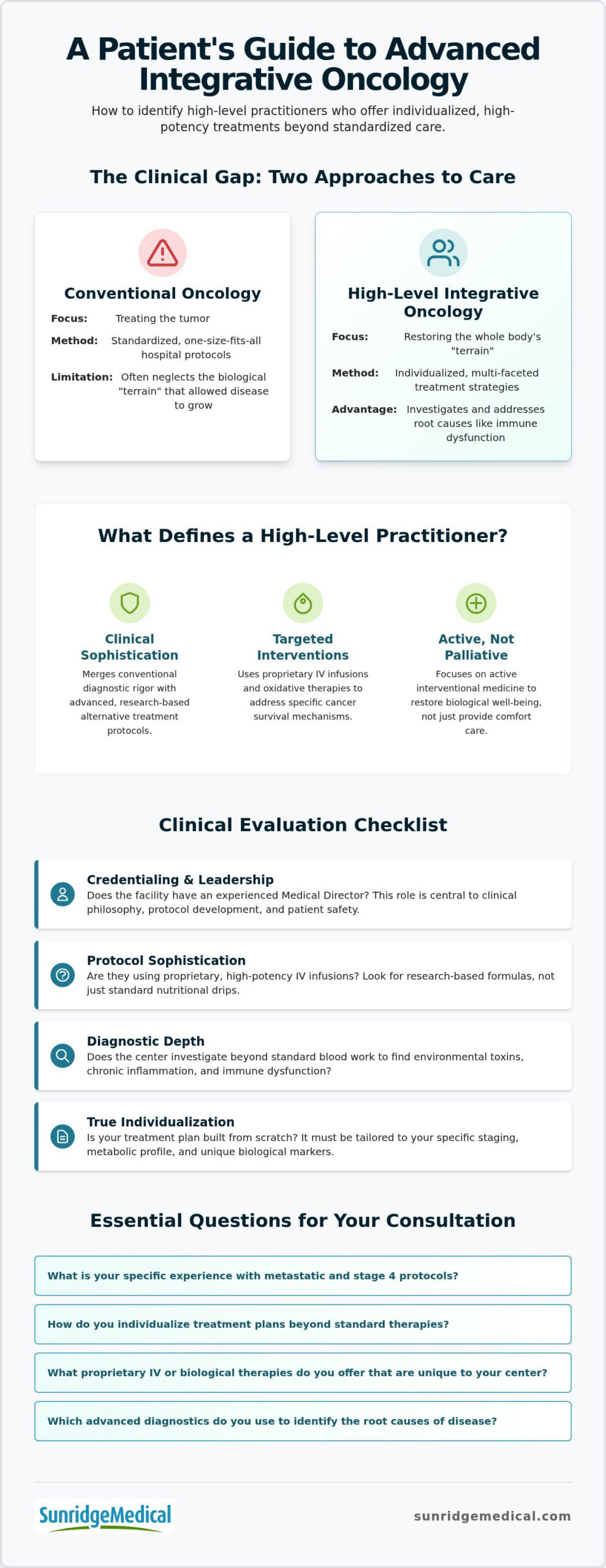
Integrative vs. Conventional Oncology: The Clinical Gap
Conventional oncology often relies on standardized, one-size-fits-all hospital protocols. These systems are designed to treat the tumor, but they often neglect the biological environment that allowed the disease to manifest. In contrast, an integrative specialist addresses the “terrain” of the body. They don’t just look at the pathology; they investigate root causes such as environmental triggers, chronic inflammation, or immune dysfunction. When you search for an “integrative oncologist near me,” you’re likely looking for more than just a second opinion. You’re looking for a new direction that respects your individual experience and targets the disease from multiple angles simultaneously.
Why Research-Based Alternative Medicine is the New Standard
There’s a definitive shift occurring from “palliative” care, which focuses solely on comfort, to “active” interventional alternative medicine. This new standard uses biological medicine to target the cancer’s survival mechanisms directly. Specialized IV therapies and nutritional infusions play a critical role in this approach. These protocols are designed to support cellular health and immune function while creating an environment that is hostile to malignant growth. Integrative oncology is a discipline that prioritizes the restoration of biological well-being through multi-faceted interventions. By moving beyond anecdotal evidence to clinical-grade methodologies, these specialists offer a level of precision that standard systems simply cannot match.
- Individualized Protocols: Moving away from standardized “one-size-fits-all” care.
- Targeted Interventions: Using proprietary IV and oxidative therapies to address specific mechanisms.
- Comprehensive Diagnostics: Evaluating the body’s internal terrain to find underlying triggers.
The MOFU Checklist: Evaluating an Integrative Medical Center
Searching for an “integrative oncologist near me” often leads to a long list of practitioners, yet few offer the clinical depth required for advanced cases. It’s vital to move beyond simple directory listings and apply a rigorous evaluation framework. High-level care requires a commitment to the Principles of Integrative Oncology, where the focus shifts from general wellness to targeted clinical interventions. Use this checklist to ensure the center you choose possesses the infrastructure to support your recovery.
- Credentialing: Does the facility have an experienced Medical Director like Dr. Steven S. Isaacman? The director’s background determines the clinical philosophy and the safety of the entire center.
- Protocol Sophistication: Are they using proprietary IV infusions and oxidative therapies? You don’t want a standardized nutritional bag; you need high-potency, research-based formulas that target specific survival pathways.
- Diagnostic Depth: True healing requires looking at environmental toxins and neurologic factors that standard hospital blood work might miss.
- Individualization: Your plan should be built from scratch, specifically tailored to your staging, metabolic profile, and unique biological markers.
- Support Systems: A dedicated team should be in place for ongoing monitoring and physiological optimization.
Vetting Clinical Protocols and Experience
When you evaluate a clinic, ask about their historical success with alternative cancer treatment. Sunridge Medical has been a pioneer in this space since 2003, focusing on cases that others might consider too complex. It’s also important to determine if the specialist works in a clinical silo or if they’re willing to coordinate with your conventional team. A collaborative approach ensures that your biological treatments work in harmony with other interventions.
Facility and Technology Standards
A premier center should feature a sophisticated IV therapy lounge designed for precise clinical administration. On-site diagnostic capabilities are necessary for managing complex chronic conditions effectively. As a core component of your recovery, always verify if the clinic includes hormone optimization within their protocols. Balancing the endocrine system is often the missing piece in restoring physiological resilience. If you’re ready to explore a higher standard of care, consider how an individualized approach at Sunridge Medical could change your prognosis.
Beyond Standard Care: Advanced Alternative Cancer Protocols
Precision medicine requires a deliberate departure from generalized wellness. While many individuals begin their search for an “integrative oncologist near me” expecting simple dietary shifts or stress management, the clinical reality at a high-level facility is far more rigorous. True integrative care involves active interventional protocols that target the biological environment of the disease. This methodology focuses on the underlying mechanisms of malignancy, moving beyond symptom management to address the physiological terrain that allows disease to persist.
Oxidative therapies represent a cornerstone of this active approach. These specialized protocols are designed to target cancer cells by exploiting their metabolic vulnerabilities while simultaneously sparing healthy tissue. This level of therapeutic precision aligns with ASCO’s Definition of Integrative Oncology, which emphasizes evidence-informed practices used alongside conventional care to improve patient outcomes. By utilizing research-based biological medicine, practitioners can offer a layer of support that conventional systems frequently lack. For patients seeking facilities that excel at integrating alternative therapies with chemotherapy, understanding how to evaluate a center’s clinical depth is an essential first step toward accessing this level of precision care.
For specific and complex challenges, such as adenocarcinoma stomach treatment, high-dose nutritional infusions are essential for supporting cellular health, especially when the digestive system’s capacity is compromised. These targeted integrative paths provide a structured framework for recovery, ensuring that the body has the necessary resources to maintain resilience during intensive treatment cycles.
IV Therapy: The Delivery System for Healing
Intravenous delivery is often superior to oral supplementation in the context of advanced illness. It bypasses digestive limitations and potential malabsorption, allowing for 100% bioavailability of potent nutrients and biological agents. At a premiere clinic, these infusions aren’t static; they’re customized based on real-time diagnostic markers and the patient’s immediate response. There is a profound clinical difference between standard “wellness drips” found in boutique shops and medical-grade oncology protocols that utilize proprietary oxidative and nutritional formulas administered under strict medical supervision.
The Importance of Immune System Optimization
Advanced alternative medicine seeks to reverse the profound immunosuppression often caused by the disease itself. By integrating detoxification and environmental illness protocols into the cancer journey, specialists help “re-educate” the immune system to recognize and respond to biological threats more effectively. Biological treatments act as a steady hand for patients navigating complex health journeys. This comprehensive lens ensures that your search for an “integrative oncologist near me” leads to a scientific guide capable of restoring physiological resilience through multi-faceted, research-backed interventions. For those managing overlapping conditions, understanding how integrative medicine for chronic illness addresses the biological root causes of persistent symptoms can provide an essential foundation for comprehensive recovery.
Navigating Your Consultation: Essential Questions to Ask
Your initial consultation is the most critical step in moving from a general search for an “integrative oncologist near me” to receiving targeted, high-potency care. It’s the moment where you must determine if a practitioner possesses the clinical depth to handle a complex, advanced-stage diagnosis. Don’t settle for vague promises of wellness. Instead, use this opportunity to challenge the provider’s expertise and the scientific foundation of their methodologies. A high-level specialist will welcome these inquiries as a sign of an informed and engaged patient.
- How do you determine which alternative protocols are right for my specific staging? Look for an answer that involves deep diagnostic testing rather than a “packaged” treatment plan.
- What is your experience in treating advanced stage 4 or metastatic cases? This is vital. You need a physician who understands the urgency and complexity of high-stage disease.
- Can you explain the research basis for the IV therapies you recommend? A clinical pioneer should be able to cite the biological mechanisms and research supporting their proprietary infusions.
- How do you monitor physiological progress beyond tumor markers? Advanced practitioners look at the whole body, including immune function, inflammatory markers, and metabolic health.
Evaluating the Physician-Patient Partnership
The ideal physician projects clinical authority tempered with compassionate optimism. You’re looking for a “scientific guide” who isn’t satisfied with the status quo of standardized care. During the meeting, notice if there’s a clear, structured path forward. A “wait and see” approach is often inadequate for advanced conditions. You deserve a partner who offers a steady hand and a methodical plan designed to restore your biological well-being through multi-faceted interventions.
Logistics and Treatment Planning
Understanding the daily reality of treatment is essential. Ask what the clinical administration of a proprietary protocol looks like on a daily basis. For those seeking national-level expertise, inquire how the clinic handles out-of-state patients and coordinates long-distance care logistics. Finally, ask a question regarding the integration of neurologic and autoimmune management in your cancer care. Because cancer often affects multiple systems, a comprehensive approach must address these adjacent physiological factors to ensure a complete restoration of health. If you’re seeking a clinical ally who prioritizes precision and individualization, contact Sunridge Medical today to discuss your unique case.
Sunridge Medical: A Sanctuary for Advanced Integrative Oncology
While your initial search for an integrative oncologist near me might be driven by geographic convenience, the complexity of an advanced diagnosis often requires a broader clinical perspective. Sunridge Medical serves as a specialized sanctuary for those who’ve reached the limits of conventional systems and are seeking a more profound level of care. Since our founding in 2003, we’ve remained dedicated to the pursuit of research-based alternative protocols that prioritize the restoration of biological well-being. Led by Medical Director Dr. Steven S. Isaacman, our center focuses on the person behind the pathology, ensuring that every patient receives a strategy as unique as their own biology.
Many patients travel from across the country to access our proprietary IV and biological treatments because they recognize that standardized care is often insufficient for metastatic or stage 4 cases. This journey is about more than just finding a doctor; it’s about transitioning from a system where you feel like a data point to a premiere environment where you receive specialized, multi-faceted attention. We’ve built our legacy on providing a steady hand for those navigating the most difficult health journeys, offering hope rooted in clinical precision and calm determination.
A Comprehensive Approach to Complex Disease
Our expertise extends beyond the scope of traditional oncology to address the interconnected nature of chronic illness. We provide advanced management for chronic Lyme disease, autoimmune disorders, and neurologic conditions, recognizing that these often overlap with a patient’s primary diagnosis. We also emphasize the role of hormone optimization therapy in restoring long-term resilience and physiological balance. This comprehensive lens allows us to address the “terrain” of the body, creating an environment that supports recovery and vitality. To simplify the process of accessing this high-level care, we offer a toll-free 1-800 number where you can receive personalized support and clear answers from your very first call.
Your Next Steps in Advanced Healing
When you’re facing a chronic or advanced condition, settling for the status quo isn’t a viable option. You deserve a scientific guide who isn’t satisfied with “packaged” treatment plans and is constantly seeking more effective ways to help those in need. The path forward begins with a comprehensive physician evaluation, a methodical process where we analyze your specific staging, metabolic profile, and underlying triggers to build a strategy from the ground up. We’re here to act as your dedicated advocate and clinical ally. Contact Sunridge Medical today to develop your individualized treatment plan and take the first step toward a more targeted, hopeful approach to your health.
Advancing Your Path to Clinical Restoration
Identifying the right medical partner is a pivotal moment in your health journey. By moving beyond general wellness and focusing on active interventional protocols, you shift the focus from symptom management to the targeted restoration of your biological well-being. This article has provided a framework for vetting clinical expertise. It ensures your chosen practitioner offers the research-based IV therapies and oxidative protocols necessary for complex cases.
Finding an integrative oncologist near me is the first step toward a more precise medical strategy. At Sunridge Medical, we’ve spent over 20 years refining proprietary research-based protocols for complex chronic diseases. Led by Medical Director Dr. Steven S. Isaacman, our clinic provides a sanctuary where advanced science meets individualized care. Don’t settle for standardized hospital protocols when a more comprehensive path is available. We invite you to schedule your comprehensive medical consultation with Sunridge Medical today. Progress is possible; we’re here to act as your scientific guide toward a meaningful recovery.
Frequently Asked Questions
What exactly does an integrative oncologist do differently from a traditional one?
An integrative oncologist merges conventional diagnostic rigor with advanced alternative treatment protocols to address the body’s internal terrain. While a traditional oncologist focuses primarily on the tumor, a specialist in this field investigates root causes such as immune dysfunction or environmental triggers. This multi-faceted approach aims to restore biological well-being through interventions that target the underlying mechanisms of the disease.
Is integrative oncology safe to use alongside chemotherapy or radiation?
Yes, these protocols are designed to be used in coordination with conventional care under the guidance of a high-level specialist. The focus is on supporting cellular health and immune function to help the body maintain resilience during intensive treatments. By addressing the physiological burden of standard care, integrative medicine aims to create a more comprehensive strategy for recovery.
Why should I look for a national specialist instead of just someone ‘near me’?
Prioritizing clinical expertise over geographic proximity is essential for complex or advanced diagnoses. While searching for an integrative oncologist near me provides convenience, a national specialist offers access to proprietary IV protocols and biological treatments that standard local facilities may not provide. High-level care often requires traveling to a sanctuary where research-based alternative medicine is the clinical standard.
What types of advanced alternative protocols are used for Stage 4 cancer?
Advanced protocols for stage 4 cases often include high-dose nutritional infusions and oxidative therapies. These interventions are designed to target the metabolic vulnerabilities of cancer cells while simultaneously supporting the health of surrounding tissue. By utilizing biological medicine, specialists can offer a layer of interventional support that goes beyond basic palliative care or simple lifestyle advice.
How does Sunridge Medical customize its IV therapy protocols for each patient?
We customize every IV protocol by analyzing a patient’s unique metabolic markers and real-time diagnostic data. Unlike standardized “wellness drips,” our medical-grade oncology protocols are designed from scratch to provide high-potency support. This precision ensures that the delivery system for healing bypasses digestive limitations and addresses the specific biological needs of each individual as they progress through treatment.
Can integrative oncology help with the side effects of conventional cancer treatments?
Targeted biological support can significantly mitigate the physiological burden of conventional care. When you consult an integrative oncologist near me, the goal is to optimize your resilience and reverse immunosuppression caused by chemotherapy or radiation. By addressing the toxicity associated with standard treatments, these protocols help maintain your strength and quality of life throughout the recovery journey.
How long does a typical integrative treatment program last at Sunridge Medical?
Treatment duration is determined by your specific diagnosis, staging, and biological response. We don’t utilize “packaged” timelines; instead, we prioritize a methodical restoration of health. Our clinical team monitors your progress through advanced diagnostics to ensure the program evolves with your needs. This individualized pacing ensures every phase of care is medically necessary and appropriately targeted.
Does an integrative oncologist address other issues like Lyme or autoimmune disease?
High-level specialists recognize that cancer often exists alongside other complex health challenges. At Sunridge Medical, our comprehensive approach includes managing chronic Lyme disease, autoimmune disorders, and environmental illnesses. We address these interconnected systems because true recovery requires stabilizing the entire physiological environment. This includes addressing neurologic factors and hormone optimization to build a foundation for long-term well-being.