


A new diagnosis, a recurrence, or a disappointing response to treatment can turn a Scottsdale search for cancer treatment options into an exhausting stream of conflicting promises. One clinic discusses surgery and chemotherapy. Another emphasizes infusions, oxygen-based therapies, supplements, or immune support. A third promotes clinical trials. The difficult question isn't, “What treatments exist?” It's, “Which option fits my cancer, my current treatment, and my goals without creating avoidable risk?”
That distinction matters across Scottsdale and the greater Phoenix metropolitan area, including Paradise Valley, Tempe, Mesa, and Chandler. Arizona records an average of 34,274 invasive cancer cases each year, with an age-adjusted rate of 382 cases per 100,000 persons, according to the Arizona Cancer Report from the Arizona Department of Health Services. Patients need local access to advanced oncology, but they also need plain-language guidance about supportive care, advanced treatment platforms, and therapies that remain investigational.
This guide offers a decision pathway rather than a catalog of services. It explains how conventional oncology and integrative care can coordinate, which therapies have guideline support for symptom relief, how to evaluate broader claims, and what to prepare for a second opinion or Scottsdale consultation.
Table of Contents
- Introduction to Cancer Treatment Options in Scottsdale
- How Conventional and Integrative Oncology Work Together
- What Evidence Supports for Symptom Relief During Treatment
- Evaluating Integrative and Advanced Options Available in Scottsdale
- How Second Opinions and Personalized Planning Work
- What to Expect From an Integrative Clinic Visit in Scottsdale
- Choosing Your Next Step With Confidence in Scottsdale
Introduction to Cancer Treatment Options in Scottsdale
A patient may begin the search after a breast, lung, prostate, colorectal, or blood cancer diagnosis and feel pressure to make decisions before the medical language becomes familiar. Another patient may have completed surgery or chemotherapy, only to face persistent fatigue, nausea, pain, sleep problems, or a recurrence. A family member might be comparing a Phoenix hospital, a Scottsdale oncology practice, a clinical trial, and an integrative clinic, while wondering whether these choices can safely fit together.
Those concerns are reasonable. Cancer treatment is not one decision. It's a sequence of decisions influenced by tumor type, stage, pathology, molecular findings, previous treatment, current health, and access to the right specialists. A therapy that makes sense for symptom relief may have no role in treating the cancer itself. Conversely, an advanced treatment platform may be appropriate only for a narrow group of patients whose disease characteristics meet specific criteria.
Scottsdale sits within a broad cancer-care ecosystem. Local centers provide infusion chemotherapy, radiation oncology, surgical oncology, specialist consultations, and trial access. A Scottsdale outpatient location in a national cancer network reports onsite chemotherapy infusions, radiation therapy, and consultations with medical, gynecologic, radiation, surgical, and thoracic oncologists in its Scottsdale cancer care program. Regional services also include highly specialized platforms such as proton beam therapy and CAR-T cellular therapy, although candidacy depends on the individual diagnosis.
Practical rule: A credible plan should make clear what is intended to treat the cancer, what is intended to reduce treatment-related symptoms, and what remains experimental.
For patients considering integrative cancer care in Scottsdale, the most important question isn't whether a clinic offers many modalities. Ask how the clinic reviews your records, communicates with your oncology team, screens for interactions, and measures whether a supportive therapy is helping. That approach protects the role of evidence while leaving room for individualized care.
How Conventional and Integrative Oncology Work Together
Conventional oncology focuses directly on controlling or removing cancer. Depending on the diagnosis, treatment may include surgery, chemotherapy, radiation therapy, immunotherapy, targeted therapy, hormone therapy, or a combination. Doctors choose among these options after reviewing pathology, stage, imaging, biomarkers, treatment history, and the patient's overall condition.
Integrative oncology adds a second layer. It uses evidence-informed supportive strategies to address symptoms, function, emotional wellbeing, nutrition, sleep, movement, and treatment tolerance. The purpose is not to replace surgery, radiation, chemotherapy, immunotherapy, or other disease-directed care. It's to help the person receiving that care.
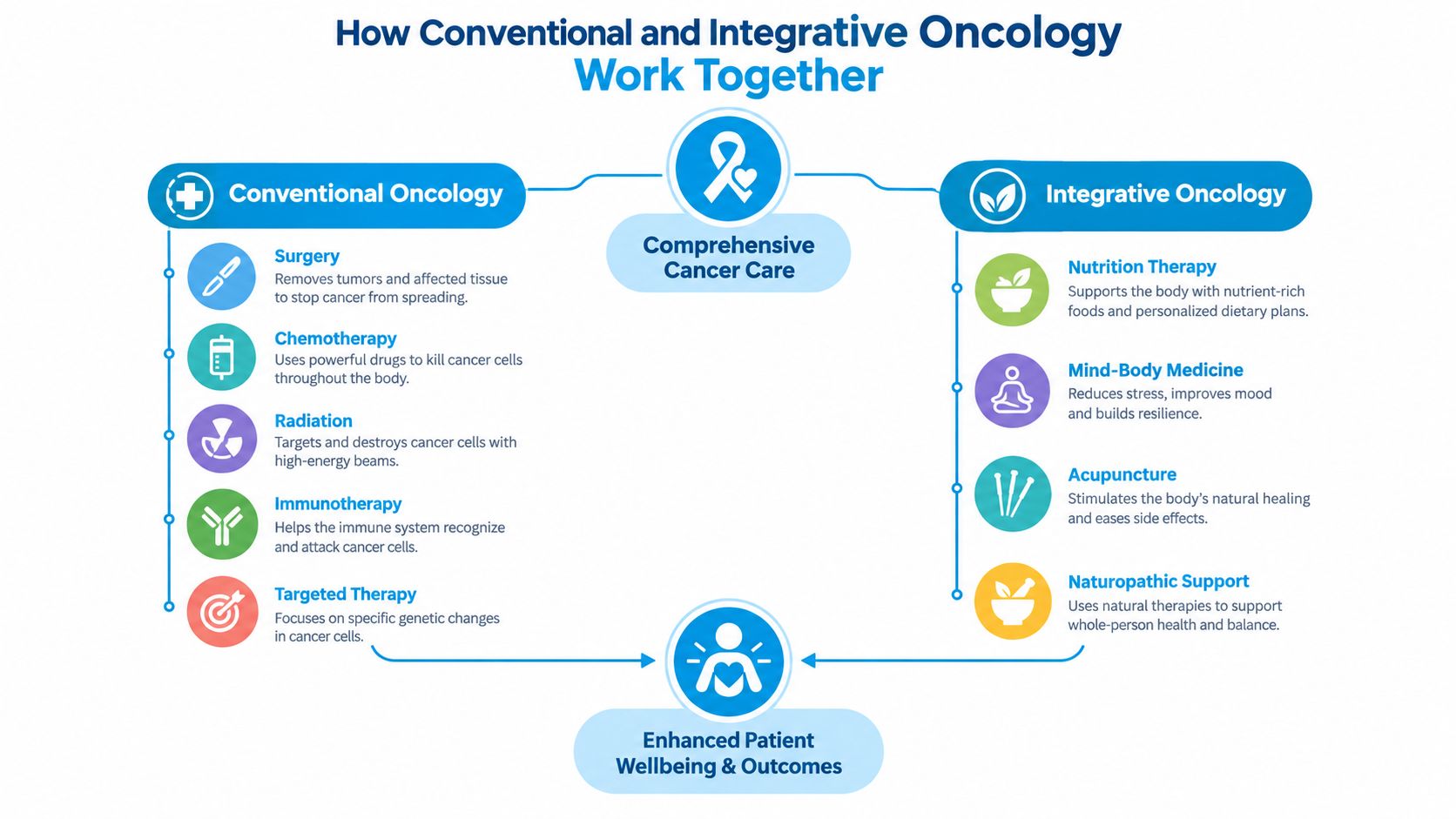
Treating the disease and supporting the person
A useful analogy is a two-part construction project. Conventional oncology addresses the structural problem, the tumor, by using treatments designed to remove, destroy, or control malignant cells. Integrative oncology supports the conditions around that work, including pain control, fatigue management, sleep, stress, nutrition, mobility, and recovery.
The analogy has limits. Supportive care doesn't guarantee that the body will eliminate cancer, and no diet, supplement, or mind-body practice should be presented as a substitute for appropriate oncology. The National Cancer Institute's overview of complementary and alternative medicine cautions that many complementary and alternative cancer treatments still lack good scientific evidence for safety and effectiveness.
The Society for Integrative Oncology published practice guidelines in 2007, and ASCO later endorsed and updated guidance for symptom management in cancer patients. The 2024 joint guideline overview includes evidence-backed recommendations involving mindfulness-based programs, yoga, qigong, exercise, acupuncture, acupressure, massage, music therapy, and relaxation.
Why coordination protects patients
Coordination matters because even seemingly gentle therapies can affect a complex treatment plan. A supplement may influence bleeding risk, sedation, blood pressure, liver metabolism, or the way a medication works. Exercise may need modification for anemia, bone involvement, neuropathy, surgery recovery, or treatment-related weakness.
A coordinated team should know:
- What your oncologist is treating: The integrative clinician needs the diagnosis, current regimen, treatment intent, and major precautions.
- What symptoms are limiting you: Fatigue, nausea, pain, anxiety, sleep disruption, and appetite changes may require different strategies.
- What requires escalation: New neurological symptoms, fever, breathing difficulty, uncontrolled pain, or other urgent changes belong with the appropriate oncology or emergency team.
- What success means: A supportive intervention should have a practical target, such as improved sleep, easier movement, reduced nausea, or better ability to participate in daily life.
Integrative care works best as a coordinated layer, not as a competing explanation for every medical problem.
What Evidence Supports for Symptom Relief During Treatment
Patients often hear that a therapy is “natural” or “used at major cancer centers.” Those descriptions don't answer the most useful clinical questions: Which symptom does it address? During which phase of care? What are the risks? Who should supervise it?
Current guidance is more specific than a general list of wellness services. Mindfulness-based interventions and yoga are recommended during treatment for fatigue, while exercise and mindfulness-based programs receive strong recommendations for survivors after treatment. ASCO's discussion of fatigue management supports mindfulness-based stress reduction, mindfulness-based cognitive therapy, and tai chi or qigong during treatment, with strong support for mindfulness-based programs after treatment in the ASCO educational update.
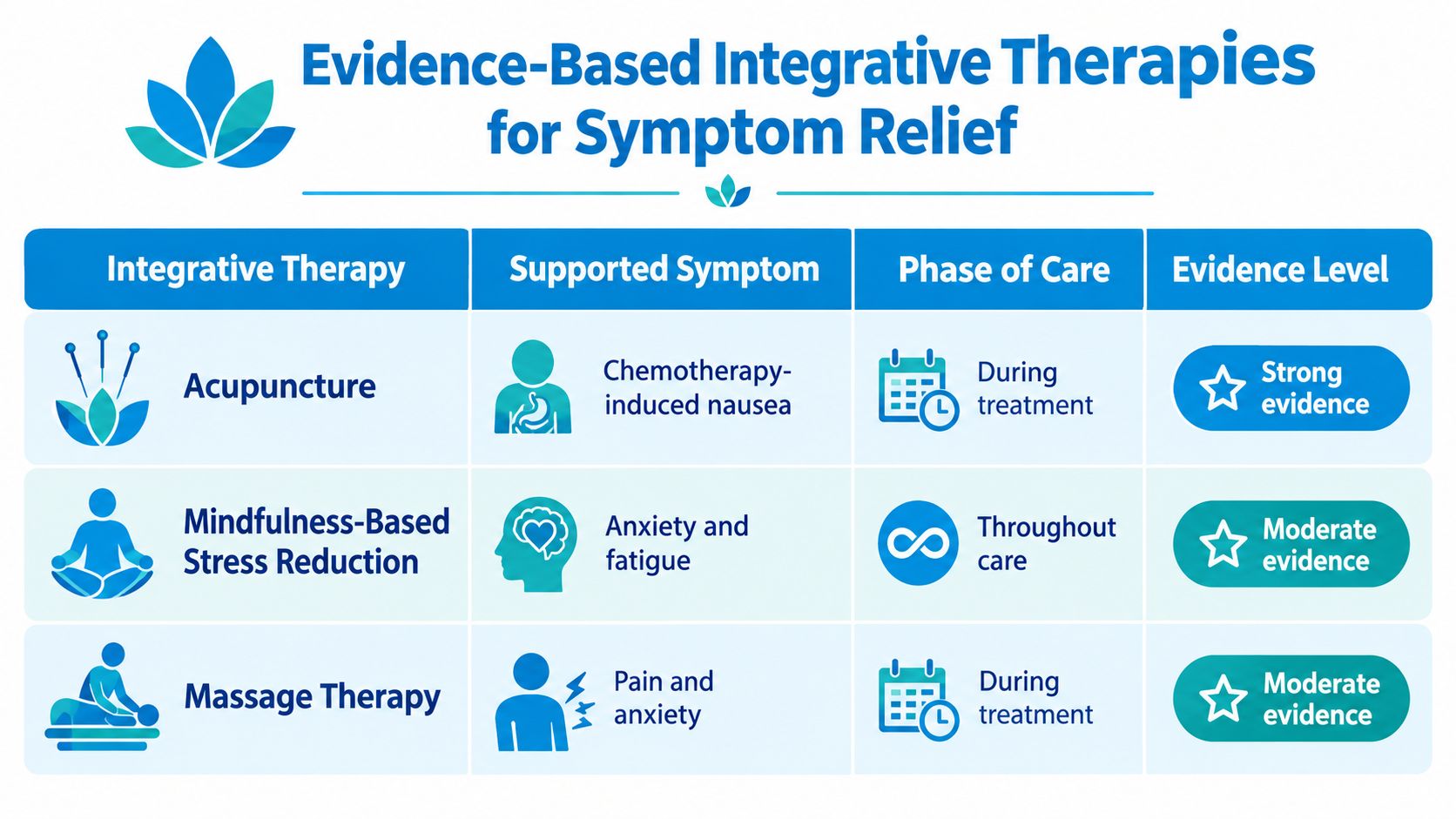
Matching the tool to the symptom
Mindfulness-based programs may help patients manage anxiety, depression, fatigue, and stress-related sleep disruption. These programs don't need to be framed as a cure or as a way to control tumor biology. Their value is more practical, helping some patients regulate distress and remain engaged with daily activities and medical care.
Yoga, tai chi, and qigong combine movement, breathing, attention, and balance. A qualified instructor should adapt the practice around surgical restrictions, ports, neuropathy, low blood counts, bone disease, or dizziness. A vigorous class isn't automatically appropriate just because movement is generally beneficial.
Exercise can be valuable during recovery and survivorship, but the plan should reflect the patient's diagnosis and physical status. Someone with bone metastases, severe anemia, cardiopulmonary limitations, or recent surgery needs medical guidance before increasing activity.
The National Cancer Institute's integrative oncology guideline summary includes acupuncture for pain, fatigue, nausea, vomiting, and hot flashes. Massage may support relaxation, pain, and anxiety, but the practitioner should understand cancer-related precautions, including surgical sites, fragile bones, thrombosis risk, low platelets, and implanted devices.
Separating symptom support from cancer-directed claims
A clinic can responsibly offer acupuncture for chemotherapy-related nausea without claiming that acupuncture treats the malignancy. It can offer massage for comfort without promising longer survival. It can teach mindfulness without suggesting that emotional stress caused the cancer.
That boundary is especially important because a global survey found nearly 80% of clinicians reported that integrative services remain underused, as discussed in Cancer Network's review of integrative oncology implementation. Underuse can reflect limited referral pathways, but it can also reflect patient uncertainty about what is supported and when it fits.
Patients seeking clinical support for chemotherapy side effects should ask the clinic to identify the target symptom, the evidence behind the intervention, the expected timing, and the communication plan with the treating oncologist.
Evaluating Integrative and Advanced Options Available in Scottsdale
Scottsdale patients may encounter a wide range of services, from nutrition-focused infusions and oxidative medicine to hyperthermia, red light therapy, insulin potentiation therapy, regenerative approaches, and environmental medicine. These therapies don't all occupy the same evidence category. Some may be used as supportive care, some are emerging, and some lack strong evidence as cancer-directed treatment.
A useful evaluation starts with purpose. Is the therapy meant to relieve a symptom, address a documented deficiency, support recovery, or treat the tumor? The clinic should describe the purpose in ordinary language and explain what would change if the therapy isn't helping.
| Therapy Category | Intended Purpose | Evidence Status | Questions to Ask the Clinic |
|---|---|---|---|
| Nutrition assessment or IV nutritional therapy | Address nutrition concerns or support intake when clinically appropriate | Depends on the identified need and formulation | What problem is being treated, and are laboratory findings available? |
| Acupuncture, massage, mindfulness, or movement | Support symptoms such as pain, nausea, anxiety, fatigue, or sleep disturbance | Guideline-supported for selected symptoms and situations | Which symptom is the target, and how will progress be assessed? |
| Hyperthermia or oxidative medicine | May be presented as an adjunctive or supportive approach | Evidence and clinical role vary by method and indication | Is this supportive, investigational, or cancer-directed? What safety monitoring is used? |
| Red light therapy | Often discussed for localized support or recovery | Cancer-specific evidence and role require careful qualification | Could it conflict with treatment timing or affect a treated area? |
| Insulin potentiation therapy | Offered by some clinics as part of a targeted protocol | Not a replacement for established oncology treatment | What published evidence supports this use, and who coordinates medication decisions? |
| Regenerative or environmental medicine | May address selected tissue, metabolic, or exposure-related concerns | Relevance depends on diagnosis and documented findings | Is there a clear indication, and what are the risks, costs, and alternatives? |
Advanced platforms require oncology-level review
Scottsdale's conventional ecosystem includes infusion, radiation, surgical oncology, specialist evaluation, and clinical trial pathways. The regional cancer field also includes Arizona's only proton beam facility and advanced immunotherapy services such as CAR-T at a major regional cancer center, according to Mayo Clinic's Arizona cancer care information. That same resource lists targeted oncology, interventional radiology, ablation, hyperthermic intraperitoneal chemotherapy, and bone marrow transplant.
These options aren't interchangeable. Proton therapy may be relevant when reducing exit dose to nearby organs matters, including selected tumors near the brain, spine, head and neck, pediatric sites, or re-irradiation situations. CAR-T, ablation, and HIPEC each depend on disease type, distribution, molecular information, previous therapy, and the patient's condition.
Ask directly: “Does this option treat my cancer, support my treatment, or remain investigational for my diagnosis?”
Safety questions also apply to hyperbaric oxygen therapy. If you're comparing facilities, review practical guidance on choosing safe HBOT centers and ask who supervises treatment, how contraindications are screened, and how the service communicates with your oncology team. For patients considering hyperthermia treatment planning, the same principle applies. The treatment should be discussed in the context of pathology, stage, current therapy, and measurable goals rather than as a stand-alone promise.
How Second Opinions and Personalized Planning Work
A second opinion isn't necessarily a rejection of the first plan. Often, it confirms the recommended approach, identifies a useful clinical trial, clarifies a pathology question, or adds symptom support that wasn't addressed during a busy oncology visit.
Step one, organize the medical record
Start with the documents that determine treatment fit:
- Pathology: Include the original report, surgical pathology, biopsy findings, and any expert review.
- Staging information: Gather imaging reports and the actual scans when available, along with operative notes.
- Biomarkers and molecular testing: Bring genomic or receptor results that may influence targeted therapy, immunotherapy, or trial eligibility.
- Treatment history: List surgeries, radiation, chemotherapy, immunotherapy, hormone therapy, dose changes, reactions, and dates.
- Current health information: Include medications, supplements, allergies, implanted devices, kidney or liver concerns, nutritional issues, and daily symptoms.
The details matter because treatment selection is constrained by tumor biology, stage, prior exposure, and the ability to coordinate multimodal care.

Step two, separate urgent decisions from optional additions
At the consultation, ask which decisions have a time-sensitive impact and which can be considered alongside standard treatment. A thorough review should address whether pathology needs clarification, whether imaging changes the stage, whether molecular profiling is complete, and whether a trial or specialized platform is relevant.
An integrative review can then consider symptom burden, functional status, nutrition, sleep, stress, medications, and reasonable complementary strategies. It should also identify therapies that may be unsafe or unsupported for the patient's situation.
Step three, create a communication plan
Fragmented referrals can delay imaging review, radiation planning, trial screening, or escalation to a higher-intensity treatment. Ask who will contact the primary oncologist, who will review new symptoms, and where laboratory or infusion records will be stored.
Patients can prepare by writing down their three most urgent questions and bringing a support person if possible. The Sunridge Medical cancer second-opinion resource can help patients understand what information may be useful before requesting a review.
What to Expect From an Integrative Clinic Visit in Scottsdale
An integrative visit should begin with your actual situation, not with a predetermined menu of therapies. A patient from Phoenix may arrive with fatigue after chemotherapy. Someone traveling from Paradise Valley, Tempe, Mesa, or Chandler may need help coordinating supportive care around radiation appointments. An out-of-town patient may need records reviewed before arranging travel to Scottsdale.

The clinician may review your diagnosis, treatment schedule, medications, supplements, allergies, laboratory information, symptoms, sleep, nutrition, activity, and recovery concerns. The discussion should distinguish a supportive goal, such as reducing nausea or improving energy, from an anticancer objective that belongs within oncology decision-making.
A clinic with in-clinic IV and injection-based capabilities may discuss whether a physician-directed therapy is appropriate, but an available service isn't automatically suitable for every patient. The clinician should explain why a therapy is being considered, what monitoring is required, how it fits around chemotherapy or radiation, and what findings would lead to stopping or changing it.
Planning for continuity and travel
Patients who travel should ask about appointment timing, record transfer, laboratory coordination, transportation, lodging, and what happens after returning home. A practical plan may include communication with the local oncology team, instructions for reporting symptoms, and a defined follow-up schedule.
The care team should also explain financial questions before treatment begins. Cancer medicine spending reached $252 billion in 2024, up 75% over five years, according to IQVIA's Global Oncology Trends 2025 report. That broader figure doesn't predict an individual bill, but it illustrates why patients should ask about insurance coverage, out-of-pocket costs, payment expectations, and whether a service is considered standard, supportive, or investigational.
A systematic review published in 2026 found that some integrative oncology approaches can be cost-effective, with phytotherapeutic and mind-body interventions showing favorable profiles, although the evidence remains uneven. Patients still need individualized cost and clinical discussions rather than assuming that a favorable review applies to every service.
A short orientation video can also help patients understand how a consultation may be structured:
Good follow-up keeps the plan connected to the patient's oncology calendar. The clinician should know whether symptoms are improving, stable, or worsening, and the patient should know which team to contact for urgent changes.
Choosing Your Next Step With Confidence in Scottsdale
A sound decision about cancer treatment options in Scottsdale rests on four questions:
- What is the medical purpose? Is the option designed to remove or control cancer, manage a treatment symptom, support recovery, or explore an investigational approach?
- What evidence applies to this diagnosis and symptom? Evidence for acupuncture-related nausea doesn't automatically support a supplement or a cancer-directed claim.
- What are the safety and coordination requirements? The plan should account for medications, blood counts, organ function, surgery, radiation, and communication with the oncology team.
- What are the practical costs and commitments? Ask about travel, scheduling, insurance, out-of-pocket expenses, monitoring, and follow-up before agreeing to treatment.
Integrative oncology has become more structured because guidelines now identify specific supportive therapies for specific symptoms and treatment phases. That progress doesn't make every alternative modality proven. It gives patients a clearer way to evaluate claims without dismissing supportive care or delaying established cancer treatment.
Sunridge Medical may review your records, current symptoms, treatment history, and goals to determine whether an individualized integrative consultation is appropriate. The purpose is to help you understand reasonable adjunctive options and coordinate decisions with qualified cancer professionals.
Sunridge Medical offers physician-directed integrative cancer consultations, second-opinion support, treatment planning, and selected IV, injection-based, and supportive therapies in Scottsdale. Visit Sunridge Medical to discuss your diagnosis and determine whether an evaluation is appropriate alongside your current oncology care.