


What if the persistent fatigue and cognitive dysfunction you’re experiencing aren’t merely symptoms of aging, but the physiological signature of a heavy metal burden that conventional labs simply aren’t designed to detect? Many individuals face the quiet frustration of being told their health markers are within range while their daily vitality continues to decline. You may feel a sense of hesitation when considering intensive detoxification, caught between the desire for relief and a valid concern regarding the safety of advanced protocols. It’s vital to have a clear, evidence-based perspective on chelation therapy benefits and risks before embarking on a path toward systemic restoration.
This clinical guide provides the clarity you need to move forward with confidence. We’ll examine how precision-targeted chelation works at a molecular level to address chronic inflammation and toxic exposure. You’ll gain a balanced understanding of the physiological mechanisms involved, the necessary safety precautions for high-impact detox, and the specific criteria for selecting a medical center that prioritizes individualized physician oversight. By the end of this article, you’ll possess a structured framework for evaluating whether this specialized intervention is the right step for your long-term wellness journey.
Key Takeaways
- Understand how the chronic bioaccumulation of metals like lead and mercury disrupts mitochondrial function, leading to persistent fatigue that standard labs often overlook.
- Learn the biochemical process of molecular bonding where specific ligands sequester toxic ions to facilitate safe, systemic excretion from the body.
- Evaluate a balanced clinical perspective on chelation therapy benefits and risks, including its role in reducing oxidative stress and improving cardiovascular endothelial health.
- Discover why provocation testing is the gold standard for revealing hidden toxic stores and which specific contraindications require careful medical screening.
- Identify the importance of an individualized physician evaluation to ensure your detoxification protocol is tailored to your unique physiological needs and safety profile.
Understanding the Physiological Burden of Heavy Metal Toxicity
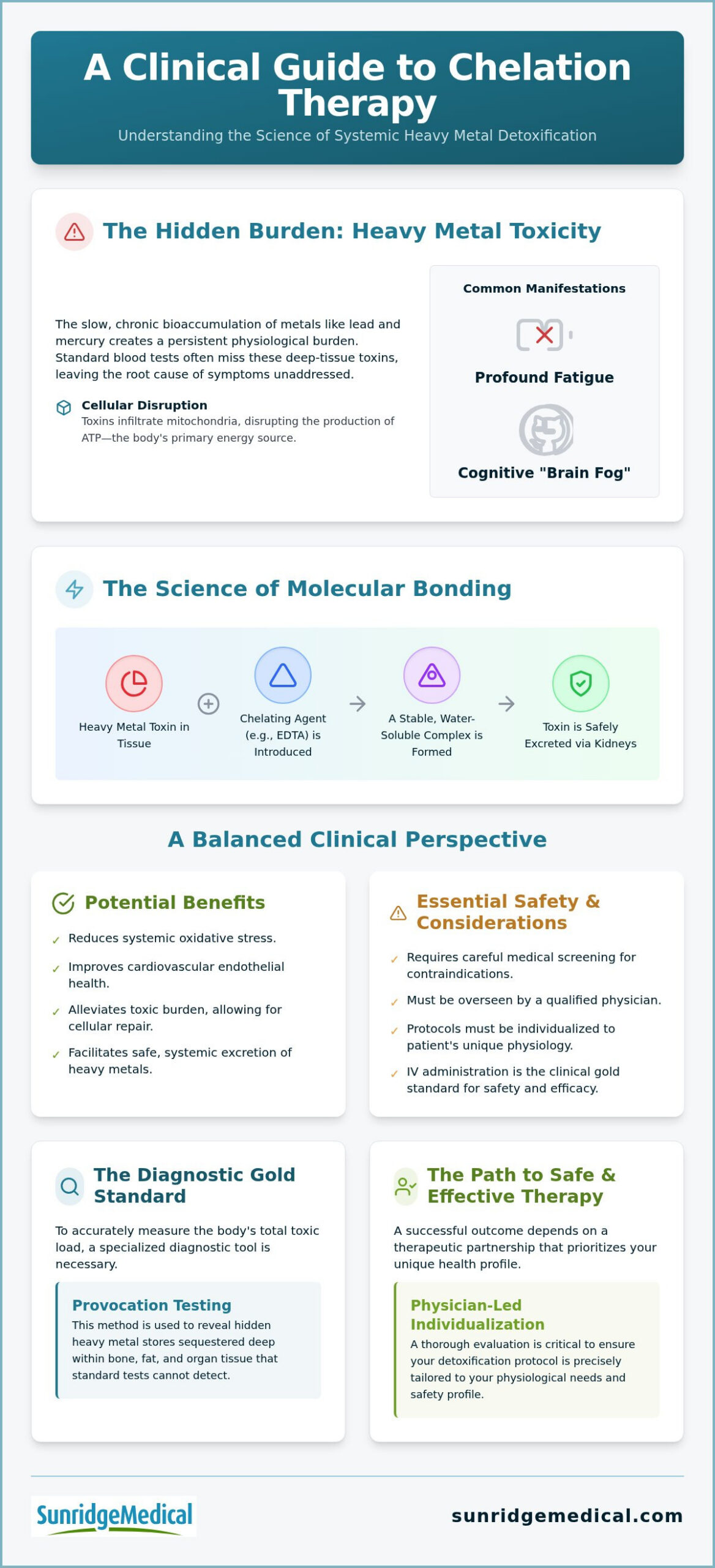
Heavy metal toxicity is often misunderstood as a rare, catastrophic event requiring emergency intervention. While acute poisoning is a medical crisis, the more common challenge for complex patients involves the slow, chronic bioaccumulation of toxins within cellular tissues. This subtle buildup creates a persistent physiological burden that standard healthcare models frequently overlook. When toxins accumulate over decades, they don’t just sit idly in the body; they actively interfere with the fundamental biological processes required for vitality and repair.
Specific metals like lead, mercury, and cadmium are particularly insidious because they mimic essential minerals, allowing them to infiltrate the mitochondria. Once inside, these metals disrupt the production of adenosine triphosphate (ATP), which is the primary energy currency of your cells. This cellular interference often manifests as the profound, unyielding fatigue and “brain fog” characteristic of environmental illness. Understanding chelation therapy benefits and risks begins with recognizing this deep-seated cellular disruption and the necessity of a targeted, clinical response to restore systemic homeostasis.
Sources of Modern Environmental Exposure
Exposure isn’t merely a relic of the industrial past. It persists through modern industrial pollutants that have become embedded in the human food chain. Legacy lead exposure remains a significant concern for those living or working in older infrastructure where lead pipes and paint still exist. The primary diagnostic challenge lies in the fact that standard blood tests typically measure circulating toxins from very recent exposure. These tests often fail to reveal the deep-tissue metal burdens sequestered in bone, fat, and organ tissue, leaving many patients without an explanation for their declining health.
The Link Between Toxicity and Chronic Disease
Heavy metals act as potent catalysts for oxidative stress, triggering a cascade of persistent inflammation. This inflammatory state is a known driver of systemic dysfunction and can significantly complicate autoimmune disease management by keeping the immune system in a state of constant hyper-vigilance. When these metals are sequestered in the central nervous system, the neurological implications are profound. Patients may experience tremors, cognitive decline, or mood disturbances as the toxic burden interferes with neurotransmitter signaling. For individuals facing these complex conditions, moving beyond symptom suppression requires a sophisticated approach to detoxification that addresses the underlying toxic load while supporting the body’s natural pathways of elimination.
What is Chelation Therapy? The Science of Molecular Bonding
Chelation therapy is a sophisticated clinical process involving the administration of specific chelating agents to sequester and remove heavy metals from the body’s tissues. At its core, the science of chelation relies on the principle of molecular bonding. Ligands, which are specialized molecules, act like chemical “claws” to bind with metal ions. This process creates stable, water-soluble complexes that the body can then safely excrete through the renal system. By facilitating this targeted removal, the therapy helps to alleviate the toxic burden that often prevents cellular repair and systemic recovery.
Understanding the nuances of chelation therapy benefits and risks requires looking closely at the specific agents used in a clinical setting. Clinicians typically utilize Ethylene-diamine-tetra-acetic acid (EDTA) or 2,3-Dimercapto-1-propanesulfonic acid (DMPS) depending on the specific metal burden identified during diagnostic testing. Intravenous (IV) administration remains the clinical gold standard for delivery. This method ensures that the chelating agent enters the systemic circulation directly, bypassing the absorption limitations and digestive hurdles often encountered with oral alternatives. It allows for a level of precision and bioavailability that’s essential for treating deep-seated toxicity.
The Role of EDTA in Vascular and Systemic Health
EDTA is a synthetic amino acid used for sequestering divalent and trivalent metal ions. Historically, it gained prominence in cardiovascular research due to its high affinity for lead and calcium ions. By removing these elements from the vascular environment, researchers observed significant improvements in endothelial function and overall blood flow. This systematic removal of toxic burdens allows the body’s self-regulatory mechanisms to function with greater efficiency, supporting long-term vitality. If you’re seeking a structured path toward recovery, you can consult with a specialist to determine the most appropriate protocol for your unique health profile.
Customized IV Protocols for Complex Conditions
A one-size-fits-all approach is inherently insufficient when treating chronic, multifaceted illnesses. Every patient presents a unique physiological landscape, meaning dosage, frequency, and the choice of chelating agent must be meticulously adjusted by a physician based on real-time response. Integrating these protocols into alternative health medicine ensures that detoxification isn’t an isolated event but part of a comprehensive recovery strategy. This physician-led customization prioritizes patient safety while maximizing the potential for profound health improvements, moving beyond the limitations of standardized care models to address the root causes of systemic dysfunction.
Evaluating Chelation Therapy Benefits and Risks
Understanding the balance of chelation therapy benefits and risks is essential for any patient navigating the complexities of environmental illness. This intervention is far more than a simple “detox” routine; it’s a high-precision medical protocol designed to alter the body’s internal chemistry. By successfully sequestering heavy metals, the therapy reduces the total body toxic load and significantly dampens systemic oxidative stress. This reduction allows the body’s natural repair mechanisms to function without the constant interference of cellular inhibitors.
The cardiovascular implications of this therapy are particularly noteworthy. Metal ions, especially lead and cadmium, act as potent triggers for vascular inflammation and endothelial dysfunction. Removing these elements can lead to improved blood flow and enhanced microcirculation, which supports organ health across the entire body. However, as the body begins to mobilize these sequestered toxins from deep tissues into the bloodstream for excretion, some individuals may experience a temporary intensification of symptoms. This “healing crisis,” similar to a Herxheimer reaction, is a sign of active detoxification but requires careful clinical management to ensure patient comfort and safety.
Primary clinical risks center on the excretory process itself. Because the kidneys serve as the primary exit route for metal-ligand complexes, they can experience significant strain if not properly supported. Additionally, chelating agents aren’t always perfectly selective; they can inadvertently bind to essential minerals like zinc, magnesium, and calcium. Without professional oversight and strategic mineral repletion, this can lead to electrolyte imbalances that compromise systemic stability.
Clinical Benefits for Chronic Illness Recovery
For those prioritizing their heart health and internal medicine needs during detoxification, you can find out more about the professional services offered by Poliklinika Dr. Nabil.
Removing inhibitory heavy metals provides a significant reprieve for a weary immune system. When the body is no longer forced to contend with a persistent toxic burden, it can redirect its limited resources toward cellular defense and tissue repair. Many patients observe a marked improvement in cognitive clarity and a substantial reduction in “brain fog” as neurotoxic metals are cleared from the system. This systemic cleanup often works in synergy with alternative cancer treatment protocols, where the goal is to create an internal environment that’s less hospitable to disease progression by lowering oxidative stress levels.
Mitigating Risks Through Medical Supervision
Safety is the foundational element of any advanced detoxification protocol. We prioritize pre-treatment kidney function screening, specifically measuring Creatinine and Glomerular Filtration Rate (GFR), to confirm that the renal system is capable of handling the increased workload. Throughout the treatment cycle, we monitor mineral levels with precision to prevent the development of deficiencies. This level of care must be performed in a clinical setting equipped with emergency protocols. Professional supervision ensures that the process remains therapeutic rather than overwhelming, providing a steady hand as you move toward restored well-being.
Clinical Candidacy: Is Chelation Therapy Right for You?
Determining if you’re a suitable candidate for intensive detoxification requires a methodical diagnostic approach. We don’t rely on guesswork. The journey begins by assessing your body’s current burden and its ability to process the release of sequestered toxins. This assessment is critical because chelation therapy benefits and risks are directly influenced by your baseline health and drainage capacity. Patients with significant renal impairment or certain cardiac conditions may need to explore alternative stabilization methods before beginning a full chelation protocol.
A successful outcome depends on a structured “Prep Phase.” Before we introduce chelating agents, we must ensure the liver and kidney drainage pathways are open and supported. This preparation reduces the likelihood of a systemic backlog when toxins enter the circulation. Once treatment begins, patients typically undergo a series of cycles, with frequency determined by their specific toxic load and physiological resilience. This isn’t a rapid process; it’s a deliberate, physician-monitored restoration of health that allows us to manage the chelation therapy benefits and risks with extreme precision.
Advanced Diagnostic Staging
Standard urine tests often fail to show the true extent of toxicity because they only measure what the body is currently excreting. We utilize provocation testing, where a small dose of a chelating agent is administered to “pull” metals from tissue stores into the urine for more accurate measurement. This process allows us to evaluate your “toxic bucket” and tailor the intervention to the specific metals found. We also conduct a thorough review of your medical history to identify any prior renal or cardiac complications that might necessitate a more cautious approach.
The Essential Role of Remineralization
One of the most critical, yet often overlooked, aspects of this protocol is the management of essential minerals. Chelating agents are designed to bind to metals, but they don’t always distinguish between toxic lead and vital minerals like zinc or magnesium. This necessitates a strategic remineralization strategy. We utilize nutritional IVs to replenish these essential electrolytes directly into the bloodstream, ensuring your cellular function remains stable throughout the process.
Integrating oral supplementation between sessions further supports the body’s mineral balance and helps maintain momentum. This multi-faceted approach ensures that while we’re removing the “bad” metals, we’re simultaneously fortifying your system with the “good” elements it needs to thrive. If you’re ready to identify the root causes of your symptoms, you can schedule a comprehensive physician evaluation to begin your diagnostic journey.
The Sunridge Approach to Individualized Chelation Therapy
Sunridge Medical approaches detoxification with a level of clinical rigor that reflects over two decades of specialized experience. Since our founding in 2003, we’ve recognized that true recovery requires moving beyond the standardized protocols that often fail complex patients. Our methodology is rooted in the understanding that chelation therapy benefits and risks must be managed through a lens of total physiological integration. This begins with an exhaustive physician evaluation led by our Medical Director, Dr. Steven S. Isaacman, ensuring that every IV protocol is precisely calibrated to your metabolic and toxicological profile.
We maintain an unwavering commitment to research-based, individualized treatment plans that prioritize patient safety at every stage of the process. This isn’t a passive administration of therapy; instead, it involves multi-faceted monitoring of renal function, mineral balance, and your overall systemic response. By providing this high level of clinical oversight, we transform a complex medical intervention into a predictable and supportive path toward recovery. This meticulous attention to detail allows us to maximize the chelation therapy benefits and risks profile for each individual, ensuring that the body is supported as it releases years of accumulated toxicity.
A Sanctuary for Complex Recovery
We view our facility as a sanctuary for those who have felt overlooked or misunderstood by conventional systems. For patients with sensitive neurological or autoimmune profiles, a generic detoxification protocol can be physically overwhelming. We mitigate this by combining chelation with advanced oxidative and nutritional therapies, creating a multi-faceted approach that supports the body’s natural resilience. By addressing the root cause of systemic dysfunction rather than merely suppressing symptoms, we offer a sophisticated environment where complex recovery becomes a tangible reality.
Taking the Next Step in Your Health Journey
Transitioning from chronic illness to recovery starts with a single, informed decision. You can begin this process by contacting our clinical team at 1-800-923-7878 to discuss your history and health goals. During your initial comprehensive physician evaluation, we’ll perform a deep-tissue analysis and review your diagnostic markers to build a research-based treatment plan tailored specifically for you. Sunridge Medical provides a steady hand for patients navigating complex health journeys.
Empowering Your Path to Systemic Recovery
Addressing the root cause of chronic illness requires a departure from the status quo. You’ve learned that heavy metal toxicity is a deep-seated physiological burden that disrupts cellular energy and fuels persistent inflammation. By understanding the science of molecular bonding and the necessity of clinical oversight, you can better navigate the landscape of chelation therapy benefits and risks. This knowledge is the first step in reclaiming the vitality that toxic exposure has quietly eroded over time. Reclaiming your health is possible when you have the right diagnostic tools and a focused treatment strategy.
Sunridge Medical brings over 20 years of clinical experience to this specialized field, offering individualized protocols specifically designed for complex chronic diseases. We prioritize advanced medical monitoring for all IV therapies to ensure your journey is both safe and effective. This level of dedicated care transforms a challenging diagnostic journey into a structured, manageable path forward. It’s time to move beyond symptom management and focus on true systemic restoration through a lens of clinical precision.
Schedule your comprehensive physician evaluation at Sunridge Medical today. We’re committed to acting as your scientific guide and steady advocate as you work toward a healthier, more vibrant future.
Frequently Asked Questions
Is chelation therapy safe for everyone?
Chelation therapy isn’t suitable for everyone, as it requires healthy kidney and liver function to process the removal of toxins. Individuals with severe renal disease, certain heart conditions, or those who are pregnant should generally avoid this protocol. We conduct a comprehensive physician evaluation to identify any contraindications before beginning treatment. This diagnostic staging ensures that we prioritize your safety while addressing the underlying mechanisms of your chronic health challenges.
How long does a typical chelation IV session take?
A typical intravenous session usually takes between 1.5 and 3 hours to complete. We prioritize a slower administration rate to minimize the potential for renal strain and to ensure the chelating agents bond effectively with sequestered metal ions. This methodical approach allows our clinical team to monitor your response in real time. The deliberate pacing helps maintain systemic stability as your body begins the complex process of cellular detoxification.
Can chelation therapy help with heart disease or clogged arteries?
Clinical research suggests that chelation can support cardiovascular health by improving endothelial function and reducing oxidative stress. By removing toxic metals like lead and cadmium from the vascular environment, the therapy helps restore the body’s natural ability to regulate blood flow. While we don’t position this as a standalone treatment for heart disease, it’s often a vital component of a multi-faceted strategy for managing systemic inflammation and environmental illness.
What are the most common side effects of chelation?
The most common side effects include mild fatigue, headache, or localized sensitivity at the injection site. Some individuals might experience a temporary intensification of symptoms, often called a “healing crisis,” as sequestered toxins enter the bloodstream for excretion. Balancing chelation therapy benefits and risks involves close medical supervision to manage these reactions. We use advanced monitoring to ensure that any side effects are addressed promptly, maintaining your comfort and progress.
How many sessions of chelation therapy are usually required?
The total number of sessions depends entirely on the depth of your toxic burden and your body’s resilience. Many patients require a series of 10 to 30 sessions to achieve a significant reduction in their total metal load. We establish a customized frequency and duration for your treatment cycle only after conducting thorough provocation testing. This individualized approach ensures that your protocol remains effective without overwhelming your body’s natural drainage pathways.
Does insurance typically cover integrative chelation therapy?
Standard health insurance providers typically don’t cover integrative or alternative chelation protocols. Sunridge Medical does not offer standard health insurance billing, as our treatments are specialized and research-based rather than part of conventional packaged care. We focus on providing high-level, individualized attention that addresses the root causes of dysfunction. Our team can provide detailed information regarding our consultation fees and treatment costs during your initial clinical inquiry.
What is the difference between EDTA and other chelating agents?
Each chelating agent has a unique chemical structure with a specific affinity for different heavy metals. EDTA is a synthetic amino acid primarily used for its ability to bind with lead and calcium ions. In contrast, agents like DMPS are often more effective for sequestering mercury and arsenic. Our physicians select the most appropriate agent based on your specific diagnostic results, ensuring the protocol is precisely targeted to your unique toxic profile.
What happens if my mineral levels drop during treatment?
If mineral levels decline, we immediately implement a strategic remineralization protocol to restore balance. Because chelating agents can inadvertently bind to essential minerals like zinc, magnesium, and calcium, we don’t leave your nutritional status to chance. We utilize specialized nutritional IVs and oral supplements to replenish these vital electrolytes between your chelation sessions. This proactive monitoring ensures your cellular function remains supported throughout the entire detoxification journey.