


The traditional medical model often views the caregiver as a secondary observer, yet clinical evidence suggests that your well-being is actually a primary determinant of patient outcomes. When you find yourself submerged in the relentless demands of a loved one’s illness, the resulting compassion fatigue isn’t a personal failure but a physiological response to prolonged neuroemotional stress. Accessing specialized caregiver support for chronic disease patients is essential for preventing the physical health decline that frequently accompanies long-term advocacy. You likely feel the weight of complex medical protocols and the isolation of a life redefined by diagnosis, but you don’t have to carry that burden without a structured map.
This guide offers a comprehensive framework designed to restore your physical and emotional equilibrium while you navigate the complexities of advanced care. We’ll move beyond generic advice to provide precise tools for managing the neuroemotional toll of caregiving and establishing a sustainable daily routine. By the end of this exploration, you’ll possess the strategies needed for better communication with medical providers and a clear path toward reclaiming your personal identity. Our objective is to ensure you remain a capable and resilient ally in your loved one’s recovery journey through a more integrated approach to wellness.
Key Takeaways
- Learn how to transition from a family member to a clinical advocate by mastering the specialized demands of managing “invisible” chronic illnesses.
- Identify the physiological signs of Caregiver Stress Syndrome and implement protocols to protect your own immune health from chronic cortisol elevation.
- Build a robust “Sustainability Infrastructure” to ensure effective caregiver support for chronic disease patients through tactical delegation and professional networking.
- Gain clinical insights into navigating complex integrative medical protocols, including the logistical management of advanced IV and precision injection therapies.
- Understand how physician-led education bridges the communication gap between patients, family members, and medical providers during intensive treatment.
Understanding the Caregiver’s Role in Complex Chronic Disease Management
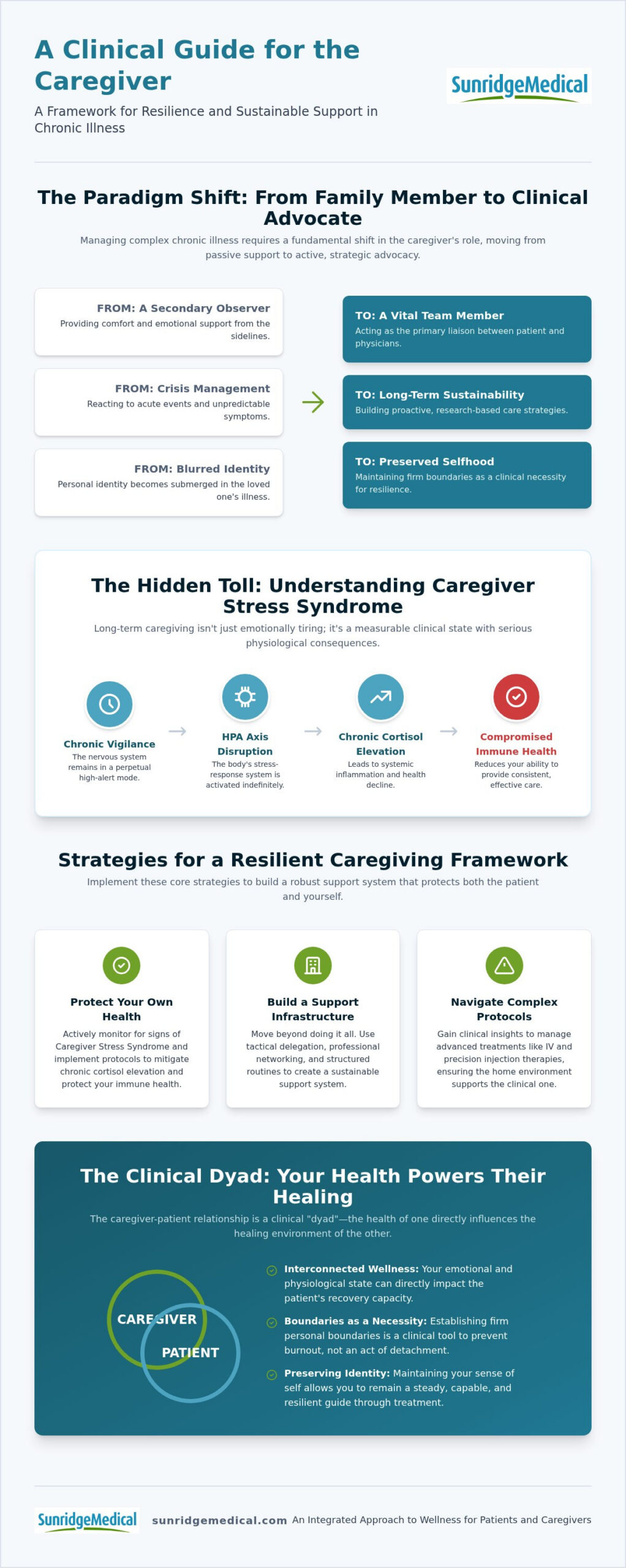
Managing a complex chronic condition requires a fundamental paradigm shift for the family unit. When a diagnosis involves persistent pathogens or systemic immune dysfunction, the role of a family member evolves into that of a clinical advocate. This transition is often sudden and emotionally taxing. Unlike acute illnesses that have a predictable trajectory and a clear resolution, complex chronic diseases demand a more sophisticated caregiving framework. You’re no longer just providing comfort; you’re managing intricate protocols and monitoring subtle physiological shifts. This shift from crisis management to long-term sustainability is the cornerstone of effective caregiver support for chronic disease patients.
Invisible illnesses, such as chronic Lyme disease or autoimmune disorders, present unique obstacles. Because the patient may appear healthy to the outside world, the caregiver often carries the weight of validating the patient’s experience while navigating a medical system that may have previously overlooked their needs. Success in this environment requires moving beyond reactionary care toward a proactive, research-based strategy. It involves recognizing that the patient’s struggle is multifaceted, requiring a dedicated ally who understands the nuances of their specific condition.
The Evolving Definition of Caregiver Support
Modern support roles have expanded to include medical navigation and rigorous advocacy. You’re a vital member of the integrative medical team, acting as the primary liaison between the patient and their physicians. This collaborative effort is rooted in the principles of integrative medicine for chronic illness, where the focus shifts from symptom suppression to addressing underlying mechanisms. In this context, support means understanding the logic behind every protocol, ensuring that the home environment mirrors the precision and sanctuary of the clinical setting.
Identifying the Caregiver-Patient Dyad
The relationship between the patient and the person providing care is a clinical “dyad,” meaning the health of one directly influences the healing environment of the other. In high-stakes scenarios, such as those involving advanced alternative cancer treatment, the emotional and physiological states of the caregiver can impact the patient’s recovery capacity. It’s easy for identities to blur during this process. Establishing firm boundaries isn’t an act of detachment; it’s a clinical necessity. By maintaining a distinct sense of self, you prevent the emotional burnout that compromises your ability to provide consistent caregiver support for chronic disease patients. This preservation of identity allows you to remain a steady, capable guide through the most challenging phases of the treatment journey.
Assessing the Clinical Impact: Caregiver Stress Syndrome and Physical Health
The biological reality of long-term caregiving often remains invisible until it manifests as a systemic health crisis. While the emotional weight of supporting a loved one is well-documented, the physiological tax is frequently overlooked in conventional medical settings. When you’re providing caregiver support for chronic disease patients, your body exists in a state of “chronic vigilance,” a high-alert mode that keeps the nervous system perpetually engaged. This isn’t merely a feeling of being tired; it’s a measurable clinical state that can compromise your own long-term well-being and, by extension, your ability to provide care.
The Biological Toll of Chronic Vigilance
At the center of this physiological response is the hypothalamic-pituitary-adrenal (HPA) axis. In a healthy individual, the HPA axis triggers a temporary spike in cortisol to handle immediate stress. However, the relentless demands of managing complex chronic conditions keep this system active indefinitely. This chronic cortisol elevation eventually leads to systemic inflammation and a weakened immune response. Caregiver Stress Syndrome is a clinical state of exhaustion resulting from long-term medical advocacy. Without intervention, this biological depletion can transform the caregiver into a “secondary patient,” suffering from many of the same inflammatory markers as the individual they are supporting.
Recognizing Early Warning Signs of Burnout
Burnout doesn’t happen overnight; it’s a progressive erosion of your physical and cognitive reserves. Recognizing these signs early is essential for maintaining the “Sustainability Infrastructure” required for long-term advocacy. If you’re noticing these physiological shifts, it’s vital to consult with a specialist who understands the integrative needs of the caregiver-patient dyad to prevent further decline.
- Cognitive Signs: You may experience persistent brain fog, forgetfulness, or an inability to process new medical information from providers. Decision fatigue becomes a significant barrier to effective care.
- Emotional Signs: This often manifests as sudden outbursts of anxiety, a growing sense of resentment toward the caregiving role, or a feeling of emotional apathy.
- Physical Signs: Chronic sleep disturbances, even when the patient is resting, are common. You might also notice an increased susceptibility to viral infections or a worsening of your own pre-existing health conditions.
Ignoring these symptoms doesn’t just hurt you; it destabilizes the entire recovery environment. Hyper-vigilance keeps your body in a “fight-or-flight” loop that eventually causes the adrenal system to falter. By addressing the clinical impact of stress early, you ensure that the caregiver support for chronic disease patients remains a pillar of strength rather than a point of failure. True recovery for the patient is only possible when the caregiver is operating from a position of biological and emotional stability.
Strategies for Building a Sustainable Caregiving Support System
Sustaining the role of a clinical advocate requires more than just endurance; it demands a structured “Sustainability Infrastructure.” Shifting from solo care to a coordinated network is essential for maintaining the high-level attention required for complex conditions. When you attempt to manage every variable alone, the risk of systemic failure increases. Effective caregiver support for chronic disease patients involves tactical delegation. Instead of asking for general help, assign specific, repeatable tasks to friends, family, or professionals. This might include pharmacy runs, meal preparation, or managing insurance claims, which allows you to focus on the patient’s immediate clinical needs.
Technology serves as a force multiplier in this framework. Utilizing dedicated applications for medication tracking and appointment management reduces the cognitive burden of memorization. Additionally, the role of professional counseling shouldn’t be underestimated. Processing the medical trauma associated with a long-term diagnosis is a clinical necessity, not a luxury. A specialized therapist can provide the tools to manage the neuroemotional stress we discussed previously, ensuring you remain a stable presence for your loved one.
Developing a Clinical Advocacy Toolkit
A well-organized toolkit is your most effective weapon against the chaos of chronic illness. Start by centralizing medical records, which is particularly vital when navigating integrative cancer treatment by stage. Accurate data allows for more precise adjustments to treatment protocols. Your toolkit should also include a dedicated log for tracking patient symptoms and treatment responses. When attending physician consultations, come prepared with high-impact questions focused on underlying mechanisms rather than just symptom management. This level of preparation ensures that every clinical interaction is maximized for the patient’s benefit.
Leveraging Community and Professional Resources
External resources provide the “breathing room” necessary for long-term resilience. Evaluating the benefits of respite care or home health aids can prevent the physical health decline often seen in high-intensity caregiving. For those managing rare or particularly complex conditions, finding disease-specific support groups offers a unique form of validation and shared intelligence. Finally, don’t overlook the importance of legal and financial planning. Addressing these logistical hurdles early reduces the secondary stress that often compounds the emotional weight of caregiving. By building this comprehensive support network, you transform caregiver support for chronic disease patients from a burden into a sustainable, professionalized practice.
Navigating Alternative and Integrative Medical Protocols as a Caregiver
Choosing an integrative path requires a caregiver to become both a researcher and a logistics expert. In this context, caregiver support for chronic disease patients takes on a more specialized dimension, moving beyond basic assistance toward managing advanced clinical interventions. You’re often responsible for overseeing research-based alternative treatments that require precise timing and strict adherence to protocol. This role is essential because the success of these therapies frequently depends on the consistency of the home environment and the accuracy of administration.
Managing the logistical demands of specialized IV and injection therapies is one of the most significant shifts for families moving away from conventional-only care. These treatments aren’t as simple as a daily pill; they require a higher level of clinical precision and a deep understanding of physiological responses. Additionally, effective caregiver support for chronic disease patients requires a discerning eye for medical credibility. You must learn to evaluate alternative medical information by focusing on underlying mechanisms and peer-reviewed data rather than anecdotal claims found in unverified online forums.
Acting as a Liaison for Integrative Care
You serve as the critical bridge between conventional oncology and innovative alternative protocols. This coordination is particularly vital when working with lyme disease specialists to ensure that multi-modal treatment plans are synchronized. Your role involves monitoring for synergies and contraindications between different therapies, ensuring that every element of the patient’s care works in harmony. By maintaining a comprehensive view of the treatment landscape, you prevent the fragmented care that often plagues patients with complex, “invisible” illnesses.
Emotional Support During Non-Standard Treatment Paths
Choosing a non-standard path often invites skepticism from well-meaning friends or family members. Navigating these conversations requires a calm determination rooted in the clinical data you’ve gathered. It’s helpful to focus on objective progress markers, such as inflammatory lab results or improved cognitive function, to keep your hope grounded in reality. Beyond the medicine, you’re the architect of a home “sanctuary.” This involves supporting the patient through lifestyle and nutritional transitions that facilitate cellular repair and reduce environmental stress.
If you’re feeling overwhelmed by the complexities of managing a multi-faceted recovery plan, you don’t have to navigate it alone. Contact our team today to discuss how our advanced integrative protocols provide a structured, physician-led path that supports the unique needs of the entire caregiver-patient dyad.
Comprehensive Support at Sunridge Medical: Bridging the Gap Between Patient and Caregiver
At Sunridge Medical, we recognize that the recovery of a patient is inextricably linked to the stability and confidence of their primary advocate. We don’t view the caregiver as a secondary observer; instead, we position you as an empowered partner in the clinical journey. Our specialized approach to caregiver support for chronic disease patients ensures that the family unit receives the same level of precision and attention as the individual undergoing treatment. By integrating family support into every individualized treatment plan, we create a cohesive environment where healing can thrive without the interference of administrative or emotional chaos.
Our physician-led approach, established under the direction of Dr. Steven S. Isaacman since 2003, focuses on deep education. We believe that clarity is the antidote to the anxiety often found in complex care settings. You’ll receive direct guidance on the underlying mechanisms of our protocols, moving beyond surface-level instructions to a true understanding of the recovery process. To ensure you’re never navigating these complexities alone, we provide access to a dedicated toll-free clinical line for personalized support. This resource allows both patients and their families to receive expert answers and reassurance whenever the need arises.
Individualized Protocols for Patient and Family Confidence
Transparency is the cornerstone of our clinical evaluations. We develop treatment plans that are as unique as the patients themselves, providing a clear roadmap that eliminates the “fear of the unknown” for the caregiver. This is particularly vital when managing intricate regimens such as hormone therapy for autoimmune disease or advanced neurologic protocols. When you understand the logic behind each intervention, your role shifts from a place of uncertainty to one of capable advocacy. We provide the data and the structure you need to maintain your own equilibrium while supporting your loved one’s progress.
The Sunridge Philosophy: A Sanctuary for Healing
Our clinic is designed to be a sanctuary, a place where professional gravity meets compassionate optimism. We understand that the burden of navigating traditional systems often leaves families feeling overlooked and exhausted. Our integrated model reduces this weight by handling the complexities of multi-modal care within a single, expert-led framework. This allows you to focus on the human experience of recovery rather than the logistical hurdles of the medical industry. Starting this journey begins with a comprehensive physician evaluation, where we assess the needs of the patient-caregiver dyad to build a sustainable path forward. By choosing a partner that prioritizes caregiver support for chronic disease patients, you’re investing in a recovery environment that is built to last.
Empowering the Caregiver-Patient Dyad for Long-Term Recovery
Sustainable caregiving requires a fundamental shift from solo crisis management to a structured, physician-led framework. By acknowledging the physiological reality of Caregiver Stress Syndrome and implementing tactical delegation, you preserve the vital healing environment necessary for patient recovery. Comprehensive caregiver support for chronic disease patients isn’t just about emotional resilience; it’s about applying clinical precision to every aspect of the care journey to prevent your own health decline. You’re an essential part of the recovery team, and your stability is a prerequisite for the patient’s progress.
Since 2003, Sunridge Medical has provided specialized expertise in advanced alternative medicine for those facing the most complex health challenges. We don’t just treat a diagnosis; we support the entire caregiver-patient dyad through individualized care plans that prioritize clarity and long-term stability. Our objective is to move you from a state of overwhelm to one of confident, informed advocacy. Contact Sunridge Medical today to schedule a comprehensive physician evaluation and discover a clinical path for recovery. You’ve carried the weight of this journey long enough, and it’s time to embrace a more integrated approach to wellness.
Frequently Asked Questions
What is the most effective way to prevent caregiver burnout in chronic disease?
Establishing a “Sustainability Infrastructure” through tactical delegation is the most effective prevention method. Don’t rely on generic self-care advice like rest; instead, assign specific, repeatable tasks to a coordinated network of friends and professionals. This strategy significantly reduces the cognitive load of caregiver support for chronic disease patients. By offloading logistical burdens, you maintain the neuroemotional stability required for long-term advocacy without reaching a state of biological depletion or systemic exhaustion.
How can I better communicate with doctors when advocating for my loved one?
Prepare for consultations by formulating questions that focus on underlying physiological mechanisms rather than just surface symptoms. Bring a centralized log of patient symptom responses and treatment data to every appointment. This objective data helps bridge the communication gap with medical providers. By acting as a clinical advocate rather than just a family member, you ensure that the integrative medical team has the precise information needed to adjust individualized treatment protocols effectively.
Are there specific resources for caregivers of patients with rare autoimmune diseases?
Specialized support for rare conditions often requires looking beyond general healthcare portals toward disease-specific foundations and integrative clinics. Organizations like the National Organization for Rare Disorders (NORD) provide valuable advocacy tools. Additionally, seeking out clinics that focus on advanced alternative medicine for complex chronic diseases can connect you with a community of specialists. These experts understand the nuances of immune dysfunction and provide targeted resources that conventional hospital systems often overlook.
What should I do if I feel overwhelmed by the complexity of alternative medical protocols?
Seek a physician-led environment where protocols are clearly structured and explained to reduce the “fear of the unknown.” If you’re managing complex regimens like IV therapies or nutritional transitions, ask for a detailed roadmap of the treatment’s logic. Accessing a dedicated clinical support line can provide immediate reassurance. Professional guidance ensures you don’t have to navigate these research-based treatments alone, transforming a complex medical journey into a manageable, step-by-step recovery process.
How does caregiver stress affect the recovery of a chronic disease patient?
Caregiver stress creates a destabilized healing environment that can negatively impact patient outcomes through the “caregiver-patient dyad” effect. When your nervous system is in a state of chronic vigilance, it can increase the emotional and physiological tension within the home. Research indicates that a stable, optimistic caregiver presence facilitates better patient compliance and immune resilience. Prioritizing your own equilibrium is a clinical necessity that directly supports the patient’s capacity for systemic restoration and healing.
Can I receive professional medical guidance on how to manage my loved one’s daily care?
Yes, professional medical guidance is a core component of a comprehensive caregiver support for chronic disease patients program. At specialized clinics, physicians provide direct education on managing daily clinical tasks, from medication tracking to monitoring treatment synergies. This expert-led training empowers you to manage complex care with precision. By receiving specialized instruction, you move away from guesswork and toward a professionalized caregiving practice that ensures the patient remains on a steady path toward recovery.
What legal and financial resources are available for long-term caregivers?
Long-term caregivers should utilize resources such as the Family and Medical Leave Act (FMLA) for job protection and explore tax credits for dependents. Consulting with a legal professional or a financial planner who specializes in chronic illness can help protect assets and navigate insurance complexities. Organizations like the Caregiver Action Network offer toolkits for managing these logistical hurdles. Addressing these legal and financial stressors early prevents them from compounding the emotional burden of caregiving.
How do I balance my career with the demands of being a full-time caregiver?
Achieving balance requires a combination of workplace transparency and the implementation of a robust support network. Explore remote work options or flexible scheduling through your HR department to accommodate medical appointments. Simultaneously, integrate professional respite care or home health aids to manage high-intensity caregiving periods. By delegating specific logistical tasks to others, you preserve your professional identity while ensuring that the patient’s medical advocacy remains consistent and effective throughout the treatment journey.