


What if the invisible barrier between you and a full recovery isn’t a lack of effort, but a hidden accumulation of toxic metals sequestered deep within your tissues? You’ve likely followed standard treatments for chronic illness only to find your progress stalled by persistent brain fog and systemic inflammation. It’s incredibly frustrating to feel stuck when you’re doing everything right. At Sunridge Medical, we recognize that a standard approach often misses the underlying environmental burdens that complicate recovery. Implementing a clinical-grade heavy metal detoxification protocol is frequently the necessary reset your immune system needs to finally respond to treatment.
You deserve a diagnostic path that goes beyond basic blood work to identify toxins that have moved into your organs and bones. In this article, you’ll discover the advanced, integrative strategies for 2026 that ensure safe and effective elimination. We’ll examine the mechanics of clinical-grade chelation and how to integrate these protocols into a larger chronic disease treatment plan. You can move past the fear of side effects and gain a clear, structured path toward restoring your well-being through precision medicine. By focusing on the unique, targeted nature of these methodologies, we can provide the specialized attention required to overcome even the most complex health journeys.
Key Takeaways
- Distinguish between acute toxicity and the chronic “total body burden” that accumulates over decades; this accumulation often serves as a hidden barrier to recovery.
- Understand the biological mechanisms of heavy metal damage, specifically how toxins induce mitochondrial dysfunction and oxidative stress within your cells.
- Learn why standard blood tests often fail to detect tissue-bound metals and why provoked urine testing is the gold standard for accurate diagnosis.
- Identify the core components of a clinical heavy metal detoxification protocol, including the strategic use of IV chelation and high-dose Vitamin C for safe elimination.
- Discover why individualized environmental illness management is a foundational prerequisite for patients seeking success in alternative cancer and Lyme disease treatments.
The Silent Burden: Understanding Heavy Metal Toxicity in Chronic Illness
Chronic illness often presents as a complex puzzle where the most critical piece remains hidden. While acute poisoning is a medical emergency with immediate, overt symptoms, bioaccumulation is a far more subtle process. It involves the gradual accumulation of toxic elements within the body’s tissues over several decades. This “Total Body Burden” represents the collective weight of environmental exposures that the body’s natural filtration systems have failed to eliminate. For those feeling “stuck” in their recovery, these sequestered toxins often act as the primary inhibitor of progress.
Heavy metals are frequently the missing link in cases of non-responsive autoimmune and neurologic disorders. They create a state of constant physiological stress, keeping the immune system in a hyper-vigilant yet ineffective state. Without a targeted heavy metal detoxification protocol, the body remains trapped in a cycle of inflammation. At Sunridge Medical, we view the removal of these burdens as a foundational step. This is especially true when coordinating an alternative cancer treatment, as a clean internal environment is a prerequisite for the body to mount an effective defense against complex diseases.
The Most Common Toxicants in the 2026 Environment
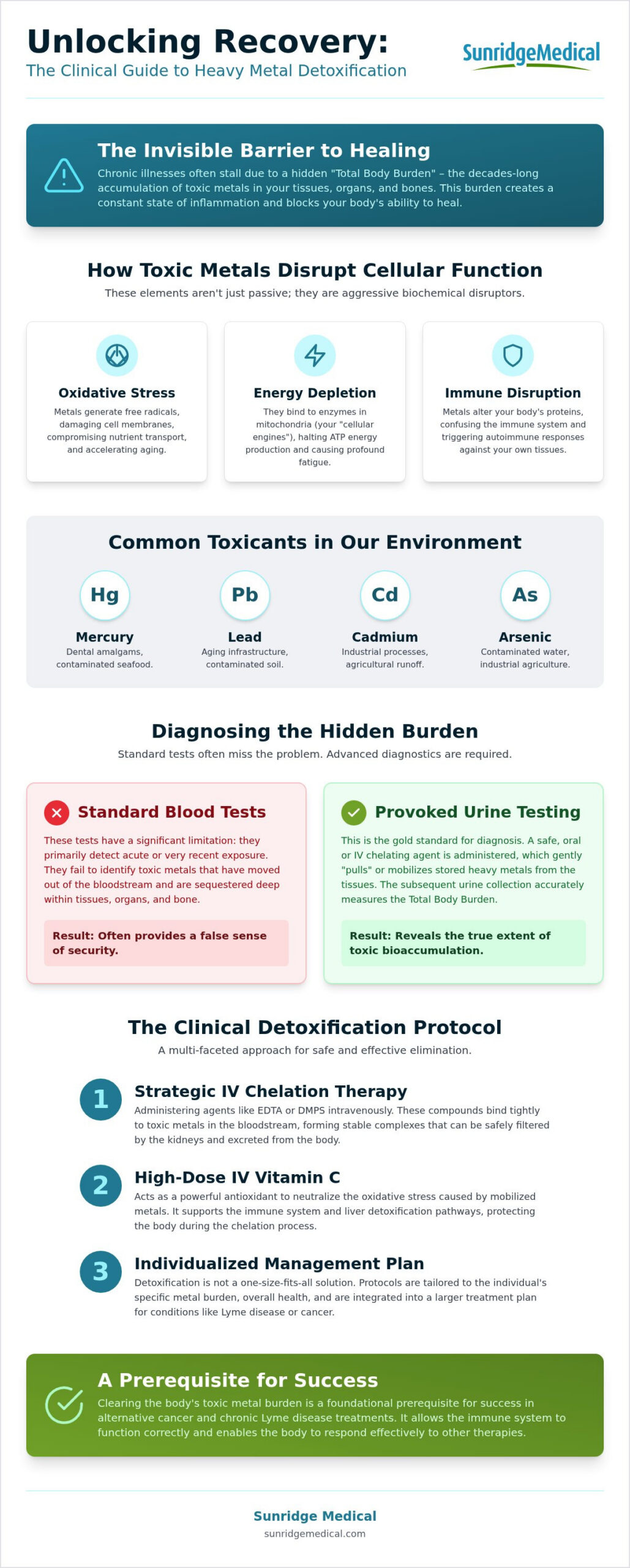
Environmental exposure risks continue to evolve. Mercury remains a pervasive threat, often introduced through legacy dental amalgams, contaminated seafood, and industrial emissions. Lead continues to leach from aging infrastructure and contaminated soil, affecting neurologic stability. In our current landscape, we also see rising levels of cadmium and arsenic, often tied to modern agricultural runoff and industrial processes. These toxicants don’t just circulate in the blood; they lodge themselves into bone and fatty tissue, requiring specialized chelation therapy to mobilize and remove safely.
Why Bioaccumulation Stalls Clinical Recovery
Toxic metals actively disrupt the body’s ability to heal at a cellular level. They inhibit essential cellular repair mechanisms and interfere with DNA synthesis, making it difficult for the body to recover from injury or infection. In patients with chronic infections like Lyme disease, these metals can actually create a protective “shield,” allowing pathogens to evade both the immune system and medical interventions. This burden fuels systemic inflammation and contributes to the “cytokine storms” that characterize many chronic conditions. By clearing these metallic obstacles through a structured heavy metal detoxification protocol, we allow the body’s innate healing capacity to finally take the lead.
Biological Mechanisms: How Toxic Metals Disrupt Cellular Function
Toxic metals aren’t merely passive occupants in the body; they’re aggressive biochemical disruptors that compromise health at the most fundamental level. These elements catalyze the production of reactive oxygen species, leading to chronic oxidative stress. This process results in lipid peroxidation, which effectively damages cell membranes and compromises their structural integrity. When the protective barrier of a cell is weakened, its ability to communicate and transport nutrients is severely diminished. Understanding the mechanism of chelation therapy is essential for addressing this damage, as it provides a pathway to neutralize these reactive elements before they cause irreversible harm.
The impact on energy production is equally profound. Metals like arsenic and mercury bind to specific enzymes within the mitochondria, the engines of our cells. This binding halts the production of ATP, the primary energy currency of the body, which manifests clinically as profound, unyielding fatigue. Beyond energy, these toxicants cause immune dysregulation by altering the structure of “self-proteins.” This confusion leads the immune system to attack the body’s own tissues, fueling autoimmune responses. Furthermore, many metals easily cross the blood-brain barrier, where they trigger neuroinflammation and contribute to the “brain fog” that so many patients find debilitating. Implementing a comprehensive heavy metal detoxification protocol is often the only way to clear these neurological pathways.
The Disruptive Power of Molecular Mimicry
One of the most insidious ways metals damage the body is through molecular mimicry. Lead, for example, is a biological mimic of calcium; it can be mistakenly incorporated into bone tissue and the nervous system where calcium should be. Similarly, mercury has a high affinity for selenium, an essential cofactor for the body’s master antioxidant, glutathione peroxidase. This displacement creates a cascading effect that disrupts metabolic pathways and hormone optimization. If you’re struggling with endocrine health that won’t stabilize, evaluating your toxic burden may reveal the underlying cause of your hormonal resistance.
Epigenetic Consequences of Long-Term Exposure
Long-term exposure to heavy metals can actually change how your body reads its own DNA. These toxicants have the power to silence tumor-suppressor genes or activate oncogenes, creating a landscape where chronic disease can thrive. This connection is particularly critical for patients navigating integrative cancer treatment by stage, as the removal of these epigenetic stressors can enhance the body’s response to therapy. Epigenetic toxicity is the alteration of gene expression by non-biological stressors. By utilizing a targeted heavy metal detoxification protocol, we aim to restore proper genetic signaling and provide the body with the clean slate it needs for genuine recovery.
Beyond Standard Lab Work: Advanced Diagnostic Protocols for Metal Burden
Standard blood tests capture only a single moment in time, reflecting what’s currently circulating in your system. This creates a significant diagnostic fallacy because toxic metals are transient in the bloodstream; they’re rapidly sequestered into deeper tissues like bone, the liver, and the brain. If your exposure wasn’t immediate or acute, a standard panel might return a “normal” result even while your organs struggle under a heavy burden. To find the root of persistent symptoms, we must look where the toxins are actually hiding.
Provoked urine testing represents the clinical gold standard for assessing total body burden. This process involves administering a safe chelating agent to “provoke” the release of tissue-bound metals into the urine for collection and analysis. By mobilizing these hidden elements, we gain a clear picture of the actual toxic load rather than just a snapshot of recent exposure. This depth of insight is foundational for any successful Chelation Therapy for Heavy Metal Poisoning, as it allows for a treatment plan based on hard data rather than clinical guesswork.
Hair Tissue Mineral Analysis (HTMA) offers a retrospective view, providing a three-month history of mineral status and metal exposure. While urine shows what’s being cleared, hair analysis reveals what the body has been depositing over time. Integrating these advanced diagnostics into a comprehensive plan for integrative medicine for chronic illness ensures that every facet of your internal environment is accounted for before treatment begins.
Evaluating the ‘Normal’ Range vs. the ‘Optimal’ Range
Lab “normal” ranges are often based on broad population averages that include many individuals who aren’t in peak health. At Sunridge Medical, we focus on optimal ranges because “sub-clinical” toxicity can still cause major health disruptions, especially in sensitive patients. The interpretation of these results requires a physician’s expertise to distinguish between “secretors” who naturally clear toxins well and “non-secretors” whose genetics make them prone to accumulation. This distinction is vital because a low result in a non-secretor might actually indicate a severe inability to detoxify rather than a lack of toxins.
Comprehensive Bio-Marker Monitoring
Safety is paramount when initiating a heavy metal detoxification protocol. You can’t simply start removing toxins without first ensuring that your body’s “exit ramps” are fully functional. We perform rigorous assessments of liver and kidney function to confirm your organs can handle the increased metabolic demand of chelation. We also monitor glutathione levels and overall antioxidant capacity to protect your cells from oxidative stress during the mobilization phase. This data-driven approach allows us to create an individualized care plan that prioritizes your safety and long-term recovery.
The Clinical Detoxification Protocol: Chelation and Targeted IV Therapies
The transition from diagnostic confirmation to active elimination requires a methodical, physician-led approach. Unlike over-the-counter regimens that often lack the necessary potency, a clinical heavy metal detoxification protocol utilizes advanced intravenous (IV) therapies to target toxins at the cellular level. We utilize specific chelating agents such as EDTA, DMPS, or DMSA, which are selected based on the specific metal profile identified during your initial provocation testing. These agents are administered to bind with tissue-bound metals and facilitate their safe removal through the urinary tract.
Safety during this process is non-negotiable. We strictly adhere to the “drainage before detox” rule, ensuring your liver, kidneys, and lymphatic system are fully supported and capable of handling the toxic outflow. Without this preparation, mobilizing metals can lead to a “detox crash” or a Herxheimer reaction, where the body becomes overwhelmed by the sudden release of sequestered toxins. Clinical supervision allows us to adjust the pace of treatment in real-time, preventing these systemic crises. High-dose IV Vitamin C is frequently integrated into our sessions to act as a potent antioxidant, neutralizing the free radicals generated during the mobilization phase and protecting your healthy cells from oxidative damage.
The Role of Specialized IV and Injection Therapies
Precision care involves more than just removing what’s harmful; it also requires restoring what’s been lost. Chelation therapy is the clinical administration of agents that chemically bind to heavy metals for excretion. Because chelating agents can occasionally bind to essential minerals, we provide customized nutritional infusions to replenish your body’s vital stores. We may also employ oxidative therapies that work in synergy with metal removal to enhance cellular respiration and further stimulate the body’s innate healing mechanisms.
Supporting the Body’s Natural Elimination Pathways
Effective detoxification continues long after you leave the treatment suite. We emphasize gut health through the use of targeted binders like zeolite, activated charcoal, and silica to prevent the reabsorption of toxins in the intestinal tract. Hydration and kidney support remain non-negotiable pillars of our safety protocol, ensuring that mobilized metals are flushed efficiently from the system. For many patients, we integrate IV therapy for autoimmune disease to stabilize the immune system while the body clears its toxic burden. If you’re ready to move beyond standard treatments that haven’t yielded results, consult with our clinical team to begin your individualized journey toward recovery.
Individualized Recovery: The Sunridge Medical Approach to Environmental Illness
Standardized detox kits often fail because they ignore the unique biochemical landscape of the individual. At Sunridge Medical, we reject “packaged” programs that offer a one-size-fits-all solution to complex toxicity. Instead, we favor precision care that addresses your specific toxic burden and physiological resilience. A clinical heavy metal detoxification protocol isn’t a product you buy off a shelf; it’s a physician-led medical intervention designed to restore your body’s foundational health.
For many, this process is the missing link in complex recovery paths. We frequently work with lyme disease specialists to integrate metal removal into a broader treatment strategy. Toxic metals often provide a structural foundation for the biofilms that protect chronic infections from the immune system. By removing these metallic “anchors,” we allow other treatments to finally reach their targets and resolve persistent infections that have previously resisted care.
The journey begins with a comprehensive physician evaluation. This isn’t a brief check-in, but a deep dive into your medical history, environmental exposures, and current physiological state. We move from a broad philosophy of healing to practical, actionable next steps tailored solely to your needs. This structured approach ensures that every phase of your detoxification is safe, effective, and aligned with your long-term health goals. We don’t just treat symptoms; we rebuild the internal environment that allows health to flourish.
A Sanctuary for Complex Chronic Disease Patients
We understand the frustration of being overlooked by traditional systems that offer few answers for systemic inflammation or brain fog. Sunridge Medical serves as a sanctuary where patients find specialized attention and a “scientific guide” to navigate the complexities of advanced alternative medicine. Our team combines deep technical knowledge with a focus on your individual human experience. We project a sense of calm determination, providing clear timelines and milestones that replace the uncertainty of chronic illness with a structured path toward recovery.
National Support and Next Steps
Distance shouldn’t be a barrier to advanced medical care. Patients across the United States travel to our center to access our specialized expertise and advanced IV protocols. If you’re navigating a complex health journey from afar, our toll-free support line at 1-800-923-7878 offers a direct path to personalized guidance. Our staff is ready to help you understand how our methodologies differ from the norm and what to expect during your consultation. Contact Sunridge Medical today to discuss your individualized detoxification protocol.
Restoring Your Health Through Targeted Precision
Identifying and removing tissue-bound metals is more than a wellness trend; it’s a clinical necessity for those facing complex chronic diseases. We’ve explored why standard blood work fails to reveal the true total body burden and how a medically supervised approach safely mobilizes sequestered toxins. By implementing a sophisticated heavy metal detoxification protocol, you’re addressing the hidden barriers that keep your immune system from functioning at its peak. This process often serves as the essential reset required for the body to finally respond to other specialized treatments.
Since 2003, Sunridge Medical has served as a pioneering alternative medical center, acting as a steady hand for patients who feel overlooked by standard systems. Our advanced IV therapy and chelation specialists don’t believe in packaged solutions. Instead, we focus on individualized care plans that respect your unique biochemistry and current health status. You don’t have to navigate this complex journey alone. Schedule your comprehensive physician evaluation with Sunridge Medical today. We’re here to help you move forward with confidence and clarity.
Frequently Asked Questions
What is the most effective heavy metal detoxification protocol for chronic fatigue?
The most effective heavy metal detoxification protocol for chronic fatigue involves a physician-led combination of IV chelation and mitochondrial support. Because toxic metals like arsenic and mercury bind to enzymes in the mitochondria, they effectively halt ATP production. A clinical protocol removes these biochemical barriers while replenishing essential nutrients. This targeted approach allows the body’s energy engines to restart, addressing the root cause of the fatigue rather than just managing the symptoms.
How long does a medically supervised heavy metal detox take?
The duration of a medically supervised detox varies significantly based on your unique total body burden and physiological resilience. While some patients see improvements within 5 to 10 sessions, a comprehensive course often spans several months. This measured pace is necessary to ensure that toxins are mobilized and excreted without overwhelming your liver or kidneys. Your physician will use ongoing diagnostic data to adjust the timeline, ensuring your safety throughout the recovery journey.
Are there side effects to clinical chelation therapy?
Clinical chelation therapy is generally safe when performed under expert supervision, though some patients may experience temporary side effects. These can include mild fatigue, mineral displacement, or a Herxheimer reaction as toxins are mobilized. We mitigate these risks by using customized nutritional infusions to replace essential minerals and by ensuring your drainage pathways are open before treatment begins. Continuous monitoring by our clinical team allows for real-time adjustments to maintain your comfort.
Can heavy metal toxicity interfere with cancer treatments?
Heavy metal toxicity can significantly complicate cancer recovery by inducing oxidative stress and altering gene expression. These environmental burdens often create a pro-inflammatory environment that can inhibit the effectiveness of various therapies. By implementing a heavy metal detoxification protocol, we aim to clear these epigenetic stressors. This foundational reset helps the immune system function more efficiently, providing a cleaner internal landscape for the body to respond to integrative cancer treatments.
Is a provoked urine test better than a standard blood test for metals?
A provoked urine test is considered the clinical gold standard for identifying chronic tissue-stored metals. Standard blood tests are only effective for detecting recent or acute exposures because metals quickly leave the bloodstream to hide in organs and bones. A provocation agent pulls these sequestered toxins into the urine for accurate measurement. This provides a far more comprehensive view of your total body burden than a snapshot of circulating blood levels.
What is the difference between a ‘cleanse’ and a clinical detox protocol?
A cleanse typically refers to over-the-counter supplements or dietary changes intended for general wellness, whereas a clinical protocol is a medical intervention. Clinical detoxification utilizes prescription-strength chelating agents and advanced IV therapies administered by physicians. While cleanses may support natural elimination, they lack the potency required to remove deeply sequestered, tissue-bound metals. A clinical approach provides the precision and supervision necessary for patients navigating complex chronic illnesses or environmental toxicity.
Do I need to change my diet during a heavy metal detox?
Dietary adjustments are a critical component of a successful detoxification journey. We recommend a diet rich in high-quality proteins and sulfur-containing foods, such as garlic and cruciferous vegetables, to support the liver’s phase II detoxification pathways. Adequate hydration is also a non-negotiable pillar, as it facilitates the flushing of mobilized toxins through the kidneys. Your physician will provide specific nutritional guidance to ensure your body has the raw materials needed for cellular repair.
How often should I undergo heavy metal testing if I have a chronic illness?
For individuals with chronic illness, we typically recommend an initial comprehensive evaluation followed by periodic monitoring during the active phase of treatment. Once your toxic burden has been successfully reduced, annual screenings may be appropriate, especially if you work in high-risk occupations like welding or battery manufacturing. Regular testing ensures that any new environmental exposures are identified and addressed before they can accumulate and stall your ongoing progress toward total well-being.