


What if a molecule commonly associated with simple immune support could be transformed into a targeted metabolic weapon against malignant cells? Many individuals navigating a complex diagnosis feel trapped between the grueling side effects of conventional protocols and the limitations of standardized oncology. It’s common to feel frustrated by conflicting information or the sense that your specific biological needs are being overlooked. You deserve a clinical strategy that is as unique as your own physiology. This guide explores the sophisticated application of high dose vitamin c for cancer, moving beyond basic nutritional support to reveal how intravenous delivery achieves the pro-oxidative concentrations necessary to exploit the metabolic vulnerabilities of cancer cells.
We’ll examine the precise mechanisms that differentiate therapeutic IV protocols from standard oral supplements; the critical importance of safety screenings, such as G6PD testing; and how this research-backed therapy serves as a cornerstone for individualized, integrative care. By understanding the transition from antioxidant to pro-oxidant, you can find a clinical path that offers both precision and hope. This exploration provides the clarity needed to move past the confusion of conflicting data and into a structured, evidence-based approach to wellness.
Key Takeaways
- Discover how intravenous delivery shifts Vitamin C from a common antioxidant into a potent pro-oxidative tool that selectively targets the metabolic vulnerabilities of malignant cells.
- Understand why high dose vitamin c for cancer must be administered intravenously to bypass the body’s natural absorption limits and reach the pharmacological levels required for clinical impact.
- Learn about the essential safety protocols, including the mandatory G6PD enzyme screening, that ensure therapy is both effective and well-tolerated by your unique physiology.
- Explore the research-based evidence suggesting that therapeutic Vitamin C can improve quality of life and support better outcomes when integrated into a comprehensive treatment plan.
- See how a physician-led, individualized approach moves beyond standardized protocols to provide a customized roadmap for those seeking advanced alternative oncology.
Beyond the Supplement: Defining High-Dose Vitamin C in Oncology
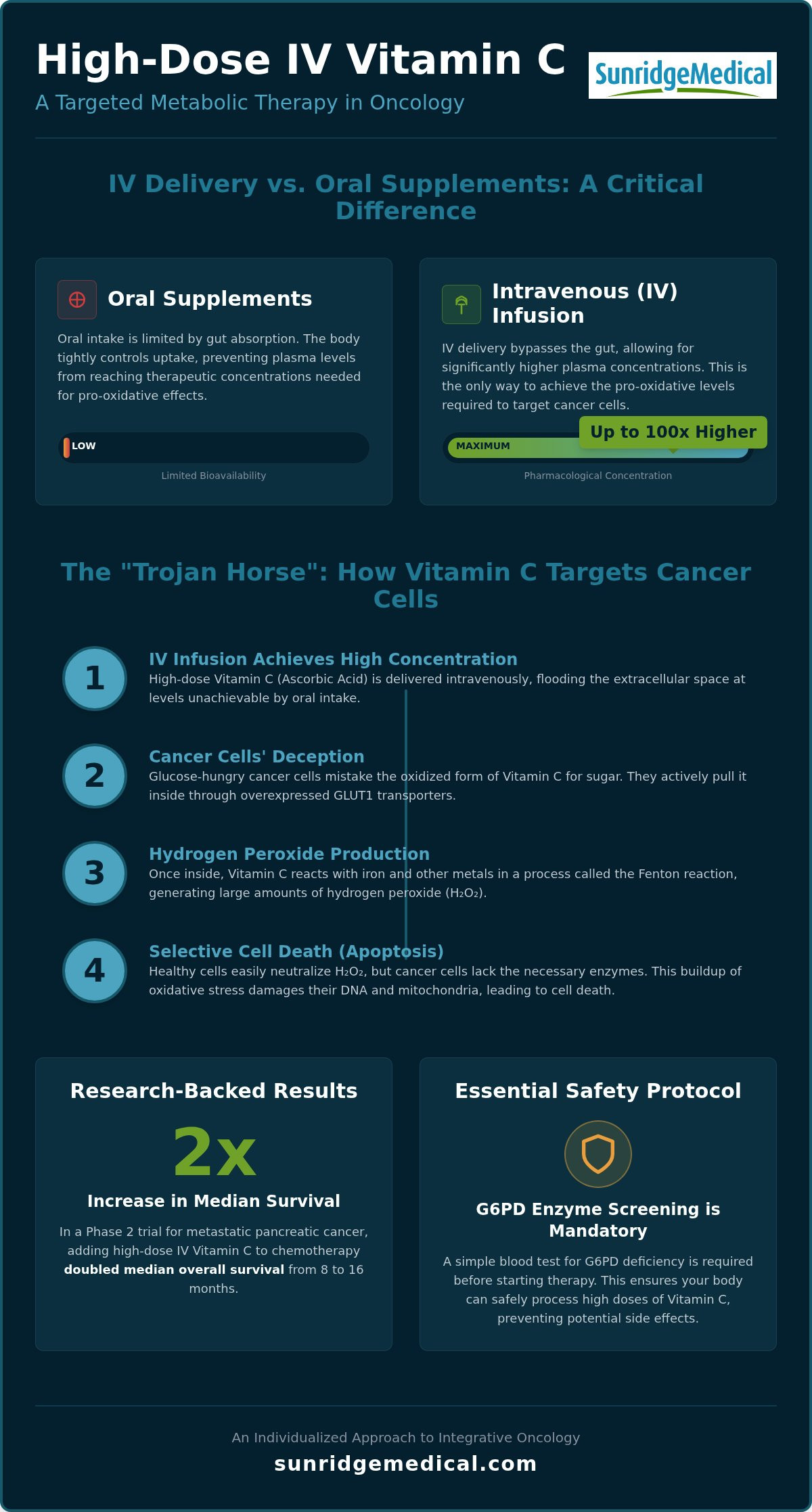
To understand the clinical utility of high dose vitamin c for cancer, one must first distinguish between simple nutritional supplementation and pharmacological intervention. Most individuals view Vitamin C through the lens of immune support or antioxidant protection, where small oral doses maintain basic physiological health. In the context of advanced oncology, however, we utilize ascorbic acid not as a vitamin, but as a pro-oxidative drug. This shift in function only occurs when plasma concentrations reach levels that the human digestive system is biologically incapable of absorbing. By bypassing the gut barrier through intravenous delivery, we can achieve concentrations up to 100 times higher than those possible with even the most potent oral supplements.
The medical perception of this therapy has evolved from a controversial alternative to a targeted metabolic intervention. Modern oncology recognizes that cancer cells possess a unique metabolic signature, often characterized by a heightened sensitivity to oxidative stress. When delivered at therapeutic levels, Vitamin C exploits these vulnerabilities without the systemic toxicity typically associated with conventional cytotoxic agents. This provides a clinical path forward for patients who feel overlooked by standardized systems, offering a sophisticated tool that bridges the gap between conventional research and advanced integrative care.
The Evolution of Ascorbic Acid Research
The history of Intravenous ascorbic acid began with the pioneering work of Linus Pauling, though early clinical trials were often clouded by the use of oral administration which failed to replicate his results. Contemporary science has corrected this oversight by focusing on the pharmacokinetics of intravenous delivery. As of 2026, clinical research has refined our understanding of the specific dosage windows required to trigger a therapeutic response. For instance, phase 2 trials for metastatic pancreatic cancer recently demonstrated that adding high-dose infusions to chemotherapy doubled median overall survival from eight to 16 months. High-dose IVC functions essentially as a pro-drug for the generation of hydrogen peroxide in the extracellular space surrounding cancer cells.
Integrative Oncology and the Multi-Faceted Approach
At Sunridge Medical, we view this therapy as a vital component of a personalized alternative cancer treatment plan. It’s not a standalone cure, but rather a targeted metabolic intervention that works in synergy with other oxidative therapies and metabolic supports. This multi-faceted approach addresses the unique biological landscape of each patient, moving beyond the ‘alternative’ label into the realm of research-based integrative medicine. By combining the use of high dose vitamin c for cancer with comprehensive laboratory testing and physician-led oversight, we create a clinical sanctuary for those who’ve exhausted conventional options. The goal is to move past standardized care and focus on the restoration of well-being through precise, individualized protocols that honor the patient’s experience.
The Pro-Oxidative Mechanism: How Vitamin C Targets Cancer Cells
The clinical power of high dose vitamin c for cancer lies in its ability to act as a “Trojan Horse” within the body’s metabolic pathways. Unlike healthy cells that maintain a balanced oxidative state, cancer cells are often characterized by a “fermentative” metabolic signature that leaves them uniquely susceptible to oxidative stress. Because these malignant cells are hungry for glucose, they overexpress GLUT1 transporters. These transporters mistake dehydroascorbic acid, the oxidized form of Vitamin C, for sugar, pulling the therapy directly into the heart of the tumor. Once inside, the molecule triggers a cascade of chemical reactions that result in the formation of hydrogen peroxide.
This process is significantly enhanced by the presence of labile iron within the tumor microenvironment. Through a mechanism known as the Fenton reaction, the interaction between Vitamin C and iron generates hydroxyl radicals. These radicals are among the most destructive species in biology, capable of inducing catastrophic damage to the DNA and mitochondrial membranes of cancer cells. While this sounds aggressive, the therapy remains remarkably precise. As noted in research concerning High-Dose Vitamin C in Cancer Therapy, the selective nature of this oxidative stress is what defines its role in modern integrative oncology.
Selective Cytotoxicity Explained
The fundamental difference between healthy and malignant tissue is how they manage oxidative pressure. Most cancer cells are catalase-deficient, meaning they lack the enzymatic tools to break down the hydrogen peroxide generated by high-dose infusions. Healthy cells utilize the enzyme catalase to efficiently neutralize hydrogen peroxide into harmless water and oxygen, maintaining cellular integrity while malignant cells perish. This metabolic disparity allows for a targeted approach that respects the health of the patient’s body while aggressively addressing the disease. If you’re looking for a strategy that prioritizes this level of precision, it’s helpful to consult with our clinical team to discuss your specific needs.
Impact on the Tumor Microenvironment
Beyond direct cell death, high-dose infusions fundamentally alter the environment where tumors thrive. By supporting robust collagen synthesis, Vitamin C helps create a physical barrier that can inhibit the migration of cancer cells to distant sites, providing a layer of protection against metastasis. This is a critical component when designing an integrative cancer treatment by stage. Additionally, these protocols exhibit anti-angiogenic properties, essentially discouraging the formation of new blood vessels that tumors rely on for nutrients. By cutting off the supply lines and strengthening the surrounding tissue, we move beyond simple treatment and toward a comprehensive metabolic defense.
IV Vitamin C vs. Oral Supplements: A Critical Comparison
Many patients are surprised to learn that taking large quantities of vitamin C capsules won’t produce the same results as an infusion. The “gut barrier” is a physiological reality where the intestines reach a saturation point. Once you hit this limit, the body simply excretes the excess via the kidneys. This renal threshold ensures that oral intake can only maintain nutritional status, not achieve the pro-oxidative state required to target malignant cells. When we discuss high dose vitamin c for cancer, we’re describing a pharmacological intervention that is biologically impossible to replicate through the digestive system.
To reach the concentrations needed for a therapeutic effect, we must bypass the digestive tract entirely. Pharmacokinetic studies show that while a 200mg oral dose results in a plasma concentration of approximately 70 micromoles per liter, a 50,000mg intravenous infusion can elevate those levels to over 15,000 micromoles per liter. This massive difference is what allows the molecule to transition from an antioxidant to a pro-oxidant. Clinical data found in studies like High-Dose Vitamin C for Advanced-Stage Cancer highlights that these pharmacological levels are essential for impacting quality of life and metabolic tumor pressure.
Bioavailability and the Saturation Point
It’s vital to distinguish between standard wellness drips and clinical oncology protocols. A typical “immune boost” drip may only contain 5 to 10 grams of ascorbic acid, which is insufficient for inducing selective cytotoxicity. In a clinical oncology setting, we utilize much higher concentrations, often exceeding 50 grams or even 100 grams per session. This level of dosing is designed to saturate the extracellular space around a tumor, creating the peroxide-rich environment necessary to exploit cancer’s metabolic weaknesses. Achieving this requires specialized IV protocols and constant clinical monitoring to ensure the patient’s mineral balance and hydration remain optimal.
Dosage Precision in Integrative Care
Success in integrative medicine for chronic illness depends on precision and customization. We don’t use a “one-size-fits-all” approach. Instead, we implement specific dosage ramps, starting at lower levels to ensure patient tolerance before moving to therapeutic peaks. Monitoring your individual response is paramount, as the goal is to find the “sweet spot” where oxidative stress on the cancer is maximized while your healthy tissues remain supported. This level of oversight is a hallmark of our specialized care, ensuring that every infusion is tailored to your specific biological needs and current stage of recovery.
Clinical Safety and Protocols: What Patients Must Know
The clinical application of high dose vitamin c for cancer is a sophisticated medical procedure that requires rigorous oversight. While the therapy is generally well-tolerated, its safety depends entirely on the precision of the protocol and the expertise of the clinical team. We don’t view these infusions as simple wellness treatments. Instead, they’re targeted metabolic interventions that must be carefully timed and monitored to ensure optimal patient outcomes. Proper preparation and screening are the foundations of a successful integrative journey.
The G6PD Screening Protocol
Before a single drop of high-dose ascorbic acid is administered, every patient must undergo a G6PD (glucose-6-phosphate dehydrogenase) enzyme screening. This genetic test is a non-negotiable safety requirement. G6PD is an enzyme that helps red blood cells function normally and protects them from oxidative damage. If a patient with a deficiency receives a high-dose infusion, the resulting oxidative stress can cause red blood cells to rupture, a dangerous condition known as hemolysis. Because of this risk, you should never start high-dose IVC therapy without first confirming your G6PD status through a verified laboratory test.
Beyond this initial screening, our clinical team closely monitors kidney function and electrolyte levels. High-dose infusions can occasionally cause shifts in mineral balance, particularly affecting calcium and magnesium. We also pay close attention to blood sugar monitoring. Because the molecular structure of Vitamin C is remarkably similar to glucose, some finger-stick monitors may provide a false high-sugar reading. It’s vital to work with a team that understands these nuances to avoid unnecessary insulin adjustments or metabolic confusion.
Supportive Therapies and Nutrient Synergy
Precision medicine involves looking at the patient’s entire biological landscape. High-dose Vitamin C often works best when integrated with other IV therapies for autoimmune or chronic conditions, creating a synergistic effect that supports the immune system while the Vitamin C targets the tumor. We frequently include specific amounts of magnesium and calcium in our infusions to prevent the cramping or “chilling” sensations that can occur during high-volume sessions. This balanced approach ensures that the therapy remains a restorative experience rather than a taxing one.
Preparation on the day of treatment is equally important. We advise patients to maintain high levels of hydration and eat a protein-rich meal before their session to stabilize blood sugar. This proactive management helps prevent the temporary fatigue that some individuals feel following a pro-oxidative treatment. If you’re ready to explore a clinical path that prioritizes your safety through individualized protocols, contact Sunridge Medical today to schedule your comprehensive physician evaluation.
The Sunridge Medical Approach to Individualized Oncology
Sunridge Medical operates on the principle that every patient’s biological landscape is unique, requiring a departure from the “packaged” or standardized care often found in traditional systems. Since our founding in 2003, our clinical focus has been on providing a sophisticated alternative for those facing complex chronic conditions. We recognize that by the time many individuals reach our doors, they’ve already exhausted conventional options and are seeking a more targeted, multi-faceted approach. Our use of high dose vitamin c for cancer is never a standalone prescription; it’s a carefully integrated component of a broader, physician-led strategy designed to restore well-being through precision and depth.
Advanced Physician Evaluations
The journey at Sunridge begins with a comprehensive evaluation that moves far beyond surface-level symptoms. Led by Dr. Steven S. Isaacman, our team utilizes advanced laboratory testing to identify specific metabolic markers and underlying root causes that may be hindering your progress. This level of detail is essential, especially for complex or late-stage cases where every biological variable matters. We look at the patient’s entire physiological state, ensuring that oxidative protocols are balanced with nutritional support and metabolic optimization. By understanding the unique drivers of your illness, we can craft a roadmap that moves beyond the status quo and toward a state of renewed health.
A Sanctuary for Advanced Healing
We’ve designed our facility to be a sanctuary, a place where professional gravity meets compassionate optimism. We understand the frustration of feeling overlooked by large-scale medical systems, and we position ourselves as a confident ally in your recovery. Our personality is rooted in reliability and thoroughness, acting as a steady hand as you navigate the complexities of integrative oncology. We don’t just focus on the disease; we focus on the human experience, ensuring you feel fully informed and supported at every stage of your narrative. Our commitment is to provide a level of care that goes beyond the ordinary, focusing on the possibility of progress through a more comprehensive lens than standard practices.
If you’re ready to move past the limitations of standardized protocols, the next step is a personalized consultation. Our 1-800 support line is available to help you begin this transition, providing the specialized attention your health journey requires. You don’t have to navigate this path alone. Consult with a Sunridge Medical specialist today to discover how our research-based application of high dose vitamin c for cancer can be tailored to support your specific needs and long-term well-being.
Embracing a Targeted Path to Metabolic Recovery
The transition from nutritional support to pro-oxidative therapy represents a critical evolution in integrative oncology. High dose vitamin c for cancer is a precision tool that exploits the metabolic vulnerabilities of malignant cells while preserving the integrity of healthy tissue. Achieving these results requires more than just a standard infusion; it demands a physician-led protocol grounded in rigorous safety screenings and highly individualized evaluations. This level of clinical precision is what allows for progress when conventional options may have been exhausted.
Sunridge Medical brings over 20 years of experience in developing research-based alternative protocols for advanced stages of illness. We provide a clinical sanctuary for individuals who feel overlooked by traditional systems, offering a steady hand and a clear roadmap toward the restoration of well-being. If you’ve felt stuck in a one-size-fits-all system, don’t navigate this complex path alone. For personalized support, you can reach our 1-800 clinical line to discuss your specific case. Take the first step toward a more comprehensive treatment strategy today. Schedule a comprehensive physician evaluation with Sunridge Medical and discover the power of individualized care.
Frequently Asked Questions
Is high-dose Vitamin C safe to use alongside chemotherapy?
High-dose Vitamin C is frequently used as a supportive therapy alongside conventional chemotherapy. Clinical studies, including a 2018 systematic review of 385 patients, indicate that it’s safe for most individuals and may help mitigate the toxic side effects of standard treatments. It’s essential to coordinate this care with your medical team to ensure timing doesn’t interfere with specific cytotoxic agents. This integrative approach focuses on maintaining quality of life while targeting the disease.
How many grams of Vitamin C are typically used in a clinical cancer protocol?
Dosing for high dose vitamin c for cancer is highly individualized and depends on the patient’s body weight and metabolic response. Clinical protocols typically range from 25 grams to over 100 grams per infusion. A common research-based starting point is 1 to 1.5 grams per kilogram of body weight, administered several times weekly. This level of precision ensures the concentration is high enough to trigger the pro-oxidative “Trojan Horse” effect within the tumor microenvironment.
Can I achieve the same anti-cancer effects by taking liposomal Vitamin C orally?
You cannot achieve therapeutic anti-cancer levels through oral liposomal Vitamin C because of the body’s intestinal absorption limits. While liposomal forms offer better bioavailability than standard tablets, they still hit a renal threshold that prevents plasma levels from reaching the pro-oxidative concentrations required for selective cytotoxicity. Only intravenous delivery bypasses the gut entirely, allowing concentrations to reach up to 100 times higher than what is possible with any oral supplement.
What is G6PD deficiency, and why must I be tested before IV Vitamin C?
G6PD deficiency is a genetic condition where the body lacks an enzyme needed to protect red blood cells from oxidative stress. Testing is mandatory because high-dose infusions generate hydrogen peroxide, which can cause red blood cells to rupture in deficient individuals. This screening is the first step in our safety protocol at Sunridge Medical. We ensure every patient is verified before beginning advanced oxidative therapies to prevent complications like hemolysis and ensure a safe treatment journey.
How often do patients typically receive high-dose Vitamin C infusions?
Patients typically receive high-dose infusions two to three times per week to maintain consistent metabolic pressure on the tumor cells. This frequency is designed to exploit the “metabolic window” where cancer cells are most vulnerable to oxidative stress. Because the half-life of ascorbic acid in the bloodstream is relatively short, regular sessions are necessary to sustain the pro-oxidative environment. Your specific schedule is determined during a comprehensive physician evaluation based on your unique recovery goals.
Are there specific types of cancer that respond better to Vitamin C therapy?
While high dose vitamin c for cancer is used across various diagnoses, research has shown particularly promising results in pancreatic and ovarian cancers. A 2024 phase 2 trial demonstrated that adding high-dose IVC to chemotherapy doubled median survival rates for stage 4 metastatic pancreatic cancer patients. It’s also utilized for its anti-angiogenic properties in other solid tumors. Because every case is unique, we focus on individualized protocols rather than a “one-size-fits-all” approach for different cancer types.
What are the most common side effects of high-dose IV Vitamin C?
The most common side effects are mild and include increased thirst, dry mouth, or temporary fatigue following a session. These are usually managed through proper hydration and nutrition strategies on the day of treatment. Some patients may experience a slight chill during the infusion, which we address by balancing the protocol with minerals like magnesium and calcium. When administered in a professional clinical setting with proper oversight, serious adverse effects are remarkably rare for most patients.
How long does a typical high-dose Vitamin C infusion session take?
A typical high-dose infusion session generally takes between 1.5 and 3 hours to complete. The exact duration depends on the volume of the fluid and the specific concentration of the dose prescribed by the medical director. We prioritize a steady, methodical flow to ensure patient comfort and optimal absorption. This time allows patients to rest in a sanctuary-like environment while their body receives the targeted metabolic support necessary for a comprehensive integrative oncology plan.