


What if the most effective path to healing isn’t found in a standardized protocol, but in the precise intersection of advanced science and individualized care? Many patients feel like a mere statistic in the conventional medical system, where the fear of debilitating side effects often outweighs the hope for a personalized solution. You deserve a holistic approach to cancer recovery that moves beyond basic supportive care and into the realm of targeted, clinical alternative medicine. It’s time to stop feeling overlooked and start seeking a sanctuary of specialized attention that recognizes your unique biological signature.
Finding the right facility requires looking past surface-level amenities to the underlying mechanisms of their treatment protocols. This guide will empower you to evaluate holistic cancer treatment centers with clinical rigor, helping you distinguish between simple wellness retreats and advanced facilities offering active alternative protocols. We’ll explore the diagnostic depth necessary for true customization and provide a clear framework to compare the world’s leading integrative facilities. By understanding these critical distinctions, you can move toward a recovery path that honors your individual experience while utilizing the most sophisticated tools available in modern integrative medicine.
Key Takeaways
- Understand the evolution of holistic care from simple symptom management to active, advanced alternative protocols that target the underlying drivers of illness.
- Master a clear comparison framework to distinguish between complementary support and the clinical depth provided by advanced integrative facilities.
- Learn how to apply a holistic approach to cancer recovery by identifying the specific diagnostic requirements and medical credentials necessary for individualized care.
- Discover the five critical criteria for evaluating any facility, including the importance of research-based protocols and comprehensive physician evaluations.
- Find out how specialized IV therapies and oxidative protocols are integrated into a multi-faceted recovery strategy designed for your unique biological needs.
Beyond Standard Oncology: The Evolution of Holistic Cancer Treatment Centers
In 2026, the definition of holistic cancer care has undergone a profound transformation. It’s no longer merely a collection of supportive wellness practices designed to manage the side effects of toxic treatments. Instead, it’s a primary medical philosophy focused on the entire biological landscape of the patient. The shift from palliative-only care to active alternative treatment marks a new era in medicine. Patients are no longer satisfied with being treated as a diagnosis code. They’re seeking individualized care that honors their unique physiology and history.
This transition is driven by a growing recognition that standardized protocols often fail to account for the complexity of the human body. When you feel like a number in a large hospital system, the focus is frequently on the disease rather than the person. A holistic approach to cancer recovery changes that dynamic. It positions the physician as a scientific guide who uses advanced data to find a truly individualized path toward well-being. This model prioritizes the restoration of health through a comprehensive lens that standard practices often ignore.
The Whole-Person Medical Philosophy
A comprehensive medical philosophy addresses physical, biochemical, and environmental factors simultaneously. While the standard of care provides a baseline, it sometimes misses the individual patient’s unique biological markers, such as specific metabolic pathways or genetic predispositions. A holistic approach to cancer recovery requires looking at these biochemical intersections to understand why the body’s natural defenses may be compromised. For those interested in the clinical depth of this field, understanding integrative oncology is essential for navigating modern recovery options.
Holistic vs. Conventional: Bridging the Gap
Advanced centers don’t abandon modern science; they use it as a foundation. We use conventional diagnostics, such as high-resolution imaging and sophisticated blood panels, to inform alternative treatments. This isn’t a rejection of clinical evidence; it’s an expansion of it. Physician-led evaluations are the cornerstone of this model, ensuring that every protocol is rooted in research and tailored to the patient’s current health status. This approach establishes a sanctuary of specialized attention. It combines professional gravity with a sense of calm determination, focusing on progress that standard practices might not achieve on their own.
Defining Clinical Excellence in Holistic Cancer Care
Clinical excellence in the field of integrative medicine isn’t defined by the presence of spa-like amenities or generic supplements. It’s defined by the rigor of the medical protocols and the depth of the diagnostic process. A truly advanced center operates with the same professional gravity as a traditional hospital, yet it applies that focus to research-based alternative medicine. This isn’t about “natural” remedies found on a store shelf; it’s about targeted interventions designed to address the specific metabolic and biological needs of the patient. When you’re seeking a holistic approach to cancer recovery, the quality of the center depends on its ability to move beyond standardized care.
A superior medical facility relies on constant monitoring and the agility to adjust protocols as the body responds. If a center offers a static, “packaged” plan, it’s likely missing the nuances of your unique recovery journey. Precision medicine requires a dedicated advocate who acts as your scientific guide, ensuring that every step is backed by clinical logic and a commitment to your long-term well-being. This level of care provides a sense of sanctuary and specialized attention for those who feel stuck in traditional systems.
Advanced Diagnostic Depth
Standard imaging like CT scans or MRIs only tells part of the story. Top-tier centers go deeper, utilizing specialized laboratory tests to evaluate immune function and cellular health at a granular level. We often find that underlying environmental illnesses or neurologic conditions are complicating the body’s ability to heal. Diagnostic precision is the primary factor that dictates the clinical success of any alternative cancer treatment. By identifying these hidden barriers, physicians can create a roadmap that is far more accurate than standard protocols.
Individualized Treatment Protocols
Packaged care plans frequently fail patients facing complex diagnoses or stage 5 cancer. These cases require a level of customization that standard oncology simply isn’t designed to provide. Our methodology integrates specialized nutritional infusions and oxidative therapies into a cohesive, multi-faceted plan. We also prioritize hormone optimization to support the body’s natural defense mechanisms, creating a more resilient internal environment. This multi-layered strategy is essential for restoring health through a comprehensive lens.
This level of care requires a commitment to thoroughness that begins with a comprehensive physician evaluation to determine the best path forward. A holistic approach to cancer recovery is most effective when it bridges the gap between sophisticated science and the individual human experience, providing a steady hand for patients navigating complex health journeys.
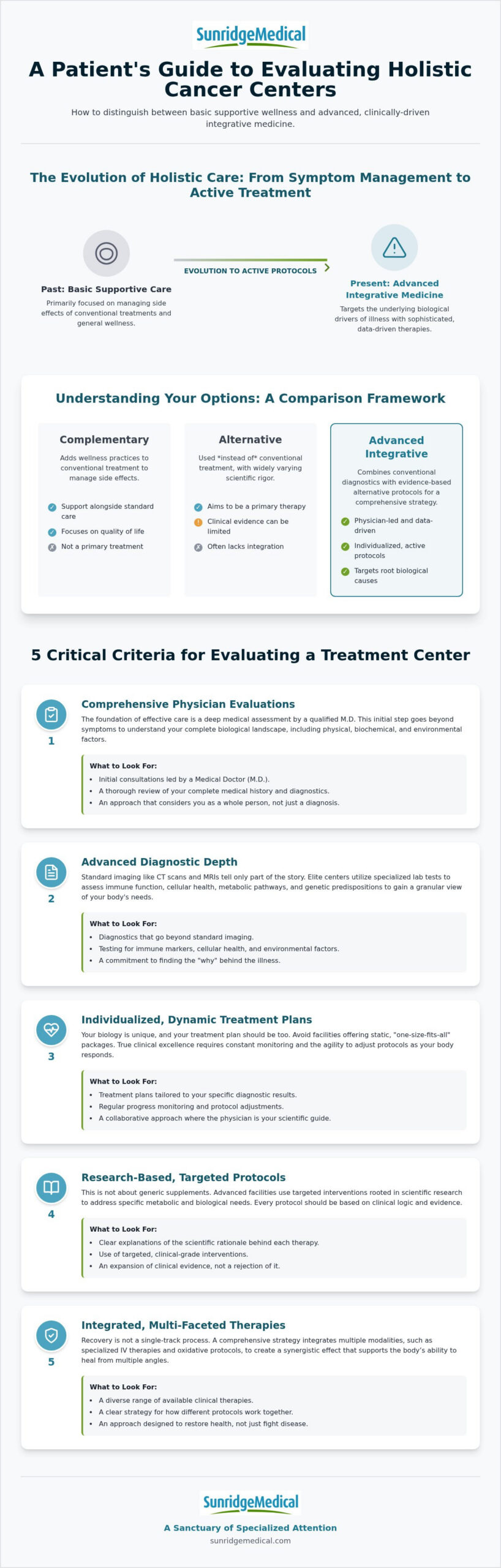
Complementary vs. Alternative vs. Integrative: A Comparison Framework
Many patients find themselves lost in a sea of terminology when exploring options outside of standard oncology. Understanding the distinctions between complementary, alternative, and integrative care is the first step in establishing a successful holistic approach to cancer recovery. These terms are often used interchangeably by general wellness sites, but in a clinical setting, they represent vastly different medical philosophies and treatment trajectories. Your choice among them will define the intensity and focus of your recovery journey.
The Complementary model is designed to support standard oncology. It uses wellness practices, such as yoga or massage, to help patients manage the side effects of chemotherapy and radiation. While valuable for quality of life, these practices are not intended to treat the underlying disease. The Alternative model, conversely, utilizes specialized medical protocols as a primary recovery path. This approach is for individuals seeking a departure from the status quo, focusing on advanced, non-toxic methodologies. Finally, the Integrative model is the strategic combination of both worlds. It uses conventional diagnostics and select therapies alongside advanced alternative protocols to create a multi-faceted defense against illness.
Choosing the Right Model for Your Diagnosis
The stage and complexity of your diagnosis often dictate the clinical gravity of the approach you require. If you are looking for a primary path that utilizes advanced science without the standard side effects, you should seek a center that offers alternative cancer treatment. Sunridge Medical bridges these models to create a personalized recovery path. We don’t simply add supportive therapies to a standard plan; we build a foundation of care based on your specific biological markers and health history. This ensures you aren’t just managing symptoms but are actively working toward restoration.
The Role of IV and Injection Therapies
A primary marker of a center’s clinical capability is its use of specialized IV and injection protocols. Oral supplementation often fails in complex cases because the digestive system cannot absorb nutrients at the concentrations required for a therapeutic effect. Specialized IV protocols bypass the gut, ensuring 100% bioavailability of biological treatments. This level of precision is essential for chronic disease management and immune system reconstruction. When evaluating facilities, consider their diagnostic depth and the sophistication of their delivery methods. A center’s ability to administer advanced oxidative and nutritional therapies is a clear indicator of its standing at the leading edge of medical research.
Evaluating Holistic Centers: 5 Critical Criteria for Patient Recovery
Choosing a medical facility for your recovery is a decision that carries immense weight. It requires a move away from emotional marketing toward clinical scrutiny. A truly effective holistic approach to cancer recovery is built on a foundation of measurable data and professional expertise. To find a center that offers more than just supportive wellness, you must evaluate their operations against these five critical criteria.
- Verify Medical Leadership: Investigate the credentials and clinical history of the Medical Director. A center led by a physician with decades of experience in integrative medicine provides a level of safety and insight that newer, less specialized clinics cannot match.
- Individualized Diagnostics: Assess whether the center uses standardized tests or individualized panels. Excellence is found in centers that evaluate immune markers, environmental toxins, and nutritional deficiencies before a single treatment is administered.
- Range of Advanced Protocols: Review the availability of specialized IV and oxidative therapies. These delivery methods are essential for achieving the therapeutic concentrations necessary for progress in complex cases.
- Experience with Co-infections: Many patients struggle with underlying issues like chronic Lyme disease or autoimmune disorders. A top-tier center must be capable of managing these comorbidities, as they often complicate the primary recovery process.
- Physician-Led Monitoring: Determine how often you’ll see your doctor. Real-time protocol adjustments based on your body’s response are a hallmark of high-level care.
Red Flags to Avoid in Alternative Medicine
Be wary of any facility that uses non-clinical terminology or promises “guaranteed cures.” In the medical world, certainty is found in the process, not in marketing slogans. A major red flag is the promotion of “one-size-fits-all” supplement bundles that haven’t been dictated by your specific lab results. If a center lacks a clear structure for personalized support or uses a generic call center for medical inquiries, it likely lacks the clinical depth required for your case.
Green Flags: Hallmarks of Clinical Excellence
Look for centers that demonstrate complete transparency regarding treatment fees and the logic behind their protocol development. Clinical excellence is rooted in research-based alternative medicine rather than anecdotal trends. A center’s ability to treat highly complex conditions, including bone cancer treatment, indicates a sophisticated understanding of advanced oncology. This level of expertise ensures you’re receiving care that’s both innovative and grounded in medical reality.
If you’re ready to move beyond standardized care, it’s time to seek a partner who prioritizes your individual biological needs. You can begin this journey by scheduling a comprehensive physician evaluation to determine the most effective path for your specific diagnosis.
The Sunridge Approach: Advanced Alternative Cancer Care Protocols
Sunridge Medical has operated as a pioneering force in advanced alternative oncology since 2003. Our facility serves as a sanctuary for those who have been marginalized by conventional systems that prioritize volume over individual outcomes. We don’t accept the status quo of “packaged” medicine. Instead, we focus on the underlying mechanisms of disease through proprietary IV protocols and advanced oxidative therapies that target cellular dysfunction at its source. This commitment to clinical gravity ensures that every patient receives a level of care that’s both intellectually rigorous and deeply empathetic.
The cornerstone of our holistic approach to cancer recovery is the comprehensive physician evaluation. This isn’t a brief consultation; it’s a deep diagnostic dive into your biological history. We utilize this data to construct a multi-faceted defense against illness, addressing not only the primary diagnosis but also the secondary factors that hinder healing. Our expertise extends to complex chronic conditions, including chronic Lyme disease treatment and autoimmune disease management. By treating the body as an interconnected system, we’re able to help patients who have seen little progress elsewhere.
Pioneering Individualized Recovery Paths
Dr. Steven S. Isaacman has spent decades developing methodologies that bridge the gap between conventional diagnostics and research-based alternative medicine. His approach focuses on restoring the body’s internal environment to support long-term well-being. We combine the precision of conventional therapies with the innovation of advanced alternatives, creating a synergy that standard oncology often overlooks. This focus on the internal terrain is essential for patients seeking a more comprehensive lens than standard practices. It’s about empowering your body to regain its natural balance through targeted, multi-faceted interventions.
Next Steps for Patients and Caregivers
Taking the first step toward a personalized recovery path is a significant decision. You can initiate a consultation by contacting our team via our toll-free 1-800 number. During your initial comprehensive evaluation, you’ll meet with a physician who acts as your scientific guide, reviewing your history and diagnostic markers with meticulous detail. We don’t rush this process; we build a foundation of trust and credibility through thoroughness. You’ll leave with a clear, structured path forward and a renewed sense of possibility. Our team remains a steady hand throughout your journey, applying our technical knowledge with calm determination and a focus on your restoration.
Your Path to Individualized Healing and Restoration
The evolution of integrative care means you no longer have to settle for standardized treatments that treat you like a statistic. Clinical excellence is defined by the precision of advanced diagnostics and the specialized application of research-based alternative protocols. By adopting a truly holistic approach to cancer recovery, you can address the specific metabolic and environmental factors that standard oncology often misses. This shift from generic care to targeted intervention is the foundation of a successful recovery journey.
Since 2003, Sunridge Medical has led the field in clinical alternative oncology, providing a sanctuary for those facing advanced diagnoses and complex co-infections or autoimmune challenges. Our commitment to individualized care plans ensures that your treatment is dictated by your unique biological markers, not a pre-packaged protocol. You deserve a dedicated advocate who combines technical expertise with a focus on your individual human experience, acting as a steady hand through every stage of your health journey.
Schedule your comprehensive physician evaluation with Sunridge Medical today.
Take the first step toward a future defined by progress and the restoration of your well-being. We’re here to act as your scientific guide, offering the specialized attention and clinical determination you need to move forward with confidence and hope.
Frequently Asked Questions
What is the difference between a holistic center and a conventional oncology clinic?
A holistic center evaluates the entire biological terrain rather than focusing solely on the tumor. While a conventional clinic follows standardized protocols for specific cancer types, a holistic facility utilizes advanced diagnostics to uncover underlying metabolic or environmental factors. This comprehensive lens allows for a more personalized strategy that addresses the person behind the diagnosis, moving beyond the limitations of one-size-fits-all medicine.
Are the alternative protocols at holistic centers safe to use with standard treatments?
Many alternative protocols are designed to be used integratively alongside conventional care. However, safety depends on a physician-led evaluation to ensure that nutritional infusions or oxidative therapies don’t interfere with the efficacy of standard chemotherapy or radiation. Professional coordination is essential to maintain clinical gravity and ensure that every treatment supports your body’s recovery without causing adverse interactions or compromise.
How do holistic cancer treatment centers determine which protocols I need?
Protocol determination is based on the results of a comprehensive physician evaluation and advanced laboratory testing. We look at immune function markers, genetic predispositions, and environmental toxins that might be hindering your health. This data-driven strategy ensures that your holistic approach to cancer recovery is tailored to your specific biochemical needs rather than a generic template, allowing for higher precision in care.
Does insurance typically cover the fees at alternative cancer treatment centers?
Most advanced alternative centers do not accept standard health insurance billing for their specialized protocols. These treatments are often categorized as elective or outside the standard of care by traditional insurance providers. Behind the scenes, many healthcare providers rely on specialized partners like Meridian RCM to navigate the complexities of medical claims and revenue cycle management. It’s important to verify the specific fee structures and payment options with the facility before starting your journey, as this ensures you can focus entirely on your recovery without financial surprises.
What kind of IV therapies are commonly used in advanced holistic oncology?
Advanced oncology clinics frequently utilize specialized IV protocols, including high-dose nutritional infusions and oxidative therapies. These delivery methods bypass the digestive system to achieve therapeutic concentrations that oral supplements simply cannot match. By ensuring 100% bioavailability, these biological treatments provide a more direct path to supporting the body’s natural defense mechanisms and restoring cellular health at a fundamental level.
Can a holistic approach help with advanced stage 4 or stage 5 cancer?
A holistic approach to cancer recovery can be highly beneficial for individuals facing stage 4 or stage 5 diagnoses. While these cases are complex, focusing on restoring the body’s internal environment and optimizing immune function provides a multi-faceted defense. This model seeks to support the body through a more comprehensive lens than standard practices allow, focusing on the possibility of progress even in advanced cases.
How long does a typical treatment protocol last at an integrative medical center?
The length of a protocol varies significantly based on the individual’s current health status and the complexity of their condition. A typical intensive phase may last several weeks, followed by a transition to a personalized maintenance program. Your scientific guide will adjust the timeline based on real-time diagnostic monitoring and your body’s specific response to the treatments, ensuring the pacing matches your needs.
What should I bring to my first consultation at a holistic cancer center?
You should bring your most recent imaging results, such as CT or MRI scans, along with comprehensive blood work and pathology reports. It’s also vital to provide a complete list of current medications and supplements you’re taking. Having these documents ready allows your physician to conduct a more thorough evaluation and begin the process of customizing an individualized recovery path from your very first visit.