


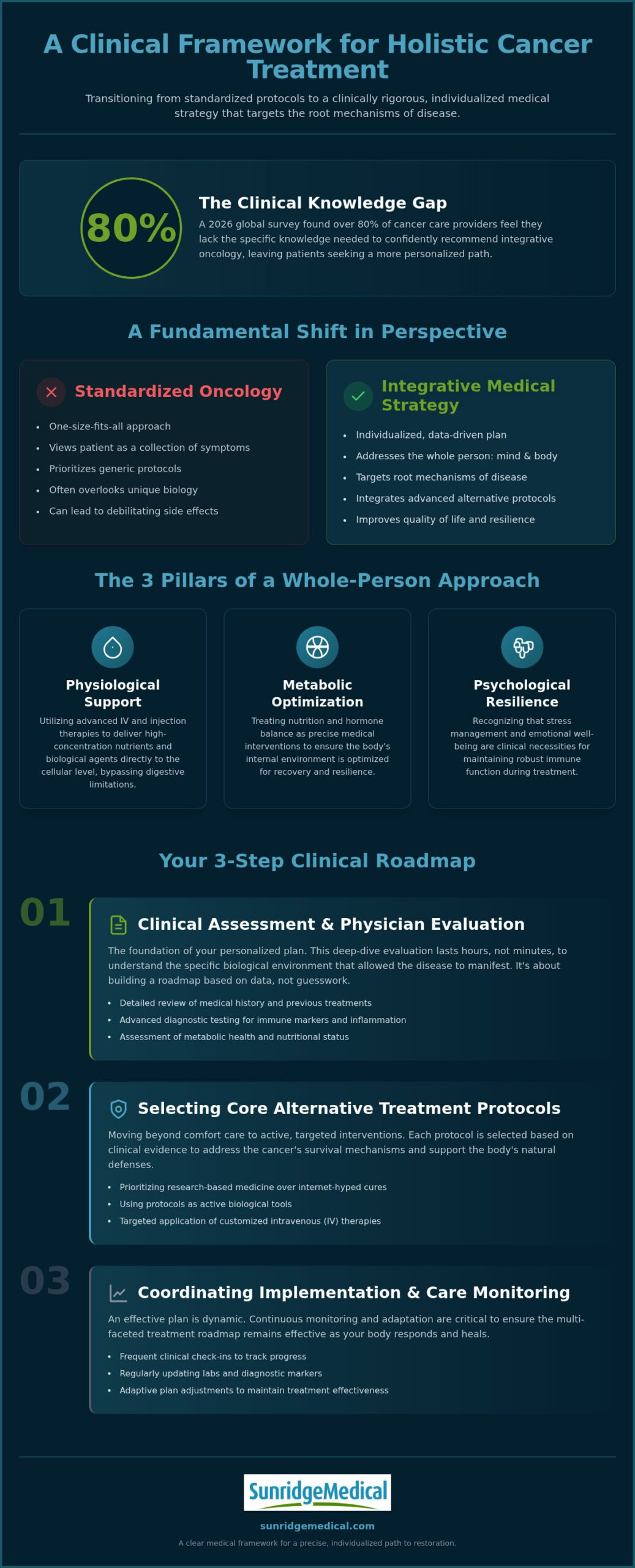
A global survey of cancer care providers published in 2026 found that over 80% of respondents felt they lacked the specific knowledge needed to confidently recommend integrative oncology to their patients. This clinical gap often leaves you feeling like a mere statistic in a rigid system that prioritizes generic protocols over your unique biology. If you’ve been searching for how to create a holistic cancer treatment plan, you’re likely facing the confusion of which alternatives are truly research-based. You deserve a strategy that addresses the complexity of your health without the debilitating side effects of conventional-only care.
In this clinical guide, you’ll learn the precise framework for building a comprehensive plan that integrates advanced alternative protocols with conventional diagnostic rigor. We’ll provide a structured medical roadmap that moves beyond basic lifestyle changes to target the underlying mechanisms of disease. You’ll discover how to access specialized methodologies that improve quality of life and offer a level of care far beyond the standard hospital experience. This is the first step toward a more precise, individualized path to restoration.
Key Takeaways
- Discover how to create a holistic cancer treatment plan by transitioning from standardized protocols to a clinically rigorous, individualized medical strategy.
- Identify the critical role of comprehensive physician evaluations and advanced diagnostic testing in uncovering the underlying biological markers of your condition.
- Learn the specific criteria for selecting research-based alternative cancer treatment protocols, including the targeted application of customized intravenous therapies.
- Understand the necessity of frequent clinical monitoring and adaptive plan adjustments to maintain the effectiveness of a multi-faceted treatment roadmap.
- Gain a clear medical framework for integrating advanced alternative medicine with conventional rigor to improve your overall quality of life and restoration.
The Framework of a Holistic Cancer Treatment Plan
Standardized oncology often relies on a one-size-fits-all approach that views the patient as a collection of symptoms rather than a unique biological system. Understanding how to create a holistic cancer treatment plan requires a fundamental shift in perspective. It’s not merely about adding supplements to a conventional regimen. Instead, it’s the deliberate integration of mind, body, and advanced clinical protocols. This framework utilizes conventional diagnostic rigor, such as the TNM (Tumor, Node, Metastasis) system for staging, while simultaneously employing targeted alternative interventions that address your specific metabolic needs. By shifting from a standardized care model to an individualized medical strategy, we can set realistic clinical goals that target the disease while providing essential support to the host.
Beyond Complementary: The Integrative Medical Model
Many patients mistake holistic care for simple complementary therapies intended only for symptom relief. In a sophisticated clinical setting, alternative cancer treatment protocols function as active biological tools. The 2026 medical landscape has seen a definitive shift from using alternative care primarily for comfort to actively targeting the cancer’s survival mechanisms. We prioritize research-based medicine over internet-hyped cures that lack clinical evidence. This model addresses the root mechanisms of complex diseases, such as chronic inflammation and immune dysfunction, ensuring that every protocol has a clear, scientific purpose within your broader roadmap.
The Pillars of a Whole-Person Approach
A truly comprehensive plan rests on three essential pillars that work in synergy to restore well-being. These pillars ensure that no aspect of your health is overlooked during the treatment process. We focus on:
- Physiological Support: Utilizing advanced IV and injection therapies to deliver high-concentration nutrients and biological agents directly to the cellular level, bypassing digestive limitations.
- Metabolic Optimization: Treating nutrition and hormone balance as precise medical interventions to ensure the body’s internal environment is optimized for recovery.
- Psychological Resilience: Recognizing that stress management and emotional well-being are clinical necessities for maintaining robust immune function.
This multi-faceted strategy moves beyond the limitations of standard practices. It provides a sense of sanctuary for those who feel frustrated by traditional systems, offering a clear and structured path forward. By focusing on the individual human experience through a high-level specialized lens, we can achieve a more thorough and reliable outcome.
Step 1: Clinical Assessment and Physician Evaluation
The foundation of any effective medical strategy begins with a thorough clinical assessment. When patients ask how to create a holistic cancer treatment plan, they are often surprised to learn that it starts with a physician evaluation that lasts hours, not minutes. This deep dive is non-negotiable. Standard hospital protocols typically rely on broad diagnostic categories that treat everyone with the same diagnosis the same way. In contrast, an individualized evaluation seeks to understand the specific biological environment that allowed the disease to manifest. This initial phase involves a detailed review of your medical history, current symptoms, and previous treatment responses to ensure no detail is overlooked.
Moving beyond standard lab tests is essential for identifying the underlying biological markers that drive disease progression. While conventional oncology focuses on tumor size and location, a holistic assessment examines immune system function, inflammatory markers, and metabolic health. During this evaluation phase, specialized IV and injection therapy fees are often required as physicians use advanced nutrient delivery to assess how your body responds to specific biological agents. This diagnostic rigor ensures that your roadmap is built on data, not guesswork. If you’re ready to move beyond standardized care, you can consult with a specialized physician to begin your journey.
Advanced Diagnostic Testing
A precision-based approach requires evaluating immune system markers and inflammatory responses that standard screenings often ignore. In 2026, we utilize multi-cancer early detection (MCED) tests alongside traditional screenings to gain a more complete picture of your health. We also emphasize the necessity of integrative cancer treatment by stage analysis, which tailors diagnostics to the specific progression of the disease. This phase identifies environmental factors or chronic co-infections that may be hindering your recovery. By uncovering these hidden barriers, we address the root causes of dysfunction rather than just managing symptoms.
Individualized Treatment Plan Development
When determining how to create a holistic cancer treatment plan that actually works, our physicians synthesize diagnostic data into an actionable roadmap. This plan is a departure from “off-the-shelf” hospital protocols. It establishes a clinical baseline for ongoing patient monitoring, allowing for real-time adjustments based on your progress. The criteria for selecting specific biological treatments are based on your unique metabolic profile and the specific mechanisms of the cancer. This methodical progression ensures that every intervention is targeted, multi-faceted, and designed to support the host while addressing the disease.
Step 2: Selecting Core Alternative Cancer Treatment Protocols
Once the diagnostic baseline is established, the focus shifts to selecting the specific biological tools that will drive recovery. Understanding how to create a holistic cancer treatment plan requires moving beyond passive wellness therapies like massage or meditation. Instead, we prioritize active protocols that target the metabolic and cellular environment of the disease. Every protocol selected must meet strict clinical criteria, ensuring it is research-based and capable of addressing the specific survival mechanisms of the cancer identified during the assessment phase. This methodical selection process transforms a list of therapies into a cohesive medical strategy.
A critical step in how to create a holistic cancer treatment plan is the integration of interventions that complement your body’s specific biological needs. We balance these advanced alternative medicine protocols with conventional oncology requirements to ensure a comprehensive approach. This strategy doesn’t ignore the standard of care; it enhances it by providing a level of specialized attention that goes beyond the ordinary hospital experience. By focusing on the individual human experience through a high-level clinical lens, we build a foundation of trust and reliability.
Customized IV and Injection Therapies
Customized intravenous (IV) and injection therapies represent the cornerstone of our physiological support. IV delivery is the preferred clinical standard because it allows for high-dose concentrations of nutritional and biological agents that the digestive system cannot process effectively. This method ensures maximum bioavailability, delivering essential support directly to the cellular level. Oxidative therapies play a vital role in chronic disease management by supporting natural defense systems and optimizing cellular respiration. We address cellular health through these targeted injectable medications, ensuring the host is supported while the disease is addressed.
Hormone and Metabolic Optimization
Resilience is a physiological state as much as a psychological one. We frequently observe a profound connection between hormone therapy for autoimmune disease and cancer resilience. When the endocrine system is optimized, the body’s immune function is significantly bolstered. A February 2026 study in Nature Medicine highlighted that 37.8% of global cancer cases are linked to modifiable risk factors, which underscores why metabolic optimization is a clinical necessity. Our nutritional strategies function as medicine, while detoxification protocols for environmental illness management help remove barriers that may otherwise hinder your path to restoration.
Step 3: Coordinating Implementation and Care Monitoring
Execution is the phase where clinical theory transforms into patient restoration. Learning how to create a holistic cancer treatment plan is only the first stage; the true success lies in the methodical coordination of its implementation. Managing the logistics of multiple biological protocols alongside conventional requirements requires a steady hand and a high level of professional gravity. We don’t view your roadmap as a fixed document. Instead, it’s a living strategy that requires constant oversight to ensure every intervention works in synergy rather than conflict.
We prioritize collaboration with your conventional oncology team to maintain the highest standards of safety. This synergy is essential for preventing contraindications and optimizing the timing of biological treatments. Since a global survey of cancer care providers published in 2026 found that 80% of respondents feel they lack the knowledge to confidently recommend integrative care, our role as your scientific guide becomes even more critical. We provide the structured medical roadmap that local hospitals often cannot, tracking your progress through both rigorous clinical markers and subjective quality-of-life indicators. If you’re ready to begin this coordinated journey, speak with our specialized medical team today to learn more about our approach.
The Clinical Monitoring Process
Our re-evaluation process is methodical and data-driven. We utilize frequent blood marker analysis and diagnostic imaging to assess the efficacy of each protocol. In 2026, we’ve integrated advanced AI tools to personalize complementary therapy recommendations based on your real-time symptom reports and treatment history. This allows us to adjust IV protocols and biological agents with precision, minimizing toxicity while maximizing therapeutic impact. Ongoing physician consultations ensure that your plan evolves alongside your recovery, providing a steady hand through every stage of the journey.
Managing the Patient Experience
We’ve designed our medical center to be a sanctuary, a place where specialized attention replaces the feeling of being just another number. This environment is essential for fostering the psychological resilience needed for long-term health. We provide personalized support systems and clear medical guidance to ensure you never feel overwhelmed by the complexity of your care. Your plan remains flexible, adapting to your evolving needs and ensuring that the path forward is always clear, supportive, and grounded in clinical reliability.
Navigating Your Path with Sunridge Medical
Choosing a medical partner is the most consequential decision in your recovery journey. Many patients arrive at our doors feeling frustrated by traditional systems that prioritize standardized protocols over individual human biology. We understand the exhaustion of being treated like a statistic in a rigid framework. At Sunridge Medical, we specialize in complex cases that require more than just a packaged approach. Our center serves as a sanctuary for those seeking a more comprehensive lens than standard practices provide. We offer a clear, structured path forward for anyone learning how to create a holistic cancer treatment plan that bridges the gap between conventional diagnostics and advanced alternative medicine.
Our approach is rooted in the belief that progress is always possible when you apply the right level of clinical precision. We don’t just manage symptoms; we seek to restore well-being by addressing the multi-faceted nature of your health. This philosophy moves beyond the limitations of “off-the-shelf” care, opting instead for descriptors that highlight the unique and targeted nature of our methodologies. We act as a steady hand for patients navigating complex health journeys, providing the reliability and thoroughness that your situation demands.
The Sunridge Advantage in Integrative Oncology
Since our founding in 2003, we’ve remained at the leading edge of medical research and application. We don’t settle for the status quo. Instead, we provide access to specialized integrative medicine for chronic illness protocols that are often unavailable in local hospital settings. Led by Dr. Steven S. Isaacman, our team focuses on the underlying mechanisms of disease rather than just the outward presentation. This dedicated advocacy ensures that every patient receives a level of care that is both intellectual and empathetic. We act as your scientific guide, applying deep technical knowledge to your unique physiological experience to ensure the best possible outcome.
Taking the First Step
Your journey begins with a comprehensive, multi-hour physician evaluation designed to uncover the underlying biological markers of your condition. This process is thorough and methodical. We don’t rush the consultation; we take the time to build a foundation of trust and clinical credibility. Our patient support team is prepared to assist with national travel and logistics to ensure your transition to our care is as seamless as possible. Our clinic offers a high-level specialist approach not satisfied with the status quo. We invite you to move beyond the limitations of standardized care and embrace a multi-faceted strategy for your well-being. By focusing on the restoration of health through a targeted roadmap, we help you navigate the complexities of how to create a holistic cancer treatment plan with confidence and calm determination.
Your Path to Clinical Restoration
Understanding how to create a holistic cancer treatment plan is the first step in moving from a standardized patient experience to a targeted medical strategy. We’ve explored the necessity of multi-hour physician evaluations and the selection of research-based biological protocols that address the root mechanisms of disease. This framework ensures that your roadmap is built on diagnostic rigor and personal biological markers rather than generic hospital standards. By integrating advanced alternative medicine with conventional rigor, you gain a level of specialized attention designed for your unique physiology.
Since 2003, Sunridge Medical has provided compassionate, research-based clinical care for those facing complex chronic conditions. Our team utilizes individualized physician evaluations and advanced alternative medicine protocols to support the host while targeting the illness. You don’t have to navigate this journey alone or settle for a system where you feel like a number. Speak with a Sunridge Medical specialist today to begin your individualized treatment plan. Progress is possible when you have a scientific guide committed to your restoration and well-being.
Frequently Asked Questions
Is a holistic cancer treatment plan safe to use with chemotherapy?
Yes, integrative protocols are specifically designed to support the body during chemotherapy. We focus on enhancing immune resilience and reducing the toxicity often associated with conventional agents. Our physicians carefully screen every biological protocol to ensure there are no contraindications with your current oncology regimen. This multi-faceted approach aims to maintain your strength while conventional treatments target the disease, creating a synergistic effect that prioritizes your overall well-being.
Can integrative oncology help with Stage 4 or metastatic cancer?
Integrative oncology provides advanced biological tools that are particularly relevant for Stage 4 or metastatic cases. While conventional options may be limited for advanced stages, our protocols focus on targeting the cancer’s survival mechanisms and optimizing metabolic health. We move beyond palliative care to use active biological medicine. This strategy aims to improve quality of life and potentially extend the window of progress through a more comprehensive lens than standard practices.
What is the first step in creating an individualized treatment plan?
The first step in how to create a holistic cancer treatment plan is a comprehensive physician evaluation that goes beyond standard diagnostic categories. This initial assessment involves a deep dive into your medical history and a review of underlying biological markers. We don’t rely on “off-the-shelf” hospital protocols. Instead, we establish a clinical baseline to understand your unique physiological environment before any specific alternative protocols are selected for your roadmap.
Do holistic cancer centers offer diagnostic testing?
Yes, advanced holistic centers utilize rigorous diagnostic testing that bridges the gap between conventional and alternative medicine. We use multi-cancer early detection (MCED) tests and detailed immune system markers to identify barriers to recovery. These diagnostics include evaluating inflammatory responses and environmental factors like chronic co-infections. By using these precise tools, we ensure that your individualized plan is based on hard clinical data rather than generalized health assumptions.
How long does a typical alternative cancer treatment protocol last?
The duration of an alternative protocol depends entirely on your specific biological response and the complexity of your condition. Most intensive phases last several weeks, followed by ongoing monitoring and maintenance adjustments. We don’t use fixed, “packaged” timelines because your recovery is a dynamic process. Regular re-evaluations allow our physicians to modify your plan in real-time, ensuring that the treatment remains effective as your health needs evolve and improve.
Will my conventional oncologist be able to work with a holistic medical center?
We prioritize open communication and coordination with your conventional oncologist to ensure safety and clinical synergy. While a 2026 survey found that 80% of providers feel they lack integrative knowledge, we act as a scientific guide to bridge that gap. We share diagnostic data and treatment progress with your local team. This collaborative effort ensures that your holistic plan complements your standard care without creating unnecessary administrative or medical hurdles.
Are alternative treatments proven to help with cancer symptoms and side effects?
Research-based alternative treatments are highly effective at managing cancer symptoms and the side effects of conventional therapies. Protocols like customized IV infusions and metabolic optimization are used to address fatigue, nausea, and immune depletion. By targeting the underlying mechanisms of these symptoms, we help you maintain a higher quality of life. This supportive care is an essential part of how to create a holistic cancer treatment plan that focuses on the whole person.
What makes Sunridge Medical different from other holistic treatment centers?
Sunridge Medical is defined by our 20-year history of leading individualized patient care under Dr. Steven S. Isaacman. We are a pioneering expert and dedicated advocate, offering advanced protocols that go beyond the status quo of standard hospital settings. Our center acts as a sanctuary, providing exclusive, multi-faceted methodologies that focus on the individual human experience. We combine clinical authority with compassionate optimism to help you navigate your most complex health challenges.