


What if the “mystery illness” stealing your cognitive clarity and energy isn’t a mystery at all, but a biological accumulation that standard blood panels simply aren’t designed to see? Research suggests that nearly 47% of homes in the U.S. have indoor mold growth, yet many patients are left feeling gaslit when conventional tests fail to explain their persistent brain fog. If you’ve spent years searching for how to detox from mold exposure, you likely know that the path to recovery involves much more than just leaving a problematic building; it requires a sophisticated approach to cellular repair.
We understand the frustration of having your symptoms dismissed while your quality of life declines. This guide promises to reveal the advanced clinical protocols and biological mechanisms necessary to effectively clear mycotoxins and restore your cellular health. You aren’t just looking for a temporary fix; you’re seeking a scientific path back to the person you were before the exposure took hold.
In the following sections, we’ll preview the essential components of a physician led recovery plan. We’ll explore the science behind targeted mycotoxin binders, the role of lipid exchange therapies, and how specialized IV protocols can bypass a compromised digestive system to deliver nutrients directly where they’re needed most. This is your roadmap to finding a specialist who treats environmental illness as the serious medical priority it is.
Key Takeaways
- Differentiate between simple mold allergies and systemic mycotoxicosis to understand how fungal metabolites disrupt internal physiology.
- Learn how mycotoxins breach the blood-brain barrier and trigger a mitochondrial “energy crisis” at the cellular level.
- Discover why environmental remediation alone is insufficient and how to detox from mold exposure through a dedicated biological clearance protocol.
- Identify the specific role of sequestering agents and binders in preventing the reabsorption of toxins during the recovery process.
- Explore the clinical advantage of a physician-led approach that integrates advanced diagnostics with research-based alternative therapies.
Understanding Mold Exposure: Identifying Mycotoxicosis and Systemic Illness
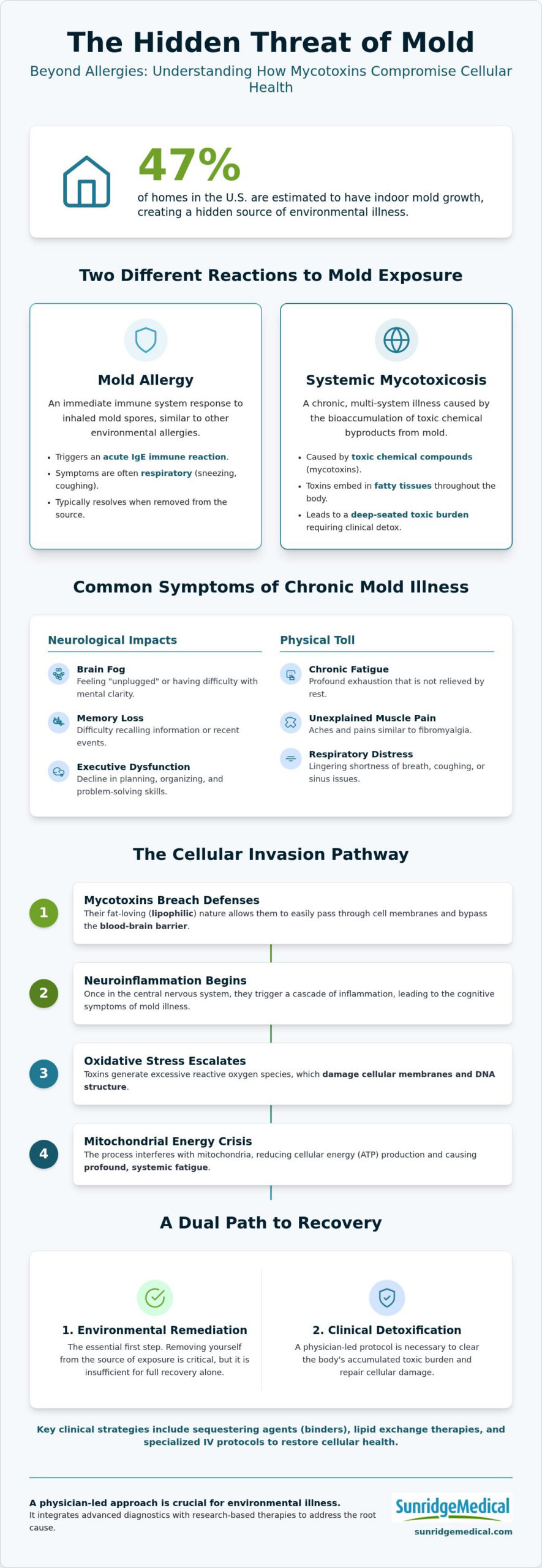
Mycotoxicosis represents a complex clinical state resulting from the bioaccumulation of fungal secondary metabolites. To truly grasp the severity of this condition, one must ask, What are mycotoxins? These are not living spores that you simply breathe out over time. Instead, they are toxic chemical compounds that embed themselves into fatty tissues, disrupting the very foundation of cellular health. While a standard mold allergy triggers an immediate, often respiratory, immune response, systemic mycotoxin poisoning involves a deep-seated toxic burden. This distinction is critical for anyone investigating how to detox from mold exposure effectively. Standard lab tests frequently miss this load because they focus on acute IgE immune reactions rather than the chronic, systemic sequestration of toxins within the body’s internal architecture.
Common Symptoms of Chronic Mold Illness
The clinical presentation of environmental illness is rarely localized to a single organ system. Neurological impacts often manifest as profound brain fog, memory loss, and a frustrating decline in executive dysfunction. Patients frequently describe a feeling of being “unplugged” from their own cognitive abilities. Physically, the toll includes unexplained muscle pain, chronic fatigue that persists regardless of rest, and lingering respiratory distress. We also observe a significant clinical overlap between these symptoms and chronic Lyme disease. Both conditions involve persistent systemic inflammation and a compromised immune system, making a nuanced, multi-faceted diagnostic approach essential for recovery.
Why Mold Exposure is Frequently Misdiagnosed
Conventional medical frameworks often struggle with environmental illness because they tend to treat individual symptoms in isolation rather than addressing the toxic whole. A patient might be referred to a neurologist for cognitive issues and a rheumatologist for joint pain, yet the underlying fungal metabolites remain unaddressed. Mycotoxins are master mimics. They frequently present as autoimmune disorders or fibromyalgia, leading to years of misdirected treatments and patient frustration. Breaking this cycle requires a comprehensive physician evaluation that prioritizes environmental triggers and utilizes specialized diagnostic protocols to uncover hidden toxicities. Mycotoxicosis is a multi-systemic inflammatory condition requiring specialized clinical intervention.
Restoring health isn’t merely about symptom management. It’s about identifying the precise mechanisms by which these toxins have compromised your biology. By moving beyond standardized care, we can begin the methodical process of clearing the body and reclaiming vitality. Understanding how to detox from mold exposure begins with acknowledging that your symptoms are a rational biological response to a very real chemical threat.
The Cellular Mechanism: How Mycotoxins Compromise Human Health
Mycotoxins are uniquely dangerous because of their lipophilic nature. This chemical property allows them to bypass the body’s primary defenses, including the blood-brain barrier. When these toxins reach the central nervous system, they initiate a cascade of neuroinflammation that manifests as the cognitive decline many patients experience. The health effects of mold exposure extend far beyond simple irritation. They represent a profound biological interference. At a microscopic level, mycotoxins generate excessive reactive oxygen species, leading to severe oxidative stress. This process doesn’t just irritate cells; it actively degrades cellular membranes and can cause structural damage to DNA. Understanding these mechanisms is the first step in learning how to detox from mold exposure effectively.
Mitochondrial Dysfunction and Chronic Fatigue
Mitochondria serve as the primary energy producers for every cell in your body. Mycotoxins directly interfere with the electron transport chain, significantly reducing the production of adenosine triphosphate (ATP). This creates a “cellular energy crisis” where the body’s engines are effectively stalled. This explains why patients suffer from chronic fatigue that doesn’t respond to traditional rest. The engine itself is inhibited. Restoring vitality requires more than sleep. It demands a clinical strategy focused on mitochondrial repair. Through integrative medicine, we can utilize specific protocols designed to stabilize these organelles and restart cellular energy production.
Immune Dysregulation and CIRS
For many, mold illness manifests as Chronic Inflammatory Response Syndrome (CIRS). This is a state of permanent “high alert” where the immune system remains triggered even after the initial threat is gone. Genetics play a massive role here. Approximately 25% of the population carries the HLA-DR genetic variant, which makes their bodies unable to identify and clear mycotoxins efficiently. While others might process these toxins, these individuals remain trapped in a systemic inflammatory cascade. This persistent immune dysregulation often leaves the body vulnerable to co-infections and other environmental sensitivities. Successfully navigating how to detox from mold exposure requires addressing this immune confusion at its source. A comprehensive environmental illness treatment evaluation focuses on these underlying genetic and inflammatory markers to create a truly individualized recovery path.
The Dual Recovery Path: Environmental Remediation vs. Clinical Detoxification
True recovery requires a simultaneous address of both the external environment and the internal biological state. While professional environmental remediation is a non-negotiable first step, it is frequently insufficient for those seeking a full return to health. This is because the toxins already sequestered in your cells do not simply vanish once the air is clear. “Building Detox” focuses on the physical structure, removing contaminated materials and filtering air. In contrast, “Biological Detox” focuses on the human system, clearing the bioaccumulated load from tissues and organs.
The danger of internal stagnation is high. If a patient’s internal clearance pathways are blocked, the body remains in a state of self-poisoning even in a sterile room. Furthermore, exposure isn’t limited to the air we breathe. The presence of mycotoxins in the food supply means that the body is constantly challenged by new inputs. A coordinated effort between environmental experts and medical specialists is the only way to ensure that the source is removed and the internal damage is repaired. Without this dual track, patients often find themselves stuck in a cycle of temporary improvement followed by inevitable relapse.
The Limitations of Environmental Remediation Alone
Many patients are perplexed when their symptoms persist after moving to a clean environment. This phenomenon occurs due to the “body burden,” where lipophilic mycotoxins migrate into adipose tissue for long-term storage. These toxins are shielded from the immune system by internal biofilms, which act as protective barriers for fungal metabolites within the body. Simply breathing clean air does not reach these deep-seated reservoirs. As long as these toxins remain stored in the fat cells and protected by biofilms, the systemic inflammatory response will continue to fire, leaving the patient in a state of chronic illness despite a successful home remediation.
Framework for Biological Restoration
A clinical approach to how to detox from mold exposure must prioritize biological stabilization. Attempting to force toxins out too quickly can overwhelm the primary emunctories, specifically the liver, kidneys, and skin. This often leads to a severe inflammatory flare that can set recovery back by months. We focus on reducing systemic inflammation first to ensure the body can safely handle the clearance process. This is why individualized treatment plans are paramount. Every patient possesses a unique toxic profile and genetic capacity for detoxification. By supporting the liver’s phase I and II pathways and ensuring renal filtration is optimal, we create a safe exit route for the mycotoxins that have compromised your health for so long.
Advanced Clinical Protocols for Clearing Mold and Mycotoxins
Biological recovery is not a passive event. It’s an active, physician-led intervention that follows a logical clinical progression. The first step involves the absolute cessation of exposure. This requires a professional environmental assessment to ensure you’re no longer inhaling or ingesting fungal metabolites. Once safety is established, we move to the utilization of sequestering agents. These binders are essential because they trap toxins in the digestive tract, preventing mycotoxins from being reabsorbed via enterohepatic circulation. Understanding how to detox from mold exposure requires this level of precision; skipping these foundational steps often leads to a cycle of re-toxification.
However, oral protocols often fall short for those with compromised digestive systems or severe systemic illness. This is why specialized IV therapies are integrated into our advanced protocols. These infusions bypass malabsorption issues entirely, delivering nutrients directly to the cells. Finally, we employ oxidative therapies to neutralize the systemic fungal load and stimulate natural repair mechanisms. This multi-faceted approach ensures that we aren’t just managing symptoms, but actively clearing the path for cellular restoration.
The Role of Specialized IV Therapy
Intravenous delivery is medically superior for patients dealing with high toxic loads. By bypassing the gut, we can deliver high-dose antioxidants like Glutathione directly into the bloodstream. This master antioxidant is crucial for supporting the liver’s Phase I and Phase II detoxification pathways. When these pathways are optimized, the body can finally process and eliminate lipid-soluble toxins that have been stored in fatty tissues for years. Using IV therapy accelerates this clearance, providing the cellular support necessary to resolve the energy crisis often seen in chronic environmental illness. It provides a level of depth that oral supplements simply cannot match.
Oxidative Therapies and Biological Binders
Oxidative protocols work by introducing controlled oxygen-based molecules to the system. This process addresses the underlying fungal load while simultaneously dampening systemic inflammation. It’s a precise clinical tool used to reset the immune response. Similarly, the science of binders requires extreme specificity. We don’t just use a “standard” agent; we select binders like bentonite clay, activated charcoal, or specialized polymers based on the specific mycotoxins detected in your system. For instance, some binders are highly effective for Aflatoxin but less so for Ochratoxin. Selecting the wrong agent can lead to stalled progress or unnecessary side effects.
Effective recovery is data-driven and requires constant refinement. We monitor your progress through advanced diagnostic testing and physician oversight to adjust the protocol as your toxic load decreases. If you’ve struggled with standard treatments, it’s time for a more targeted, research-based approach. You can learn more about our specialized Environmental Illness Treatment and how we customize these advanced protocols for each patient’s unique biological needs.
Personalized Environmental Illness Recovery at Sunridge Medical
Sunridge Medical approaches environmental illness with a level of professional gravity that reflects the profound impact of mycotoxin accumulation on the human system. While many medical frameworks offer a standardized approach, we provide a sophisticated blend of clinical authority and compassionate optimism. We recognize that patients often arrive frustrated or overlooked by traditional systems. Our role is to act as your scientific guide, utilizing research-based protocols and conventional diagnostics to create a multi-faceted path forward. This isn’t just about temporary relief. It’s about establishing a clear clinical path to biological recovery and the restoration of well-being.
Our commitment to treating complex illnesses is rooted in the belief that every patient deserves a dedicated advocate. We don’t settle for the status quo. Instead, we constantly seek more effective ways to help those in need by bridging the gap between conventional clinical language and advanced alternative methodologies. By focusing on the unique, targeted nature of our protocols, we ensure that your treatment addresses the root cause of your condition rather than just managing a list of symptoms. This comprehensive lens is what allows our patients to find the progress they’ve been seeking.
Our Comprehensive Physician Evaluation
Your journey toward health begins with a deep-dive consultation designed to uncover the specific mechanisms of your illness. We don’t just look at the presence of mold; we look at how your specific biology has responded to that exposure. This evaluation frequently includes the integration of hormone optimization to support your body’s resilience during the clearance process. Chronic toxic exposure often disrupts the endocrine system, and stabilizing these pathways is essential for maintaining stamina during detoxification. By identifying these underlying imbalances, we develop a roadmap that not only addresses how to detox from mold exposure today but also creates a foundation for long-term health and the prevention of relapse.
A Sanctuary for Complex Chronic Disease Recovery
Patients travel nationally to access our specialized expertise because they recognize that environmental illness requires a level of care beyond the ordinary. We have cultivated a sense of sanctuary where your experience is honored and your recovery is our priority. Navigating a mold recovery path is a complex health journey, and having a steady hand to guide you makes a significant difference. Our brand persona is rooted in reliability and thoroughness, ensuring you feel fully informed and supported at every stage of the narrative. We are pioneering experts who apply deep technical knowledge with a focus on the individual human experience.
If you’re ready to move beyond “packaged” care and embrace a more comprehensive approach to your health, we are here to help. Our methodical rhythm ensures that you aren’t rushed through your recovery, but rather guided through a logical progression of healing. Contact Sunridge Medical to schedule your comprehensive evaluation and discover the clinical advantage of our specialized methodologies.
Reclaiming Your Health Through Precision Medicine
True recovery from environmental illness requires moving beyond the surface. While cleaning your physical environment is a vital first step, clearing the systemic accumulation of mycotoxins from your tissues is the only way to resolve persistent fatigue and cognitive decline. We have explored the necessity of a dual-track approach that combines environmental remediation with clinical, cellular-level detoxification. This process is not a matter of generic supplements; it is a methodical restoration of your body’s internal architecture.
Navigating how to detox from mold exposure shouldn’t be a journey you take alone or through frustrating trial and error. Sunridge Medical serves as a national leader in integrative chronic disease management, offering over 20 years of experience in advanced alternative medicine. Our team specializes in developing individualized protocols that address the unique biological hurdles of complex environmental illnesses, ensuring every patient receives the specialized attention they require.
You deserve a medical ally who prioritizes your recovery with both scientific depth and compassionate optimism. Schedule a Consultation with a Sunridge Medical Specialist to begin your personalized path to restoration. We are committed to helping you rediscover the vitality and clarity you thought were lost forever. Progress is possible, and your return to health starts with a single, decisive step.
Frequently Asked Questions
How long does it typically take to detox from mold exposure?
The timeline for recovery is highly individualized and depends on the total toxic load, genetic detoxification capacity, and the duration of exposure. Most patients begin to see clinical improvements within 3 to 6 months of starting a targeted protocol, though full biological restoration can take 12 months or longer. It’s a methodical process that requires patience and consistent physician oversight to ensure toxins are cleared safely without overwhelming the body’s primary emunctories.
Can I detox from mold while still living in a contaminated environment?
Successful recovery is nearly impossible if you remain in a contaminated space. Continuous inhalation of mycotoxins triggers a persistent inflammatory response that overrides the effects of clinical detoxification. To understand how to detox from mold exposure effectively, you must first secure a clean environment through professional remediation or relocation. This allows the immune system to shift from a state of constant defense to one of active repair and toxin clearance.
What are mycotoxin binders and how do they work in the body?
Mycotoxin binders are sequestering agents, such as activated charcoal, bentonite clay, or specialized polymers, designed to trap toxins within the gastrointestinal tract. Once mycotoxins are processed by the liver and excreted into the bile, binders attach to them to prevent enterohepatic reabsorption. This ensures that the toxins are physically removed from the body through bowel movements rather than being cycled back into the bloodstream where they can cause further systemic damage.
Is it possible for mold exposure to cause permanent neurological damage?
While mycotoxins are neurotoxic and can cause significant cognitive decline, many neurological symptoms are reversible with the right clinical intervention. The brain possesses a remarkable degree of neuroplasticity, and by neutralizing neuroinflammation and restoring mitochondrial function, patients often see a return of executive function and memory. However, prolonged exposure without treatment can lead to more deep-seated issues, making early and comprehensive physician evaluation vital for preventing long-term damage and supporting neural repair.
What is the difference between a mold allergy and mycotoxin poisoning?
A mold allergy is an acute immune system reaction to fungal spores, typically manifesting as respiratory distress or skin irritation. To ensure you are correctly identifying your condition, the Premium Allergy & Respiratory Center provides expert resources on testing accuracy. In contrast, mycotoxin poisoning, or mycotoxicosis, is a systemic toxic condition caused by the accumulation of fungal metabolites within the body’s tissues. While an allergy is about how the body reacts to an external trigger, poisoning is about the internal damage caused by the toxins themselves, requiring a much more complex detoxification strategy.
This phenomenon is often referred to as a “healing crisis” or a Herxheimer-like reaction. As the body begins to mobilize stored mycotoxins from adipose tissue, the temporary increase in circulating toxins can overwhelm the liver and kidneys, leading to a transient flare in symptoms like fatigue or brain fog. We manage this by prioritizing inflammation reduction and emunctory support before introducing aggressive binders, ensuring the clearance process remains within the body’s physiological capacity for safe elimination.
What specific lab tests are used to confirm mycotoxin exposure?
We utilize advanced diagnostic tools including urine mycotoxin panels, which measure the excretion of specific fungal metabolites like Ochratoxin A or Gliotoxin. Additionally, blood serum antibody testing helps us identify the immune system’s specific response to mold exposure. These tests, combined with a comprehensive physician evaluation, allow us to map your unique toxic profile. This data-driven approach is essential for selecting the correct binders and tailoring the detoxification protocol to your specific biological needs.
How does Sunridge Medical’s approach to mold detox differ from standard care?
Standard medical care often focuses on managing isolated symptoms with antihistamines or anti-inflammatory drugs. At Sunridge Medical, we address the root cause through a sophisticated blend of conventional diagnostics and advanced alternative protocols. Our approach includes specialized IV therapies to bypass digestive malabsorption and oxidative protocols to neutralize the systemic fungal load. We treat environmental illness as a serious medical priority, providing individualized care plans that go far beyond the status quo of standardized, “packaged” treatments.