


You've just received a cancer diagnosis, or you're facing recurrence, and your oncology plan is moving quickly. At the same time, you may be searching for ways to manage fatigue, pain, nausea, neuropathy, anxiety, nutrition, and treatment tolerance without stepping away from chemotherapy, radiation, immunotherapy, or surgery. That tension is common. The most useful question isn't whether conventional or integrative care is “better.” It's how carefully selected supportive therapies can fit around evidence-based oncology.
For patients searching for integrative cancer treatment in Scottsdale, the central issue is coordination. Arizona's cancer burden provides important context, with a 2022 age-adjusted cancer incidence rate of 383.8 per 100,000 and mortality rate of 442.3 per 100,000, according to Arizona State Cancer Profiles. Integrative oncology can add a structured layer of symptom management and individualized decision support, but it shouldn't promise a cure or replace treatment that has demonstrated value.
Table of Contents
- Understanding Integrative Cancer Care in Scottsdale
- Core Principles of Integrative Oncology
- Common Integrative Cancer Therapies Explained
- How Individualized Protocols Are Designed and Coordinated
- Safety, Evidence, and Common Misconceptions
- Choosing the Right Integrative Cancer Clinic
- Travel and Coordination for Out-of-Town Patients
Understanding Integrative Cancer Care in Scottsdale
A patient may arrive at an integrative clinic carrying pathology reports, imaging results, medication lists, and urgent questions. Is acupuncture appropriate during chemotherapy? Could a supplement interfere with immunotherapy? Should an infusion be scheduled before or after radiation? These are clinical coordination questions, not requests for a generic “natural” remedy.
Integrative oncology combines conventional cancer treatment with selected supportive and complementary approaches. The focus includes symptoms, physical function, nutrition, emotional distress, sleep, and treatment-related complications. It does not turn an unproven therapy into cancer treatment, and it does not require leaving an established oncology team.
The model is now offered within major cancer centers. A review of National Cancer Institute designated centers found that 73% offered acupuncture and massage, 69% offered meditation and yoga, and 91% provided nutrition counseling in its review of integrative oncology services. These services reflect the practical role of integrative oncology: evidence-informed symptom management that can be coordinated with standard care.
Why patients seek a broader plan
Patients often seek additional support when recommended treatment is medically appropriate but difficult to tolerate. A global survey of 344 oncology professionals across eight regions found that 70% had used or recommended integrative oncology modalities, while 79% believed these services were underutilized in cancer supportive care. Emotional symptoms, pain, gastrointestinal symptoms, and fatigue were the most common reasons for recommending integrative care during active treatment.
A separate clinical analysis found that 75% of people seen in an integrative oncology program had used complementary and alternative medicine during the previous 12 months, and 38% had distant or advanced disease in the reported patient population. These findings do not establish that every therapy works. They do show why patients with complex cancer journeys need interaction checks, clear treatment boundaries, and guidance that distinguishes supportive care from disease-directed therapy.
Practical rule: An integrative plan should make oncology care safer, more coordinated, and more tolerable. A clinic that tells you to stop proven treatment is giving you a serious warning sign.
Scottsdale serves patients from Phoenix, Paradise Valley, Tempe, Mesa, Chandler, Gilbert, and communities throughout the greater Phoenix metropolitan area. A physician-directed program can organize questions for each medical team, review supplements and possible interactions, and identify supportive options that fit the diagnosis, treatment intent, blood counts, organ function, and current therapy.
Patients seeking further context can review the role of integrative oncology in modern cancer care.
Core Principles of Integrative Oncology
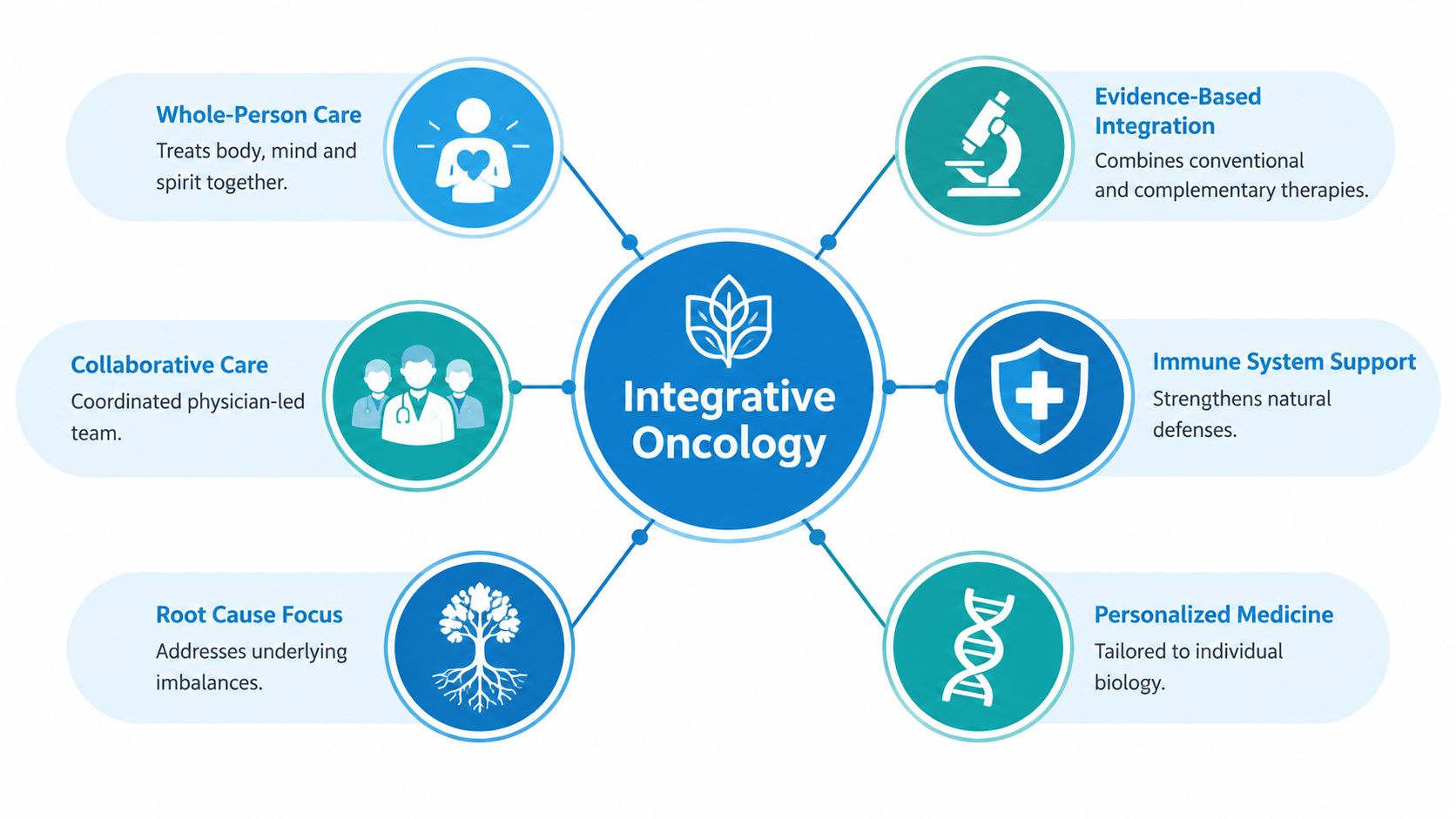
A patient beginning chemotherapy, radiation, immunotherapy, or surgery needs more than a menu of complementary therapies. Integrative oncology starts with the diagnosis, treatment intent, current function, other illnesses, medications, and practical limits. That information determines which supportive options can be combined safely with standard oncology care.
Whole-person assessment
A tumor does not exist separately from the person receiving treatment. A useful evaluation covers symptom burden, performance status, nutrition, sleep, mood, organ function, medication use, environmental exposures, caregiving demands, and finances. These details help determine whether a proposed intervention addresses a real need and whether the patient can tolerate it.
Tumor biology remains central. Cancer type, stage, pathology, biomarkers, previous treatment, and treatment intent guide the plan. Personalized care means matching decisions to the patient's biology and circumstances, not selecting therapies solely because they are preferred or promoted.
Evidence before enthusiasm
The strongest role for many integrative therapies is supportive care. ASCO-endorsed Society for Integrative Oncology guidelines recommend meditation, yoga, relaxation, massage, and music therapy for selected anxiety, depression, and quality-of-life concerns. They also recommend acupuncture or acupressure for chemotherapy-induced nausea and vomiting in the guideline recommendations.
This evidence supports a specific symptom benefit in an appropriate patient. It does not establish that acupuncture or another supportive therapy treats the cancer itself.
Coordination instead of separation
The integrative clinician should communicate with the treating oncology team, particularly during systemic therapy, radiation, immunotherapy, or surgery. Treatment timing, blood counts, kidney and liver function, hydration, infection risk, and medication interactions can change the safety of an otherwise familiar intervention.
Supplements need careful review. The same guideline does not support ingested dietary supplements for managing breast cancer treatment-related adverse effects and advises against acetyl-L-carnitine for preventing chemotherapy-induced peripheral neuropathy because of possible harm. A supplement plan should therefore be reviewed before it is started, paused, or resumed.
A structured plan asks four practical questions:
- What problem are we treating? Pain, nausea, anxiety, fatigue, neuropathy, poor intake, or another defined concern.
- What evidence supports the option? Supportive, emerging, off-label, or insufficient.
- Could it interfere with oncology care? The answer may depend on dose, timing, organ function, and the treatment regimen.
- How will we monitor it? Symptoms, laboratory testing, treatment tolerance, and communication with each medical team.
The clinical framework for building an integrative cancer treatment plan explains how these questions can organize care across oncology and integrative teams.
Common Integrative Cancer Therapies Explained
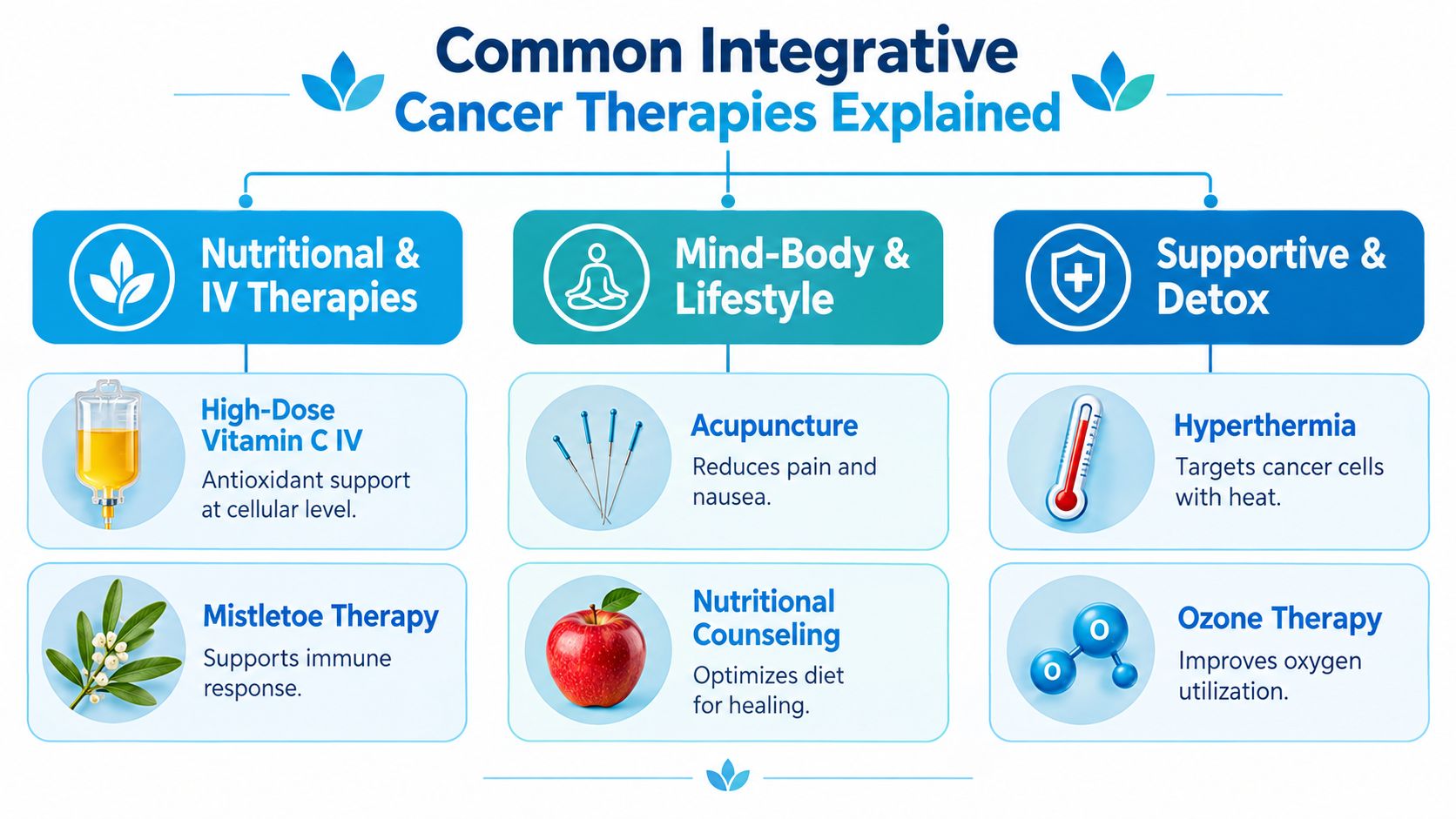
A patient in Scottsdale may be receiving chemotherapy while also asking about vitamin infusions, heat therapy, or “detox” treatments. The practical question is not which therapies sound promising. It is whether a proposed treatment addresses a defined need, can be scheduled safely with oncology care, and has evidence relevant to the diagnosis. A treatment listed by a clinic does not prove that it improves survival or belongs in an individual protocol.
IV nutritional therapies
IV infusions may have a supportive role when a clinician identifies a hydration, nutritional, or symptom-related need. Patients commonly ask about high-dose vitamin C and glutathione. Before either is considered, the care team should review kidney function, medications, laboratory findings, treatment timing, and evidence for the specific cancer and regimen.
A 2024 randomized trial in metastatic pancreatic cancer reported longer median overall and progression-free survival when IV ascorbate was added to gemcitabine and nab-paclitaxel. Because the trial was small and needs replication, it represents an emerging finding rather than proof that IV vitamin C can replace standard oncology treatment. Review vitamin C infusions for cancer with both oncology and integrative clinicians before scheduling treatment.
Hyperthermia
Hyperthermia applies heat as an adjunct, and its potential value depends on the method, treatment site, cancer type, and combination with standard therapy. A 2022 systematic review found no evidence that alternative whole-body hyperthermia or electrohyperthermia improved survival or quality of life in cancer patients in its review of complementary medical hyperthermia.
Regional or local hyperthermia used with radiation or chemoradiation has a more favorable evidence base in selected situations. Trial syntheses report better local control and response rates, and sometimes survival, when heat is added to standard treatment. The same review literature describes tumor-target temperatures around 39°C or higher in those protocols. The clinical rationale is radiosensitization or chemosensitization, not a stand-alone cancer cure.
Oxidative therapies and IPT
Ozone and other oxidative therapies require a direct discussion of proposed mechanisms, uncertainty, and safety. The clinician should identify the intended outcome, explain how closely the evidence matches the patient's diagnosis, and distinguish a research-based hypothesis from a claim that the treatment can eliminate cancer.
Insulin potentiation therapy, or IPT, is another protocol-specific approach discussed by some integrative clinics. It should not replace chemotherapy, targeted treatment, radiation, or immunotherapy. Insulin can cause clinically important changes in blood glucose, so patient selection, medication review, and monitoring are necessary.
Regenerative therapies and chelation
PRP and related regenerative approaches generally concern symptoms, recovery, or tissue support rather than direct cancer treatment. Suitability depends on the treatment site, blood counts, infection risk, planned surgery, and overall condition. Timing may also matter if the patient is receiving therapies that affect healing or immune function.
Heavy-metal chelation belongs only in cases with a credible medical indication and appropriate monitoring. “Detoxification” is not a blanket cancer therapy, and chelation can cause harm when used without a clear reason.
The appropriate protocol may include none of these options. A careful clinic starts with the patient's goals and oncology schedule, then selects only interventions that have a defined role and can be coordinated with standard care.
How Individualized Protocols Are Designed and Coordinated
A patient starting chemotherapy, radiation, immunotherapy, or surgery may also be considering acupuncture, supplements, or other supportive therapies. Safe integration begins with the medical record, not a preferred protocol. The clinician reviews pathology, staging, imaging, biomarkers when available, prior treatments, medications, allergies, laboratory results, organ function, symptoms, and performance status. Kidney disease, low blood counts, neuropathy, infection risk, or an upcoming operation can make an otherwise reasonable intervention unsuitable.
The patient journey
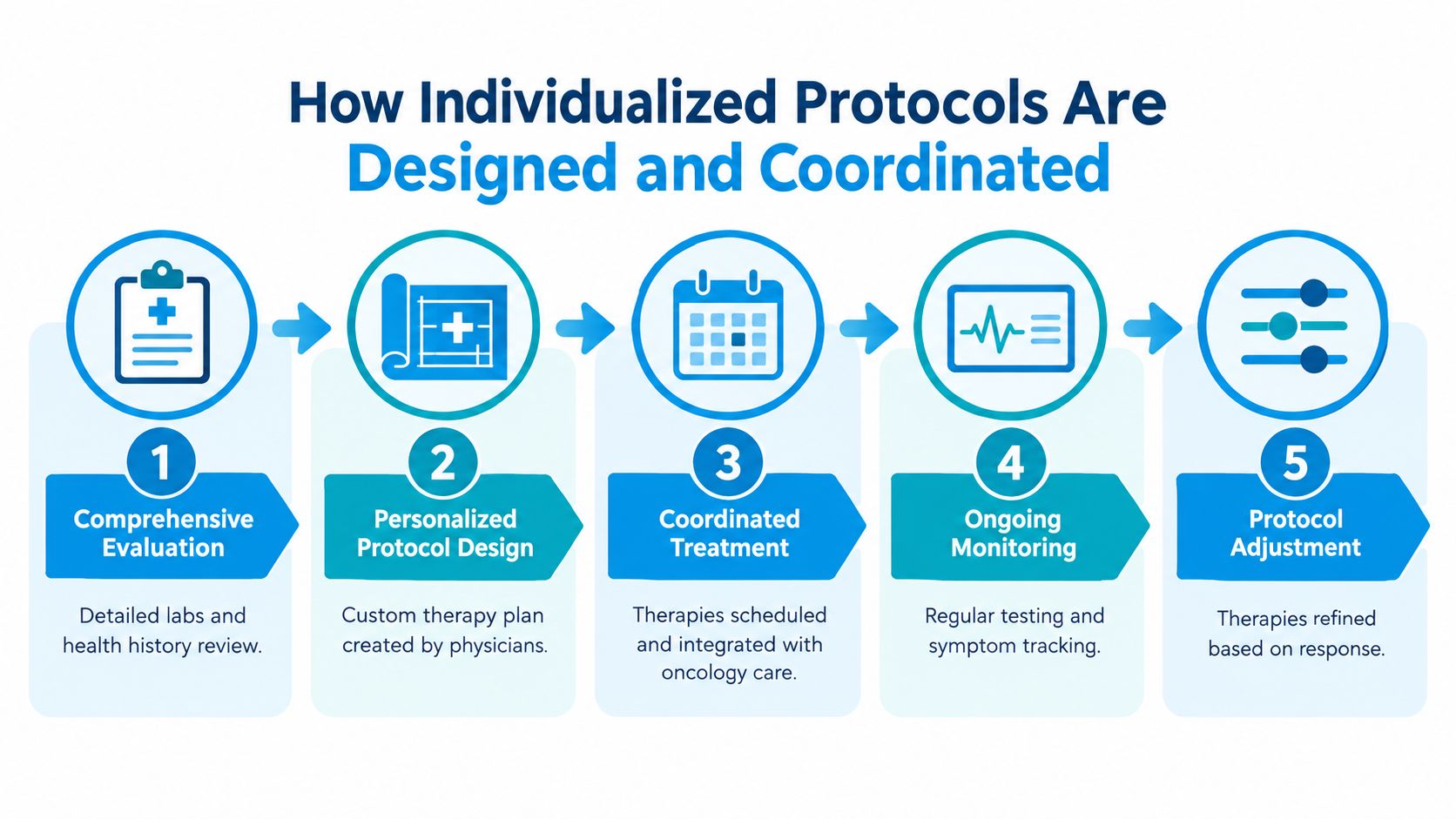
Protocol development follows connected clinical decisions:
- Evaluation: The team identifies the patient's cancer-related symptoms and care priorities, then confirms the current oncology plan.
- Protocol design: The clinician assigns each intervention a defined purpose and distinguishes established supportive care from emerging or investigational options.
- Treatment coordination: Scheduling accounts for chemotherapy cycles, radiation appointments, immunotherapy, surgery, medications, and recovery periods. Potential interactions or timing concerns are reviewed before treatment begins.
- Monitoring: Symptoms, laboratory findings, hydration, nutrition, treatment tolerance, and functional changes are tracked.
- Adjustment: The plan changes when the patient's condition, test results, oncology treatment, or goals change.
Coordination requires clinical communication, not only appointment scheduling. A patient with chemotherapy-related nausea might receive acupuncture or acupressure alongside prescribed antiemetics. A patient with neuropathy may need neurological assessment before any supplement or infusion is considered. The team should document when an intervention must be paused for abnormal laboratory results, infection, surgery, or poor tolerance.
Keeping multiple clinicians informed
Patients should authorize communication between the integrative and oncology teams when possible. Bring the oncology schedule, complete medication and supplement list, pathology, imaging reports, and recent laboratory results to the consultation. Ask who will contact the oncologist if a proposed therapy could affect treatment timing, blood work, medication choices, or recovery.
Families managing appointments across Scottsdale and Phoenix may use general care coordination services to organize records, scheduling, transportation, and communication. This logistical help does not replace medical oversight, but it can reduce missed information between appointments.
The consultation should produce a written plan identifying each therapy's purpose, evidence category, possible risks, monitoring clinician, and stop or review criteria. Patients seeking another opinion can prepare focused questions with this clinical evaluation checklist for finding an integrative oncologist. A clear plan lets supportive care work alongside evidence-based oncology without asking the patient to choose between them.
Safety, Evidence, and Common Misconceptions
A newly diagnosed patient can use supportive therapies without abandoning chemotherapy, radiation, surgery, immunotherapy, or a clinical trial. The practical dividing line is coordinated integrative oncology, where each therapy has a defined purpose and monitoring plan, versus alternative claims that encourage patients to reject effective cancer treatment.
Mindfulness, yoga, relaxation, massage, music therapy, acupuncture, and acupressure may support selected symptoms. The 2024 SIO-ASCO guideline gives strong recommendations for mindfulness-based interventions and yoga for anxiety and depression in adults with cancer. It also recommends exercise and mindfulness-based programs for cancer survivors after treatment in the published guideline.
These recommendations have limits. They support symptom management and quality of life, not tumor destruction. A therapy that helps sleep, anxiety, pain, or treatment-related nausea still needs to fit the patient's diagnosis, medications, blood counts, and treatment schedule.
What requires caution
Supplements can change bleeding risk, sedation, liver metabolism, kidney function, blood pressure, or the effects of cancer medicines. Review antioxidant products, herbal extracts, and high-dose nutrients before use, especially during chemotherapy or radiation. “Natural” does not establish compatibility with treatment.
Hyperthermia, ozone, IPT, IV vitamin C, chelation, and regenerative procedures require therapy-specific review. Evidence may be limited, mixed, or relevant only to a particular delivery method or diagnosis. The clinician should identify whether an option is established supportive care, off-label, investigational, or unsupported, then specify what monitoring or treatment changes may be needed.
Ask directly: “What is this therapy expected to change, what could it interfere with, and how will we know whether it's helping?”
Disclose every infusion, supplement, injection, procedure, and restrictive diet to the oncology team. The integrative clinician should coordinate with the treatment plan, including surgery, chemotherapy, radiation, immunotherapy, and clinical trials. A credible program will not ask you to conceal care from another physician.
Choosing the Right Integrative Cancer Clinic
A general wellness center may offer relaxation services or supplements, but cancer care needs clinical oversight. Choose a clinic with licensed physicians, nurses, or other qualified clinicians; a defined process for reviewing pathology and imaging; and a clear willingness to communicate with your oncology team. The clinic should explain which services can be combined with chemotherapy, radiation, or immunotherapy, and which require changes in timing or additional monitoring.
A second opinion can help when the diagnosis is complex, treatment is no longer working, side effects are difficult, or you are uncertain about an adjunctive therapy. Bring a written list of goals. “I want more options” is understandable, while “I need help with neuropathy while continuing chemotherapy” gives the clinician a safer, measurable starting point.
| Criteria | Reputable Integrative Oncology Clinic | Generic Wellness Center |
|---|---|---|
| Clinical leadership | Physician-directed evaluation connected to the cancer diagnosis and current treatment | Services may be offered without oncology-focused medical review |
| Evidence discussion | Explains what is established, emerging, experimental, or unsupported | May rely on broad claims about natural healing |
| Coordination | Communicates with oncologists, surgeons, and radiation teams when appropriate | May operate separately from standard oncology |
| Safety monitoring | Reviews medications, organ function, laboratory findings, and treatment timing | May provide limited medical monitoring |
| Treatment purpose | Links each therapy to a defined symptom, risk, or care goal | May emphasize packages or general wellness benefits |
| Follow-up | Adjusts care according to symptoms, test results, and oncology changes | Follow-up may focus on attendance rather than clinical response |
Ask whether the clinic treats people during active chemotherapy, how it schedules care around immunotherapy and radiation, who reviews supplements, and what happens if blood counts or organ function change. Also ask who will contact your oncologist, how treatment records are shared, and which clinician has authority to pause an integrative therapy when safety concerns arise.
Sunridge Medical is one Scottsdale option offering physician-directed cancer evaluation, individualized treatment planning, IV and infusion services, and supportive integrative care. Compare any clinic with your diagnosis, treatment history, goals, and need for coordinated medical oversight. A credible clinic supports evidence-based oncology rather than asking you to replace it.
Travel and Coordination for Out-of-Town Patients
Patients traveling from Phoenix, Paradise Valley, Tempe, Mesa, Chandler, Gilbert, or outside Arizona should arrange medical and practical details before arriving in Scottsdale.
Ask the clinic which records it needs: pathology and imaging reports, imaging discs, medication lists, treatment schedules, recent laboratory results, and your oncology team's contact information. Confirm whether the first visit is an introductory call, medical consultation, or treatment appointment. These require different preparation.
Plan the visit around active treatment
Ask how long you may need to stay, whether someone should accompany you, and how follow-up will occur after you return home. Request a written schedule covering consultations, laboratory testing, infusions, symptom check-ins, and communication with your local oncologist. It should show how the Scottsdale plan fits around chemotherapy, radiation, or immunotherapy.
If you fly through Phoenix Sky Harbor, review Sky Harbor lounge prices and hours when treatment fatigue or mobility limitations could make airport time harder. This is logistical information only. Ask the clinic whether travel is appropriate after an infusion or procedure.
Before booking, confirm transportation, nearby accommodations, emergency instructions, and who manages care between visits. Ask how records will move between teams and who can pause an integrative therapy if symptoms, blood counts, or organ function change.
Sunridge Medical offers physician-directed integrative cancer evaluation, individualized protocol planning, IV and infusion therapies, and care coordination. If considering integrative cancer treatment in Scottsdale, visit Sunridge Medical to discuss your diagnosis, current treatment, and whether consultation is appropriate.