


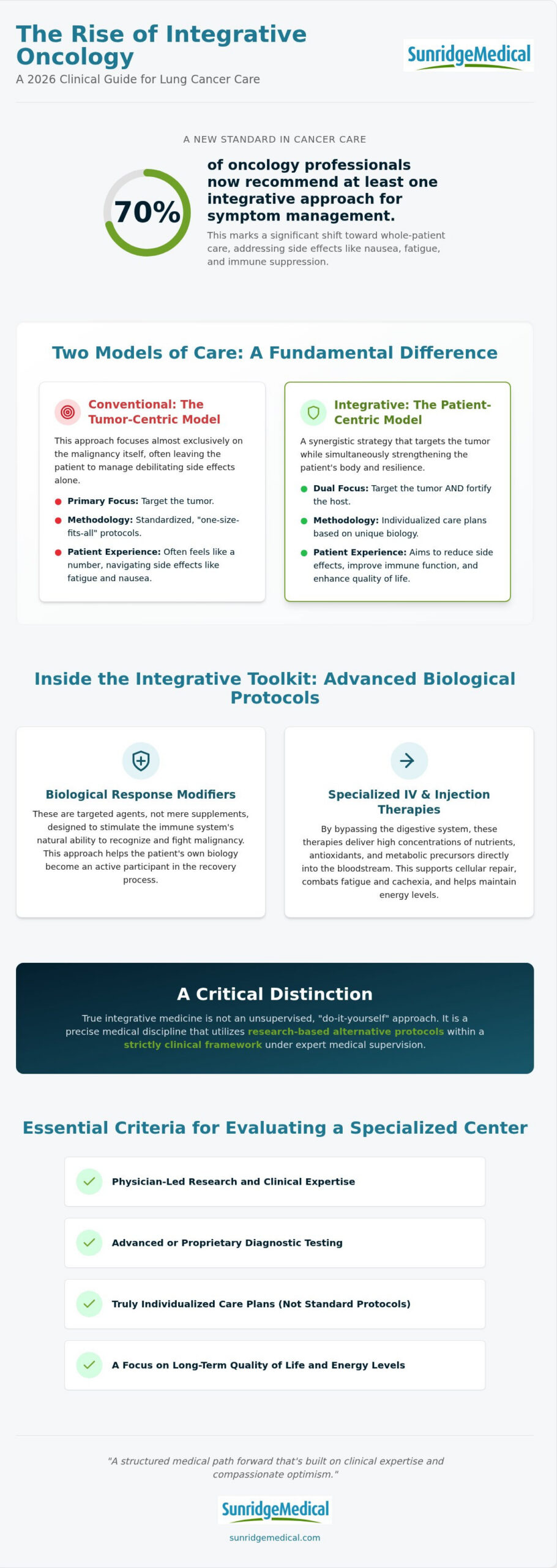
Recent clinical data from late 2025 reveals that approximately 70% of oncology professionals now recommend at least one integrative approach for symptom management, marking a significant shift toward whole-patient care. You likely recognize that while conventional treatments are designed to target the tumor, they often leave you to navigate the debilitating side effects of nausea, fatigue, and immune suppression on your own. It’s common to feel like a number in a standardized hospital system, searching for a more personalized approach that treats you as an individual rather than a diagnosis.
This clinical guide for 2026 explores how advanced integrative medicine for lung cancer combines research-based alternative protocols with medical precision to support your recovery and well-being. You’ll discover how individualized care plans and the latest ASCO biomarker guidelines allow for a more targeted, multi-faceted strategy. We will provide a clear overview of how specialized therapies can reduce treatment side effects and improve your immune function, offering a structured medical path forward that’s built on clinical expertise and compassionate optimism.
Key Takeaways
- Learn how the synergy between advanced alternative protocols and conventional diagnostics creates a more comprehensive defense by targeting the tumor while simultaneously fortifying the host.
- Discover the specific mechanisms of biological response modifiers and specialized IV therapies used in integrative medicine for lung cancer to optimize immune function.
- Understand the clinical distinction between a tumor-centric focus and a patient-centric model that prioritizes your long-term quality of life and energy levels.
- Identify the essential criteria for evaluating specialized medical centers, including the requirement for physician-led research and proprietary diagnostic testing.
- Explore how individualized care plans move beyond the limitations of standardized hospital protocols to address your unique biological and physiological needs.
Defining Integrative Medicine for Lung Cancer in 2026
Standard oncology often focuses exclusively on the malignancy, yet the patient’s biological resilience is the foundation of any successful recovery. In 2026, integrative medicine for lung cancer has evolved into a precise medical synergy. It’s no longer just about adding supportive therapies to a standard regimen; it represents a sophisticated fusion where advanced alternative protocols work in tandem with conventional diagnostics. This dual-action strategy targets the tumor directly while simultaneously fortifying the host’s internal environment. By strengthening the immune system and optimizing cellular health, we create a biological landscape that is less hospitable to disease and more responsive to treatment.
While many organizations categorize these methods as mere “add-ons,” a truly integrative approach is synergistic. It seeks to improve survival outcomes and quality of life at the same time, ensuring that the person is never lost in the process of treating the pathology. Understanding the history and scope of Alternative and Complementary Cancer Treatments helps clarify why this medical evolution is so critical for modern patients who demand more than standardized options. We don’t just want to manage symptoms; we want to change the trajectory of the disease by addressing the underlying mechanisms that allow it to thrive.
The Shift from Standardized to Individualized Care
Traditional hospital systems typically rely on “one-size-fits-all” protocols. These pathways are designed for the average patient, but cancer is rarely average. Standardized care often overlooks unique biological markers and genetic nuances that dictate how an individual responds to treatment. At Sunridge Medical, we move beyond these broad-stroke methodologies. Our process begins with a comprehensive physician evaluation. This deep dive into your specific physiology allows us to design a recovery path that is as unique as your DNA, ensuring every protocol is calibrated for maximum impact.
Integrative vs. Alternative: Clearing the Confusion
There’s often a misconception that choosing integrative medicine means abandoning rigorous science. That couldn’t be further from the truth. We utilize research-based alternative medicine within a strictly clinical framework. This isn’t a “do-it-yourself” approach. It requires expert medical supervision to administer complex protocols safely and effectively. By maintaining high clinical standards, we bridge the gap between innovative alternative therapies and the precision of modern medicine, providing a sanctuary for those who seek the leading edge of oncology.
Advanced Biological Protocols: The Mechanism of Integrative Oncology
Many patients initially view integrative care as a collection of lifestyle adjustments or relaxation techniques. However, modern integrative medicine for lung cancer utilizes advanced biological protocols to intervene at a cellular level. We employ biological response modifiers to stimulate the immune system’s natural ability to recognize and fight malignancy. These aren’t merely supplements; they’re targeted agents designed to shift the body’s internal chemistry. By using these modifiers, we help the patient’s own biology become an active participant in the recovery process.
Specialized IV and injection therapies play a critical role in this clinical framework. These methods bypass the digestive system’s limitations, delivering high-concentration nutrients directly into the bloodstream. This direct delivery ensures that cells receive the precise levels of antioxidants and metabolic precursors required to support repair and resilience. Additionally, nutritional infusions are strategically designed to combat cachexia and treatment-induced fatigue. These infusions provide the essential building blocks needed to maintain muscle mass and energy levels, which are frequently depleted by conventional oncology treatments.
If you’re seeking a more targeted approach to your recovery, you can consult with our medical team to discuss how these protocols might apply to your specific diagnosis.
Targeting the Tumor Microenvironment
Alternative protocols aim to make the body less hospitable to cancer growth by addressing the metabolic state of the patient. For individuals facing lung adenocarcinoma, metabolic support can influence how cells process energy, potentially slowing the progression of the disease. Oxidative therapy acts as a specialized mechanism to support cellular health by introducing controlled oxygen species that challenge cancer cells while sparing healthy tissue. By altering the microenvironment, we create an internal landscape where healthy cells can flourish and abnormal ones struggle to survive.
Immune System Fortification
A robust immune system remains the primary defense against metastatic spread. Biological treatments help the body recognize and respond to abnormal cell growth with greater precision. This is especially vital when dealing with advanced stages, as detailed in our integrative treatment for metastatic cancer guide. By prioritizing immune surveillance, we empower your own biology to act as a dedicated advocate for health. This shift from a tumor-centric to a patient-centric model ensures that the immune system isn’t just a bystander but a powerful ally in the journey toward well-being.
Navigating the Spectrum: Conventional, Complementary, and Alternative Care
The primary concern for many patients is whether combining different medical approaches is safe. In the context of integrative medicine for lung cancer, safety is maintained through rigorous clinical oversight and research-based protocols. Conventional oncology is fundamentally tumor-centric; its primary objective is the destruction of malignant cells through surgery, radiation, or chemotherapy. While essential, this focus often overlooks the physiological toll on the patient. Integrative medicine shifts the perspective to a patient-centric model. We prioritize the biological environment in which the tumor exists, ensuring the host is strong enough to withstand the rigors of standard care.
It’s a reality that standard health insurance billing is often restricted to “packaged” or “standardized” treatments. This systemic limitation frequently prevents patients from accessing advanced alternative options that could significantly impact their recovery. Because these specialized protocols are outside the conventional insurance framework, they offer a level of customization that isn’t possible within the constraints of a high-volume hospital system. Choosing this path means moving beyond the status quo and seeking a level of care that prioritizes your unique biological needs.
Synergistic Effects of Combined Modalities
Integrative care doesn’t just exist alongside conventional treatment; it actively enhances it. One of the most significant benefits is the reduction of treatment-induced toxicity. When side effects like severe fatigue or immune suppression are managed through biological support, patients are more likely to stay on their conventional treatment schedules without interruption. We utilize detoxification protocols to address the physical burden and cognitive fog, often called “chemo-brain,” that results from standard care. Clinical monitoring acts as the bridge, ensuring that every therapy is synchronized for optimal safety and efficacy.
When to Seek Advanced Alternative Protocols
Recognizing the right time to integrate advanced care is crucial. Many individuals wait until they’ve reached a plateau in their conventional treatment, where progress stalls or side effects become unbearable. However, seeking help early in the diagnosis is often more effective. Building a strong biological foundation from the start can improve your overall resilience. These considerations are vital for complex cases, such as those navigating stomach cancer survival stage 4 or advanced lung malignancies. Proactive integration ensures you aren’t just reacting to the disease, but actively managing your internal health.
Evaluating Clinical Integrative Strategies for Advanced Lung Cancer
When facing advanced stages of the disease, the search for effective treatment often becomes urgent and overwhelming. Standard advice frequently points toward clinical trials. However, many patients require a more immediate, personalized framework that addresses their unique biology. Evaluating a facility for integrative medicine for lung cancer requires looking beyond the surface. You must prioritize centers led by experienced physicians who develop research-based protocols rather than those offering generic wellness packages. The medical direction should reflect a deep understanding of oncology, ensuring that every alternative therapy is administered with clinical precision and ongoing monitoring. Understanding how integrative cancer treatment by stage adapts to your specific diagnosis can help you ask the right questions and identify the most appropriate clinical path for your situation.
Logistics are also a vital consideration for patients who may already be physically taxed. Unlike traditional inpatient hospitalization, Sunridge Medical operates as an outpatient facility. This model allows you to receive intensive, specialized protocols while maintaining a sense of comfort in your daily life. It’s a sanctuary where the focus remains on your progress without the sterile environment of a standard ward. Before committing to a path, you should consult with our specialized medical team to evaluate how our clinical expertise aligns with your specific needs.
Questions to Ask an Integrative Medical Specialist
- How is the treatment plan individualized to my specific lung cancer subtype, such as small cell or non-small cell?
- What specific clinical monitoring is provided during the administration of high-concentration IV therapies?
- What is the specific research basis for the alternative protocols being suggested for my case?
The Role of Diagnostic Precision
Standard laboratory tests are often designed to monitor the tumor’s presence. They frequently miss the underlying biological roadblocks to recovery. Proprietary diagnostic testing goes deeper, identifying environmental factors, metabolic imbalances, and immune deficiencies that standard blood work ignores. This level of precision is essential for uncovering why a patient might not be responding to conventional care. Utilizing alternative health medicine as a clinical path allows us to address these hidden variables. By removing these obstacles, we clear the way for the body’s natural defense systems to function more effectively, even in advanced cases.
Individualized Care at Sunridge Medical: Beyond Standardized Protocols
Since 2003, Sunridge Medical has been a dedicated advocate for patients who feel overlooked by the standardized hospital system. We understand that a diagnosis of lung cancer is a life-altering event that requires more than a packaged treatment plan. Our commitment to advanced alternative medicine is rooted in the belief that every patient deserves a personalized, research-based strategy. By combining clinical authority with compassionate optimism, we provide a structured path forward for those seeking integrative medicine for lung cancer that prioritizes the human experience alongside medical precision.
The foundation of our approach is the comprehensive physician evaluation. This isn’t a brief check-in; it’s an in-depth analysis of your unique biological landscape. Our medical team develops proprietary IV and injection therapies that are administered with constant clinical monitoring. These protocols are designed to deliver high-concentration nutrients and biological modifiers directly to the cells that need them most. We don’t just treat the tumor; we work to restore the host’s internal environment, creating a sanctuary where recovery becomes a tangible possibility.
The Sunridge Medical Patient Experience
Your journey begins with an initial medical consultation where we listen to your history, concerns, and goals. We view health through a multi-faceted clinical lens, identifying the biological roadblocks that may have hindered your progress in the past. This isn’t a rushed process. We take the time to explain the underlying mechanisms of our suggested protocols, acting as a steady hand to guide you through the complexities of your health journey. You’re a partner in your care, not just a recipient of a protocol. This collaborative environment ensures that your voice is heard and your specific physiological needs are met with expertise.
Taking the Next Step in Your Recovery
Proactive health management is essential, especially when dealing with advanced or metastatic conditions. Waiting for a conventional “plateau” isn’t necessary when you can start fortifying your body today. If you’re ready to explore a clinical path that goes beyond the ordinary, our toll-free consultation line is available to provide the support you need. For a deeper understanding of our broader medical philosophy, we invite you to read our comprehensive guide on alternative cancer treatment. Your recovery deserves the precision of advanced science and the warmth of dedicated advocacy.
Empowering Your Recovery Through Clinical Precision
Choosing a path that combines advanced alternative protocols with clinical precision represents a shift from being a passive recipient of care to an active participant in your recovery. We’ve explored how synergistic strategies target the tumor while fortifying your immune system, ensuring that your biological resilience is never sacrificed for the sake of a standardized regimen. By moving beyond the limitations of traditional hospital models, you gain access to individualized care that addresses the specific metabolic and environmental factors of your diagnosis.
Sunridge Medical provides a sanctuary of specialized attention with over 20 years of experience in advanced alternative medicine. Our comprehensive outpatient care utilizes proprietary protocols developed by Medical Director Dr. Steven S. Isaacman to provide a multi-faceted defense against the disease. If you’re ready to explore how integrative medicine for lung cancer can support your quality of life and survival outcomes, we’re here to act as your scientific guide. Contact us today at 1-800-923-7878 or schedule your medical consultation online to discover a personalized path forward. You don’t have to navigate this journey alone; progress is possible when your treatment is as unique as your biology.
Frequently Asked Questions
What is the difference between integrative oncology and standard lung cancer treatment?
Standard lung cancer treatment focuses primarily on tumor eradication through surgery, radiation, or chemotherapy. Integrative oncology expands this focus by simultaneously fortifying the patient’s internal environment. By combining advanced alternative protocols with conventional diagnostics, we address the biological factors that influence how a person responds to treatment. This dual strategy seeks to improve both survival outcomes and quality of life through a more comprehensive medical lens.
Can integrative medicine for lung cancer be used alongside chemotherapy?
Yes, integrative medicine for lung cancer is specifically designed to be used alongside chemotherapy. These protocols often work to reduce treatment-induced toxicity and manage common side effects like nausea and fatigue. By supporting the immune system and cellular health, integrative care helps patients maintain their conventional treatment schedules more consistently. This synergy ensures that the body remains resilient while standard therapies target the malignancy.
What specific alternative protocols are used for lung cancer at Sunridge Medical?
Sunridge Medical utilizes proprietary research-based protocols developed by Medical Director Dr. Steven S. Isaacman. These include specialized IV and injection therapies that deliver high-concentration nutrients and biological response modifiers directly into the bloodstream. We also employ oxidative therapies and targeted nutritional infusions to alter the cancer cell microenvironment. Every protocol is administered by medical professionals within a clinical outpatient setting to ensure safety and ongoing monitoring.
Is integrative medicine effective for Stage 4 lung cancer?
Integrative strategies are highly relevant for Stage 4 lung cancer, especially when conventional treatments reach a plateau. At this advanced stage, the focus shifts toward aggressive immune fortification and metabolic support to manage the disease’s spread. These protocols aim to improve energy levels and reduce the physical burden of the condition. While every case is unique, a multi-faceted clinical approach offers a structured path forward for patients seeking advanced medical options. Our integrative cancer treatment by stage reference guide provides a detailed clinical overview of how protocols are adapted to meet the specific demands of each disease stage.
How does Sunridge Medical individualize treatment plans for cancer patients?
Individualization begins with an extensive physician evaluation and proprietary diagnostic testing that goes beyond standard blood work. We analyze unique biological markers, environmental stressors, and the specific subtype of the malignancy to design a custom recovery plan. Instead of a “one-size-fits-all” hospital model, your protocol is calibrated to your specific physiology. This precision ensures that every therapy addresses the underlying biological roadblocks to your well-being.
What are the most common side effects of integrative lung cancer protocols?
Most patients experience very few side effects from integrative protocols because the therapies are designed to support, rather than suppress, the body. Some individuals may experience mild detoxification symptoms, such as temporary fatigue or low-grade headaches, as the body processes the infusions. Our medical team provides constant clinical monitoring during every administration to manage these responses effectively. This steady-hand approach ensures that the treatment remains a restorative experience.
Does insurance cover advanced alternative cancer treatments?
Advanced alternative cancer treatments are generally not covered by standard health insurance billing. Most insurance providers only cover “packaged” or standardized hospital protocols, which limits access to highly individualized care. Because Sunridge Medical offers specialized, research-based therapies that fall outside these conventional categories, we operate on a self-pay basis. This allows our physicians to prioritize your health needs without the restrictions of a third-party billing system.
How do I schedule a consultation for integrative lung cancer care?
You can schedule a consultation by calling our toll-free line at 1-800-923-7878 or by visiting our website to use the online contact form. Our patient advocates will guide you through the initial steps of the process and help you prepare for your comprehensive evaluation. This first meeting is a vital opportunity to discuss your history and discover how our specialized protocols can be tailored to your specific recovery journey.