


A cancer diagnosis can leave you sorting through pathology reports, treatment recommendations, online claims, and advice from people who care about you. You may be newly diagnosed and looking for support alongside treatment, managing difficult side effects, or seeking another perspective after recurrence. Integrative oncology programs can offer a structured way to consider supportive therapies, but they shouldn't promise a cure or ask you to abandon evidence-based cancer care.
For patients in Scottsdale, Phoenix, and the greater Phoenix area, the most useful question isn't which therapies a clinic offers. It's how the team evaluates each option, checks safety, and coordinates with your oncologist.
Table of Contents
- What Integrative Oncology Programs Are and Who They Serve
- The Core Model and How It Differs From Standard Oncology
- Services Typically Offered Inside an Integrative Oncology Program
- The Patient Pathway From First Call to Ongoing Care
- Evidence Base, Outcome Tracking, and What the Data Show
- Safety, Interactions, and Common Misconceptions to Avoid
- Choosing a Program and Starting the Conversation With Sunridge Medical
What Integrative Oncology Programs Are and Who They Serve
People come to integrative oncology at different points in their care. Some want help understanding how nutrition, symptom support, and mind-body practices might fit into a plan after diagnosis. Others are in active treatment and need help managing fatigue, anxiety, nausea, pain, or sleep problems. Patients facing recurrence or advanced disease may also seek another opinion or ask what supportive options are reasonable alongside their oncology team's recommendations.
These needs deserve careful medical discussion, not a one-size-fits-all menu. A program should start by understanding the diagnosis, treatment phase, medications, symptoms, and personal goals. It should distinguish therapies intended to support quality of life from treatments intended to control a tumor.
What makes a program clinical
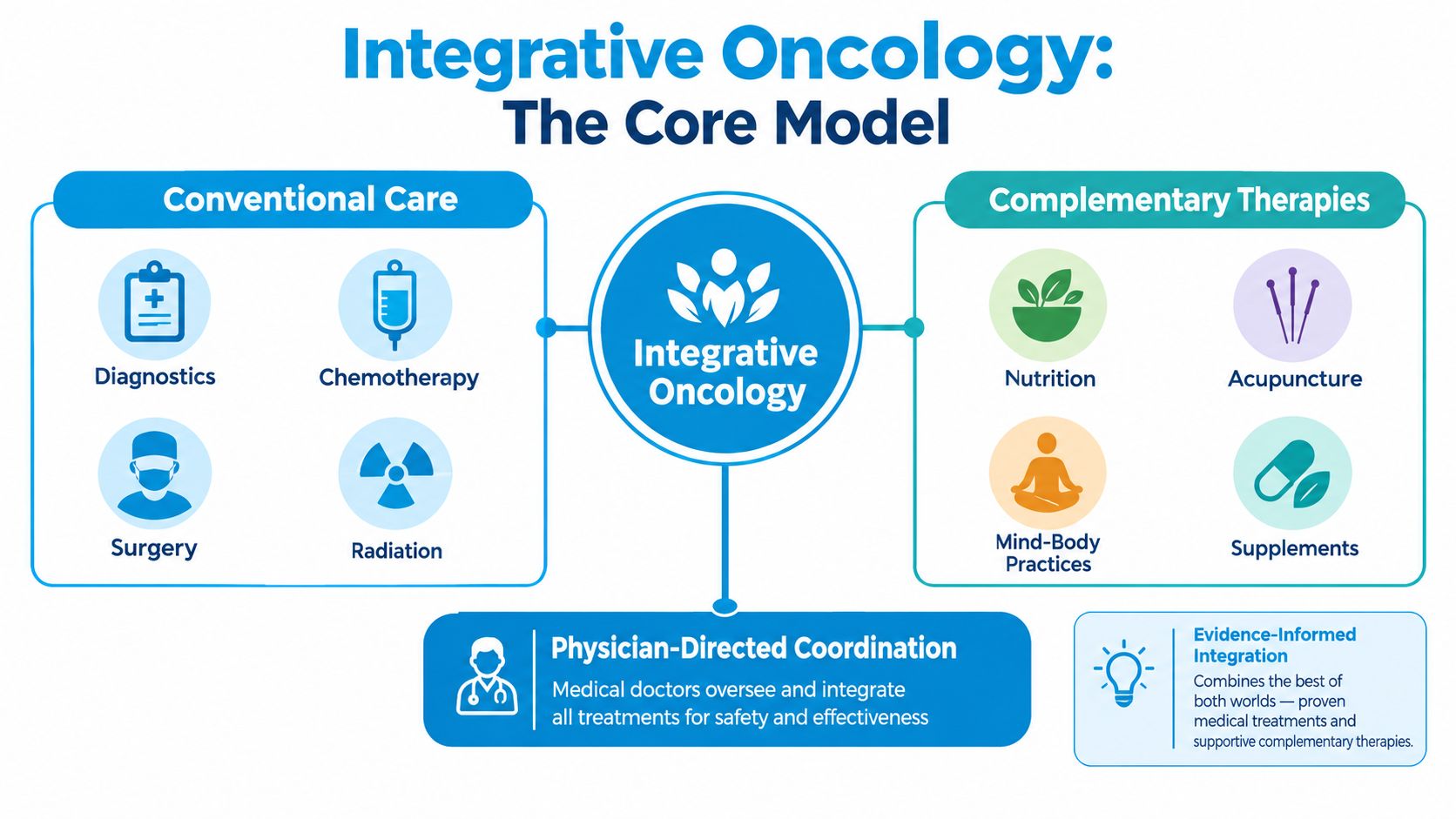
Integrative oncology is a clinical approach that brings conventional cancer care and selected complementary therapies into a coordinated plan. It isn't the same as a wellness spa, a supplement shop, or an alternative-only clinic. A credible program explains what each therapy is intended to do, what evidence supports it, what risks or interactions may apply, and how the patient's oncology team will stay informed.
Availability remains uneven, even at major cancer centers. In a 2023 cross-sectional survey, 53% of responding centers reported a formal integrative oncology clinical program, although 57% rated such services important or very important. The survey received 58 completed responses from 94 invitations, a 62% response rate, and 74% of respondents were from National Cancer Institute-designated cancer centers (survey of comprehensive cancer centers). These findings show that interest and formal availability don't always match.
Programs in the survey commonly served people in active treatment and cancer survivors, while fewer served people without a cancer history. That pattern reflects a practical role for integrative care: supporting patients through treatment and recovery, rather than replacing tumor-directed care.
A useful starting question: “What is the goal of each therapy in my plan, and how will we know whether it's helping?”
If stress and emotional strain are prominent, counseling can be part of a broader support plan. Patients looking beyond cancer care alone may also explore integrative care for burnout and stress.
The Core Model and How It Differs From Standard Oncology
A patient may arrive with a new diagnosis, active treatment, or lingering symptoms after treatment. In each case, integrative oncology adds coordinated support to cancer care. The treating oncologist remains responsible for decisions about surgery, radiation, chemotherapy, immunotherapy, and other tumor-directed treatment. An integrative clinician assesses whether supportive approaches may help with symptoms, daily function, or treatment tolerability, and communicates recommendations to the oncology team.
The field's institutional roots in the United States include federal steps taken in the 1990s. Congress directed the National Institutes of Health to establish the Office of Alternative Medicine in 1990–1991, with a focus on investigating alternative approaches, including cancer therapies. The National Cancer Institute created a complementary and alternative medicine office in 1998. That year, Congress also established the National Center for Complementary and Alternative Medicine, raising the earlier NIH office to center status (review of integrative oncology programs and field development).
Research infrastructure gave clinicians a way to assess complementary approaches rather than assume they work. The review examined 29 programs: 16 (55%) were hospital-based, and seven (24%) were community-based. Outcome tracking varied. Sixteen programs (55%) consistently measured patient outcomes, two (7%) explicitly reported no evaluation, and 11 (38%) did not say whether they evaluated outcomes. These figures show why the label “integrative” alone is not enough to judge how a clinic monitors care.
Support alongside treatment, not instead of it
Ask how recommendations will be shared with your oncologist and who is responsible for checking that they fit your treatment plan. A clinic that urges you to stop standard treatment, promises an unproven therapy will cure cancer, or discourages discussion with your oncologist is giving you reason to pause.
Care goals can change as a person's illness and priorities change. A conversation about when to shift to comfort care can help patients and families prepare questions for their clinicians. Supportive care can address comfort and quality of life alongside appropriate cancer treatment; it does not automatically mean stopping that treatment.
Services Typically Offered Inside an Integrative Oncology Program
A program's service list can include very different kinds of care. Some approaches have guideline support for specific symptoms. Others are investigational or lack strong evidence for the intended use. The key is to evaluate each therapy for your diagnosis, treatment phase, medications, and goals rather than assuming every service on a clinic menu has the same evidence.
Supportive therapies with defined uses
Mindfulness-based stress reduction, mindfulness-based cognitive therapy, and tai chi or qigong have strong recommendations for cancer-related fatigue during treatment; mindfulness-based programs are strongly recommended after treatment. Guidance for breast-cancer supportive care also includes specific recommendations for meditation, yoga, relaxation, massage, music therapy, acupuncture, and acupressure for symptoms such as anxiety, mood concerns, quality of life, and chemotherapy-induced nausea and vomiting (ASCO-endorsed guidance on integrative therapies).
These recommendations apply to defined indications. They don't establish that a therapy treats the cancer itself. Physical rehabilitation may also help address function and recovery needs; patients can read more about oncology and physical therapy for women.
Approaches that need closer scrutiny
Depending on the clinic, a consultation may include discussion of IV nutritional therapies, oxidative medicine such as ozone, hyperthermia, red light therapy, regenerative options, environmental medicine, or immune-supportive approaches. Their availability doesn't establish that they control cancer. Ask for the proposed purpose, evidence limits, possible harms, alternatives, and how the clinician will assess whether to continue.
Insulin potentiation therapy (IPT) should be described as investigational, not established cancer treatment. A Louisiana Medicaid evidence review describes one randomized trial in metastatic breast cancer involving 30 women divided into three groups of 10. The study did not report long-term effects or improved health outcomes, and the review concludes that well-designed trials are still needed (Louisiana Medicaid evidence review of IPT).
An observational summary of IPT in castration-resistant prostate cancer also reports early, uncontrolled findings, including 16 men treated with six applications; these results can't establish that IPT improves survival or outperforms standard treatment (clinical-trial evidence table for IPT). When considering any IV or other adjunctive therapy, ask whether the recommendation addresses a documented need and how it will be coordinated with active treatment. Sunridge Medical describes its IV nutritional therapy for cancer as one component of its cancer-care offerings.

The Patient Pathway From First Call to Ongoing Care
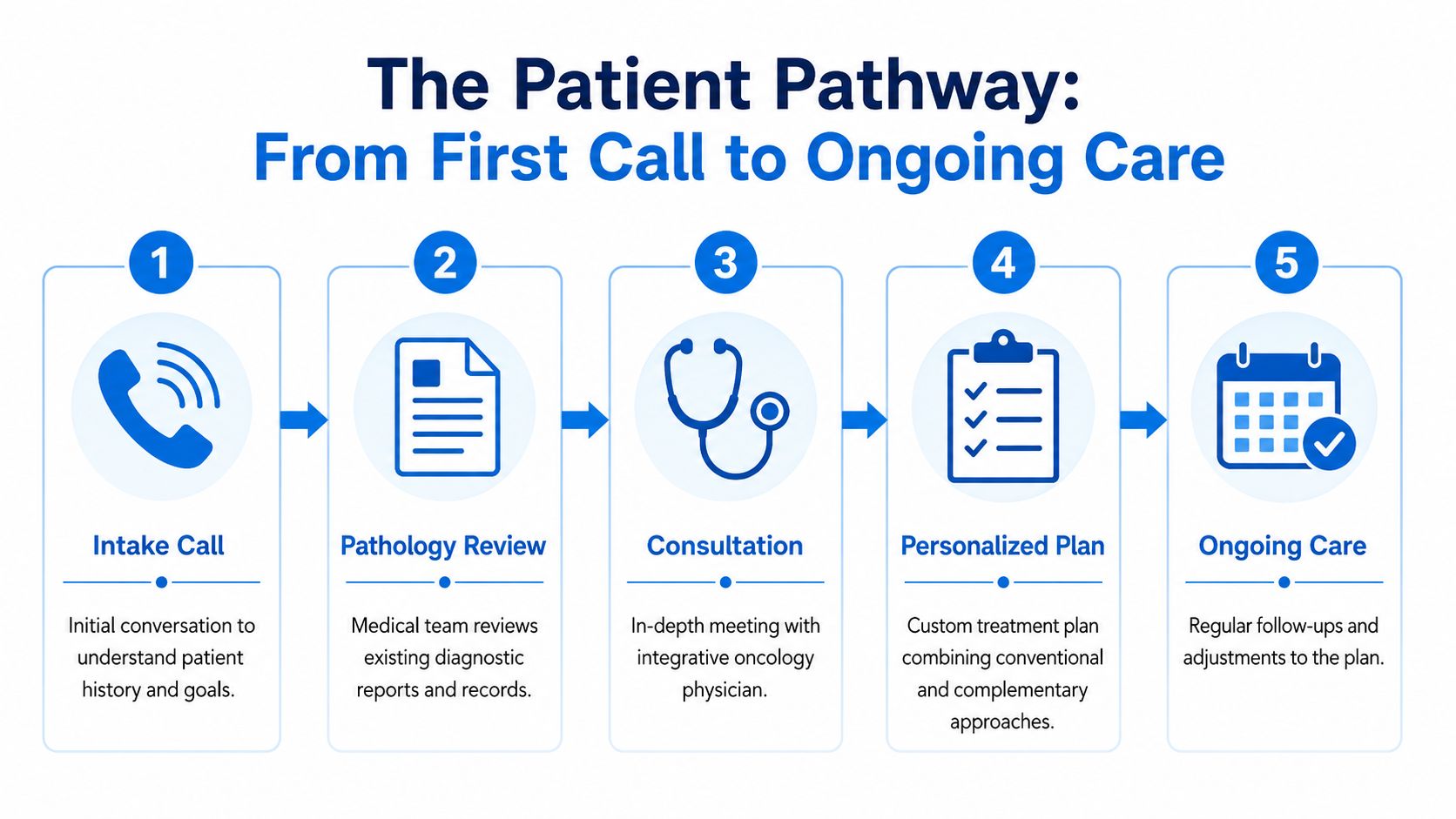
A sound first visit begins with your medical record, not a preset protocol. Before the consultation, gather pathology and imaging reports, staging information, treatment summaries, medication and supplement lists, and relevant molecular test results. If records are incomplete, ask the clinic what it needs and whether it can help request them.
What to expect at each stage
Intake and records review: The care team asks what brought you in, what treatment you've received, what symptoms concern you, and what you hope to address. The physician then reviews available records in context.
Consultation: You discuss diagnosis, current treatment, medical history, medications, risks, and priorities. Be direct about what you're considering, including supplements, infusions, or therapies obtained elsewhere.
Plan and coordination: Recommendations should state the intended goal of each intervention and how it will be checked for safety. The integrative clinician should review potential contraindications and drug-supplement interactions, and share relevant recommendations with your oncologist and pharmacist when appropriate.
Follow-up: The plan should be revisited as symptoms, treatment, or test results change. If a new issue suggests a need for conventional oncology review or urgent care, the integrative clinician should help direct that escalation rather than treating every concern within the complementary-care plan.
For someone traveling to Scottsdale or Phoenix, ask how records can be sent before arrival, whether some discussions can happen remotely, and what follow-up support is available between visits. Clarify lodging and travel arrangements directly with the clinic; don't assume those services or costs are included in care.
Use the first consultation to establish a shared plan with your existing oncologist. If a proposed therapy could affect chemotherapy, immunotherapy, radiation, surgery, anticoagulation, or trial eligibility, ask who will check that risk and what would trigger a pause.
The following video offers another way to consider integrative care and the patient experience.
Evidence Base, Outcome Tracking, and What the Data Show
A responsible program separates evidence for symptom support from claims about tumor control. Guidelines support selected mind-body and other therapies for particular symptoms, but evidence for survival or recurrence benefits from integrative modalities remains insufficient. The National Cancer Institute cautions that many complementary and alternative cancer treatments lack strong scientific evidence establishing safety and effectiveness (NCI overview of complementary and alternative medicine).
That distinction should appear in the care plan. For each recommendation, the clinician should record the symptom or goal, the intervention, its evidence strength, relevant contraindications, an interaction review, and a way to assess progress. Possible measures include fatigue, nausea frequency, sleep quality, functional status, quality of life, or whether treatment can proceed as planned.
| Modality | Common indication | Evidence strength | Typical role |
|---|---|---|---|
| Mindfulness-based programs | Fatigue, stress, or mood support | Strong recommendations for specified fatigue settings; other guidance is indication-specific | Supportive |
| Tai chi or qigong | Cancer-related fatigue during treatment | Strong recommendation for this defined use | Supportive |
| Acupuncture or acupressure | Selected symptoms, including chemotherapy-related nausea | Recommendations depend on indication | Supportive |
| Ingested supplements | Proposed symptom management or general support | No strong evidence for managing treatment-related adverse effects; interactions may matter | Requires review |
| Cannabis or cannabinoids | Patients may ask about cancer treatment | Guidelines advise against presenting these as cancer-directed therapy outside clinical trials | Not a replacement for tumor-directed care |
| Insulin potentiation therapy | Proposed cancer treatment | Investigational; evidence is limited | Investigational |
Why programs need outcome tracking
A published implementation framework places integrative oncology within supportive care and connects oncologists, pharmacists, nutrition professionals, physical therapists, pain and palliative-care teams, mental-health clinicians, social workers, and integrative practitioners. It recommends prospective tracking of symptoms, adverse events, medication changes, emergency use, treatment interruptions, quality of life, and referral completion, with clear stopping rules and escalation pathways (integrative oncology implementation framework).
Tracking matters because a patient feeling better after a therapy doesn't prove the therapy caused the change. Clinics should distinguish an observed improvement from causal evidence, especially where reports lack randomized controls. For help assessing claims, use a structured clinical framework for evaluating alternative cancer treatments.
Safety, Interactions, and Common Misconceptions to Avoid
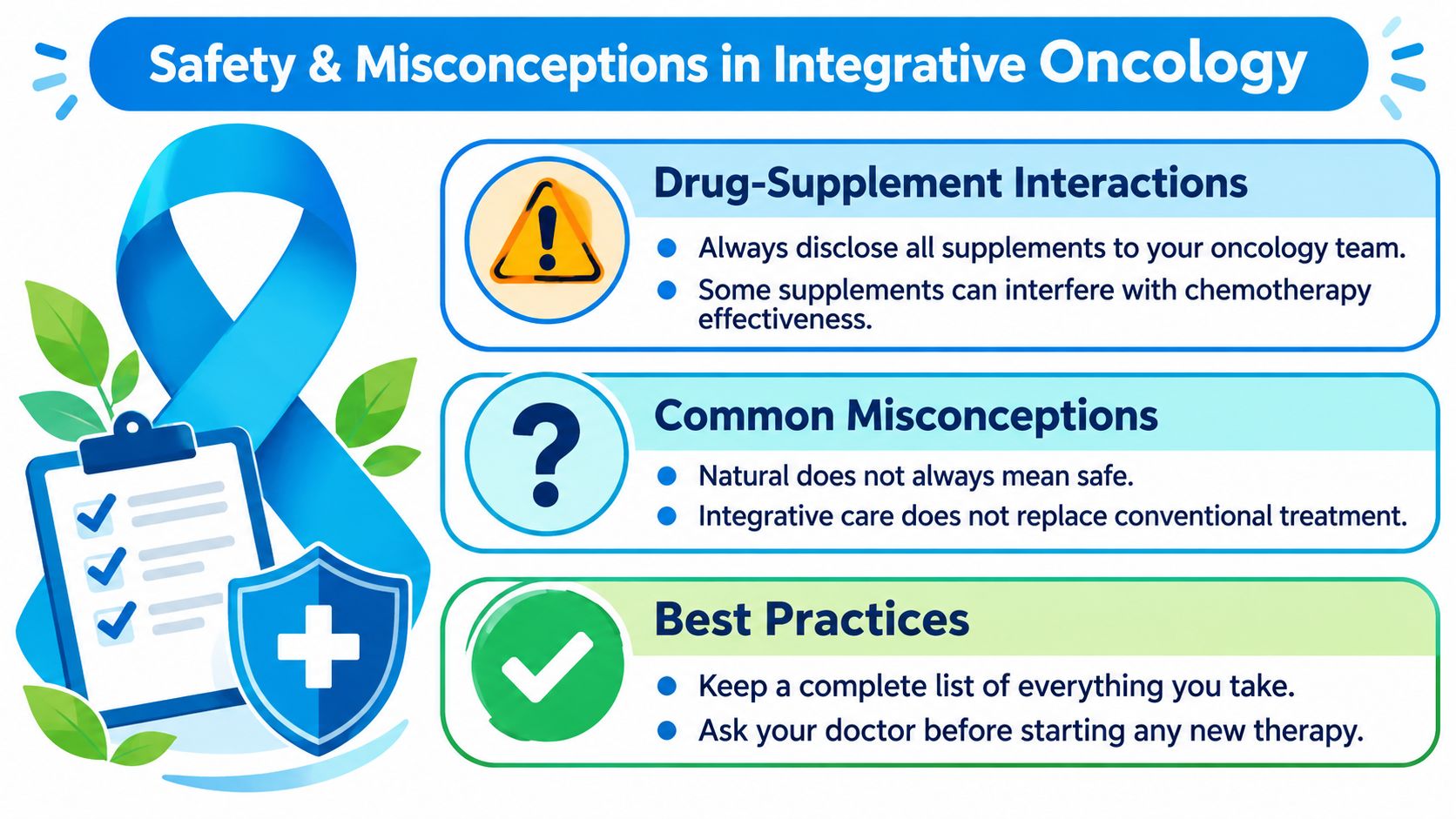
“Natural” doesn't mean safe during cancer treatment. Supplements and other complementary therapies can have side effects or interact with medications, and the risk depends on the product, dose, cancer treatment, and your health history. Bring your oncologist and pharmacist a complete list of what you take or are considering, including vitamins, herbs, infusions, and products purchased online.
Nor does “integrative” mean that more therapies are better. Adding an intervention without a clear goal can complicate your plan, make it harder to identify what's helping, and introduce risks or costs without a defined benefit. A therapy should have a stated purpose, an evidence discussion, an interaction check, and a way to decide whether it's worth continuing.
A shared-care routine
Before starting a complementary therapy, use a simple process:
- Write it down: Include prescription medicines, nonprescription drugs, supplements, and therapies from every provider.
- Ask about timing: Check whether the therapy should be avoided, adjusted, or paused around chemotherapy, immunotherapy, radiation, surgery, anticoagulant use, or a clinical trial.
- Name the goal: Clarify whether the aim is symptom relief, rehabilitation, or quality-of-life support, not tumor control unless that use is established.
- Set a review point: Agree on what will be measured and who will decide whether to continue.
- Keep clinicians aligned: Share recommendations with your oncologist and pharmacist, and ask the integrative clinician to document the plan.
Be cautious of providers who claim certainty, conceal risks or costs, or discourage conventional care. Unsupported approaches such as iris diagnostics and bioresonance shouldn't be used to make cancer-treatment decisions. Reputable providers should explain evidence limits, possible interactions, goals, duration, and costs transparently. For supplement questions, use a guide to immune-support supplements during chemotherapy as a starting point for discussion with your care team, not as a substitute for individualized review.
Hyperbaric oxygen therapy (HBOT) illustrates why indication matters. It has a defined role for selected radiation-related tissue injuries, but that doesn't mean it treats tumors. Harvard Medical School notes that the FDA hasn't cleared or approved HBOT for cancer treatment; discuss any proposed use with your oncology team and ask what evidence and risks apply to your situation (Harvard Medical School overview of HBOT uses and unproven claims).
Choosing a Program and Starting the Conversation With Sunridge Medical
When comparing integrative oncology programs, ask whether licensed physicians oversee care, whether the clinic explains evidence limits, whether it will coordinate with your oncologist, and whether you'll receive a written interaction review. Also ask how outcomes are measured and what services, travel, and follow-up may cost.
A useful consultation starts with your diagnosis, prior treatments, pathology, molecular information, medications, symptoms, and personal goals. Bring a list of the decisions you're facing and ask which options are supportive, investigational, or outside the clinic's scope. If you're looking for another perspective, learn what to expect from a cancer diagnosis second opinion.
Sunridge Medical is an integrative medical clinic in Scottsdale that offers physician-directed consultations for cancer care and complex health concerns. The team reviews individual circumstances and may discuss complementary options alongside conventional oncology care; no particular therapy or outcome should be assumed in advance.
If you're in Scottsdale, Phoenix, Paradise Valley, Tempe, Mesa, Chandler, Gilbert, or elsewhere in the greater Phoenix area, contact the clinic to discuss whether an evaluation is appropriate.
Sunridge Medical offers physician-directed integrative oncology consultations in Scottsdale, including review of your diagnosis, previous treatment, medications, symptoms, and goals. Contact Sunridge Medical to discuss whether an evaluation is appropriate and how any proposed supportive care could be coordinated with your oncology team.