
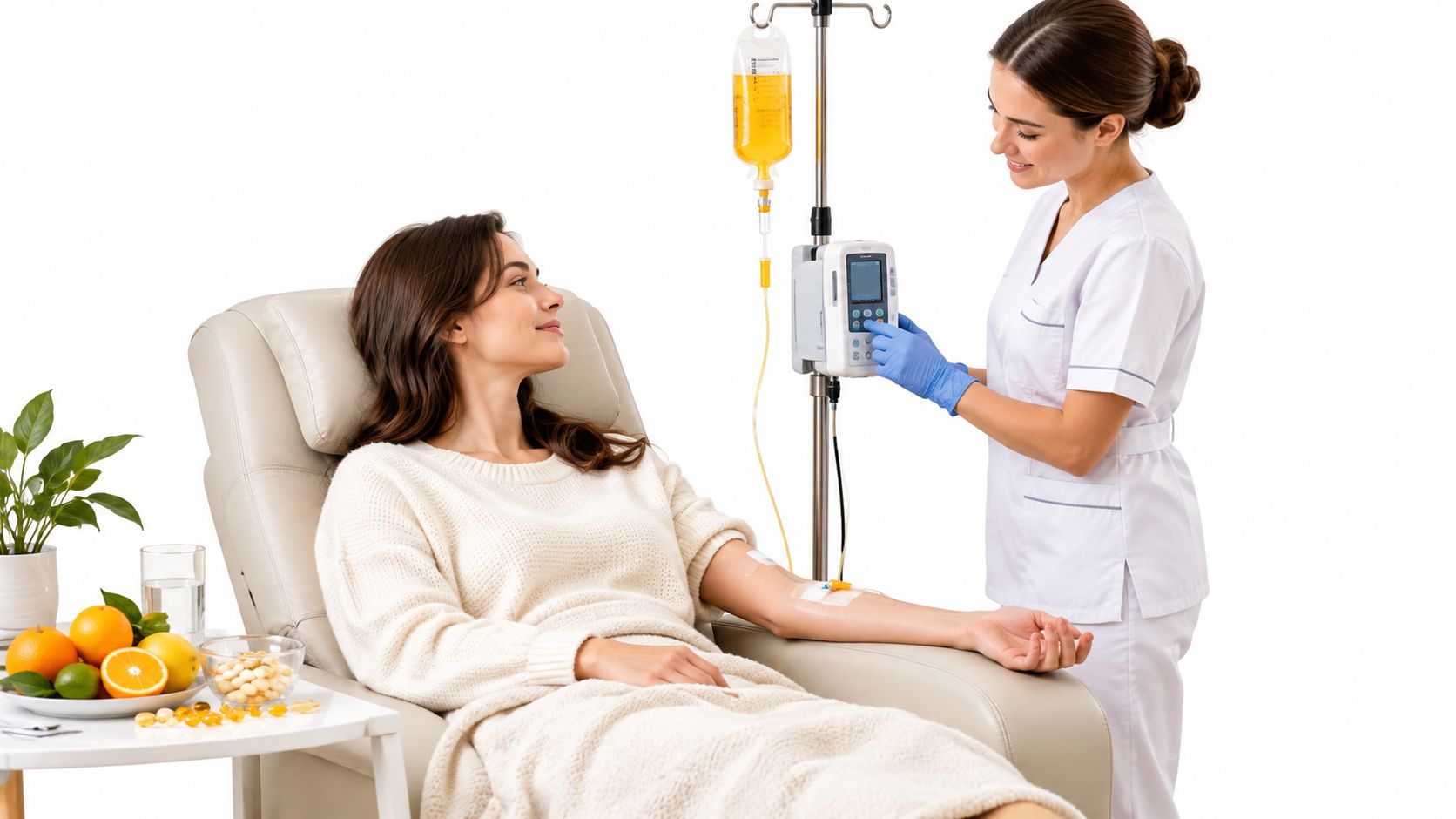
You're sitting in an infusion center during chemotherapy, scrolling through your phone while another clinic promises that an IV nutrient treatment can restore energy, strengthen immunity, or “starve” a tumor. The language sounds reassuring, but IV nutritional therapy for cancer can mean several medically different treatments, and confusing them can create real risk.
Some patients need medically prescribed parenteral nutrition, which delivers calories and protein when the digestive tract can't provide enough. Others ask about high-dose intravenous vitamin C, an investigational adjunct that isn't an approved replacement for cancer treatment. Still others are considering wellness-oriented vitamin or mineral drips that may not address cancer-related malnutrition at all.
The useful question isn't, "Should I get an infusion?" It's, “What problem is this infusion intended to solve, what evidence supports it, and how will my oncology team monitor it?” The answers should be specific enough to guide a safe decision, whether you're receiving care in Scottsdale, Phoenix, or elsewhere in the greater Phoenix metropolitan area.
Table of Contents
- What Patients Actually Mean by IV Nutritional Therapy in Oncology
- The Core Concept of Parenteral Nutrition Versus Nutrient Drips
- The Main IV Therapies Used in Integrative Oncology
- What the Evidence Actually Shows
- Safety and Drug Interactions You Should Not Skip
- Who Is a Candidate and the Pre-Infusion Checklist
- How Sunridge Medical Integrates IV Nutrition Into Cancer Care
What Patients Actually Mean by IV Nutritional Therapy in Oncology
A patient may use the phrase IV nutritional therapy to describe a bag of fluids with vitamins, a high-dose vitamin C protocol, or total parenteral nutrition. These aren't interchangeable. Their ingredients, clinical goals, evidence, and hazards differ.
The first category is parenteral nutrition, or PN. It's a prescription formulation containing amino acids, glucose, lipids, electrolytes, vitamins, and trace elements. PN supports nutrition when oral or enteral feeding cannot meet requirements. It doesn't directly attack a tumor.
The second is pharmacologic intravenous vitamin C. High-dose dosing is being studied because IV administration can produce blood concentrations that oral supplementation cannot reliably achieve. That research question doesn't establish vitamin C as a cancer cure, and the National Cancer Institute states that the FDA hasn't approved high-dose IV vitamin C as a cancer treatment. It also hasn't been shown to replace surgery, chemotherapy, radiation, immunotherapy, or other standard care (National Cancer Institute overview of intravenous vitamin C).
The third category includes micronutrient and wellness infusions, such as combinations of vitamins, minerals, antioxidants, or glutathione. These may be considered for selected supportive goals, but a nutrient drip isn't automatically a treatment for malnutrition, treatment toxicity, or cancer itself.

| Category | Intent | Evidence Status |
|---|---|---|
| Parenteral nutrition | Deliver calories, protein, fats, electrolytes, vitamins, and trace elements when oral or enteral feeding is inadequate | Established medical nutrition support for carefully selected patients |
| High-dose IV vitamin C | Investigate a pharmacologic adjunct to cancer treatment | Investigational, disease-specific, and not a replacement for standard care |
| Micronutrient or wellness drip | Provide selected vitamins, minerals, fluids, or other compounds | Variable evidence, with safety dependent on ingredients, dose, screening, and monitoring |
A careful integrative approach can complement conventional oncology without disguising an experimental therapy as standard treatment. Sunridge Medical's educational discussion of complementary cancer treatment reflects that distinction. A responsible clinician should be able to explain exactly what an infusion is intended to do, what it cannot do, and when it should be stopped.
The Core Concept of Parenteral Nutrition Versus Nutrient Drips
Parenteral nutrition is medical nutrition support, not a premium vitamin drink. It's prescribed when a person can't obtain adequate nutrition through the gastrointestinal tract or when oral and enteral options aren't sufficient.
PN can include:
- Amino acids: The protein building blocks needed for tissue maintenance and repair.
- Glucose: A source of carbohydrate energy.
- Lipids: Concentrated calories and essential fatty acids.
- Electrolytes: Including sodium, potassium, magnesium, and phosphate as clinically indicated.
- Vitamins and trace elements: Adjusted to the patient's needs and laboratory findings.
The digestive tract still matters. ESPEN guidance generally favors oral or enteral feeding when the gut works because feeding through the gastrointestinal tract helps preserve its function and avoids exposure to a central venous catheter. PN becomes more relevant when obstruction, severe mucositis, severe malabsorption, short-gut syndrome, or another form of gastrointestinal failure prevents adequate intake (ESPEN guideline on nutrition in cancer patients).
Why a vitamin drip may not solve malnutrition
A patient with significant calorie-protein deficiency may need a calculated nutrition prescription, not merely fluid and selected micronutrients. A boutique infusion can contain useful ingredients, but it may provide little or no meaningful calorie or protein replacement.
The National Cancer Institute describes nutrition support as a selective intervention. In advanced cancer, artificial nutrition hasn't consistently improved survival or quality of life, and one summarized study found that PN influenced neither outcome. Patients with a reversible obstruction, severe malabsorption, or another specific barrier to eating may be different. Their potential benefit depends on functional status, prognosis, goals, and whether the underlying problem can improve (NCI information on nutrition in cancer care).
Practical rule: If the clinical problem is inadequate calories and protein, ask for a formal nutrition assessment before accepting a general vitamin infusion as a substitute.
The decision also depends on duration and severity. ESPEN materials identify inadequate intake of less than 60% of estimated energy needs expected for more than 10 days as a threshold for considering supplemental PN when enteral feeding isn't sufficient or feasible. Nutritional assessment is also relevant after more than 7 to 10 days of inadequate intake or weight loss (ESPEN non-surgical oncology guidance).
The Main IV Therapies Used in Integrative Oncology
Patients researching integrative oncology commonly encounter several infusion categories. The names can sound similar, but the intended use is different.
| Infusion | Proposed Mechanism | Typical Dosing in Reports |
|---|---|---|
| Parenteral nutrition | Delivers calories, amino acids, fats, electrolytes, vitamins, and trace elements when oral or enteral feeding is inadequate | Prescription varies according to nutritional status, organ function, and goals |
| High-dose IV vitamin C | Investigates whether pharmacologic ascorbate concentrations can create tumor-selective oxidative stress | A 2024 trial used 1 g/kg with docetaxel; an earlier pancreatic study used 50, 75, or 100 g per infusion three times weekly for eight weeks (NCI vitamin C evidence) |
| IV glutathione | Provides glutathione for a proposed antioxidant and supportive role | Dose and schedule vary by formulation and clinical purpose |
| Myers cocktail or B-complex drip | Supplies combinations of vitamins and minerals for supportive or wellness-oriented goals | No universal oncology dosing standard |
| Individual micronutrient infusion | Replaces or supplements selected nutrients when a clinician identifies a relevant need | Must be based on ingredients, laboratory findings, organ function, and treatment context |
High-dose vitamin C deserves special care because it's often discussed as if it were ordinary nutritional replacement. IV administration bypasses the saturable intestinal absorption that limits oral dosing, which is why researchers study it as a pharmacologic adjunct rather than as a routine vitamin supplement. The National Cancer Institute also lists a phase Ib/II study combining IV ascorbic acid two to three times weekly with gemcitabine and carboplatin in selected patients with bladder cancer who can't receive cisplatin. That type of protocol illustrates why dose, cancer type, combination therapy, and eligibility remain clinical-trial questions (NCI clinical trial record).
Glutathione, Myers cocktails, and other micronutrient infusions may have a place in a carefully coordinated supportive plan, but the evidence shouldn't be inflated into proof of tumor control. Patients who want broader background on IV compounds and the difference between emerging science and established clinical use may also find this discussion of anti-aging supplement science useful, particularly when evaluating claims about compounds outside standard oncology.
For a focused explanation of one commonly discussed antioxidant infusion, see IV glutathione. The central question remains the same: what is the patient's defined goal, and does the proposed infusion have a reasonable benefit-to-risk balance?
What the Evidence Actually Shows
A patient may hear that an IV infusion is being given alongside chemotherapy and assume it is part of proven cancer treatment. In practice, that is where the evidence needs the most careful reading. In integrative oncology, supportive IV nutrition and investigational high-dose IV vitamin C are not the same thing, and they should not be discussed as if they carry the same level of proof.
The clearest current point is this: high-dose IV vitamin C remains investigational as an adjunct in oncology.
In a 2024 phase II trial, 47 patients with progressive metastatic castration-resistant prostate cancer were randomly assigned in a 2:1 ratio to docetaxel plus pharmacologic IV vitamin C or docetaxel plus placebo. Vitamin C was administered at 1 g/kg, while docetaxel was given at 75 mg/m² intravenously. Adding vitamin C did not improve prostate-specific-antigen response, toxicity, or other clinical outcomes compared with docetaxel alone.
That matters because it reflects a common problem in this category. A plausible mechanism, a favorable lab signal, or early enthusiasm does not automatically translate into better patient outcomes. Cancer type, disease stage, concurrent therapy, dose intensity, and who is selected for treatment all affect whether a result holds up outside a small study.

What smaller studies can and cannot tell us
An earlier pancreatic-cancer phase I study treated 14 patients with IV vitamin C at 50, 75, or 100 g per infusion three times weekly for 8 weeks, alongside gemcitabine and erlotinib. Only 9 evaluable participants completed treatment, and the reported finding was tolerability with the combination, not proof of tumor response, longer survival, or durable disease control.
This is an important distinction in clinic. Supportive care research often looks at feasibility, symptom burden, and whether patients can complete treatment. Antitumor claims require a different level of evidence.
The same caution applies to glutathione and mixed micronutrient drips. A patient may feel better hydrated, less depleted, or more able to recover between treatments. That can matter. It still does not show cancer regression.
“Mixed with chemotherapy” doesn't mean “proven to improve chemotherapy.”
Before considering this approach, review the exact protocol with your oncology team and ask whether it is supported for your cancer type and stage. If you want a practical overview of how clinics describe this adjunctive approach, Sunridge Medical's page on high-dose vitamin C for cancer is a reasonable starting point, but it should not replace individualized medical review.
Safety and Drug Interactions You Should Not Skip
An IV goes directly into the bloodstream, so screening errors can have immediate consequences. This is especially important when a patient is dehydrated, older, malnourished, taking multiple medications, or receiving active chemotherapy, immunotherapy, radiation, or surgery.
High-dose IV vitamin C requires attention to:
- Kidney function and kidney stone history: Susceptible patients may face oxalate nephropathy or kidney injury.
- G6PD status: Severe deficiency can increase the risk of hemolysis.
- Iron overload history: Hemochromatosis is a relevant concern.
- Glucose monitoring: High-dose vitamin C can interfere with some point-of-care glucose meters.
- Fluid balance: Rapid or substantial fluid administration may be poorly tolerated by patients with cardiac, renal, or other medical problems.
Risks extend beyond vitamin C
Other formulations carry their own hazards. Magnesium- or potassium-containing infusions can contribute to arrhythmias or muscle weakness when blood levels are abnormal. Rapid administration can cause hypotension, dizziness, or fainting. Improper sterilization has also caused severe infections, which is why compounding, storage, vascular access, and aseptic administration deserve direct questions (Merck Manual discussion of IV vitamin safety).
Drug interactions aren't limited to a single ingredient. The timing of an infusion may matter during chemotherapy, immunotherapy, or radiation. Hydration can affect renal clearance, electrolytes can change treatment tolerance, and a central or peripheral line may already be needed for other care. A patient should provide the infusion clinician with the complete medication and treatment schedule.
Patients evaluating supportive options for radiation-related complications may also encounter therapies outside nutritional infusions. For example, an overview of Atlanta Hyperbaric Center's treatment approach discusses hyperbaric treatment for radiation cystitis. That's a different clinical question and shouldn't be conflated with IV nutrition, but it illustrates why the treatment should match the complication being addressed.
Who Is a Candidate and the Pre-Infusion Checklist
There isn't one cancer type or stage that automatically qualifies someone for IV nutritional therapy. Candidacy depends on the purpose of treatment, current nutritional status, gastrointestinal function, organ health, active oncology regimen, and a realistic goal.
A short, goal-directed PN trial may be considered for a carefully selected patient with a reversible bowel obstruction, severe malabsorption, short-gut syndrome, or another defined barrier to oral or enteral intake. By contrast, routine total parenteral nutrition during chemotherapy isn't recommended for everyone. The American Society of Clinical Oncology strongly discourages routine use during chemotherapy because evidence is weak and hasn't shown a significant overall survival improvement. A selected trial should have a functional goal, a reassessment point, and a plan to stop if meaningful benefit doesn't occur or death is imminent (ASCO guidance on cancer cachexia).
Questions a responsible clinic should answer
| Item | Why It Matters |
|---|---|
| Cancer diagnosis, treatment intent, and current regimen | Determines whether the infusion supports care or could complicate active treatment |
| Weight trajectory and dietary intake | Identifies malnutrition and clarifies whether PN is appropriate |
| Gastrointestinal function | Establishes whether oral or enteral feeding remains feasible |
| Kidney and liver function | Guides fluid, electrolyte, vitamin, and vitamin C safety |
| G6PD status when high-dose vitamin C is considered | Helps identify hemolysis risk |
| Electrolytes, magnesium, phosphate, and glucose | Detects abnormalities and helps prevent dangerous shifts |
| Iron overload history and relevant testing | Matters when considering high-dose vitamin C |
| Allergies, medications, and vascular access | Reduces infusion, interaction, and access-related complications |
| Specific functional goal and stop date | Prevents open-ended treatment without a measurable purpose |
Rapid refeeding in a severely malnourished patient can precipitate hypophosphatemia and other electrolyte shifts. PN initiation and escalation therefore require medical monitoring, not a generic vitamin-drip protocol.
Before a first session, patients can also review what to expect from a first IV therapy session. Bring recent laboratory results, a complete medication list, oncology contact information, and a clear description of appetite, intake, nausea, bowel function, weight change, and treatment side effects.
How Sunridge Medical Integrates IV Nutrition Into Cancer Care
An integrative oncology consultation should begin with the patient's diagnosis and treatment plan, not with an infusion menu. The clinical review may include pathology, disease status, prior surgery or radiation, current chemotherapy or immunotherapy, treatment timing, medications, kidney and liver function, nutritional intake, gastrointestinal symptoms, and the patient's priorities.
From there, IV nutritional support may be considered as one component of coordinated care. The appropriate choice could be oral counseling, an oral nutritional supplement, enteral feeding, a short PN trial, a targeted micronutrient infusion, or no infusion at all. If high-dose IV vitamin C is discussed, the clinician should frame it as an adjunctive or research-informed option, preserve standard oncology treatment, and document the safety screening that supports the decision.
Coordination matters more than the label
A patient receiving chemotherapy in Phoenix may need the infusion plan synchronized with an oncology practice in Scottsdale. Someone traveling from Paradise Valley, Tempe, Mesa, Chandler, or Gilbert may need records transferred and follow-up arranged around treatment days. Patients from elsewhere in the Phoenix metropolitan area, or from out of state, benefit from knowing who will monitor laboratory changes and communicate with the treating oncology team.
The same principle applies to people with complex gastrointestinal problems. If obstruction or malabsorption is driving inadequate intake, the nutrition plan should involve oncology, a qualified dietitian or nutrition clinician, and vascular-access specialists when PN is required. A wellness drip shouldn't be used to conceal a problem that needs imaging, hospitalization, surgery, medication adjustment, or formal nutrition support.
Sunridge Medical is an integrative medical clinic in Scottsdale, Arizona that evaluates IV therapies within individualized cancer-care plans and can discuss whether an oncology consultation, second opinion, or coordinated supportive approach is appropriate. Patients should expect a candid conversation about evidence, contraindications, treatment timing, goals, monitoring, and alternatives rather than a promise of cure.
Sunridge Medical offers physician-directed integrative oncology evaluations and selected IV nutritional therapies for patients seeking coordinated support alongside conventional cancer care. Visit Sunridge Medical in Scottsdale to discuss your diagnosis, current treatment, nutritional concerns, and whether a safety-focused consultation is appropriate.