

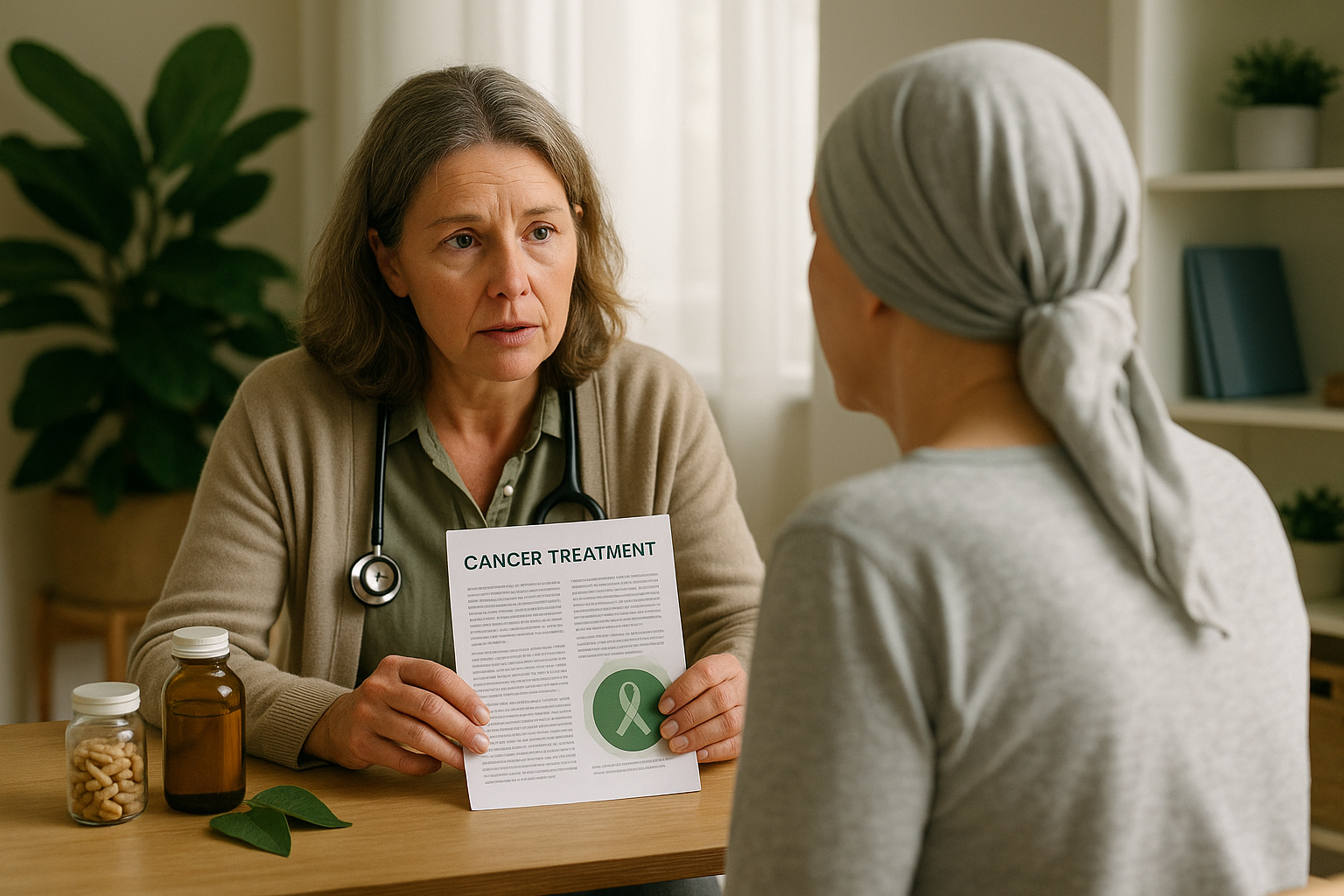
A cancer diagnosis can bring urgent questions about every available path forward. Some patients and caregivers search for natural medicine, naturopathic care, complementary therapies, or alternative cancer treatment while also trying to understand pathology reports, treatment recommendations, symptoms, and practical decisions. These terms can sound similar, but they do not always describe the same role in care.
This guide explains how to approach naturopathic cancer treatment options with clear questions, coordinated communication, and realistic expectations. It does not recommend a treatment plan, rank therapies, or replace advice from an oncology team. Its purpose is to help you prepare for an informed discussion about supportive and integrative options while keeping your oncology care team involved.
Start with a simple priority: make every member of your care team aware of the therapies, products, and goals you are considering. A shared record can keep the conversation focused on your diagnosis, current plan, symptoms, medical history, and personal priorities. For broader context on coordinated care, see the role of integrative oncology in modern cancer care.
Naturopathic cancer treatment options: start by defining the terms
Language matters because a decision can look very different depending on whether an approach is being considered alongside oncology care or in place of it. The National Center for Complementary and Integrative Health distinguishes among complementary, alternative, and integrative health approaches and provides patient education about this terminology.[1]
Complementary care describes an approach considered alongside conventional medical care. In a cancer setting, a patient may use this language when discussing supportive goals such as daily routines, emotional well-being, nutrition concerns, or other needs while continuing oncology-directed care.
Alternative care describes an approach considered in place of conventional medical care. This distinction should not be treated as a minor wording issue. Before making a decision that could change, delay, or replace an oncology recommendation, ask the treating oncology team to discuss the proposal directly and answer your questions in plain language.
Integrative care is commonly used to describe a coordinated approach that considers conventional medical care alongside selected complementary approaches. The World Health Organization addresses traditional, complementary, and integrative medicine as a health topic, reflecting the broad ways these terms are used across health systems.[2]
For patients and caregivers, naturopathic cancer treatment options is a broad search phrase rather than a single plan. It may lead to questions about nutrition, stress support, supplements, botanicals, intravenous therapies, or other clinician-administered services. Move from the broad label to a specific proposal: identify what is being offered, the goal being discussed, the limits of that goal, and how the proposal would fit with the rest of the patient’s care.
Set the purpose of supportive care
Supportive care should begin with a defined patient concern rather than a vague promise. A useful consultation identifies what the patient wants help with and what remains under the direction of the oncology team. Discussion areas may include nutrition concerns, sleep disruption, stress, emotional strain, day-to-day functioning, and the practical burden of appointments.
An integrative setting may take account of physical, emotional, social, and spiritual needs and may include lifestyle-focused services intended to complement medical care. Cleveland Clinic describes an integrative and lifestyle medicine program with a whole-person orientation.[3] This framing can help keep supportive goals distinct from broad promises that a natural approach will work for every person or replace individualized cancer care.
Ask for the goal in plain language. Is the proposal intended to support comfort, nutrition, coping, sleep, activity, or another concern? Is it being discussed as adjunctive support, or is someone presenting it as a replacement for oncology care? Is the goal meaningful to the patient? A clinic should be able to answer these questions without relying on slogans, urgency, or guarantees.
Whole-person care can organize a conversation around the individual rather than a single product. It does not remove the need for diagnostic follow-up, cancer staging discussions, treatment decisions, or communication among clinicians.
Understand the broad categories you may encounter
Patients researching natural and integrative cancer support may encounter many categories. A category is not a conclusion that a particular option is appropriate. It is a starting point for a more precise discussion with clinicians who know the patient’s diagnosis, treatment history, medicines, and current care plan.
Nutrition-focused counseling
Nutrition conversations may address eating difficulties, food preferences, changing routines, or questions that arise during treatment. A productive appointment identifies the exact concern and avoids presenting a single diet as a universal cancer solution. Ask how the discussion accounts for current symptoms, appetite, weight changes, medical restrictions, and the oncology plan.
Mind-body and lifestyle support
Mind-body practices, sleep support, movement planning, and stress-management conversations may be part of a whole-person approach. The important question is not whether a practice sounds natural. Ask whether its intended role, expectations, and relationship to medical care are stated plainly. Patients should be able to explain what they can realistically sustain and what feels burdensome.
Supplements, herbs, and botanicals
Supplements and herbal products require a specific discussion. Bring the exact product name, ingredients, label, amount used, and reason for considering it. Do not assume that an over-the-counter product belongs outside the medical record. Ask the oncology team and any integrative clinician to review the full list and explain how they will consider the proposed product in the context of the individual care plan.
Clinician-administered supportive therapies
Some clinics discuss therapies delivered or supervised in a clinical setting. Before agreeing to any service, ask what it is intended to address, what information is used to determine suitability, how the team communicates with oncology clinicians, how concerns are handled, and what monitoring or follow-up is planned. The name of a therapy alone does not answer those practical questions.
For a broader discussion of terminology and the range of approaches patients may see described online, visit Alternative Cancer Treatment: A Comprehensive Clinical Guide to Integrative Oncology. Use it as background reading, then return to the specifics of your own diagnosis and care plan.
Make safety and coordination non-negotiable
When evaluating a naturopathic or natural option, coordination is not an administrative detail. It is part of informed decision-making. Ask what information each clinician needs and make sure the same current list of medicines, supplements, and services is available to the oncology team, primary care clinician, surgeon, pharmacist, specialists, and any integrative provider involved.
Bring every item into the conversation, including prescription medicines, nonprescription medicines, supplements, powders, teas, tinctures, topical products, and therapies received elsewhere. Also describe anything you have recently stopped. Include the current cancer treatment plan, planned procedures, allergies or prior reactions, and any new symptoms or concerns.
Ask direct safety questions before starting or changing anything:
- What specific goal is this option meant to address?
- Is it being considered alongside my oncology plan or as a substitute for part of it?
- What information from my oncology record should be reviewed first?
- Could this proposal affect another medicine, treatment, procedure, or test I am receiving?
- How will product selection, quality questions, and documentation be handled?
- What changes or concerns should prompt a call to my oncology team?
- Who is responsible for communicating updates to the rest of my clinicians?
These questions are not a rejection of integrative care. They are a way to require clarity. A responsible conversation makes room for uncertainty, acknowledges limits, and gives the patient time to decide. It does not pressure a patient to abandon oncology care, portray reasonable questions as negativity, or promise a particular outcome.
Prepare for an integrative cancer consultation
A well-prepared consultation can be more useful than an unfocused search for the newest or most dramatic option. Patients and caregivers can make a concise folder or digital record before the appointment. The purpose is to provide accurate information while ensuring that the patient’s priorities are heard.
Bring records and a current list
- Pathology reports, imaging reports, and recent relevant test results.
- A short cancer treatment history and the current oncology treatment plan.
- Contact information for relevant clinicians and pharmacies.
- A complete medication, supplement, and product list, including items used only occasionally.
- A brief symptom and concern list in the patient’s own words.
- Important medical history, allergies, prior reactions, and planned procedures.
- A caregiver’s notes, if the patient wants assistance tracking questions and next steps.
Other health concerns can also affect how care is organized. The National Institute of Neurological Disorders and Stroke maintains health information about neurological disorders.[4] MedlinePlus provides patient education about neurologic diseases and explains that the nervous system includes the brain, spinal cord, and nerves.[5] If a patient has a neurologic diagnosis or symptoms under specialist evaluation, include that information in the medical record and ask how communication with the relevant specialist will occur.
State your goals before discussing options
Write down what matters most right now. Some patients want help preparing questions for an oncology visit. Others want support around a symptom, an eating challenge, sleep, stress, family communication, or the logistics of a demanding care schedule. A clearly stated goal allows a clinician to explain whether a proposed service relates to that goal and what it cannot be expected to do.
Take notes and invite a caregiver
Consider bringing a trusted caregiver or note-taker to help record questions and explanations. Ask for written explanations of the proposed role of a therapy, practical commitments, monitoring plans, alternatives, and the process for contacting the clinic with questions. Review the information later, and bring unresolved concerns back to the oncology team before making changes.
Evaluate claims, evidence, and communication
Patients do not need to become researchers to ask disciplined questions. Start by separating a personal story, a marketing statement, and a clinical claim. A testimonial may describe one person’s experience, but it does not by itself determine whether a therapy fits another person’s diagnosis, medical history, or oncology plan. A long list of conditions or a complicated explanation is not a substitute for a clear discussion of intended use and limitations.
Ask a clinic to explain the basis for each recommendation in language you can understand. Request a direct description of what is known, what is uncertain, what other options exist, and how the proposed approach will be coordinated with oncology care. If an answer cannot be explained without pressure or vague claims, pause and seek another opinion.
Warning signs include:
- Guarantees of cure, remission, or a specific outcome.
- Pressure to act immediately or purchase a large package before questions are answered.
- Advice to keep products or therapies from the oncology team.
- Claims that a therapy works for every cancer type or every patient.
- Dismissal of pathology, imaging, oncology follow-up, or informed consent.
- Refusal to discuss risks, limitations, alternatives, documentation, or coordination.
- Reliance on labels such as natural, proprietary, detoxifying, or breakthrough without a specific explanation of the proposed role.
A constructive signal is transparency: a clinic welcomes questions, asks for relevant records, identifies the boundaries of its role, and supports communication with other clinicians. You can also review this guide to evaluating cancer natural treatment centers for a more detailed clinic-selection framework.
Questions to ask before choosing a clinic
Choosing an integrative clinic is not simply choosing a menu of therapies. It is choosing a process for assessment, communication, informed consent, and follow-up. Use the following questions to compare options:
- Who will review my diagnosis, treatment history, and current oncology plan?
- How will the clinic communicate with my oncologist and other treating clinicians?
- What is the stated purpose of each proposed service?
- What are the expected limits of the service, and what outcomes are not promised?
- How will the clinic review medicines, supplements, allergies, and other relevant health information?
- What monitoring, documentation, and follow-up are included?
- What are the alternatives, including choosing not to proceed?
- What practical commitments, costs, travel demands, and scheduling requirements should I understand before deciding?
- Who should I contact if I have a concern between visits?
Take time to compare the answers. A patient or caregiver should leave a consultation with more clarity, not more confusion. If a clinic’s explanation conflicts with the oncology plan or raises a concern, bring that concern back to the oncology team before making a change.
Next steps for patients and caregivers
Exploring naturopathic cancer treatment options can be a useful starting point for questions about supportive, complementary, and integrative care. The next step is not a self-directed protocol. It is a documented conversation that identifies the exact option, the intended purpose, the limits of the claim, and the plan for coordination with cancer care.
Keep your oncology team involved. Keep an updated list of all therapies and products. Ask for plain-language explanations. Bring a caregiver or note-taker when possible. Give yourself permission to pause when a claim sounds larger than the available explanation or when a proposal is not clearly connected to your needs.
Medical disclaimer: This article is for general educational purposes only. It does not diagnose, treat, prescribe for, or replace individualized advice from your oncology team, physician, pharmacist, or other qualified health professionals. Do not begin, stop, or change cancer treatment, medicines, supplements, or other therapies without discussing the decision with the clinicians responsible for your care.
References
- https://www.nccih.nih.gov/health/complementary-alternative-or-integrative-health-whats-in-a-name
- https://www.who.int/health-topics/traditional-complementary-and-integrative-medicine
- https://my.clevelandclinic.org/departments/wellness/integrative
- https://www.ninds.nih.gov/health-information/disorders
- https://medlineplus.gov/neurologicdiseases.html
Share this article
Need Help Understanding Your Options?
Talk with our Patient Care Team about the questions this article raises and whether a physician consultation may be appropriate.