


A cancer diagnosis often creates two urgent questions at once: How do I treat the cancer, and how do I get through treatment with the best possible quality of life? In Scottsdale, many patients search for naturopathic cancer treatment after hearing about nutrition programs, IV therapy, acupuncture, botanical medicine, or alternative protocols online. The challenge is separating supportive care with a reasonable evidence base from claims that could put effective cancer treatment at risk.
Naturopathic oncology can have a useful role when it is built as an adjunct to conventional oncology, not as a substitute for surgery, chemotherapy, radiation, immunotherapy, or other indicated treatment. The most defensible goals usually involve symptom control, treatment tolerance, nutrition, sleep, fatigue, stress, and survivorship. Claims that a natural protocol can reliably cure cancer or replace curative treatment require a much higher level of evidence than most clinics can provide.
Table of Contents
- A Patient Considering Integrative Cancer Care in Scottsdale
- What Naturopathic Cancer Treatment Means
- Common Therapies Used in Scottsdale Integrative Programs
- What the Evidence Does and Does Not Support
- How an Integrative Oncology Plan Is Built
- Common Misconceptions About Alternative Cancer Care
- How to Choose the Right Scottsdale Provider
- Next Steps With Sunridge Medical
A Patient Considering Integrative Cancer Care in Scottsdale
A 58-year-old Scottsdale resident receives a stage II breast cancer diagnosis after an abnormal mammogram and biopsy. Her breast surgeon has discussed surgery, and her medical oncologist expects chemotherapy to follow. She understands why the conventional plan has been recommended, but she's worried about what treatment may feel like. She wants to reduce the risk of neuropathy, manage fatigue, protect her appetite, and support her immune system without taking supplements that interfere with chemotherapy.
At the same time, she has found an alternative-only protocol online. The language is confident. It promises detoxification, immune restoration, and tumor control without surgery or chemotherapy. That approach is appealing because it offers certainty at a frightening moment. It's also the point where careful medical judgment matters most.
The central question isn't whether she must choose between “natural” and “conventional” care. It's what evidence-informed naturopathic cancer treatment in Scottsdale looks like, where it may help, and where it shouldn't replace standard oncology. A coordinated plan might address nausea, sleep, anxiety, nutrition, movement, and treatment-related fatigue while her oncology team manages the cancer-directed treatment.
Practical rule: A complementary therapy is safest when the oncology team knows about it, understands its purpose, and can review its interaction risk.
Patients comparing programs can review Sunridge Medical's integrative cancer care information while also asking direct questions about credentials, evidence, communication, and monitoring. The rest of this guide defines naturopathic oncology, compares common therapies, examines the difference between symptom support and tumor claims, and explains how to evaluate a Scottsdale provider.
What Naturopathic Cancer Treatment Means
Naturopathic oncology is a focused area of naturopathic medicine covering cancer prevention, supportive care, treatment planning, and survivorship. Its professional structure is relatively recent. The Oncology Association of Naturopathic Physicians, or OncANP, launched in 2004, and the American Board of Naturopathic Oncology began certifying physicians in 2006. That history helps explain why Arizona programs often present integrative oncology as a developing specialty rather than an established cancer-treatment tradition. The professional background of this field is described through the career history of Dan Rubin, ND, FABNO.
A clinician with the FABNO designation, meaning Fellow of the American Board of Naturopathic Oncology, has completed specialty training and certification associated with naturopathic cancer care. The credential does not establish that every proposed therapy works, nor does it replace medical oncology expertise. It does offer a more relevant benchmark than a general wellness certification or broad “cancer” language without oncology-specific training.
Adjunctive care is different from alternative care
The terms complementary, alternative, and integrative describe different clinical choices:
- Complementary care is used alongside standard treatment. Acupuncture for treatment-related nausea is one example.
- Alternative care is used instead of standard treatment. Replacing recommended surgery with supplements fits this category.
- Integrative oncology coordinates conventional treatment with selected complementary approaches, with attention to safety, symptoms, and patient goals.
The National Cancer Institute's guidance on complementary and alternative medicine makes this distinction practical. Complementary approaches may accompany standard treatment, while some products can interfere with cancer therapy. “Natural” does not mean harmless.
In Arizona, a licensed naturopathic doctor may diagnose, order laboratory testing, and prescribe within the state's scope of practice. A safe cancer plan still depends on communication with the surgeon, medical oncologist, radiation oncologist, pharmacist, and other relevant clinicians. Before recommending an intervention, the naturopathic doctor should review the pathology, stage, treatment schedule, organ-function data, and medication list.
For a broader clinical overview, see the role of integrative oncology in modern cancer care. The strongest case for naturopathic care is usually symptom control and treatment support. Claims that it can cure a tumor or replace cancer-directed therapy require much stronger evidence and should be treated cautiously.
Common Therapies Used in Scottsdale Integrative Programs
Scottsdale programs may use several therapy families, but they don't all answer the same clinical question. A treatment aimed at nausea or fatigue has a different evidence standard from a therapy promoted as shrinking a tumor. Patients should ask what outcome the therapy is intended to change and how that outcome will be measured.
| Therapy family | Typical use | Evidence level |
|---|---|---|
| IV nutrients, including high-dose vitamin C | Hydration, nutritional support, and selected symptom-focused protocols | Safety and cancer-specific benefit depend on the patient, dose, kidney function, glucose status, and treatment plan |
| Mistletoe extract and botanical medicine | Supportive care, quality of life, and research protocols | Evidence is mixed and should not be presented as a proven replacement for cancer-directed treatment |
| Oral nutraceuticals and supplements | Correcting documented deficiencies or supporting nutrition | Useful in selected cases, but interaction risk and weak evidence for many ingested products require review |
| Mediterranean or ketogenic dietary frameworks | Nutrition quality, metabolic goals, appetite, and weight management | Dietary needs are individualized; no special diet has been proven to cure cancer |
| Sleep, movement, stress reduction, mindfulness, yoga, tai chi, and qigong | Fatigue, distress, sleep, function, and quality of life | Among the better-supported supportive approaches |
| Acupuncture and acupressure | Nausea, pain, hot flashes, and selected neuropathy symptoms | Commonly used for symptom management, with evidence varying by symptom and protocol |
| Functional diagnostics | Risk discussion, nutritional assessment, treatment monitoring, or exploratory tumor profiling | Clinical usefulness varies; tests shouldn't be treated as definitive substitutes for pathology and standard imaging |
IV therapy and targeted supplementation
IV nutrient therapy may be considered when oral intake is poor, a documented deficiency needs correction, or a clinician is evaluating a specific supportive protocol. High-dose vitamin C requires individualized screening because kidney function, glucose-6-phosphate dehydrogenase status, hydration, and concurrent treatment can affect safety. A conventional oncologist may accept supportive infusion care when the indication is clear, but will reasonably question claims that an infusion can replace chemotherapy or reliably control a tumor. Patients can review Sunridge Medical's clinical guide to IV nutritional therapy for cancer before discussing an infusion plan with their oncology team.
Botanical therapies, mistletoe injections, medicinal mushrooms, and nutraceutical combinations require the same discipline. A supplement can alter bleeding risk, liver metabolism, immune activity, sedation, or the effects of chemotherapy and immunotherapy. For general education about supplement categories, patients may also explore which mushroom species work best, then bring any product list to a qualified clinician rather than starting it independently.
Diet, acupuncture, and testing
A Mediterranean-style eating pattern may help a patient maintain adequate protein, fiber, and overall nutritional quality when tolerated. A ketogenic framework may be considered in selected situations, but it can be difficult for patients losing weight or struggling with appetite. Neither approach should be marketed as a stand-alone cancer cure.
Acupuncture may be used for nausea, pain, sleep disruption, anxiety, or treatment-related sensory symptoms. Its purpose is generally symptom relief, not direct tumor destruction. Functional tests such as circulating tumor DNA, Galleri, RGCC, and DUTCH hormone testing may be discussed in some programs, but their role depends heavily on the cancer type, clinical question, validation, and how the result will change treatment. They shouldn't replace pathology, staging, or imaging interpreted by the conventional oncology team.
What the Evidence Does and Does Not Support
The most reliable role for integrative oncology is supportive care. ASCO and the Society for Integrative Oncology recommend mindfulness-based interventions for depression and support mindfulness-based stress reduction, mindfulness-based cognitive therapy, tai chi, and qigong for fatigue management. The same guideline advises against using cannabis or cannabinoids as cancer-directed treatment outside a clinical trial. The ASCO educational summary explains these recommendations.
That distinction is clinically important. A patient may reasonably use mindfulness to reduce distress, exercise to preserve function, or acupuncture to address a treatment symptom. Those choices don't require pretending that the therapy destroys cancer cells. The evidence becomes much weaker when a clinic moves from “this may help you tolerate treatment” to “this protocol will eliminate your cancer.”
| Therapy | Evidence level | Supported use | Limitation |
|---|---|---|---|
| Mindfulness-based care | Stronger supportive evidence | Depression, anxiety, stress, and fatigue management | It isn't a tumor-directed treatment |
| Exercise and movement | Supportive evidence | Function, fatigue, conditioning, and survivorship | Must be adapted to stage, blood counts, pain, and treatment status |
| Acupuncture and acupressure | Symptom-focused evidence | Nausea and selected treatment-related symptoms | Results vary, and it requires oncology-specific safety screening |
| Mistletoe extract | Mixed and evolving | Selected supportive-care and quality-of-life questions | It hasn't established a reliable substitute for standard treatment |
| IV vitamin C | Incomplete and condition-specific evidence | Selected investigational or supportive protocols | It requires medical screening and doesn't prove tumor control |
| Whole-system naturopathy | Low-certainty evidence for cancer outcomes | Individual supportive components may be reasonable | The bundled system hasn't shown dependable improvements in survival or tumor control |
A 2024 Australian government evidence evaluation found an absence of high-certainty evidence that naturopathy as a whole-system treatment is more effective than usual care for cancer, with uncertainty across many prioritized outcomes. The full natural therapies evidence evaluation provides the review findings. That doesn't mean every naturopathic intervention is useless. It means each component must stand on its own clinical rationale.
The Society for Integrative Oncology describes its clinical practice guidelines as the only evidence-based guidelines for incorporating complementary and integrative therapies into conventional oncology practice. Its breast cancer supportive-care guidance includes meditation, yoga, massage, and music therapy for selected symptoms, while warning that evidence for many ingested dietary supplements remains weak. Patients who want a structured way to assess claims can use this clinical framework for evaluating alternative cancer treatments.
How an Integrative Oncology Plan Is Built
A credible plan starts with the cancer, not with a menu of therapies. During intake, the clinician should collect the pathology report, diagnosis, stage, imaging, treatment schedule, medications, allergies, prior therapies, laboratory results, and the symptoms that matter most to the patient. “Immune support” is too broad to guide treatment. The practical question might be how to maintain nutrition during chemotherapy, manage sleep during steroids, or address persistent neuropathy after treatment.
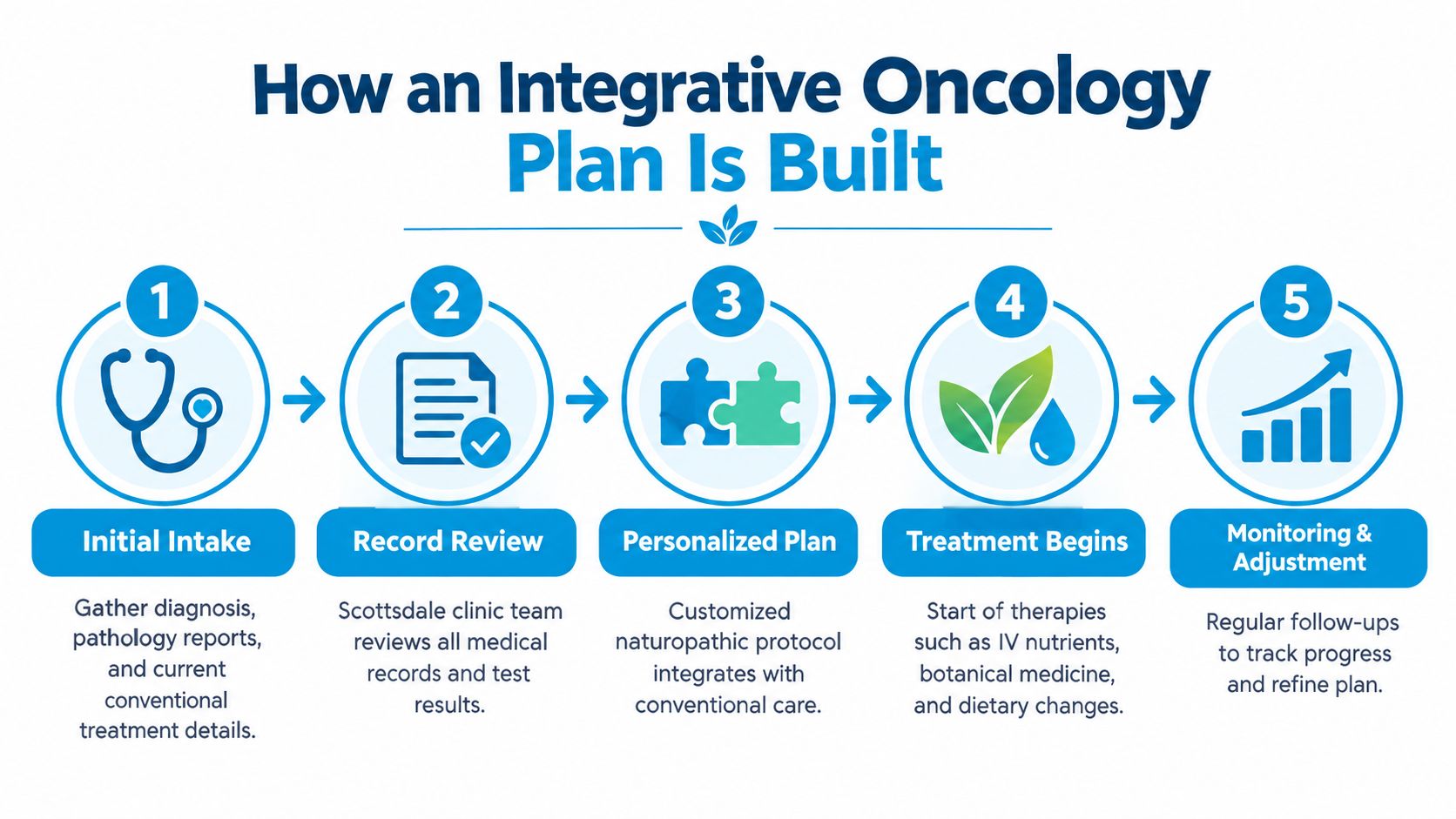
Record review comes before protocol design
The team may review metabolic markers, micronutrient panels, hormone testing, gut-related testing, or circulating tumor DNA when there's a defined clinical reason and the result could influence management. Tests such as Galleri, RGCC, and DUTCH hormone testing shouldn't be ordered because they sound advanced. Their limitations, cost, timing, and effect on decisions should be explained before testing.
The clinician then maps proposed supplements, nutraceuticals, IV treatments, botanical medicines, and lifestyle changes against chemotherapy, radiation, surgery, immunotherapy, and prescribed medications. Organ function matters. Kidney and liver status, blood counts, clotting risk, immune suppression, and upcoming procedures can change what is appropriate.
A useful plan has a purpose, a safety check, a monitoring method, and a reason to stop.
Goals often fall into three tiers. The first is helping the patient tolerate conventional treatment. The second involves carefully discussing residual-disease risk without promising that an adjunctive therapy eliminates it. The third focuses on survivorship, including movement, nutrition, sleep, emotional health, and long-term medication review. Follow-up should adjust the plan as treatment cycles, radiation, recovery, or survivorship changes.
Common Misconceptions About Alternative Cancer Care
The most dangerous misconception is that “natural” means “safe.” Botanical products, supplements, teas, injections, and restrictive diets can affect bleeding, sedation, liver metabolism, or immune activity. Anyone receiving chemotherapy, immunotherapy, or radiation should disclose every product to the oncology team before using it.
No special diet, food, vitamin, mineral, supplement, herb, or combination has been proven to slow cancer, cure it, or prevent recurrence. That evidence does not support claims that an alkaline diet can “starve” a tumor, detoxification can remove cancer from an established tumor, or high-dose IV vitamin C can cure advanced disease. These approaches may have a place in symptom support or nutrition planning, but tumor-cure claims remain unsupported.
Supplements cannot replace surgery for an early-stage solid tumor when surgery is recommended. They also cannot reliably substitute for chemotherapy in a curative treatment plan. An alternative-only protocol can delay treatment and reduce the opportunity for effective disease control. NCCIH guidance on mind and body approaches for cancer symptoms and side effects cautions against replacing conventional care, particularly because delayed treatment can reduce the likelihood of remission or cure.
Recognizing unsafe marketing
Be cautious when a clinic:
- Promises a cure: No responsible provider can guarantee an outcome for every cancer stage or tumor type.
- Uses “detox” as a complete explanation: A vague toxin narrative should not replace pathology, staging, and treatment planning.
- Discourages oncology care: Pressure to abandon surgery, chemotherapy, radiation, or immunotherapy is a serious warning sign.
- Treats testimonials as proof: Personal stories do not establish effectiveness or safety for another patient.
- Bundles expensive therapies without detail: You should receive itemized costs, risks, alternatives, and monitoring requirements.
Integrative care has its strongest evidence in symptom control, treatment support, and coordination with conventional oncology. It becomes unsafe when marketing claims tumor cures that clinical evidence does not support.
How to Choose the Right Scottsdale Provider
Start with credentials and scope. Confirm that the prescribing clinician holds an active Arizona naturopathic medical license. For a provider presenting as a naturopathic oncology specialist, ask whether they hold FABNO certification through the American Board of Naturopathic Oncology and what cancer-specific training informs their practice.
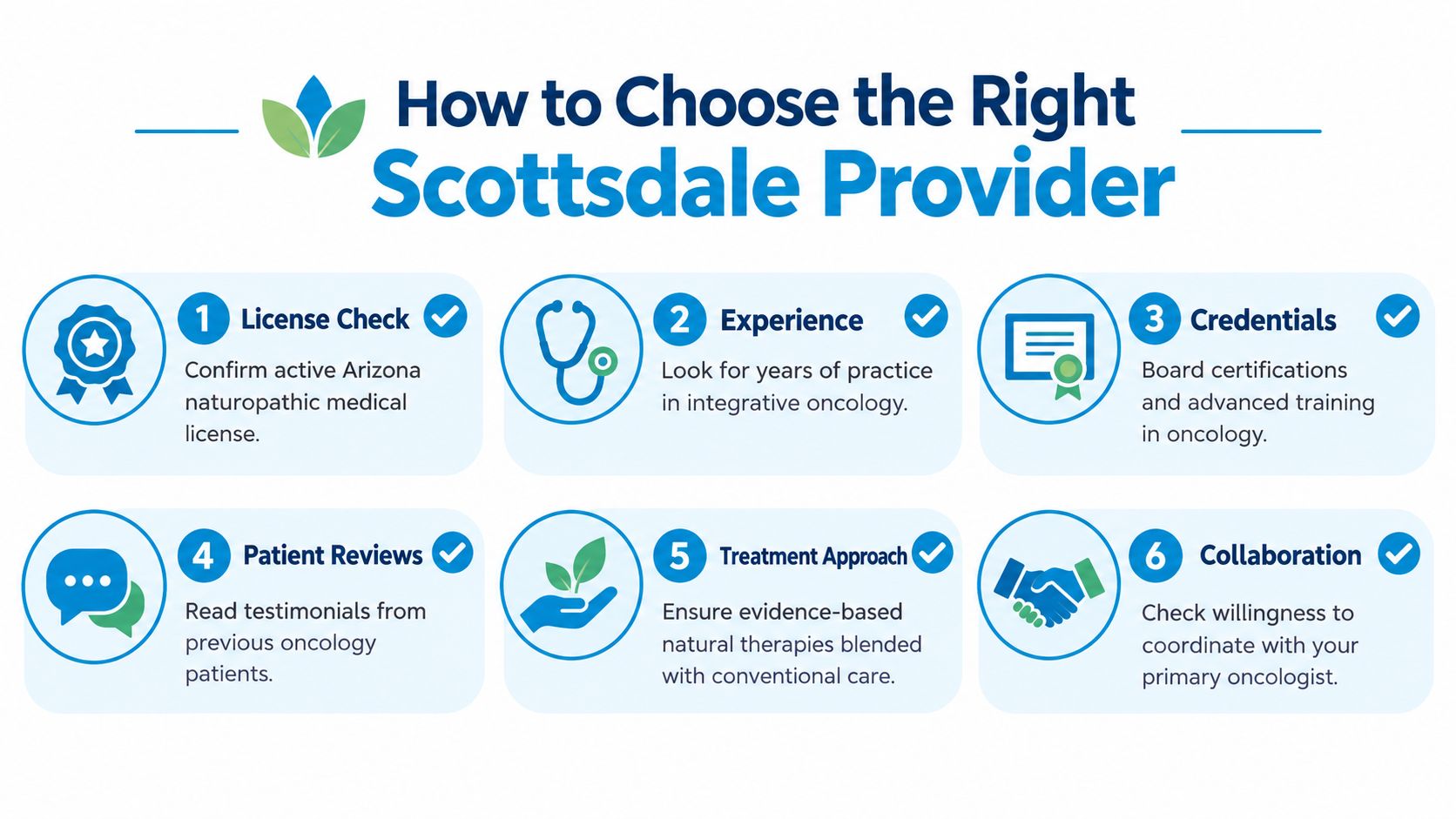
Questions to ask before starting
Bring a written list to the consultation:
- Who coordinates with my oncologist? Ask whether the provider will communicate directly and share recommendations in writing.
- How are interactions screened? The answer should address chemotherapy, immunotherapy, radiation, surgery, blood counts, and organ function.
- What is each therapy intended to do? Separate symptom relief, nutritional support, investigational treatment, and tumor-directed claims.
- How will progress be monitored? Look for defined symptoms, laboratory safety checks, imaging coordination, or functional goals.
- What are the total costs? Request itemized pricing rather than accepting a large package without a clear breakdown.
- What happens if I develop a complication? Ask about after-hours contact, urgent symptoms, and communication with your oncology team.
A reputable provider should welcome a second opinion and accept that your medical oncologist remains central to cancer-directed decisions. The clinic should provide a protocol you can share, explain uncertainty plainly, and revise recommendations when your treatment changes.
A provider who refuses collaboration is asking you to carry the clinical risk alone.
Patients in Scottsdale may also compare practices across the greater Phoenix area, including Phoenix, Paradise Valley, Tempe, Mesa, Chandler, and Gilbert. Distance matters less than whether the team understands your diagnosis, communicates reliably, and can provide appropriate follow-up.
Next Steps With Sunridge Medical
A practical starting point is a 20-minute discovery call or online intake. Share the diagnosis, current oncology treatment, pathology reports, imaging, medication list, and the symptoms or decisions causing the most concern. Record review helps determine whether a consultation is appropriate and what information remains missing.
Sunridge Medical is an integrative medical clinic in Scottsdale that describes individualized cancer planning involving nutrition, targeted supplementation, lifestyle changes, symptom management, and physician-directed therapies. A naturopathic oncology clinician can evaluate how proposed interventions fit around chemotherapy, radiation, surgery, immunotherapy, or survivorship care. The key question remains the same throughout: what is the goal, what is the evidence, and how will safety be monitored?
For patients traveling from Phoenix or outside Arizona, follow-up may be handled through telehealth when clinically appropriate, while in-person visits can be organized around Scottsdale-based evaluations, IV therapies, and diagnostics. The care team can also help with scheduling, travel planning, and insurance documentation for eligible services. Before committing to any treatment, ask for a written roadmap that identifies expected visits, monitoring, and decision points.
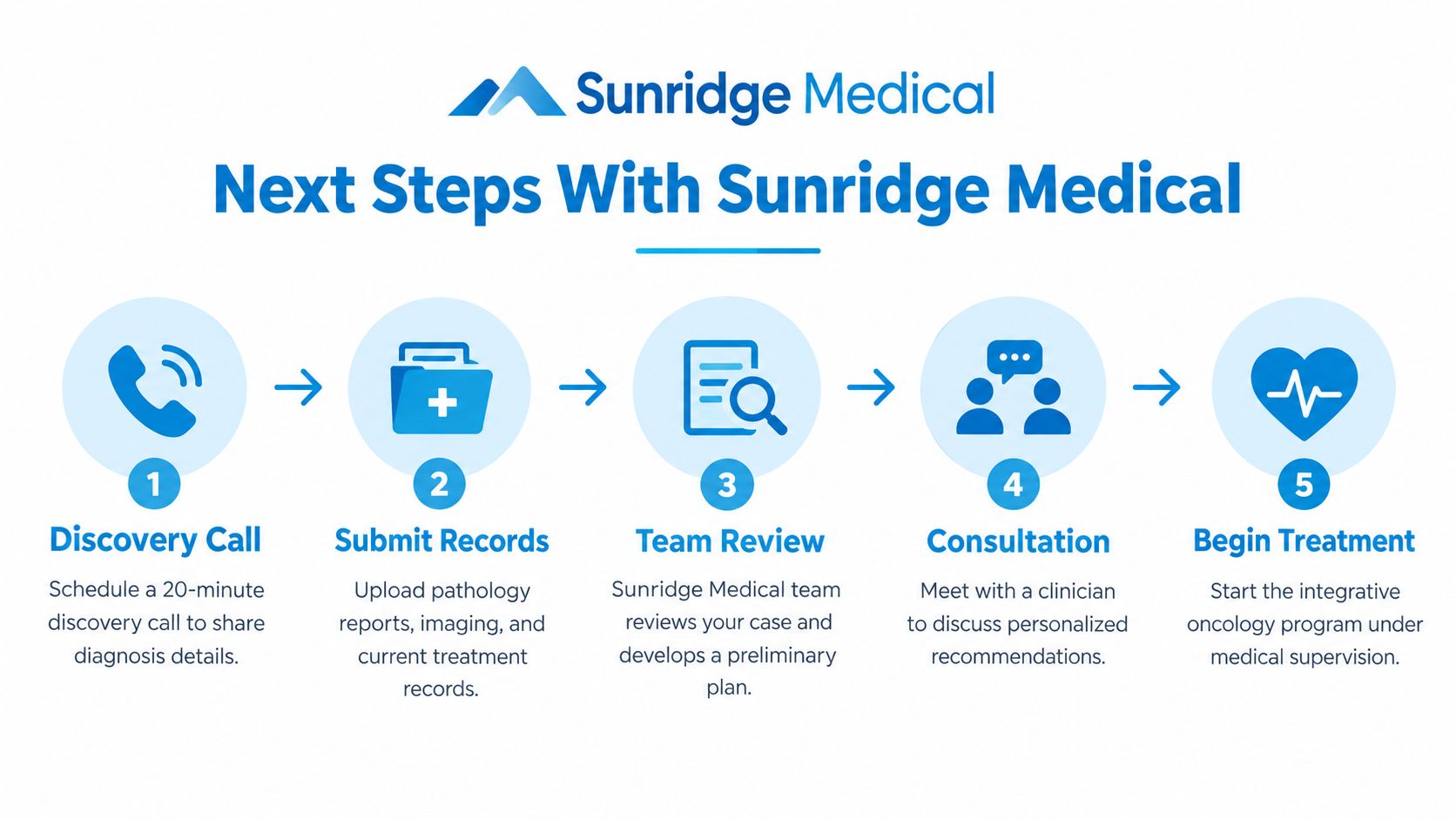
For patients who want to understand the clinic's approach before contacting the team, this video provides additional context:
If you're considering naturopathic cancer treatment in Scottsdale, bring your proposed protocol and supplement list to both your integrative clinician and oncology team. Coordinated care gives you a better chance of addressing fatigue, nausea, sleep, nutrition, stress, and other treatment burdens without losing sight of evidence-based cancer treatment.
Sunridge Medical offers physician-directed integrative oncology consultations in Scottsdale, with individualized plans designed to complement existing cancer care and address treatment tolerance, symptoms, nutrition, and survivorship needs. Visit Sunridge Medical to request a discovery call and discuss whether an integrative oncology evaluation is appropriate for your diagnosis and current treatment plan.