


What if your multi-systemic symptoms aren’t a mystery to be managed, but a complex puzzle waiting for the right clinical lens? You’ve likely spent months visiting specialists only to be met with contradictory test results or the suggestion that your persistent fatigue is merely a byproduct of modern stress. It’s profoundly isolating to feel dismissed when your body is clearly signaling a deeper, systemic imbalance. Navigating a complex chronic illness diagnosis requires more than just standard symptom suppression; it demands a departure from the standardized approach of conventional medicine.
At Sunridge Medical, we view these challenges through the eyes of a scientific guide, focusing on the underlying mechanisms rather than just the surface labels. This article provides a structured, research-based framework for moving from diagnostic confusion to a targeted, individualized treatment plan. We’ll explore a clear roadmap for integrative testing and introduce advanced, research-driven protocols that honor the unique nature of your health journey. By understanding the multi-faceted nature of your condition, we can move together toward a measured, clinical path that prioritizes the restoration of your long-term well-being.
Key Takeaways
- Learn why multi-systemic conditions require a shift from “what” the disease is to “why” the body is reacting, specifically focusing on underlying environmental factors and toxicity.
- Gain clarity on how a patient-centric integrative model offers a more thorough clinical framework than conventional care when navigating a complex chronic illness diagnosis.
- Discover practical steps to organize your medical history and symptom timeline to facilitate more precise and comprehensive physician evaluations.
- Explore how individualized, research-based alternative protocols, such as customized IV therapies, work to restore the body’s internal biological terrain and support recovery.
Understanding the Challenges of a Complex Chronic Diagnosis
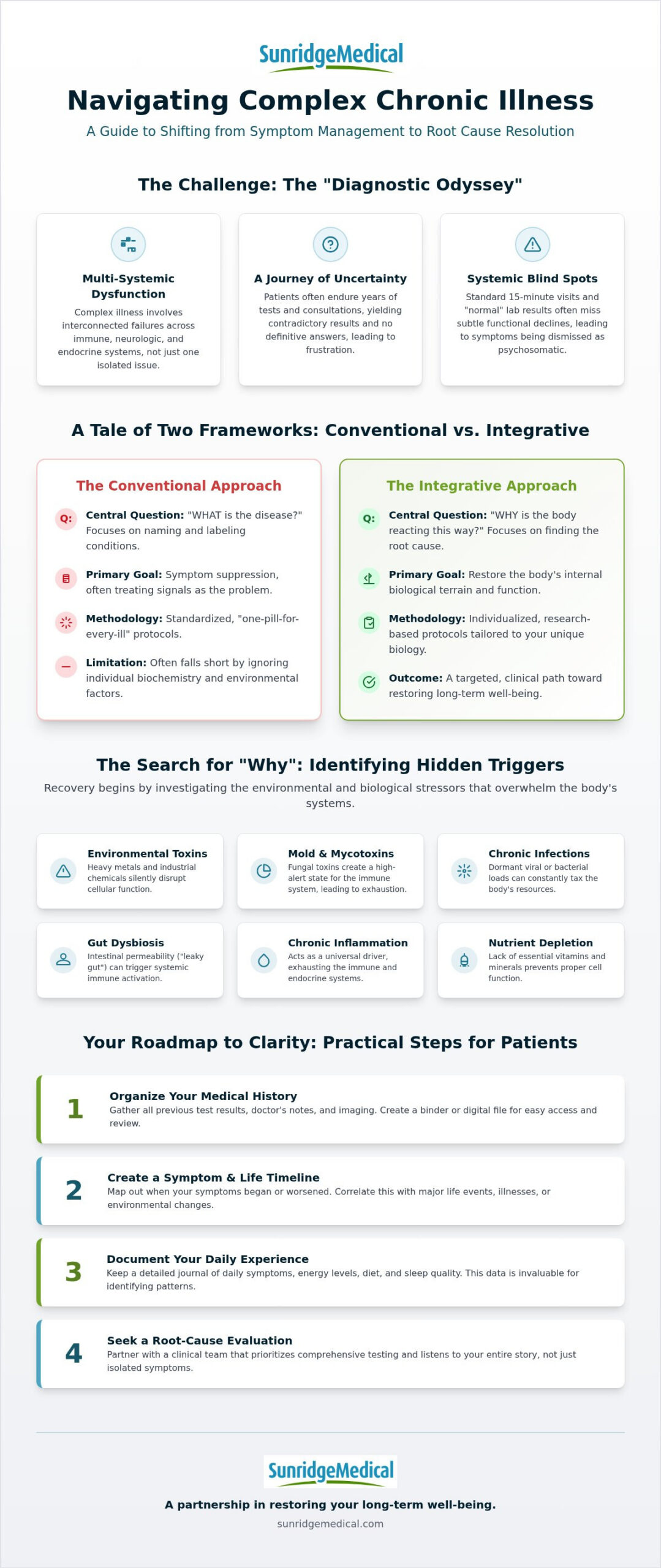
A complex chronic illness isn’t just one disease. It’s a state where multiple systems, including the immune, neurologic, and endocrine pathways, fail to communicate correctly. For many, navigating a complex chronic illness diagnosis becomes a “diagnostic odyssey.” This is a grueling journey through years of tests and consultations that often yields no definitive answers. Standard medical models are built for acute care. They excel at fixing broken bones or treating sudden infections but often struggle with the interconnected nature of systemic dysfunction. This lack of a cohesive framework leaves patients feeling stranded in a sea of contradictory information.
Patients frequently encounter clinical “blind spots” during the typical 15-minute primary care visit. This brief window doesn’t allow for the deep investigation required to map complex biological interactions. When standard blood panels come back “normal,” patients are often told their symptoms are psychosomatic. This experience of being medically gaslit adds emotional trauma to physical suffering. It’s a failure of the system, not the individual. True healing requires an understanding of multimorbidity, where the focus shifts from isolated symptoms to the synergy of multiple conditions occurring simultaneously.
The Reality of Multi-Systemic Dysfunction
The human body is an integrated web. When one system falters, such as the gut microbiome, it triggers cascading failures across the entire organism. For example, intestinal permeability can lead to systemic immune activation, which eventually disrupts neurologic function and cognitive clarity. Chronic inflammation acts as a universal driver here, constantly taxing the immune system and exhausting the endocrine response. Standard lab ranges are designed to identify end-stage disease, not subtle functional declines. We look for optimal health markers because “normal” is often just the average of a sick population.
Why Standard Protocols Often Fall Short
The “one pill for every ill” pharmaceutical approach is inherently limited. It treats the symptom as the enemy rather than a signal. Standardized care ignores your unique genetic blueprint and environmental exposures. If two people have chronic fatigue, their root causes could be entirely different. One might be struggling with mold toxicity while the other has a dormant viral load. We believe in a sophisticated, integrative medical model that prioritizes individual biochemistry. When you’re navigating a complex chronic illness diagnosis, you deserve a clinical framework that accounts for your specific biological reality. Moving beyond packaged care is the only way to address the depth of these conditions effectively.
The Clinical Search for Root Causes: Beyond Symptom Management
Recovery begins when we stop asking what the disease is called and start asking why the body is responding with dysfunction. In conventional medicine, a name like “Fibromyalgia” or “Chronic Fatigue Syndrome” often acts as a finish line. In our clinical framework, these names are merely starting points. Successfully navigating a complex chronic illness diagnosis involves peeling back layers of environmental and infectious interference. We focus on the biological terrain, the internal environment that determines whether pathogens thrive or the immune system remains in a state of perpetual alarm. If this terrain is compromised by toxicity or nutrient depletion, even the most advanced medications will struggle to produce lasting results.
Identifying the specific stressors that have overwhelmed your regulatory systems is a meticulous process. This approach mirrors the clinical coordination found in Principal Illness Navigation services, which help patients manage the logistics of complex care across multiple medical disciplines. Navigating a complex chronic illness diagnosis requires this level of thoroughness to ensure that no underlying trigger is overlooked in the rush to treat symptoms.
Identifying Hidden Triggers and Stressors
Biological stressors often hide in plain sight. Heavy metals, mycotoxins from mold, and industrial chemical sensitivities can silently disrupt mitochondrial function and cellular signaling. These environmental burdens create a state of high-alert for the immune system, leading to systemic exhaustion. When the body is under constant environmental siege, chronic stress and hormone dysregulation become inevitable. We prioritize hormone optimization for autoimmune disease to stabilize the endocrine system, providing the foundational strength necessary for physical healing and cellular repair.
The Infection-Immunity Connection
Pathogens often exploit a weakened biological terrain. Latent infections, particularly those involving persistent bacteria or viruses, can hijack the immune system to create symptoms that look exactly like autoimmune disease. Dedicated lyme disease specialists recognize that standard lab tests frequently miss co-infections that complicate the clinical picture. These “stealth” pathogens hide within tissues, driving the multi-systemic symptoms that don’t fit into a single medical box. Effective recovery requires research-based alternative treatments that address these persistent infections without further damaging the body’s natural defenses. If you feel stuck in a cycle of temporary relief followed by relapse, a more comprehensive evaluation of your underlying triggers may be the missing link in your recovery journey.
Comparing Conventional and Integrative Diagnostic Frameworks
The conventional medical model is fundamentally diagnosis-centric. It seeks to match a set of symptoms to a specific code and then apply the corresponding pharmaceutical protocol. While this works for acute issues, it’s often insufficient when you’re navigating a complex chronic illness diagnosis. In contrast, the integrative framework is patient-centric. It focuses on the individual’s unique biochemical narrative. Instead of just asking what the condition is, we investigate how the body’s regulatory systems have lost their equilibrium. This shift in perspective is the first step toward a more comprehensive recovery path.
A critical distinction lies in the depth of the initial clinical evaluation. Standard primary care operates on a high-volume model, often limiting physician-patient interaction to fifteen minutes or less. This is statistically inadequate for multi-systemic conditions. We prioritize specialized physician evaluations that last hours. This extended time allows us to map the intersection of your genetics, environmental exposures, and lifestyle factors. It’s the difference between looking at a single frame of a movie and watching the entire film. Our goal is to shift the clinical focus from managing symptoms to actively restoring physiological function.
Advanced Lab Testing vs. Standard Panels
Standard blood panels are designed to detect acute failure or advanced disease states. They often miss the nuanced markers of chronic Lyme or subtle autoimmune triggers that keep patients in a state of illness. We utilize functional testing to assess mitochondrial and cellular health, identifying where energy production and waste removal are failing at the microscopic level. By using integrative medicine for chronic illness, we gather deep data to build precision protocols that go beyond the capabilities of basic diagnostic screenings. This data-driven approach ensures your treatment is as unique as your biology.
Integrative Oncology: A New Standard for Advanced Stages
This comprehensive approach is perhaps most vital in cancer care. Understanding integrative cancer treatment by stage provides a more sophisticated view of patient care than conventional oncology alone. We don’t see alternative protocols and conventional care as mutually exclusive. Instead, we look for the synergy between research-based alternative medicine and supportive standard treatments. This dual-layered strategy aims to improve clinical outcomes while simultaneously enhancing the patient’s quality of life. Navigating a complex chronic illness diagnosis like cancer requires a steady hand and a guide who understands how to integrate these diverse medical tools into one cohesive plan.
How to Navigate Your Medical Journey: A Step-by-Step Guide
Taking control of your health requires a methodical transition from passive patient to active advocate. Navigating a complex chronic illness diagnosis isn’t just about finding a label; it’s about executing a strategic clinical plan. This journey demands a departure from the fragmented care typical of standard systems. By following a structured roadmap, you can move from a state of reactive symptom management to a proactive restoration of your biological terrain. It’s a process of rebuilding your health from the cellular level up.
- Step 1: Organize Your History. Create a comprehensive symptom timeline that tracks the progression of your condition across different body systems.
- Step 2: Seek a Specialized Guide. Find a physician who understands the deep intersection of Lyme disease, autoimmune dysfunction, and environmental toxicity.
- Step 3: Prioritize Precision Testing. Move beyond standard blood panels to include functional testing that assesses mitochondrial health and latent infections.
- Step 4: Evaluate Multi-Layered Plans. Ensure your treatment addresses multiple systemic layers simultaneously rather than treating symptoms in isolation.
- Step 5: Commit to the Process. Embrace a long-term recovery path. Complex conditions require time for the body to recalibrate and heal.
Selecting the Right Medical Partner
Your choice of a clinical partner is the most significant factor in your recovery. When evaluating a potential physician, ask specifically about their experience with multi-systemic cases that don’t fit into standard boxes. You need a scientific guide who views your body as an integrated whole. A multidisciplinary approach is essential because conditions like Lyme and autoimmune disorders rarely exist in a vacuum. Clinics that offer customized IV and injection therapy under one roof provide a level of care coordination that is often missing in traditional outpatient settings. This integration ensures that every facet of your protocol is executed with precision.
Managing the Logistics of Advanced Care
Self-advocacy is a clinical necessity in a medical system that often favors standardized billing over individualized care. You must be prepared to navigate a landscape where the most effective, research-based protocols may fall outside the traditional insurance model. Understanding the investment required for alternative cancer treatment and complex chronic care allows you to plan your journey with certainty. Prepare for your first consultation by bringing all previous lab results and a clear list of your primary health goals. If you’re ready to move beyond the status quo, contact our clinical team to begin a more thorough evaluation of your unique biological needs.
Advancing Your Recovery with Individualized Medical Protocols
Navigating a complex chronic illness diagnosis often leaves patients with a list of symptoms but no clear path toward restoration. At Sunridge Medical, we replace this uncertainty with a structured, research-based clinical framework. Our methodology is rooted in the understanding that chronic illness is a dynamic process, not a static state. To reverse this process, we employ individualized medical protocols that address the body’s underlying mechanisms rather than simply masking outward signs of distress. This approach ensures that your treatment is as unique as your biological signature.
Central to our recovery model is the restoration of the “biological terrain.” This internal environment is the foundation of your health. When it’s compromised by toxicity, latent infection, or nutritional depletion, the body loses its ability to self-regulate. We utilize customized IV therapies and precision injection protocols to deliver high concentrations of targeted nutrients and therapeutic agents directly into the bloodstream. This method bypasses digestive barriers and ensures that cellular repair can begin immediately. Because every patient’s biochemistry is distinct, these infusions are never standardized; they’re meticulously formulated based on your specific diagnostic data.
Complex cases are rarely linear. Recovery often involves shifts in symptoms as the body detoxifies and the immune system recalibrates. Ongoing monitoring is a clinical requirement in our practice. We maintain a constant feedback loop, adjusting your protocol in real-time based on your physiological response. This agility allows us to navigate the intricacies of multi-systemic dysfunction with precision and care, ensuring that your roadmap to health remains accurate as your body changes.
The Sunridge Medical Difference in Complex Care
We provide a sophisticated sanctuary for individuals who have found no answers in traditional systems. Our team combines deep conventional expertise with the latest advancements in alternative medicine to solve the most difficult health puzzles. Whether you’re dealing with autoimmune flares, neurologic decline, or the lingering effects of environmental illness, our focus remains on finding the “why” behind your diagnosis. Since 2003, Sunridge Medical has served as a national leader in advanced care, offering a level of specialized attention that transcends the ordinary and honors the patient’s experience.
Taking the Next Step Toward Clarity
Breaking the cycle of diagnostic confusion requires a decisive shift in strategy. Navigating a complex chronic illness diagnosis is a heavy burden to carry alone. Our specialized team acts as your scientific guide, supporting you through every stage of the clinical process. We invite you to begin this journey with a personalized phone consultation. This initial conversation allows us to understand your history and determine how our advanced protocols can best support your recovery. Contact our team at 1-800-923-7878 to schedule your comprehensive evaluation and take the first step toward a restored quality of life.
Your Path Toward Clinical Restoration and Clarity
Navigating a complex chronic illness diagnosis doesn’t have to be a permanent cycle of confusion and temporary relief. You’ve learned that true recovery requires shifting the focus from isolated symptoms to the underlying root causes of systemic dysfunction. By embracing an integrative diagnostic framework and prioritizing the restoration of your biological terrain, you can move toward a more predictable and sustainable recovery. It’s a transition from managing illness to actively cultivating wellness through precise, research-based interventions.
Since 2003, Sunridge Medical has provided a sanctuary for those seeking answers that standard systems often overlook. With over 20 years of clinical experience, our specialized focus on advanced alternative medicine ensures that your protocol is as unique as your own biology. Personalized support is always available through our national toll-free number, providing a steady hand as you move through your healing journey. We invite you to take the next decisive step. Schedule your comprehensive physician evaluation with Sunridge Medical today. There is a path forward, and we’re here to guide you with clinical precision and compassionate optimism.
Frequently Asked Questions
How do I know if my chronic illness is considered “complex”?
A chronic illness is typically considered complex when it involves multiple biological systems, such as the immune, neurologic, and endocrine pathways, simultaneously. These conditions don’t fit into a single medical category and often present with a wide array of overlapping symptoms. If you’re experiencing multi-systemic dysfunction that hasn’t responded to standard care, your case requires a more sophisticated, integrative approach to identify the underlying drivers of your illness.
Why do my standard lab tests always come back normal despite my symptoms?
Standard lab tests are designed to detect acute disease or end-stage organ failure rather than subtle functional imbalances. These “normal” results often reflect a broad population average instead of your optimal health state. When navigating a complex chronic illness diagnosis, you need advanced diagnostic tools that look for cellular dysfunction, latent infections, and environmental toxicities that conventional blood panels typically overlook during a standard 15-minute consultation.
What is the first step in navigating a new chronic illness diagnosis?
The first step is to shift your focus from symptom suppression to root-cause identification. You should begin by creating a comprehensive timeline of your symptoms and medical history to share with a specialist. This preparation allows for a more effective evaluation. Seeking a clinical guide who understands the intersection of environmental illness, Lyme, and autoimmunity is essential for building a targeted recovery roadmap that addresses your unique biology.
Can integrative medicine help if conventional treatments have failed?
Yes, integrative medicine is specifically designed to address the gaps left by conventional protocols. While standard care often relies on a one-size-fits-all pharmaceutical model, integrative care focuses on your unique biochemistry. By combining conventional expertise with research-based alternative therapies, we can address the underlying mechanisms of your condition. This multi-faceted approach often succeeds where standardized symptom management has fallen short, providing a path forward for those navigating a complex chronic illness diagnosis.
What should I look for in a complex chronic illness specialist?
You should look for a specialist who prioritizes individualized care and spends significant time understanding your unique health history. A qualified expert will have deep experience in multi-systemic conditions and offer advanced diagnostic testing beyond standard panels. It’s also important to find a clinic that provides customized IV and injection therapy protocols. These targeted treatments are often necessary for restoring the body’s internal biological terrain and supporting long-term recovery.
How does Sunridge Medical approach a diagnosis that other doctors can’t name?
We focus on identifying the physiological “why” behind your symptoms rather than just searching for a diagnostic label. Our clinical team performs comprehensive physician evaluations that last significantly longer than the standard 15-minute visit. By mapping your genetics, environmental exposures, and immune function, we develop a personalized treatment plan. This data-driven strategy allows us to treat complex conditions that often leave other practitioners without answers, focusing on restoring balance to the body.
Is it possible to recover from a long-term chronic condition like Lyme or autoimmune disease?
Recovery is possible when the body’s internal environment is properly supported and the root triggers are addressed. While chronic conditions are serious, the body possesses a remarkable capacity for healing when provided with the right clinical tools. Successfully navigating a complex chronic illness diagnosis involves a commitment to a long-term, structured recovery path. We focus on restoring cellular function and balancing the immune system to achieve lasting progress and a restored quality of life.
How do I schedule a consultation for an individualized treatment plan?
You can schedule your comprehensive evaluation by contacting our clinical team at 1-800-923-7878. Our specialized staff is available to provide personalized support and guide you through the initial steps of our intake process. During this phone consultation, we’ll discuss your history and explain how our advanced alternative protocols can be tailored to meet your specific health needs. This first step is essential for breaking the cycle of diagnostic confusion and starting your recovery.