


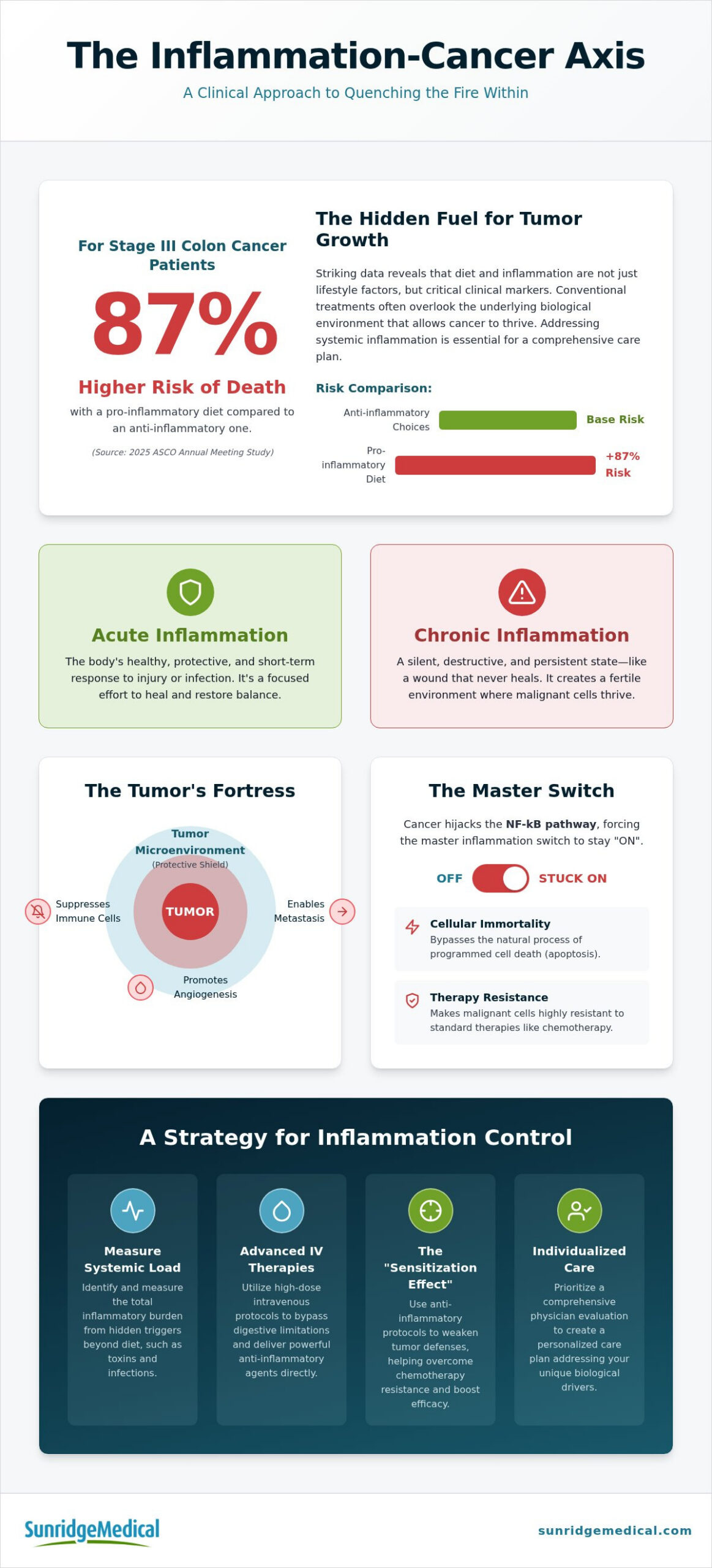
A 2025 study presented at the ASCO Annual Meeting revealed that patients with stage III colon cancer who followed pro-inflammatory diets faced an 87% higher risk of death compared to those prioritizing anti-inflammatory choices. This striking data underscores a reality many patients feel instinctively: the standard approach often leaves the biological fuel for tumor growth untouched. It’s common to finish conventional treatments like chemotherapy yet still feel as though the underlying fire is simmering. You aren’t alone in your frustration with systems that overlook these systemic health markers or leave you confused about which clinical interventions actually work.
We understand that reducing inflammation to fight cancer is not just a lifestyle choice but a critical clinical necessity. This guide provides a clear understanding of the inflammation-cancer axis and the advanced clinical protocols used to quench the inflammatory environment. You’ll learn about specific therapies that target these mechanisms, moving beyond generic advice toward a comprehensive, individualized care plan. By addressing the cellular terrain, we can offer a path forward rooted in both scientific precision and the genuine possibility of progress.
Key Takeaways
- Understand how the tumor microenvironment leverages chronic inflammation as a protective shield, creating a fertile environment for malignant growth that must be clinically addressed.
- Learn why lifestyle modifications are often insufficient for advanced stages and how to measure the total systemic inflammatory load on your physiology.
- Discover the role of advanced clinical protocols, including high-dose IV therapies, in reducing inflammation to fight cancer by bypassing digestive limitations.
- Explore the “Sensitization Effect,” a strategy that uses anti-inflammatory protocols to help overcome chemotherapy resistance and increase treatment efficacy.
- Gain insight into the Sunridge Medical strategy of individualized care, which prioritizes a comprehensive physician evaluation to address the unique drivers of your condition.
The Biological Link Between Chronic Inflammation and Cancer Progression
Since the mid-19th century, researchers have observed the persistent presence of immune cells within tumor tissues. Today, we recognize that The Biological Link Between Chronic Inflammation and Cancer is a defining hallmark of the disease. While acute inflammation is a healthy, self-limiting response to injury, chronic inflammation acts as a silent, destructive force. It creates a fertile soil where malignant cells don’t just survive; they thrive. This persistent state provides the necessary growth factors and signaling molecules that drive tumor initiation and progression.
The Tumor Microenvironment (TME) serves as a specialized ecosystem that protects cancer from the immune system. Within this space, inflammatory cells are often co-opted to suppress the body’s natural killer cells, essentially building a biological fortress around the tumor. Chronic inflammation facilitates metastasis by degrading the structural integrity of the extracellular matrix and weakening cellular barriers to allow malignant migration into the bloodstream. Understanding this connection is the first step toward reducing inflammation to fight cancer through targeted clinical interventions.
Distinguishing between protective and destructive inflammation is vital for any advanced care plan. Acute inflammation is the body’s focused effort to heal a wound or fight an infection. In contrast, chronic inflammation is often described as a wound that never heals. This systemic burden exhausts the immune system and creates a cycle of cellular damage that can trigger the very mutations that lead to malignancy.
Cytokines: The Chemical Messengers of Malignant Growth
Cytokines are small proteins that act as the primary communication network for the immune system. In a healthy state, they coordinate defense; however, in a cancer-prone environment, pro-inflammatory cytokines like IL-6 and TNF-alpha become drivers of disease. These signals effectively trick the body into supporting tumor vascularization, a process known as angiogenesis. By recruiting new blood vessels, the tumor secures a dedicated nutrient supply. Clinical data consistently shows that high levels of these inflammatory markers correlate with a poor prognosis, making their suppression a priority in specialized care.
The NF-kB Pathway: The Master Switch of Inflammation
At the heart of the inflammatory response lies the NF-kB protein complex. This complex serves as a master switch that controls DNA transcription and the production of cytokines. Cancer cells frequently hijack this pathway to bypass the natural process of programmed cell death, or apoptosis. By keeping the NF-kB switch in the “on” position, malignant cells become nearly immortal and highly resistant to standard therapies. Targeting this specific pathway is a cornerstone of alternative cancer treatment. We focus on quenching this master switch to strip away the tumor’s survival mechanisms and restore the body’s ability to regulate cellular health. This level of precision is essential when reducing inflammation to fight cancer at a biological level.
Identifying the Systemic Inflammatory Load: Beyond Diet and Exercise
While adopting an anti-inflammatory diet or increasing physical activity provides a vital foundation, these measures are often insufficient for patients facing advanced cancer. The complexity of the disease requires a deeper look at what we call the “Systemic Inflammatory Load.” This concept refers to the total physiological burden placed on the body by various stressors that keep the inflammatory fire burning. Simply eating well doesn’t address deep-seated clinical drivers that continue to provide fuel for tumor progression.
Research published by the NIH regarding The Link Between Inflammation and Cancer demonstrates that inflammation isn’t just a side effect but a core component of the tumor’s survival strategy. To be effective in reducing inflammation to fight cancer, we must identify hidden triggers. These often include environmental toxins, undiagnosed chronic infections, and persistent hormonal imbalances. Without precision testing to map this specific profile, treatment remains a guessing game. If you feel like your current plan is missing these underlying factors, a comprehensive evaluation can help uncover the specific drivers unique to your biology.
Advanced Diagnostic Markers for Inflammatory Assessment
Precision medicine relies on objective data. We look beyond standard blood panels to assess markers like C-Reactive Protein (CRP) and High-Sensitivity CRP (hs-CRP), which serve as primary indicators of systemic distress. Another critical metric is the Neutrophil-to-Lymphocyte Ratio (NLR). A high NLR often predicts a diminished response to standard treatments, signaling that the immune system is overwhelmed. We also screen for environmental illnesses, such as mold exposure or heavy metal toxicity, which can silently amplify the inflammatory response and hinder recovery.
The Gut-Immune Connection in Oncology
The health of the gastrointestinal tract is inseparable from immune function. When intestinal permeability, or “leaky gut,” occurs, it allows toxins and undigested proteins to enter the bloodstream, triggering a systemic release of pro-inflammatory cytokines. This constant immune activation creates an environment where cancer can thrive. The microbiome also plays a critical role in modulating how the body responds to malignancy. Addressing these issues is a non-negotiable component of integrative medicine for chronic illness. By restoring gut integrity, we can significantly lower the systemic load and improve the body’s overall resilience. This multi-faceted approach ensures that reducing inflammation to fight cancer becomes a targeted clinical reality rather than a general wellness goal.
Clinical Protocols for Reducing Inflammation in Advanced Cancer Care
Standard oral supplements often fall short when the body is in a state of advanced malignancy because the digestive system cannot absorb therapeutic doses. Clinical protocols for reducing inflammation to fight cancer utilize high-dose intravenous (IV) delivery to ensure that critical anti-inflammatory compounds reach their cellular targets. By bypassing the gut, these infusions provide 100% bioavailability for nutrients and biological agents that would otherwise be degraded or poorly absorbed. This direct access allows us to modulate the inflammatory microenvironment with a level of precision that lifestyle changes alone cannot achieve.
Biological response modifiers represent another pillar of our advanced protocols. These treatments don’t just suppress inflammation; they re-educate the immune system to recognize and respond to malignant cells more effectively. We also employ oxidative therapies, which play a paradoxical role in systemic health. While they introduce controlled oxidative stress in the short term, they trigger a rebound effect that strengthens the body’s antioxidant defenses and reduces long-term systemic inflammation. Each protocol is meticulously tailored according to our integrative cancer treatment by stage guide, ensuring the intervention matches the specific complexity of your diagnosis.
Specialized IV and Injection Therapies
Specialized IV and injection therapies utilize customized nutrient blends designed to quench the oxidative stress that fuels tumor growth. These biological treatments work to transform the tumor microenvironment from one that supports cancer to one that facilitates its destruction. By delivering these agents directly into the bloodstream, we achieve the systemic saturation required for a meaningful clinical response. This approach ensures that the anti-inflammatory compounds remain active and effective at the cellular level.
Hormone Optimization as an Anti-Inflammatory Tool
Hormone optimization serves as a powerful, often overlooked tool in the anti-inflammatory arsenal. Cortisol, known as the primary stress hormone, plays a dual role; it’s meant to control inflammation, but chronic elevation can lead to glucocorticoid resistance and systemic flares. Simultaneously, balancing sex hormones like estrogen and testosterone can significantly reduce the inflammatory burden, particularly in hormone-sensitive cancers. This approach draws on the same principles found in hormone therapy for autoimmune disease, where restoring endocrine balance is essential for quenching systemic immune overactivity. Through this multi-faceted lens, reducing inflammation to fight cancer becomes a comprehensive effort to restore physiological harmony and empower the body’s innate healing mechanisms.
Synergizing Anti-Inflammatory Protocols with Conventional Oncology
Integrating anti-inflammatory protocols with conventional oncology creates a powerful synergy that addresses the limitations of a single-modality approach. Chronic inflammation isn’t just a passive byproduct of cancer; it actively contributes to chemotherapy and radiation resistance. By reducing inflammation to fight cancer, we aim to achieve the “Sensitization Effect.” This clinical strategy involves stripping away the inflammatory shield that tumors use to protect themselves, making malignant cells significantly more vulnerable to standard cytotoxic agents. When the inflammatory environment is quenched, the primary treatment can penetrate and perform more effectively.
Many patients struggle with the “Chemo-Brain” phenomenon, which is increasingly recognized as a form of neuro-inflammation. This cognitive fog isn’t just a side effect of the drugs themselves but a result of the systemic inflammatory cascade triggered by treatment. By clinically addressing this neuro-inflammatory load, we can help restore mental clarity and cognitive function during and after the treatment journey. Managing these inflammatory side effects is essential for maintaining the patient’s resolve and physical capacity throughout the process.
Overcoming Treatment Resistance
Inflammation plays a pivotal role in shielding tumors from standard therapies. High levels of pro-inflammatory cytokines can activate survival pathways within cancer cells, allowing them to resist the DNA damage intended by radiation and chemotherapy. Reducing the systemic load helps the body recover more efficiently between conventional cycles, potentially allowing for more consistent dosing schedules. It’s essential that these alternative and conventional paths are professionally monitored to ensure they align perfectly for the patient’s benefit. If you are currently navigating conventional treatment and want to explore how to enhance its efficacy, we invite you to schedule a consultation with our medical team.
Quality of Life and Symptom Management
Effective inflammation control is a primary tool for managing the most debilitating symptoms of cancer. Reducing systemic inflammation helps combat cancer-related fatigue and cachexia, the severe muscle wasting that often compromises a patient’s strength. By achieving what we call “systemic cooling,” patients often experience a significant reduction in chronic pain and an improvement in overall vitality. This focus on the whole patient transforms inflammation control into a strategy for long-term survivorship and recovery. It moves beyond merely treating a diagnosis to restoring a person’s quality of life and resilience.
Individualized Care: The Sunridge Medical Strategy for Inflammation Control
Standard protocols often treat cancer as a localized event, focusing almost exclusively on the tumor while ignoring the systemic environment that allowed it to grow. At Sunridge Medical, we recognize that true progress requires a departure from this “packaged” approach. Our strategy for reducing inflammation to fight cancer is rooted in the understanding that every patient’s biological terrain is unique. We don’t just treat a diagnosis; we treat the human being in front of us, addressing the specific physiological imbalances that contribute to disease progression. This philosophy ensures that our alternative cancer treatment protocols are as multi-faceted as the conditions they address, positioning us as a confident ally in your health journey.
The Comprehensive Physician Evaluation
The journey begins with a deep dive into your medical history and current health status. Unlike the brief appointments common in traditional systems, our initial 1-hour consultation allows for a thorough exploration of your unique inflammatory drivers. We act as a scientific guide, looking for the gaps that standard oncology often misses, such as environmental triggers, toxic burdens, or underlying chronic infections that keep the immune system in a state of perpetual alarm. By identifying these specific markers through elevated diagnostic testing, we can move beyond generic advice and start reducing inflammation to fight cancer by quenching the inflammatory “fuel” that drives tumor growth. This research-based approach provides a sense of sanctuary for those who have felt overlooked, offering a clear, structured path toward restoring well-being through precision medicine.
Taking the Next Step in Your Recovery
Precision in treatment is only effective when it’s applied with timing and clinical expertise. It’s vital to act while the body still possesses the capacity to respond to integrative interventions. Our individualized plans are never “one-size-fits-all”; instead, they seamlessly combine high-dose IV therapies, biological response modifiers, and hormone optimization to create a hostile environment for cancer cells while supporting the patient’s overall resilience. As a nationwide center of excellence, we provide a level of specialized attention that transcends ordinary care, offering a steady hand for patients navigating complex health journeys. We invite you to reach out for a clinical review of your case to see how our methodologies can be tailored to your specific needs. The possibility of progress starts with a single, decisive step toward a more comprehensive lens of care.
Schedule a consultation with our medical team today.
Empowering Your Recovery Through Clinical Precision
Addressing the systemic environment is no longer an optional component of oncology; it’s a physiological necessity. We’ve explored how chronic inflammation acts as a biological fuel, protecting tumors and driving resistance to conventional therapies. By reducing inflammation to fight cancer through high-dose IV protocols and hormone optimization, we can transform the cellular terrain into one that supports healing rather than disease.
Founded in 2003, Sunridge Medical brings over two decades of clinical experience to the management of advanced Stage 4 and complex cancer cases. Our national reach allows us to provide personalized support via 1-800 consultations, ensuring you receive expert guidance regardless of your location. You don’t have to navigate this journey with a one-size-fits-all plan that ignores your unique inflammatory profile or your specific needs for progress.
Take the next step toward a more comprehensive lens of care. Speak with a Sunridge Medical specialist about your individualized treatment plan today. There is always a path forward when you have a dedicated ally and a treatment plan rooted in scientific precision and compassionate optimism.
Frequently Asked Questions
Does reducing inflammation actually kill cancer cells?
While inflammation reduction isn’t a direct cytotoxic agent like chemotherapy, it strips the tumor of its survival signals and immune-evasion mechanisms. By neutralizing the inflammatory microenvironment, we help restore the body’s natural apoptosis pathways. This process effectively starves the tumor of the growth factors it needs to proliferate and metastasize. It creates a hostile environment for malignancy while empowering the immune system to resume its essential surveillance and defense duties.
Can I follow an anti-inflammatory protocol while undergoing chemotherapy?
Yes, integrating anti-inflammatory protocols with chemotherapy is often beneficial for achieving a “sensitization effect.” Reducing the systemic inflammatory load can help lower treatment resistance, making cancer cells more vulnerable to cytotoxic drugs. Professional medical supervision is mandatory to ensure that specific anti-inflammatory agents don’t interfere with the drug’s mechanism of action. This coordinated approach aims to enhance efficacy while mitigating the inflammatory side effects often associated with standard oncology.
What are the most common signs of chronic inflammation in cancer patients?
Chronic inflammation often manifests through systemic symptoms such as persistent fatigue, unexplained muscle wasting, and cognitive fog. Beyond these physical sensations, clinical indicators include elevated levels of C-reactive protein (CRP) or an imbalanced Neutrophil-to-Lymphocyte Ratio (NLR). Patients might also experience chronic joint pain or persistent digestive disturbances. Identifying these signs is a critical step in reducing inflammation to fight cancer effectively through targeted clinical protocols that address the whole person.
How do clinical IV therapies differ from taking anti-inflammatory supplements?
The primary difference lies in bioavailability and therapeutic concentration. Oral supplements must navigate the digestive system, where absorption is often limited and compounds are degraded by first-pass metabolism. Clinical IV therapies bypass these barriers, delivering 100% of the active anti-inflammatory compounds directly into the bloodstream. This method achieves the systemic saturation levels required to modulate the tumor microenvironment, a feat that traditional oral dosing simply cannot match in advanced disease states.
How long does it take to see a reduction in inflammatory markers like CRP?
The timeline for seeing a reduction in markers like C-reactive protein (CRP) varies depending on the patient’s initial systemic load and the intensity of the protocol. Some patients observe measurable shifts in blood markers within two to four weeks of beginning intensive clinical therapy. Sustainable reduction usually requires a longer-term commitment to addressing the underlying drivers. Consistent monitoring allows our medical team to adjust protocols in real-time based on your specific physiological response.
Is hormone optimization safe for patients with hormone-sensitive cancers?
Hormone optimization is a highly specialized field that requires precise physician-led evaluation, especially in hormone-sensitive cases. The goal isn’t necessarily to increase hormone levels but to restore physiological balance and reduce the inflammatory signals that hormones can trigger when imbalanced. By carefully modulating the endocrine system, we can often lower the overall inflammatory burden. This approach is rooted in clinical research and is customized to the patient’s specific oncological profile and metabolic needs.
What role does the microbiome play in cancer-related inflammation?
The microbiome acts as a central regulator of the immune system and a primary source of systemic inflammation. When the gut barrier is compromised, pro-inflammatory cytokines are released into the bloodstream, fueling tumor progression. Restoring microbial diversity and intestinal integrity is essential for reducing inflammation to fight cancer at its source. A healthy microbiome helps modulate the body’s overall inflammatory response, making it a non-negotiable component of any comprehensive alternative cancer treatment protocol.
Can environmental toxins cause the inflammation that drives cancer growth?
Persistent exposure to environmental toxins like heavy metals, mold, or pesticides can create a state of chronic immune activation. These toxins act as “inflammagens,” triggering the NF-kB pathway and sustaining a pro-inflammatory environment that supports malignant growth. Identifying and detoxifying these external triggers is a core pillar of our diagnostic process. Without addressing these hidden drivers, the body remains trapped in a cycle of inflammation that hinders the efficacy of active cancer treatments.